Exodus 22:27
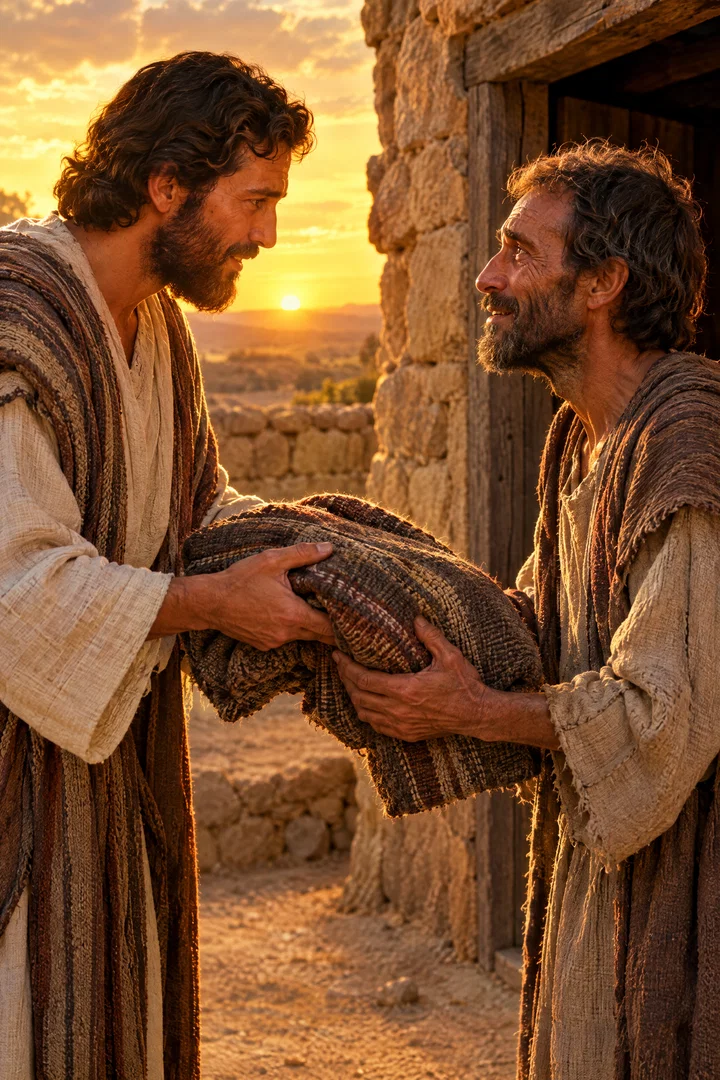
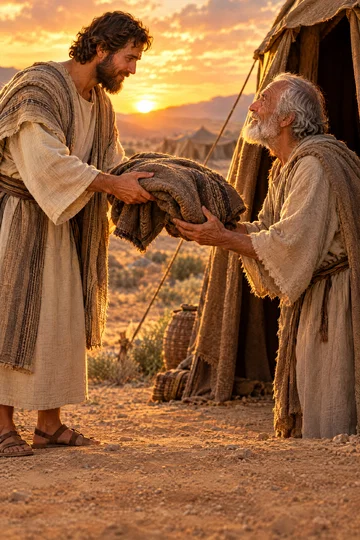
For that is his covering only, it is his raiment for his skin: wherein shall he sleep? and it shall come to pass, when he crieth unto me, that I will hear; for I am gracious.
Translations
For that is his covering only, it is his raiment for his skin: wherein shall he sleep? and it shall come to pass, when he cries to me, that I will hear; for I am gracious.
For that is his covering only, it is his raiment for his skin: wherein shall he sleep? and it shall come to pass, when he crieth unto me, that I will hear; for I am gracious.
for that is his covering only, it is his raiment for his skin: wherein shall he sleep? and it shall come to pass, when he crieth unto me, that I will hear; for I am gracious.
For that is his only covering, it is his raiment for his skin: wherein shall he sleep? and it shall come to pass, when he crieth to me, that I will hear; for I am gracious.
Revised Version, American Standard Version
for that is his only covering, it is his garment for his skin: wherein shall he sleep? and it shall come to pass, when he crieth unto me, that I will hear; for I am gracious.
for it alone is his covering, it [is] his garment for his skin; wherein doth he lie down? and it hath come to pass, when he doth cry unto Me, that I have heard, for I [am] gracious.
for that is his only covering, his garment for his skin: on what shall he lie down? And it shall come to pass, when he crieth unto me, that I will hear; for I am gracious.
for that is his only covering, that, is his mantle, for his skin,—wherein shall he sleep? and it shall come to pass when he maketh outcry unto me, then will I hear because, gracious, I am.
Berean Standard Bible, Majority Standard Bible
because his cloak is the only covering he has for his body. What else will he sleep in? And if he cries out to Me, I will hear, for I am compassionate.
for that is his only covering, it is his garment for his skin. What would he sleep in? It will happen, when he cries to me, that I will hear, for I am gracious.
For it is the only thing he has for covering his skin; what is he to go to sleep in? and when his cry comes up to me, I will give ear, for my mercy is great.
For that is his couering only, and this is his garment for his skin: wherin shall he sleepe? therefore when he crieth vnto mee, I will heare him: for I am mercifull.
Douay-Rheims (Challoner revision)
For that same is the only thing wherewith he is covered, the clothing of his body, neither hath he any other to sleep in: if he cry to me, I will hear him, because I am compassionate.
Pictures
Cross-references
- Deuteronomy 24:12
And if the man be poor, thou shalt not sleep with his pledge:
Both require mercy toward a poor borrower and his pledge.
- Deuteronomy 24:17
Thou shalt not pervert the judgment of the stranger, nor of the fatherless; nor take a widow’s raiment to pledge:
Both prohibit oppressing the vulnerable by withholding a widow’s clothing.
- Amos 2:8
And they lay themselves down upon clothes laid to pledge by every altar, and they drink the wine of the condemned in the house of their god.
Describes misuse of pledged garments at altars.
- Amos 2:6-7
Thus saith the LORD; For three transgressions of Israel, and for four, I will not turn away the punishment thereof; because they sold the righteous for silver, and the poor for a pair of shoes;
condemns Israel for violating the pledge law
- Matthew 5:42
Give to him that asketh thee, and from him that would borrow of thee turn not thou away.
Both teach mercy toward borrowers.
Commentary
Each commentary is drawn from primary sources: the writings of Ellen G. White and Adventist pioneers and periodicals. Each commentary is separate. Its own words are not a quotation; follow the references to read the source passages.
Ellen G. White
10 sources
The instruction was given through Moses among the statutes and judgments recorded in Exodus 21, 22, and 23, which were to be strictly obeyed.Lt 160, 1906, par. 3–9Ms 126, 1901, par. 46–47 It was given by Jesus Christ Himself, and does not witness to a Christless dispensation nor stand of a lower order than present requirements.Ms 126, 1901, par. 46–47 It is still needed to guard against injustice and to guide how people treat one another.Lt 160, 1906, par. 3–9 It was given as part of the plan of life to Israel as an object lesson for all mankind about justice and mercy and care for the suffering, needy, homeless, poor, borrower, and outcast.Ms 126, 1901, par. 46–47MH 188.5MH 188.3–4 It guards the interests of God's people by special direction concerning the poor, showing how impartial God's ways are and how exalted His requirements are.Ms 126, 1901, par. 46–47 If these principles were carried out today the world would be a different place.MH 188.5MH 188.3–4
If a poor neighbor's outer garment or raiment is taken as a pledge for a debt or loan, it must be returned by sunset, sundown, or nightfall.Ms 72, 1898, par. 20–21MH 188.2MH 188.1MH 187.3PP 311.1 The reason is that it is his only covering and clothing for his skin and what he sleeps in.Ms 72, 1898, par. 20–21MH 188.2MH 188.1MH 187.3PP 311.1 When the afflicted person cries out, God will hear, because He is gracious.Ms 72, 1898, par. 20–21MH 188.2MH 188.1MH 187.3ST Feb 7, 1884
The verse forbids enriching one class or oneself by the oppression, suffering, and impoverishing of another.MH 187.3ST Feb 7, 1884 It forbids exploiting the necessities of the poor and afflicted.ST Feb 7, 1884 It requires putting oneself in the place of those dealt with in business, so a lender must not take advantage of another's misfortune, weakness, or incompetence to benefit himself.MH 187.3 Merciful lending and giving to him that asks and borrows is a binding duty, and mercy in lending is part of doing no unrighteousness in dealing with the poor.MH 188.2MH 188.1 Oppression of the borrower is a wrong that God Himself will answer.MH 188.2
Sources
Pioneers and periodicals
19 sources
It belongs to the judgments and practical ordinances given through Moses to apply the moral principles of the Ten Commandments to daily life under Israel's covenant with God.ST Jan 25, 1910ST Apr 17, 1907ST May 16, 1878ST Feb 6, 1879 Its plain command is that a neighbor's cloak taken as a pledge must be returned before sunset, because it is his only covering for his skin and his bed at night.ST Feb 7, 1884RH Jun 22, 1916ST Nov 21, 1900 The reason given is that when the poor and oppressed cry out, God will hear, for He is gracious, and His pity forbids enriching oneself by their necessity.ST Feb 7, 1884RH Jun 22, 1916 The wrong must therefore be made right before nightfall rather than left to stand overnight.ST Feb 7, 1884RH Jun 22, 1916 Israel broke this requirement by keeping pledged garments for its own use and indulgence, even in idolatrous feasting and worship.RH Jun 16, 1868
Place in Covenant Law
Exodus 22:27 belongs to Exodus 21-23, which give practical instruction for various phases of life growing out of the law.ST Jan 25, 1910ST Apr 17, 1907 Those chapters are the legislative part that gave the ransomed people guidance under their covenant with Jehovah. They are statutes revealing and applying the moral principles of the Ten Commandments so their practical meaning can be understood.ST Apr 17, 1907
The Ten Commandments were spoken aloud from Sinai in fearful majesty in the hearing of all the people, written on two tables of stone, and met with the people's agreement to obey His voice.ST May 16, 1878ST Aug 5, 1889 What followed was given privately to Moses in the mount, on the third day after that public speaking.ST May 16, 1878ST Aug 5, 1889 It stands with the latter part of Exodus 20 and all of Exodus 21, 22, and 23, also described as the laws division of Exodus 20-24 and as the complete code given after the going out from Egypt and deliverance from bondage when Israel became a nation with thorough organization, efficient leadership, and established worship.ST May 16, 1878ST Aug 5, 1889RH Jan 20, 1916 In the order of the record as Moses' time is reached, it is part of the law of ordinances written out in full in Exodus 19-30 immediately after the moral law, the Ten Commandments, was written out first.ST May 6, 1875
What Moses received was written in the book of the covenant that was read in the audience of Israel at Sinai and ratified with blood.ST Dec 10, 1896ST Dec 16, 1897 Together with the agreement between God and Israel and the ten words spoken by God, these judgments formed the basis of the national law, applying the principles of God's law to Israel's national life and to life in Canaan.ST Dec 10, 1896RH Oct 22, 1861 They were the words and judgments that made up the agreement afterward confirmed as the old covenant, given to Moses to make known to Israel as civil and ecclesiastical laws regulating the Jewish theocracy.ST Aug 5, 1889ST Dec 16, 1897 The verse itself is not the covenant but one of the words concerning which the covenant was made with Israel.ST Dec 16, 1897
In nature these statutes and judgments are chiefly civil, judicial, religious, and ecclesiastical rules, setting out justice in dealings with one another and duties among people.ST May 16, 1878ST Feb 6, 1879ST Mar 1, 1883 They include some ceremonial precepts, and with the latter part of Exodus 20 and all of Exodus 21, 22, and 23 give an epitome of the civil and ceremonial laws given to that people.ST May 16, 1878ST Mar 1, 1883 They are judicial precepts for Israel's civil government, of moral, civil, and ceremonial nature, laying the foundation for the Levitical priesthood.RH Dec 31, 1861ST Dec 16, 1897 They are distinct as judgments given through Moses to teach from the Ten Commandments, called the words of the Lord and terms of the covenant spoken to the assembly and written on stone tablets.ST Dec 16, 1897
These laws were given in love to draw the people into close fatherly relationship with God and to write His law on their hearts.ST Jan 27, 1909 As civil laws they were binding on Israel as a nation but are not binding on other nations as laws, while their underlying moral principles remain binding.RH Nov 12, 1908 They belong to God's law that existed before the Sinai covenant was made and still exists although that first covenant has ended.ST Dec 16, 1897 All afterward added no new moral principle but only developed principles already contained in them for an ignorant and sin-blinded people, and Israel's failure to keep the agreement did not affect the nature or perpetuity of God's law.ST Dec 10, 1896
The Mosaic code containing the verse is essentially different from and superior to the Code of Hammurabi.ST Mar 10, 1909 Similarities in some respects do not prove dependence in any.ST Mar 10, 1909 The Bible narrative containing it is confirmed by discoveries in ancient lands adjoining Israel and having dealings with that people.ST Mar 10, 1909
Mercy to the Poor
If a neighbor's outer garment or cloak or mantle has been taken as a pledge for debt, it must be given back before sunset and must not be kept from him overnight.ST Feb 7, 1884RH Jun 22, 1916ST Nov 21, 1900RH Jun 16, 1868 The reason is that it is his covering only, his raiment for his skin, and he needs it to sleep in.ST Feb 7, 1884RH Jun 22, 1916ST Nov 21, 1900 That covering is often used at night for sleep, so the law of Moses gives the poor man a special claim to it when it is pledged.ST Feb 7, 1884RH Jun 22, 1916ST Nov 21, 1900
When the poor and afflicted and oppressed cry out under such dealing, God will hear, for He is gracious, and that divine care underlies the command to restore the pledge.ST Feb 7, 1884RH Jun 22, 1916 That same care forbids exploiting the necessities of the poor and enriching oneself by impoverishing them.ST Feb 7, 1884RH Jun 22, 1916 It requires making matters right before nightfall rather than leaving wrongs unresolved, which applied to bedtime means settling wrongs before sleep in case one does not wake.ST Feb 7, 1884RH Jun 22, 1916 Israel broke this law and lived regardless of divine law in sensual indulgence, keeping and using the pledged garments for themselves instead of returning them, especially when prostrating themselves before their idols, when feasting, or sleeping, or committing abominations before their altars.RH Jun 16, 1868
Sources