Exodus 28:21
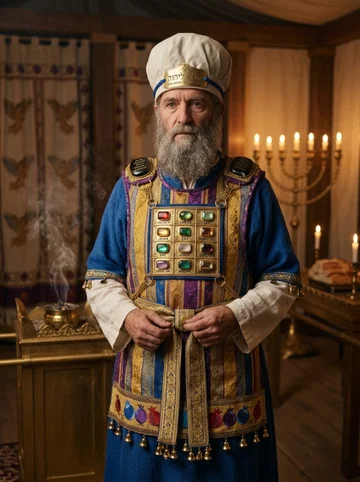
And the stones shall be with the names of the children of Israel, twelve, according to their names, like the engravings of a signet; every one with his name shall they be according to the twelve tribes.
Translations
American King James Version, King James Version, KJV Cambridge Paragraph Bible, Webster Bible
And the stones shall be with the names of the children of Israel, twelve, according to their names, like the engravings of a signet; every one with his name shall they be according to the twelve tribes.
Revised Version, American Standard Version
And the stones shall be according to the names of the children of Israel, twelve, according to their names; like the engravings of a signet, every one according to his name, they shall be for the twelve tribes.
and the stones are according to the names of the sons of Israel, twelve, according to their names, openings of a signet, each by his name are they for the twelve tribes.
And the stones shall be according to the names of the children of Israel, twelve, according to their names, engraved as a seal: every one according to his name shall they be for the twelve tribes.
And the stones shall be after the names of the sons of Israel—twelve, after their names,—as the engravings of a seal-ring everyone after his name, shall they be, for the twelve tribes,
Berean Standard Bible, Majority Standard Bible
The twelve stones are to correspond to the names of the sons of Israel, each engraved like a seal with the name of one of the twelve tribes.
The stones shall be according to the names of the children of Israel, twelve, according to their names; like the engravings of a signet, everyone according to his name, they shall be for the twelve tribes.
The jewels are to be twelve in number, for the names of the children of Israel; every jewel having the name of one of the twelve tribes cut on it as on a stamp.
And the stones shall be according to the names of the children of Israel, twelue, according to their names, grauen as signets, euerye one after his name, and they shall bee for the twelue tribes.
Douay-Rheims (Challoner revision)
And they shall have the names of the children of Israel: with twelve names shall they be engraved, each stone with the name of one according to the twelve tribes.
Pictures
Cross-references
- Exodus 28:29
And Aaron shall bear the names of the children of Israel in the breastplate of judgment upon his heart, when he goeth in unto the holy place, for a memorial before the LORD continually.
The high priest bears Israel’s tribal names on the breastplate before the Lord.
- Exodus 28:30
And thou shalt put in the breastplate of judgment the Urim and the Thummim; and they shall be upon Aaron’s heart, when he goeth in before the LORD: and Aaron shall bear the judgment of the children of Israel upon his heart before the LORD continually.
The breastplate bears the tribal stones and the Urim and Thummim before the Lord.
- Exodus 28:4
And these are the garments which they shall make; a breastplate, and an ephod, and a robe, and a broidered coat, a mitre, and a girdle: and they shall make holy garments for Aaron thy brother, and his sons, that he may minister unto me in the priest’s office.
Lists the garments made for Aaron to serve as priest.
- Revelation 21:19-20
And the foundations of the wall of the city were garnished with all manner of precious stones. The first foundation was jasper; the second, sapphire; the third, a chalcedony; the fourth, an emerald;
The breastplate stones correspond to the city’s twelve foundations.
- Leviticus 8:1-13
And the LORD spake unto Moses, saying,
Records the setting apart and service of the priests.
- Exodus 28:15
And thou shalt make the breastplate of judgment with cunning work; after the work of the ephod thou shalt make it; of gold, of blue, and of purple, and of scarlet, and of fine twined linen, shalt thou make it.
Identifies the breastplate as the breastplate of judgment.
- Exodus 28:36
And thou shalt make a plate of pure gold, and grave upon it, like the engravings of a signet, HOLINESS TO THE LORD.
The engraved plate and breastplate are paired parts of the high priest’s garments.
- Leviticus 16:4
He shall put on the holy linen coat, and he shall have the linen breeches upon his flesh, and shall be girded with a linen girdle, and with the linen mitre shall he be attired: these are holy garments; therefore shall he wash his flesh in water, and so put them on.
The high priest wears holy garments when serving in the sanctuary.
- Hebrews 8:5
Who serve unto the example and shadow of heavenly things, as Moses was admonished of God when he was about to make the tabernacle: for, See, saith he, that thou make all things according to the pattern shewed to thee in the mount.
The earthly sanctuary and its furnishings were made as a shadow of heavenly things.
Commentary
Each commentary is drawn from primary sources: the writings of Ellen G. White and Adventist pioneers and periodicals. Each commentary is separate. Its own words are not a quotation; follow the references to read the source passages.
Ellen G. White
16 sources
God directed that the high priest's breastplate carry twelve precious stones set in gold, each engraved like a signet with the name of one tribe so that together they bore all Israel over his heart.SG4 101.1GW92 162.2EW 213.1 Through those stones He gave direct guidance when leaders inquired of Him over judgment and battle, with brilliant light resting on the right stone to grant favor and a shadowing cloud settling on the left stone to withhold it.1SP 398.2–399.1ST Feb 21, 1911ST Oct 7, 1886 That earthly means of answer ceased at Christ's death, when the veil was torn and God's presence no longer overshadowed the earthly mercy seat.ST Oct 7, 18863SP 166.2–167.1 In heaven Jesus as High Priest still bears His people upon His breastplate while wearing the name of God upon His brow, exalted above Moses and angels yet joined to humanity to make believers partakers of the divine nature.EW 213.1SG1 158.1Lt 97, 1898, par. 8–9 The twelve differing stones forming one breastplate show that distinct persons with their own light and gifts belong together as one family without contradiction.Ms 105, 1900, par. 6Lt 53, 1900, par. 9–12
Breastplate and Its Stones
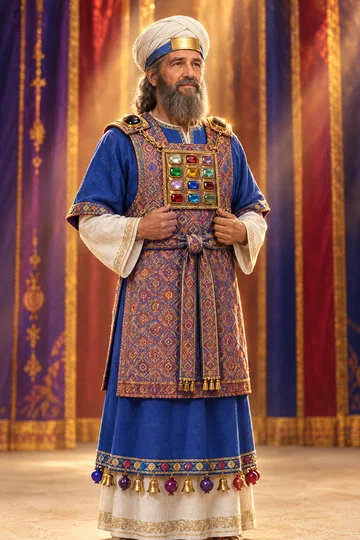
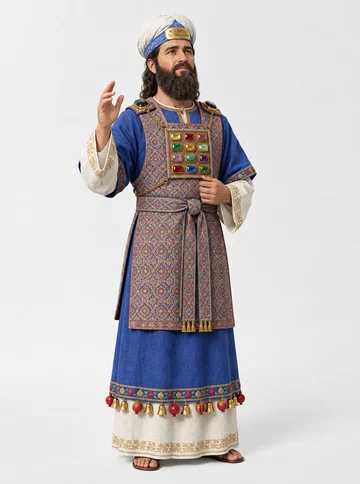
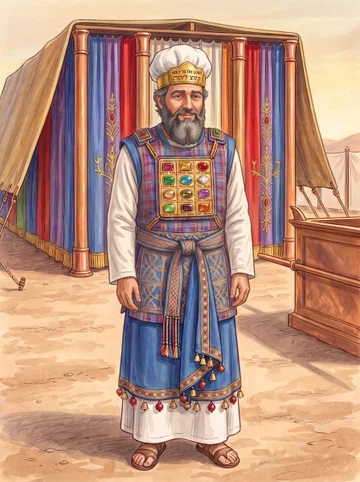
The breastplate bore twelve precious stones set in gold, each stone engraved like the engraving of a signet with the name of one of the twelve tribes of Israel, so that together the stones represented all the tribes, each name matched to its tribe.SG4 101.1GW92 162.22T 610.3–612.11SP 398.1SG1 158.1 The same imagery is reflected in the heavenly sanctuary, where Jesus as He enters the second apartment wears a glittering breastplate with letters that look like names engraved upon it.EW 213.1SG1 158.1 The breastplate covered the priest's chest and was suspended from his shoulders.SG4 101.1
The verse belongs to God's detailed, specific directions to Moses for Aaron's garments and for everything connected with His service, prescribing the dress of those to minister before Him in the holy place in sacred office.GW92 161.1GW92 162.22T 610.3–612.1Ms 56, 1900, par. 11–12 God may be honored or dishonored by the apparel of those who officiate before Him, and He requires order in everything and especially cleanliness, so these specific instructions for sacred garments show the care and order required in approaching Him.GW92 161.12T 610.3–612.1 The high priest's clothing was carefully specified and symbolical, and likewise the dress of Christ's followers should represent Christ.Ms 56, 1900, par. 11–12 The description of the breastplate bearing the names of Israel's twelve tribes on precious stones was also associated with receiving messages from God.ST Feb 21, 1911
The ephod and breastplate of judgment were not sacred in themselves, for their sacred use depended on God's directions.ST Jul 28, 1881 Only the high priest was authorized to wear them when coming before the Lord.ST Jul 28, 1881 That pattern was later imitated by Gideon when he made an ephod and breastplate of judgment according to the instructions for the high priest's breastplate.ST Jul 28, 1881
Guidance Through the Stones
The breastplate bearing the names of Israel's twelve tribes on precious stones was the appointed means for receiving messages from God.1SP 398.2–399.1ST Feb 21, 1911 When judges faced difficult matters they could not decide, and when the question was going to battle, the priests inquired of God through it.1SP 398.2–399.1
Two larger stones set at its right and left shone with great brilliancy to convey His answer.1SP 398.2–399.1 A halo of light and glory resting on the precious stone at the right, with flashing light, meant favor and success, saying Go and prosper.1SP 398.2–399.1ST Oct 7, 1886 A vapor or cloud settling on and shadowing the precious stone at the left meant disapproval, saying Thou shalt not go and thou shalt not prosper.1SP 398.2–399.1ST Oct 7, 1886
At Christ's death the sacred service of the earthly sanctuary ended.ST Oct 7, 18863SP 166.2–167.1 The veil of the temple was rent from top to bottom, and the most holy place entered only once a year was exposed to common gaze.ST Oct 7, 1886 God's presence no longer overshadowed the earthly mercy-seat, and the light of His glory no longer shone with flashing light upon the breastplate's precious stones nor shadowed them with the cloud of disapproval.ST Oct 7, 18863SP 166.2–167.1
Christ and His People
The pattern of the earthly breastplate is seen in heaven, for as Jesus enters the second apartment He wears a glittering breastplate bearing letters that look like names engraved upon it.EW 213.1SG1 158.1 As High Priest He bears the name of Israel on His breastplate while bearing the name of Jehovah upon His mitre.Lt 97, 1898, par. 8–9 As the Son of God over His own house He is higher than Moses and higher than the highest angel.Lt 97, 1898, par. 8–9 He was the invisible Leader of Israel who followed the people in their wilderness wandering enshrouded in the pillar of cloud by day and the pillar of fire by night, as the Angel of the covenant coming in the name of God.Lt 97, 1898, par. 8–9 He took humanity that humanity might touch humanity, and in the form of man humbled Himself and became a servant, yet as the Son of God He was higher than the angels, so that by His life in humanity man may become a partaker of the divine nature.Lt 97, 1898, par. 8–9 As the Majesty of heaven exalted above the angels He carries with Him in His work of redemption all who have received Him and believed on His name.Lt 97, 1898, par. 8–9
Each of the twelve stones had its own light and significance and its own message, and their differing qualities contributed to the beauty and meaning of the whole.Ms 105, 1900, par. 6Lt 53, 1900, par. 9–12 Together the distinct stones formed one breastplate.Ms 105, 1900, par. 6Lt 53, 1900, par. 9–12 This shows how people with distinct characteristics and different ways of expressing truth can belong together as one family without contradiction.Ms 105, 1900, par. 6Lt 53, 1900, par. 9–12
God gave special directions about everything connected with His service, specifying the dress of those to minister before Him in sacred office in the holy place.GW92 161.12T 610.3–612.1 He may be honored or dishonored by the apparel of those who officiate before Him.GW92 161.1 He requires order in everything and especially cleanliness, and His specific instructions for sacred garments show the care and order required in approaching Him.GW92 161.12T 610.3–612.1 The high priest's clothing was carefully specified and symbolical, and likewise the dress of Christ's followers should represent Christ.Ms 56, 1900, par. 11–12
Sources
Pioneers and periodicals
49 sources
The verse describes twelve precious stones set in gold on the breastplate, each engraved like a signet with the name of one of the twelve tribes of Israel so every tribe has its own stone.ST Jun 3, 1886RH Aug 15, 1865ST Jan 27, 1909ST Dec 17, 1912 The high priest wore that square breastplate over his heart when ministering before the Lord as a continual memorial, bearing the judgment of the whole nation.RH Aug 15, 1865RH Sep 16, 1852RH Dec 15, 1910ST Jun 12, 1884 It belongs to the minute pattern for tabernacle, furnishings, and priestly garments given to Moses on the mount, an earthly object-lesson and shadow of the heavenly temple where Jesus now ministers.ST Jan 24, 1911ST Mar 25, 1889ST Jun 26, 1907 Called the breastplate of judgment, it typified the closing work of judgment when each name is examined before God and the sins of God's children are blotted out.ST Dec 17, 1912RH Apr 8, 1858ST Aug 12, 1880RH Dec 1850 In the antitype Christ as the great High Priest bears every repentant believing soul upon His heart continually, presenting the names of His true Israel before the Father and never forgetting them.RH Aug 19, 1851RH Feb 2, 1911RH Sep 11, 1866ST Sep 6, 1910ST Dec 10, 1912
Stones and Garment Described
The twelve stones bear the names of the children of Israel, twelve in number according to their names, each stone engraved like the engraving of a signet with its own tribal name so that every tribe is represented by its own name.RH Aug 15, 1865ST Jan 27, 1909ST Jun 26, 1907RH Dec 15, 1910 They are precious stones belonging to the detailed directions for the sanctuary and its priestly garments, set forth as object lessons pointing to power to forgive sin, transform character, and deliver from burdens.ST Nov 12, 1894ST Jan 27, 1909ST Jun 26, 1907 The breastplate of judgment carrying all twelve names was a portion of the holy garment worn continually in service every day of the year, not only on the Day of Atonement, having no more names on that day than on other days and meaning no more on that day than on other days.RH Aug 15, 1865RH Sep 16, 1852 Worn upon the heart as a continual representation and memorial of Israel before the Lord, bearing their judgment, it was not a list limited to those who had previously confessed their sins.RH Aug 15, 1865RH Sep 16, 1852 Together with the names on the shoulder stones the twelve signify that the priest bears responsibility for the welfare of the whole nation, with assurance of light and truth for all the tribes.RH Dec 15, 1910
The stones are precious stones set in gold on the breastplate of judgment, the crowning feature of the gorgeous robe, worn over the heart when officiating before the Lord in the holy of holies.ST Jun 3, 1886ST Dec 17, 1912 The breastplate was of the same material as the ephod, in the form of a square measuring a span, with the twelve stones arranged three in a row.ST Dec 17, 1912 It belonged to the worship of God in the Jewish age, first connected with the wilderness tabernacle and afterward with the temple where sacrificial offerings were presented, and messages from Jehovah were received from it.ST Jun 3, 1886
The breastplate belongs to Aaron's distinctive, splendid priestly garments, different from the garments of the other priests and supporting the Urim and Thummim.RH Jul 5, 1864RH Dec 8, 1910 The splendid dress prescribed for other occasions was laid aside on the Day of Atonement for the plainest and humblest dress when entering the most holy place.RH Jan 11, 1870ST Jun 6, 1878 That contrast was designed to impress infirmity and sinfulness, showing the Levitical high priest was high priest only in a typical sense and not in reality, unlike Christ the sinless High Priest who lives forever.RH Jan 11, 1870RH Jul 5, 1864
The priestly clothing was significant of calling and purpose, setting forth the special dress appointed in accordance with office, to be carefully studied together with the account of the consecration services in the next chapter.ST Nov 12, 1894 The garments were specified by God down to small details, including what should be worn and how appearance before Him should be.RH Oct 30, 1913ST Mar 15, 1883 Care in following the instructions showed reverence for God and taught that He is holy and His work is sacred and important, and He does not accept negligence in its service.RH Oct 30, 1913ST Mar 15, 1883
Sanctuary Instructions Given
Exodus 28:21 falls within the detailed, minute instructions God gave Moses on the mountain for the construction of the tabernacle with its furnishings, priestly garments, and instruments of service.ST Jan 31, 1911ST Dec 10, 1896 Those instructions were given during forty days and nights on the mountain after Israel's covenant was ratified, showing God's particular care in matters of worship.ST Mar 25, 1889RH Dec 31, 1861 This was while God was preparing to entrust Moses with the law written on stone.RH Dec 31, 1861 It was given through Moses during forty days in the mount in the thick darkness, after the people stood afar off and asked Moses to hear God and speak to them.ST Apr 15, 1886 It is not part of what God spoke directly from heaven on the day of assembly, to which He added no more, nor part of what He Himself wrote on the two tables of stone, which was the Ten Commandments alone, but belongs with what was made known by the hand of Moses and recorded chiefly in Exodus 25-30 and in Leviticus, including burdensome ceremonies and carnal ordinances imposed until the time of reformation, a yoke which neither the fathers nor their children were able to bear.ST Apr 15, 1886 The building and setting up of the sanctuary followed those mountain instructions.ST Dec 10, 1896
The sanctuary described in Exodus 25 to 40 was to be made exactly according to the pattern shown in the mount.ST Oct 29, 1894 It is set forth in a very minute description and minute account extending through Exodus 25-31, of the tabernacle as erected by Moses.ST Oct 29, 1894ST May 20, 1880 It was a structure of extraordinary magnificence, formed of upright boards overlaid with gold, with coverings, veil, holy place and most holy place, and court with its sacred vessels.ST May 20, 1880 It was marvelously beautiful, and its worship centered on the holy of holies, where the law of God rested beneath the mercy seat.ST Jun 19, 1907
God gave these directions for building and this description after redeeming Israel from Egyptian bondage. Hundreds of years of slavery had unfitted Israel to comprehend God's great salvation and the character He required, so God gave a great, multiple object-lesson by various forms and rites comprehending the great plan of salvation. He asked free-will offerings of the children of Israel for the building and commanded them to make Him a sanctuary that He might dwell among them, and He specially endowed His workmen to build it according to the divine pattern.
Those instructions in Exodus 25-31 for building the sanctuary and preparing its services form part of an earthly object lesson showing God's plan for salvation from sin and His way of governing, in which God's people were to cooperate in carrying out that work. Its furnishings and services were object lessons pointing to Christ and His power to forgive sin, transform character, and deliver people from their burdens, the twelve stones on the high priest's breastpiece bearing the names of the twelve tribes engraved like a signet belonging to the directions for that sanctuary service.ST Jun 26, 1907 The tabernacle made according to the pattern God showed Moses on the mountain was a pattern of the heavenly temple, and its Levitical priesthood and service in the earthly sanctuary were the pattern and shadow of Christ's ministry in the heavenly sanctuary.ST May 16, 1878RH Feb 3, 1853 The ancient tabernacle, sanctuary and priests described in Exodus 25-31 have no likeness to modern churches, for the ancient tabernacle was constructed for ministration in sacrifices and offerings, all of which passed away when Christ came and suffered and died once for all, while the ancient sanctuary typified the great temple on high where Jesus the Lord now ministers.ST Jan 24, 1911
Names Carried Before God
The twelve stones of the breastplate each bore like a signet engraving the name of one of the twelve tribes of Israel, so that every tribe was represented by its own name.RH Aug 15, 1865RH Sep 16, 1852RH Dec 15, 1910ST Jun 12, 1884 The high priest carried those tribal names on his heart before the Lord in sanctuary service as a continual representation and memorial of Israel, bearing their judgment.RH Aug 15, 1865RH Sep 16, 1852 That wearing was continual in service every day of the year, not only on the Day of Atonement.RH Aug 15, 1865 On that day the breastplate had no more names on it than on other days, meant no more than on other days, and was not a list limited to those who had previously confessed their sins.RH Aug 15, 1865
Together with the names on the shoulder stones, the breastplate names signify that the priest bears responsibility for the welfare of the whole nation.RH Dec 15, 1910 The sanctuary services, including the Day of Atonement, in which he carried these names concerned the common interest of all Israel.ST Jun 12, 1884 The stones are also associated with assurance of light and truth for all the tribes.RH Dec 15, 1910 The continued presence of all twelve names after the captivity indicates the tribes were still recognized as existing, with Israel here denoting those who remained faithful to the worship of the true God.ST Jun 12, 1884
Christ the Great High Priest
Aaron in the type and Jesus Christ in the antitype bear the sins and judgment of all God's people upon the heart before the Lord continually.ST Sep 6, 1910 Having ascended into heaven to appear in the presence of God for His people, Christ never forgets them but has them graven continually before Him.ST Sep 6, 1910 As great High Priest He bears upon His heart every repentant, believing soul.RH Feb 2, 1911 He thinks of people individually and confesses their names before God as they come under review.ST Dec 10, 1912 Signs of faith, repentance, and spiritual care are bright evidence that believers' names are engraved on the breastplate of Christ and are not forgotten before the Father's throne.RH Sep 11, 1866
In the heavenly sanctuary the Great High Priest bears the names of God's true Israel over His heart and presents them before the Father and the angels.RH Aug 19, 1851 This was a literal heavenly transaction on the tenth day of the seventh month in 1844, when Christ entered the Most Holy Place to make that presentation.RH Aug 19, 1851 Through the closing mediatorial work He still bears His people on His heart, and He cannot wear priestly and kingly robes at the same time, nor the mitre and the crown at the same time.RH May 21, 1857 He therefore does not receive the kingdom, symbolized by the marriage of the Lamb, in the first part of the day of atonement but only after mercy closes.RH May 21, 1857 Only then does He exchange the mitre for the golden crown before coming for the saints.RH May 21, 1857 Christ, who in all things is the word of God, accompanied the Israelites out of Egypt and through the wilderness to the promised land.
Judgment and Atonement Foretold
The breastplate is called the breastplate of judgment because it held the names of the twelve tribes over the high priest's heart in work that typified the judgment work in which each individual name comes up in review before God.ST Dec 17, 1912 In that antitypical judgment Christ confesses the names of the overcomers, and their names remain in the Book of Life.ST Dec 17, 1912
The high priest wore the breastplate bearing the names of the twelve tribes of the children of Israel into the most holy place to make atonement for the holy sanctuary and for all the people of the congregation.RH Apr 8, 1858ST Aug 12, 1880 That cleansing of the earthly sanctuary was a work of judgment.RH Apr 8, 1858 It prefigures the great time of judgment and decision upon the human race in the closing work of the heavenly sanctuary, when the lives of all the children of God whose names are written in the Lamb's book of life pass in final review before the tribunal and their sins are blotted out.RH Apr 8, 1858 This wearing belongs to the high priest's entering the most holy place on the Day of Atonement to make atonement for the sanctuary and the people.RH Apr 8, 1858ST Aug 12, 1880
The breastplate of judgment with its twelve engraved tribal names, one name for each tribe, represents Israel's names before God as Christ presents them before the Father, with every name examined in the final judgment.RH Dec 1850 Because one's name is represented there, all God's commandments are to be kept before Christ finishes His advocacy.RH Dec 1850 The high priest wore these stones bearing the tribal names, each engraved like a signet, when he entered the sanctuary's second apartment on the Day of Atonement.RH Oct 10, 1912
Moses set apart the Levitical priesthood to minister before the ark in the typical sanctuary.RH Dec 12, 1854 That priestly service continued while that sanctuary remained and could not itself remove sin.RH Dec 12, 1854 Its sacrifices pointed penitent sinners forward to the great sacrifice for human sin.RH Dec 12, 1854
The twelve precious stones engraved with the names of the twelve tribes were a medium for God's direct approval and disapproval, with the light of His glory flashing upon them in approval and the cloud of His disapproval shadowing them.ST Oct 7, 1886 When Christ died the veil of the temple was rent from top to bottom, so that the most holy place entered only once a year was exposed to common gaze.ST Oct 7, 1886 Then God's presence no longer overshadowed the earthly mercy-seat, and the breastplate stones no longer received that flashing light or shadowing cloud.ST Oct 7, 1886
Law Guidance and Application
The engraved stones belong to the priestly arrangement appointed after the Ten Commandments had already been given in Exodus 20, which proves the Ten Commandments are distinct from the law received under that priesthood.ST Mar 22, 1883ST Mar 22, 1883ST Feb 20, 1879 That later law concerning the priesthood stands in contrast with the moral law.ST Mar 22, 1883ST Mar 22, 1883
The verse is no part of what God spoke directly from heaven on the day of assembly, to which He added no more, nor of what He Himself wrote on the two tables of stone, which was the Ten Commandments alone.ST Apr 15, 1886 It belongs with what was made known by the hand of Moses during forty days in the mount in the thick darkness, after the people stood afar off and asked Moses to hear God and speak to them.ST Apr 15, 1886 That instruction is recorded chiefly in Exodus 25 to 30 and in Leviticus, including burdensome ceremonies and carnal ordinances imposed until the time of reformation, a yoke which neither the fathers nor their children were able to bear.ST Apr 15, 1886
The verse stands among the law of Moses commanded in Horeb with statutes and judgments, part of the instruction set forth in Exodus 20 to 40 and Leviticus that is to be remembered in the last days. It stands among laws revealing offerings, sacrifices, and types whose shadows trace to the substance of the new dispensation, together with the Ten Commandments and rules of conduct. It belongs to the consecration of the priests, where sanctification consists in setting apart or consecrating to a sacred or religious use.RH Jul 26, 1864 That priesthood was committed to Aaron and his sons, so that after that time no one else was to perform the rites of a priest unless especially directed by the Lord.ST Mar 3, 1914
The garments were not sacred in themselves, for their sacred use depended on God's directions, and only the high priest was authorized to wear them when coming before the Lord.ST Jul 28, 1881 Gideon imitated the ephod and breastplate of judgment when he made his own.ST Jul 28, 1881
The breastplate belonged to the worship of God in the Jewish age, first connected with the tabernacle in the wilderness and afterward with the temple, where God was worshiped and sacrificial offerings were presented before Him.ST Jun 3, 1886 Messages from Jehovah were received from the breastplate.ST Jun 3, 1886ST Feb 21, 1911 Together with the names on the shoulder stones, the twelve engraved stones with the names of Israel's twelve tribes signify that the priest bears responsibility for the welfare of the whole nation, and the stones are associated with assurance of light and truth for all the tribes.RH Dec 15, 1910
The breastplate also contained two brilliant stones called the Urim and Thummim by which the mind of the Lord was made known through the high priest, with light encircling the precious stone at the right giving an affirmative answer to questions asked and light encircling the stone at the left giving a negative answer.ST Dec 17, 1912 The breastplate was attached to the ephod, which explains David calling for the priest to bring the ephod when undecided about what course to pursue in order to know the mind of the Lord.ST Dec 17, 1912 The breastplate of judgment with its twelve stones, each engraved with the name of one of Israel's twelve tribes, thus served as a means of divine guidance, whose New Testament counterpart is shown in God's discernment, revelations, and aid to His people.ST Dec 17, 1912RH Jul 16, 1872
The twelve varieties of precious stones set in the breastplate are the same stones that form the foundation of the New Jerusalem.ST Dec 17, 1912RH May 7, 1901 The same varieties that God placed in Eden for Adam and his descendants to use in building a city around the garden are taken by Christ to build a city in heaven beyond the taint of sin, which He brings down to earth, where they are formed into the foundations of the wall, for God created nothing in vain.RH May 7, 1901
Sources