Exodus 28:36
And thou shalt make a plate of pure gold, and grave upon it, like the engravings of a signet, HOLINESS TO THE LORD.
Translations
And you shall make a plate of pure gold, and grave on it, like the engravings of a signet, HOLINESS TO THE LORD.
King James Version, KJV Cambridge Paragraph Bible
And thou shalt make a plate of pure gold, and grave upon it, like the engravings of a signet, HOLINESS TO THE LORD.
And thou shalt make a plate of pure gold, and engrave upon it, like the engravings of a signet, HOLINESS TO THE LORD.
And thou shalt make a plate of pure gold, and grave upon it, like the engravings of a signet, HOLY TO THE LORD.
And thou shalt make a plate of pure gold, and grave upon it, like the engravings of a signet, HOLY TO JEHOVAH.
'And thou hast made a flower of pure gold, and hast opened on it — openings of a signet — 'Holy to Jehovah;'
And thou shalt make a thin plate of pure gold, and engrave on it, as the engravings of a seal, Holiness to Jehovah!
And thou shalt make a burnished plate, of pure gold,—and shalt engrave thereupon, like the engravings of a seal-ring, Holiness to Yahweh.
Berean Standard Bible, Majority Standard Bible
You are to make a plate of pure gold and engrave on it as on a seal:HOLY TO THE LORD.
“ You shall make a plate of pure gold, and engrave on it, like the engravings of a signet, ‘ HOLY TO THE LORD.’
You are to make a plate of the best gold, cutting on it, as on a stamp, these words: HOLY TO THE LORD.
Also thou shalt make a plate of pure golde, and graue thereon, as signets are grauen, Holines To The Lord,
Douay-Rheims (Challoner revision)
Thou shalt make also a plate of the purest gold: wherein thou shalt grave with engraver’s work, Holy to the Lord.
Pictures
Cross-references 20 of 22
- Zechariah 3:4-5
And he answered and spake unto those that stood before him, saying, Take away the filthy garments from him. And unto him he said, Behold, I have caused thine iniquity to pass from thee, and I will clothe thee with change of raiment.
Joshua’s sin is removed, and he is clothed in clean priestly garments with a mitre.
- Hebrews 8:5
Who serve unto the example and shadow of heavenly things, as Moses was admonished of God when he was about to make the tabernacle: for, See, saith he, that thou make all things according to the pattern shewed to thee in the mount.
The earthly sanctuary service is a pattern and shadow of heavenly things.
- Leviticus 16:4
He shall put on the holy linen coat, and he shall have the linen breeches upon his flesh, and shall be girded with a linen girdle, and with the linen mitre shall he be attired: these are holy garments; therefore shall he wash his flesh in water, and so put them on.
The high priest wears holy linen garments for the atonement service.
- Leviticus 8:9
And he put the mitre upon his head; also upon the mitre, even upon his forefront, did he put the golden plate, the holy crown; as the LORD commanded Moses.
The golden plate is placed on the priest’s mitre as the holy crown.
- Hebrews 9:3
And after the second veil, the tabernacle which is called the Holiest of all;
The golden plate marked holiness to the Lord, as the sanctuary furnishings were holy.
- Acts 7:44
Our fathers had the tabernacle of witness in the wilderness, as he had appointed, speaking unto Moses, that he should make it according to the fashion that he had seen.
The wilderness tabernacle was made according to the pattern shown to Moses.
- Exodus 39:30
And they made the plate of the holy crown of pure gold, and wrote upon it a writing, like to the engravings of a signet, HOLINESS TO THE LORD.
Describes the golden plate and its inscription.
- Exodus 28:1-2
And take thou unto thee Aaron thy brother, and his sons with him, from among the children of Israel, that he may minister unto me in the priest’s office, even Aaron, Nadab and Abihu, Eleazar and Ithamar, Aaron’s sons.
The gold plate belongs to the high priest’s sacred garments.
- 1 Peter 1:15-16
But as he which hath called you is holy, so be ye holy in all manner of conversation;
Calls God’s people to be holy in all their conduct.
- John 17:19
And for their sakes I sanctify myself, that they also might be sanctified through the truth.
same setting-apart sense of sanctification
- Exodus 28:29
And Aaron shall bear the names of the children of Israel in the breastplate of judgment upon his heart, when he goeth in unto the holy place, for a memorial before the LORD continually.
The priest bears Israel before the Lord, joining the mitre’s holiness to his representative ministry.
- Hebrews 9:7
But into the second went the high priest alone once every year, not without blood, which he offered for himself, and for the errors of the people:
The high priest entered the most holy place alone for the people’s sins.
- Exodus 29
And this is the thing that thou shalt do unto them to hallow them, to minister unto me in the priest’s office: Take one young bullock, and two rams without blemish,
The passage describes consecrating priests for sanctuary ministry.
- Ezekiel 44:19
And when they go forth into the utter court, even into the utter court to the people, they shall put off their garments wherein they ministered, and lay them in the holy chambers, and they shall put on other garments; and they shall not sanctify the people with their garments.
garments worn only when officiating
- Hebrews 9:24
For Christ is not entered into the holy places made with hands, which are the figures of the true; but into heaven itself, now to appear in the presence of God for us:
Contrasts the earthly sanctuary with the true heavenly holy places.
- Exodus 25:8-9
And let them make me a sanctuary; that I may dwell among them.
The sanctuary and its furnishings follow the pattern God shows Moses.
- Exodus 28:21
And the stones shall be with the names of the children of Israel, twelve, according to their names, like the engravings of a signet; every one with his name shall they be according to the twelve tribes.
same engraved names on breastplate glittering as He moves
- Leviticus 16:16-19
And he shall make an atonement for the holy place, because of the uncleanness of the children of Israel, and because of their transgressions in all their sins: and so shall he do for the tabernacle of the congregation, that remaineth among them in the midst of their uncleanness.
Describes the high priest’s work for Israel in the sanctuary.
- Hebrews 3:1
Wherefore, holy brethren, partakers of the heavenly calling, consider the Apostle and High Priest of our profession, Christ Jesus;
Christ is the High Priest, contrasted with Moses who wore the mitre.
- Hebrews 7:28
For the law maketh men high priests which have infirmity; but the word of the oath, which was since the law, maketh the Son, who is consecrated for evermore.
Contrasts priests appointed under the law with the Son, consecrated forever.
Commentary
Each commentary is drawn from primary sources: the writings of Ellen G. White and Adventist pioneers and periodicals. Each commentary is separate. Its own words are not a quotation; follow the references to read the source passages.
Ellen G. White
28 sources
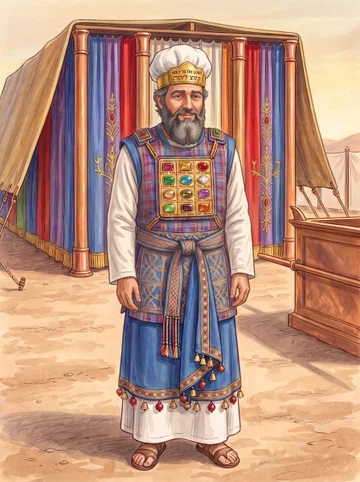
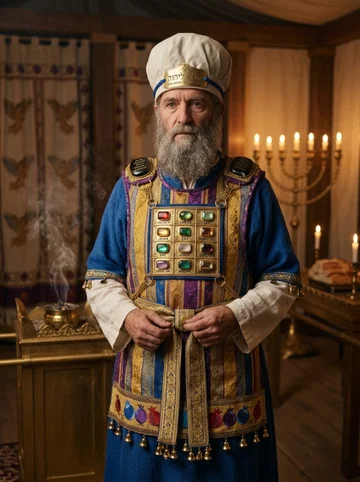
The engraved plate of pure gold was to be fastened on the front of the high priest's white linen miter as a crown-like sign of consecration to God.Ms 109, 1899, par. 11–12EW 213.1PP 351.3 It signifies that sin is taken away and pardoned, and that the priest is clothed in Christ's righteousness and made fit to minister before God in obedience to His ways.PK 584.2Lt 68, 1900, par. 14–16Ms 70, 1902, par. 19–22RH Aug 20, 1901 It points to Christ as the true High Priest over His house, bearing the divine name and the names of His people, whose ministration passed into the most holy place to cleanse the sanctuary at the close of the prophetic periods.EW 213.1Lt 97, 1898, par. 8–9 It is the motto for a life wholly surrendered to God, in which all powers, business, and service are set apart for His holy purpose and marked by purity, faithfulness, and diligence.Lt 107, 1900, par. 13–14RH Jun 24, 1902Ms 39, 1900, par. 16RH Jul 2, 1901Lt 21, 1897, par. 33–34 It will become the inscription placed by Jesus Himself upon every overcomer's crown of glory at entrance into the city of God as the emblem of victory and consecration.GC 645.3GC88 645.3
The Golden Plate Described
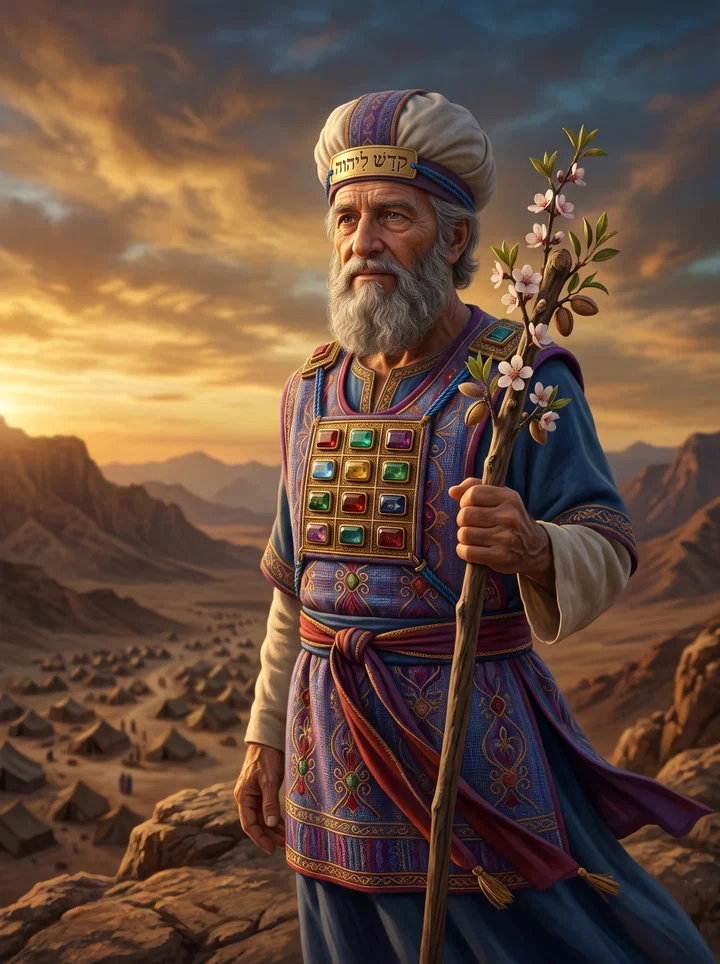
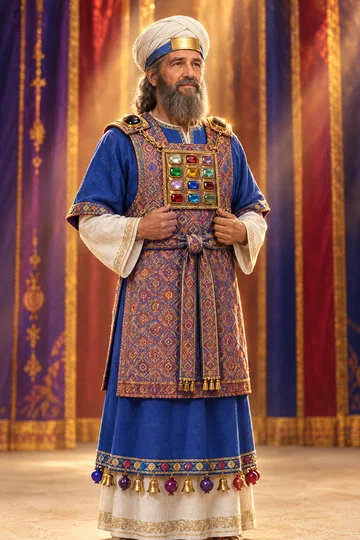
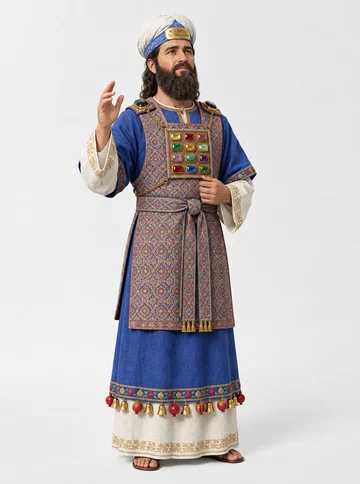
The command is to fashion a plate of pure gold and engrave upon it, like the engravings of a signet, the words holiness to the Lord.Ms 109, 1899, par. 11–12PP 351.3 It was to be set on the front of the high priest's miter, which was a turban of white linen, and fastened there by a lace of blue.Ms 109, 1899, par. 11–12PP 351.3 Worn on the head as part of the precious garments, it had the appearance of a crown, seen together with the robe with a bell and a pomegranate around the hem and the breastplate with engraved names glittering like diamonds.EW 213.1PP 351.3 The inscription stands for the purity and holiness required in appointed service, so that those who minister uphold those standards and give an ennobling representation of the work.Ms 109, 1899, par. 11–12PP 351.3
The plate belongs to distinct and detailed instructions specifying the particular garments to be worn for doing service in the holy place and ministering in the priest's office, with clothing made in accordance with the work.GW92 162.2GW92 161.1Ms 56, 1900, par. 11–12 That dress was symbolic of the service, and the dress of followers is likewise to symbolize their service and represent Christ in all things.GW92 161.1Ms 56, 1900, par. 11–12 Clothing connected with worship could honor or dishonor God, requiring order and cleanliness in everything.GW92 161.12T 610.3–612.1 The laver stood between the altar and the congregation, where priests washed their hands and their feet in sight of the people before coming into the presence of God.GW92 162.2 This, with all connected with priestly apparel and deportment, was to impress beholders with the holiness of God, the sacredness of His worship, and the purity required of those who come into His presence, giving an exalted sense of God and His work through cleanliness, order, and reverence in clothing and conduct.GW92 162.22T 610.3–612.1PP 351.3 It taught that every particle of dust must be put away before going into God's presence, because God is so high and holy that failure to meet these conditions would bring death.GW92 162.2
The instruction was given by Christ enshrouded in the pillar of cloud while educating His church in the wilderness.Ms 92, 1899, par. 10–12 It sets forth the outline of the expressed will of God and the laws of His kingdom for conducting life as a citizen of heaven for present and eternal good.Ms 92, 1899, par. 10–12 It states the covenant with the people He is seeking to save, gives the terms of salvation, and provides the education of most value for knowing the only true God and Jesus Christ whom He has sent.Ms 92, 1899, par. 10–12 It is to be kept as the definite object before students, giving correct lessons for mental discipline that come to knowledge only by practical working out and that strengthen the mental powers for that knowledge.Ms 92, 1899, par. 10–12
Pardon and Priestly Ministry
The inscription of consecration borne on the priestly miter marked Joshua as one whose own sins and the sins of Israel had been pardoned, whose iniquity had been caused to pass away, and who had been clothed with Christ's imputed righteousness.PK 584.2Lt 68, 1900, par. 14–16Ms 70, 1902, par. 19–22RH Jan 2, 1908 That clothing followed the taking away of his filthy garments, for the holiness represented by the miter belongs to the righteousness God gives only after sin is removed.PK 584.2Lt 68, 1900, par. 14–16 So attired, Joshua was qualified to minister before God in His sanctuary despite his former transgressions.PK 584.2Ms 70, 1902, par. 19–22RH Jan 2, 1908
The filthy garments of disobedience and transgression are first taken away rather than covered over, and then the punished, repenting people are clothed by Christ with His own garments of righteousness.RH Aug 20, 1901 Those garments were bought with a price, and acceptance comes through the righteousness of One who resisted every art of the enemy.RH Aug 20, 1901 The fair miter with its gold plate is set upon the head of the one thus given a change of raiment.RH Aug 20, 1901 That gift is given on condition of walking in God's ways and keeping His charge, with the promise of judging His house and keeping His courts and of having places to walk among those standing by.RH Aug 20, 1901
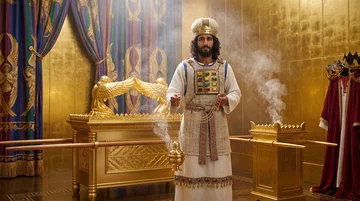
The same plate marks Christ as the true High Priest over His own house, bearing the name of Jehovah upon His miter while bearing the name of Israel upon His breastplate.Lt 97, 1898, par. 8–9 He is greater than Moses who served in the house and higher than the highest angel, for He was the invisible Leader of Israel in the wilderness enshrouded in the pillar of cloud by day and the pillar of fire by night, the angel of the covenant come in the name of God.Lt 97, 1898, par. 8–9 He took humanity that humanity might touch humanity, humbling Himself in the form of man and becoming a servant, yet remaining as Son of God and Majesty of heaven exalted above the angels, so that by His life in humanity men may become partakers of the divine nature.Lt 97, 1898, par. 8–9 This priestly attire was seen when Jesus ended His ministration in the holy place and closed the door of that apartment at the close of the prophetic periods in 1844.EW 213.1 Attired in the precious garments with the headpiece having the appearance of a crown, together with the robe bordered with bell and pomegranate and the breastplate with engraved names glittering like diamonds, He passed, surrounded by angels in a flaming chariot, within the second veil into the most holy place to cleanse the sanctuary and make a special atonement for Israel.EW 213.1
Holiness in Life and Victory
The inscription on the golden plate defines the character of Christ's earthly life and is to characterize the lives of His followers.RH Jun 24, 1902Ms 39, 1900, par. 16 Those who serve God are to work with unselfishness and faithfulness, and their work and business dealings are to be marked by intelligence and purity.RH Jun 24, 1902Ms 39, 1900, par. 16 There is no place in such a life for dishonest acts or injustice.RH Jun 24, 1902Ms 39, 1900, par. 16
It is the motto for every department of work, including business and trade as well as ministry and religious service, which is to bear heaven's signature.RH Oct 5, 1905Ms 81, 1900, par. 17 Those who serve are to strive for perfection and become complete in Christ.RH Oct 5, 1905 Their work is to be carried out with regularity, propriety, fidelity, dispatch, diligence, and striving for completeness.Ms 81, 1900, par. 17Ms 163, 1902, par. 20
As the motto for a life wholly surrendered to Christ, it means recognizing that one's powers, influence, wealth, abilities, and whole self belong to God and are set apart for His holy purpose to be used in cooperation with Him.Lt 107, 1900, par. 13–14Lt 21, 1897, par. 33–34Ms 21, 1911, par. 14 It means giving oneself unreservedly to the Saviour in unselfish service and serving God with the energies of the whole being, with the whole mind, heart, soul, and strength.RH Jul 2, 1901Ms 21, 1911, par. 14 Such consecration makes every act in business, ministry, or any trade and appointed post of duty a sacred act of consecrated service, marked by gentleness, kindness, and courtesy.Lt 107, 1900, par. 13–14RH Jul 2, 1901 While living under Christ the person is trained for the courts above and for a higher grade.RH Jul 2, 1901Ms 21, 1911, par. 14 It means the grace of Christ disciplining the whole human fabric, so that mind, strength, body as well as soul partake of the divine nature as His purchased possession because He made all and redeemed all.Lt 12, 1897, par. 13 In this way the inscription comes to be upon God's saints and even upon the common temporal things connected with them, and upon every work of the church through faithful improvement of entrusted talents and conferred privileges, placing the church on vantage ground with the entire life glorifying God and the Lord glorified in His saints.Lt 12, 1897, par. 13Ms 8, 1889, par. 8
It is displayed on the Christians' white banner of purity and holiness, standing for a commitment held firmly through persecution and refused to be surrendered to idolatry or compromise.SG1 105.2–3 It will become the inscription on every overcomer's crown of glory at entrance into the city of God.GC 645.3GC88 645.3 Jesus Himself with His own right hand will place such a crown on each redeemed person as the emblem of victory, the insignia of royal state, and the mark of consecration to God.GC 645.3GC88 645.3 Each crown will also bear that person's own new name, while into every hand will be placed the victor's palm and the shining harp.GC 645.3
Sources
Pioneers and periodicals
60 sources
God appointed a pure gold plate engraved like a signet to be worn on the front of the high priest's linen mitre on his forehead, fastened with a blue lace.RH Sep 16, 1852ST Nov 12, 1894 It declared purity and complete setting apart and consecration to God and His service as a symbol of character.RH Jul 26, 1864ST Jan 9, 1893RH Jan 13, 1859ST Dec 16, 1897 Worn there it marked his office of continually bearing the failure attached even to Israel's holy gifts so they could be accepted before God, showing that acceptance depends on the work of the great High Priest.ST Jun 12, 1884ST Apr 26, 1883RH Aug 28, 1860RH Sep 16, 1852 It is a type of Christ, who continually bears iniquity so that believers convicted of sinfulness are accepted and kept alive with Him, and who clothes repenting sinners in imputed righteousness to minister in obedience.RH Aug 20, 1901RH Jan 2, 1908RH Aug 28, 1860 That same dedication must become the motto and character of His followers, engraved on the heart and seen in humble loving conduct, in every post of duty, business transaction, and family, and in the church's worship and work.RH Oct 5, 1905RH Jun 24, 1902RH Jul 2, 1901RH Mar 22, 1860RH Oct 14, 1915
Sanctuary Context and History
The appointment belongs to the special dress prepared for the priests according to their priestly office, and it is to be studied carefully together with the services connected with their consecration given in the next chapter.ST Nov 12, 1894
It belongs to the minute and detailed instructions for the tabernacle and its furniture, the sanctuary services, and the priesthood to minister before the ark, which God gave to Moses during his forty days and nights stay on Mount Sinai.ST Mar 25, 1889RH Dec 31, 1861ST Dec 10, 1896 Those instructions formed the system of legal ordinances provided for the guidance of the ransomed people bound to Jehovah by solemn covenant, given before the building was set up.ST Dec 10, 1896 They show God's care for what concerns worship, whose purpose is to bring people into harmony with His holy law.ST Mar 25, 1889 In that forty-days period God ordained the sanctuary and the priesthood that would minister before the ark containing the law.RH Dec 31, 1861
It is part of the very minute description in Exodus 25-40 of the worldly sanctuary built in the days of Moses exactly according to the pattern shown in the mount.ST Oct 29, 1894ST May 16, 1878RH Jan 4, 1870 That sanctuary was composed of two apartments separated by a veil, the holy place twenty cubits long, ten cubits wide and ten cubits high, and the most holy place ten cubits in each dimension and half as large as the holy place.ST Oct 29, 1894 Its sides and west end were of acacia wood boards overlaid with gold, secured below by tenons fitted into silver sockets weighing a talent each and held above by bars through rings on the boards.ST Oct 29, 1894 The sanctuary and its sacred furnishings and vessels made according to the heavenly pattern serve as a model of the heavenly temple.ST May 16, 1878RH Jan 4, 1870
It is part of the explicit directions in Exodus 25-31 for the inner tabernacle erected by Israel in the wilderness, afterward carried out just as God directed in Exodus 35-40 with the ark and all its furniture and equipment.ST Jun 19, 1907ST Jan 27, 1909ST Jan 31, 1911 That building is what the word sanctuary generally means, and Solomon's temple later took the place of the portable tabernacle.ST Jun 19, 1907 All earthly worship and service revolved around and centered in the holy of holies where the ark of the covenant containing God's holy law written on tables of stone rested with the mercy-seat over it.ST Jun 19, 1907ST Jan 27, 1909 There the law and its Sabbath commandment held a uniquely sacred place, with the law kept in the ark in the most holy place, while the sanctuary services addressed the people's transgressions of that law through sin offerings and atonement.RH Jun 21, 1864 God placed His Spirit upon the builders Bezalel and Oholiab with other devoted men and women so the building would be properly erected and the work properly done, showing He is just as willing to bless workers in material things who are consecrated to Him as workers in spiritual things.ST Jan 27, 1909 When completed, wonderful blessing and glory came down upon the congregation and the building, and the manifestation of God's glory showed He accepted the people's repentance.ST Jan 27, 1909ST Jan 31, 1911
The detailed instructions for preparing the sanctuary and its services make the sanctuary an earthly object lesson of God's plan of government and salvation from sin. God's people take part in this work, cooperating with God through Christ in the sanctuary. The full description from Exodus 25 to the end of the book must be read carefully to learn the exact form of the two kinds of ceremonies done by different persons at different times in separate apartments for the errors of the people pointing to the remedy for sin.ST Mar 10, 1898
The earthly sanctuary with its priestly garments was a pattern of Christ's ministry in the two holy places of the heavenly sanctuary.ST Jun 26, 1907RH Mar 8, 1870 The ancient tabernacle was built for ministry involving sacrifices and offerings, and the earthly sanctuary and its rites were object lessons pointing to Christ, whose power forgives sin and transforms character.ST Jan 24, 1911ST Jun 26, 1907 That typical service and system passed away and ended when Christ died once for all, and Jesus now ministers in the heavenly temple where the sanctuary it represented is.ST Jan 24, 1911ST Jun 26, 1907
The appointment belongs not to the Ten Commandments spoken by God directly from Sinai and written by Him on the two tables of stone with nothing added, but to the additional instruction given through Moses during the forty days in the mount.ST Apr 15, 1886 It was recorded chiefly in Exodus 25-30 and Leviticus and is set forth in Exodus 20-40 and Leviticus, belonging to the law of Moses commanded in Horeb which God calls His people to remember in the last days.ST Apr 15, 1886 It stands together with the Ten Commandments and all the precepts, statutes and judgments under that one law, as part of the precepts, statutes and laws delivered by the hand of Moses.ST Apr 15, 1886 It consists of burdensome ceremonies and carnal ordinances such as required pilgrimages, circumcision, and diverse washings, imposed until the time of reformation, which were a yoke which neither the fathers nor their children were able to bear.ST Apr 15, 1886 It is among the laws revealing offerings, sacrifices and types, shadows of the old dispensation from which the substance of the new dispensation is traced. The Levitical priesthood to which it belongs was appointed after the Ten Commandments were given and was set apart to minister before the ark containing the two tables of the law in the most holy place of the typical sanctuary while that sanctuary continued, thereby distinguishing the Levitical system from the moral law.ST Mar 22, 1883ST Mar 22, 1883RH Dec 12, 1854
Priestly Garment and Inscription
A plate of pure gold was to be made and engraved like the engravings of a signet with HOLINESS TO THE LORD, called the holy crown, worn on the front of the mitre on the high priest's forehead.RH Sep 16, 1852ST Nov 12, 1894 It was fastened with a blue lace to the linen turban, described as the white bonnet or fair mitre.ST Nov 12, 1894ST Dec 17, 1912 Like the other priestly garments it was to be worn only when officiating in the work of the sanctuary.ST Dec 17, 1912
The priestly clothing was significant of calling and purpose. The plate of pure gold inscribed HOLINESS TO THE LORD was suspended before the breast by chains fastened to the gold settings on the shoulders of the linen ephod worn over the high priest's long white coat. With it were the names of the twelve tribes in four rows with three names in each row, and the Urim and Thummim were also placed there in unknown form. Aaron's official attire included distinctive badges and equipment not worn by the other priests, while the priests' pure white linen signified the purity of their priestly character and work.RH Dec 8, 1910
On the great Day of Atonement the high priest laid aside the splendid dress prescribed for other occasions and entered the most holy place in the plainest and humblest dress.RH Jan 11, 1870ST Jun 6, 1878 That laying aside solemnly admonished that he was high priest only in a typical sense and not in reality.RH Jan 11, 1870ST Jun 6, 1878 It impressed his infirmity and sinfulness, with his sin-offering for himself, so that part of his service cannot typify the sinless work of Christ.RH Jan 11, 1870ST Jun 6, 1878
The mitre with its gold plate was specially designed for bearing the iniquity of the holy things.ST Apr 26, 1883 It was worn as the high priest entered the Most Holy Place to make atonement and cleanse Israel, marking his role in bearing the iniquities of the holy things.RH Sep 16, 1852 He changed this mitre with the rest of his garments after completing his intercession for Israel on the Day of Atonement.ST Apr 26, 1883
Even the apparel and appearance for sacred service were specified by God to teach reverence, showing He is holy and His work sacred.RH Oct 30, 1913ST Nov 12, 1894 The priests' clothing and conduct were to impress God's holiness, the sacredness of worship, and the purity required of those coming into His presence.ST Nov 12, 1894 The gold plate engraved HOLINESS TO THE LORD shows that this service was sacred and required care in every detail, and God does not accept carelessness in His work.ST Mar 15, 1883
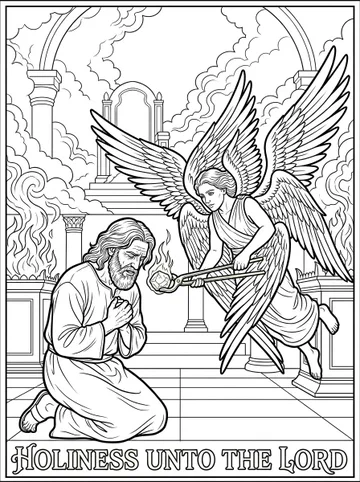
The consecration of the priest by the inscription on his mitre cannot make common fire sacred.ST God's precepts and institutions are holy, and He accepts no substitutes for them nor permits unholy conduct in sacred service.STST Aug 13, 1896 The golden plate on the mitre was engraved with the name of God, whose sacred office represented by the priestly garments was recognized when Alexander honored the name and greeted the high priest.ST Jun 25, 1902
Atonement Through High Priest
The engraved plate on Aaron's forehead shows that the high priest continually bore the iniquity attaching even to Israel's holy gifts so that they might be accepted before God.ST Jun 12, 1884RH Aug 28, 1860 Even prayers and other holy acts carry iniquity and are far from atoning for remaining sin, so acceptance depends on the work of the great High Priest.ST Jun 12, 1884RH Aug 28, 1860 The plate is a type of Christ as the great High Priest, whom believers need every moment as they daily see more of their own sinfulness in the divine mirror of the law.RH Aug 28, 1860 As Aaron bore the iniquity of the holy gifts, so Christ continually bears it that believers may be accepted.RH Aug 28, 1860 After the law brings sinners to Christ for justification, it has the further office of keeping them alive with Him by continually sending them to Him, while Christ in turn endears the law to them.RH Aug 28, 1860
A gift dedicated to God becomes holy when offered to Him as marked by the inscription, even one associated with wrongdoing such as double dealing. That consecrated offering represents Jesus Christ. Holiness to the Lord is the great doctrine of God's law, which keeps holiness in view through all its commands and ordinances calling people to love God wholly and neighbor as self.ST Apr 3, 1879 Because souls are polluted and tend toward pollution, the law makes sin known while the gospel provides its cure, and Christ is the end of the law for righteousness to believers.ST Apr 3, 1879
The same inscription was set on the fair mitre placed on Joshua the high priest's head after his filthy garments of disobedience and transgression were taken away rather than covered over, his iniquity was caused to pass from him, and he was clothed with change of raiment.RH Aug 20, 1901 Clothed in Christ's imputed righteousness bought with a price, the punished repenting people are accepted through One who resisted every art of the enemy.RH Aug 20, 1901 So clothed, Joshua was qualified to minister in God's sanctuary despite former transgressions.RH Aug 20, 1901RH Jan 2, 1908 The holy inscription was given on condition of obedience, walking in God's ways and keeping His charge, with promise of judging His house, keeping His courts, and having places to walk among those that stand by.RH Aug 20, 1901
Meaning of Holiness
Sanctification is setting apart or consecrating to a sacred or religious use, and in this sense the priests and the sanctuary and its utensils were sanctified.RH Jul 26, 1864 The engraving declares something set apart as holy to God, expressing purity and complete consecration to God and His service.RH Jan 13, 1859ST Dec 16, 1897 It stands as a symbol of character, declaring that holiness belongs to the Lord.ST Jan 9, 1893
The inscription names entire sanctification, called holiness to the Lord, whose biblical declarations are plain, positive and unmistakable.RH Jul 6, 1868 That holiness is not gained in human strength, wisdom or grace, for of these there is none, and nothing is too hard for the Lord to sanctify the soul wholly now.RH Jul 6, 1868 The claim that it is too hard for God to make a person holy now comes from Satan and the carnal, unbelieving, unsanctified heart, an idea that has floated around in the church from age to age though refuted again and again.RH Jul 6, 1868 It is a blessed theme of full salvation, and the holy fervor once kindled is to be kept alive rather than lost.RH Jan 13, 1859
The phrase alone does not make profession evidence of loyalty to God's government when used by those who profess holiness while opposing God's law.ST Oct 11, 1883 Like the Sabbath which bears God's image and superscription, keeping holy concerns the soul and its motives and is a spiritual duty owed to God, so civil governments cannot compel true holiness or enforce it.ST Oct 23, 1893 The words also picture the holiness that characterizes eternal life, suited to an unending state in which every desire is holy and sin, sorrow and death are absent.ST Nov 27, 1884
Daily Life Application
The inscription furnishes the motto, banner and watchword for the church, marking a people rising under the influence of the Spirit of God.RH Dec 29, 1859RH Jul 2, 1867ST Jul 10, 1893 It calls to courage and holy living and full consecration, lived out in renewed dedication, Sabbath meetings, preaching, prayer and conference meetings, the felt power of God, the reclaiming of backsliders, and deep religious feeling in the neighborhood.RH Dec 29, 1859RH Jul 2, 1867ST Jul 10, 1893 It is kept by living as strangers and pilgrims on earth as soldiers for Christ under Christ as Captain in repentance toward God and faith in the Lord Jesus Christ, and without it no one shall see God. It means a life of holiness preparing to meet Jesus at His near coming, sustained only as the Lord sustains in answer to prayer and as dependence rests on His sanctifying power upon scattered believers.RH Dec 29, 1859RH Dec 25, 1856
It defines the character of Christ's earthly life and what must characterize His followers in every appointed post of duty in ministry or in any trade.RH Oct 5, 1905RH Jun 24, 1902RH Jul 2, 1901 It means giving self unreservedly to the Saviour in unselfish faithful service with the energies of the whole being, realizing Christ is owner, striving for perfection and becoming complete in Christ.RH Oct 5, 1905RH Jun 24, 1902RH Jul 2, 1901 Those who serve are to work with intelligence and purity, with no place for dishonest acts or injustice, becoming kind and gentle and courteous and making every act an act of consecration while Christ trains for the courts above.RH Jun 24, 1902RH Jul 2, 1901 Every department of work, including business and religious service, is thus to bear heaven's signature.RH Oct 5, 1905RH Jun 24, 1902
The same dedication must be written upon every business transaction in contact with the world, so that business life is pure and holy and shows God's presence in the life.RH Oct 14, 1915 So lived, daily conduct reveals gospel truth and glorifies the Father.RH Oct 14, 1915 It must be engraved on the heart and evermore characterize conversation.RH Dec 27, 1855RH Aug 17, 1869 It is to be inscribed on every act of life, which requires a pure heart cleansed from all pride and self and sin in order to see God.RH Dec 27, 1855RH Aug 17, 1869
Inwardly it means cleansing where all love of the world is destroyed, all selfishness extirpated, pride banished, unbelief removed, all idols dethroned, and everything hostile to holiness and opposed to the divine will crucified.RH Dec 27, 1855 It is given in answer to hungering and thirsting prayer to be visited and filled with the Holy Ghost, in full surrender giving up all to God to be sealed forever His and made clean.RH Dec 27, 1855 It brings calm and love and peace and joy in the Holy Ghost, full assurance of acceptance, and Christ living and reigning within without a rival.RH Dec 27, 1855 The holiness stamped on the brow so all may read it comes from being much alone with Jesus.ST Feb 3, 1914
That hidden fellowship appears in humility and gentleness and love in all dealings, in passing few judgments on others and many more on self, and in calm resignation and joyful submission to all God's dealings.ST Feb 3, 1914 Being alone with Jesus is a sweet and holy refuge from Satan's charges, the world's accusations, and life's sorrows, where the heart unfolds itself to infinite love, tenderness and compassion.ST Feb 3, 1914 It makes the passage to glory sunshine whether through death or through the clouds of heaven.ST Feb 3, 1914 As the dedication placed on the sacred vessels, so the same consecration accepted by God must beam forth from all the life of one separated unto Himself, made visible on hand and lip and heart.ST Dec 21, 1888RH Mar 22, 1870
Then the round of humble everyday toil is lifted out of drudgery into service for God, filling life with joy and weaning it from unhallowed pleasures, and lives marked on the forehead are known as devoted to God.ST Dec 21, 1888RH Mar 22, 1870 The dedication is to be written upon every member of the family, meaning salvation of the entire household to God's glory with every heart possessing the meek and quiet spirit precious in God's sight.RH Mar 22, 1860 It is sought by earnest prayer, with gratitude for great things already done and rich grace already shown, and with confident expectation that greater blessings remain in reserve to be poured out as soon as the family is prepared to receive them.RH Mar 22, 1860
It is the standard for the publishing work, meaning those connected with it must truly live up to that holiness, which is possible only as the Lord sustains in answer to prayer.RH Dec 25, 1856 It is a motto for a life devoted to God and striving for Christian perfection.RH Dec 25, 1856RH Sep 22, 1859 It marks serious ministerial conduct, calling ministers to avoid lightness, jesting and foolish talk.RH Sep 22, 1859RH Apr 14, 1874
Sources