Exodus 28:4
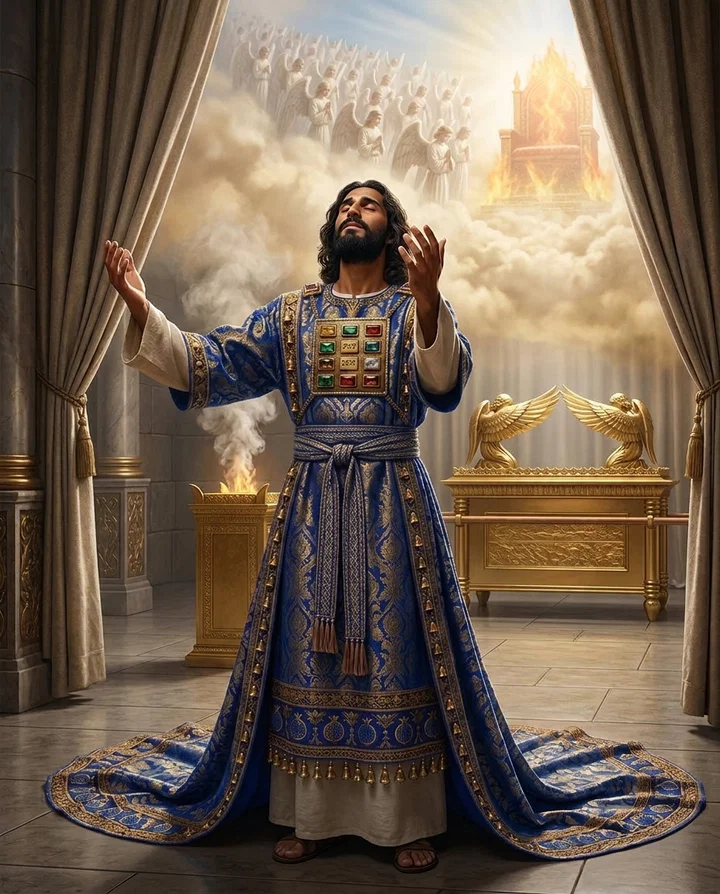
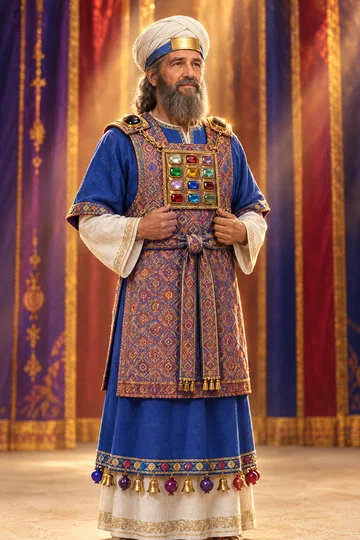
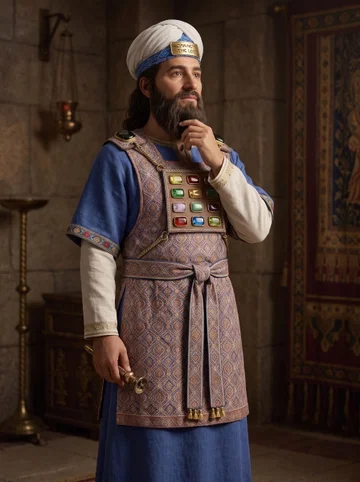
And these are the garments which they shall make; a breastplate, and an ephod, and a robe, and a broidered coat, a mitre, and a girdle: and they shall make holy garments for Aaron thy brother, and his sons, that he may minister unto me in the priest’s office.
Translations
And these are the garments which they shall make; a breastplate, and an ephod, and a robe, and a broidered coat, a turban, and a girdle: and they shall make holy garments for Aaron your brother, and his sons, that he may minister to me in the priest’s office.
King James Version, KJV Cambridge Paragraph Bible
And these are the garments which they shall make; a breastplate, and an ephod, and a robe, and a broidered coat, a mitre, and a girdle: and they shall make holy garments for Aaron thy brother, and his sons, that he may minister unto me in the priest’s office.
And these are the garments which they shall make; a breast-plate, and an ephod, and a robe, and a broidered coat, a miter, and a girdle; and they shall make holy garments for Aaron thy brother, and his sons, that he may minister to me in the priest's office.
And these are the garments which they shall make; a breastplate, and an ephod, and a robe, and a coat of chequer work, a mitre, and a girdle: and they shall make holy garments for Aaron thy brother, and his sons, that he may minister unto me in the priest’s office.
And these are the garments which they shall make: a breastplate, and an ephod, and a robe, and a coat of checker work, a mitre, and a girdle: and they shall make holy garments for Aaron thy brother, and his sons, that he may minister unto me in the priest’s office.
'And these [are] the garments which they make: a breastplate, and an ephod, and an upper robe, and an embroidered coat, a mitre, and a girdle; yea, they have made holy garments for Aaron thy brother, and for his sons, for his being priest to Me.
And these are the garments which they shall make: a breastplate, and an ephod, and a cloak, and a checkered vest, a turban, and a girdle; and they shall make holy garments for Aaron thy brother, and his sons, that he may serve me as priest.
These, therefore are the garments which they shall make—a breastpiece, and an ephod and a robe, and a tunic of checker work, a turban and a girdle,—so shall they make holy garments for Aaron thy brother and for his sons, for ministering as priests unto me.
Berean Standard Bible, Majority Standard Bible
These are the garments that they shall make: a breastpiece, an ephod, a robe, a woven tunic, a turban, and a sash. They are to make these holy garments for your brother Aaron and his sons, so that they may serve Me as priests.
These are the garments which they shall make: a breastplate, an ephod, a robe, a fitted tunic, a turban, and a sash. They shall make holy garments for Aaron your brother and his sons, that he may minister to me in the priest’s office.
This is what they are to make: a priest's bag, an ephod, and a robe, and a coat of coloured needlework, a head-dress, and a linen band; they are to make holy robes for Aaron your brother and for his sons, so that they may do the work of priests for me.
Nowe these shall be the garments, which they shall make, a brest plate, and an Ephod, and a robe, and a broydred coate, a miter, and a girdle. so these holy garments shall they make for Aaron thy brother, and for his sonnes, that he may serue me in the Priests office.
Douay-Rheims (Challoner revision)
And these shall be the vestments that they shall make: A rational and an ephod, a tunick and a strait linen garment, a mitre and a girdle. They shall make the holy vestments for thy brother Aaron and his sons, that they may do the office of priesthood unto me.
Pictures
Cross-references 20 of 27
- Exodus 29:1-9
And this is the thing that thou shalt do unto them to hallow them, to minister unto me in the priest’s office: Take one young bullock, and two rams without blemish,
Sets apart Aaron and his sons for priestly service.
- Hebrews 8:5
Who serve unto the example and shadow of heavenly things, as Moses was admonished of God when he was about to make the tabernacle: for, See, saith he, that thou make all things according to the pattern shewed to thee in the mount.
Aaron’s earthly priestly garments belong to a service patterned after heavenly things.
- Exodus 30:19-21
For Aaron and his sons shall wash their hands and their feet thereat:
Priests washed their hands and feet before ministering in the sanctuary.
- Leviticus 8:1-13
And the LORD spake unto Moses, saying,
Describes the consecration of Aaron and his sons for sanctuary service.
- Hebrews 8:1-2
Now of the things which we have spoken this is the sum: We have such an high priest, who is set on the right hand of the throne of the Majesty in the heavens;
Christ ministers as high priest in the true heavenly sanctuary.
- Hebrews 9:23-24
It was therefore necessary that the patterns of things in the heavens should be purified with these; but the heavenly things themselves with better sacrifices than these.
Earthly holy places are figures of the heavenly sanctuary where Christ ministers for us.
- Hebrews 7:11
If therefore perfection were by the Levitical priesthood, ( for under it the people received the law,) what further need was there that another priest should rise after the order of Melchisedec, and not be called after the order of Aaron?
Connects the Levitical priesthood appointed in Exodus with the priesthood contrasted with Christ’s ministry.
- Hebrews 9:6-7
Now when these things were thus ordained, the priests went always into the first tabernacle, accomplishing the service of God.
Summarizes the priests’ regular service and the high priest’s yearly entry.
- Exodus 28:15-21
And thou shalt make the breastplate of judgment with cunning work; after the work of the ephod thou shalt make it; of gold, of blue, and of purple, and of scarlet, and of fine twined linen, shalt thou make it.
Describes the high priest’s breastplate and the names it bears.
- Leviticus 16:4
He shall put on the holy linen coat, and he shall have the linen breeches upon his flesh, and shall be girded with a linen girdle, and with the linen mitre shall he be attired: these are holy garments; therefore shall he wash his flesh in water, and so put them on.
Contrasts the high priest’s plain linen Day of Atonement clothing with his prescribed splendid garments.
- Exodus 28:36-38
And thou shalt make a plate of pure gold, and grave upon it, like the engravings of a signet, HOLINESS TO THE LORD.
The high priest’s mitre bears the inscription “Holiness to the Lord.”
- Hebrews 9:11
But Christ being come an high priest of good things to come, by a greater and more perfect tabernacle, not made with hands, that is to say, not of this building;
Christ's greater priestly work contrasts with the earthly service.
- Exodus 31:1-6
And the LORD spake unto Moses, saying,
God’s Spirit equips the sanctuary builders.
- Hebrews 9:1-5
Then verily the first covenant had also ordinances of divine service, and a worldly sanctuary.
Describes the first-covenant sanctuary and its furnishings.
- Exodus 39
And of the blue, and purple, and scarlet, they made cloths of service, to do service in the holy place, and made the holy garments for Aaron; as the LORD commanded Moses.
Both describe the making of Aaron’s holy garments for service in the sanctuary.
- Exodus 28:29
And Aaron shall bear the names of the children of Israel in the breastplate of judgment upon his heart, when he goeth in unto the holy place, for a memorial before the LORD continually.
Aaron bears Israel’s names on his heart when entering the holy place.
- Exodus 28:33-35
And beneath upon the hem of it thou shalt make pomegranates of blue, and of purple, and of scarlet, round about the hem thereof; and bells of gold between them round about:
Prescribes bells and pomegranates on the robe’s hem.
- Exodus 36
Then wrought Bezaleel and Aholiab, and every wise hearted man, in whom the LORD put wisdom and understanding to know how to work all manner of work for the service of the sanctuary, according to all that the LORD had commanded.
Both texts concern the sanctuary and its service, including the garments made for priestly ministry.
- Leviticus 16:2
And the LORD said unto Moses, Speak unto Aaron thy brother, that he come not at all times into the holy place within the vail before the mercy seat, which is upon the ark; that he die not: for I will appear in the cloud upon the mercy seat.
Restricts Aaron’s entry beyond the veil into the holy place.
- Exodus 25:2-8
Speak unto the children of Israel, that they bring me an offering: of every man that giveth it willingly with his heart ye shall take my offering.
Describes the offering and the sanctuary made for God to dwell among Israel.
Commentary
Each commentary is drawn from primary sources: the writings of Ellen G. White and Adventist pioneers and periodicals. Each commentary is separate. Its own words are not a quotation; follow the references to read the source passages.
Ellen G. White
13 sources
God distinctly specified holy garments in a particular style for Aaron and his sons, requiring them in order to minister in the priest's office and do service in the holy place.GW92 162.22T 610.3–612.12T 613.2 Every article was consecrated to a most solemn purpose to be whole and without blemish, clothing him with glory and beauty and fitting him to stand as a representative character for the nation of Israel.Ms 102, 1897, par. 9–10 The requirement taught that God and His work are holy, so that those who approach Him must be clean, orderly and reverent, putting away every defilement, since God is dishonored when His service is performed with neglectful appearance.GW92 162.2GW92 161.12T 610.3–612.1RH May 30, 1871RH May 30, 1871 The robes were symbolic of the character of Jesus Christ, showing that God has a preference concerning the dress of those who serve Him and that the dress of His followers should likewise witness in all things that they are His representatives.MYP 358.26T 96.2Ms 102, 1897, par. 9–10Ms 56, 1900, par. 11–12 The verse gives no sanction to changing apparel merely for fashion in order to appear like the world or to decorating the person with costly array, but calls for neatness, modesty and purity with ministers circumspect in apparel so their appearance upholds the sacred dignity of the ministry.MYP 358.26T 96.2RH May 30, 18716MR 158.2
Priestly Garments Commanded
The instruction is part of what Christ, enshrouded in the pillar of cloud, gave in educating His church in the wilderness in the laws of God's kingdom and how to conduct life in this world as a citizen of heaven.Ms 92, 1899, par. 10–12 It gives the outline of God's expressed will and His covenant with the people He is seeking to save, the terms of salvation, and the education of most value, bringing the highest knowledge after the divine similitude and working present and eternal good for those who take heed and habituate the mind to dwell upon and observe it.Ms 92, 1899, par. 10–12
God distinctly specified holy garments for Aaron and his sons in a particular style in accordance with their work, requiring them in order to do service in the holy place and minister in the priest's office.GW92 162.22T 610.3–612.12T 613.2RH May 30, 1871RH May 30, 1871 He prescribed the particular garments they were to wear when serving as priests, with very specific directions for every detail concerning the garments of those who ministered before Him.2T 610.3–612.12T 613.26T 96.2 The special directions about dress given to Moses were part of detailed instructions about everything connected with His service, even the arrangement of houses.GW92 161.1
Every article the high priest was to wear was specified to Moses in the mount and consecrated to a most solemn purpose.Ms 102, 1897, par. 9–10 Everything worn was to be whole and without blemish, covering him with glory and beauty, striking the people with awe, and making the dignity of the office appear.Ms 102, 1897, par. 9–10 When so clothed he was fitted for his holy official work and stood as a representative character for the nation of Israel, showing by his garments the glory that Israel as God's chosen people should reveal to the world.Ms 102, 1897, par. 9–10
The attire worn in the heavenly sanctuary corresponds to this priestly attire.EW 213.1 There the robe has bells and pomegranates, and a glittering breastplate hangs from the shoulders and bears names.EW 213.1
Holiness and Reverent Order
The holy garments were joined to the washing of hands and feet at the laver set between the altar and the congregation in full sight of the people, and together they taught that every particle of dust must be put away before coming into the presence of God.GW92 162.22T 613.2 God is so high and holy that failure to comply with this cleansing and clothing for service in the holy place and ministry in the priest's office would bring death.GW92 162.22T 613.2 The garments were prescribed in a particular style suited to the work of Aaron and his sons as priests, requiring reverent cleanliness in those who came before Him.GW92 162.22T 613.2
These requirements taught the people that God and His work are holy and that those who approach Him must put away impurity.2T 610.3–612.1RH May 30, 1871 Those who minister before Him and the work they perform must be clean, orderly, reverent, and free from impurity and defilement.2T 610.3–612.1RH May 30, 1871 The holy garments belonged to the order and reverence required in sacred service.2T 610.3–612.1RH May 30, 1871
God may be honored or dishonored by the apparel of those who officiate before Him.GW92 161.1RH May 30, 1871 Sacred work therefore demands outward order, neatness, cleanliness, and fitness, with order in everything and especially cleanliness.GW92 161.1RH May 30, 1871 This is because God is high and holy, and He is dishonored when His service is performed with neglectful appearance.GW92 161.1RH May 30, 1871
Every article the high priest wore was to be whole and without blemish, and a high priest who dared to appear and minister in holy office with a rent robe severed himself from God.Ms 102, 1897, par. 9–10 By that act he cut himself off from being a representative character and was virtually no longer accepted as an officiating priest.Ms 102, 1897, par. 9–10 He then showed only human passion and human imperfection.Ms 102, 1897, par. 9–10
Symbolic Witness in Dress
Aaron's robes were symbolic, for the specification of every detail of the garments of those who ministered before Him shows that He has a preference concerning the dress of those who serve Him and that dress matters in His service.MYP 358.26T 96.2Ms 56, 1900, par. 11–126MR 158.2 As those robes were symbolic, so the dress of Christ's followers is to be symbolic, showing in all things that they are His representatives and witnesses.MYP 358.26T 96.2Ms 56, 1900, par. 11–126MR 158.2 The beautiful official garments represented the character of the great antitype, Jesus Christ.Ms 102, 1897, par. 9–10
For Christ's sake there is to be no carelessness in dress but an effort to make the best of appearance, representing Him in neatness, modesty, and purity in every respect rather than seeking display.MYP 358.26T 96.26MR 158.2 The specification of holy garments gives no sanction to changing apparel merely for the sake of fashion in order to appear like the world.MYP 358.26T 96.26MR 158.2 Nor does it sanction decorating the person with costly array or expensive ornaments.MYP 358.26T 96.26MR 158.2
The requirement of holy garments in a particular style suited to the work means that sacred work demands outward order, neatness, cleanliness, and fitness.RH May 30, 1871 Applied to the present, Christian ministers who minister in sacred things must be circumspect in apparel, with person, hair, color, fit, and tastefulness in order.RH May 30, 1871 Their appearance is to agree with the truths they present and to uphold the sacred dignity and exalted character of the ministry, rather than bringing the sacred down to the level of common labor and wounding souls.RH May 30, 1871
Sources
Pioneers and periodicals
44 sources
God commanded six special holy garments to be made for Aaron and his sons to set them apart as consecrated priests to minister before Him.ST Jun 19, 1907RH May 21, 1857ST May 16, 1878 The minute detail of the command down to what the priests should wear shows how holy God is and how sacred, orderly and reverent everything connected with His worship must be.RH May 30, 1871ST Mar 25, 1889RH Oct 30, 1913 The earthly sanctuary, its priesthood and its splendid jeweled dress were a temporary shadow and object-lesson pointing to Christ and His ministry in the great temple on high.ST Jan 24, 1911ST Jun 26, 1907RH Mar 8, 1870 On the Day of Atonement the high priest laid aside those splendid garments for the plainest humble dress to enter the most holy place, solemnly showing his own sinfulness and that he was high priest only in type and not in reality.RH Jan 11, 1870RH Sep 16, 1852ST Jun 6, 1878 This priestly law of garments and offerings came after the Ten Commandments and belongs to the added ceremonial ordinances that pointed to Christ's once-for-all sacrifice and then passed away, so the exquisite costly array commanded for the Jewish high priest alone gives no permission for costly dress now.ST Apr 15, 1886ST Mar 22, 1883ST Mar 22, 1883ST Jul 8, 1886RH Jul 10, 1855
Setting in Exodus Story
Exodus 28:4 belongs to the minutely detailed instructions in Exodus 25-31 for the tabernacle, its furniture, and its services, continued in full description to the end of Exodus, for a sanctuary to be made exactly according to the pattern shown to Moses in the mount.ST May 20, 1880ST Oct 29, 1894ST Dec 10, 1896ST Mar 10, 1898 It is part of the detailed directions for making the wilderness sanctuary and its furnishings, specifying garments for Aaron and his sons so they can serve as priests.ST Jun 26, 1907ST Dec 10, 1896 The building and setting up of the sanctuary followed that instruction given to Moses on the mountain.ST Dec 10, 1896
Those instructions were given to Moses during his forty days and nights in the mountain with the tables of stone, after the Ten Commandments with other statutes were solemnly proclaimed and the book of the covenant was ratified, and before the sin of the golden calf, the renewal of the tables and covenant, and the preparation and fitting of the tabernacle that was set up on the first day of the first month of the second year from the Exodus.ST Mar 25, 1889 During that forty days on Sinai the priesthood was ordained to minister in the sanctuary before the ark containing God's law.RH Dec 31, 1861 The passage does not explain the garments it names.ST Mar 25, 1889
The passage stands in the chiefly legislative second division of Exodus in which the ransomed people redeemed from Egyptian bondage are bound to Jehovah by solemn covenant to preserve them as a peculiar treasure, a kingdom of priests, and a holy nation. Because long slavery had unfitted Israel to comprehend God's salvation and required character, God gave a great multiple object-lesson by forms and rites comprehending the plan of salvation, beginning with free-will offerings to make Him a sanctuary that He might dwell among them. That sanctuary where God would dwell among Israel and where the priests would minister in His presence was made as God's dwelling place among the Israelites, the place where Israel's worship centered and where God's glory was to dwell among the people.ST Feb 17, 1890ST Jun 4, 1885ST May 16, 1878
The tabernacle with its two holy places and its sacred vessels, made like the pattern shown in the mount, was Israel's earthly center of worship and established form of worship, and its services centered on the holy of holies, where God's law rested beneath the mercy seat.ST Jun 19, 1907RH Jan 20, 1916RH Jan 4, 1870 There Aaron and his sons served as priests, wearing holy garments that included a breastplate, ephod, robe, embroidered coat, mitre, and girdle, ministering in God's presence before the ark containing His law.ST Jun 19, 1907RH Dec 31, 1861ST May 16, 1878
The wonderfully itemized text of Exodus 25 to 31 rewards slow, careful, very thoughtful reading, with extreme exactness and minute detail about the priestly attire and profuse use of gold, silver, costly gems, and fine linen.ST Jun 10, 1908 The depths of all its meaning cannot be seen, all the reasons for its exactness cannot be fathomed, and the complete motive for its costly materials cannot be appreciated, yet study brings to the surface a multitude of invigorating and instructive ideas, suggestions, and lessons, serving as vitalizing food to strengthen famishing hearts and water of life to refresh worn spirits through long days.ST Jun 10, 1908 The instructions show how particular God was about what pertained to His worship, directing the sanctuary service down to what the priests should wear and how they should appear, with nothing too trifling to escape His notice, in directions for building the marvelously beautiful structure in Exodus 25-40 which specially endowed workmen were to build according to the divine pattern.ST Mar 25, 1889
Garments Described and Explained
These are the holy garments to be made for Aaron and his sons so that he may minister in the priest's office: a breastplate, and an ephod, and a robe, and a broidered coat, a mitre, and a girdle.ST Jun 19, 1907RH May 21, 1857ST May 16, 1878RH Sep 16, 1852RH Feb 3, 1853 They belong to the instructions for making the sanctuary and its sacred furnishings, where God would dwell among Israel and the priests would minister in His presence.ST Jun 19, 1907ST May 16, 1878 The sanctuary was Israel's earthly center of worship, and its services centered on the holy of holies, where God's law rested beneath the mercy seat.ST Jun 19, 1907 The earthly sanctuary's ministration was performed by this Levitical priesthood set apart to serve as priests.RH Sep 16, 1852RH Feb 3, 1853 On the annual atonement day Aaron was dressed in these garments as he entered the most holy place to make atonement for Israel.RH May 21, 1857RH Sep 16, 1852
They were special, richly made, splendid holy clothing that marked the priests as a separate, consecrated order appointed for ministry in the holy places of the earthly sanctuary.ST Nov 12, 1894RH Jan 12, 1911RH Jul 5, 1864ST Oct 4, 1899 The common priest wore a white linen robe, girdle, and turban, while the high priest wore additional garments over his long white coat or robe.ST Nov 12, 1894 Over it he wore a linen ephod, or cape, worked with gold, blue, purple, and scarlet. The high priest's many-colored robe, splendid and adorned with rich colors and jewels, recalls that description.RH Jul 5, 1864ST Oct 4, 1899
Gold settings on the ephod's shoulders held stones, and gold chains suspended the breastplate before him. The breastplate was called the breastplate of judgment, contained the names of all twelve tribes of Israel in four rows, and was worn on the high priest's heart, including on the great day of atonement.RH May 21, 1857 A place there was also for the Urim and Thummim, whose form is not specified. The mitre was a priestly head-dress with a gold plate in front engraved Holiness to the Lord.RH May 21, 1857 The priestly mitre and the kingly crown cannot be worn at the same time, nor priestly and kingly robes together before the ark and mercy-seat.RH May 21, 1857
Leaving shoes outside and washing hands and feet before service, with clean, orderly dress free from defilement, taught that all defilement must be put away before approaching God.ST Nov 12, 1894 The priesthood was restricted to Aaron's family, while the tribe of Levi was set apart for sanctuary service.ST Apr 1, 1913 The priest represented the people before God in matters concerning God.ST Apr 1, 1913 The position described is one of the two nearest the throne of God, held by the anointed cherub who covered.ST Aug 8, 1900
Type of Heavenly Ministry
The rites and objects of the wilderness sanctuary and the service of the Levitical priesthood in the earthly sanctuary before the ark that held the law were temporary, symbolic lessons that have passed away, an example and shadow pointing to Christ and His power to forgive sin and transform character, typifying the great temple on high where Jesus now ministers after suffering and dying once for all.ST Jan 24, 1911ST Jun 26, 1907RH Mar 8, 1870RH Jul 8, 1852RH Dec 12, 1854 The tabernacle with its two holy places and sacred vessels was made exactly like the pattern shown to Moses in the mount for a sanctuary that He might dwell among Israel and the priests might minister in His presence, and it is a pattern of the heavenly temple.RH Jan 4, 1870 Let down upon earth, it is the object-lesson that sets forth God's plan of government and how He deals with sin and with those who sought to dethrone Him, the plan devised from eternity for salvation from sin.
God's people are so intimately related to the sanctuary that they co-operate with God in His work through Christ in the sanctuary, the divine and the human co-operating in every step of making the sanctuary that He may dwell among them. God as priest upon the throne remains King even while executing the priest's office in dealing with sinners. Aaron's beauty in his splendid holy garments of rich colors and jewels points to the greater glory of Christ, the sinless High Priest who lives forever, unlike the sinful priest who dies and whose priesthood ends.RH Jul 5, 1864
The splendid holy garments of breastplate and ephod and robe and broidered coat and mitre and girdle were prescribed for Aaron and his sons for ordinary priestly ministry in the priest's office.RH Jan 11, 1870RH Sep 16, 1852ST Jun 6, 1878 On the great Day of Atonement the high priest laid that splendid dress aside and put on the plainest and humblest dress to enter the most holy place to make atonement for Israel.RH Jan 11, 1870RH Sep 16, 1852ST Jun 6, 1878 That laying aside solemnly admonished that he was high priest only in a typical, symbolic sense and not in reality, and was expressly designed to impress his infirmity and sinfulness as a sinful and imperfect man.RH Jan 11, 1870ST Jun 6, 1878 No part of that humbling, like the sin-offering for himself, typifies the work of Christ, so in that part of His work he could not represent Christ.RH Jan 11, 1870ST Jun 6, 1878
The breastplate was called the breastplate of judgment and contained the names of all twelve tribes of Israel and was worn on the high priest's heart on the great day of atonement, and the mitre was a priestly head-dress with a gold plate in front engraved Holiness to the Lord.RH May 21, 1857 The priestly mitre and the kingly crown cannot be worn at the same time, nor priestly and kingly robes together before the ark and mercy-seat.RH May 21, 1857 Christ as great High Priest therefore does not receive the kingdom and the crown in the first part of the antitypical Day of Atonement while mediatorial work is still going on in the second apartment, but only after mercy closes, when He lays aside the mitre and takes a golden crown.RH May 21, 1857 Those who held the other teaching held that Christ wears the mitre, girdle, and breastplate of judgment together with the crown, sword, and kingly robe all during the 1000 years after the marriage supper in the City and the destruction of the living wicked by Christ and the saints on white horses.RH May 21, 1857
The priestly and sacrificial system concerning flesh and offerings, constructed for ministration in sacrifices and offerings with the blood of bulls and goats, could not really take away sin but pointed to Jesus as the Lamb of God who takes away sin, bears sins in His own body on the tree, and put away sin by the sacrifice of Himself, so that eternal life comes by eating the flesh and drinking the blood of the Son of man.ST Jan 24, 1911ST Jul 8, 1886 Having found fulfillment in the body of Christ, the sacrifices were not to continue after Christ suffered once for all but were abolished in His flesh.ST Jan 24, 1911ST Jul 8, 1886
Law Covenant and Priesthood
The verse belongs to the law of Moses commanded through Moses in Horeb and included under the statutes and judgments of Malachi 4:4, set forth especially in Exodus 20 to 40 and in Leviticus. It is one of the laws revealing types and shadows of the old dispensation from which the substance of the new dispensation is traced, alongside the moral rules of conduct and the Ten Commandments. In the last days God's people are called to remember it as part of that law.
The holy garments belong to additional instruction given by the hand of Moses apart from the Ten Commandments, recorded chiefly in Exodus 25-30 and in Leviticus.ST Apr 15, 1886ST Jul 8, 1886 After God spoke the Ten Commandments from Sinai He added no more to what He spoke directly, and only what He spoke directly was written by Him on the two tables of stone.ST Apr 15, 1886 Because the people asked Moses to hear God for them, Moses spent forty days in the mount receiving additional instruction for them, and the prescription of holy priestly garments for Aaron and his sons for ministry in the priest's office belongs to that additional instruction.ST Apr 15, 1886ST Jul 8, 1886 That priestly and sacrificial system concerned flesh and offerings, and with its blood of bulls and goats could not really take away sin but pointed to Jesus as the Lamb of God who takes away sin, bears sins in His own body on the tree, and put away sin by the sacrifice of Himself, so that eternal life comes by eating the flesh and drinking the blood of the Son of man.ST Jul 8, 1886 The sacrifices were not to continue after Christ suffered once for all but were abolished in His flesh by finding their fulfillment in the body of Christ.ST Jul 8, 1886
The Ten Commandments were given before the Levitical priesthood was appointed, and the later Levitical law concerned priesthood, offerings, and related duties of flesh and offerings.ST Mar 22, 1883ST Mar 22, 1883 The appointment of that priesthood by directing the making of holy garments for Aaron and his sons so they could serve as priests came after Exodus 20, proving the Ten Commandments are distinct from the Levitical law received under that priesthood.ST Mar 22, 1883ST Mar 22, 1883ST Feb 20, 1879 The verse belongs to the law of ordinances, which was written out after the moral law when the record reaches Moses' time.ST May 6, 1875 These Mosaic requirements were burdensome ceremonies, diverse washings, and carnal ordinances imposed until the time of reformation, a yoke which neither the fathers nor their children were able to bear.ST Apr 15, 1886
The priests' garments and office belonged to a consecration setting them apart for sacred, religious use.RH Jul 26, 1864 Moses set apart the Levitical priesthood to minister before the ark in the typical sanctuary, and the earthly sanctuary's ministration was performed by this Levitical priesthood as long as that typical sanctuary continued.RH Dec 12, 1854RH Feb 3, 1853 The verse identifies Aaron and his sons as those set apart to serve as priests and names the holy garments made for that ministry.RH Feb 3, 1853
The priesthood was committed to Aaron and his sons to minister to God in the priest's office, so that after that appointment no one else is to perform the rites of a priest unless especially directed by the Lord.ST Mar 3, 1914 Saul had no such ordination and no such direction but had been instructed to wait at Gilgal till Samuel came to offer the sacrifices.ST Mar 3, 1914 His burnt offering after his victory over the Ammonites was therefore presumptuous disobedience from impatience and self-exaltation in the face of God's command to wait, though God fully knew the circumstances and dangers of the time.ST Mar 3, 1914
Worship Reverence and Dress
God specified particular holy garments for Aaron and his sons to wear while serving as priests and ministering in the priest's office.RH May 30, 1871RH Oct 30, 1913 The care and reverence shown in their dress taught the people that God is holy and that His service and everything connected with it are sacred.RH May 30, 1871RH Oct 30, 1913 He distinctly specified those holy garments in a particular style in accordance with their work, requiring them in order to do service in the holy place.RH May 30, 1871 That requirement means sacred work demands outward order, neatness, cleanliness and fitness, with those who minister before Him and the work they perform clean, orderly and free from defilement, because God is high and holy and is dishonored when His service is performed with neglectful appearance.RH May 30, 1871RH May 30, 1871 He directed the service of His sanctuary down to the smallest detail, telling what the priests should wear and how they should appear before Him, with nothing too trifling to escape His notice, which proves His work is sacred and important and He does not countenance carelessness or negligence, then or now, but requires all energy and ability, growing wisdom and skill, and consecrated best efforts, which He will accept and reward with the words Well done.ST Mar 15, 1883
Applied to the present, Christian ministers who minister in sacred things must be circumspect in apparel, with person, hair, color, fit and tastefulness in order.RH May 30, 1871 Their appearance must agree with the truths they present and uphold the sacred dignity and exalted character of the ministry.RH May 30, 1871 To do otherwise brings the sacred down to the level of common labor and wounds souls.RH May 30, 1871
The express command that Aaron and his successors in the high priesthood should be adorned in the most exquisite manner with gold and precious stones and costly array was for the Jewish high priest only and affects no other person, so it gives no permission for costly dress now.RH Jul 10, 1855 The Jews and Christians are under different dispensations, with the glory of the whole Mosaic dispensation chiefly visible and external while the glory of the Christian dispensation is invisible and spiritual.RH Jul 10, 1855 The instructions for making the sanctuary's holy garments, alongside directions for decorative figures and patterns in the sanctuary, show that crafted images and ornamentation could be used to beautify sacred spaces without violating the command against idolatry.ST Jul 1, 1897 The prohibition concerns making things to worship or reverence, not merely making them.ST Jul 1, 1897
Sources