Exodus 40:23
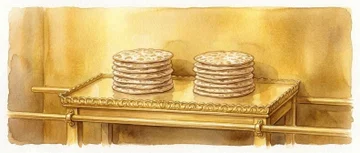
And he set the bread in order upon it before the LORD; as the LORD had commanded Moses.
Translations
And he set the bread in order on it before the LORD; as the LORD had commanded Moses.
King James Version, Webster Bible
And he set the bread in order upon it before the LORD; as the LORD had commanded Moses.
And he set the bread in order upon it before the Lord; as the Lord had commanded Moses.
And he set the bread in order upon it before the LORD; as the LORD commanded Moses.
And he set the bread in order upon it before Jehovah; as Jehovah commanded Moses.
and setteth in order upon it the arrangement of bread, before Jehovah, as Jehovah hath commanded Moses.
and arranged the bread in order upon it before Jehovah; as Jehovah had commanded Moses.
and set in order thereupon the arrangement of bread before Yahweh,—As Yahweh commanded Moses.
Berean Standard Bible, Majority Standard Bible
He arranged the bread on it before the LORD, just as the LORD had commanded him.
He set the bread in order on it before the LORD, as the LORD commanded Moses.
And he put the bread on it in order before the Lord, as the Lord had said.
And set the bread in order before the Lord, as the Lord had commanded Moses.
Douay-Rheims (Challoner revision)
Setting there in order the loaves of proposition, as the Lord had commanded Moses.
Pictures
Cross-references
- Hebrews 9:2
For there was a tabernacle made; the first, where in was the candlestick, and the table, and the shewbread; which is called the sanctuary.
Names the table and showbread among the furnishings of the first sanctuary compartment.
- Hebrews 8:5
Who serve unto the example and shadow of heavenly things, as Moses was admonished of God when he was about to make the tabernacle: for, See, saith he, that thou make all things according to the pattern shewed to thee in the mount.
The earthly sanctuary service is a shadow of the heavenly sanctuary.
- Exodus 25:30
And thou shalt set upon the table shewbread before me alway.
Gives the instruction for placing bread on the table before God.
- Leviticus 24:5-6
And thou shalt take fine flour, and bake twelve cakes thereof: two tenth deals shall be in one cake.
Specifies the twelve showbread cakes and their arrangement on the table.
- Hebrews 9:23-24
It was therefore necessary that the patterns of things in the heavens should be purified with these; but the heavenly things themselves with better sacrifices than these.
Earthly sanctuary things correspond to the heavenly sanctuary where Christ appears.
- Exodus 25:9
According to all that I shew thee, after the pattern of the tabernacle, and the pattern of all the instruments thereof, even so shall ye make it.
The tabernacle and its furnishings followed the pattern God showed Moses.
- Leviticus 24:8-9
Every sabbath he shall set it in order before the LORD continually, being taken from the children of Israel by an everlasting covenant.
Describes the bread’s weekly placement and use by Aaron and his sons.
- John 6:51
I am the living bread which came down from heaven: if any man eat of this bread, he shall live for ever: and the bread that I will give is my flesh, which I will give for the life of the world.
The showbread points to Christ as the living bread.
- John 6:48
I am that bread of life.
The showbread points to Christ as the living bread.
- Exodus 26:35
And thou shalt set the table without the vail, and the candlestick over against the table on the side of the tabernacle toward the south: and thou shalt put the table on the north side.
Identifies furnishings in the holy place.
- Exodus 40:1-9
And the LORD spake unto Moses, saying,
Gives the instructions for setting up the tabernacle.
- John 6:35
And Jesus said unto them, I am the bread of life: he that cometh to me shall never hunger; and he that believeth on me shall never thirst.
The bread represents Christ, who gives life and satisfies those who believe.
- Hebrews 9:8-9
The Holy Ghost this signifying, that the way into the holiest of all was not yet made manifest, while as the first tabernacle was yet standing:
The earthly sanctuary and its service are presented as a type.
- Exodus 29
And this is the thing that thou shalt do unto them to hallow them, to minister unto me in the priest’s office: Take one young bullock, and two rams without blemish,
appointed to minister before the ark
- Exodus 40:34-35
Then a cloud covered the tent of the congregation, and the glory of the LORD filled the tabernacle.
God’s glory appeared at the sanctuary’s inauguration.
Commentary
Each commentary is drawn from primary sources: the writings of Ellen G. White and Adventist pioneers and periodicals. Each commentary is separate. Its own words are not a quotation; follow the references to read the source passages.
Ellen G. White
1 source
The bread was arranged in order upon the table placed before the Lord, in obedience to what the Lord had commanded Moses.GW92 308.2 That setting belonged to the ordered arrangement of the tabernacle in all its parts.GW92 308.2 That order impressed Israel with the majesty and holiness of God and with the purity required of those who served Him.GW92 308.2 The same order showed the surrounding nations something of God's character and of what He desired His people to be.GW92 308.2
Sources
Pioneers and periodicals
28 sources
Moses set the table with the bread arranged in its proper order upon it before the LORD in the first apartment, the holy place on the north side outside the veil, together with the candlestick and the golden altar, when the tabernacle was erected on the first day of the first month of the second year after leaving Egypt.RH Jan 6, 1853ST Jul 17, 1879RH Mar 10, 1874RH Aug 21, 1856 All was done exactly as the LORD had commanded according to the pattern shown in the mount, and when finished the cloud covered the tent and the glory of the LORD filled the tabernacle in token of His acceptance and dwelling among Israel.RH Aug 21, 1856ST Jun 4, 1885 The bread set before the LORD acknowledged dependence on God for temporal food and spiritual blessing and pointed to Christ, the living Bread ever in God's presence, represented by twelve fresh loaves for the twelve tribes upon which souls feed by faith.ST May 8, 1901ST Mar 10, 1898 The sanctuary so furnished was an object-lesson of the way of salvation, teaching by forms and rites and pointing to Christ's priestly ministry in the heavenly sanctuary, the true tabernacle which the Lord pitched and not man, until the earthly shadow passed away at Calvary.ST Aug 8, 1878ST Jun 19, 1907
Tabernacle Setting and Arrangement
Exodus belongs to the worship division from chapter 25 onward, giving Israel's established form of worship, and especially the preparation, fitting and erection of the tabernacle in chapters 25-31 and 35-40.ST Jun 4, 1885RH Jan 20, 1916 The book means going out, telling how Israel was delivered from bondage from Egypt and became an organized nation with thorough organization, efficient leadership, a complete code of laws, and an established worship.RH Jan 20, 1916 The verse records part of setting up the tabernacle on the first day of the first month of the second year after the departure from Egypt.ST Jul 17, 1879RH Aug 21, 1856
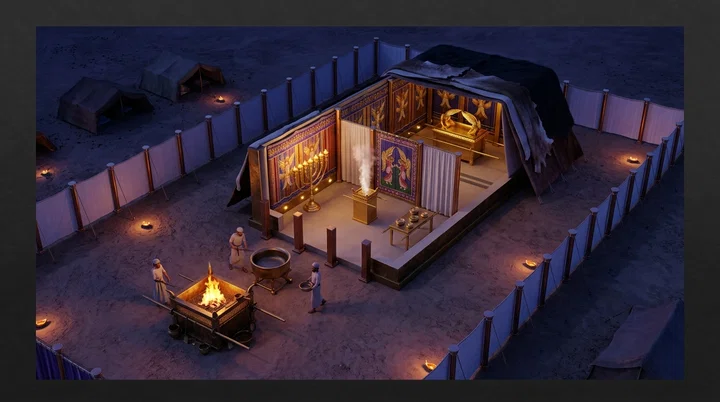
The building so erected had sides and one end formed of upright boards closely joined together with lower ends set in silver sockets fixed in the ground and held by outside bars passing through rings at uniform distances.ST Mar 10, 1898 It was roofed with curtains reaching to the ground on both sides, with the east end closed by hangings of fine-twined linen brushed aside for passage.ST Mar 10, 1898 It was divided by another curtain into two apartments, with the first outer apartment twice as much space as the other, its inner walls overlaid with fine gold of greatest brilliancy and its ceiling of finest purest linen wrought with forms of many angels.ST Mar 10, 1898 Within that layout Exodus 40:22-27 identifies the furnishings of the holy apartment, with the table set on the north side of the tent of meeting without the veil.ST May 8, 1901ST Jan 27, 1890
The verse shows Moses placing the table of showbread with the bread set in its proper order upon it before the LORD in the first apartment, the holy place outside the veil.RH Jan 6, 1853RH Aug 21, 1856ST May 20, 1880ST May 11, 1876ST Aug 8, 1878 That table belonged there together with the candlestick with seven lamps and the golden altar of incense, as part of the completed tabernacle erected for God's habitation.RH Mar 10, 1874RH Aug 21, 1856ST May 20, 1880ST Jan 18, 1883 This was done with the lighting of the lamps, the burning of sweet incense, and the offering of the burnt offering and meat offering on the altar before the door.RH Aug 21, 1856 The table of showbread was made according to the pattern of the heavenly sanctuary.ST Aug 8, 1878
That first holy place is distinct from the second holy place behind the veil, the most holy place.RH Mar 10, 1874RH Aug 21, 1856ST May 8, 1901ST Jan 18, 1883ST May 8, 1901 The most holy place contained the ark of the testimony, or ark of God's testament, with the tables of the ten commandments and the mercy-seat with the cherubim of glory overshadowing it.RH Mar 10, 1874RH Aug 21, 1856ST May 8, 1901ST Jan 18, 1883 The ark was made on purpose to receive the two tables of the moral law spoken with God's own voice and written with His own finger at Mount Sinai.ST Aug 10, 1882 Its top is the mercy-seat where the breaker of the law beneath finds pardon by the sprinkling of atoning blood.ST Aug 10, 1882
All was done exactly as the LORD had commanded Moses, according to the divine pattern given to Moses and shown in the mount.RH Aug 21, 1856ST Jul 8, 1930ST Oct 25, 1905 It was built from willing freewill offerings of the children of Israel of gold, silver, brass, blue, purple, scarlet, fine linen, goats' hair, dyed rams' skins, badgers' skins, shittim wood, oil, spices and precious stones, by workmen specially endowed by God for the work, so He might dwell among Israel.ST Jun 4, 1885ST Oct 25, 1905 When the work was finished a cloud covered the tent of the congregation and the glory of the LORD filled the tabernacle, showing God's acceptance and that God accepted the people's repentance.RH Aug 21, 1856ST Jan 31, 1911 That dwelling-place continued from the wilderness through the time of the judges, Samuel, Saul and David until Solomon built the temple after the same pattern, which from the day the glory of the Lord filled it was God's dwelling-place among Israel.ST Jun 4, 1885
Meaning, Type, and Application
The bread set in order upon the table before the LORD acknowledged Israel's dependence upon God for temporal food and for spiritual blessings, and it pointed to Christ as the living Bread who is ever in God's presence for them.ST May 8, 1901 That table stood in the first apartment of the sanctuary, where each Sabbath morning twelve fresh loaves were placed, one for each tribe of Israel, to represent the living Bread from heaven upon which souls feed by faith in Him who would come as their Life-giver.ST May 8, 1901ST Mar 10, 1898
The wilderness tabernacle with its specified furniture was a scriptural object-lesson of God's way, made according to the pattern of the heavenly sanctuary and built from freewill offerings so that God might dwell among His people by workmen He specially endowed.ST Aug 8, 1878ST Jun 19, 1907 Such a manifold lesson by forms and rites was needed because hundreds of years of slavery had unfitted Israel to comprehend God's great salvation and the character He required, and it taught the great plan of salvation while pointing to Christ's priestly ministry in the heavenly sanctuary.ST Jun 19, 1907 That earthly center of worship, focused on the holy of holies where God's law rested beneath the mercy-seat, was typical of and foreshadowed the true tabernacle which the Lord pitched and not man, serving unto the shadow of heavenly things as an object lesson pointing to the coming Messiah and His power to forgive sin, transform character, and deliver from burdens.ST Jun 19, 1907ST Jun 26, 1907 Its rites and ceremonies served their purpose until Christ's sacrifice at Calvary rent the veil, when the earthly sanctuary passed away entirely and forever.ST Jun 26, 1907
As part of the law of Moses given in Horeb, set forth in Exodus 20 to 40 and Leviticus, the verse belongs with civil regulations, laws concerning sacrifices and offerings, laws regulating conduct between man and man, health laws, ceremonial laws, and moral laws, with the Ten Commandments included under the statutes and judgments. As one of the laws in which offerings, sacrifices, and types are revealed, it helps trace the substance of the new dispensation from the shadows of the old, while the great laws remain the rule of conduct. In that system the ark containing the law of God was placed in the second apartment, the most holy place, made on purpose to receive the two tables of the moral law spoken with God's own voice and written with His own finger at Sinai.ST Aug 10, 1882 Its top is the mercy-seat, where the breaker of the law beneath finds pardon by the sprinkling of atoning blood, the whole ceremonial system being ordained to enable man to approach the broken law again and to typify the restitution of the pardoned to their inheritance and the destruction of the impenitent.ST Aug 10, 1882
The setting of the showbread when the tabernacle was set up on the first day of the first month does not show that day was a weekly Sabbath, for the command to set out the bread every Sabbath was given later and that later ceremonial rule cannot determine the day of the arrangement.ST Jul 17, 1879ST Jul 17, 1879 Nor does the verse teach that the Sabbath was a movable affair changing every year beginning with the first of the year, for that conclusion comes from jumbling together the weekly Sabbaths and the yearly Sabbaths and confusing the annual Sabbaths with the weekly Sabbath.ST Apr 3, 1907 The weekly Sabbath is fixed, while the yearly Sabbaths and yearly holidays sometimes fall on the seventh day of the week and sometimes on other days.ST Apr 3, 1907 The verse belongs to the instructions for worship, distinct from the civil laws in Exodus 21-23, showing that Israel's religious service was regulated by God separately from civil government.ST Sep 3, 1896 The sanctuary thus set apart for God with its bread arranged before the LORD as commanded was sacred in purpose, so that the priests could not use it as they would their own houses.RH Jul 16, 1861ST Sep 3, 1896
The perfect order God required in setting the bread and the tabernacle at Sinai before Israel could go up to possess the good land of Canaan and subdue enemies proves that God is jealous and particular to have all things just right and to be obeyed in all things in the straitness of the way.RH Dec 31, 1857 That exactness types the even greater particularity now required to advance in the divine life and to enter the heavenly Canaan by moving just right under the strait testimony and overcoming without counting life dear.RH Dec 31, 1857
Sources