Exodus 9:26
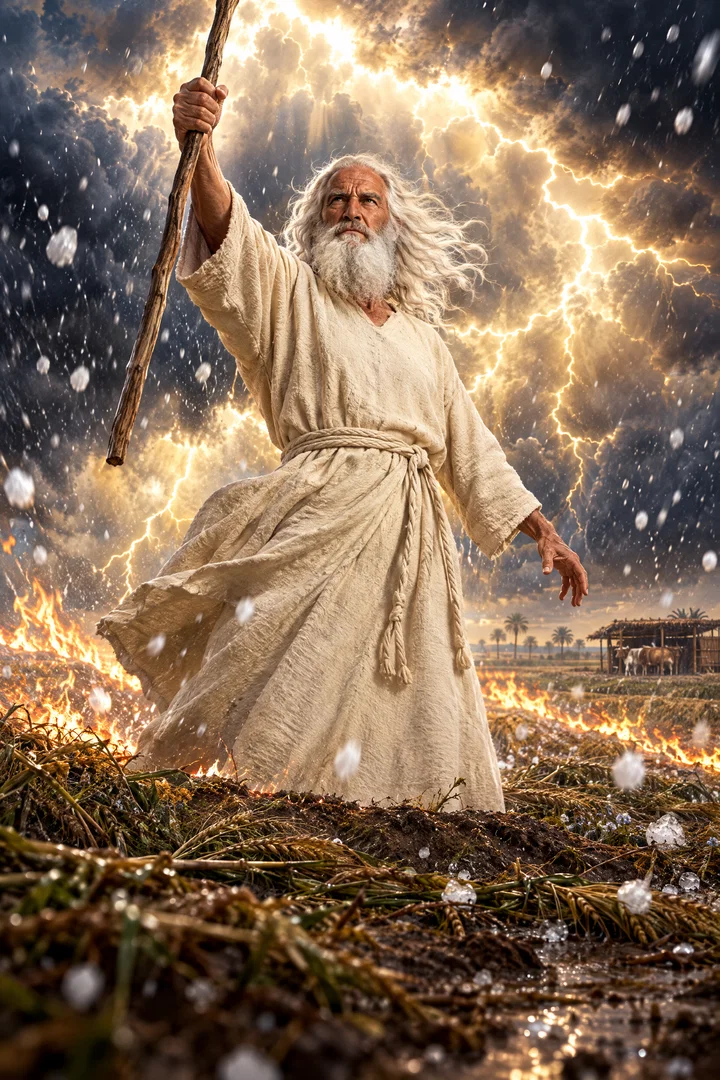
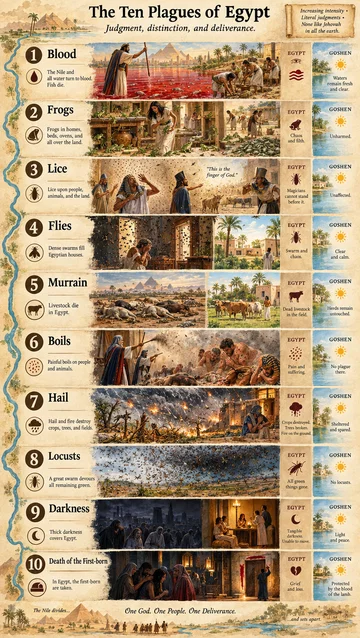
Only in the land of Goshen, where the children of Israel were, was there no hail.
Translations
American King James Version, King James Version, KJV Cambridge Paragraph Bible, Revised Version, American Standard Version, Darby Translation
Only in the land of Goshen, where the children of Israel were, was there no hail.
Webster Bible, World English Bible
Only in the land of Goshen, where the children of Israel were, there was no hail.
only in the land of Goshen, where the sons of Israel [are], there hath been no hail.
Only in the land of Goshen, where were the sons of Israel, was there no hail.
Berean Standard Bible, Majority Standard Bible
The only place where it did not hail was in the land of Goshen, where the Israelites lived.
Only in the land of Goshen, where the children of Israel were, there was no ice-storm.
Onely in the lande of Goshen (where the children of Israel were) was no haile.
Douay-Rheims (Challoner revision)
Only in the land of Gessen, where the children of Israel were, the hail fell not.
Pictures
Cross-references
- Exodus 9:20-21
He that feared the word of the LORD among the servants of Pharaoh made his servants and his cattle flee into the houses:
Some Egyptians heeded the warning and sheltered their people and cattle from the hail.
- Exodus 9:31-32
And the flax and the barley was smitten: for the barley was in the ear, and the flax was bolled.
The verses detail which crops the hail destroyed and which it left untouched.
- Revelation 16:21
And there fell upon men a great hail out of heaven, every stone about the weight of a talent: and men blasphemed God because of the plague of the hail; for the plague thereof was exceeding great.
The final hail plague recalls the hail plague in Egypt.
- Exodus 9:4-6
And the LORD shall sever between the cattle of Israel and the cattle of Egypt: and there shall nothing die of all that is the children’s of Israel.
Israel’s cattle were spared, as Goshen was spared hail.
- Exodus 8:22-23
And I will sever in that day the land of Goshen, in which my people dwell, that no swarms of flies shall be there; to the end thou mayest know that I am the LORD in the midst of the earth.
The LORD distinguished Goshen from Egypt during the plagues.
- Exodus 10:21-23
And the LORD said unto Moses, Stretch out thine hand toward heaven, that there may be darkness over the land of Egypt, even darkness which may be felt.
contrasted as mental anguish versus physical harm
- Psalms 105
O give thanks unto the LORD; call upon his name: make known his deeds among the people.
recounts same deliverance proving right to rule
- Exodus 7:17-21
Thus saith the LORD, In this thou shalt know that I am the LORD: behold, I will smite with the rod that is in mine hand upon the waters which are in the river, and they shall be turned to blood.
Both describe the plagues God sent upon Egypt.
- Exodus 9:8-11
And the LORD said unto Moses and unto Aaron, Take to you handfuls of ashes of the furnace, and let Moses sprinkle it toward the heaven in the sight of Pharaoh.
preceding plague showing same judgment
- Exodus 10:14-15
And the locusts went up over all the land of Egypt, and rested in all the coasts of Egypt: very grievous were they; before them there were no such locusts as they, neither after them shall be such.
paired with hail as destroyers of vegetation
- Exodus 12:29-30
And it came to pass, that at midnight the LORD smote all the firstborn in the land of Egypt, from the firstborn of Pharaoh that sat on his throne unto the firstborn of the captive that was in the dungeon; and all the firstborn of cattle.
The final plague distinguishes Israel from Egypt.
- Exodus 9:34-35
And when Pharaoh saw that the rain and the hail and the thunders were ceased, he sinned yet more, and hardened his heart, he and his servants.
what Pharaoh did after storm abated
- Exodus 7:3-5
And I will harden Pharaoh’s heart, and multiply my signs and my wonders in the land of Egypt.
The signs and judgments in Egypt reveal that the LORD is God.
Commentary
Each commentary is drawn from primary sources: the writings of Ellen G. White and Adventist pioneers and periodicals. Each commentary is separate. Its own words are not a quotation; follow the references to read the source passages.
Ellen G. White
6 sources
The hail that fell throughout Egypt was mingled with fire and came with thunder and lightning, more grievous than any since Egypt became a nation, striking down both man and beast in the field, destroying every herb of the field, breaking and shattering every tree, with death and desolation following in its path.1SP 190.3–192.1ST Mar 18, 18801SP 217.1 Only in the land of Goshen, where the children of Israel lived, was there no hail, marking a clear distinction between the Israelites and the Egyptians.SG3 213.1–215.11SP 190.3–192.1ST Mar 18, 1880PP 269.2–3SG3 244.1 Its time was told beforehand so it could not be called chance, demonstrating that the land and the whole earth and its elements, including thunder and hail and storm, are under the command of the Lord, the God of the Hebrews, and obey His voice.ST Mar 18, 1880PP 269.2–3SG3 244.11SP 217.1 In mercy in the midst of judgment a warning gave every Egyptian a way of escape by gathering servants and cattle into houses and barns, and the judgment tested exalted pride and revealed hearts by dividing those who feared the word and made servants and cattle flee into shelter from those whose hearts were hardened like Pharaoh's and who left them in the field to die.1SP 190.3–192.1ST Mar 18, 1880
Pharaoh, who had asked who the Lord was that he should obey Him, was humbled to confess that he had sinned and that the Lord is righteous while he and his people are wicked, and to beg Moses to intercede with God that the thunder and hail and lightning might cease.SG3 244.11SP 217.1 The sparing of Goshen fulfills the prophecy that God's people shall dwell in a peaceful habitation and in sure dwellings and in quiet resting places when hail comes down on the forest.ST Mar 18, 1880 It proves that the only true safety for nations and individuals is to be obedient to the voice of God and to ever stand on the side of truth and righteousness.ST Mar 18, 1880PP 269.2–3
Sources
Pioneers and periodicals
40 sources
The hail fell throughout all Egypt yet left untouched the district where Israel dwelt, as the seventh of the ten plagues sent before their deliverance.ST Jan 25, 1910RH Mar 11, 1915ST Nov 14, 1906ST Jan 14, 1889 It was a literal, unprecedented tempest of thunder and hail mingled with fire that shattered trees, destroyed crops and buildings, and struck man and beast everywhere else in the land.ST Mar 18, 1880STST May 31, 1910ST Nov 23, 1904RH Jan 6, 1903 Its sparing of one region exposed the powerlessness of the gods of Egypt and proved that sun and moon do not rule the climate, but all the earth and its elements obey the voice of the living God.ST Mar 18, 1880RH Jan 6, 1903ST Jan 22, 1885ST Nov 1, 1899RH Oct 31, 1912 As a type of the seven last plagues of Revelation 16, it shows that the saints will not be taken from the earth beforehand but will remain through the time of trouble sealed and protected while judgments fall around them.STRH Dec 23, 1851RH Jun 25, 1857ST Jul 18, 1878ST Oct 28, 1930 That merciful deliverance amid judgment reveals God's creative power, wisdom, love and right to rule, and teaches that safety for nations and individuals is found only in obedience and in standing on the side of truth and righteousness.ST Nov 14, 1906ST Jan 14, 1889ST Mar 7, 1906RH Nov 3, 1868RH Jan 6, 1903
Place in Exodus Story
Only in Goshen, where the Israelites lived, was there no hail, while the hail fell throughout the rest of Egypt.ST Jan 25, 1910ST Nov 14, 1906ST Jan 14, 1889 This marked Israel out from the Egyptians during the seventh plague and showed God's protection, power, care, and merciful deliverance of His children amid the plague.ST Jan 25, 1910ST Nov 14, 1906ST Jan 14, 1889ST Jan 20, 1909 The hail that fell on Egypt and spared Israel in Goshen was literal, an example of literal judgments in which God can care for His people.STST May 31, 1910 The going out of Egypt into Canaan is a type of the deliverance of God's people from the dark Egypt of earth, even as the plagues on Egypt are a type of the last plagues recorded in Revelation 16.ST
The verse belongs to the ten plagues upon Egypt recorded in Exodus 7-12, also described as Exodus 6-12.RH Mar 11, 1915ST Apr 13, 1904ST Jan 20, 1909 Within that series the hail is the seventh plague.ST Jan 25, 1910RH Oct 31, 1912ST May 6, 1913 Exodus 5-10 records the interviews with Pharaoh, the contest with his magicians, and the infliction of the plagues culminating in the tenth plague, the death of the firstborn, and the hurried departure of the Israelites. From the very beginning of the writing of the Bible in the days of Moses, God's religious system was arrayed against the religious system of Egypt, with both systems supported by miracles.RH Mar 11, 1915
It belongs to the history part of Exodus, chapters 1 to 18, in the book whose name means the going out for the departure of Israel from Egypt.RH Jan 20, 1916 That history tells how the family of Israel comfortably and prosperously settled in Egypt, grew more and mightier than the Egyptians, and came into bitter bondage and oppression.RH Jan 20, 1916 It tells how they received a great deliverance and became a nation with thorough organization, efficient leadership, a complete code of laws, and an established form of worship under Moses, who was rescued from Egyptian malice in infancy and raised up as the chosen leader of Israel.RH Jan 20, 1916
The hail is paired with the locusts as the fourth pair of plagues, both destructive of vegetation, with the hail destroying a large part of the crops and the locusts taking what was left.ST Apr 13, 1904 Like blood, frogs, lice, flies, murrain, and boils before it, the hail affected man in a material or physical way, unlike the last two plagues of darkness and death, which caused intense mental anguish.ST Apr 13, 1904 The hail plague came in January or February, when barley was in the ear but wheat was not yet grown, several months after the first plague at the summer inundation of the Nile and about two months before the tenth plague in March or April, showing the plagues covered several months.ST May 6, 1913 Goshen is associated with Israel's protection in the plagues generally, for the Egyptians' cattle died while not one of the Israelites' cattle died, and Pharaoh sent messengers to Goshen to verify this, and the same distinction of Israel from Egypt is shown in the sparing from hail and in the display of Jehovah's supremacy over Egypt's idols.RH Jan 6, 1903ST Jan 22, 1885
Character of the Hailstorm
The hail came with thunder and hail and fire mingled with hail, with unusually mighty thunder and lightning, and it brought desolation everywhere else in Egypt outside Goshen.ST Mar 18, 1880RH Jan 6, 1903RH Mar 11, 1915 It destroyed every herb and a large part of the crops, shattered trees, struck people and animals, and broke down crops, trees and buildings, with death and desolation following in its track.ST Mar 18, 1880ST Nov 23, 1904 Pharaoh pleaded for the storm to stop.RH Mar 11, 1915
In a land where rain seldom fell, it was a storm such as had never been seen since Egypt became a nation.RH Jan 6, 1903 The plagues were literal and tangible judgments, and the hail that fell on Egypt while Israel in Goshen was spared was literal.STST May 31, 1910
Darkness, plague and storm marked the nation's departure, and they are recalled as the signs accompanying Israel's deliverance from bondage.ST Sep 28, 1904
Triumph Over Egypt's Gods
God's order of worship stood face to face with Egypt's order of worship, and each was backed by miraculous power, from the very start of the written Scriptures in the days of Moses when Exodus 7 to 12 records that confrontation.RH Mar 11, 1915 The wonders done by divine power were sent to convince Pharaoh and his people of their duty to obey God, while the wonders done by the magicians were done to deceive Pharaoh and to close his heart against the message sent to him.ST May 4, 1882
The plagues set forth the supremacy of Jehovah over the idols of Egypt, humbling Egypt and laying bare the pretended power of its gods.ST Jan 22, 1885ST Jan 14, 1889ST Nov 27, 1901 Israel's God alone was shown to be all-embracing, all-powerful, and wise, while the gods of Egypt stood powerless before Him.ST Nov 1, 1899 Those gods could neither lift evil from men nor bestow blessing upon them.ST Dec 4, 1901 By these humbling judgments the people were given opportunity to know God for themselves, and the miracles helped free Israel from bondage, with Israel marked off from Egypt as when the cattle of Israel were spared while the cattle of Egypt were destroyed.ST Jan 22, 1885ST Jan 14, 1889ST Nov 27, 1901
Rain and hail and fire were a punishment upon Egypt for its worship of the powers of nature, for the Egyptians honored the sun and moon as chief gods and held that they ruled the climate.RH Jan 6, 1903RH Oct 31, 1912 Thunder and hail and fire mingled with hail brought desolation over all the rest of Egypt, destroying every plant, shattering trees, striking man and beast, and leaving death and ruin in the path of the destroyer, in a land where rain seldom fell, a tempest such as had never been seen since Egypt became a nation.ST Mar 18, 1880RH Jan 6, 1903 That Goshen alone was spared proves the elements are under the control of the living God and not under the sun and moon, that the whole earth is under the command of the God of the Hebrews and the elements obey His voice, and that true safety for nations and individuals is found only in obedience to Him and in ever standing for truth and righteousness.ST Mar 18, 1880RH Jan 6, 1903
This plague belongs to God's considerate and kind dealing with Pharaoh, beginning in kindness and then advancing by mighty miracles proving that the gods of Egypt are nothing before Him, from Moses' first demand that Pharaoh let the people go to worship God in the wilderness to the song of triumph beyond the Red Sea.ST Feb 4, 1913 Pharaoh hardened his heart against each dealing until the Spirit of God left him and his host was given over to destruction, though yielding to the first request for God's people to go and hold a feast to Him in the wilderness would have opened his heart to receive further truth.ST Feb 4, 1913 The hail was a destructive miracle displaying the living God's power over nature and over the Egyptian gods, attended by unusually mighty thunder and lightning, so that Pharaoh pleaded for it to cease.RH Mar 11, 1915
Even in this judgment mercy was mingled, for a way of escape was opened to every Egyptian who would heed the warning and gather cattle and servants into barns and houses.ST Mar 18, 1880
Type of Last Plagues
The plagues upon Egypt are a type of the last plagues recorded in Revelation 16, just as the going out of Egypt into Canaan is a type of the deliverance of God's people from the dark Egypt of earth.STRH Dec 23, 1851 Both the Egyptian plagues and the seven last plagues come before the deliverance of God's people.STRH Dec 23, 1851 The hail that fell on Egypt while Israel in Goshen was spared was literal.STRH Mar 23, 1852
The hail stands among the ten plagues in Exodus 7-12 demonstrating the power of God's two witnesses to smite the earth with plagues as often as they will.ST Apr 13, 1904RH Jan 14, 1862 That same plague power is to come again under the seven last plagues.ST Apr 13, 1904RH Jan 14, 1862 The hail is paired with the locusts as the fourth pair of plagues, both destructive of vegetation, with the hail destroying a large part of the crops and the locusts taking what was left.ST Apr 13, 1904 Like blood, frogs, lice, flies, murrain, and boils before it, the hail affected man in a material or physical way, unlike the last two plagues of darkness and death which caused intense mental anguish.ST Apr 13, 1904
The ten plagues fell just prior to the deliverance of God's ancient people and are similar to seven terrible plagues that will sweep over the world.ST Oct 28, 1930 The seven plagues will be the wrath of God without mercy, and forgiveness of sin will never be granted any more after they begin.ST Oct 28, 1930 The account of Exodus 9 is presented as an illustration and example of real, literal plagues expected in the future.RH Mar 23, 1852 The sparing of Goshen when hail fell on Egypt serves as the example of God protecting His people while judgment falls around them, illustrating the saints' protection during the final plagues.RH Jun 25, 1857ST Jul 18, 1878RH Mar 23, 1852 They will not be removed from the earth beforehand but will remain through the first six plagues and witness the fearful scenes of the time of trouble, yet the seal of the living God will protect them so the calamities do not come upon them.RH Jun 25, 1857ST Jul 18, 1878
Deliverance and Obedience Call
Only in Goshen was there no hail, and that distinction marked God's protection of His people amid the plague, His power and care for them in the midst of judgment.ST Nov 14, 1906ST Jan 14, 1889ST Jan 20, 1909 It was part of His wonderful deliverance of Israel from Egypt, demonstrating His wisdom, love, and power, His ability and right to rule, and Israel's obligation to obey Him.ST Mar 7, 1906 It belonged to His mighty work in saving Israel from oppression and bondage under the whole power of Egypt to triumph beyond the Red Sea with Egypt's host overthrown, creative power manifested over again in saving Israel, such work as was never done in the saving of any nation.ST Jan 30, 1912 His deliverance to His children in the ten plagues was merciful, for while the plagues came upon Egypt, the children of Israel in Goshen were spared.ST Jan 20, 1909
He exercised creative power in producing frogs, lice, flies, and locusts and in controlling the hail so that it fell on Egypt but not in Goshen where Israel lived, just as He later fed Israel in the wilderness with quails and manna.ST Aug 22, 1911 This exercise of power to create and command nature vindicated His right as Creator and gave great prominence to the Sabbath as the memorial of creative power, following the same course as in creating the world when He did not create manna on the seventh day.ST Aug 22, 1911
The plagues broke Pharaoh's power and led to Israel's deliverance through God's intervention.RH Mar 25, 1909 They were terrible judgments on the Egyptians for enslaving Israel and refusing to release them, striking the oppressors while Israel in Goshen was spared, then leading Israel out as an army of fugitive slaves and drowning their pursuers in the Red Sea.RH Oct 1, 1861 God had allowed Israel to remain for a time in a servile condition as serfs but never sanctioned even that modified form of slavery, and demanded their instant release.RH Oct 1, 1861
His redemption of Israel from bondage with a mighty hand left a people whom hundreds of years of slavery had unfitted to comprehend His great salvation and the character He required, so He gave them the sanctuary as a great multiple object-lesson whose forms and rites contained the whole plan of salvation. The sparing of Goshen alone when thunder and hail and fire mingled with hail destroyed every herb, shattered trees, and smote man and beast with death and desolation following, fulfills the prophecy that God's people shall dwell in a peaceful habitation and in sure dwellings and in quiet resting places when hail comes down on the forest.ST Mar 18, 1880
Israel's deliverance from the plagues is a warning that those who refused to join God's people would face destruction, while God's people would be spared.RH Nov 3, 1868 While thunder and hail and fire mingled with hail brought desolation everywhere else in Egypt, no storm fell in Goshen where the children of Israel lived, proving the elements are under the control of the living God and not under the sun and moon worshiped as chief gods, and that safety is found only in obedience to Him.RH Jan 6, 1903 The exemption, with its measure of severity and definite result, carries the practical lesson of when safety from evil is found.RH Jan 6, 1903 The only true safety of nations and individuals is to be obedient to the voice of God and to ever stand on the side of truth and righteousness, and mercy was shown in the midst of judgment by providing a way of escape for all who acted on the warning by gathering cattle into barns and houses.ST Mar 18, 1880
The hail plague was literal, and the account of Egypt's plagues is an example of literal judgments showing that God can care for His people amid such judgments.ST May 31, 1910 The same storm shows God preserving Heber as he crossed the tempest unharmed toward the prophets although hail struck around him.ST Nov 23, 1904 The keeper who had sheltered the prophets in his house during the hail believed their God.ST Dec 7, 1904 The hail belongs with the time of the Egyptian plagues and with related questions about Pharaoh's free will and the borrowing from the Egyptians.ST Feb 21, 1911
Sources