Ezekiel 16:11
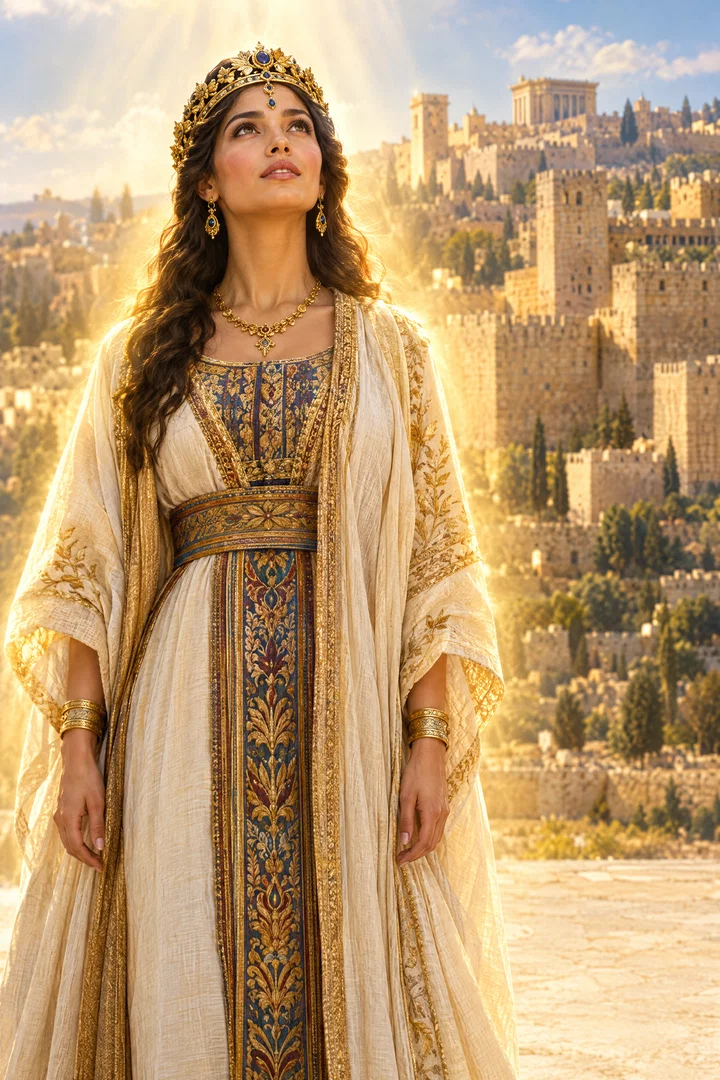
I decked thee also with ornaments, and I put bracelets upon thy hands, and a chain on thy neck.
Translations
I decked you also with ornaments, and I put bracelets on your hands, and a chain on your neck.
King James Version, Webster Bible, Revised Version
I decked thee also with ornaments, and I put bracelets upon thy hands, and a chain on thy neck.
I decked thee also with ornaments, and I put bracelets upon thine hands, and a chain on thy neck.
And I decked thee with ornaments, and I put bracelets upon thy hands, and a chain on thy neck.
And I adorn thee with adornments, And I give bracelets for thy hands, And a chain for thy neck.
And I decked thee with ornaments, and I put bracelets upon thy hands, and a chain on thy neck;
Then decked I thee with ornaments, And put bracelets upon thy hands, And a neckchain upon thy throat;
Berean Standard Bible, Majority Standard Bible
I adorned you with jewelry, and I put bracelets on your wrists and a chain around your neck.
I decked you with ornaments, put bracelets on your hands, and put a chain on your neck.
And I made you fair with ornaments and put jewels on your hands and a chain on your neck.
I decked thee also with ornaments, and I put bracelets vpon thine handes, and a chaine on thy necke.
Douay-Rheims (Challoner revision)
I decked thee also with ornaments, and put bracelets on thy hands, and a chain about thy neck.
Pictures
Cross-references
- Isaiah 61:10
I will greatly rejoice in the LORD, my soul shall be joyful in my God; for he hath clothed me with the garments of salvation, he hath covered me with the robe of righteousness, as a bridegroom decketh himself with ornaments, and as a bride adorneth herself with her jewels.
Both describe God adorning his people with ornaments.
- Isaiah 54:5
For thy Maker is thine husband; the LORD of hosts is his name; and thy Redeemer the Holy One of Israel; The God of the whole earth shall he be called.
The Lord is named as Israel’s husband and Redeemer.
- Jeremiah 31:32
Not according to the covenant that I made with their fathers in the day that I took them by the hand to bring them out of the land of Egypt; which my covenant they brake, although I was an husband unto them, saith the LORD:
Israel’s covenant with the Lord is described in the context of their espousal.
- Jeremiah 2:32
Can a maid forget her ornaments, or a bride her attire? yet my people have forgotten me days without number.
Refers to a bride’s ornaments.
- Isaiah 62:4-5
Thou shalt no more be termed Forsaken; neither shall thy land any more be termed Desolate: but thou shalt be called Hephzi-bah, and thy land Beulah: for the LORD delighteth in thee, and thy land shall be married.
Jerusalem’s land is pictured as married to the Lord.
- Jeremiah 3:1
They say, If a man put away his wife, and she go from him, and become another man’s, shall he return unto her again? shall not that land be greatly polluted? but thou hast played the harlot with many lovers; yet return again to me, saith the LORD.
Both describe Jerusalem’s unfaithfulness as harlotry.
- Jeremiah 2:2
Go and cry in the ears of Jerusalem, saying, Thus saith the LORD; I remember thee, the kindness of thy youth, the love of thine espousals, when thou wentest after me in the wilderness, in a land that was not sown.
Israel is pictured as adorned and espoused to the Lord.
- Hosea 2:19-20
And I will betroth thee unto me for ever; yea, I will betroth thee unto me in righteousness, and in judgment, and in lovingkindness, and in mercies.
The Lord betroths his people to himself.
- Jeremiah 2:20
For of old time I have broken thy yoke, and burst thy bands; and thou saidst, I will not transgress; when upon every high hill and under every green tree thou wanderest, playing the harlot.
Both describe Jerusalem’s spiritual harlotry.
Commentary
Each commentary is drawn from primary sources: the writings of Ellen G. White and Adventist pioneers and periodicals. Each commentary is separate. Its own words are not a quotation; follow the references to read the source passages.
Pioneers and periodicals
19 sources
The verse pictures the Lord adorning Jerusalem with ornaments, bracelets on her hands and a chain on her neck, as a husband decks his wife and bride in the solemn custom of marriage.ST Jul 25, 1911ST May 4, 1904RH Oct 7, 1851 The jewels and clothing are tokens of His affection and the grace, spiritual character, honor and royal beauty He gives His church, so that her prosperity and loveliness come from His majesty and reflect His own beauty and not from herself.STRH Oct 7, 1851 The same gift belongs to the individual, for God covers the repentant sinner and clothes that person in Christ's perfect righteousness after godly sorrow, bringing pardon and comfort.ST The chapter sets this adorning against Judah's sins under the figure of a lewd and adulterous woman, for having become His by covenant she broke it and turned to foreign powers, idols and the ways of the world.ST Nov 17, 1909ST Aug 19, 1913ST Jun 11, 1896RH Feb 14, 1856ST Jan 8, 1902 A woman is the symbol of a church, and a harlot is a corrupt, fallen and apostate church, so the Jewish church espoused to the Lord became a harlot like Babylon by seeking the friendship of the world in unlawful union with the kings of the earth, and Babylon likewise is a professedly religious body unlawfully united with them rather than an earthly power or a literal city, whose fall was God's rejection of her when He turned His face away and not her immediate destruction.ST Jun 29, 1876RH Oct 19, 1869RH Feb 20, 1855RH Feb 20, 1855RH Feb 21, 1854
God's Adorning of Jerusalem
The verse pictures divine care for Jerusalem in the act of decking her with ornaments and jewelry.ST Jul 25, 1911 The adorning with ornaments, bracelets upon the hands, and a chain upon the neck belongs to the marriage customs that accompanied a solemn union.ST May 4, 1904 In that union Jerusalem stands as the Lord's wife and bride.ST May 4, 1904RH Oct 7, 1851
The bracelets and the chain on the neck are gifts and tokens of affection.RH Oct 7, 1851 The ornaments express the beauty with which He adorned her.RH Oct 7, 1851 This adorning comes after washing and clothing His people, when He adds ornaments, bracelets, necklace, and crown.ST Those adornments represent the grace and beauty He bestows so that His people reflect His own beauty.ST
The ornaments together with fine clothing, food, and royal beauty describe the spiritual character and honor God gave His church. The bracelets and necklace are gifts from God who makes His church beautiful. Her beauty and prosperity therefore come from His majesty and not from herself. The same image applies to the individual, for God covers the repentant person's sin and clothes that person in Christ's perfect righteousness, so that the person's beauty comes from God's character and not their own. That gift follows godly sorrow and repentance and brings the comfort of grace and pardon.
Apostasy and the Harlot Church
Ezekiel 16 presents Judah's sins under the figure of a lewd woman, as a strong parable rebuking the apostasy of Judah and Israel and showing God earnestly pleading with His children to turn back to Him.ST Nov 17, 1909ST Aug 19, 1913 The chapter speaks of the Lord's covenant with His people: they became His, but broke the covenant and relied on another.RH Feb 14, 1856 The combined symbol of a city and a woman represents a church or the professed people of God, with a woman as the symbol of a church.RH Oct 19, 1869RH Feb 10, 1874
A lewd, licentious woman and a harlot are the symbol of a corrupt, fallen, and apostate church.RH Feb 20, 1855ST Aug 30, 1905 The Jewish church was espoused to the Lord and became a harlot in the same manner as Babylon, by apostatizing from God, seeking the friendship of the world through unlawful connection with the kings of the earth, joining the surrounding nations, and worshiping their gods.ST Jun 29, 1876RH Oct 19, 1869RH Feb 20, 1855 The chapter portrays Jerusalem as an adulterous wife who turns from God her husband to foreign powers and their ways, in backsliding, conformity to the world, idolatry, and departure from God that mixes heaven with earth and righteousness with sin.ST Jun 11, 1896ST Jan 8, 1902
God calls His church's union with the world spiritual fornication and adultery, so that when God's church is joined to the world instead of remaining faithful to God alone, it is counted as a harlot.ST Mar 23, 1915 This symbolic use supports identifying Babylon as a corrupt, worldly, professedly religious body rather than the earthly power of human government, an abstract evil, the whole world, or a literal city; Babylon is distinct from the kings of the earth though unlawfully united with them.RH Feb 20, 1855RH Feb 21, 1854RH Feb 10, 1874 The Jewish church as a harlot espoused to the Lord illustrates the fall of Babylon: her fall was her rejection by God when He turned His face from her, not her destruction, for her destruction was deferred for a considerable period and came later.ST Jun 29, 1876RH Mar 6, 1855
Sources