Ezra 1:3
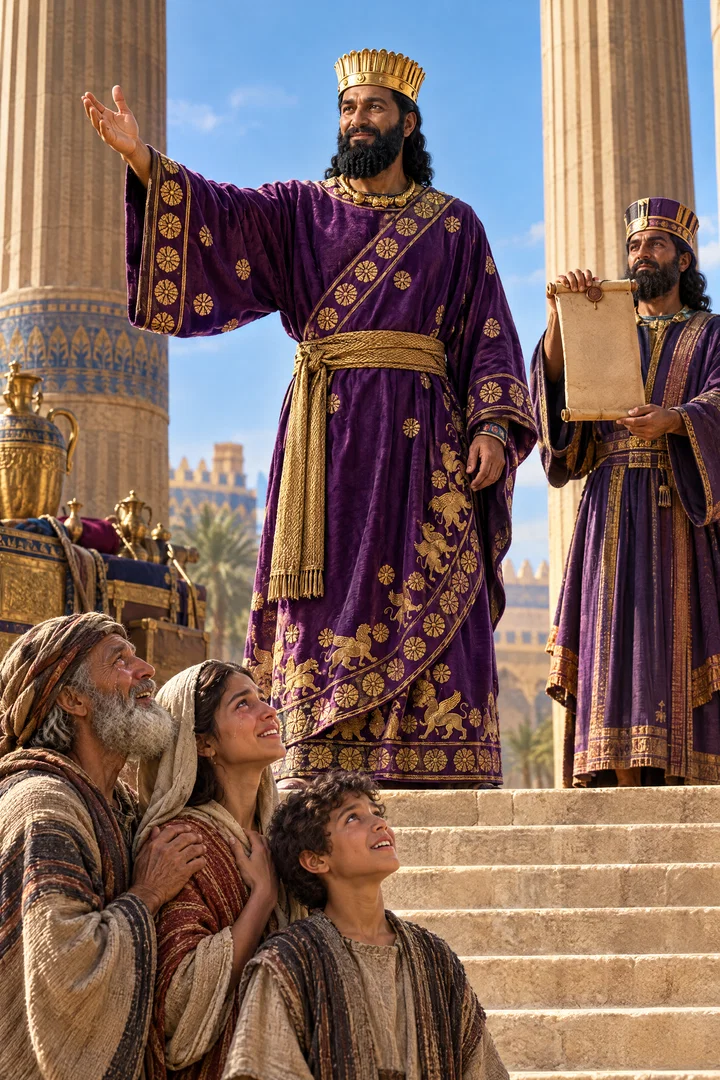
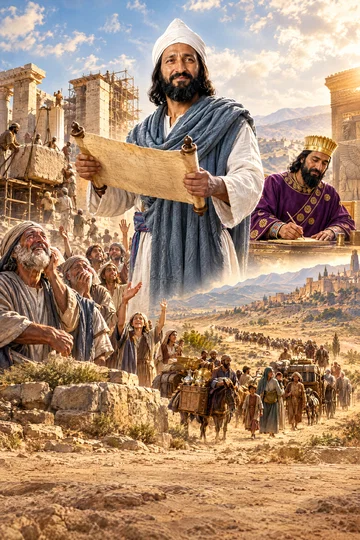
Who is there among you of all his people? his God be with him, and let him go up to Jerusalem, which is in Judah, and build the house of the LORD God of Israel, (he is the God,) which is in Jerusalem.
Translations
American King James Version, King James Version
Who is there among you of all his people? his God be with him, and let him go up to Jerusalem, which is in Judah, and build the house of the LORD God of Israel, (he is the God,) which is in Jerusalem.
Who is there among you of all his people? his God be with him, and let him go up to Jerusalem, which is in Judah, and build the house of the Lord God of Israel, (he is the God,) which is in Jerusalem.
Who is there among you of all his people? his God be with him, and let him go up to Jerusalem, which is in Judah, and build the house of the LORD God of Israel, (he is the God,) who is in Jerusalem.
Whosoever there is among you of all his people, his God be with him, and let him go up to Jerusalem, which is in Judah, and build the house of the LORD, the God of Israel, ( he is God,) which is in Jerusalem.
Whosoever there is among you of all his people, his God be with him, and let him go up to Jerusalem, which is in Judah, and build the house of Jehovah, the God of Israel ( he is God), which is in Jerusalem.
who [is] among you of all His people? His God is with him, and he doth go up to Jerusalem, that [is] in Judah, and build the house of Jehovah, God of Israel — He [is] God — that [is] in Jerusalem.
Whosoever there is among you of all his people, his God be with him, and let him go up to Jerusalem, which is in Judah, and build the house of Jehovah the God of Israel — he is God — which is at Jerusalem.
Who is there among you of all his people? His God be with him, and let him go up to Jerusalem, which is in Judah,—and build the house of Yahweh God of Israel, (he, is God!) which is in Jerusalem;
Berean Standard Bible, Majority Standard Bible
Whoever among you belongs to His people, may his God be with him, and may he go to Jerusalem in Judah and build the house of the LORD, the God of Israel; He is the God who is in Jerusalem.
Whoever there is among you of all his people, may his God be with him, and let him go up to Jerusalem, which is in Judah, and build the house of the LORD, the God of Israel ( he is God), which is in Jerusalem.
Whoever there is among you of his people, may his God be with him, and let him go up to Jerusalem, which is in Judah, and take in hand the building of the house of the Lord, the God of Israel; he is the God who is in Jerusalem.
Who is he among you of all his people with whome his God is? let him goe vp to Ierusalem which is in Iudah, and buylde the house of the Lord God of Israel: he is the God, which is in Ierusalem.
Douay-Rheims (Challoner revision)
Who is there among you of all his people? His God be with him. Let him go up to Jerusalem, which is in Judea, and build the house of the Lord the God of Israel: he is the God that is in Jerusalem.
Pictures
Cross-references 20 of 74
- Daniel 9:25
Know therefore and understand, that from the going forth of the commandment to restore and to build Jerusalem unto the Messiah the Prince shall be seven weeks, and threescore and two weeks: the street shall be built again, and the wall, even in troublous times.
Its command to restore and build Jerusalem sets the prophecy’s starting point.
- Ezra 7:11-26
Now this is the copy of the letter that the king Artaxerxes gave unto Ezra the priest, the scribe, even a scribe of the words of the commandments of the LORD, and of his statutes to Israel.
Artaxerxes’ decree extends the restoration to Jerusalem and its law.
- Isaiah 44:28
That saith of Cyrus, He is my shepherd, and shall perform all my pleasure: even saying to Jerusalem, Thou shalt be built; and to the temple, Thy foundation shall be laid.
Foretells Cyrus’s role in rebuilding Jerusalem and the temple.
- Jeremiah 29:10
For thus saith the LORD, That after seventy years be accomplished at Babylon I will visit you, and perform my good word toward you, in causing you to return to this place.
Promises the exiles’ return after seventy years, fulfilled by Cyrus’s decree.
- 2 Chronicles 36:22-23
Now in the first year of Cyrus king of Persia, that the word of the LORD spoken by the mouth of Jeremiah might be accomplished, the LORD stirred up the spirit of Cyrus king of Persia, that he made a proclamation throughout all his kingdom, and put it also in writing, saying,
Records Cyrus’s decree to rebuild the temple.
- Ezra 6:1-12
Then Darius the king made a decree, and search was made in the house of the rolls, where the treasures were laid up in Babylon.
Darius renews Cyrus’s decree and funds completion of the temple.
- Isaiah 45:1-4
Thus saith the LORD to his anointed, to Cyrus, whose right hand I have holden, to subdue nations before him; and I will loose the loins of kings, to open before him the two leaved gates; and the gates shall not be shut;
God names Cyrus beforehand and appoints him to release Israel.
- Ezra 6:14
And the elders of the Jews builded, and they prospered through the prophesying of Haggai the prophet and Zechariah the son of Iddo. And they builded, and finished it, according to the commandment of the God of Israel, and according to the commandment of Cyrus, and Darius, and Artaxerxes king of Persia.
Names the successive Persian decrees that carried out the command to rebuild.
- Jeremiah 25:11-12
And this whole land shall be a desolation, and an astonishment; and these nations shall serve the king of Babylon seventy years.
The seventy years of captivity end as Babylon’s rule is punished, opening the way for return.
- Isaiah 45:13
I have raised him up in righteousness, and I will direct all his ways: he shall build my city, and he shall let go my captives, not for price nor reward, saith the LORD of hosts.
Foretells Cyrus releasing the captives and rebuilding Jerusalem.
- Ezra 7:7
And there went up some of the children of Israel, and of the priests, and the Levites, and the singers, and the porters, and the Nethinims, unto Jerusalem, in the seventh year of Artaxerxes the king.
Dates Ezra’s return to Jerusalem in Artaxerxes’ seventh year, later than Cyrus’s decree.
- Ezra 5:1-2
Then the prophets, Haggai the prophet, and Zechariah the son of Iddo, prophesied unto the Jews that were in Judah and Jerusalem in the name of the God of Israel, even unto them.
Prophecy encouraged the people to resume building the temple.
- Ezra 9:9
For we were bondmen; yet our God hath not forsaken us in our bondage, but hath extended mercy unto us in the sight of the kings of Persia, to give us a reviving, to set up the house of our God, and to repair the desolations thereof, and to give us a wall in Judah and in Jerusalem.
Persian kings show mercy by allowing Jerusalem and its temple to be restored.
- Daniel 9:2-3
In the first year of his reign I Daniel understood by books the number of the years, whereof the word of the LORD came to Jeremiah the prophet, that he would accomplish seventy years in the desolations of Jerusalem.
Daniel understands the seventy years are ending and prays for Jerusalem’s restoration.
- Ezra 2:64-65
The whole congregation together was forty and two thousand three hundred and threescore,
Counts the people who answered the call and returned from exile.
- Nehemiah 2:5-8
And I said unto the king, If it please the king, and if thy servant have found favour in thy sight, that thou wouldest send me unto Judah, unto the city of my fathers’ sepulchres, that I may build it.
Nehemiah seeks permission and supplies to rebuild Jerusalem.
- Ezra 3:1-6
And when the seventh month was come, and the children of Israel were in the cities, the people gathered themselves together as one man to Jerusalem.
The returned people rebuild the altar and resume worship in Jerusalem.
- Ezra 4:21
Give ye now commandment to cause these men to cease, and that this city be not builded, until another commandment shall be given from me.
A Persian king’s order stopped the building work.
- Isaiah 45:4
For Jacob my servant’s sake, and Israel mine elect, I have even called thee by thy name: I have surnamed thee, though thou hast not known me.
Isaiah names Cyrus as God’s chosen agent for Israel’s sake.
- 2 Chronicles 36:21
To fulfil the word of the LORD by the mouth of Jeremiah, until the land had enjoyed her sabbaths: for as long as she lay desolate she kept sabbath, to fulfil threescore and ten years.
The desolate land rested while the people served their enemies.
Commentary
Each commentary is drawn from primary sources: the writings of Ellen G. White and Adventist pioneers and periodicals. Each commentary is separate. Its own words are not a quotation; follow the references to read the source passages.
Ellen G. White
15 sources
Cyrus's proclamation gave every one of God's people open liberty to go up to Jerusalem in Judah and build the house of the Lord God of Israel, with the assurance that his God would be with him.PK 558.1–2RH Mar 28, 1907RH Jan 30, 1908 It marks the end of seventy years of captivity in Babylon, fulfilling prophecy and beginning the return under Zerubbabel and Joshua with the king's favor and abundant provision for restoring the temple.RH Mar 28, 1907Lt 98, 1907, par. 2Ms 116, 1897, par. 2–5RH Jan 30, 1908 Nearly fifty thousand accepted and returned, yet they were only a remnant, for most remained in the provinces of exile rather than face the hardships of the journey and the work of rebuilding.RH Jan 23, 1908PK 598.1 That deliverance was an act of mercy and forbearance after disobedience and exile, giving wayward children another opportunity to serve God in Jerusalem and advancing His plans through the wealth and power of empires.PK 8.3–4Lt 98, 1907, par. 2RH Apr 11, 1907 God Himself moved Cyrus to release the people and furnish means for the work, showing that He can move foreign and worldly rulers to support His cause, so their favors and practical help may be received and used.Ms 41, 1895, par. 7–8Lt 11, 1895, par. 34–3816MR 169.2–3Ms 116, 1897, par. 2–5
Cyrus's Decree and Return
The verse is Cyrus's invitation to any among all God's people to go up to Jerusalem in Judah and build the house of the Lord God of Israel, with his God to be with him in going.PK 558.1–2RH Mar 28, 1907RH Jan 30, 1908 The proclamation made the return and the rebuilding a public, kingdom-wide opportunity for the Hebrew exiles.PK 558.1–2 The decree gave the exiles liberty to return and provided for the restoration of the temple, fulfilling the prophecies concerning Cyrus and the end of the captivity.RH Mar 28, 1907 It begins the return of the exiles under Zerubbabel and Joshua.RH Jan 30, 1908 It belongs to the account of the return from seventy years of captivity in Babylon, where the king's favor and abundant provision of means made it possible to return to their own country and rebuild the temple.Lt 98, 1907, par. 2Ms 116, 1897, par. 2–5
Nearly fifty thousand people accepted the decree and returned under Zerubbabel and Joshua.RH Jan 23, 1908PK 598.1 Yet they were only a remnant of the captives.RH Jan 23, 1908 Most Israelites remained in the Medo-Persian provinces and in the lands of their exile rather than help restore the temple services.RH Jan 23, 1908PK 598.1 They remained rather than face the hardships of the journey, rebuilding their homes, and helping restore the temple services.RH Jan 23, 1908PK 598.1
The decree gave opportunity and responsibility to return to Jerusalem, rebuild the temple, restore its services, and reestablish homes in Judea.PK 572.1–2 The work required energetic action.PK 572.1–2 But opposition and discouragement led many to abandon the work for ordinary pursuits.PK 572.1–2 God moved Cyrus to release the people and to provide the means for the work, and the rebuilding begun under Cyrus continued under his successor.Ms 116, 1897, par. 2–5
God's Mercy and Present Application
The proclamation is freedom from Babylonian captivity, and that deliverance moves forward the divine purpose, with the wealth and power of empires made to serve that end.PK 8.3–4 The return from seventy years of captivity in Babylon was made possible by the king's favor and abundant provision for going back to their own country and rebuilding the temple.Lt 98, 1907, par. 2 That return and rebuilding were mercy and forbearance toward wayward children after disobedience, exile, and the destruction of Jerusalem, giving them another opportunity to serve God there.Lt 98, 1907, par. 2RH Apr 11, 1907 Such mercy called for gratitude rather than discouragement, with God's favor accompanying the work of return and rebuilding.RH Apr 11, 1907
The invitation to go up to Jerusalem in Judah and build the house of the Lord God of Israel, with God with the one who goes, shows that God can move rulers, even foreign and worldly rulers, to support His people and advance His cause.Ms 41, 1895, par. 7–8Lt 11, 1895, par. 34–3816MR 169.2–3 Help, favors, and practical support for His work that come through such rulers may therefore be received and used to advance His cause.Ms 41, 1895, par. 7–816MR 169.2–3 They are not to be refused merely because they come from worldly authorities or from those who do not share the faith.Ms 41, 1895, par. 7–8Lt 11, 1895, par. 34–38
The call to arise and build a house of worship applies to the decision to erect a church in Cooranbong, encouraging the worshipers to proceed despite limited funds and uncertainty about completing the work.Ms 97, 1897, par. 1 The same command to rise and build applies to the work of building the sanitarium, teaching those who undertake it to trust that God will act in His own time to deliver and help them.13MR 167.2–3
Sources
Pioneers and periodicals
96 sources
In his first year after Babylon fell, Cyrus king of Persia issued a proclamation throughout his kingdom, because the Lord stirred his spirit to end the seventy years' captivity, confessing that the God of heaven had given him all kingdoms and charged him to build Him a house at Jerusalem in Judah.ST Feb 11, 1886ST May 24, 1883ST Feb 25, 1886RH Nov 19, 1908 It was an open, voluntary call for any of God's people who wished to go up to Jerusalem with God's presence with him and build the house of the Lord God of Israel, who is truly God, while those who stayed were to help with silver, gold, goods, beasts and freewill offerings.RH Mar 28, 1907ST Oct 4, 1905ST Feb 22, 1883RH Mar 14, 1912ST Feb 25, 1886 The proclamation fulfilled Jeremiah's word that the desolate land would rest seventy years and Isaiah's word naming Cyrus as God's shepherd and anointed to let the captives go, lay the temple foundation and build God's city.ST Feb 11, 1886ST Jan 17, 1906RH Sep 18, 1856ST Feb 13, 1912 It contemplated only rebuilding the temple and its worship, not the full restoration of Jerusalem as city and polity, so it did not bring the commandment to restore and build Jerusalem that begins the seventy weeks of Daniel 9 and the 2,300 days, which was completed only by Artaxerxes in his seventh year in 457 B.C.ST Feb 25, 1886ST Mar 11, 1889ST Mar 26, 1912RH Feb 7, 1907 The release shows God's faithfulness, mercy and rule over earthly kingdoms, given in answer to Daniel's prayer through a pagan king as an object lesson of the gospel deliverance from the captivity of sin by the greater Deliverer.ST Sep 6, 1899ST Mar 13, 1893ST Aug 17, 1904
Words and Historical Setting
The verse is the heart of the proclamation of Cyrus king of Persia in his first year, in 536 B.C., after glorious Babylon fell and the kingdom of the Medes and Persians took its place.ST Feb 11, 1886ST Jan 13, 1888RH Jul 9, 1908 It ended the seventy years' captivity that began with Nebuchadnezzar's first successful expedition against Jerusalem in 606 B.C., when Daniel was taken and all but the very poorest were carried to Babylon to be servants to him and his sons until the Persian reign.ST Feb 11, 1886ST Feb 25, 1886RH Jul 9, 1908 The Lord stirred up the spirit of Cyrus to issue it, and it was published by proclamation throughout all his kingdom and put in writing.ST Jan 13, 1888ST Feb 11, 1886 It was made in his sole rule over Medo-Persia by authority of the king then ruling Babylon, marking the return of the Jews from Babylon to their own land when the seventy years expired.ST May 24, 1883RH Jul 9, 1908
Cyrus confessed in it that the Lord God of heaven had given him all the kingdoms of the earth and had charged him to build Him a house at Jerusalem in Judah.ST Feb 25, 1886ST Jan 13, 1888ST Feb 11, 1886 Those who remained in the places where they sojourned were ordered to help the returning exiles with silver and gold, with goods and beasts, and with freewill offerings for the house of God which is in Jerusalem.ST Feb 25, 1886RH Nov 19, 1908ST Feb 11, 1886ST Apr 26, 1910 The decree thus released all the people of Israel throughout the empire and called them to rebuild the city and especially the house of the Lord God of Israel.RH Nov 19, 1908
The verse is an open call for any among all His people who wishes to go up to Jerusalem in Judah, with His presence and blessing with him, and build the house of the LORD God of Israel.RH Mar 28, 1907RH Mar 14, 1912ST Feb 11, 1886ST Mar 6, 1907 It was made two years after Daniel's prayer in Daniel 9, ending the seventy years of Jewish captivity in fulfillment of the word of the Lord by Jeremiah.ST Feb 25, 1886ST Mar 6, 1907 It may not yet have been issued when Daniel was praying for his people's return and the fulfillment of Jeremiah's prediction, though placed about 536 B.C. in the period when Cyrus ruled Persia after Babylon's fall, even in his third year on one reckoning.ST Feb 25, 1886ST Apr 9, 1912
The verse locates Jerusalem as being in Judah, the city including Mount Zion distinguished from the tribe, its territory, and the whole land of Canaan.ST Oct 4, 1905ST Dec 19, 1892RH Jan 6, 1853 It identifies Jerusalem in Judah as the place God chose for His sanctuary, the place of the temple where the house of the Lord God of Israel was to be built.ST Apr 12, 1883ST Dec 19, 1892RH Jan 6, 1853 It affirms that He is the God, that the LORD, Jehovah, the God of Israel who is in Jerusalem, is truly God.ST Oct 4, 1905RH Mar 14, 1912ST Jan 17, 1906ST Apr 26, 1910 Cyrus's use of that name and his invitation with God's blessing show he accepted and acknowledged the LORD after receiving a personal revelation of Him, publicly bearing witness that the Lord is God and closely identifying himself with Him.RH Mar 14, 1912ST Jan 17, 1906ST Apr 26, 1910
Voluntary Universal Invitation to Return
Cyrus’s proclamation opened the way for any among all God’s people who wished to go up to Jerusalem in Judah to build the house of the Lord God of Israel, with God’s presence and blessing with him, and the offer was permission rather than compulsion.ST Oct 4, 1905ST Feb 22, 1883RH Jan 19, 1860ST Feb 2, 1882RH Jun 23, 1874 Those who preferred to remain were left free to stay where they sojourned, and no prophecy contemplates anything more than such full and liberal permission with voluntary acceptance.ST Feb 22, 1883ST Feb 2, 1882RH Jun 23, 1874 The invitation called for volunteers and in that way served as a sifting message.ST Aug 9, 1899
The permission ran throughout Cyrus’s realm to all Israel, both the two tribes and the ten, because he had succeeded to all the provinces of the conquered Assyrian and Chaldean empires.ST Jun 12, 1884RH Sep 4, 1856ST May 7, 1912ST Jan 23, 1893 It therefore reached Media where the ten tribes were captive as well as Chaldea and Assyria where the Jews were captive, and was not limited to those already in Judah or to Judah and Benjamin alone.ST Jun 12, 1884RH Sep 4, 1856RH Aug 26, 1902ST Jan 23, 1893 Under it remnants of all the tribes returned and formed one nation subsequently known as Judea, so that Ephraim and Manasseh dwelt in Jerusalem with Judah and Benjamin and all Israel dwelt in their cities.ST Jun 12, 1884 Those who held otherwise taught that only Judah, Benjamin, some Levites and a few others went, while the ten tribes rejected the offer and its promised blessings.RH Jan 20, 1853 On that understanding few accepted the privilege, the people failed to meet the conditions for the sanctuary Ezekiel described, and it was never built.RH Jan 20, 1853RH May 25, 1876
Nearly fifty thousand took advantage of the offer and returned, reported as 49,897 and as 42,360 in the first group under Zerubbabel.ST Feb 25, 1886ST May 7, 1912ST Apr 19, 1883RH Sep 18, 1856 Another reckoning reports 1,754 exiles returning under it to begin restoration, and another reports over forty-two thousand led by Zerubbabel of David’s line.RH Oct 11, 1915 Joshua was high priest and Zerubbabel governor; they set up the altar and began burnt offerings on the first day of the seventh month before the foundation was laid, and two years later work was begun on the temple foundations.RH Jan 23, 1908ST Feb 25, 1886
The captivity ended because all were free to go even though many remained in the Medo-Persian provinces rather than help restore the temple services.RH Jan 23, 1908ST Feb 25, 1886 Many Jews nevertheless remained scattered throughout the empire, assisted by Persian rulers in the restoration of worship, including the ancestors of the mountain Jews in Caucasia and Persia who remained in exile rather than returning.RH Jan 23, 1908RH Apr 11, 1912RH Apr 4, 1912 Daniel, then nearly ninety-four years old, lived in Babylon through the whole sojourn and did not return with the other captives, probably because of his advanced age.RH Aug 24, 1916ST Jan 18, 1877
Prophetic Fulfillment and Dating
The proclamation fulfills the word of the Lord by Jeremiah that the desolate land would enjoy her Sabbaths for threescore and ten years, ending the seventy years of captivity and the period of desolation and rest from Sabbaths denied.ST Feb 11, 1886RH Sep 18, 1856ST Feb 25, 1886ST Feb 2, 1882RH Nov 19, 1908 Every detail of Jeremiah's prophecy was met in the great movement that promptly responded to the decree, restored Israel to their land, rebuilt city and temple, and restored the temple services after years of toil and sacrifice requiring strong faith, discernment, firmness and steadfastness amid trials, opposition, obstacles and discouragements.ST Feb 13, 1912ST Feb 2, 1882RH Nov 19, 1908 The prophecy stood as the basis and authority of that movement, outlining its message and work, with the character and scope of the movement corresponding to the character and scope of the prophecy.RH Nov 19, 1908 The return and rebuilding came while the sanctuary ministry was not yet complete, the first covenant had not yet ended, and the heavenly ministry to which the earthly sanctuary pointed had not yet begun.RH Sep 18, 1856 The permission given was full and liberal and voluntary, for all of God's people who were willing, with whoever remained free to stay where he sojourned, since no prophecy contemplates more than such full permission with voluntary acceptance.ST Feb 25, 1886ST Feb 2, 1882
The decree also fulfills Isaiah's prophecy concerning Cyrus, called by name before his birth as God's shepherd and anointed, who should build God's city, lay the temple foundation, and let go God's captives not for price nor reward.ST Feb 11, 1886ST Feb 2, 1882RH Jun 23, 1874ST Jan 13, 1888 It carries out what was foretold of Cyrus as the instrument to say to Jerusalem, Thou shalt be built, and to the temple, Thy foundation shall be laid, releasing all the people of Israel throughout the empire to go up to Jerusalem in Judah to rebuild the city and especially the house of the Lord God of Israel.ST Feb 2, 1882RH Jun 23, 1874 Its accuracy in foretelling how Babylon would be taken led Cyrus to acknowledge that the Lord God of heaven had given him all kingdoms and appointed him to this work, and his influence continued to promote God and His worship through later Persian kings.ST Feb 11, 1886ST Jan 17, 1906ST Jan 13, 1888
On one reckoning Isaiah's word was given one hundred and six years before the carrying to Babylon that Judah would be carried away but would return and Jerusalem and the temple would be rebuilt, and one hundred and seventy-four years before the feast of Belshazzar and the fall of Babylon, calling Cyrus by name more than a hundred years before he was born.ST Feb 11, 1886 On another reckoning the proclamation was issued after the seventy-year captivity, 176 years after Isaiah named Cyrus and 113 years before Cyrus was born.ST Jan 13, 1888 On still another reckoning Isaiah called Cyrus by name and told his wonderful acts one hundred fifty years before his birth, so that Cyrus, after reading Isaiah and receiving a personal revelation of the true God, believed and contrary to Oriental custom gave permission to return and furnished means from his revenues.ST Apr 26, 1910RH Apr 25, 1912
Cyrus issued the decree after Daniel, made prime minister of the empire, showed him Isaiah's prophecy calling him by name and told him of the true God.ST Jan 13, 1888 When the appointed time arrived, the seventy years counted from 606 to 536 B.C. having ended, Cyrus was supernaturally moved to grant liberty and means to return, and God visited His people through Cyrus to cause them to return to their land and rebuild the house of the Lord in Jerusalem.ST Jan 13, 1888RH Apr 28, 1853ST Mar 6, 1907ST Jan 20, 1914RH Mar 14, 1865 After Daniel showed Cyrus the message God had addressed to him through Isaiah, Cyrus accepted it and declared, He is the God. God could thus use a foreign Persian ruler, even though not His people's special favorite, to proclaim Israel's return and fulfill His purpose of release.RH Mar 14, 1865
Temple Decree and Prophetic Periods
Cyrus's proclamation in his first year in 536 B.C. authorized rebuilding the house of God at Jerusalem in Judah, with necessary provision for the workers and its worship and permission for buildings around it, but not the full restoration of Jerusalem as a city with its civil, political, judicial and governmental order and the Jewish state.ST Feb 25, 1886ST Mar 11, 1889RH Apr 30, 1901RH Mar 10, 1874ST Feb 23, 1882 It concerned the temple and its worship while the city itself remained in ruins, beginning the restoration after the seventy-year desolation without restoring the civil and political life required by Daniel's prophecy.ST Mar 26, 1912RH Apr 30, 1901RH Mar 10, 1874ST Feb 23, 1882ST Nov 1, 1877 The invitation for any among God's people to go up and rebuild the Lord God of Israel's temple thus started the return of the Jewish people to their land without itself fulfilling the broader requirement to restore and build Jerusalem and re-establish the nation.ST Mar 11, 1889ST Mar 26, 1912RH Apr 30, 1901RH Mar 10, 1874ST Feb 23, 1882
It is the first part of the threefold commandment to restore and to build Jerusalem given through Cyrus, Darius, and Artaxerxes and recorded in Ezra, whose history records the decree calling the Jews to leave Babylon for Jerusalem to rebuild the temple of the Lord, the God of Israel.ST Mar 11, 1889RH Feb 7, 1907ST Jun 26, 1907ST Aug 14, 1901RH Oct 11, 1915 Cyrus took the initial step by decreeing that the temple should be built, Darius renewed it by a second part that is only a confirmation of Cyrus, and Artaxerxes completed and greatly amplified it.ST Mar 11, 1889ST Jun 26, 1907ST Aug 14, 1901ST Feb 17, 1898 The decree of Artaxerxes in Ezra 7 in his seventh year in 457 B.C. embraces and completes the former features, restores the whole civil policy and administration of Jerusalem with its secular government, alone bears all the specifications, and therefore supplies the only complete charter and starting-point.ST Mar 11, 1889ST Jun 26, 1907ST Aug 14, 1901ST Feb 17, 1898 Together the three decrees contribute to and make up the commandment of the God of heaven used to date the prophecy, with 1,754 exiles returning under Cyrus to begin restoration before the later decrees finished the work.RH Feb 7, 1907ST Jun 26, 1907ST Aug 14, 1901RH Oct 11, 1915ST Feb 17, 1898
The commandment could not be said to have gone forth until the city itself was included, so the date of Cyrus's temple permission cannot be the beginning of Daniel 9's seventy weeks or the 2,300 days, which begin only with the commandment to restore and to build Jerusalem.ST Feb 25, 1886ST Mar 11, 1889ST Aug 14, 1901ST Nov 1, 1877 Four hundred ninety years reckoned from Cyrus in 536 B.C. falls many years short of reaching even to the Christian era, to Messiah the Prince, and to the birth of Christ, and makes the sixty-nine weeks end too early.ST Feb 25, 1886ST Nov 1, 1877 The prophetic command means more than permission for physical construction around the temple, requiring restoration of Jerusalem's civil, political, and judicial life.ST Feb 25, 1886ST Mar 11, 1889ST Nov 1, 1877 On the count that lists four Persian edicts, Cyrus's edict is the first, followed by one of Darius Hystaspes and two of Artaxerxes Longimanus, and it is not the going forth from which the seventy weeks of 490 years are counted.
The original decree of 536 B.C., issued when Cyrus became sole ruler as the seventy years ended, was the first installment of the larger decree to restore and rebuild Jerusalem, later given efficiency and completed by Artaxerxes in 457 B.C.RH Oct 11, 1915ST Feb 17, 1898RH Feb 23, 1869ST Aug 18, 1881ST Feb 2, 1882 That later decree in Artaxerxes' seventh year marks the beginning of the longest and most important prophetic period in Scripture, the seventy weeks of 490 days or years allotted especially to the Jewish people covering the time the gospel was preached particularly to them by Christ and His apostles, and the 2,300 days of Daniel 8.RH Oct 11, 1915ST Feb 17, 1898RH Feb 23, 1869ST Aug 18, 1881 The completion of the commandment with the final decree supplies the date from which both periods are reckoned, the temple decrees of Cyrus and Darius pertaining especially to the temple while Artaxerxes supplied the essential element for full restoration.RH Oct 11, 1915ST Feb 17, 1898RH Feb 23, 1869ST Aug 18, 1881 This work belongs to the past historical gathering after the Babylonian captivity that fulfills Old Testament prophecies written before the return, not to a future return.ST Feb 2, 1882
On a differing identification the record in Ezra 1 is dated to Artaxerxes' seventh year, 457 B.C., marking the beginning of the seventy weeks and the 2,300-year prophecy and supplying their starting point.ST May 7, 1912RH Jul 15, 1873RH Feb 27, 1908 A related distinction separates Zerubbabel's return with commission to go to Jerusalem and build the temple from Ezra's later return in 457 B.C., under which the people first became a polity with a government of their own.ST May 7, 1912RH Nov 7, 1907RH Jul 15, 1873 In that reckoning the authorization associated with Artaxerxes' seventh year is treated as the starting point of Daniel's seventy weeks.ST May 7, 1912RH Nov 7, 1907RH Jul 15, 1873RH Feb 27, 1908
The proclamation identifies the return from captivity at the end of the seventy years and the beginning of gradual liberation and restoration, distinct from the later decree to Ezra authorizing rebuilding Jerusalem.RH Apr 25, 1854ST Apr 9, 1912 It belongs to the period when Cyrus ruled Persia after Babylon's fall, placed in his third year about 536 B.C., though it may not yet have been issued when Daniel was praying for his people's return and the fulfillment of Jeremiah's prediction.RH Apr 25, 1854ST Apr 9, 1912 That original decree authorizing His people to go up to Jerusalem in Judah and build the house of the LORD God of Israel remained in the hands of the people in Jerusalem and Judea and could not lawfully be reversed by any later Medo-Persian decree, because no law of the Medes and Persians could be changed.ST Apr 9, 1902 The later stop-work order secured by the false Smerdis through false representations was illegal in itself, and even after the usurper was dead the people did not resume the work, showing loss of faith by treating the work as dependent on kings and their decrees with the Lord's part secondary instead of the Lord and His work first with kings cooperating afterward.ST Apr 9, 1902
Sanctuary and Scriptural Connections
Cyrus's proclamation invited any of God's people to go up to Jerusalem in Judah and rebuild the house of the Lord God of Israel, with God's presence with him.RH Mar 28, 1907RH Jan 20, 1853RH Sep 18, 1856ST Mar 31, 1898 It gave liberty to return to the city where God had chosen to place His name and provided for the restoration of the sanctuary that had long lain in ruins.RH Mar 28, 1907RH Jan 20, 1853RH Sep 18, 1856 The call to rebuild came after the temple had been destroyed and burned, and its destruction did not mean it could never be rebuilt, for God directed its rebuilding and reproved delay through selfishness.RH Sep 18, 1856ST Sep 26, 1906 The restoration began after destruction and desolation under Persian rule, when the sanctuary remained desolate until the call to return.RH Sep 18, 1856RH Jan 20, 1853ST Mar 31, 1898 That work belonged to a time when the sanctuary's ministry was not yet complete, the first covenant had not yet ended, and the heavenly ministry to which the earthly sanctuary pointed had not yet begun, following the land's period of desolation and its rest from the sabbaths denied and fulfilling the word spoken through Jeremiah as the Lord stirred Cyrus to make it.RH Sep 18, 1856
Unlike the sanctuaries at Bethel, Shiloh, Samaria, and Jezreel, which were forever forsaken, Israel's temple would be restored, as the returning exiles hoped on the strength of prophecy when they saw God had moved the Persian king to hasten the rebuilding in Jerusalem.RH Apr 14, 1910 The return from Babylonian captivity and the reestablishment of true worship in Judea and Jerusalem took place through Cyrus and his successors.RH Apr 14, 1910RH Feb 16, 1911 It was accomplished through human agents including Zerubbabel, Jeshua, Ezra, and Nehemiah, as God's providence working through people.RH Feb 16, 1911
The opening of Ezra is identical to the closing of 2 Chronicles.RH Apr 6, 1916RH May 11, 1916 The account belongs to the history of the return from Babylonian captivity and of Ezra as a real person, which skeptical claims dismiss as fiction.ST Apr 20, 1904 Discoveries in ancient lands adjoining Israel and having dealings with that people give information about Babylonian life in the days of Ezra and Nehemiah and confirm the Bible narrative.ST Apr 20, 1904ST Mar 10, 1909 The building work discussed in Haggai belongs to that same period of return and rebuilding, when the temple was languishing and the people were discouraged.ST Aug 23, 1899 The returned people began the work under Cyrus's decree allowing them to return to Jerusalem and rebuild the temple of the Lord, but opposition and a later order to stop discouraged them, until Haggai and Zechariah called them back to God's work and the king ultimately renewed the decree.ST Aug 23, 1899
During all the seventy years of the captivity, while the temple lay in ruins, Daniel in Babylon was the living representation of the true meaning of the temple and its services.RH Jun 18, 1908 He was himself the temple of the living God in whom the true service was preserved, a type of those who will survive the final overthrow of antitypical Babylon and continue forever, and that year of Cyrus's proclamation for rebuilding the temple at Jerusalem is the year unto which Daniel continued in Babylon.RH Jun 18, 1908 He lived there with the Jewish captives during the whole of their seventy-year sojourn in constant communion with God, and being very jealous for the law of his God he would have corrected his people had they been in danger of losing or forgetting the Sabbath, proving the weekly Sabbath was not lost during the Babylonish captivity.RH Jun 18, 1908
Gospel Lessons and Application
The return from captivity displays God's faithfulness, mercy and compassion, and His desire to save people from the captivity of sin.ST Sep 6, 1899ST Mar 13, 1893 The release of the Judean captives and the restoration of Jerusalem under Cyrus ended the seventy years foretold by Jeremiah and showed God's rule over earthly kingdoms.ST Mar 13, 1893ST Nov 6, 1901 That deliverance serves as an object lesson of the glorious gospel, for Cyrus's freeing of captives from Babylon prefigured the greater Deliverer who frees people from sin.ST Nov 6, 1901
Cyrus was raised up as God's chosen instrument to bring deliverance to Israel from captivity and restore them to their own land, called His anointed in prophecy more than a century before his birth.ST Aug 17, 1904 He was raised up for the same purpose as Pharaoh king of Egypt nearly a thousand years before, to show God's power in him, with a like task assigned to release captive subjects to return to the land of their fathers, and the names of both monarchs were handed down as men through whom God worked in a special manner.ST Aug 17, 1904 Where Pharaoh showed stubborn opposition to letting Israel go, determined to retain them and thrusting them out only when forced, Cyrus yielded himself to God to accelerate the exodus of the exiled Israelites and made liberal provision for their return and every possible provision for their assistance.ST Aug 17, 1904 Thus Cyrus became favorably renowned in all ages with the honor and power of God manifested in his rulership, while Pharaoh, who might have gained the same renown by submitting, chose rebellion so that God's power was manifested in his destruction, his name handed down covered with ignominy and contempt while God's cause was greatly exalted.ST Aug 17, 1904 The verse therefore sets the choice to let God manifest His power either as vessels of mercy fitted to salvation by imitating Cyrus, or as vessels of wrath fitted to destruction by imitating Pharaoh, for He causes both the obedience of man and the wrath of man to praise Him.ST Aug 17, 1904
The decree for deliverance to go up to Jerusalem and build the house of the Lord was given in answer to Daniel's prayer of faith, showing that God set His people free from captivity in Persia by moving Cyrus's heart.ST Aug 19, 1897RH Nov 12, 1914 Their deliverance came through God's power, not through political action by His people, and God can still move rulers to provide help and resources for the advancement of His work.ST Aug 19, 1897 The greatest victories are not gained by talent or education, by wealth or the favor of men, but in the audience chamber with God when earnest, agonizing prayer lays hold upon the mighty arm of power.RH Nov 12, 1914 The decree is proof of what faithful prayer can move a king to do, and of the great victories God's people will still gain in more troublous times than any in past history by exercising faith in God's promises now so they can walk by faith when no human help is nigh and they have only the promises by which to walk.RH Nov 12, 1914
The Lord stirred the heart of Cyrus to issue the decree, and the act stands divinely approved as an example of the State serving the interests of the church in supporting the return and rebuilding of the temple.ST Mar 6, 1893ST Nov 11, 1889 God fulfilled His purpose of release after seventy years through Cyrus the Persian king, using a foreign ruler even though that ruler was not His people's special favorite, and the action served God's purpose despite appearing politically unwise.RH Nov 14, 1912RH Mar 14, 1865 The Persians recognized the Jews as God's people and helped them return and rebuild, acknowledging the command of the God of heaven.ST Mar 6, 1893 God moved even foreign, pagan rulers to protect His people and send the captives back to rebuild, thereby displaying His supremacy when Judah's rulers and religious leaders had failed to fulfill His purpose, with restoration by a pagan ruler following punishment through pagan rulers.ST Mar 11, 1897RH Dec 1, 1874
The prompt response to the invitation opened a great movement that restored Israel to their land, rebuilt city and temple, and restored the temple services, with every detail of Jeremiah's prophecy met as its basis and authority outlining its message and work.RH Nov 19, 1908 That work took years of toil and sacrifice and required strong faith in God, clear discernment between right and wrong, and great firmness and steadfastness of purpose amid trials, opposition, obstacles and discouragements recorded in Ezra, Nehemiah and Zechariah, ending in complete success.RH Nov 19, 1908 Few accepted the privilege, but those who went up in faith were sustained by God through the difficult work of rebuilding.RH Feb 17, 1874 The call to build shows that opposition and difficult circumstances are not by themselves proof that God wants a duty abandoned, for the temple work had scarcely advanced beyond the laying of its foundation when opposition led them to think God did not want them to continue.ST Feb 20, 1893 The return and rebuilding after disobedience, exile, and the destruction of Jerusalem were acts of mercy calling for gratitude rather than discouragement, given in financial distress and under most trying circumstances because of lack of faith, since God did not want His people to lie longer under reproach before their enemies for withholding honor, Sabbath observance, service, tithes and offerings; the mistake was Israel's, the loss was Israel's, and the duty to arise and build was Israel's, with no time to fall back and lay blame on the men who first brought the trouble.RH Apr 11, 1907ST Apr 15, 1903 The original decree could not lawfully be reversed by any later Medo-Persian decree, so the later stop-work order secured by the false Smerdis through false representations was illegal in itself, yet even after the usurper was dead the people did not resume, showing loss of faith by treating the work as dependent on kings and their decrees with the Lord's part secondary, instead of the Lord and His work first with kings cooperating afterward.ST Apr 9, 1902
The fall of Babylon opened the way for God's people to return to Jerusalem, regain liberty and religious privileges, and restore the worship of their God.ST Apr 23, 1912 The decree was carried out after rebellion in Babylon and Media and war in Egypt were quelled, so that the temple-building work could proceed.ST Mar 14, 1911 The restoration after the Babylonian captivity stands as a model for patriotism.ST May 11, 1876 It is one of the great reform movements in the light of the threefold message of Revelation 14. That return to the promised land is presented as a precedent for Zionist hope of restoring the Jewish nation in its historic homeland, with the claim that a minority can succeed gloriously.ST Oct 6, 1898
Sources