Ezra 7:11
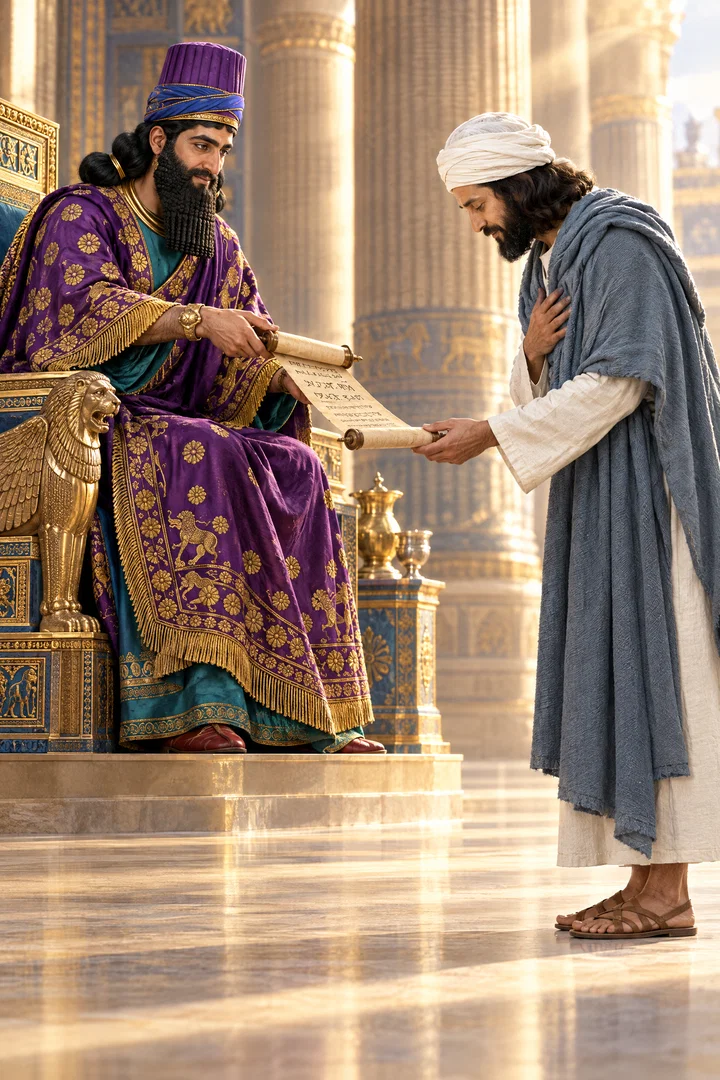
Now this is the copy of the letter that the king Artaxerxes gave unto Ezra the priest, the scribe, even a scribe of the words of the commandments of the LORD, and of his statutes to Israel.
Translations
American King James Version, Webster Bible
Now this is the copy of the letter that the king Artaxerxes gave to Ezra the priest, the scribe, even a scribe of the words of the commandments of the LORD, and of his statutes to Israel.
Now this is the copy of the letter that the king Artaxerxes gave unto Ezra the priest, the scribe, even a scribe of the words of the commandments of the LORD, and of his statutes to Israel.
Now this is the copy of the letter that the king Artaxerxes gave unto Ezra the priest, the scribe, even a scribe of the words of the commandments of the Lord, and of his statutes to Israel.
Now this is the copy of the letter that the king Artaxerxes gave unto Ezra the priest, the scribe, even the scribe of the words of the commandments of the LORD, and of his statutes to Israel.
Now this is the copy of the letter that the king Artaxerxes gave unto Ezra the priest, the scribe, even the scribe of the words of the commandments of Jehovah, and of his statutes to Israel:
And this [is] a copy of the letter that the king Artaxerxes gave to Ezra the priest, the scribe, a scribe of the words of the commands of Jehovah, and of His statutes on Israel:
And this is the copy of the letter that king Artaxerxes gave to Ezra the priest, the scribe, a scribe of the words of the commandments of Jehovah, and of his statutes to Israel:
Now, this, is a copy of the letter which King Artaxerxes gave, to Ezra the priest the scribe,—the scribe of the words of the commandments of Yahweh, and of his statutes, for Israel:—
Berean Standard Bible, Majority Standard Bible
This is the text of the letter King Artaxerxes had given to Ezra the priest and scribe, an expert in the commandments and statutes of the LORD to Israel:
Now this is the copy of the letter that King Artaxerxes gave to Ezra the priest, the scribe, even the scribe of the words of the LORD’s commandments, and of his statutes to Israel:
Now this is a copy of the letter which King Artaxerxes gave to Ezra, the priest and the scribe, who put into writing the words of the orders of the Lord, and of his rules for Israel:
And this is the copie of the letter that King Artahshashte gaue vnto Ezra the Priest and scribe, euen a writer of the words of the commadements of ye Lord, and of his statutes ouer Israel.
Douay-Rheims (Challoner revision)
And this is the copy of the letter of the edict, which king Artaxerxes gave to Esdras the priest, the scribe instructed in the words and commandments of the Lord, and his ceremonies in Israel.
Pictures

Cross-references
- Daniel 9:25
Know therefore and understand, that from the going forth of the commandment to restore and to build Jerusalem unto the Messiah the Prince shall be seven weeks, and threescore and two weeks: the street shall be built again, and the wall, even in troublous times.
The decree introduced here is used to date the seventy weeks and the rebuilding of Jerusalem.
- Ezra 6:14
And the elders of the Jews builded, and they prospered through the prophesying of Haggai the prophet and Zechariah the son of Iddo. And they builded, and finished it, according to the commandment of the God of Israel, and according to the commandment of Cyrus, and Darius, and Artaxerxes king of Persia.
The successive Persian decrees carry out God’s command to rebuild the temple.
- Nehemiah 2:1-8
And it came to pass in the month Nisan, in the twentieth year of Artaxerxes the king, that wine was before him: and I took up the wine, and gave it unto the king. Now I had not been beforetime sad in his presence.
Nehemiah’s later permission confirmed and advanced the work begun by Ezra’s decree.
- Ezra 1:1-4
Now in the first year of Cyrus king of Persia, that the word of the LORD by the mouth of Jeremiah might be fulfilled, the LORD stirred up the spirit of Cyrus king of Persia, that he made a proclamation throughout all his kingdom, and put it also in writing, saying,
Cyrus’s limited decree began the restoration later renewed and enlarged by Artaxerxes.
- Ezra 7:25-26
And thou, Ezra, after the wisdom of thy God, that is in thine hand, set magistrates and judges, which may judge all the people that are beyond the river, all such as know the laws of thy God; and teach ye them that know them not.
The decree authorizes Ezra to appoint judges, teach God's law, and enforce it.
- Ezra 7:7
And there went up some of the children of Israel, and of the priests, and the Levites, and the singers, and the porters, and the Nethinims, unto Jerusalem, in the seventh year of Artaxerxes the king.
Dates the decree to Artaxerxes’ seventh year.
- Isaiah 45:13
I have raised him up in righteousness, and I will direct all his ways: he shall build my city, and he shall let go my captives, not for price nor reward, saith the LORD of hosts.
The prophecy of Jerusalem’s restoration is fulfilled through the Persian decree.
- Ezra 7:6
This Ezra went up from Babylon; and he was a ready scribe in the law of Moses, which the LORD God of Israel had given: and the king granted him all his request, according to the hand of the LORD his God upon him.
Both describe Ezra as a learned scribe and say the king granted his request.
- Ezra 7:15
And to carry the silver and gold, which the king and his counsellors have freely offered unto the God of Israel, whose habitation is in Jerusalem,
The king and his counselors freely give gifts to the God of Israel in Jerusalem.
- Ezra 8:1-20
These are now the chief of their fathers, and this is the genealogy of them that went up with me from Babylon, in the reign of Artaxerxes the king.
Records the Jews who returned with Ezra; Esther’s events fall between Ezra 7 and Ezra 8.
- Ezra 7:20
And whatsoever more shall be needful for the house of thy God, which thou shalt have occasion to bestow, bestow it out of the king’s treasure house.
Temple expenses are provided from the king’s treasury.
- Isaiah 44:26-28
That confirmeth the word of his servant, and performeth the counsel of his messengers; that saith to Jerusalem, Thou shalt be inhabited; and to the cities of Judah, Ye shall be built, and I will raise up the decayed places thereof:
God’s prophecy of Jerusalem’s rebuilding is carried out through the Persian decree.
- Ezra 9:9
For we were bondmen; yet our God hath not forsaken us in our bondage, but hath extended mercy unto us in the sight of the kings of Persia, to give us a reviving, to set up the house of our God, and to repair the desolations thereof, and to give us a wall in Judah and in Jerusalem.
Persian favor enabled Jerusalem’s restoration and repair of its walls.
- Ezra 7:24
Also we certify you, that touching any of the priests and Levites, singers, porters, Nethinims, or ministers of this house of God, it shall not be lawful to impose toll, tribute, or custom, upon them.
The decree exempts temple workers from tolls, tribute, and customs.
- Ezra 7:27-28
Blessed be the LORD God of our fathers, which hath put such a thing as this in the king’s heart, to beautify the house of the LORD which is in Jerusalem:
Ezra praises God for moving the king to support the temple and the return.
- Ezra 4:11-16
This is the copy of the letter that they sent unto him, even unto Artaxerxes the king; Thy servants the men on this side the river, and at such a time.
The letter shows the earlier decree’s limited scope.
- Ezra 7:23
Whatsoever is commanded by the God of heaven, let it be diligently done for the house of the God of heaven: for why should there be wrath against the realm of the king and his sons?
God’s commands are to be carried out diligently to avert wrath.
- Jeremiah 29:10
For thus saith the LORD, That after seventy years be accomplished at Babylon I will visit you, and perform my good word toward you, in causing you to return to this place.
The Jews’ return follows the seventy years of captivity.
- Ezra 6:1-10
Then Darius the king made a decree, and search was made in the house of the rolls, where the treasures were laid up in Babylon.
second decree completed by Artaxerxes decree
Commentary
Each commentary is drawn from primary sources: the writings of Ellen G. White and Adventist pioneers and periodicals. Each commentary is separate. Its own words are not a quotation; follow the references to read the source passages.
Ellen G. White
14 sources
This verse gives the copy of the royal letter that King Artaxerxes Longimanus gave to Ezra, commissioning him to act and to return to Jerusalem.RH Feb 6, 1908PK 610.1–611.1PK 609.4 It describes Ezra as the priest and scribe of the words of the commandments of the Lord and His statutes to Israel, learned and skilled in the law of the God of heaven and raised up by the Lord to renew its study and practice.RH Feb 6, 1908PK 610.1–611.1PK 609.4 The decree was issued in the seventh year of Artaxerxes, dated to 457 B.C., as the third and final decree for restoring and building Jerusalem, completing what Cyrus began and Darius continued.RH Feb 6, 1908PK 610.1–611.1PK 609.44SP 494.2–3RH Jan 30, 1908 This decree is the starting point from which the seventy weeks begin and from which the 2,300-year period of Daniel 8:14 is reckoned, taking effect in autumn 457 B.C.ST May 2, 1878LS 48.4–5CET 49.2 That period was reckoned as 2300 minus 457 to end in 1843, while those who held that the decree came near the close of the year teach that it reaches instead to the fall of 1844.ST May 2, 1878LS 48.4–5CET 49.2ST Mar 30, 18761T 52.2–53.2
The Letter and Setting
Ezra 7:11 presents the copy of the letter that King Artaxerxes Longimanus gave to Ezra as a royal commission authorizing him to act and to return to Jerusalem.RH Feb 6, 1908PK 610.1–611.1PK 609.4Lt 98, 1907, par. 2 The letter identifies Ezra as the priest and the scribe, even a scribe of the words of the commandments of the Lord and of His statutes to Israel.RH Feb 6, 1908PK 610.1–611.1PK 609.44SP 494.2–3 He is described as learned and skilled in that law, also called the law of the God of heaven, and his attainments in it are recognized by the king.RH Feb 6, 1908PK 610.1–611.1PK 609.4 The Lord raised up Ezra as His servant and enabled him to find favor with the king.PK 609.4Lt 98, 1907, par. 2
The decree was issued in the seventh year of Artaxerxes, dated to 457 B.C.4SP 494.2–3RH Jan 30, 1908PK 607.1 Under it Ezra led a company of Jews back to Jerusalem after seventy years of captivity in Babylon.RH Feb 6, 1908PK 609.4Lt 98, 1907, par. 2RH Jan 30, 1908PK 607.1 The commission authorized him to help restore the city and to renew the study and practice of God's word.RH Feb 6, 1908PK 609.4 It provided gifts for the temple and abundant means for rebuilding the temple, with heavy expenses ordered to be paid out of the royal treasure-house.PK 610.1–611.1PK 609.4Lt 98, 1907, par. 2
It was the third and final decree for the restoring and building of Jerusalem since the close of the seventy years captivity.PK 610.1–611.1RH Jan 30, 1908PK 607.1 It completed the work begun by Cyrus and continued by Darius, so that Scripture counts the actions of the kings as one decree.PK 610.1–611.14SP 494.2–3 The decree is remarkable for its reverent expressions regarding the God of heaven, for its recognition of Ezra's attainments, and for the liberality of its grants to the remnant people of God.PK 610.1–611.1 Joined with his counselors, the king freely offered to the God of Israel whose habitation is in Jerusalem.PK 610.1–611.1 In this return God's people were given another opportunity to serve Him there, showing God's forbearance toward them.Lt 98, 1907, par. 2
Prophetic Starting Point
The copy of the letter introduced here is the decree to restore and build Jerusalem from which the seventy weeks begin and from which the 2,300-year period of Daniel 8:14 is reckoned.ST May 2, 1878LS 48.4–5CET 49.2ST Mar 30, 1876LS 185.2–3 It went forth in 457 B.C., in the seventh year of Artaxerxes.LS 48.4–5CET 49.2ST Mar 30, 18761T 52.2–53.2LS 185.2–3 It took effect in autumn.ST May 2, 1878ST Mar 30, 18761T 52.2–53.2LS 185.2–3LSEGW 57.3–58.1
The reckoning was taught as 2300 minus 457 leaving 1843, fixing the close of the prophetic period in 1843 with the coming of the Lord.LS 48.4–5CET 49.2LS 185.2–3 That starting date was susceptible of the clearest proof.LS 48.4–5 The calculation from the decree was so simple and plain that even children could understand it.LS 185.2–3
Because the decree was given near the end and close of the year 457 B.C. and not at the beginning of the year, the period reaches to the fall of 1844 rather than ending in 1843.ST May 2, 1878ST Mar 30, 18761T 52.2–53.2LS 185.2–3LSEGW 57.3–58.1 What was first expected to terminate in 1843 was thus moved to the fall of 1844.1T 52.2–53.2LS 185.2–3LSEGW 57.3–58.1 The apparent delay did not mean the vision had failed, but that its appointed time had not yet arrived.ST May 2, 1878
Sources
Pioneers and periodicals
82 sources
This is the introduction to the preserved copy of the decree that King Artaxerxes gave to Ezra, who was both a priest and a learned scribe of the Lord's commandments and statutes to Israel.RH Feb 6, 1908RH Jan 14, 1858RH Mar 2, 1876 It is the going forth of the commandment to restore and build Jerusalem spoken of in Daniel 9:25, the third and final part of the threefold commandment after Cyrus and Darius, completing them into the full commandment from which the seventy weeks and the 2300 days are dated together.ST Feb 25, 1886ST Jan 20, 1904 Unlike the earlier acts which only permitted and confirmed the rebuilding of the temple, this decree restored the city, its religion and its civil government, authorizing the willing to return, supplying treasure and offerings, commissioning the teaching of the law, appointing magistrates and judges, and empowering the rebuilding of the walls.ST Mar 11, 1889RH Apr 18, 1912ST Jun 26, 1907 It went forth in the seventh year of Artaxerxes in 457 B.C., and counted by year-day reckoning sixty-nine weeks reach Messiah the Prince at Christ's baptism in A.D. 27, the midst of the seventieth week reaches His death in A.D. 31, the seventy weeks close in A.D. 34 with the gospel going to the Gentiles, and 2300 years reach autumn 1844.ST May 2, 1878ST Jan 20, 1904RH Jun 4, 1857 That ending marks the cleansing of the heavenly sanctuary, when Christ entered the Most Holy place to begin the investigative judgment and closing work announced by the judgment-hour message.RH Dec 8, 1915ST Mar 30, 1876ST Nov 18, 1880
Words and Historical Setting
The verse introduces the copy of the letter that King Artaxerxes gave to Ezra, identifying Ezra as a priest and a scribe of the words of the commandments of the Lord and of His statutes to Israel.RH Feb 6, 1908RH Jan 14, 1858RH Mar 2, 1876ST Mar 26, 1912ST Mar 26, 1912 The royal recognition rests on Ezra's knowledge of God's law, and authorizes him to return to Jerusalem to restore the city, renew the study and practice of that law, bring worship into due order, and regulate Jewish affairs.RH Feb 6, 1908RH Mar 2, 1876ST Mar 26, 1912ST Mar 26, 1912RH Dec 23, 1852 That commission grants authority to establish government, appoint magistrates and judges, enforce God's law, teach those who do not know it, and punish disobedience.RH Jan 14, 1858RH Mar 2, 1876ST Mar 26, 1912ST Mar 26, 1912RH Dec 23, 1852
What follows is the preserved original document itself, a single written decree addressed directly to Ezra and kept in Scripture.ST Feb 23, 1882ST Apr 15, 1880RH Feb 22, 1870RH Sep 13, 1870ST Nov 1, 1877 It is presented as the original copy of the letter, not a later verbal permission or an unpreserved message through others.ST Apr 15, 1880RH Feb 22, 1870RH Sep 13, 1870ST Nov 1, 1877ST Feb 23, 1882 As such it is the authorization by which Ezra was empowered to restore and build Jerusalem, to bring back the Jewish state civil and ecclesiastical to its pre-captivity condition.ST Feb 23, 1882ST Apr 15, 1880RH Sep 13, 1870ST Nov 1, 1877ST Feb 23, 1882
The decree section in Ezra 7:12-26 is preserved in its original Chaldaic or Eastern Aramaic, the language then used at Babylon, with the Hebrew narrative resuming at verse 27.ST Feb 23, 1882ST Apr 15, 1880RH Sep 13, 1870ST Nov 1, 1877RH Dec 23, 1852 The letter was written in the Aramaic used at Babylon while the narrative resumes in Hebrew.ST Apr 15, 1880RH Jan 14, 1858RH Sep 13, 1870ST Nov 1, 1877RH Dec 23, 1852
The king is Artaxerxes Longimanus in his seventh year, who reigned forty-one years beginning in 464 B.C., so that seventh year is 457 B.C.ST Apr 15, 1880RH Nov 26, 1857RH Jul 9, 1908RH Jan 30, 1879ST Jan 22, 1880 That 464 B.C. beginning is reckoned from the moon's eclipse in Cambyses' seventh year in 523 B.C., with Cambyses eight years including Smerdis, followed by Darius thirty-six years and Xerxes twenty-one years, a reckoning fixed by astronomy and confirmed by more than twenty eclipses.ST Apr 15, 1880RH Nov 26, 1857RH Jul 9, 1908RH Jan 30, 1879ST Jan 22, 1880 Artaxerxes Longimanus followed Darius son of Hystaspes and Xerxes on the throne, is identified as son of Xerxes or Ahasuerus and the same as Ahasuerus, acting with his seven chief counselors, and the favor was obtained at Esther's solicitation by Mordecai's direction while she concealed her kindred.ST Apr 15, 1880RH Nov 26, 1857RH Jul 9, 1908ST Jan 22, 1880ST Jun 2, 1909
In its setting Ezra is the learned, faithful organizer of the company that returned with him from Babylon to Jerusalem in large numbers in response to the invitation to return.RH Feb 6, 1908ST Apr 19, 1883RH Aug 28, 1860ST May 9, 1878 He sought lawful authority from the king rather than acting independently, and the king granted his request.RH Feb 6, 1908RH Jan 14, 1858RH Mar 2, 1876RH Dec 23, 1852RH Aug 28, 1860 The temple had already been completed, so the sanctuary was in existence when the period dated from this decree began.ST Apr 15, 1880RH Nov 26, 1857RH Jan 20, 1853ST Jun 2, 1909ST May 9, 1878 Esther's story falls between Ezra 7 and Ezra 8, about sixty years after the first return and forty years after the temple's completion, and the verse stands after the close of Judah's history in 2 Kings 25 with its destruction of Jerusalem, captivity, and aftermath.ST Apr 19, 1883RH Aug 28, 1860RH Jan 20, 1853ST May 9, 1878ST Sep 20, 1899
Decree's Provisions and Scope
The letter introduced here authorized Ezra to go up to Jerusalem with all of his people who were willing to go with him, to return there and inhabit it.ST Feb 23, 1882RH Sep 13, 1870RH Jul 28, 1863ST Nov 1, 1877RH Jul 15, 1873 The favor was obtained at Esther's solicitation by Mordecai's direction while she concealed her kindred, when as best beloved of the king's concubines she asked it on a day when Persian kings allowed their women to ask boons, acting with his seven chief counselors. It was a very ample commission to return with full authority to restore and settle the state and to reform the church and regulate and govern both according to their own laws.
It supplied much treasure from the king and his counselors to beautify the house of God and procure offerings and to do whatever else seemed good to Ezra, with liberty to collect more.ST Nov 1, 1877RH Jul 15, 1873 It commanded a yearly supply from the treasurers beyond the River up to one hundred talents of silver, one hundred measures of wheat, one hundred baths of wine, one hundred baths of oil, and salt without measure, for sacrifices and other uses at Ezra's discretion.RH Jul 15, 1873 It required that all things be done according to the mind and will of the God of heaven lest His anger break out against the king and his sons.RH Jul 15, 1873 It made priests and Levites free from all taxes and impositions, provided for ordered worship, and furnished building materials before construction.RH Dec 24, 1861RH Jul 15, 1873
It commissioned Ezra to restore the Scriptures and renew the study and practice of God's law, to teach those who did not know it, to bring worship into due order, and to work full reformation in church and state.RH Feb 6, 1908ST Feb 25, 1886ST Apr 15, 1880RH Dec 24, 1861ST Mar 26, 1912 It recognized his knowledge as priest and scribe of the words of the commandments of the Lord and His statutes to Israel and authorized him to help restore the city on that basis.RH Feb 6, 1908 It added to the earlier permissions to return and rebuild the temple by restoring Jerusalem's privileges and re-establishing God's law as the law of the city.ST Aug 8, 1878
It empowered Ezra to regulate Jewish affairs and restore the Jewish state civil and ecclesiastical to its pre-captivity condition according to the law of God and ancient custom and the law of the king.ST Feb 23, 1882ST Apr 15, 1880RH Sep 13, 1870 It gave him power to constitute judges and governors and to set magistrates and judges over the people beyond the river, to establish tribunals and administration of justice, to ordain laws, and to enforce observance.ST Feb 23, 1882ST Apr 15, 1880RH Jul 15, 1873 It authorized speedy punishment of disobedience with death, banishment, confiscation of goods, imprisonment, or fines.ST Apr 15, 1880ST Nov 1, 1877ST Mar 26, 1912
The grant authorized more than rebuilding walls and houses or repairing the temple, since unlike the permission of Cyrus in Ezra 1 to return and build the temple and the renewal by Darius in Ezra 6 with provision for finishing it, it fully restored the city to its ancient privileges.RH Feb 22, 1870RH Mar 2, 1876RH Mar 10, 1874ST Aug 8, 1878 Though the edict has no express mention of repairing the walls, sufficient license and authority to fortify and build is concluded in it, because secure dwelling and safe temple work required walls against Samaritans and other enemies and the treasure could only be spent on fortifications.RH Jul 15, 1873 Ezra began to build the walls but was hindered by other occasions, negligence, and molestations of enemies who used the lack of express license to interrupt the work, until thirteen years afterward it was renewed and perfected by Nehemiah in Artaxerxes' twentieth year under the same decree.RH Jul 15, 1873
The decree was not limited to Judah and Benjamin but extended to all the people of Israel, renewing the decree of Cyrus with the same wide extent.RH Sep 4, 1856 A copy was sent through all Media where the ten tribes were captive, as well as through all Chaldea and Assyria where the Jews were captive, so both groups were included.RH Sep 4, 1856 It was proclaimed throughout the Persian Empire of one hundred and twenty provinces, so that Jews scattered in far countries, even in Egypt, could learn that favor was again shown and could return if they wished.ST May 9, 1878 Its provisions enabled rebuilding and restoration to proceed as fully as the people chose to respond, so that by 445 B.C., twelve years later, Israel was dwelling in its cities.
Command to Restore Jerusalem
The decree introduced here is the going forth of the commandment to restore and build Jerusalem spoken of in Daniel 9:25, from which the seventy weeks of 490 years are dated, and with them the 2300 days or years. ST Feb 25, 1886ST Jan 20, 1904RH Apr 30, 1901RH Mar 12, 1901 Its date is the seventh year of Artaxerxes, 457 B.C., and that date governs alike the seventy weeks to A.D. 34 and the 2300 years to autumn 1844, with sixty-nine weeks or 483 years reaching to Messiah the Prince. ST Jan 20, 1904RH Feb 17, 1853RH Apr 30, 1901RH Mar 12, 1901 It authorized the complete restoration of the Jewish polity, allowing Jews to return to Jerusalem, providing for the temple service and its needs, and empowering Ezra to teach and enforce God's law and to restore civil government and religious worship. ST Feb 25, 1886RH Apr 30, 1901RH Mar 12, 1901
It is the third and final portion of the threefold commandment, with Cyrus in 536 B.C. in Ezra 1 and Darius in 519 B.C. in Ezra 6, completing and greatly enlarging them into the full commandment of the God of Israel legally established by successive Persian action. RH Mar 2, 1876ST Jan 20, 1904ST Mar 11, 1889ST Jun 26, 1907 The prophetic period must be dated from this last decree because the command had not fully gone forth until it included the city and its government. ST Jan 20, 1904ST Mar 11, 1889ST Jun 26, 1907 Together the three decrees form the commandment to restore and build Jerusalem, but this one includes the provisions of the earlier decrees and supplies what was lacking in them, and being fuller in scope and greater in powers it makes that commandment full and complete. RH Mar 2, 1876RH Apr 18, 1912ST Jun 26, 1907 Its date is firmly established, and it was put into effect in Artaxerxes' seventh year to mark the commencement of the seventy weeks and therefore of the 2300 days. ST Mar 11, 1889RH Apr 18, 1912ST Jun 26, 1907
Unlike Cyrus, which only gave permission to rebuild the temple, and Darius, which only confirmed Cyrus and provided for finishing the temple, this decree is a complete charter for the full restoration of Jerusalem. ST Mar 11, 1889ST Dec 19, 1892RH Mar 10, 1874 It is as broad and ample as could be given without granting entire independence, fully reestablishing the religion, polity, and policy of the Jewish nation and restoring its secular government. ST Mar 11, 1889RH Apr 18, 1912ST Dec 19, 1892 It authorized more than temple repairs or rebuilding walls and houses, empowering the restoration of the Jewish state including its civil and religious order, laws, magistrates and judges, re-establishing the law of God as the law of the city and authorizing the rebuilding of its walls. RH Mar 2, 1876RH Apr 18, 1912ST Jun 26, 1907ST Feb 23, 1882RH Mar 10, 1874 So it fully meets the specification of the prophecy to restore as well as to build, and therefore fixes the date from which the seventy weeks and the 2300 days must be reckoned. ST Mar 11, 1889ST Dec 19, 1892RH Mar 10, 1874
It, not Nehemiah's later permission, is the true starting point. RH Feb 22, 1870RH Jul 28, 1863RH Dec 23, 1852ST Apr 22, 1880 It was one single express decree addressed directly to Ezra and preserved in Scripture as the original document, presented as the copy of the letter, while Nehemiah's was only verbal and consisted of more than one letter addressed not to Nehemiah but to the keeper of the king's forest and the governors beyond the river, whose copies were not thought important enough to preserve. RH Feb 22, 1870RH Dec 23, 1852ST Apr 22, 1880ST Apr 22, 1880 Nehemiah's later letters concerned rebuilding the city's damaged walls and gates and finishing what Ezra began, not beginning its restoration, and his commission was a fuller but more limited permission given in Artaxerxes' twentieth year. RH Jul 28, 1863RH Feb 17, 1853RH Dec 23, 1852ST Apr 22, 1880 The thirteen years to Nehemiah's completion make no difference because the weeks are counted from issuing, proved by the crucifixion in the midst of the seventieth week. RH Feb 22, 1870RH Jul 28, 1863RH Jul 21, 1863
Among four Persian acts considered as possible starting points for Daniel's prophecy, this decree is the only one whose scope and timing fit the prophecy's conditions. RH Jan 7, 1858RH Feb 14, 1854RH Sep 13, 1870RH Feb 14, 1854 The earlier decrees of Cyrus and Darius chiefly concerned rebuilding the temple and restoring its worship, so they did not fully answer the command to restore and build Jerusalem including its civil state and government, leaving this decree and the commission to Nehemiah as the two remaining candidates. RH Jan 7, 1858RH Jul 21, 1863RH Sep 13, 1870 Dated from this decree, the seventy weeks align with the prophecy's events: the beginning of Christ's ministry after sixty-nine weeks and his crucifixion in the middle of the seventieth week. RH Jul 21, 1863RH Feb 14, 1854RH Feb 14, 1854 Counting from it makes the 2300-day period and its first 490 years accord with the stated events concerning Messiah the Prince, the cessation of sacrifice and offering, and the confirmation of the covenant for one week. RH Jul 21, 1863RH Feb 14, 1854RH Feb 14, 1854
Dates and Prophetic Reckoning
The decree went forth in the seventh year of Artaxerxes, dated to 457 B.C.ST Jan 24, 1878ST Jan 20, 1904RH Jan 14, 1858ST Mar 27, 1879ST Mar 4, 1886 It was issued in the fifth Jewish month, which falls in autumn by the modern calendar.ST Jan 20, 1904ST Mar 27, 1879 It is given as a margin date and reckoned as 456 1/2 B.C. because half the year had passed.RH Jun 4, 1857ST Sep 16, 1886RH Oct 27, 1904RH Sep 18, 1900
That 457 B.C. date is fixed by Ptolemy's Canon and astronomy.RH Jan 14, 1858ST Jun 26, 1907ST Apr 15, 1880ST Oct 25, 1883 The first year of Artaxerxes is reckoned as 464 B.C. from the moon's eclipse in the seventh year of Cambyses in 523 B.C., with Cambyses reigning eight years including Smerdis, followed by Darius thirty-six years and Xerxes twenty-one years.RH Jan 14, 1858ST Apr 15, 1880 The reckoning is confirmed by the agreement of more than twenty eclipses.ST Jun 26, 1907ST Apr 15, 1880ST Oct 25, 1883RH Oct 27, 1904 It is confirmed also by Olympiad and city-year reckonings carried to Christ's crucifixion.RH Oct 27, 1904
The period begins not with Ezra's spring departure from Babylon but with the actual commencement at Jerusalem in autumn.ST Sep 16, 1886ST Mar 31, 1909RH Sep 18, 1900RH Dec 23, 1852RH Feb 22, 1870 Ezra left Babylon in the first month and reached Jerusalem in the fifth, four months later, the decree taking effect when he arrived because it was addressed to officials beyond the river.ST Sep 16, 1886ST Mar 31, 1909RH Sep 18, 1900 The rebuilding work began after the seventh-month ceremonies.RH Dec 23, 1852ST Mar 31, 1898 The first seven weeks belong to that restoration work in troublous times.RH Feb 22, 1870
Counted from 457 B.C. by year-day reckoning, sixty-nine weeks or 483 years reach Messiah the Prince at Christ's baptism and anointing in autumn A.D. 27.ST Jan 20, 1904GSAM 109.2–110.1ST May 11, 1876RH Oct 27, 1904 The midst of the seventieth week reaches his cutting off in A.D. 31.RH Oct 27, 1904 The seventy weeks close in autumn A.D. 34 when the gospel went to the Gentiles, when the scattered disciples went everywhere preaching the word.ST Jan 20, 1904RH Dec 1, 1904RH Oct 27, 1904 The first forty-nine years reach Jerusalem's restoration completed in 408 B.C. with Nehemiah's final reformation.ST Jan 20, 1904 Eighteen hundred and ten years beyond A.D. 34 bring the 2300 years to autumn 1844.ST Jan 20, 1904RH Jun 4, 1857RH Oct 27, 1904
Subtracting 457 from 2300 first gave 1843, the year first concluded for the close.ST May 2, 1878ST Jan 24, 1878 It was corrected to the fall of 1844 because the decree came near the end or middle of 457 B.C. and full years before and after Christ require it, with six months of that year passed before the decree took effect so the full years run six months over into 1844 to the midnight cry.ST May 2, 1878RH Jun 4, 1857RH Dec 1, 1904 This fulfillment confirms the day-for-a-year reckoning and the starting date.ST May 11, 1876 Counting 490 years from the decree does not reach Jerusalem's destruction in A.D. 70.RH Apr 9, 1908
Doctrine and Practical Lessons
The royal letter to Ezra marks the going forth in full effect in 457 B.C. of the command to restore Jerusalem, beginning the 490 years and the 2,300-year period together, with the 490 years ending in A.D. 34 and the 2,300 years ending in 1844.RH Dec 8, 1915ST Mar 30, 1876ST Jan 9, 1893ST Mar 31, 1909RH Apr 10, 1916 That ending date marks the cleansing of the heavenly sanctuary, when Christ as great High Priest entered the Most Holy place to make the final atonement and cleanse it from the sins of His people.RH Dec 8, 1915ST Mar 30, 1876ST Nov 18, 1880ST Jan 9, 1893ST Mar 31, 1909 There He began the present closing work of investigative judgment of God's people, the priestly ministry in the holy of holies in the heavenly temple announced by the message that the hour of God's judgment has come.ST Mar 30, 1876ST Jan 9, 1893ST Mar 31, 1909RH Apr 10, 1916 After that cleansing sin is laid upon Satan as the antitypical scapegoat, and Christ comes the second time without sin unto salvation preparatory to His second coming.ST Mar 30, 1876ST Nov 18, 1880
The reckoning from the 457 B.C. promulgation was so simple and plain that even children could understand it, and counting 2,300 years from that date first led to expecting the close in 1843.LS 48.4–5LS 185.2–3ST Jan 24, 1878RH Aug 11, 1904 Because the decree was given near the end or close of the year 457 B.C. and went into effect four months later when Ezra reached Jerusalem, the period must reach to the fall of 1844 rather than ending in 1843, with six months over into 1844 to the midnight cry.ST May 2, 1878ST Mar 30, 1876LS 185.2–3ST Mar 31, 1909 The apparent delay and the passing of the expected time without the event did not mean the vision had failed, but that its appointed time had not yet arrived.ST May 2, 1878RH Aug 11, 1904 The correction preserves the harmony of the prophecy and brings it to its climax in the great advent movement and the threefold message of Revelation 14 as heaven's last gospel message.ST May 2, 1878ST Jan 9, 1893ST Mar 31, 1909
The first 490 years of the 2,300 years, beginning with the command's full force in 457 B.C., were allotted to the Jewish people.ST Feb 7, 1906RH Oct 27, 1904ST Nov 5, 1912 They identify when the Jews would cease to be God's specially chosen people and their city and temple would be rejected.RH Nov 3, 1874ST Nov 5, 1912 That starting point is proved because 483 years or sixty-nine weeks reach to A.D. 26 1/2 or A.D. 27, when Jesus was anointed with the Holy Ghost at His baptism as Messiah the Prince, and 490 years reach to A.D. 33 1/2 and A.D. 34, when the scattered disciples went everywhere preaching the word and the gospel went to the Gentile world.RH Oct 27, 1904ST Nov 5, 1912 The date is established by more than twenty eclipses and by the markers for John's preaching six months before Christ's ministry, leaving with A.D. 34 fixed as the end of the 490 years 1810 years remaining of the 2,300 to reach 1844.RH Oct 27, 1904
The commission sent Ezra to Jerusalem to restore the Scriptures, instruct the people in the law, bring worship into due order, and work full reformation in church and state, a thorough restoration of the Jewish church and state making him another Moses and second founder of it.RH Oct 20, 1874 That restoration foreshows the age of the restored church of the Jews, how long it would continue and when it would cease, while the 457 B.C. decree completing the decree for Jerusalem and its temple marks the beginning of the 2,300 years ending in 1844, when the final decree for completing the gospel temple and the announcement of God's judgment were to take place.ST May 21, 1896RH Oct 20, 1874 Persian monarchs issuing decrees for building the temple and for rebuilding and repairing Jerusalem shows God's care for His people.ST Apr 16, 1912 When kings, prophets and priests of Judah and Israel completely failed and the kingdom passed away with the temple destroyed, God vindicated Himself as the nation's hope by compelling the proud despots of Persia, including Cyrus and Xerxes with Artaxerxes, to recognize His supremacy, protect His people, and send back the captives from Babylon to rebuild the city and temple at Jerusalem.ST Mar 11, 1897
In returning to restore God's law and worship Ezra as priest and scribe skilled in the Lord's commandments and statutes sought lawful authority from the king rather than acting independently, and the king granted his request, an example for church order.RH Aug 28, 1860 The royal enactment for the temple work, to the same purpose as the decrees of Cyrus and Darius and as David and Solomon's provision with Hiram king of Tyre, means the State uses legislative, executive and judicial proceedings to serve the church, destroying public vice, crime, immorality and licentiousness, promoting morality, virtue and good order, and meeting expenses of the church's public aggressive work in whole or in part from the public treasury, done with divine approval.ST Nov 11, 1889 The needed temple resources and building materials were provided before construction through that royal support, so the temple rebuilt after the captivity was completed without debt, an example for finance.RH Jul 17, 1913
Sources