Hebrews 11:17
By faith Abraham, when he was tried, offered up Isaac: and he that had received the promises offered up his only begotten son,
Translations
American King James Version, King James Version, KJV Cambridge Paragraph Bible
By faith Abraham, when he was tried, offered up Isaac: and he that had received the promises offered up his only begotten son,
By faith Abraham, when he was tried, offered up Isaac: and he that had received the promises offered up his only-begotten son,
Revised Version, American Standard Version
By faith Abraham, being tried, offered up Isaac: yea, he that had gladly received the promises was offering up his only begotten son;
By faith Abraham hath offered up Isaac, being tried, and the only begotten he did offer up who did receive the promises,
By faith Abraham, [ when] tried, offered up Isaac, and he who had received to himself the promises offered up his only begotten [son],
By faith, Abraham, when tested, offered up Isaac, and, the only-begotten, would he have offered up, who the promises had accepted,—
Berean Standard Bible, Majority Standard Bible
By faith Abraham, when he was tested, offered up Isaac on the altar. He who had received the promises was ready to offer his one and only son,
By faith, Abraham, being tested, offered up Isaac. Yes, he who had gladly received the promises was offering up his only born son,
By faith Abraham made an offering of Isaac, when he was tested: and he with whom the agreement had been made gave up as an offering the only son of his body,
By faith Abraham offered vp Isaac, when he was tryed, and he that had receiued the promises, offered his onely begotten sonne.
Douay-Rheims (Challoner revision)
By faith Abraham, when he was tried, offered Isaac: and he that had received the promises, offered up his only begotten son;
Pictures
Cross-references 20 of 65
- Genesis 22:1-14
And it came to pass after these things, that God did tempt Abraham, and said unto him, Abraham: and he said, Behold, here I am.
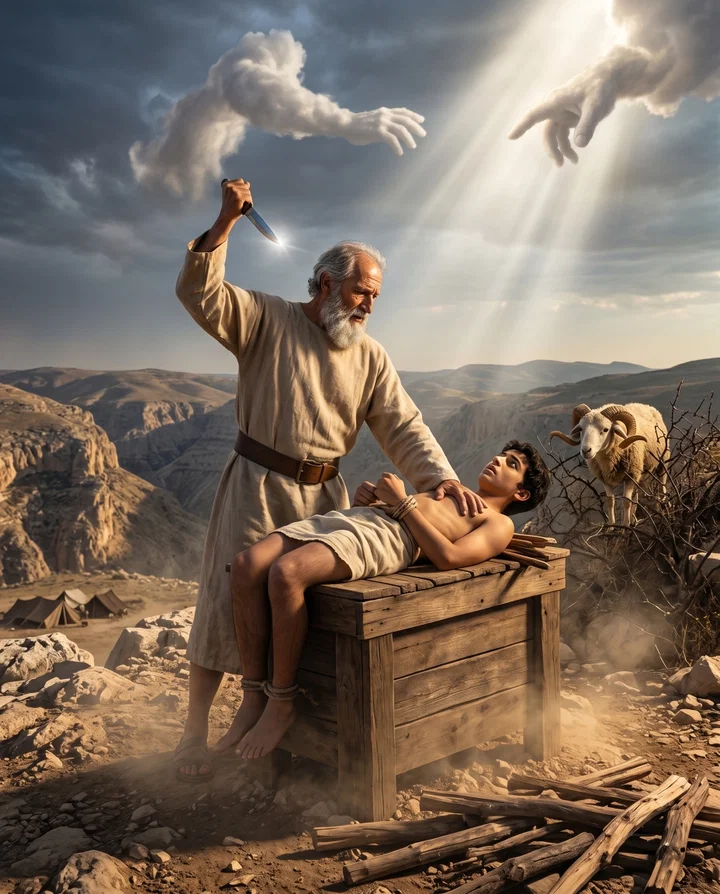
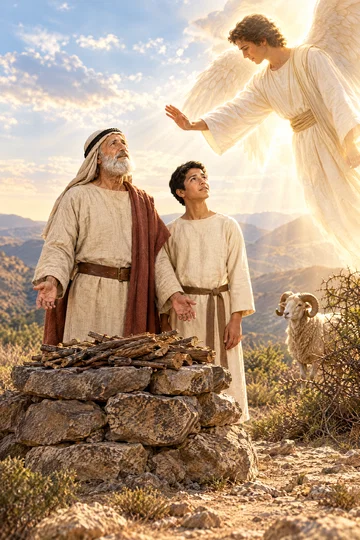
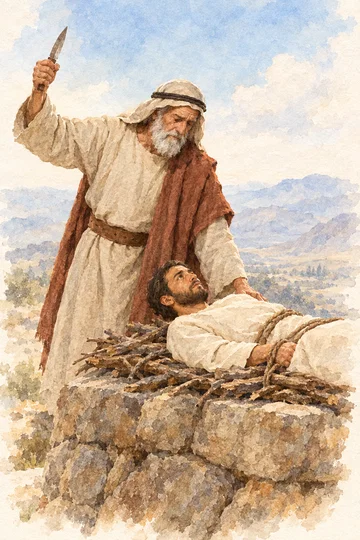
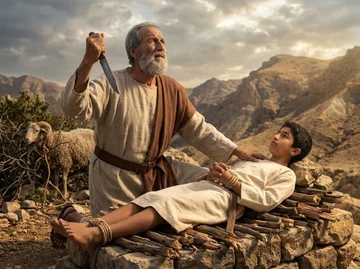
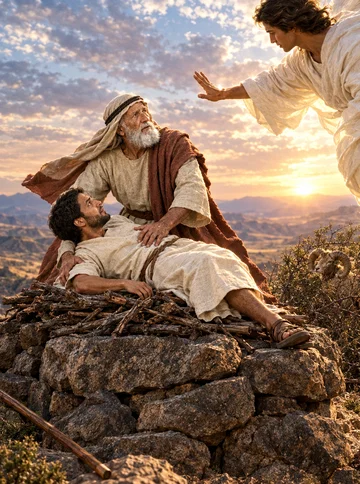
Abraham is tested and prepares to offer Isaac, but God provides a substitute.
- Genesis 21:12
And God said unto Abraham, Let it not be grievous in thy sight because of the lad, and because of thy bondwoman; in all that Sarah hath said unto thee, hearken unto her voice; for in Isaac shall thy seed be called.
God says the promised line will come through Isaac.
- Romans 4:13
For the promise, that he should be the heir of the world, was not to Abraham, or to his seed, through the law, but through the righteousness of faith.
Abraham was promised the world as his inheritance.
- James 2:21-23
Was not Abraham our father justified by works, when he had offered Isaac his son upon the altar?
Abraham’s offering of Isaac shows faith made complete through works.
- Hebrews 11:1
Now faith is the substance of things hoped for, the evidence of things not seen.
Defines the faith Abraham exercised in offering Isaac.
- Galatians 3:16
Now to Abraham and his seed were the promises made. He saith not, And to seeds, as of many; but as of one, And to thy seed, which is Christ.
Identifies Christ as Abraham’s promised Seed.
- Galatians 3:29
And if ye be Christ’s, then are ye Abraham’s seed, and heirs according to the promise.
Those who belong to Christ are Abraham’s seed and heirs of the promise.
- Hebrews 11:6
But without faith it is impossible to please him: for he that cometh to God must believe that he is, and that he is a rewarder of them that diligently seek him.
Both present faith as necessary to please God.
- Romans 4:20-21
He staggered not at the promise of God through unbelief; but was strong in faith, giving glory to God;
Abraham’s unwavering faith trusts God to fulfill his promise despite the command concerning Isaac.
- Genesis 15:6
And he believed in the LORD; and he counted it to him for righteousness.
Abraham’s faith was counted to him for righteousness.
- Galatians 3:8
And the scripture, foreseeing that God would justify the heathen through faith, preached before the gospel unto Abraham, saying, In thee shall all nations be blessed.
Connects the gospel promise with Abraham.
- Hebrews 11:8
By faith Abraham, when he was called to go out into a place which he should after receive for an inheritance, obeyed; and he went out, not knowing whither he went.
Abraham’s departure at God’s call exemplifies obedient faith.
- Acts 7:5
And he gave him none inheritance in it, no, not so much as to set his foot on: yet he promised that he would give it to him for a possession, and to his seed after him, when as yet he had no child.
Abraham had received the inheritance promise but owned none of the land.
- Genesis 12:1
Now the LORD had said unto Abram, Get thee out of thy country, and from thy kindred, and from thy father’s house, unto a land that I will shew thee:
Abraham left his country and kindred in obedience to God’s call.
- John 8:56
Your father Abraham rejoiced to see my day: and he saw it, and was glad.
Abraham rejoiced by faith to see Christ’s day.
- Hebrews 11:4
By faith Abel offered unto God a more excellent sacrifice than Cain, by which he obtained witness that he was righteous, God testifying of his gifts: and by it he being dead yet speaketh.
Abel and Abraham are both examples of faith among the Hebrews worthies.
- Hebrews 11:13
These all died in faith, not having received the promises, but having seen them afar off, and were persuaded of them, and embraced them, and confessed that they were strangers and pilgrims on the earth.
The faithful died in faith without receiving the promises.
- Genesis 13:14-16
And the LORD said unto Abram, after that Lot was separated from him, Lift up now thine eyes, and look from the place where thou art northward, and southward, and eastward, and westward:
The land and seed promises belong to the promises Abraham trusted, though their fullness remained future.
- John 3:16
For God so loved the world, that he gave his only begotten Son, that whosoever believeth in him should not perish, but have everlasting life.
God’s gift of his Son echoes Abraham’s willingness to offer Isaac.
- Habakkuk 2:4
Behold, his soul which is lifted up is not upright in him: but the just shall live by his faith.
Declares that the just live by faith.
Commentary
Each commentary is drawn from primary sources: the writings of Ellen G. White and Adventist pioneers and periodicals. Each commentary is separate. Its own words are not a quotation; follow the references to read the source passages.
Ellen G. White
25 sources
By faith Abraham in his old age willingly offered up Isaac when he was tried with the closest test ever required of man, though the command seemed terrible and conflicted with the promises he had received concerning his son.Ms 106, 1902, par. 9–101SP 98.3–99.3ST Oct 25, 1910 Isaac is called his only begotten son because he was the only son of promise, the beloved son through whom God had plainly said Abraham would become a great nation with descendants called through Isaac.1SP 98.3–99.3SG3 105.1–106.23T 368.1–369.1 Abraham obeyed without doubting, hesitating, complaining, or reasoning that the promise could be fulfilled through Ishmael, trusting that the God who gave Sarah a son in her old age could fulfill the promise even if Isaac died by raising him from the dead.1SP 98.3–99.3SG3 105.1–106.2Ms 19, 1886, par. 15–161SP 99.4–101.1ST Oct 25, 1910 Through personal anguish the test taught him the cost of redeeming fallen humanity, for Isaac represented God's Son given as a sacrifice for the sins of the world, yet Abraham's sorrow could not equal God's self-denial since Jesus was not spared but endured humiliation, mockery, and crucifixion.STSE 41.2–42.13T 368.1–369.1 His obedience stands among the heroes of faith as a pattern for the church today, turning the mind from visible discouraging things to the unseen and heavenly city and strengthening believers to trust God, follow the path He marks out, and give back to God what has been entrusted whatever the consequences.CTBH 238.1RH Sep 30, 1902Ms 63, 1893, par. 26–276MR 296.1–2PK 175.2
Trial on Mount Moriah
By faith the offering of Isaac was the closest test ever required of man, given because Abraham had failed the first test by taking Hagar as his wife instead of patiently waiting for the promise to be fulfilled in Sarah.1SP 98.3–99.3 When he was tried in his old age he willingly offered Isaac in obedience, although he had received God's promises.Ms 106, 1902, par. 9–10 The command seemed terrible and conflicted with the promises concerning his son, yet he obeyed without complaint because he trusted God completely.ST Oct 25, 1910
Isaac is called his only begotten son in the sense that he was the only son of promise, the beloved son through whom God had plainly said the promise would be fulfilled.1SP 98.3–99.3SG3 105.1–106.2SG3 106.3–108.11SP 99.4–101.1ST Apr 3, 1879 Through him Abraham would become a great nation, with descendants called through Isaac.3T 368.1–369.1SG3 106.3–108.11SP 99.4–101.1ST Apr 3, 1879 Abraham obeyed God's command to offer Isaac without doubting that the promise would find its fulfillment in him.SG3 105.1–106.2
He believed God meant just what He said in commanding a burnt-offering on Moriah.1SP 98.3–99.31SP 99.4–101.1 During the three days' journey he did not disbelieve, hesitate, or doubt, did not complain or question its justice, did not let paternal feeling rebel against God, and did not reason that the promise could be fulfilled through Ishmael.1SP 98.3–99.31SP 99.4–101.1ST Oct 25, 1910 He obeyed without distrust.1SP 99.4–101.1
He left the servants behind lest their love for Isaac hinder obedience, carrying the fire and knife himself while laying the wood on Isaac.1SP 99.4–101.1 He built the altar, laid the wood in order, bound Isaac and raised his hand to slay him.1SP 99.4–101.1ST Apr 3, 1879 The angel called from heaven to forbid harm to the lad, declaring it was now known he feared God because he had not withheld his only son, and a ram caught in the thicket was offered in his stead.1SP 99.4–101.1ST Apr 3, 1879
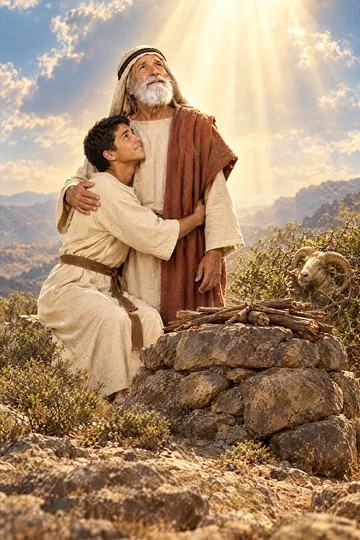
Isaac was a full-grown young man who shared faith in the God of his father, loving and reverencing Him.3T 368.1–369.11SP 99.4–101.1ST Apr 3, 1879 He freely submitted to being bound and laid on the wood after affectionately embracing his father.1SP 99.4–101.1 He trusted his father's integrity and believed he would not be sacrificed unless God had commanded it, willingly yielding himself to be offered.3T 368.1–369.11SP 99.4–101.1ST Apr 3, 1879
Faith in Resurrection Promise
By faith Abraham trusted that God could keep His promise even if Isaac died, by raising him from the dead.1SP 98.3–99.3SG3 105.1–106.2Ms 19, 1886, par. 15–16SG3 106.3–108.11SP 99.4–101.1 The God who in providence had given Sarah a son in her old age could also give life again and bring Isaac up from the dead.1SP 98.3–99.3SG3 105.1–106.2SG3 106.3–108.11SP 99.4–101.1 He did not doubt that the promise would be fulfilled in Isaac, the only son of promise and the son through whom he was to become a great nation.SG3 105.1–106.2SG3 106.3–108.11SP 99.4–101.1 He truly offered Isaac in his heart and made the sacrifice there, keeping looking beyond what he could see.Ms 19, 1886, par. 15–1610MR 119.2ST Apr 3, 1879 He trusted God's wisdom and purposes without questioning His dealings, and trusted God's right to lead and to require what He had given.Ms 19, 1886, par. 15–1610MR 119.2ST Apr 3, 1879
This faith was counted to him for righteousness.Ms 19, 1886, par. 15–1610MR 119.2 The test revealed complete obedience and surrender and fear of God.3T 368.1–369.1ST Apr 3, 1879Lt 110, 1897, par. 1–8 It showed that what God gives remains His, and that faith gives back to God what has been entrusted.ST Apr 3, 1879Lt 110, 1897, par. 1–8 Through personal anguish the trial taught Abraham the cost of God's plan to redeem fallen humanity.STSE 41.2–42.13T 368.1–369.1 Isaac represented God's Son given as a sacrifice for the sins of the world.STSE 41.2–42.13T 368.1–369.1
Abraham's sorrow could not equal God's self-denial in giving His Son.STSE 41.2–42.13T 368.1–369.1 Unlike Isaac, Jesus was not spared death but endured humiliation, mockery, and crucifixion.STSE 41.2–42.1 Through Abraham's anguish God impressed upon him the plan of redemption and the self-denial involved in giving His Son to save humanity.STSE 41.2–42.13T 368.1–369.1
Pattern for Faith Today
Hebrews 11:17 places Abraham among the heroes of faith whose lives are set forth as patterns for the Christian church, commended because by faith they obtained promises and performed mighty acts.CTBH 238.1CTBH 238.2 His fidelity to God was made conspicuous, held up before the world so that his example shines as a light to people in darkness.Ms 53, 1902, par. 318MR 138.120MR 41.4–5 He stands among the cloud of witnesses who breasted the evils and difficulties in his way and in the Lord's name braced himself successfully against opposing forces of evil when tried in offering Isaac, sustained and strengthened with the Lord holding him by the hand.Ms 61, 1907, par. 1–3
The faith lesson of the chapter turns the mind away from visible, discouraging things toward the unseen and toward the better country and the heavenly city built by God.Ms 63, 1893, par. 26–27 It presents faith as trust in God that strengthens believers to act faithfully amid difficult circumstances.6MR 296.1–2 The same faith shown by God's servants in sacred history can work in people today as channels of God's power, enabling them to trust God through trials and follow the path He marks out.PK 175.2Ms 61, 1907, par. 1–3ED 256.1
Abraham's offering of Isaac was recorded for the benefit and instruction of God's servants and workers today, belonging to the history of faithful servants whose trust in God is an example to apply to themselves.RH Sep 30, 1902Ms 106, 1902, par. 9–10STSE 41.1 It encourages them to go forward in faith, do their best, and trust God as they watch, work and pray.RH Sep 30, 1902 He truly offered Isaac in his heart, trusting God even when tested with the command to sacrifice the son through whom the promises were to come, believing God could raise him from the dead and trusting God's wisdom without questioning His right to lead, and this faith was counted to him for righteousness.Ms 106, 1902, par. 9–1010MR 119.2 His experience gives believers courage to trust God and rely on His promises through tests, whatever the consequences.10MR 119.2
His obedience teaches confidence in God's requirements however close, cutting and painful they are, and that nothing is too precious to give to God.STSE 41.13T 368.1–369.1 It teaches children perfect submission to their parents and to God, as Isaac, a full-grown young man, freely submitted, trusting his father's integrity and believing he would not be sacrificed unless God had commanded it.STSE 41.13T 368.1–369.1 The test demonstrated that Abraham feared God and had confidence in His word, showing that what God gives remains His and that faith gives back to God what has been entrusted.3T 368.1–369.1Lt 110, 1897, par. 1–8 Such faith is to be followed by patient humility when corrected and a cheerful, unquestioning response to every requirement of God, since disregarding even one command makes a person a transgressor of the law.4T 253.2
Sources
Pioneers and periodicals
134 sources
By faith Abraham when he was put to the supreme, crowning test offered up Isaac, his only legitimate son of promise, though God stayed his hand and provided a ram, crediting him with the whole-hearted offering because in his heart he had already given him up as dead for three days.ST Nov 5, 1912ST Jun 2, 1881ST Mar 23, 1888ST Aug 21, 1901
He obeyed against parental love and human reason because he trusted that God's word could not fail, reasoning that God who had miraculously given Isaac could raise him even from the dead to keep the promise that his seed would be called in Isaac.RH Feb 5, 1861RH Feb 23, 1911ST Jul 22, 1886RH May 29, 1855ST Feb 12, 1894
His obedience proved and completed his faith, showing it to be living, active and righteous, keeping God's commandments and laying aside every weight of unbelief.ST Aug 30, 1877RH Feb 6, 1900ST May 21, 1896ST Sep 4, 1901
The offering foreshadowed the great antitypical Offering, picturing the Father's gift of His own only-begotten Son with no substitute to stay His death, and Isaac's restoration in a figure pointed to Christ's resurrection.ST Nov 5, 1912ST May 29, 1884ST Nov 10, 1909RH Dec 31, 1903ST Feb 2, 1915
Like all the faithful, Abraham saw the promises of the land, the world to come and the city with foundations from afar and embraced them, yet died without receiving them, awaiting their fulfillment after the resurrection when the dead are raised.RH Apr 17, 1900RH Feb 23, 1860ST Feb 21, 1878RH Apr 23, 1857
Words and Historical Setting
To be tried means to be put to the test by God, not to be tempted to do evil.ST May 1, 1884ST Sep 8, 1898 The testing of Abraham was the supreme test and crowning ordeal of his faith, its severest, decisive and culminating trial.ST Aug 21, 1901ST Sep 25, 1901ST Sep 8, 1898 It came late in life after about fifty years of schooling since his first call, through repeated tests and slow and steady growth, until he was strong in faith.ST Aug 21, 1901ST Aug 21, 1901 It followed earlier failures and waverings about the fulfillment of the promise, and it proved whether he loved God above his son and above all.ST Sep 8, 1898ST Aug 30, 1877ST Feb 26, 1894
He is said to have offered up Isaac because God gives him full credit for having offered him, his sacrifice being whole-hearted, fervent and literal as far as God permitted it to go.ST Jun 2, 1881ST Aug 21, 1901 God restrained his hand and provided a ram and a sacrifice in his place, so that a substitute died in Isaac's stead.ST Aug 21, 1901ST Jul 26, 1905 In his heart Abraham had fully given his son to the Lord and regarded him as already slain, for three days reckoning him as dead while trusting the promise could not fail.ST Jun 2, 1881ST Feb 2, 1915 Receiving him back was therefore receiving him in a figure from the dead, as from the dead.ST Jun 2, 1881ST Feb 2, 1915
Isaac is called his only begotten son because he was his only legitimate son and the only son counted for the promise, the alone heir of the promises whom he loved.ST Nov 5, 1912ST Aug 21, 1901 There was no fallback to Ishmael, because Ishmael had been decidedly rejected from being heir. Abraham had no earthly hope of another son, being about 120 and Sarah about 110, at least thirty-five years beyond the time when a child of their own had once seemed out of the question.ST Mar 23, 1888ST Aug 21, 1901 Isaac was the long-awaited, long-promised child, dearer than possessions and even life itself, grown to young manhood, whose own faith was also tested and who willingly submitted in faith's victory.ST Sep 25, 1901ST Feb 26, 1894
To have received the promises means to have gladly received the promise that his seed would be called in Isaac and become a great nation and multitude, distinctly revealed to Isaac individually.RH Apr 9, 1908ST Mar 23, 1888 It was the promise of extensive possessions and innumerable seed made nearly fifty years before, held to through the long anxiety about descendants, and it included the blessing of the Messiah to mankind through Isaac's posterity, through whom the Messiah would descend.ST Nov 5, 1912ST Sep 25, 1901ST Aug 21, 1901ST Jun 1, 1882 The verse states the theme of Genesis 22:1-13.ST Aug 21, 1901 The command to make a burnt offering of Isaac therefore seemed mysterious and to cut off the promise, the perpetuation of his name and house, and the vast inheritance.RH Feb 5, 1861ST Feb 24, 1881ST Feb 12, 1894ST Aug 21, 1901
The offering took place on Mount Moriah in the land of Moriah, the very spot later occupied by Ornan's threshing floor, David's altar and Solomon's temple, and in the future God's glorious everlasting city and sanctuary.ST Nov 5, 1912 Its name means provided by Jehovah.ST Sep 22, 1909 There Abraham's answer to Isaac's question expressed trust that God would provide the offering.ST Sep 22, 1909 The provision of the sacrifice in Isaac's place revealed God as Jehovah-jireh, the Lord will provide.ST Jul 26, 1905
The trial demanded effort and anguish in the journey and preparations, which Abraham carried out in obedience despite the pain and anguish of losing his beloved son.ST Aug 30, 1877ST Aug 30, 1877ST Dec 28, 1888 His faith triumphed over human feelings, and God gave him strength to endure and obey.ST Dec 28, 1888 He recognized the command as God's will and that alone settled the question, without consulting relatives in the flesh, worldly interests, personal safety, or human counsel to wait and be cautious.RH Dec 25, 1900ST Dec 28, 1888
Faith Under Trial
Hebrews 11:17 belongs to the chapter's account of faith as the firm ground of what is hoped for and the proof of what is unseen.RH Jan 5, 1860RH Feb 27, 1900RH Aug 26, 1862 Faith makes future and invisible realities present to the believer, so they influence feeling and action as powerfully as things seen with the eyes.RH Jan 5, 1860RH Feb 27, 1900 It is firm confidence in God that makes what is hoped for and unseen so certain that it is as real as something already present, shaping affections and actions, trusting what God says and acting on that trust.RH Feb 27, 1900RH Aug 26, 1862 It deals with the unseen things of the kingdom through faith in the Word of God, taking the performance as certainly contained in the promise and obtaining its benefit as a present reality before it is manifested to sight.ST Apr 23, 1902 The chapter's illustration includes that the ages of God's plan were adjusted by His word and can be understood only by faith, and Abraham's offering of Isaac exemplifies faith perceiving God's purpose beyond what was visible in the circumstances of that age.ST Jan 16, 1896
Faith is not outward profession, such as putting on clothes and coming to the mission, and it is not merely listening to warnings, as many who listened to Noah were still lost.RH Jun 22, 1916 It is believing the Word of God without any visible evidence of its fulfilment, as Noah did when he entered the ark at the command of God seven days before the rain began, and believing too late, when the storm is seen, is of no use.RH Jun 22, 1916 The word preached does not profit unless it is mixed with faith in those who hear it, and preparation requires much, since of all the vast throng that left Egypt only two entered the Promised Land and even Moses did not enter but only saw it from the mountain top.RH Jun 22, 1916 Abraham's offering of Isaac was a test of where his faith rested, whether in the flesh of Isaac as the fulfilled promise of the son in whom the Seed would be called or only in the power of the word of promise.ST Apr 23, 1902ST Apr 23, 1902
Hebrews 11:17 presents Abraham's willingness to offer Isaac as an act of faith under trial.RH Oct 15, 1857RH May 29, 1855ST Feb 12, 1894 Abraham had received God's promises, yet trusted God while offering his only son, the son through whom he had received God's promises, in obedience to God.RH Oct 15, 1857RH May 29, 1855ST Feb 12, 1894 His trial exemplifies the faith by which the patriarchs endured hardship and looked beyond present circumstances to God's promised future.RH May 29, 1855 He trusted God's word and obeyed even when the command seemed unreasonable and mysterious to human judgment, resting only on the power of the word of promise rather than on the visible flesh of Isaac as fulfilled promise or on outward appearances.ST Apr 23, 1902ST Apr 30, 1894ST Apr 23, 1902 His example illustrates that faith receives God's word and acts on the duty it reveals, trusting what is unseen and relying on God for the outcome.ST Apr 30, 1894
Hebrews 11:17 holds up Abraham as one of faith's standout heroes, his name shining alongside Abel, Enoch and Noah in a triumphal roll of honor.ST Oct 16, 1884ST Jun 7, 1883ST Jun 11, 1894 The verse means faith is a great worker, giving confidence that girds a man's loins and nerves him to put forth all his energy, so that men of strong conviction fashion the world on their anvils.ST Oct 16, 1884 It places Abraham among the people whose faith helped shape history, showing faith as an active, courageous power that moves people to act on what lies beyond what they can see or fully prove.ST Jun 7, 1883 It belongs to the record of faithful people whose deeds testify, through the sacred record, that faith can win great victories, subdue kingdoms, work righteousness, direct and control actions, give moral courage even to martyrdom, and bind the church to God in all ages.ST Feb 15, 1883 These witnesses are not watching the living, for the dead know nothing of what happens on earth.ST Feb 15, 1883
The chapter lists faithful men including Gideon, Barak, Samson, and Jephthae, whose lives are recorded in the book of Judges and whose experiences deserve considerable attention, for the time would fail to tell of these men.ST Jun 1, 1904 Barak had extraordinary faith, yet his faith could have been stronger, for he would not pursue the enemy unless Deborah the prophetess went with him, and Deborah told him the expedition would not be for his honor because the Lord would sell the enemy into the hand of a woman, which happened when the Lord delivered Sisera into the hands of Jael the wife of Heber the Kenite, so the man whose faith would not go to the conflict without a woman's help was excelled by a woman, according to the rule, According to your faith be it unto you.ST Jun 1, 1904 Abraham's faith remains the crowning virtue through trials and under every circumstance, and his offering of Isaac is identified as the defining feature of his faith in the review of Israel's history.ST Jun 11, 1894ST Jan 17, 1884
Hebrews 11:17 belongs to the account of the experiences of men of faith, teaching that faith is needed both to overcome trials and to endure them, and sometimes grace to endure trouble is needed more than deliverance from it.ST Jan 16, 1907 Faith does not always bring deliverance from suffering, but remains submissive to God's will through trial, even when the outcome is not escape from suffering or death.ST Aug 24, 1904 The ancient faithful confessed that they were strangers on earth and endured torture, mockery, scourging, imprisonment, destitution, affliction, torment and other hardships.ST Sep 21, 1904 Their example teaches that godly people should expect persecution rather than assume they will fare better in one age than another, and that faithfulness to God does not necessarily bring wealth or worldly ease.ST Sep 21, 1904
Abraham's faith and obedience stood out amid the idolatry of his time, exercised amid opposition and difficulty and resting on God's reliable promises.ST Jun 20, 1906 The cloud of witnesses shows faith strengthened through adversity, not through an easy life, growing more radiant through struggle. Hebrews 11:17 shows true faith is obedience founded on the word and promise of God, for Abraham was told by the Lord to offer Isaac and he obeyed, taking God at His word and performing His command while trusting the Lord for the final result.RH Feb 6, 1900 Faith is not believing a thing so strongly that it will happen simply because it is believed; it must together be the substance of things hoped for and the evidence of things not seen, which mere belief that God will carry out His plans is not.RH Feb 6, 1900 Trusting God is no mere experiment, for faith in God rests on His demonstrated wisdom, truthfulness, goodness, and power.ST Nov 8, 1883
Faith is founded on God's Word, not on feeling, convenience, or the customs of men, leading to obedience and everlasting life.RH Dec 9, 1915 It is genuine and active, trusting God and accepting every required cross, receiving God's testimony, acting on revealed duty, laying aside cares and pleasures for the reward, valuing God's approval above human applause, setting self aside, and designed to cure unbelief.RH Dec 10, 1867 Abraham is held up as an example to strengthen those who dare not venture out alone to obey unpopular truth.ST Nov 18, 1889ST Apr 20, 1882 His faith meant sacrifice when he obeyed the command to leave his country and kindred and father's house for a land God would show, though his father's family were idolaters and he had to endure opposition and ridicule for leaving with apparently no object and without even knowing where he was going.ST Nov 18, 1889ST Apr 20, 1882 No one starting to obey God now has a darker outward prospect than Abraham had, and by not drawing back he became the father of all the faithful and secured his place among them.ST Nov 18, 1889
Trust in Resurrection
By faith Abraham offered Isaac trusting that God was able to raise him up even from the dead in order to keep the promise that his seed would be called through Isaac.RH Feb 5, 1861RH Feb 23, 1911ST Jul 22, 1886ST Mar 23, 1888 He that had received the promises fully gave his son to the Lord, accounting that God's word could not fail even if Isaac died, while facing parental love and the apparent loss of all tied to his only son.RH Feb 5, 1861RH Feb 23, 1911ST Jul 22, 1886ST Jun 2, 1881ST Mar 23, 1888 Receiving him back was like receiving him from the dead, and his faith therefore looked toward resurrection and the fulfillment of the promise in the coming Life-giver who would break death's power.RH Feb 5, 1861ST Jul 22, 1886ST Jun 2, 1881ST Mar 23, 1888 He did not expect God to provide a substitute for Isaac, for that expectation would have left no need to trust in resurrection and would have made the test no real trial.ST Jul 7, 1890
What made it possible to give up his only son, through whom alone the promise could be fulfilled, was his belief that God would bring him back to life to make a great nation from him.ST Aug 21, 1884RH Aug 4, 1874ST Aug 14, 1879 The resurrection in view was bodily resurrection, the raising of the whole person, since the promised multiplication of descendants through Isaac was central to the promise.ST Aug 21, 1884RH Aug 4, 1874ST Aug 14, 1879 He got this idea from God himself, knowing the promise looked to a resurrection shared by the multitude of faithful descendants, and he reasoned that if God will raise all the faithful at the last day He was able to raise the single one on whom their existence depended.ST Aug 21, 1884 Like Noah he was tested concerning things not seen as yet, for no one at that time had ever seen a person raised from the dead.ST Jan 18, 1883ST Jul 17, 1901 Because he had received Isaac through a miracle he knew God could work another, so his faith in the resurrection existed centuries before the New Testament was written.ST Jan 18, 1883ST Jul 17, 1901
In a figure he received Isaac back as though from the dead, regarding him as already slain and then restored alive.RH Apr 9, 1908ST Jun 2, 1881RH Dec 31, 1903ST Feb 12, 1894 Abraham's words that he and Isaac would return expressed this faith, not a falsehood, and this blessed hope of life beyond death holds believers patient in trial until Christ comes to give reward.ST Aug 21, 1884RH Dec 31, 1903ST Feb 12, 1894 By the offering and receiving back he was taught that death and a resurrection must take place before his seed received the inheritance, just as affliction and oppression must befall his posterity before they possessed the promised land.ST Jun 2, 1881ST Feb 20, 1896 The offering taught that death and resurrection of the seed must come before inheriting the promises, so Christ must suffer before entering His glory and the saints must wait until the morning of the resurrection to be made fit for a holy and eternal inheritance.ST Feb 20, 1896ST Jun 30, 1881 This illustrates that God can fulfill His promise to Abraham despite Abraham's death by raising him from the grave, sustaining Abraham and faithful Israelites as they awaited an inheritance they did not receive in earthly life.ST Feb 20, 1896RH Oct 27, 1874
The resurrection was thus taught to Abraham and has always been the great hope of the church of God.RH Apr 14, 1874ST Feb 24, 1881 It was the hope for which the patriarchs believed, suffered and died, rather than hope of reward at death or of going to heaven at death, and they died without receiving the promises looking forward to a better resurrection when the dead are raised.RH Apr 14, 1874RH Feb 23, 1860RH Jun 10, 1862RH Oct 3, 1854 God's word that the dead will rise rests on His power to fulfill what He promised, bringing the doctrine to view in Genesis as part of the plan of salvation.RH Feb 23, 1860RH Oct 3, 1854 They looked forward to resurrection, life, the heavenly country and lasting city, when the righteous dead sleeping unconsciously in death shall wake at the last trumpet to assemble the good of all ages.RH Feb 23, 1860RH Jun 10, 1862RH Oct 3, 1854
Obedience Proving Faith
By faith Abraham's willingness to offer Isaac required obedience and effort, proving that true faith does the work God requires and does not sit still in mere belief.ST Aug 30, 1877RH Feb 6, 1900ST Sep 4, 1901 He was told by the Lord to offer the son through whom the promise was to be fulfilled, and he took God at His word, performing the command while trusting the Lord for the final result, carrying out the preparations despite anguish.ST Aug 30, 1877RH Feb 6, 1900ST Jun 23, 1887 His actions showed his trust, brought his faith to completion and maturity, and established him as an example of faithful obedience.ST Aug 30, 1877ST Jun 18, 1902 His willingness made his faith visible as real, saving, living and practical, demonstrated only in good works, genuine because accompanied by practical obedience to God's word.ST Jun 23, 1887ST Sep 4, 1901 True faith is obedience founded on the word and promise of God, not believing a thing so strongly that it will happen simply because it is believed, for it must together be the substance of things hoped for and the evidence of things not seen; obedience proves the power of faith, since he could not have obeyed in that trial without faith, and it sealed the righteousness of his faith.RH Feb 6, 1900ST Sep 4, 1901
His obedience of faith was accounted to him for righteousness and obtained witness that he was righteous.ST Feb 19, 1894ST Sep 25, 1901ST Dec 8, 1887ST Mar 25, 1913RH Apr 9, 1908 This is evidence that righteousness was counted to believers through faith, not works or law, with hearts purified by faith as now, and that he was justified by faith, not by law.ST Feb 19, 1894ST Sep 25, 1901RH Nov 8, 1864 Such faith is childlike trust in God even when the promise seemed impossible to fulfill, including humility, worship, and willingness to do whatever God requires, and it brings pardon for sin.ST Dec 8, 1887 Though Isaac was the son through whom God had promised descendants, Abraham trusted God to fulfill that promise, believing He could raise Isaac from the dead and restore life even from the dead; his willingness was therefore counted as an offering in a figure, and in faith he received Isaac back as though from the dead.ST Jun 23, 1887ST Sep 25, 1901RH Apr 9, 1908 By that faith thus expressed, looking forward through visible types of sacrificial offerings to the cross, trusting in the promised Redeemer, for there is salvation in no other name under heaven given among men whereby we must be saved, he manifested all-conquering faith in the gospel.ST Mar 25, 1913
When tried he kept God's charge, fulfilling Genesis 26:5 that he obeyed God's voice and kept His charge, His commandments, His statutes, and His laws, proving he knew and obeyed God's commandments.ST Mar 18, 1913 Their faith was shown through good works and lives governed by God's moral precepts, not by disobedience to them, and such working faith made complete through works is the way to please God and keep His law.ST May 21, 1896ST Aug 13, 1885ST Jun 18, 1902 God required men to be holy in the former dispensation because He is holy, with obedience to moral law on a moral basis of the heart and not only outward civil observance, and that holiness and requirement have not changed.ST Mar 17, 1887 Faith has always been the condition of salvation, connecting people with God's power, submitting to His will, bringing them into agreement with Him, working through love, and leading to willing obedience to all His commands, not a change from faith to works across different dispensations.ST May 21, 1896 The same power of the Spirit of Christ through faith that enabled Abraham to obey is what enables men to keep the commandments of God.ST Sep 4, 1901
The law is written in the hearts of the redeemed and the law of sin is removed by God's Spirit, so obedience becomes possible through grace.ST May 17, 1883ST Jan 14, 1889 The patriarchs were justified by faith, believing they would be made right with God through the work of the promised and typified Redeemer, whom the sacrifices and prophecies pointed to.RH Mar 14, 1854ST Apr 23, 1912RH Jan 13, 1852 They could not yet understand the plan of salvation and justification fully, because the Redeemer had not come and died.RH Mar 14, 1854RH Jan 13, 1852 Abraham and the other patriarchs expressed that faith through sacrifices, trusting in the promised Seed whose death would atone for sin, testifying that salvation is obtained through faith.ST Apr 23, 1912
Promise Awaiting Fulfillment
Hebrews 11:17 places Abraham among the faithful who saw God's promises from afar and embraced them, yet died without receiving their fulfillment, and who will be made perfect together with all the faithful.RH Apr 17, 1900RH Sep 11, 1856RH Feb 23, 1860 They confessed themselves strangers and pilgrims on the earth, dwelt in the land of promise as in a strange country, and actually inherited nothing on the earth though all was theirs by promise.RH Apr 17, 1900 Abraham looked for a heavenly country, and the Canaan rest enjoyed under Joshua was only a type and not the promised rest that remains as an object of hope.RH Sep 11, 1856 Their faith rested on God's promise of life as a reward, looking forward to the resurrection when they would receive life and possess the heavenly country and lasting city.RH Feb 23, 1860ST Oct 17, 1895 Reaching clear back to Abel, that long list saw Jesus by faith and willingly submitted to trials and persecutions in defense of the faith, looking forward to a city which hath foundations whose builder and maker is God and rejoicing to see Christ's day.RH Apr 17, 1900ST Oct 17, 1895 That faith obtained a good report that will eventually see the Lord in the everlasting kingdom prepared from the foundation of the world, proving Christ's work as Redeemer did not begin with New Testament history.ST Oct 17, 1895 The promised inheritance embraces the literal land of Palestine but is not confined to it, for Abraham died without realizing the promise that he would inherit the world and therefore had not yet received his promised reward.
In his tried faith in offering Isaac, Abraham is one who received not the promise in this life.ST Feb 21, 1878RH Apr 9, 1857RH Dec 18, 1855 The promise that he and his seed should have the land forever was not fulfilled to him while he lived, for he died without receiving inheritance in it, not even to set foot on.ST Feb 21, 1878RH Dec 18, 1855 Abraham and his children died still believing God's promise that they would have the land, having received none of it in this life, expecting to receive it hereafter.ST Feb 21, 1878RH Apr 9, 1857 The fulfillment therefore remains future, to be realized after the resurrection, when Abraham, Isaac, Jacob and all who are of faith are blessed with faithful Abraham and inherit the earth as heirs according to the promise in Christ.ST Feb 21, 1878RH Dec 18, 1855
That faith looked beyond Canaan to the full promise, which embraced more than the literal land of Canaan and more than temporary possession by his seed.RH Apr 23, 1857RH Jan 9, 1900ST Apr 23, 1912 The land possessed by Abraham's descendants was a type of the final, glorious inheritance, while the promise ultimately embraced the whole world and the world to come.RH Dec 8, 1859RH Jan 9, 1900ST Apr 23, 1912 The promise seen eastward, westward, northward, and southward takes in the whole earth, so that Abraham should be heir of the world, including the new earth after it is restored to Eden beauty and glory.RH Apr 23, 1857ST Apr 23, 1912 Abraham gave up claim to present possession and by faith looked for a city which hath foundations, whose builder and maker is God, which God hath prepared for Abraham and his children, a better country than any on earth, even an heavenly.RH Apr 23, 1857RH Jan 9, 1900 That city is their promised heritage and is identified with the holy city New Jerusalem coming down from God out of heaven where God will dwell with men, with Zion, the mother of God's people, whose maker is also her husband.RH Apr 23, 1857RH Apr 7, 1859 There the faithful followers of Christ as Abraham's seed will inherit as heirs according to the promise when the meek inherit the earth, the New Jerusalem and the new earth as the eternal home of the immortal saints.RH Apr 23, 1857RH Jun 8, 1869
In the fuller development of God's promises the seed through whom the world inheritance comes is Jesus Christ.RH Jun 8, 1869ST Apr 23, 1912 God's promise to Abraham and his seed, identified as Christ, is the one gospel hope of the purchased inheritance — the city with foundations, the better country, the New Jerusalem, and the new earth.RH Jun 8, 1869ST Apr 23, 1912 The promise is through faith, so that those who are Christ's are Abraham's seed and heirs according to promise.RH Jun 8, 1869ST Apr 23, 1912
Foreshadowing of Christ
Abraham's offering of Isaac when tried was the sacrifice in Genesis nearest to the great antitypical offering of Christ.ST Nov 5, 1912ST May 29, 1884ST Nov 10, 1909 Isaac, the son of the promise, is the picture of Christ, the seed of Abraham and true heir offered as a sacrifice.ST Aug 21, 1901ST Jun 30, 1881 The verse points to Jesus Christ as the antitype of Isaac, who came to the altar of sacrifice with no substitute provided and no hand to stay His death, because He Himself was the Substitute for humanity.ST Nov 5, 1912ST Aug 21, 1901 Isaac's near-sacrifice points to Christ, who carried the promise into death, and therefore illustrates the faith in resurrection on which hope in God's promises rests.ST May 29, 1884RH Dec 31, 1903 The offering taught that death and resurrection of the seed must come before inheriting the promises, so Christ must suffer before entering His glory, and so all the saints must suffer and wait until the morning of the resurrection to be made fit to inherit a holy and eternal inheritance.ST Nov 10, 1909ST Jun 30, 1881
The test was not only that Isaac was his only legitimate son, but that Abraham understood the long-promised Messiah was to come through Isaac's posterity, so in offering Isaac he was cutting off his own hope of salvation as well as that of the world.ST Nov 5, 1912 His faith did not waver, for he believed the same God who had miraculously given him a son could raise him from the dead to fulfill the promise.ST Nov 5, 1912ST May 29, 1884 In deliberately giving up his only-begotten son after about fifty years of schooling since his first call, through repeated tests and slow and steady growth, he proved his faith in God's power and wisdom and justice.ST Nov 5, 1912ST Aug 21, 1901 In that deliberate giving he came to realize to some degree what it means to give up an only-begotten son.ST Nov 5, 1912ST Aug 21, 1901
Abraham's offering of Isaac prefigured the Father's gift of His Son.RH Feb 27, 1900 This trial, in which after three days regarding his son as dead he received him back figuratively, led Abraham to understand God's sacrifice of His Son, slain for human sin.ST Feb 2, 1915 By the fearful experience of offering Isaac, when he appropriated the righteousness which is of faith and his altar rose amid idolatry, Abraham learned something of the profound significance to the heart of love in the Lamb whose antitype is an only Son.ST Feb 2, 1915ST Oct 25, 1905 His faith and patience look forward to Christ, and show the patience the heavenly Father exercised in giving His own Son as the only sacrifice that could save.ST Feb 2, 1915
Abraham's faith in God's promise endured its final test in willingness to offer Isaac, the son through whom God had said his descendants would come, believing God could raise him from the dead, and in a figure he received him back when Isaac was spared.RH Dec 31, 1903RH May 20, 1909 This faith in resurrection is connected to Christ's resurrection, through which believers receive assurance of forgiveness of sin.RH Dec 31, 1903 Isaac's restoration is presented as a type of Christ's resurrection, and Abraham's seeing Christ's day is identified with seeing the day of Christ's resurrection.RH Dec 31, 1903RH May 20, 1909
Abraham's faith in God's gift of His only-begotten Son enabled him to offer up Isaac, his only son.ST Jun 3, 1908ST Jun 1, 1882 On Mount Moriah he was willing to offer Isaac, his only son and the child of promise, rather than doubt God's word or deny its authority.ST Jun 3, 1908ST Jun 1, 1882 Abraham trusted the promise while seeing Isaac as the one through whom the Messiah would descend, and his faith looked ahead to the unfolding of the Messiah's kingdom.ST Jun 3, 1908ST Jun 1, 1882
Abraham when tried had the Gospel and believed it, proving that God's work for sinners in the patriarchal age and under the Mosaic dispensation was as certainly Christian as since the time of Christ.ST Aug 3, 1882ST Mar 27, 1893 True believers in past ages were actuated by faith in Christ just as truly as believers today, so that the law and the gospel harmonize perfectly, and salvation in every age depends on faith in Christ, not on ordinances themselves which had value only as expressions of faith.ST Mar 7, 1906ST Mar 27, 1893ST Oct 25, 1877 From Abel onward redemption through the Son was accepted in purpose so that Christ was a present Saviour, spiritually understood in the light of the gospel, cleansing by His blood and quickening by His Spirit.ST Oct 17, 1895 Abraham's offering of Isaac was that kind of faith that sees Jesus, belonging to a long list reaching clear back to Abel of those who saw Jesus by faith and were willing to submit to all manner of trials and persecutions in defense of the faith.ST Oct 17, 1895ST Mar 7, 1906 That faith looked forward to a city which hath foundations whose builder and maker is God and rejoiced to see Christ's day, and it obtained a good report through faith that will eventually see the Lord in the everlasting kingdom prepared from the foundation of the world, proving Christ's work as Redeemer did not begin with New Testament history.ST Oct 17, 1895ST Aug 3, 1882 The religion of faith was the same in every age: Abraham and the other patriarchs, prophets and apostles practiced the same religion of Christ, trusting the promised Seed, Christ, and rejoicing by faith in the gospel preached to them, so sinners have always been pardoned and saved by faith.ST Aug 3, 1882ST Oct 25, 1877
Abraham stands as one of the long line of ancient worthies who by faith in the gospel looked forward through the visible types of the sacrificial offerings to the cross of Calvary.ST Apr 23, 1912ST Mar 25, 1913 His offering of Isaac expressed faith in the promised Redeemer, trusting in the promised Seed whose death would atone for sin.ST Apr 23, 1912ST Mar 25, 1913 There is salvation in no other name under heaven given among men whereby we must be saved.ST Mar 25, 1913 By that faith thus expressed he obtained witness that he was righteous, manifesting the mighty power of all-conquering faith in the gospel.ST Apr 23, 1912ST Mar 25, 1913
Witness and Application
Hebrews 11:17 stands in the record of the faithful and the great cloud of witnesses to what real faith is and what it can accomplish in ordinary men of like passions and weaknesses.RH Apr 29, 1902ST Feb 15, 1883 Abraham stands in that roll of honor among prominent landmarks and moral heroes, alongside Abel, Enoch, Noah, Gideon, Barak, Samson, Jephthae and others, to be honored, wished to be like, and counted worthy to share their reward.ST Jan 27, 1904RH Dec 1, 1874 His experience is written as a type of individual experience and instruction with encouragement for those awaiting the Lord's near coming.RH Sep 30, 1902 That same faith is the strong cord binding the church to God in all ages, filling the world with martyrs and the Lamb's Book of Life with the redeemed, and it remains a prominent feature in the last church which the storms of earth cannot shake.ST Jan 27, 1904 The witnesses do not watch the living, for the dead know nothing of what happens on earth, yet their deeds testify through the sacred record that faith can win great victories.ST Feb 15, 1883 Their experiences benefit the church, but no human being is made the leader or pattern, for believers are to look to Jesus.RH Dec 1, 1874
The chapter commends Abraham for his faith, not for being without faults.ST Apr 11, 1906 It honors people whose lives included recorded sins because faith was the quality praised.ST Apr 11, 1906 Their honorable mention does not endorse their sins.ST Apr 11, 1906 Abraham's offering of Isaac on Mount Moriah is a real example of faith's triumph enabling what would otherwise be beyond human strength, and if the event never happened the faith it depicts would be mythical.
His faith had reached perfection through a period of preparation and growth through the revelation of the Gospel, and the offering testified to that perfect faith as a specific work done through perfect faith in God. He appropriated the righteousness which is of faith while his altar rose amid idolatry after the Deluge, when God chose him to keep alive true faith and worship.ST Oct 25, 1905 God called him out from his country and from evil influences of kindred and surroundings because He knew he would prove faithful, and gave him the great promise of extensive possessions and innumerable seed.ST Sep 4, 1901 When Isaac had grown to young manhood as the only son through whom the promises were to continue, the command to offer him as a burnt offering put an end to all human hope and prospect of fulfilling the promises, equivalent to giving up the divine purpose altogether.ST Sep 4, 1901 In that command God hung the whole plan of salvation on the thread of Abraham's faith, risking nothing because He knew him and had placed the power of the Holy Spirit underneath his frail humanity.ST Sep 4, 1901
His trial was not a test exposing a defect in character, for he recognized the command as coming from God and obeyed despite anguish over losing his beloved son.ST Dec 28, 1888 His faith triumphed over human feelings, and God gave him strength to endure and obey, bringing blessing to him and continuing encouragement and strength to God's people facing severe trials.ST Dec 28, 1888 The test came late in life over Isaac, the long-awaited child dearer than possessions and even life itself, to prove whether he loved God above his son and would surrender what he cherished most.ST Feb 26, 1894 His faithfulness under this severe test came before the glory that followed, showing that trial can precede spiritual glorification.ST Feb 26, 1894
His being tested through Isaac illustrates the great faith required to risk everything in obedience to a message from God even when others ridicule, to venture out alone to obey unpopular truth, to leave kindred and face opposition without knowing what lies ahead, and to endure hardship and even death rather than disobey.ST Nov 18, 1889ST Apr 20, 1882ST Aug 31, 1888GSAM 162.1–2 He obeyed the call to leave country and kindred and father's house for a land to be shown, though his father's family were idolaters and he endured opposition and ridicule for leaving with apparently no object and without knowing where he was going.ST Nov 18, 1889 No one starting to obey God now has a darker outward prospect than he had, and by not drawing back he became father of all the faithful and secured his place among them.ST Nov 18, 1889 He was willing to offer Isaac, the dearest thing he held on earth, trusting God even when he did not know where obedience would lead, valuing God's approval above human applause.ST Apr 20, 1882RH Nov 19, 1857
The record gives instruction for workers for God to apply to themselves to go forward in faith, do their best, and trust God as they watch, work and pray.RH Sep 30, 1902 His faith is an example to look at, not a source to get faith from, for dwelling on his experience or trying to copy it does not impart it; the same kind of experience is had in the same way, through Jesus dwelling within by the gift of Himself, leading and perfecting faith with His own life of faith.RH Apr 29, 1902 With Enoch, Noah and the other examples he stands against the easily besetting sin of unbelief, in contrast to doubting Israel who fell and came short of the promised rest, while bad tongue, bad temper, avaricious spirit and the like are differing weights that hinder the race.RH Aug 5, 1873 He stands with the ancient worthies whose faith was tested by trials and persecutions as part of the cloud calling believers to lay aside every weight and the besetting sin and run with patience, which means cleansing from all filthiness of flesh and spirit and perfecting holiness in the fear of God.RH Feb 16, 1869 His example presents Old Testament belief walking by faith rather than sight as encouragement for Christians facing trials, looking to Jesus as author and finisher rather than making any human the pattern.RH Dec 1, 1874
His willingness to surrender what he cherished most applies to parents who give up a son or yield an only child to God, the value of such offering being measured by the faith behind it. It teaches laying plans before God and being willing to give them up, trusting God can restore what is right and that it is best for what is not right to be consumed.RH May 26, 1904 Like giving what is treasured without knowing what will follow, it involves costly surrender, as shown by persecuted martyrs who clung to truth, valued by God though despised by the world.ST Apr 1, 1875ST Jan 10, 1900 His offering on the altar as worship teaches Christians to offer themselves and all they have to God.RH Aug 18, 1868 His enduring the trial by seeing the invisible God exemplifies enduring suffering in service, distinct as sanctified love that loves deeply yet surrenders unselfishly recognizing every good as lent by God, not idolatrous affection.RH Feb 8, 1912
His obedience in the trial gave opportunity to recover from earlier failure to trust God's way of fulfilling the promise and to redeem time in which he wavered concerning the promised heir, restoring his standing.ST Aug 30, 1877RH Mar 16, 1869ST Sep 12, 1878 The journey and preparations demanded effort and deep anguish, and by obeying he showed faith through works and brought it to maturity.ST Aug 30, 1877 He expected to slay his son with no hope except that God could raise him from the dead, obeyed without abandoning the promise, and God stopped him before Isaac was killed.RH Mar 16, 1869 Men show by works all the faith they have, for his faith was accounted for righteousness because it led him to attempt the offering.ST Sep 12, 1878 His experience encourages those who have departed from God that they can be given opportunity to return and have a faithful record.RH Mar 16, 1869
Tested faith in the promises is a model for trusting truth and doctrine including Christ's second coming, as Noah trusted about the flood.RH Nov 5, 1861 It is faith ever ready to act on what the soul believes God has spoken, laying aside unnecessary cares and bidding farewell to worldly pleasures for the recompense of reward, a tried obedience withholding not even an only son.RH Aug 27, 1857 It is the faith of those devoting the whole soul to preparation for Christ's nearness so as to join the multitude inheriting the promises.RH Aug 27, 1857 His offering stands as an instance accompanied by miraculous interposition in his favor.RH Jan 29, 1861 The little or much light he had was dominant in his soul and made him mighty in God among mighty witnesses to the power of God's word.ST Jul 15, 1908
By faith he saw the invisible God and endured suffering in service.RH Feb 8, 1912 The achievements of God's people in past ages were accomplished through such faith, which rather than love alone represents the gold of Christian character.RH Jul 2, 1867 That holy faith enabled overcoming frightening circumstances and living in freedom under God.ST May 12, 1909 It is living and active, not merely an idea in the mind, giving strength and wisdom, inspiring noble deeds, and shaping daily life.ST Oct 29, 1885
Sources