Genesis 24:18
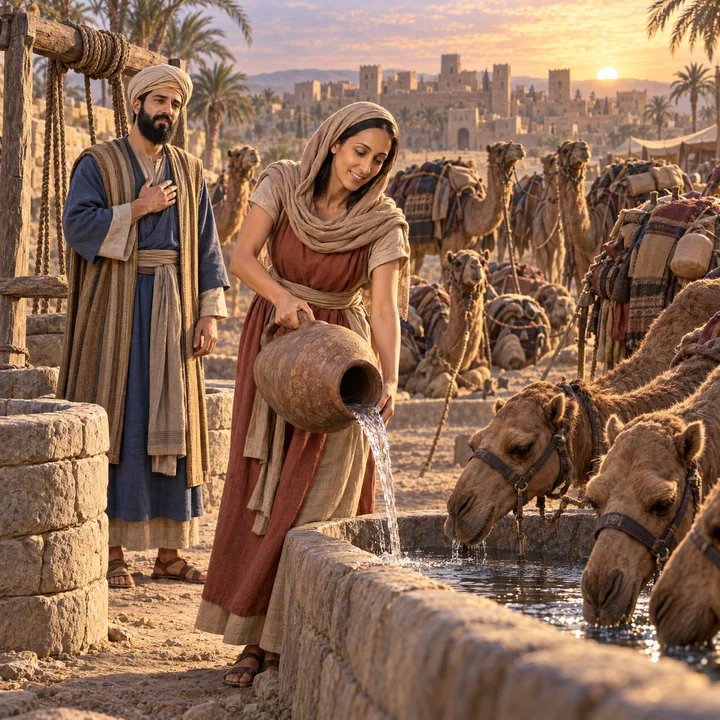
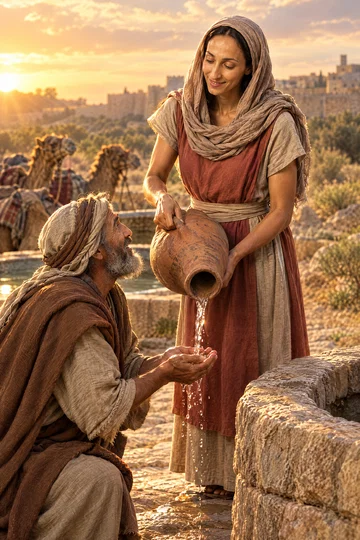
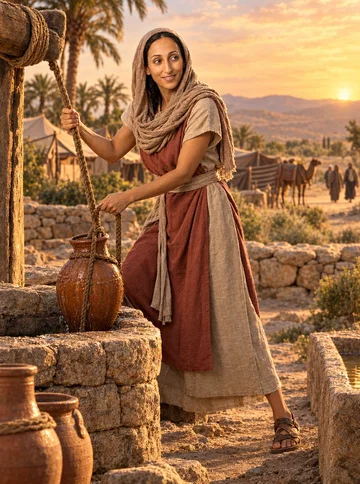
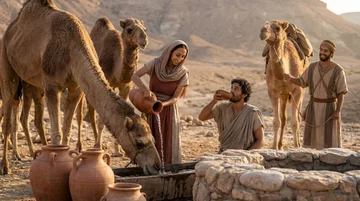
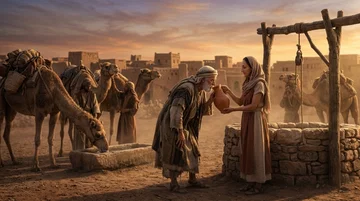
And she said, Drink, my lord: and she hasted, and let down her pitcher upon her hand, and gave him drink.
Translations
And she said, Drink, my lord: and she hurried, and let down her pitcher on her hand, and gave him drink.
King James Version, KJV Cambridge Paragraph Bible, Revised Version, American Standard Version
And she said, Drink, my lord: and she hasted, and let down her pitcher upon her hand, and gave him drink.
And she said, Drink, my lord. And she hasted, and let down her pitcher upon her hand, and gave him drink.
and she saith, 'Drink, my lord;' and she hasteth, and letteth down her pitcher upon her hand, and giveth him drink.
And she said, Drink, my lord! And she hasted and let down her pitcher on her hand, and gave him to drink.
And she said, Drink my lord,—And she hastened and lowered her pitcher on her hand and let him drink.
Berean Standard Bible, Majority Standard Bible
“ Drink, my lord,” she replied, and she quickly lowered her jar to her hands and gave him a drink.
She said, “ Drink, my lord.” She hurried, and let down her pitcher on her hand, and gave him a drink.
And she said, Take a drink, my lord: and quickly letting down her vessel onto her hand, she gave him a drink.
And she said, Drinke sir: and she hasted, and let downe her pitcher vpon her hand and gaue him drinke.
Douay-Rheims (Challoner revision)
And she answered: Drink, my lord. And quickly she let down the pitcher upon her arm, and gave him drink.
Pictures
Cross-references
- Genesis 24:12-14
And he said, O LORD God of my master Abraham, I pray thee, send me good speed this day, and shew kindness unto my master Abraham.
The servant prays for guidance, and Rebekah’s response supplies the requested sign.
- Genesis 24:27
And he said, Blessed be the LORD God of my master Abraham, who hath not left destitute my master of his mercy and his truth: I being in the way, the LORD led me to the house of my master’s brethren.
Eliezer thanks God for guiding him to Rebekah.
- Genesis 24:50-51
Then Laban and Bethuel answered and said, The thing proceedeth from the LORD: we cannot speak unto thee bad or good.
Rebekah’s family recognizes God’s leading in the marriage proposal.
- Genesis 29:9-10
And while he yet spake with them, Rachel came with her father’s sheep: for she kept them.
Both women meet a traveler at a well and give water to his flock.
- Genesis 24:14
And let it come to pass, that the damsel to whom I shall say, Let down thy pitcher, I pray thee, that I may drink; and she shall say, Drink, and I will give thy camels drink also: let the same be she that thou hast appointed for thy servant Isaac; and thereby shall I know that thou hast shewed kindness unto my master.
The servant seeks God’s guidance through the maiden’s offer of drink.
- Exodus 2:16-17
Now the priest of Midian had seven daughters: and they came and drew water, and filled the troughs to water their father’s flock.
Moses meets Reuel’s daughters at a well, where they draw water.
- Genesis 24:67
And Isaac brought her into his mother Sarah’s tent, and took Rebekah, and she became his wife; and he loved her: and Isaac was comforted after his mother’s death.
Completes the account with Isaac taking Rebekah as his wife and loving her.
- Genesis 24:58
And they called Rebekah, and said unto her, Wilt thou go with this man? And she said, I will go.
Rebekah willingly agrees to go with the servant.
- Genesis 24:63
And Isaac went out to meditate in the field at the eventide: and he lifted up his eyes, and saw, and, behold, the camels were coming.
paired as scenes of Isaac and Rebekah
- Genesis 24:31
And he said, Come in, thou blessed of the LORD; wherefore standest thou without? for I have prepared the house, and room for the camels.
Laban welcomes the servant after Rebekah reports what happened.
Commentary
Each commentary is drawn from primary sources: the writings of Ellen G. White and Adventist pioneers and periodicals. Each commentary is separate. Its own words are not a quotation; follow the references to read the source passages.
Ellen G. White
8 sources
The verse belongs to the account of Abraham having his servant seek a wife for Isaac under God's guidance.PP 171.3SG3 112.3SG3 112.1–2ST Apr 10, 18791SP 104.3 The servant had asked for an act of courtesy to identify the right maiden, and Rebekah's conduct is the evidence by which he recognizes her as the woman God has selected for Isaac.PP 171.31SP 102.1 Rebekah responds promptly and hospitably by respectfully addressing the servant, hastening to lower her pitcher upon her hand, and giving him drink.PP 171.31SP 102.1PP 171 Her offer shows hospitality, willingness to help, gracious character, and readiness to serve.PP 171.3CE 228.1–230.11SP 102.1PP 171
The account of Isaac's marriage to which the verse belongs is presented as a tender example of domestic happiness.CE 228.1–230.1 The account is presented as an example of parents' responsibility to guide their children's affections toward suitable companions.SG3 112.3ST Apr 10, 1879 Isaac trusted God to direct him and submitted to his father's experienced servant's choice, and the account is held up as an example teaching children, especially those who fear God, to respect parental authority.SG3 112.3SG3 112.1–21SP 104.3 The choice of a spouse should be made with God's guidance and prayer and with the counsel of experienced, godly parents, rather than by youthful impulse and self-will.CE 228.1–230.11SP 104.3
Sources
Pioneers and periodicals
21 sources
Rebekah promptly and courteously lowered her pitcher upon her hand and gave Abraham's servant a drink when he asked, beginning willing hospitality and service that extended also to his camels.ST Jan 14, 1886ST Sep 15, 1898ST Sep 15, 1898ST Feb 17, 1914RH Jul 25, 1912 Her readiness answered the servant's prayer and fulfilled the sign he had asked as evidence of God's guidance, showing God's special providence in leading His faithful servant while in the way even in ordinary, practical matters.ST Jan 9, 1912ST Feb 17, 1914RH Jul 25, 1912ST Jan 14, 1886ST Sep 5, 1900 Though the act appeared natural, God was directing events so that she came to the well at that time and did what was asked without knowing she was being led.RH Jan 30, 1872 It marks the finding of a wife for Isaac, the son of promise, as nearly as possible in the godly line, keeping God's people separate from the ungodly and preserving the channel for the coming Deliverer, as part of God's progressive dealings with Abraham and his chosen family as progenitors of the promised Seed.ST Dec 20, 1910ST Aug 3, 1915ST Jan 9, 1912ST Jan 14, 1913
Well Meeting and Hospitality
Rebekah promptly and courteously lowered her pitcher upon her hand and gave Abraham's servant a drink when he asked for water, and that act began the hospitality and willing service that mark their meeting.ST Jan 14, 1886ST Sep 15, 1898ST Sep 15, 1898 Her hospitable character is seen in the promptness with which she offers and serves him water at the well.ST Sep 15, 1898ST Sep 15, 1898 Her response shows gracious courtesy and deference to the servant's age, with a prompt, welcoming readiness to help.ST Feb 17, 1914RH Jul 25, 1912 That readiness to help begins the kindness shown to him, including also drawing water for his camels.ST Feb 17, 1914RH Jul 25, 1912
The meeting happens at a well where women came to draw water, as Abraham's servant meets Rebekah while seeking a wife for Isaac.ST Feb 19, 1894ST May 19, 1898 He travels to Mesopotamia and to Padan-aram to find a wife for Isaac, succeeds in his mission, and returns with Rebekah.ST Feb 19, 1894ST Oct 6, 1898 His arrival there was about one hundred years before Jacob's arrival there, and the two arrivals are to be compared with each other.ST Oct 6, 1898
The scene shows Rebekah at the well with her camels and their tinkling bells.RH Feb 22, 1912 It belongs among the outgoings and ingoings of Abraham and Ishmael, Isaac in the fields at eventide, Jacob and Esau, and Joseph.RH Feb 22, 1912 It pictures the silence of a half-peopled world, the bleating of flocks, green pastoral rest, and real human life.RH Feb 22, 1912
Providence and Promised Seed
Rebekah's giving of drink was an ordinary act that appeared to happen naturally, yet God was directing events so that she came to the well at that time and did what was asked as a sign, without her knowing she was being led.RH Jan 30, 1872 Her response was part of the providential guidance for which the servant had prayed, showing God's special providence and His leading of Abraham's pious, unselfish, faithful servant while he was in the way.ST Jan 9, 1912 That leading illustrates that God may guide people in ordinary, practical matters.ST Jan 14, 1886
Her readiness and arrival answered the servant's prayer and fulfilled the sign he had prayed for as evidence of God's guidance and approval, showing the power of prayer.ST Feb 17, 1914RH Jul 25, 1912ST Sep 5, 1900RH Aug 1, 1871 Her prompt kindness in giving water and also drawing for the camels began the kindness that answered his prayer for guidance in finding a wife for Isaac.ST Feb 17, 1914RH Jul 25, 1912
The verse belongs to the progressive steps of God's dealing with Abraham, the father of the faithful, from his call onward unto full trust, and to God's providential dealings with Abraham's family as the chosen family and progenitors of the promised Seed.ST Dec 20, 1910ST Jan 9, 1912ST It is to be read with the Promised Seed kept in mind.ST Dec 20, 1910
It marks the finding of a wife for Isaac, the son of promise come to manhood, as nearly as possible in the godly line.ST Aug 3, 1915 That finding shows care to prevent amalgamation of the godly seed with the ungodly and its pollution, to keep God's people separate and preserve the channel for the coming Deliverer.ST Aug 3, 1915 The account continues through the promises extending from Abraham to Isaac before passing to Jacob, and leads on to Jacob and Esau, pressing how highly the heavenly birthright is prized.ST Jan 14, 1913
Marriage Example and Obedience
Abraham's arrangements for Isaac's marriage are an example of parents guiding their children's affections toward suitable companions.ST Apr 10, 1879 That account illustrates Isaac's submission to his father's judgment in choosing a wife.ST Apr 10, 1879
His deference to his father's wishes is honor to parents in keeping with the fifth commandment.ST Jul 9, 1874 That obedience shows the fifth commandment was not new at Sinai but already had force and authority among the patriarchs and controlled God's chosen servants.ST Jul 9, 1874 It was part of the ten commandments that governed the human race from creation for twenty-five hundred years before Sinai.ST Jul 9, 1874 The account of Isaac and Rebekah presents their marriage as a simple, romantic example of the sacred marriage bond.ST Apr 5, 1905
Sources