Genesis 29:3
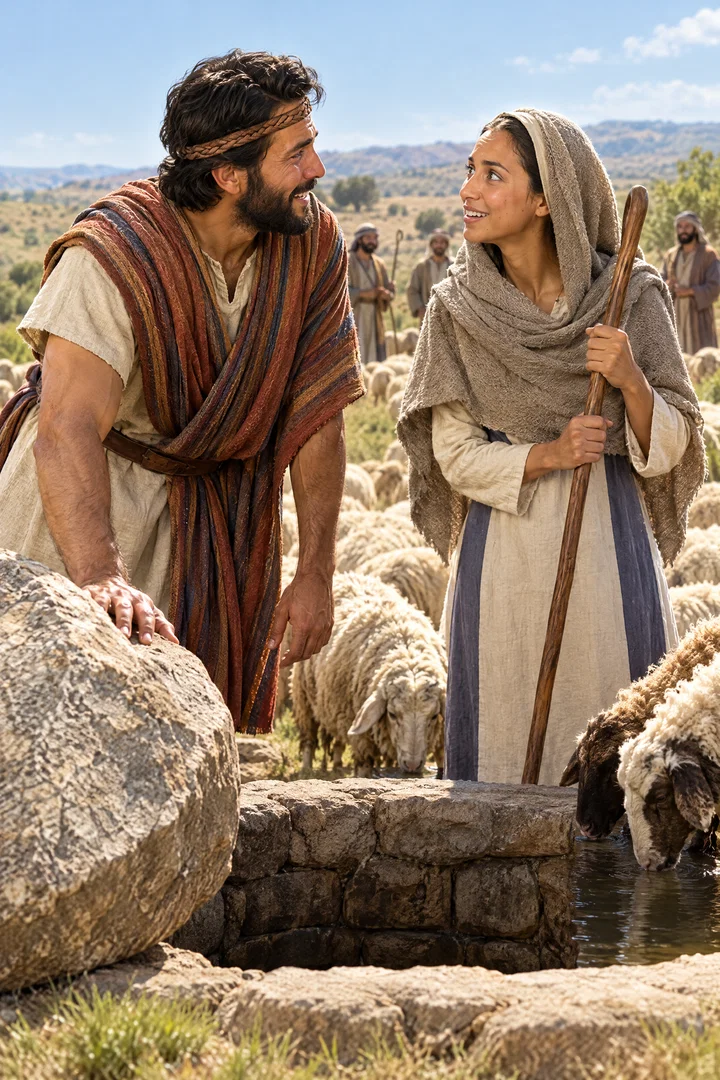
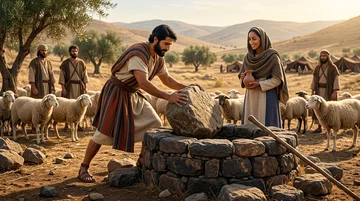
And thither were all the flocks gathered: and they rolled the stone from the well’s mouth, and watered the sheep, and put the stone again upon the well’s mouth in his place.
Translations
And thither were all the flocks gathered: and they rolled the stone from the well’s mouth, and watered the sheep, and put the stone again on the well’s mouth in his place.
King James Version, KJV Cambridge Paragraph Bible
And thither were all the flocks gathered: and they rolled the stone from the well’s mouth, and watered the sheep, and put the stone again upon the well’s mouth in his place.
And thither were all the flocks gathered: and they rolled the stone from the well's mouth and watered the sheep, and put the stone again upon the well's mouth in its place.
Revised Version, American Standard Version
And thither were all the flocks gathered: and they rolled the stone from the well’s mouth, and watered the sheep, and put the stone again upon the well’s mouth in its place.
(When thither have all the droves been gathered, and they have rolled the stone from off the mouth of the well, and have watered the flock, then they have turned back the stone on the mouth of the well to its place.)
And when all the flocks were gathered there, they rolled the stone from the mouth of the well, and watered the sheep, and put the stone again on the mouth of the well in its place.
so they gather together thither all the flocks, and roll away the stone from off the mouth of the well, and water the sheep,—and put back the stone upon the mouth of the well, to its place.
Berean Standard Bible, Majority Standard Bible
When all the flocks had been gathered there, the shepherds would roll away the stone from the mouth of the well and water the sheep. Then they would return the stone to its place over the mouth of the well.
There all the flocks were gathered. They rolled the stone from the well’s mouth, and watered the sheep, and put the stone back on the well’s mouth in its place.
And all the flocks would come together there, and when the stone had been rolled away, they would give the sheep water, and put the stone back again in its place on the mouth of the water-hole.
And thither were all the flockes gathered, and they rolled the stone from the welles mouth, and watered the sheepe, and put the stone againe vpon the welles mouth in his place.
Douay-Rheims (Challoner revision)
And the custom was, when all the sheep were gathered together to roll away the stone, and after the sheep were watered, to put it on the mouth of the well again.
Pictures
Cross-references
- Genesis 29:9-10
And while he yet spake with them, Rachel came with her father’s sheep: for she kept them.
Rachel arrives, and Jacob waters her flock.
- Exodus 2:15-17
Now when Pharaoh heard this thing, he sought to slay Moses. But Moses fled from the face of Pharaoh, and dwelt in the land of Midian: and he sat down by a well.
both went to the fountain when seeking refuge and contacts
- John 4:6-7
Now Jacob’s well was there. Jesus therefore, being wearied with his journey, sat thus on the well: and it was about the sixth hour.
Both scenes describe people gathering water at Jacob’s well.
- Genesis 24:11
And he made his camels to kneel down without the city by a well of water at the time of the evening, even the time that women go out to draw water.
both went to the fountain to find family connections
Commentary
Each commentary is drawn from primary sources: the writings of Ellen G. White and Adventist pioneers and periodicals. Each commentary is separate. Its own words are not a quotation; follow the references to read the source passages.
Ellen G. White
1 source
The well was the gathering place where all the flocks were brought together.PP 188.2 Its mouth was covered by a stone that was rolled away so the sheep could be watered, and afterward the stone was put back again in its place.PP 188.2 When Jacob met Rachel he joined in this labor, serving by helping to water the flocks.PP 188.2
Sources
Pioneers and periodicals
11 sources
Jacob had come east to Padan-Aram to a well near Haran to find his kindred, and there he was introduced to Laban's home.ST Oct 6, 1898ST Mar 19, 1894ST Mar 27, 1907ST May 19, 1898ST Oct 6, 1898 On his arrival he found three men with flocks of sheep waiting at the well, and the account of his visit to Laban and his years living with him follows from this meeting, including his marriages to Leah and Rachel, the birth of his sons, and the prospering of his flocks and herds despite Laban's efforts to deprive him of what was his.ST Jan 3, 1911ST Oct 6, 1898ST Mar 19, 1894 The shepherds' custom was to wait until all the flocks were gathered, then together roll the stone from the well's mouth, water the sheep together, and put the stone back in its place covering the well.ST Oct 6, 1898ST Mar 27, 1907ST May 19, 1898ST Oct 6, 1898 The watering was done from a large stone basin and trough for stock standing beside the spring, reflecting the familiar practice of villagers coming to public wells to draw water.ST Mar 27, 1907ST May 19, 1898 The well or village fountain was the place to seek information about relatives, because it served as a sort of bureau of information where women and girls gathered from all parts of town with stone or earthen water-jars on their heads and passed the news of the day about in several editions daily.ST May 19, 1898 Carrying water remained women's work, and it was a rare thing for a man to carry a jar of water.ST May 19, 1898
The surrounding account is that of Jacob's visit to Laban, his marriage to Leah and Rachel, and his years living with him.ST Jan 3, 1911ST Mar 19, 1894 He met Laban and served him fourteen years for Laban's two daughters, and the history recounts the birth of Jacob's sons and God's prospering of his flocks and herds despite Laban's efforts to deprive him of what was his.ST Jan 3, 1911ST Mar 19, 1894 The verse stands in the continuing story of Abraham and his family through which the promised Seed was to come, with the promises passing from Abraham to Isaac and from Isaac to Jacob.ST Jan 6, 1909ST Jan 14, 1913 It shows the gradual development of faith alongside the defects of Isaac and his two sons, culminating in Jacob's victory that made him Israel, a prevailer with God.ST Jan 6, 1909ST Jan 14, 1913 His unsatisfactory experience here grew out of his earlier home life, where the aged father's overfond affection for Esau drew stronger sympathy from the mother for Jacob and brought division to the family.ST Jan 14, 1913
The mother knew God's promise would come through Jacob and kept the importance of the Seed before him in a material way without full appreciation of the spiritual blessings, and material overreaching all the way through showed the fitness of Jacob's name as supplanter.ST Jan 14, 1913 Within chapters 27-31 the verse belongs to the checkered and unsatisfactory experiences of Esau and Jacob, in which Jacob's selfish plotting and overreaching brought consequent suffering.ST Jan 3, 1911ST Jan 9, 1912ST Jan 14, 1913ST Jan 9, 1912 He who deceived his father and supplanted others was deceived in marriage and met overreaching in return, showing that God's providence, though seeming slow, brings retribution sooner or later.ST Jan 3, 1911ST Jan 9, 1912 Yet God cared for Jacob despite his selfishness and unfaithfulness, and in mercy afterward brought a change.ST Jan 3, 1911ST Jan 14, 1913 The verse also stands in a history where holy men reckoned time by weeks and sevens of days, a reckoning with no natural cycle that comes only from the six days of creation work and rest on the seventh day, so that remembrance of creation carries remembrance of the rest and sanctification of the Sabbath.ST Jun 10, 1875 It stands likewise in a history of plain violation of the marriage institution by the patriarchs, and just as that violation does not destroy the sacred character of marriage made for man before the fall, a violation of the Sabbath in the patriarchal age would not destroy the sacred character of the Sabbath made for man before the fall.ST Jun 10, 1875
Sources