Exodus 2:15
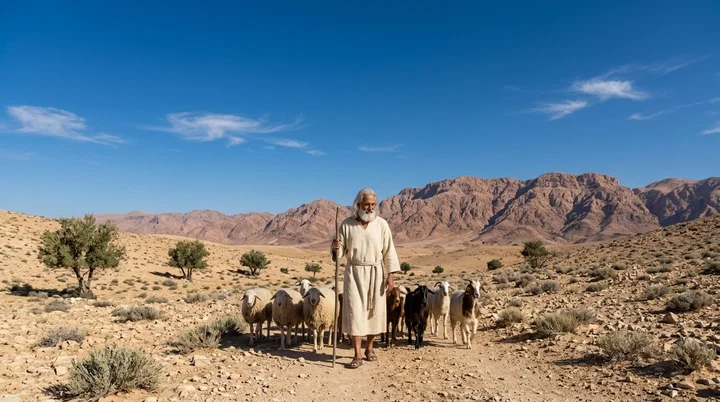
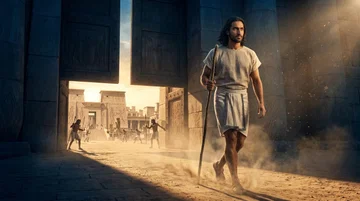
Now when Pharaoh heard this thing, he sought to slay Moses. But Moses fled from the face of Pharaoh, and dwelt in the land of Midian: and he sat down by a well.
Translations
Now when Pharaoh heard this thing, he sought to slay Moses. But Moses fled from the face of Pharaoh, and dwelled in the land of Midian: and he sat down by a well.
King James Version, KJV Cambridge Paragraph Bible, Webster Bible, Revised Version, American Standard Version
Now when Pharaoh heard this thing, he sought to slay Moses. But Moses fled from the face of Pharaoh, and dwelt in the land of Midian: and he sat down by a well.
And Pharaoh heareth of this thing, and seeketh to slay Moses, and Moses fleeth from the face of Pharaoh, and dwelleth in the land of Midian, and dwelleth by the well.
And Pharaoh heard of this matter, and sought to slay Moses. But Moses fled from before Pharaoh, and dwelt in the land of Midian. And he sat by the well.
So Pharaoh heard this thing, and sought to slay Moses,—and Moses fled from the face of Pharaoh, and dwelt in the land of Midian and sat down by the well.
Berean Standard Bible, Majority Standard Bible
When Pharaoh heard about this matter, he sought to kill Moses. But Moses fled from Pharaoh and settled in the land of Midian, where he sat down beside a well.
Now when Pharaoh heard this thing, he sought to kill Moses. But Moses fled from the face of Pharaoh, and lived in the land of Midian, and he sat down by a well.
Now when Pharaoh had news of this, he would have put Moses to death. But Moses went in flight from Pharaoh into the land of Midian: and he took his seat by a water-spring.
Now Pharaoh heard this matter, and sought to slay Moses: therefore Moses fled from Pharaoh, and dwelt in the lande of Midian, and hee sate downe by a well.
Douay-Rheims (Challoner revision)
And Pharao heard of this word and sought to kill Moses: but he fled from his sight, and abode in the land of Madian, and he sat down by a well.
Pictures
Cross-references
- Acts 7:23-29
And when he was full forty years old, it came into his heart to visit his brethren the children of Israel.
Retells Moses’ killing of the Egyptian and his flight to Midian.
- Exodus 3:1-10
Now Moses kept the flock of Jethro his father in law, the priest of Midian: and he led the flock to the backside of the desert, and came to the mountain of God, even to Horeb.
After his years in Midian, God calls Moses to deliver Israel from Egypt.
- Acts 7:22
And Moses was learned in all the wisdom of the Egyptians, and was mighty in words and in deeds.
Moses’ Egyptian learning and abilities preceded his flight from Pharaoh.
- Hebrews 11:24-26
By faith Moses, when he was come to years, refused to be called the son of Pharaoh’s daughter;
Moses rejected royal privilege and chose to suffer with God’s people.
- Acts 7:29
Then fled Moses at this saying, and was a stranger in the land of Madian, where he begat two sons.
Stephen recounts Moses fleeing to Midian.
- Hebrews 11:27
By faith he forsook Egypt, not fearing the wrath of the king: for he endured, as seeing him who is invisible.
Explains Moses’ flight from Pharaoh as an act of faith.
- Numbers 12:3
(Now the man Moses was very meek, above all the men which were upon the face of the earth.)
Moses’s flight to Midian precedes the meekness later described.
- Exodus 3:10
Come now therefore, and I will send thee unto Pharaoh, that thou mayest bring forth my people the children of Israel out of Egypt.
God later sends Moses to lead Israel out of Egypt.
- Exodus 4:19
And the LORD said unto Moses in Midian, Go, return into Egypt: for all the men are dead which sought thy life.
God commands return when enemies are dead
- Exodus 2:5-10
And the daughter of Pharaoh came down to wash herself at the river; and her maidens walked along by the river’s side; and when she saw the ark among the flags, she sent her maid to fetch it.
Pharaoh’s daughter adopted Moses.
- Exodus 3:14
And God said unto Moses, I AM THAT I AM: and he said, Thus shalt thou say unto the children of Israel, I AM hath sent me unto you.
God reveals himself as I AM after preparing Moses.
- Exodus 3:7-8
And the LORD said, I have surely seen the affliction of my people which are in Egypt, and have heard their cry by reason of their taskmasters; for I know their sorrows;
God tells Moses he will deliver Israel from Egypt.
- Exodus 2:23
And it came to pass in process of time, that the king of Egypt died: and the children of Israel sighed by reason of the bondage, and they cried, and their cry came up unto God by reason of the bondage.
marks long interval with death of king
- Exodus 1:8
Now there arose up a new king over Egypt, which knew not Joseph.
Places Rameses in the dynasty that forgot Joseph.
Commentary
Each commentary is drawn from primary sources: the writings of Ellen G. White and Adventist pioneers and periodicals. Each commentary is separate. Its own words are not a quotation; follow the references to read the source passages.
Ellen G. White
22 sources
When Pharaoh heard that Moses had killed an Egyptian, with the report swollen into a charge that he meant to make war on Egypt and take rule himself, he sought to kill him, so Moses at forty years old secretly left Egypt and the Lord directed his course to Midian.SG3 185.1–2ST Feb 19, 18801SP 166.21SP 167.1 There he found a home with Jethro the priest and prince of Midian who worshiped God, married one of his daughters, and remained forty years as a shepherd and keeper of his father-in-law's flocks.SG3 185.1–2ST Feb 19, 18801SP 167.1 He was not yet prepared for his life-work but mistook God's purpose and took the work into his own hands, supposing his training in Egyptian wisdom and as a mighty general qualified him to deliver Israel by warfare, and in killing the oppressor and hiding the body he acted in presumption, self-sufficiency, and human planning and showed himself unfit to represent the God of mercy, love, and tenderness.ED 62.2STE 120.1Lt 47, 1895, par. 24–251SP 165.1OEWP 14.1–16.2 God permitted and overruled even that rash act to accomplish His own purpose of delivering by His mighty power alone, allowing the failure and flight to teach Moses his utter helplessness without divine upholding, to lose self-confidence, to trust wholly in God, and to learn the gentleness, patience, and long-suffering every laborer must possess.CT 407.1–2ED 62.2STE 120.1 Cut off from his mission, he spent forty years in humble shepherd work in the solitude and hardship of Midian, where through care for the flock, communion with God, and unlearning Egypt's molding influences his pride and self-sufficiency were swept away until he became very meek above all men, and those habits prepared him to become the compassionate, long-suffering shepherd of Israel as no human training could.STE 50.2–3ST Jul 12, 1905Ms 8a, 1891, par. 25–27
Flight to Midian
When Pharaoh heard that Moses had killed an Egyptian, he sought to slay Moses.SG3 185.1–21SP 166.21SP 167.1PP 246.2–247.1 The report was exaggerated into the claim that Moses intended to make war upon Egypt, overthrow it, and rule as king.SG3 185.1–21SP 167.1 It was that inflamed charge that stirred Pharaoh's anger against him.1SP 167.1
Moses was forty years old when the news reached Pharaoh, after his clash in reproving a Hebrew who was striking another Hebrew.1SP 166.2 Knowing that Pharaoh planned to kill him, he secretly left Egypt and fled.SG3 185.1–21SP 167.1 He escaped toward Arabia to Midian, with the Lord directing his course.SG3 185.1–2ST Feb 19, 18801SP 167.1PP 246.2–247.1
In Midian he found a home with Jethro, the priest and prince of Midian who worshiped God.SG3 185.1–2ST Feb 19, 18801SP 167.1PP 247.2 After a time he married one of Jethro's daughters.SG3 185.1–2ST Feb 19, 18801SP 167.1PP 247.2 He became a shepherd and keeper of his father-in-law's flocks, and remained there forty years.SG3 185.1–2ST Feb 19, 18801SP 167.1PP 247.2
Failure and Preparation for Leadership
Moses was not yet prepared for his life-work when Pharaoh sought his life, for he had mistaken God's purpose and taken into his own hands the work God had promised to do.ED 62.2PP 247.3–248.1SG3 186.1–187.1 Supposing his thorough education in Egyptian wisdom and his training as a mighty general fully qualified him to lead Israel from bondage, he acted in presumption, self-sufficiency, hurry, and human planning.STE 120.1Lt 47, 1895, par. 24–25OEWP 14.1–16.2Lt 89, 1897, par. 8–10Ms 10a, 1895, par. 33–35 He set about redressing his people's wrongs and gaining their favor by killing an Egyptian who was oppressing an Israelite and hiding the body, expecting Israel's deliverance to come through warfare with himself leading against the Egyptian army.1SP 165.1FE 342.2–343.1Ms 10a, 1895, par. 27–29Ms 8a, 1891, par. 25–27PP 247.3–248.1 His flight to Midian as a fugitive and exile in defeat and disappointment was the consequence of that rash attempt.ED 62.2OEWP 14.1–16.2Ms 8a, 1891, par. 25–27
In that killing he manifested the spirit of him who was a murderer from the beginning, and by an act prompted by a presumptuous spirit he proved himself unfit to represent the God of mercy, love, and tenderness.STE 120.1Lt 47, 1895, par. 24–25FE 342.2–343.1Ms 10a, 1895, par. 27–29ST Jul 12, 1905 The act revealed the foolishness of man's wisdom and the weakness of human strength even at the height of human glory.Ms 10a, 1895, par. 33–35 After his first attempt to deliver Israel ended in miserable failure and defeat, he immediately lost confidence in God and turned his back upon his appointed work.STE 120.1Lt 47, 1895, par. 24–25FE 342.2–343.1Ms 10a, 1895, par. 27–29ST Jul 12, 1905 He concluded that because of his mistake and great sin in taking life God would not permit him to have any part in delivering His people from cruel bondage.STE 120.1Lt 47, 1895, par. 24–25FE 342.2–343.1Ms 10a, 1895, par. 27–29ST Jul 12, 1905
God permitted and overruled even that rash, premature act to accomplish His purposes, for He willed to deliver by His own mighty power so that the glory would be ascribed to Him alone.PP 247.3–248.1SG3 186.1–187.1 He allowed the failure and flight to teach Moses his utter helplessness and inefficiency without divine upholding, the lesson of dependence upon divine power taught to Abraham and Jacob, not to rely upon human strength or wisdom but upon the power of God for the fulfillment of His promises.ED 62.2OEWP 14.1–16.2PP 247.3–248.1Ms 10a, 1895, par. 33–35 Faith moves in the strength and wisdom of God and not in the ways of men, so Moses had to lose self-confidence, realize his own helplessness, put his trust in God, and become willing to obey God's commands whether they seemed proper to human reason or not.Ms 10a, 1895, par. 33–35 By such simple faith he was enabled to press through difficulties and overcome obstacles that seemed almost insurmountable.Ms 10a, 1895, par. 33–35 The Lord permitted these things that He might teach him the gentleness, goodness, patience, and long-suffering that every laborer for the Master must possess and that constitute the successful workman in the Lord's cause.CT 407.1–2STE 120.1Lt 47, 1895, par. 24–25FE 342.2–343.1Ms 10a, 1895, par. 27–29
The flight cut him off apparently forever from his life's mission and began forty years in the humble work of a shepherd and keeper of flocks in the wilds, desert, and mountains of Midian, in solitude, self-denial, and hardship.ST Jul 12, 1905PP 247.3–248.1SG3 186.1–187.1Lt 89, 1897, par. 8–10 In that school of nature with Christ as teacher, through care-taking, hunting for stray sheep, self-forgetfulness, and tender solicitude for the flock, he learned humility, meekness, simple unwavering faith, trust, and patience.ST Jul 12, 1905PP 247.3–248.1 Solitude, self-denial, and hardship taught him patience, tempering of passions, obedience before he could govern wisely, harmony of heart with God before he could teach Israel the knowledge of His will, and fatherly care for all who needed help through his own experience.PP 247.3–248.1 The habits thus developed prepared him to become the compassionate, long-suffering shepherd of Israel, for which no human training or culture could substitute.Lt 47, 1895, par. 24–25PP 247.3–248.1
He had much to unlearn from the molding influences surrounding him in Egypt, and time, change of surroundings, and communion with God removed those impressions through a struggle as for life on his own part to renounce error and accept truth, with God as his helper when the conflict was too severe for human strength.PP 247.3–248.1 There his pride and self-sufficiency were swept away until he became patient, reverent, humble, and very meek above all men.Lt 89, 1897, par. 8–10Ms 11, 1903, par. 9–11 He learned the lesson of humility so perfectly that even afterward when God revealed Himself and spoke to him face to face as a man speaks to a friend, he was not lifted up to think he could teach God how to work for His people.Lt 89, 1897, par. 8–10 The retired life amid nature exerted a refining, subduing influence that fitted him for his calling.STE 50.2–3
That fitting illustrates that the locality for training workers and youth should be chosen where contact with nature can shape character away from corrupting surroundings.STE 50.2–3 The flight and shepherd years teach laying aside self-sufficiency to walk humbly before God, helping rather than driving further one whose soul is in peril, and speaking and acting as God's little children.Ms 11, 1903, par. 9–11
Sources
Pioneers and periodicals
49 sources
When Pharaoh learned that Moses had killed an Egyptian he sought to kill him, so Moses fled for his life from Pharaoh's face and settled in Midian and sat down by a well, where he found a home with Jethro.ST Feb 19, 1880ST May 14, 1894 At forty he had tried to deliver his brethren by his own wisdom and strength, by physical force without asking God or His direction.ST Jan 24, 1911ST Jan 28, 1913RH Feb 25, 1915ST Nov 27, 1901 He acted forty years ahead of God's appointed time for deliverance, and God put a stop to his self-confident work because His work is done not by human might but by His Spirit.RH Feb 4, 1873RH Aug 16, 1870RH Jun 12, 1913RH Mar 23, 1869ST Dec 30, 1889 His flight began forty years of schooling in the wilderness tending sheep, which curbed his eager and impetuous spirit and taught him humility, meekness, faith, patience, and tender care for a murmuring people.ST Jul 12, 1905ST Jan 24, 1911ST Jan 28, 1913RH Feb 4, 1873 His fear when exposed revealed trust in himself rather than God, though it is also taught as strong faith not fearing the wrath of the king but enduring as seeing Him who is invisible (Hebrews 11:27).ST Sep 12, 1916ST May 12, 1890
Place in Exodus Narrative
Exodus 2:15 belongs to the first, mainly historical division of Exodus covering chapters 1-18, and specifically to chapters 1-4 which begin with the oppression of Israel in Egypt and relate the birth and upbringing of Moses until he is called to be the deliverer of his people. It belongs to the account of Israel's oppression in Egypt and Moses' birth and rearing.RH Dec 17, 1861ST Jan 20, 1909 This forms part of a long and bitter oppression that followed the earlier prosperity in Egypt of the family of Abraham.RH Dec 17, 1861
It belongs to the time when Israel in long slavery in Egypt, surrounded by polytheism, idolatry and licentiousness, had well-nigh lost the knowledge of God and His laws, and Sabbath observance was difficult if not entirely impossible.ST Feb 28, 1906 When the time of the promise God swore to Abraham drew nigh, Moses was qualified and commissioned by Jehovah to make the people know the statutes of God and His laws, including rest from their work, and Pharaoh at once reprimanded him and enforced stringent measures to crush that attempt at Sabbath observance.ST Feb 28, 1906 The events of Exodus 1-14 to which the verse belongs are not to be expected in the historical records and public monuments of Egypt, because nothing was ever registered there except successes and triumphs, and the plagues suffered during a whole year and the disaster of the Red Sea would naturally be omitted by the court historiographers and the monarch.RH Apr 23, 1908
The Pharaoh from whose presence Moses fled was Rameses II, the Pharaoh of the Oppression whose daughter had adopted Moses and who made Israel to serve with rigor.RH Aug 24, 1905 He built the store city Pithom with its strong treasure chambers of sun-dried bricks made with and without straw, built the great hall of columns at Karnak and the rock-hewn temple of Abu Simbel guarded by four colossal figures of himself, warred against the Hittites and made the first known treaty with them with an extradition clause for returning fugitive slaves.RH Aug 24, 1905 He lived to almost one hundred years old, with a high forehead and lock of pale yellow hair, a hawk-like nose and compressed lips showing a kingly will to rule men.RH Aug 24, 1905 The verse marks the end of Moses' first forty-year period, from infancy through his life in Pharaoh's palace and his flight to Midian.ST Nov 7, 1878 It places his flight from Egypt and sojourn in Midian in the period when Job lived, if the chronology is reliable, and supplies the historical setting for the uncertain possibility that Moses wrote the account of Job's experience while in Midian.RH Mar 14, 1912
Flight and Settlement in Midian
After Pharaoh learned that Moses had killed an Egyptian he sought to kill Moses, so Moses feared and fled for his life from Pharaoh's face toward Arabia to escape the wrath of the offended king.ST Feb 19, 1880GSAM 198.3–199.1 The flight came after Moses tried to defend his Hebrew brethren, and it carried him away to settle in Midian where tending flocks in the desert trained him in keeping sheep so he could lead God's flock out of Egypt toward Canaan before receiving his call.GSAM 198.3–199.1 God directed his course in that escape.ST Feb 19, 1880
When Moses had grown to manhood plots were contrived to destroy him, and he fled from his family and friends and his adopted country to a strange country.RH Feb 25, 1915RH Feb 3, 1910ST Jul 21, 1909 He had tried to save the people by his own plan without asking God, and that serious mistake led to his flight.RH Feb 25, 1915 There in Arabia his mission to the monarch of Egypt and to the Hebrew captives was revealed to him, though refused by his own people and a fugitive from Egypt yet selected and made by God the leader and deliverer of Israel to bring life and salvation to all who follow His providence.RH Feb 3, 1910ST Jul 21, 1909
He dwelt and settled in the land of Midian, a related tribe, and sat down by a well.ST Feb 19, 1880RH Feb 7, 1907 He found a home with Jethro, the priest of Midian who worshiped the true God, later married Jethro's daughter and spent forty years keeping his father-in-law's flocks in a discouraged and lonely shepherd life after Israel did not respond to his efforts to help them.ST Feb 19, 1880ST May 14, 1894 That sojourn lasted forty years until his call, when while near Horeb he encountered the Lord in the burning bush and God called him to deliver Israel from Egypt and send him back to work great deliverance, humble the proudest nation, lead a whole people from bondage to freedom, and give a code of laws.ST May 14, 1894ST Nov 27, 1901 His path into Midian by the well, in contrast with remaining on Egypt's throne, shows the dignity of useful labor and how humble surroundings develop body, mind, and soul.RH Feb 7, 1907
Before he fled he had spent a time teaching about God in Egypt.ST Dec 7, 1904 He taught a man at the court the knowledge of the true God, who took Him as his own God and kept that faith for forty years until the night of the death of the firstborn.ST Dec 7, 1904
Premature Attempt and Timing
Moses fled because his self-sent, premature attempt to deliver God's people had failed, undertaken when he felt sufficient in himself because of his education and position in Egypt.ST Jan 24, 1911ST Jan 28, 1913 That failure ended his confidence in his own ability and began forty years of schooling in the wilderness tending sheep, a postgraduate course in God's providence to train him for God's call to deliver Israel from Egypt, so that he felt insufficient when God later called him to his mission.ST Jan 24, 1911ST Jan 28, 1913
At forty he visited his brethren to defend them when he saw an Egyptian ill-treating a Hebrew, and he tried to free them by his own wisdom and strength, by physical force and military means.RH Feb 25, 1915ST Nov 27, 1901ST May 12, 1890 He tried to save the people by his own plan without asking God and without God's direction, supposing they would understand that God would deliver them by his hand, so the expected divine blessing did not come.RH Feb 25, 1915ST Nov 27, 1901ST Nov 27, 1901 His fear when a poor laborer's taunt exposed him and rumor of the king's anger came revealed that he had trusted his own wisdom and strength and military skill.ST May 12, 1890 That flight for his life proves the fear that comes from self-reliance, the opposite of the confidence and courage born of faith, in contrast with his later fearlessness when distrusting himself, trusting only in God, and bearing Heaven's commission.ST May 12, 1890
He acted forty years ahead of God's timing, before the appointed time for deliverance had come, though it had been revealed to him that he was to be the deliverer of his brethren.RH Feb 4, 1873RH Aug 16, 1870RH Jun 12, 1913ST Dec 28, 1876 He had struck a bold signal blow confidently expecting them to rise with one impulse and rally around his standard, but God's time had not yet come and he fled for his life to escape the wrath of an offended king.RH Feb 4, 1873 Israel's deliverance came later, when the time God had set was fulfilled and the time was right for God to bring them out of Egypt.RH Aug 16, 1870ST Dec 28, 1876 Because of that self-reliant attempt God sent him away into the mountains to tend sheep to teach him his lesson, for God's thought for Israel was deeper and grander than Moses's own plan, and after that discipline God called Moses back and used him wonderfully to lead His people forward.RH Jun 12, 1913 In lonely exile he found a home in the desert with Jethro the holy priest of Midian, and clad in a shepherd's humble garb he led Jethro's flocks forty long years while his suffering people still groaned beneath the oppressor's yoke.RH Feb 4, 1873 The weary waiting curbed and disappointed his eager spirit and gave him, in tending flocks in seclusion, just the tender, patient shepherd experience needed to bear with a murmuring, rebellious people, for God who sees the end from the beginning knew the training needed to fit His chosen servant for his high and holy mission, and it teaches unwearied labor, patient waiting, and steady, earnest aim until the appointed time comes.RH Feb 4, 1873
God saw that this self-confident, I-can-do-everything spirit would only ruin His work and cast reproach upon His holy name, so He put a stop to Moses' work and sent him away into the wilderness to learn humility.RH Mar 23, 1869ST Dec 30, 1889 Moses fled to the wilderness of Midian in bitter disappointment after his perfect failure to deliver Israel when he left Pharaoh's court to join the people of God, and the humiliating failure was prominent in his mind as he fled and was exactly what was needed to prepare him for his life work, introducing him to his lowly life as a shepherd.RH Mar 23, 1869 The failure shows that God's work is accomplished not by human might or power and greatness but by God's Spirit, with Moses to serve as the visible leader only by following God's directions and depending on the Lord of Israel for power, wisdom, and guidance.RH Mar 23, 1869ST Nov 27, 1901RH Oct 2, 1900 Instead of spending his forty years in bitter regret for the royal honors he had left or in murmuring against God for the failure of his well-meant effort, Moses bowed his whole soul before God and made the valley of humiliation his constant abode, communing with his own heart and with the Spirit of God till he drank deeply of heavenly graces and enjoyed the care of angels, and that lowly shepherd life fitted him to be the shepherd of God's flock and to bear the crushing burden of Israel's rebellion, so his disappointment was made of exceeding profit and holds a lesson for others to profit by.RH Mar 23, 1869
His killing of the Egyptian who was ill-treating an Israelite manifested the spirit of the murderer from the beginning and proved him unfit to represent the God of mercy, love, and tenderness.ST Jul 12, 1905 His Egyptian education as the adopted son of Pharaoh's daughter had led him to feel fully able to deliver Israel, but his first attempt was a miserable failure.ST Jul 12, 1905 He immediately lost confidence in God, turned his back on his appointed work, and concluded that because of his mistake and sin in taking life God would not permit him to have any part in delivering His people from cruel bondage and would bar him forever from delivering Israel.ST Jul 12, 1905 God permitted the mistake in order to teach him the gentleness, goodness, and longsuffering necessary for every worker for God, and the flight cut him off apparently forever from his life's mission to begin forty years in Midian as a keeper of sheep, where in the school of nature with Christ as teacher he learned humility, meekness, faith, trust, and simple unwavering faith that palace instruction could not impart.ST Jul 12, 1905
Training During Wilderness Years
The flight to Midian opens forty years of schooling in the wilderness tending sheep, a postgraduate shepherd course in God's providence that trained Moses for God's call to lead God's flock out of Egypt toward Canaan.ST Jan 24, 1911ST Jan 28, 1913 It began after his self-sent, premature attempt to deliver God's people failed, when his confidence in his own ability, education, and position ended in failure and left him feeling insufficient when God later called him to his mission.ST Jan 24, 1911ST Jan 28, 1913 In Midian he settled and was trained in keeping sheep, specifically tending Jethro's sheep, so he could lead God's flock toward Canaan.
He had been taken from home training at age twelve to be educated in the university of Egypt, which left his physical, mental, and spiritual powers without proper balance.RH May 20, 1915 After his mistake and failure at age forty when entering the special work God had called him to do as deliverer and leader, he had to flee, and God sent him to the shepherd school for forty years to secure that balance so he could succeed as deliverer and leader.RH May 20, 1915 In lonely exile he found a home in the desert with Jethro, the holy priest of Midian, and clad in a shepherd's humble garb he led Jethro's flocks forty long years while his suffering people still groaned beneath the oppressor's yoke.ST Jul 12, 1905RH Feb 4, 1873ST Nov 27, 1901 The weary waiting curbed and disappointed his eager, quick and impetuous spirit, and in the school of nature with Christ as teacher he learned humility, meekness, faith, trust, patience, self-control, obedience, gentleness, goodness, and longsuffering with simple unwavering faith, as palace instruction could not impart.ST Jul 12, 1905RH Feb 4, 1873ST Sep 10, 1902ST Nov 27, 1901RH Nov 18, 1873
Tending flocks in seclusion gave him just the tender, patient shepherd experience needed to bear with a murmuring, rebellious people.RH Feb 4, 1873 Caring for the flock developed self-forgetfulness and tender concern to lead Israel with compassion and long-suffering, teaching faith in God rather than reliance on human strength or wisdom through humble toil, solitude, self-denial, and hardship, and his own heart had to be brought into harmony with God before he could guide others.ST Nov 27, 1901 His humiliating failure in leaving Pharaoh's court to join the people of God was prominent in his mind as he fled to the wilderness of Midian in bitter disappointment, and that perfect failure was exactly what was needed to prepare him for his life work by introducing him to his lowly life as a shepherd, showing that the work is not by human might, nor by human power and greatness, but by God's Spirit.RH Mar 23, 1869 Instead of spending the forty years in bitter regret for the royal honors he had left or in murmuring against God for the failure of his well-meant effort, he bowed his whole soul before God and made the valley of humiliation his constant abode, communing with his own heart and with the Spirit of God till he drank deeply of heavenly graces and enjoyed the care of angels, and that lowly shepherd life fitted him to be the shepherd of God's flock and to bear the crushing burden of Israel's rebellion, so his disappointment was made of exceeding profit.RH Mar 23, 1869
The years could seem wasted and his early hope of Israel's freedom like a dream, but they showed man's littleness and God's greatness and were not lost.ST Jun 15, 1904 Israel's suffering was refining the people while Moses was being prepared and made fit for God to use, until the burning bush showed the experience had not been lost.ST Jun 15, 1904 Forced to flee Egypt after identifying himself with Israelites who did not respond to his efforts, discouraged and alone he settled down to a shepherd life with a related tribe, beginning forty years of preparation before God called him, during which he kept Jethro's flock, married one of Jethro's daughters, and near Horeb encountered the Lord in the burning bush where his mission to the monarch of Egypt and to the Hebrew captives was revealed and he was called and sent back to Egypt.RH Feb 3, 1910ST May 14, 1894 Through him God then wrought great deliverance for His people, humbled the proudest nation then on earth, led a whole people from bondage to freedom, and gave to the world a code of laws which has been the wonder and wisdom of the ages. That dwelling in Midian became a peaceful home in the restful quiet of the desert, where he lived forty pleasant and prosperous years guiding and tending the innocent flocks of his father-in-law, for which afterward, while bearing the burden of a great and rebellious people with a responsibility such as none before or after him bore, he knew heartache and homesickness and at times longed for that Midian home.ST Feb 18, 1913
Doctrine and Scriptural Connections
Moses' hiding for three months by his parents and his adoption by Pharaoh's daughter belong with his flight to Midian as one early history, and that history is largely reproduced in Acts 7, which corroborates the Exodus account and establishes that Exodus is accurate and inspired rather than fabulous or mythological.ST Apr 13, 1904 Acts 7:20-31 adds to that account that Moses was taught all the wisdom of the Egyptians during his upbringing in Pharaoh's house.RH Jun 6, 1912
The flight belongs to the oppression of Israel in Egypt described in the first five chapters of Exodus, when Israel were bondmen in an oppressed state in which they could not have kept the Sabbath even if they had desired to, though they might have kept the other nine commandments.RH May 16, 1854 They were then in long slavery, surrounded by polytheism, idolatry and licentiousness, having well-nigh lost the knowledge of God and His laws, so that Sabbath observance was difficult if not entirely impossible.ST Feb 28, 1906 God afterward wrought deliverance for them with a mighty hand and brought them out where they could keep the Sabbath.RH May 16, 1854 When the time of the promise sworn to Abraham drew nigh, Moses was qualified and commissioned by Jehovah to make the people know the statutes of God and His laws, including rest from their work, and Pharaoh at once reprimanded him and enforced stringent measures to crush that attempt at Sabbath observance.ST Feb 28, 1906
At forty, when he went to visit his Israelite brethren, Moses by faith refused to be called the son of Pharaoh's daughter and chose to suffer affliction with God's people rather than enjoy Egypt's temporary pleasures, esteeming the reproach of Christ and having respect to the recompense of the reward. He left Pharaoh's court at forty to unite himself with the Hebrews in slavery because Jochebed, the daughter of Levi and granddaughter of Jacob, had instructed him effectually in his early youth.ST Oct 11, 1883 He therefore possessed all the treasures of divine truth held by his ancestors with the highest measure of inspiration, and was well instructed concerning the events of the last day.ST Oct 11, 1883 His fleeing Egypt for self-preservation was an act of strong faith, not fearing the wrath of the king but enduring as seeing Him who is invisible.ST Sep 12, 1916 That faith had been implanted in childhood at his mother's knee, and though seemingly buried by worldly ambition it came to the surface when the parting of the way was reached.ST Sep 12, 1916 In its self-reliant aspect his trembling at a poor laborer's taunt and his flight at the rumor of the king's anger prove the fear that comes from trusting his own strength and military skill, the opposite of the confidence and courage born of faith, in contrast with his later fearlessness when distrusting himself, trusting only in God, and bearing Heaven's commission.ST May 12, 1890
Exodus 2:11-17 shows Moses as he was by nature before he became meek, quick and impetuous in temper and given to resenting and avenging injuries.ST Feb 12, 1885 This proves that meekness is not effeminacy or weakness, for Moses was a great general and leader of mighty armies of fierce warriors, a place no effeminate man could fill.ST Feb 12, 1885 His later gentleness and forbearance, when he was very meek above all men, were not natural to him but were the result of communion with God.ST Feb 12, 1885 In Midian he found a place in the home of Jethro, the priest of Midian and a worshiper of the true God.ST Apr 2, 1912 His example shows that all the true people of God were not found in the called nation, for God had His witnesses scattered everywhere through the nations.ST Apr 2, 1912
The deliverance to which the flight belongs is God's redeeming Israel with a mighty hand after hundreds of years of slavery had unfitted them to comprehend God's great salvation and the character He required. God therefore gave them a great, multiple object-lesson by various forms and rites comprehending the great plan of salvation in the sanctuary He commanded Moses to build. Though refused by his own people and a fugitive from his adopted country Egypt, Moses was selected and made the leader and deliverer of Israel, showing that God sees deeper than man and chooses those whom the world rejects in order to bring life and salvation to all who follow His providence.ST Jul 21, 1909 His forced flight to Midian was God's special providence for him, the means by which the Lord showed him man's littleness and God's greatness and placed him in the best school he ever knew.ST Jan 21, 1889ST Mar 11, 1913 It proves that out of what is insignificant or nothing God can bring deliverance and blessing.ST Jan 21, 1889 Moses thus stands with Noah, Jeremiah, Cyrus, John the Baptist, and Paul as one of the men of the hour whom the Lord raised up to fill a certain important place in His work and great plan, a man specially called and fitted for the particular occasion.RH Oct 19, 1916 This shows that God designates for each of His faithful children a special place on earth where to work in cooperation with Christ for the salvation of souls, so that every humble believer right where he is, however lowly his lot, is just as truly called as Moses was.RH Oct 19, 1916
Example and Personal Application
Moses fled for his life to escape the wrath of an offended king because the time for deliverance had not yet come, though it had been revealed to him that he was to be the deliverer and he had struck a bold blow confidently expecting his brethren to rise with one impulse and rally around his standard.RH Feb 4, 1873 In lonely exile he found a home in the desert with Jethro the holy priest of Midian, and clad in a shepherd's humble garb he led flocks forty long years while his suffering people still groaned beneath the oppressor's yoke.RH Feb 4, 1873 The weary waiting curbed and disappointed his eager spirit and gave him in tending flocks in seclusion just the tender, patient shepherd experience needed to bear with a murmuring, rebellious people, for God who sees the end from the beginning knew the training needed to fit His chosen servant for his high and holy mission.RH Feb 4, 1873 Instead of spending those forty years in bitter regret for royal honors left behind or in murmuring against God for the failure of his well-meant effort, he bowed his whole soul before God and made the valley of humiliation his constant abode, communing with his own heart and with the Spirit of God till he drank deeply of heavenly graces and enjoyed the care of angels, and that lowly life fitted him to be shepherd of God's flock and to bear the crushing burden of Israel's rebellion.RH Mar 23, 1869 His disappointment was thus made of exceeding profit, teaching unwearied labor, patient waiting, and steady earnest aim until the appointed time comes, and holding a lesson to profit from disappointment rather than regret or murmur.RH Feb 4, 1873RH Mar 23, 1869
Patient endurance in that exile was wisdom that prepared him for leading Israel out of Egypt and for the long trial in the wilderness.RH May 2, 1865 Those years taught him humility and how to walk with God.RH Nov 18, 1873
The flight is a pattern for weary, empty souls to flee Pharaoh's court as a frivolous and unsatisfying world-show.RH Jun 24, 1873 That court means royal pleasures and gayeties that are weariness and pain, vanity and vexation of spirit, with earthly and selfish cares that leave no time or vitality for discipline of the soul.RH Jun 24, 1873 Fleeing to Midian means leaving that world-pageant for simplicity, keeping the sheep in a lowly and obscure path where one can come unto Horeb the mount of God, be nearer to nature, commune with what is noblest and best, walk in charity, and have the spirit put in tune, purified, calmed and rested in God.RH Jun 24, 1873 Sitting by a well in Midian shows the dignity of useful labor and how humble surroundings develop body, mind, and soul, in contrast with remaining on Egypt's throne or studying at learned feet.RH Feb 7, 1907
The flight for self-preservation was an act of strong faith, not fearing the wrath of the king but enduring as seeing Him who is invisible.ST Sep 12, 1916 That faith was implanted in childhood at his mother's knee, and though seemingly buried by worldly ambition it came to the surface when the parting of the way was reached.ST Sep 12, 1916 It teaches parents that lessons of faith taught in tender childhood are not forgotten but will bring the child to stand with them to endure the desert journey and to rest with them at the end of the way in Canaan, and his life of faith accomplishing great things offers children a high ideal to imitate.ST Sep 12, 1916RH Dec 14, 1911 His later experiences as Israel's chosen leader began with this flight to Midian after Pharaoh sought to kill him.RH Jan 20, 1916 Being driven from power and dwelling in remote places brings simple faith through contact with nature, and enduring persecution makes lovers of peace and quiet.
Sources