Genesis 29:8
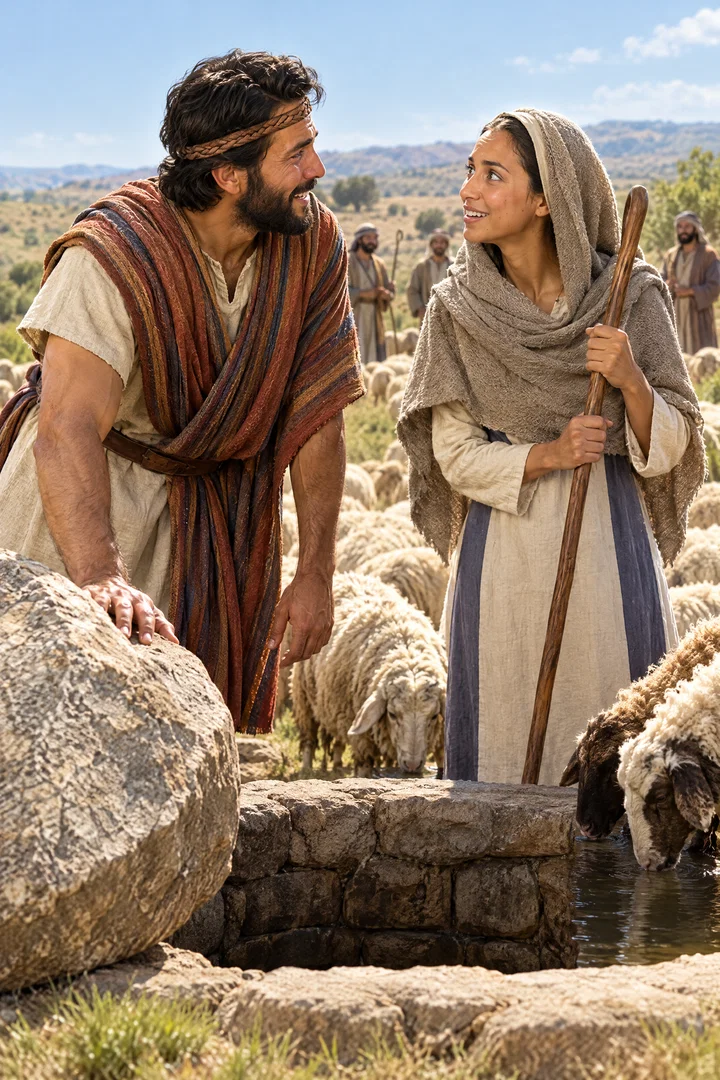
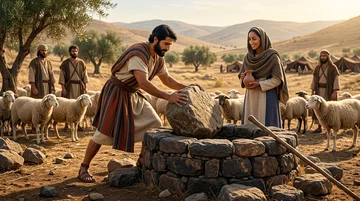
And they said, We cannot, until all the flocks be gathered together, and till they roll the stone from the well’s mouth; then we water the sheep.
Translations
American King James Version, King James Version, KJV Cambridge Paragraph Bible
And they said, We cannot, until all the flocks be gathered together, and till they roll the stone from the well’s mouth; then we water the sheep.
And they said, We cannot, until all the flocks are collected, and till they roll the stone from the well's mouth; then we water the sheep.
Revised Version, American Standard Version
And they said, We cannot, until all the flocks be gathered together, and they roll the stone from the well’s mouth; then we water the sheep.
And they say, 'We are not able, till that all the droves be gathered together, and they have rolled away the stone from the mouth of the well, and we have watered the flock.'
And they said, We cannot until all the flocks are gathered together, and they roll the stone from the mouth of the well, and we water the sheep.
And they said, We cannot, until that all the flocks are gathered together, and they roll away the stone, from off the mouth of the well,—and then can we water the sheep.
Berean Standard Bible, Majority Standard Bible
But they replied, “ We cannot, until all the flocks have been gathered and the stone has been rolled away from the mouth of the well. Then we will water the sheep.”
They said, “ We can’t, until all the flocks are gathered together, and they roll the stone from the well’s mouth. Then we will water the sheep.”
And they said, We are not able to do so till all the flocks have come together and the stone has been rolled away from the mouth of the water-hole; then we will get water for the sheep.
But they sayde, We may not vntill all the flocks be brought together, and till men rolle the stone from the welles mouth, that we may water the sheepe.
Douay-Rheims (Challoner revision)
They answered: We cannot, till all the cattle be gathered together, and we remove the stone from the well’s mouth, that we may water the flocks.
Pictures
Cross-references
- Genesis 24:11-20
And he made his camels to kneel down without the city by a well of water at the time of the evening, even the time that women go out to draw water.
Jacob’s arrival at a well contrasts with the servant’s search for Isaac’s wife.
- Genesis 29:1
Then Jacob went on his journey, and came into the land of the people of the east.
places well meeting after journey east
- Exodus 2:15
Now when Pharaoh heard this thing, he sought to slay Moses. But Moses fled from the face of Pharaoh, and dwelt in the land of Midian: and he sat down by a well.
both show going to the fountain to find people
- Genesis 29:18
And Jacob loved Rachel; and said, I will serve thee seven years for Rachel thy younger daughter.
Service at the well leads to service for marriage.
Commentary
Each commentary is drawn from primary sources: the writings of Ellen G. White and Adventist pioneers and periodicals. Each commentary is separate. Its own words are not a quotation; follow the references to read the source passages.
Ellen G. White
1 source
Genesis 29:8 belongs to Jacob's arrival in the land of the children of the East as a lonely, foot-sore traveler with no possession save his staff.PP 188.2 This was in marked contrast to the coming of Abraham's messenger nearly a hundred years before, who had arrived with a train of attendants riding on camels and with rich gifts of gold and silver.PP 188.2 Like Abraham's servant, Jacob tarried beside a well.PP 188.2 It was there that he met Rachel, Laban's younger daughter.PP 188.2
Jacob himself rendered helpful service by rolling the stone from the well's mouth and watering the flocks.PP 188.2 On making known his kinship he was welcomed into Laban's home.PP 188.2 Though he came portionless and unattended, a few weeks were enough to show the worth of his diligence and skill.PP 188.2 This led to the arrangement by which he would render seven years' service for the hand of Rachel.PP 188.2
Sources
Pioneers and periodicals
11 sources
The shepherds' custom at the well was to wait there until all the flocks were gathered together, and only then to roll the stone from the well's mouth and water the sheep, which was the scene Jacob found with three men and flocks of sheep on his way to Laban.ST Oct 6, 1898ST Oct 6, 1898 The well with its gathered flocks being watered shows ordinary life in the biblical East, with Jacob arriving weary and thirsty at the spring near Haran.ST Mar 27, 1907 Jacob went to the well to find his relatives because the village well or fountain served as a place of information where people gathered to meet others, pass the news of the day, and learn what was transpiring.ST May 19, 1898 On Jacob's arrival in Padan-Aram he learned from the shepherds that they were from Haran, that they knew Laban the son of Nahor, that Laban was well, and that Rachel would soon come with her flock, and Rachel then came with Laban's flock and Jacob watered it.ST Oct 6, 1898
The verse belongs to the continuing story of Abraham and his family in Genesis 29-30, carrying forward the line through which the promised Seed was to come, with the promises passing from Abraham to Isaac and from Isaac to Jacob.ST Jan 6, 1909ST Jan 14, 1913 It stands in Jacob's checkered and unsatisfactory experience in Genesis 27-31, in which his selfish plottings and overreaching of others brought consequent suffering and overreaching in return, and want of better earlier experience brought much later trouble.ST Jan 9, 1912ST Jan 14, 1913 It stands where God's providence brings retribution sooner or later, even when it appears slow.ST Jan 9, 1912 It stands where God in mercy brings a change, shown in Jacob's victory that made him Israel, prevailer with God.ST Jan 6, 1909ST Jan 14, 1913
The verse belongs to the patriarchal age when time was measured by weeks, and that custom is a trace of the Sabbath from the beginning of the world, showing the Sabbath appointment is as old as creation.RH Feb 25, 1875 It belongs to an account in which the patriarchs plainly violated the marriage institution, cited as proof that polygamy was only evil and wrong and caused very great unhappiness in every family where it entered.RH Feb 3, 1852ST Jun 10, 1875RH Mar 1, 1870 That violation of marriage does not destroy the sacred character of marriage, just as a violation of the Sabbath in the patriarchal age would not destroy the sacred character of the Sabbath.RH Feb 3, 1852ST Jun 10, 1875 Marriage and the Sabbath were both made for man before the fall, their holiness is not derived from the Decalogue, but the seventh commandment guards the sacredness of marriage and the fourth commandment guards the sacredness of the Sabbath.RH Feb 3, 1852
Sources