Genesis 3:2
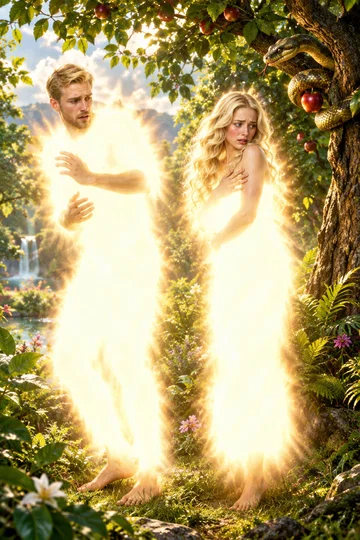
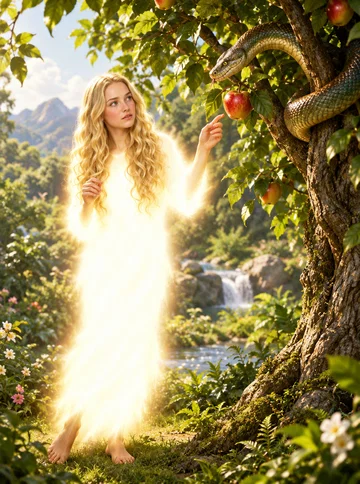
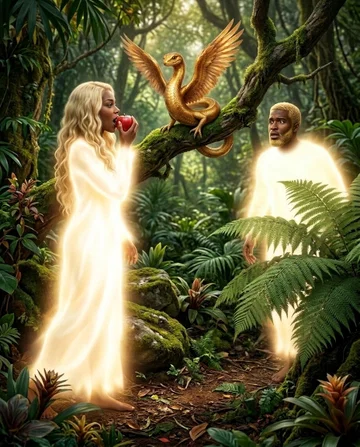
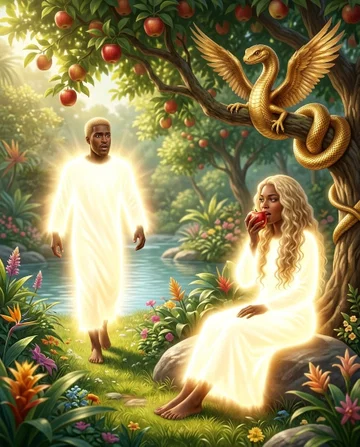
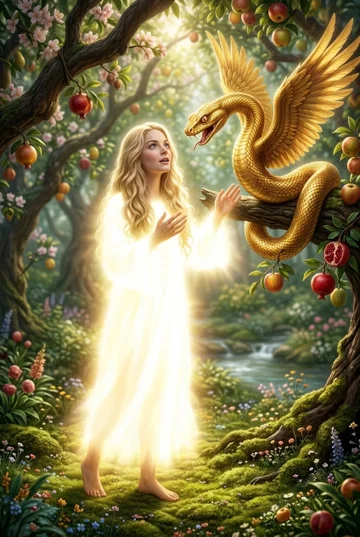
And the woman said unto the serpent, We may eat of the fruit of the trees of the garden:
Translations
American King James Version, Webster Bible
And the woman said to the serpent, We may eat of the fruit of the trees of the garden:
King James Version, KJV Cambridge Paragraph Bible
And the woman said unto the serpent, We may eat of the fruit of the trees of the garden:
Revised Version, American Standard Version
And the woman said unto the serpent, Of the fruit of the trees of the garden we may eat:
And the woman saith unto the serpent, 'Of the fruit of the trees of the garden we do eat,
And the woman said to the serpent, We may eat of the fruit of the trees of the garden;
And the woman said unto the serpent,—Of the fruit of the trees of the garden, we may eat;
Berean Standard Bible, Majority Standard Bible
The woman answered the serpent, “We may eat the fruit of the trees of the garden,
The woman said to the serpent, “We may eat fruit from the trees of the garden,
And the woman said, We may take of the fruit of the trees in the garden:
And the woman said vnto the serpent, We eate of the fruite of the trees of the garden,
Douay-Rheims (Challoner revision)
And the woman answered him, saying: Of the fruit of the trees that are in paradise we do eat:
Pictures








Cross-references 20 of 35
- Genesis 2:16-17
And the LORD God commanded the man, saying, Of every tree of the garden thou mayest freely eat:
God’s original permission and prohibition frame Eve’s answer.
- Genesis 3:6
And when the woman saw that the tree was good for food, and that it was pleasant to the eyes, and a tree to be desired to make one wise, she took of the fruit thereof, and did eat, and gave also unto her husband with her; and he did eat.
Continues the account of the first parents’ temptation.
- Revelation 12:9
And the great dragon was cast out, that old serpent, called the Devil, and Satan, which deceiveth the whole world: he was cast out into the earth, and his angels were cast out with him.
Eden’s serpent continues the deception begun by Satan, the old serpent cast from heaven.
- Romans 5:12
Wherefore, as by one man sin entered into the world, and death by sin; and so death passed upon all men, for that all have sinned:
Adam’s transgression brought sin and death into the world.
- Genesis 3:15
And I will put enmity between thee and the woman, and between thy seed and her seed; it shall bruise thy head, and thou shalt bruise his heel.
The promise of the woman’s seed defeating the serpent follows the fall.
- 2 Corinthians 11:3
But I fear, lest by any means, as the serpent beguiled Eve through his subtilty, so your minds should be corrupted from the simplicity that is in Christ.
Eve’s deception by the serpent warns of minds being led astray.
- Matthew 4:1-11
Then was Jesus led up of the Spirit into the wilderness to be tempted of the devil.
Christ overcame the test Adam failed.
- Genesis 2:9
And out of the ground made the LORD God to grow every tree that is pleasant to the sight, and good for food; the tree of life also in the midst of the garden, and the tree of knowledge of good and evil.
Describes the garden’s trees, including the trees she means.
- 1 Timothy 2:14
And Adam was not deceived, but the woman being deceived was in the transgression.
It identifies Eve as deceived in the transgression.
- Revelation 22:14
Blessed are they that do his commandments, that they may have right to the tree of life, and may enter in through the gates into the city.
Obedience grants access to the tree of life lost through Eden’s disobedience.
- Revelation 20:2
And he laid hold on the dragon, that old serpent, which is the Devil, and Satan, and bound him a thousand years,
Identifies the serpent in Genesis as the devil and Satan.
- Genesis 3:17-19
And unto Adam he said, Because thou hast hearkened unto the voice of thy wife, and hast eaten of the tree, of which I commanded thee, saying, Thou shalt not eat of it: cursed is the ground for thy sake; in sorrow shalt thou eat of it all the days of thy life;
Adam’s disobedience brings a curse, toil, suffering, and death.
- Revelation 2:7
He that hath an ear, let him hear what the Spirit saith unto the churches; To him that overcometh will I give to eat of the tree of life, which is in the midst of the paradise of God.
The tree of life is in God’s paradise, promised to the overcomer.
- Revelation 22:2
In the midst of the street of it, and on either side of the river, was there the tree of life, which bare twelve manner of fruits, and yielded her fruit every month: and the leaves of the tree were for the healing of the nations.
The tree of life in the city recalls Eden restored.
- Genesis 2:8
And the LORD God planted a garden eastward in Eden; and there he put the man whom he had formed.
Both identify Eden as the garden where Adam and Eve lived before the fall.
- Romans 5:19
For as by one man’s disobedience many were made sinners, so by the obedience of one shall many be made righteous.
Contrasts Adam’s disobedience with Christ’s obedience.
- Genesis 3:22-24
And the LORD God said, Behold, the man is become as one of us, to know good and evil: and now, lest he put forth his hand, and take also of the tree of life, and eat, and live for ever:
Humanity’s disobedience resulted in expulsion from Eden.
- Luke 4:1-13
And Jesus being full of the Holy Ghost returned from Jordan, and was led by the Spirit into the wilderness,
Christ resisted temptation and overcame where humanity failed in Eden.
- Genesis 1:29
And God said, Behold, I have given you every herb bearing seed, which is upon the face of all the earth, and every tree, in the which is the fruit of a tree yielding seed; to you it shall be for meat.
God gave humanity plant food as its intended diet in Eden.
- 1 Timothy 2:13
For Adam was first formed, then Eve.
Eve answers the serpent, while Paul distinguishes Adam’s formation before Eve.
Commentary part 1 of 3
Each commentary is drawn from primary sources: the writings of Ellen G. White and Adventist pioneers and periodicals. Each commentary is separate. Its own words are not a quotation; follow the references to read the source passages.
Ellen G. White
217 sources
The verse records Eve affirming God's broad permission to eat freely from all the trees of the garden with only one tree excepted.ST Dec 23, 1886GC88 531.1–532.1GC 531.2–532.1CTBH 42.1–3ST Jan 23, 1879
It is her answer to the serpent's subtle questioning of God's command about eating.Ms 140, 1903, par. 10–11Ms 164, 1905, par. 13–15ST Jul 12, 1910
By answering instead of refusing to argue she entered into controversy with the tempter, which left her vulnerable and shows that debating God's commands leads to doubt.GC88 531.1–532.1GC 531.2–532.14SP 351.2–352.1
She spoke thus after separating from her husband against caution, wandering from her work, and lingering with curiosity beside the forbidden tree.Lt 245a, 1903, par. 29–31PP 53.5ST Jan 23, 1879
The one tree stood as the smallest test of obedience, faith and love, and yielding to appetite there brought sin and death, in contrast with Christ who passed over the same ground and gained victory to redeem Adam's failure.ST Jul 12, 1910ST Jun 18, 18944T 293.2–3ST Jun 11, 1874
Wording and Garden Setting
The woman's reply affirms that God had freely given the pair the good of the trees of the garden to eat, while withholding the evil because it was not His will that they should know evil.ST Dec 23, 1886GC88 531.1–532.1GC 531.2–532.14SP 351.2–352.1 She states broad permission to eat the fruit of the trees, and restates His prohibition against eating or even touching the fruit of the tree in the midst of the garden lest they die.Ms 140, 1903, par. 10–112RED 9.2–10.1 Her answer defends His liberality against any suggestion that He had withheld every tree, and leads into her statement of the one prohibition under penalty of death.ST Jul 12, 1910Lt 245a, 1903, par. 29–31Ms 16, 1897, par. 23–24
The permission was broad and free with only one tree excepted, the tree of the knowledge of good and evil, and the danger lay only at that tree in disobeying God, not in approaching the other trees.CTBH 42.1–3ST Jan 23, 1879RH Aug 4, 1910EW 103.2SCEV 46.3 Adam and Eve had been fully instructed about the danger of disobeying, yet were left free to trust and obey His word or believe the tempter and perish.ST Jan 23, 1879 The restriction concerned the tree in the garden's midst, which she identifies in her following words, setting out the boundary of the command that the serpent then challenges.ST Nov 18, 1913
The verse belongs to the Eden account of testing, temptation, listening to the tempter, disobedience, and Adam's fall that brought sin into the world.SG3 44.15T 56.12RED 74.3 It belongs to the test in which God had forbidden eating from one tree, where violating even this slight restriction was disobedience that led to humanity's fall.ST Jun 18, 1894 It is part of the full account that records the law given in Eden as the basis of conduct with reward and penalty, warning that disobedience brings death and that justice in enforcing His commandments does not fail.4T 11.3 In that exchange Eve listens to the serpent rather than to God, bringing a confused understanding of good and evil and inability to appreciate His gifts, and the example warns against disobeying express commands and repeating the pattern rather than learning from it.ED 25.32RED 74.3
Her reply is spoken beside the forbidden tree after she had separated from her husband against the caution to stay together while working, because she would be in less danger from temptation with him than alone.PP 53.5 Absorbed in her pleasing task she wandered unconsciously from his side and from her work, perceived she was alone and felt apprehension of danger but dismissed her fears, deciding she had sufficient wisdom and strength to discern evil and withstand it.2RED 9.2–10.1PP 53.5 She stood gazing with mingled curiosity and admiration upon the forbidden tree whose fruit was very beautiful, questioning why God had withheld it and curious how death could be concealed in such fair fruit, speaking her thoughts aloud to herself without knowing it.2RED 9.2–10.1PP 53.5RH Feb 24, 1874 At that moment the tempter addressed her thoughts, surprising and startling her by speaking through the serpent in a musical voice with subtle praise of her loveliness, repeating her queries so that she thought he knew her thoughts and must be very wise, and instead of fleeing to consult her husband and God she lingered wonderingly to hear a serpent speak, having no thought that the fascinating serpent could become the medium of the fallen foe.2RED 9.2–10.1PP 53.5LC1 113.2 Holy angels had often visited the pair to instruct them about their employment and to teach them about Satan's rebellion and fall, charging them to follow closely God's directions and not to separate lest they meet the fallen foe, because only in perfect obedience were they safe.SG1 20.2SG1 20.1
She speaks there about permitted food where appetite was made the point of temptation, and failure to resist brought sin.3T 139.1–2STBk 133.3ST Feb 22, 1883 The foe appealed to appetite, the forbidden fruit looked pleasant and desirable to eat, and they ate, disobeyed God's command, became sinners, and fell from their original high and happy condition.3T 139.1–2LC1 116.32RED 32.2LC1 47.1–2
The verse is her answer to the serpent's subtle, ensnaring, wily questioning of God's command and character about eating.Ms 140, 1903, par. 10–11Ms 164, 1905, par. 13–15Ms 16, 1897, par. 23–24Ms 145, 1897, par. 2–4 It shows Satan's method of beginning deception by leading people to question what God has said and whether He meant it, then using flattering inducements and very subtle argument that makes a lie appear a very desirable fact to lead them into sin against God and His commandments.Ms 164, 1905, par. 13–15Ms 145, 1897, par. 2–4 Her statement leads into an addition to the express command, neither shall ye touch it, which God did not say, and her answer gives the tempter occasion to contradict the warning with Ye shall not surely die, to promise opened eyes and godlike knowledge of good and evil, a more exalted existence and broader knowledge, to assert he himself gained speech by eating, to insinuate God jealously withholds wisdom and power to prevent equality with Himself and nobler development and greater happiness, and to dismiss the warning as mere intimidation because they had eaten of the tree of life and therefore could not die.Ms 140, 1903, par. 10–11Ms 16, 1897, par. 23–24
In stating God's provision and restraint she is answering Satan as part of listening to sophistry, with the setting establishing the serpent's challenge and the choice to obey or disobey.Ms 56, 1897, par. 7–111SP 35.1 Satan comes disguised as a serpent questioning the Word about eating, she answers that they may eat of the garden's trees but not of the tree in the midst nor touch it lest they die, and this encounter is the test in which she is deceived into believing God withheld something most desirable that would make them as gods knowing good and evil, just what He did not want them to know.Ms 56, 1897, par. 7–11 Yielding to this temptation is transgression that opened the floodgates of deception, prevarication and misrepresentation, so that any yielding to his alluring temptations even in little things is taken as birds entrapped in the snare of the fowler.Ms 56, 1897, par. 7–11Lt 35a, 1877, par. 3–6 The serpent addressed was beautiful and bright like burnished gold, positioned in the tree of knowledge leisurely eating its fruit to call attention to himself and show it harmless, delicious and exhilarating with power to impart wisdom, and she already thinks his words wise.ST Dec 23, 1886 She declares that all the beauties and bounties of Eden were given for enjoyment, yet knows the free permission and still ventures to transgress the prohibition in an act that looked simple and unworthy of notice, but the holy pair fell, lost Eden, were expelled in retribution, proving retribution follows transgression and mercy does not excuse guilt.Lt 8, 1893, par. 6Lt 35a, 1877, par. 3–6RH Feb 24, 1874
Eve's Reply and Fault
Eve's answer affirming freedom to eat from the garden's trees begins the exchange in which she engages the tempter instead of refusing to argue, and that entering into discussion leaves her vulnerable to deception.GC88 531.1–532.1GC 531.2–532.14SP 351.2–352.1SG3 40.1 Instead of fleeing from the spot and returning to her husband's side to inquire of him, she enters into controversy with the serpent at the tree of knowledge, failing to heed the caution not to separate and not to parley with the fallen foe using the serpent as a medium.ST Jan 16, 1879ST Feb 13, 1896 Separated from her husband in her employment, with curiosity aroused and beguiled and flattered by the strange speaking voice, she answers Satan's subtle, artful question about God's prohibition by affirming permission to eat while holding the prohibition on the tree in the midst.ST Jan 16, 1879ST Feb 13, 1896 This encounter was Satan's first victory in his conflict with man, and it became the pattern showing that debating God's commands leads people to doubt them and to accept human ideas and deceptive claims in place of obedience.GC88 531.1–532.1GC 531.2–532.1ST Feb 13, 1896
She is alone at the forbidden tree when she gives this answer, having wandered from her husband against angelic caution to stay together while working in the garden because she would be in less danger from temptation with him than alone.Lt 245a, 1903, par. 29–31PP 53.5 Absorbed in her pleasing task she wandered unconsciously from his side, perceived she was alone and felt apprehension of danger but dismissed her fears, deciding she had sufficient wisdom and strength to discern evil and withstand it.PP 53.5 Unmindful of the caution she stood gazing with mingled curiosity and admiration upon the forbidden tree, its fruit very beautiful, questioning why God had withheld it.PP 53.5SG1 20.2 At that moment the tempter addressed her thoughts, surprising and startling her by speaking through the wise and beautiful serpent in a musical voice with subtle praise of her surpassing loveliness, and instead of fleeing she lingered wonderingly to hear a serpent speak, having no thought that the fascinating serpent could become the medium of the fallen foe.Lt 245a, 1903, par. 29–31PP 53.5 She should instead have sought Adam and told God what the serpent had said, which would have freed them from the temptation, for Adam and Eve had been fully instructed about the danger of disobeying God yet were free to trust and obey His word or believe the tempter and perish.ST Jan 23, 1879SG3 42.2
Her willingness to listen to his temptations reveals a disposition to distrust the Word of God, and this listening is how the first parents lost their beautiful Eden home.Ms 21, 1898, par. 29–33 Speaking through the serpent he lies about God and bears false witness of the Creator while exalting himself in preference to God, and the sinless pair are beguiled by his seductive influence and believe his false statements about their Creator.MWISDAP 53.2STB 396.2–3 They allow themselves to be allured when God, who foresees all things, would in His providence have kept and directed them if they had heeded His warning against evil, and they become so fully seduced that they cannot discern the power leading them into apostasy.STB 396.2–3Ms 120, 1905, par. 5–6 By listening Eve believes Satan's lie over God's truth, covets what is forbidden, casts away faith, and opens the way to disobedience, giving Satan opening to make transgression appear a real blessing and to make God's prohibition appear a withholding of great good.Ms 21, 1898, par. 29–33RH Aug 4, 1910 The choice to trust the deceiver rather than God brings a confused understanding of good and evil and makes people unable to appreciate God's gifts, with curiosity about what God had not designed humans to know ending in the loss of Eden.ED 25.3RH Aug 4, 1910
Her statement leads into an addition to God's express command, neither shall ye touch it, which God did not say, as part of the beginning of disobedience and transgression in the world by believing Satan's lie.Ms 16, 1897, par. 23–24 She trusted her own judgment and was drawn by the hope of gaining greater knowledge, reasoning that it makes no difference whether to eat from the forbidden tree or from the permitted trees.SG3 42.2Ms 1, 1892, par. 8 In this she dared to doubt what God had said, In the day that thou eatest thereof thou shalt surely die, and thought it perhaps did not mean just as the Lord said.SG1 20.2 That yielding to Satan's reasoning and setting aside God's distinction between the forbidden and the allowed is disobedience and transgression in doing the very thing God told not to do, accepting false assertions that brought the unwanted knowledge of guilt and opened the floodgates of woe upon the world.Ms 16, 1897, par. 23–24Ms 1, 1892, par. 8 The command behind her words joined free eating of all the rest with certain death if that one tree was eaten, the one forbidden tree standing in the midst of the garden near the tree of life as the pledge of obedience, faith and love, with the prohibition also including touching the tree.SG4 120.11SP 27.1
She knew everything needed had been provided and all trees could be eaten except one, for God had provided abundant food and beauty in the garden.SG3 43.19MR 232.2–3 The one forbidden tree was not harmful in itself and its fruit was not injurious but was set as a mere test of obedience to God.9MR 232.2–3 Yet she was deceived into suspecting that something beneficial was being withheld from her, reflecting mistrust of God's goodness and confidence in the serpent's words in contrast to the abundance around them.SG3 43.11SP 40.3 Charmed by seductive speech she gave ear to sophistry, allowed herself to be allured, and was so fully seduced that she could not discern the power leading into apostasy.STB 396.2–3Ms 120, 1905, par. 5–6 Satan tempted on the point of appetite, telling her there was nothing bad in the tree and its fruit would give increased knowledge, and she was deceived into thinking she was becoming wise, but she exchanged heavenly wisdom for human judgment and discovered she had been deceived, with yielding contrary to God's law bringing terrible loss.9MR 232.2–34T 584.1
Serpent's Identity and Tactics
The serpent Eve answered was beautiful and bright like burnished gold, winged and fitted to arrest attention, possessed by Satan and used as his medium while it leisurely ate the fruit of the tree of knowledge to show it harmless, delicious and exhilarating.ST Dec 23, 1886ST May 28, 1894Ms 92, 1894, par. 9 He concealed his identity and spoke through it with a musical voice that seemed to proceed from the creature itself, having changed his appearance and assumed its disguise to assail her with subtle, artful questioning about God's prohibition.ST Feb 13, 1896RH Mar 3, 1904ST May 29, 1901Lt 91, 1900, par. 4–58T 294.1 Eve's answer affirming free permission to eat of the garden trees was given to that tempter, and her entering into controversy with him was his first victory in his conflict with man, beginning the ruin he still carries on by increasingly skillful deceptions.ST Feb 13, 1896ST May 28, 1894Ms 92, 1894, par. 9 He is not a monstrous being with hoofs and horns but a fallen angel once exalted to high responsibility among the heavenly hosts, capable of mingling highest intellectual greatness with basest cruelty and degrading corruption, charming minds with attractive representations and taking them captive by delusions.Ms 92, 1894, par. 9
Satan deliberately planned to destroy Adam and Eve in the beautiful garden by leading them to disobedience, knowing they could not be deprived of happiness while they obeyed and he could exercise no power upon them unless they first disobeyed and forfeited God's favor.SG1 19.1EW 117.2ST Nov 18, 1913 He counseled with his evil angels to that end, choosing cunning and deceit rather than force or open complaint or intimidation, because they would not listen for a moment to a bold attack and would be prepared for it.SG1 19.11SP 31.1–32.2ST Jan 16, 1879 He assumed another form and manifested pretended interest for man, to incite rebellion that would bring God's frown, place them under his own direct influence and that of his angels, cause grief in heaven, and, if pardon were provided, share in that mercy or, if not, unite with them to take Eden and gain the tree of life to make their strength equal to holy angels so even God could not expel them.SG1 19.1EW 117.2ST Jan 16, 1879 Out of envy toward humanity he sought to bring guilt, loss and misery upon them on probation, where obedience meant life and disobedience meant death and depraved nature without power or desire to resist him.ST Nov 18, 1913TBC1882 32.3–33.2
His method is to begin by questioning what God said, insinuating against His truthfulness and creating doubt whether He meant just what He said.Ms 164, 1905, par. 13–15Ms 145, 1897, par. 2–4SG1 19.1EW 117.2 He excites curiosity to pry into unsearchable plans and reason about the cause of restriction concerning the tree of knowledge, the very sin of questioning God of which he himself had been guilty, stirring irreverent curiosity and restless desire to penetrate secrets of divine wisdom and power while multitudes overlook revealed truths essential to salvation.SG1 19.1EW 117.2PP 54.3 He then uses flattering inducements and very subtle argument to make falsehood appear truth and a lie appear a very desirable fact, a deceptive science of inventing questionable theories and false representations by subterfuge that confuses minds so they do not discern he is playing the game of life for their souls.Ms 164, 1905, par. 13–15Ms 145, 1897, par. 2–4Lt 178, 1906, par. 1–2 By shaking confidence in the Creator he leads men to distrust God's love and doubt the wisdom of His government and justice of His laws, tempting to disobedience by promise of entering a wonderful field of knowledge that ends in degradation and death.4SP 354.1–3PP 54.3
He joined the broad permission to the prohibition on pain of death only to deny the penalty with Ye shall not surely die, promising opened eyes and godlike knowledge of good and evil, wisdom, power, greater happiness, more exalted existence, broader knowledge, and even equality with God.Ms 140, 1903, par. 10–11ED 24.1–21T 565.1 He presented the forbidden fruit as source of that wisdom and power, making prohibition seem withholding of good, leading Eve to believe God had not given all she needed and to covet what was forbidden, distrust His wisdom and cast away faith for expected physical and mental excitement that became a terrible curse.Ms 56, 1897, par. 7–11ED 24.1–21T 565.1 He claimed he himself had gained the power of speech by eating, dismissed the warning of death as mere intimidation because they had eaten of the tree of life and therefore could not die, and restated her words about not eating or even touching lest they die only to contradict them.Ms 140, 1903, par. 10–11 Her answer stating the single test, in which faithfulness in abstaining proved obedience in everything with eternal life for obedience and death for disobedience, thus gave occasion for his contradiction and for yielding that opened floodgates of deception, prevarication and misrepresentation in which even little yielding entraps like birds in the fowler's snare.ST Jul 12, 1910Ms 56, 1897, par. 7–11
He insinuated God jealously withholds wisdom and power to prevent equality with Himself and nobler development and greater happiness, defrauding them of rich blessings, honor and exaltation theirs by right.Ms 140, 1903, par. 10–1121MR 11.7 By falsifying God's character he created distrust of Him, misrepresented Him as severe, stern, unjust and tyrannical, even worse than himself, to excuse his own malignity and rebellion, shift his own horrible cruelty upon the heavenly Father, and blame God's restrictions for the fall as he had blamed them for his own rebellion.4SP 354.1–35T 738.2GC 500.1–2GC 534.1–3 He contrasted bondage imposed by stern decrees of Jehovah with liberty to be enjoyed under his own mild sway, and so lured souls away from allegiance to God, a work by which he overcame our first parents and seeks to overcome men today in the same way.4SP 354.1–3GC 534.1–3 Lucifer, the first traitor in the heavenly courts, used the serpent to declare God was withholding the higher education that would make them as gods, and accepting such false sentiments brings shameful infirmities and darkened, degraded ideas of God shaped by narrowness and selfishness, fading knowledge and love of God as men grow bolder in sin.5T 738.210MR 162.5
He works by subtle reasoning, specious sophistry, deceptive science, hypnotic mind-upon-mind power and charming fascination to pervert understanding, corrupt the mind, poison the soul and make error appear beautiful truth.Lt 83, 1905, par. 13STB 373.1–2Lt 276, 1904, par. 1–6 Eve gave ear to that sophistry instead of refusing even to listen or discuss with another teacher, and by listening she and Adam came under satanic influence; though Adam had the wonderful gift of a sinless nature, under that hypnotic power he sinned and opened the door through which the enemy could ever after gain access to human beings, losing the spiritual life theirs by continual endowment.Lt 83, 1905, par. 13Lt 276, 1904, par. 1–6 Consenting to listen lets subtle influence weave seductive theories into the mind like a deadly viper, and as Eve listened God's warnings faded until she yielded and Adam forgot God's warnings and believed God's enemy, in the same kind of conversation wicked angels still speak through various agencies today.Lt 276, 1904, par. 1–6ST May 29, 1901Lt 91, 1900, par. 4–5 That same science by which Eve was deceived still deceives men, drawing ministers, physicians and medical workers into the snare even after warnings, using members of the human family with cunning to hedge up the path cast up for the ransomed, presenting popular religion that would make men develop into gods with no place for God or Christ.STB 373.1–2Lt 276, 1904, par. 1–6Lt 91, 1900, par. 4–5
The temptation continues on earth the rebellion and self-seeking begun in heaven, where Lucifer desired to be first in power and authority, wanted to be God and have rulership of heaven, won many angels to his side by false assertions and subtle scientific theories, and with his rebel host was cast out from God's courts.CT 32.3Ms 145, 1903, par. 7–9 Satan and those fallen angels prepared a temptation presenting deceptive error as safe doctrine, accomplishing the fall through temptation to self-indulgence and ambition, and from that fall gratification of human ambition and indulgence of selfish hopes and desires have proved the ruin of mankind.CT 32.3 By that disobedience humanity was estranged from God and earth separated from heaven, making a gulf of sin Christ pledged to bridge as the Way, the Truth and the Life, the pattern for future counterfeiting of truth by precepts of men.Ms 145, 1903, par. 7–9
The serpent served as Satan's instrument and medium to lead into transgression, and God's heavy curse rested on it for that role.SA 29.2ApM 30.1 The account warns that those who let themselves become instruments to lead others into sin bear guilt both for their own sins and for the sins they encourage.SA 29.2 He continued on earth the rebellion he began in heaven by falsehood and misrepresentation against God, working so cautiously upon minds to seduce from loyalty to God's unchangeable law that sin was not detected until disobedience and fall brought the penalty of death which could not be set aside by changing the law.Lt 110, 1896, par. 9–15Ms 141a, 1897, par. 14–17 The principles he used to deceive them are the same principles afterward demonstrated in the antediluvian world and worked out in Sodom and Gomorrah, after which Adam lost Eden and with all posterity was placed on probation with Christ become man's substitute and surety by sacrifice.Lt 110, 1896, par. 9–15Ms 141a, 1897, par. 14–17
Garden Test and Probation
God freely gave the good of the trees of the garden while withholding the evil, for it was not His will that they should have any knowledge of evil.ST Dec 23, 1886ST Jan 16, 1879 Everything in nature was pure and undefiled, with fruits, flowers and beautiful lofty trees flourishing and abundantly supplying everything required, given in love and mercy as specimens of Eden's beauty and an expression of love toward the human family.8MR 39.1–2Ms 154, 1903, par. 16–18 The trees and leaves had no soul and were not to be treated or prayed to as if God were in them in person, though He gave attention to them as His husbandry; they were passing things that today are and tomorrow are consumed, to direct man from nature to nature's God.Ms 154, 1903, par. 16–18 The one exception was the fruit of the tree of knowledge, prohibited to test loyalty, and Satan used that prohibition to insinuate doubts of God's wisdom and accuse Him of selfishness, under which temptation Eve fell and Adam accepted the fruit from his wife's hand.ST Jan 16, 1879SG3 38.28MR 39.1–2 A knowledge of good only is essential, and to suppose a knowledge of evil is of advantage is wrong, for the forbidden fruit is evil, faultfinding and criticism, and those who give themselves to sharp reproof create in themselves an appetite for it and go about as peddlers offering forbidden wares.Ms 59, 1902, par. 27–28
The one forbidden tree stood in the midst of the garden near the tree of life, on pain of certain death, as the single test in which faithfulness in abstaining proved obedience in everything.ST Jul 12, 1910ST Oct 8, 1894 Its fruit was not harmful or injurious in itself but was set as a mere test of obedience, faith and love under God's government as subjects of His law, a slight restriction whose violation was disobedience.ST Jun 18, 18949MR 232.2–3 The restriction deprived them of no blessing, yet evil was left within reach and Satan was permitted to tempt them before they could be rendered eternally secure.ST Feb 17, 1909ST Jan 16, 1879SG3 38.2 Eve knew the broad permission and joined it to the prohibition against eating or touching lest they die, but Adam and Eve believed the serpent's contradiction, taking falsehood instead of truth and opening the floodgates of woe.ST Jul 12, 1910ST Oct 8, 1894 Satan declared man could not obey God's law and approached with falsehood and misrepresentation to turn them from allegiance, so that through failure to resist they came under his jurisdiction and he gained supremacy over the race.
Disregarding the expressed command even in one particular was presumptuous transgression of God's law, bringing the consequences of the Fall.ST Dec 15, 1887ST Apr 15, 1875 The full account records the law God gave humanity in Eden with penalty for disobedience and punishment that followed, warning that disobedience brings death and showing God's justice in enforcing His commandments does not fail.4T 11.3ST Apr 15, 1875 Adam and Eve were on probation and could keep their happy state only by remaining faithful to God's law, with obedience and life set against disobedience and death.ST Oct 8, 1894ST Nov 18, 1913 While they obeyed they were safe from Satan's harm with perpetual favor, but yielding would deprave nature, bring guilt, loss and misery, and leave them without power or desire to resist him.ST Nov 18, 1913 Their disobedience brought woe to the world, yet His requirements are founded in love and wisdom.5T 365.2
The full and explicit record of Adam and Eve in Paradise sets forth the law given in Eden as the basis of all right conduct with reward for obedience and penalty for disobedience, then the temptation and fall, then the punishment inflicted.ST May 31, 1910FE 504.1–3Lt 188, 1903, par. 7–9 That Eden law is the rule of conduct and amenability to God for everyone, especially those in positions of responsibility, with the transgression and its results plainly setting forth what follows breaking God's law.FE 504.1–3Lt 188, 1903, par. 7–9 Adam's transgression introduced sin into the fair world God had created, and afterward men and women became more and still more bold in disobeying His law.FE 504.1–3 That fatal eating was breaking away from the law of love to love God with all heart and soul and strength and neighbor as self, which obeyed would have been a hedge against evil paths.Lt 69, 1897, par. 23–25ST Dec 9, 1897 The greatest evil was man becoming a law to himself, uplifting self and following his own human standard in opposition to the Lord's standard to please the carnal mind, a pattern many follow by entering disobedience imperceptibly without calculating its sure result.Lt 69, 1897, par. 23–25
The condition of obedient submission enjoined in Eden is the same condition of salvation enjoined upon every human being.12MR 233.2Ms 20, 1897, par. 5–8 When tempted they disobeyed and fell, putting the human family with few exceptions under service to Satan, doing his work and wearing his uncomfortable galling yoke and bearing his disagreeable heavy burdens.12MR 233.2Ms 20, 1897, par. 5–8 Christ as Substitute and Surety pledged His own life to spare the transgressor and give another trial by living from infancy to manhood in obedience to all requirements to show how man should live.Ms 20, 1897, par. 5–8 It is hard to walk humbly with God, believe His Word and accept His plans, and refusing obedience ends in ruin, for every calamity and death witnesses to the power of evil and to the unchanging living God whose Word is life abiding forever.Ms 135, 1902, par. 23–2414MR 154.2–155.1 Having and keeping God's commandments is the test of love, and the human family must obey the light about the binding claims of the law and lift the cross before the world, for the only path to Paradise restored is obedience to Thus saith the Lord.Ms 1, 1894, par. 1414MR 154.2–155.1Ms 16, 1895, par. 19
Faith would have led the first parents to trust God's love and obey His commands.GW 260.2–3DA 126.1 Presumption instead led them to break His law and disobey, assuming His great love would spare and save them from the consequences of sin.GW 260.2–3ST Dec 23, 1913DA 126.1 That presumption was not faith, because faith trusts God and obeys.ST Dec 23, 1913
Tempting man to eat the fruit of the tree of knowledge was a deliberate scheme by the enemy to make man disordered through disregard and violation of the physical laws God established.3MR 335.2–336.1 The knowledge thus obtained, instead of enabling cooperation with God to preserve every organ, would weaken and depress the human machinery so it could not perfectly act its part as designed.3MR 335.2–336.1
Fall's Consequences and Ruin
Eve's reply about free permission to eat belongs to the test where yielding brought transgression that opened the floodgates of deception, prevarication, misrepresentation and woe to the world.Ms 56, 1897, par. 7–11Lt 35a, 1877, par. 3–6RH Jun 4, 1901 The act looked simple and unworthy of notice, yet the holy pair fell, lost Eden, were expelled in retribution, and sin and death entered the world.Lt 35a, 1877, par. 3–6RH Jun 4, 19012RED 74.3ST Feb 18, 1913 That first disobedience brought ruin to them and the whole human race, with guilt, sorrow, violence and crime following, though sin was then new in experience and enduring in consequence.5T 56.12RED 74.3ST Feb 18, 1913 The example warns against disobeying express commands, since any yielding even in little things entraps like birds in the snare of the fowler, and the pattern is still repeated rather than learned from.Ms 56, 1897, par. 7–112RED 74.3
Through that disobedience they obtained a knowledge they would never have had in obedience, an experience in disobedience and disloyalty, knowing that they were naked.21MR 193.2–4RH Aug 4, 19108T 290.1–3 The garments of innocence, the covering of light and presence, departed, and they sewed fig leaves into aprons to supply its place, which represent the arguments all transgressors since use to cover disobedience and hide the nakedness of the soul when attention is called to truth.21MR 193.2–4 God had not intended knowledge founded on disobedience, and if they had not touched the forbidden tree He would have given knowledge free from sin's curse bringing everlasting joy; instead they gained only knowledge of sin and its results.RH Aug 4, 19105T 502.28T 290.1–3 Listening to the deceiver rather than God brought a confused understanding of good and evil, inability to appreciate His gifts, estrangement from Him, and separation of earth from heaven through imagined promises of improvement and desire for speculative knowledge.RH Aug 4, 1910ED 25.35T 502.28T 290.1–3 Such knowledge is objectionable, craving it as supreme wisdom shows separation from God and rebellion, and putting it into practice ends in eternal death.5T 504.2
By yielding they placed themselves under Satan's control instead of remaining under God's influence to reflect the moral image of their Creator.Ms 55, 1902, par. 9–13PP 69.2Ms 1, 1902, par. 6 They chose him as ruler, giving him ground to claim possession of this world as his kingdom and the fallen race as his rightful subjects, and the enemy gained supremacy over the human race with death entering as penalty for disobedience.PP 69.2Ms 1, 1902, par. 6 Under God man was to stand at the head of the earthly family to maintain the principles of the heavenly family in peace and happiness, but when he sinned he broke away from the heaven-ordained center, Satan placed his throne where God's throne should have been and became the central power in the world, and the world laid its homage as a willing offering at his feet.RH Jan 16, 1913 That acceptance of living for self as center instead of unselfish love perverted man's powers so selfishness took the place of love, effaced God's image to stamp a satanic image in its place, weakened nature so man could not resist evil, and chained men as captives to a ruler of their own choosing.RH Jan 16, 1913Ms 55, 1902, par. 9–13 Obedience would have shown God's law not oppressive nor opposed to good, but transgression brought woe and death, loss of innocence, becoming transgressors and disloyal subjects beginning a downward career, separation from God's favor, thwarting of God's plan in man's creation, and filling the earth with misery, desolation and universal dreadful evil from Paradise down through the ages.RH Jan 16, 1913GC 531.1Ms 55, 1902, par. 9–13 The first Adam as a free moral agent abused freedom and allowed himself to be overcome by appetite, and by his own free will became a sinner separated from favor, in contrast with the second Adam who amid intensely subtle influences resisted every temptation, maintained innocency, and remained ever sinless though much less favorably situated for a sinless life.18MR 113.1–2
Their sin brought loss of the Eden home and access to the tree of life, for obeying another's word instead of God's forfeited what was purposed.5T 503.32T 560.1–2ST Feb 27, 1912 Eve imagined eating would exalt her, ate, and lost the glories of Eden, showing the ruin following disobedience of the prohibition though fruit from permitted trees was available.2T 560.1–2 Her curiosity and presumption in seeking forbidden knowledge brought an experience not intended for humanity, and indulging appetite linked to that loss means regaining Eden requires self-denial and control of appetite and passion.5T 503.3RH Jun 22, 1916 Listening to the tempter brought loss of heavenly innocence and its light so God's character could no longer be discerned perfectly in nature, the earth was marred by sin, and nature became an imperfect testimony about its Creator.8T 255.3–256.1 Disobedience brought woe upon the world, with expulsion to labor, physical, mental and spiritual weakening, and subjection to death.ST Feb 27, 19126T 190.2
The thing forbidden was such a little thing, the least test that could be given, yet violating even this slight restriction was disobedience that led to the fall.ST Jun 18, 1894Ms 92, 1899, par. 33–34 Disregarding the expressed command was presumptuous transgression of law bringing consequences of the fall and death, and God's justice in enforcing commandments does not fail.ST Dec 15, 18874T 11.3ST Apr 15, 1875 Adam's act went directly against the express command though he did not set out to defy or speak against God, for disobedience whatever its apparent size is rebellion against authority with terrible consequences.ST Apr 10, 1893 It is not the greatness of the disobedience but the disobedience itself which is the crime, unfaithfulness in least soon leading if uncorrected to transgression in great, and retribution follows transgression without mercy excusing or lessening guilt.Lt 35a, 1877, par. 3–6Ms 92, 1899, par. 33–34 The full account records the law given in Eden as basis of conduct with reward and penalty, and because its full result is now before all, present violations with clear knowledge are of far greater magnitude, in contrast with a life of obedience in higher education.4T 11.3ST Apr 10, 1893Ms 92, 1899, par. 33–34
Eve was deceived, but Adam was not deceived, yet after listening he rashly ate in a presumptuous and inexcusable act not from deception.2RED 88.2Ms 32, 1885, par. 4RH Apr 1, 1875 Eve ate, imagined a pleasing exhilarating new life, told Adam the serpent's claims, urged him to the tree, and prevailed upon him saying no harm had come to her.1SP 38.1Ms 32, 1885, par. 4 He was influenced by his wife to do as she did, yielding rather than endure separation from her, doubting whether the command meant what was said.2RED 88.2Ms 32, 1885, par. 4 In strong love he resolved to share her fate and fell with her, distrusting wisdom, questioning plans, and disobeying command, which repeats the heavenly rebellion where sympathizers loving and following the leader fell with him and over which Satan exults.EW 118.3ST Jan 23, 1879 Through Eve Satan thus led Adam to disobey, introducing sin into the world and making intemperate lustful appetite the prevailing sin and most successful temptation, with one person's wrong influence over another bringing misery beyond description.Ms 32, 1885, par. 4ST Jan 23, 1879
The greatest evil was man becoming a law to himself, breaking away from God's law which was the law of love to God with all heart, soul and strength and neighbor as self that would have hedged from evil paths.Lt 69, 1897, par. 23–25 The fatal eating was a costly work involving much, uplifting self and following own human standard and will and way as law in direct opposition to the Lord's standard to please the carnal mind.Lt 69, 1897, par. 23–25 Many follow the same footprints imperceptibly without calculating sure result, resisting feebly or not at all, denying God in one place and dishonoring Him in another, selfishly entering disobedience whose unchristlike results appear when the scroll is unrolled, showing they did not feed on the Word by eating the flesh and drinking the blood of the Son.Lt 69, 1897, par. 23–25
The original apostasy whose consequences must not be lessened or excused brought alienation from truth and righteousness so complete it cannot be overstated, entered by all whose souls revolt.Ms 60, 1905, par. 8 Satan presents everything possible in perverted light to make of no effect the warnings to be heeded.Ms 60, 1905, par. 8 At the final coronation of the Son the scenes of temptation and fall will be revealed above the throne like a panoramic view just as it was, together with the cross and successive steps of redemption from lowly birth through ministry, Gethsemane, trial, Calvary and death.ST Jun 11, 1902 Satan, his angels and subjects will have no power to turn from the picture of their own work, each recalling the part performed, proving the wages of sin is not noble independence and eternal life but slavery, ruin and death, that the wicked forfeited far more exceeding eternal glory, declared they will not have Jesus reign, and are justly excluded from heaven.ST Jun 11, 1902 The first sin spreads and increases from generation to generation like a contagious disease, becoming while the world was yet in infancy fearful in proportion to universal hatred of law and of all goodness, dishonoring, slighting and despising the Creator who gave unsparingly, though He still sends rain, fruitful seasons, warnings and entreaties fully setting wickedness and its result before man.ST Apr 1, 1886
Christ's Victory and Rescue
Adam was tested while still in original purity and strength, with full vigor of body and mind, surrounded by the glories of Eden and in daily communion with heavenly beings, yet he failed and brought the human race into misery and despair.4T 293.2–3ST Jun 11, 1874ST Dec 3, 1902 His trial on appetite was one hundred times less trying than what Christ later met, and he did not reach above his humanity for divine power but believed Satan's lie and became the enemy's bondslave.ST Dec 3, 1902Ms 16, 1886, par. 3–4 In contrast the second Adam passed over the same ground where the first stumbled and fell, meeting in the wilderness after fasting forty days and nights temptations in every way greater, and He did not swerve a hairsbreadth from allegiance to God but gained the victory with the Word of God within the reach of all, leaving Satan a beaten foe.Ms 8, 1885, par. 3ST Dec 3, 1902 Though a free moral agent held responsible for His conduct, and much less favorably situated than the first Adam after four thousand years of decrease in physical strength, mental power and moral worth, Christ in the midst of sinners resisted every temptation, maintained His innocency and remained ever sinless.ST Dec 3, 190218MR 113.1–2
Christ came as man's substitute and surety to commence the work of redemption just where the ruin began, being baptized and then led by the Spirit into the wilderness to be tested on the same point of eating.LC1 149.4–150.1Ms 26, 1887, par. 7 There He faced overpowering temptation to indulge appetite, the same power by which Satan had overcome Adam and Eve under most favorable circumstances with communion with God and angels, without condemnation of sin, and with the Author of their existence as teacher.LC1 149.4–150.1Ms 108, 1894, par. 8ST Jul 9, 1874 He entered a world disloyal to God and seared and marred by the curse of rebellion, and was tempted in a hundredfold severer manner than was Adam, yet He would not swerve a hair's breadth and refused to depart from His Father's will for food even under the pressure of hunger.COS 46.2–4ST Dec 3, 1902Ms 20, 1898, par. 4–5 That battle fought by the Prince of life in the weakness of humanity decided the future welfare of the world when Satan had already gained strength and experience and fallen men had lost the advantages of Eden.LC1 149.4–150.1Ms 26, 1887, par. 7
By that victory He redeemed Adam's disgraceful fall and failure, broke the power of appetite on behalf of the race, and opened the way for every son and daughter of Adam to gain the victory over the enemy in the name of Jesus.4T 293.2–3Ms 8, 1885, par. 3LC1 149.4–150.1 The triumph gives assurance that through divine help men can come off victorious in their own conflict, making it possible for man in all future time in His name to overcome the strength of appetite.LC1 149.4–150.1Ms 26, 1887, par. 7 It gives moral power to keep God's law and hope to all who will come to Him and receive Him as personal Saviour, while fallen man has been granted another trial through the sacrifice of Christ alone.Lt 35a, 1877, par. 3–6Lt 14, 1885, par. 1–3Ms 20, 1898, par. 4–5 The result should lead every soul to avoid sin and abhor it as hateful, feeling that it is better to suffer loss of all things than to depart from the least of God's commandments.Lt 14, 1885, par. 1–3
God did not abandon the fallen pair after they ventured to transgress His prohibition, but promised a Deliverer by whom all lost through yielding to Satan could be regained.Lt 35a, 1877, par. 3–6JIOKP 37.2–3 He gave His own dear Son, one equal with Himself, from heaven to bear the penalty of transgression and pay the debt, which exalts the sacred character of the law that could not be set aside by changing it.Lt 35a, 1877, par. 3–6PP 69.2Lt 110, 1896, par. 9–15 Through Christ the human family is redeemed and those who accept His salvation are restored to God's favor, to His image and family, and brought back to their Eden home, rescued from Satan's grasp and claim to possession of this world and the fallen race as his rightful subjects without forgiveness.JIOKP 37.2–3PP 69.2 By infinite love and mercy a life of probation was granted to restore in man the image of his Maker, to bring him back to the perfection in which he was created, and to promote the development of body, mind and soul, which is the work of redemption and the object of education and the great object of life.ED 15.2 Thus Christ became man's substitute and surety by giving Himself as a sacrifice, making it possible for fallen man to keep God's commandments through His merits and blood.Lt 35a, 1877, par. 3–6Lt 110, 1896, par. 9–15
The Garden of Eden account bearing the foul blot of disobedience is to be carefully compared with the Garden of Gethsemane, where the world's Redeemer suffered superhuman agony when the sins of the whole world were rolled upon Him.ST Aug 29, 1911 There He prayed three times that the cup might pass yet Thy will be done, sweating as it were great drops of blood falling to the ground, with an angel from heaven strengthening Him, set against the fatal eating of the forbidden tree.ST Aug 29, 1911Lt 69, 1897, par. 23–25 That eating was a costly breaking away from the law of love to love God with all heart and soul and strength and neighbor as self, which obeyed would have been a hedge against evil, and its greatest evil was man becoming a law to himself, uplifting self and making his own will and way his law in opposition to the Lord's standard to please the carnal mind.Lt 69, 1897, par. 23–25 Adam's failure and fall on appetite stands in this same contrast with Christ's victory over appetite in the wilderness.ST Mar 7, 1878
Sources