Genesis 3:1
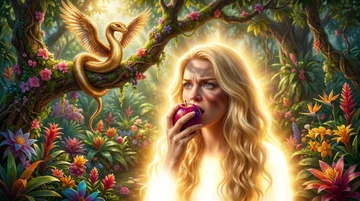
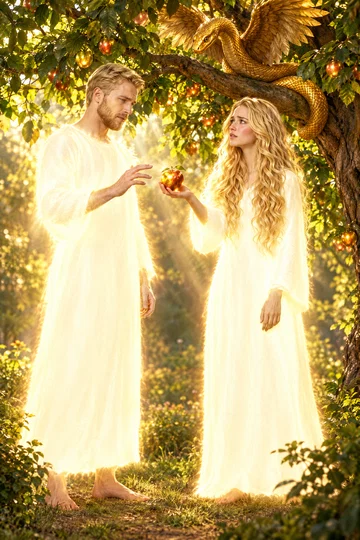
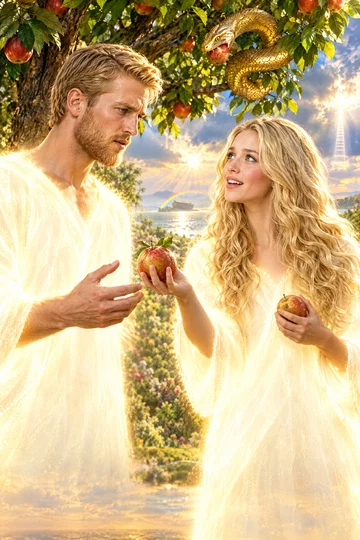
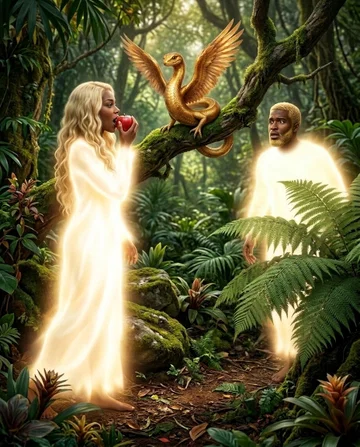
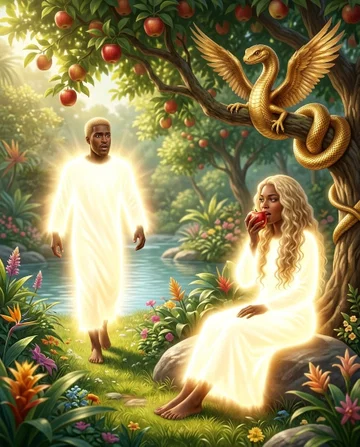
Now the serpent was more subtil than any beast of the field which the LORD God had made. And he said unto the woman, Yea, hath God said, Ye shall not eat of every tree of the garden?
Translations
Now the serpent was more subtle than any beast of the field which the LORD God had made. And he said to the woman, Yes, has God said, You shall not eat of every tree of the garden?
Now the serpent was more subtil than any beast of the field which the LORD God had made. And he said unto the woman, Yea, hath God said, Ye shall not eat of every tree of the garden?
Now the serpent was more subtil than any beast of the field which the Lord God had made. And he said unto the woman, Yea, hath God said, Ye shall not eat of every tree of the garden?
Now the serpent was more subtil than any beast of the field which the LORD God had made: and he said to the woman, Yea, hath God said, Ye shall not eat of every tree of the garden?
Now the serpent was more subtil than any beast of the field which the LORD God had made. And he said unto the woman, Yea, hath God said, Ye shall not eat of any tree of the garden?
Now the serpent was more subtle than any beast of the field which Jehovah God had made. And he said unto the woman, Yea, hath God said, Ye shall not eat of any tree of the garden?
And the serpent hath been subtile above every beast of the field which Jehovah God hath made, and he saith unto the woman, 'Is it true that God hath said, Ye do not eat of every tree of the garden?'
And the serpent was more crafty than any animal of the field which Jehovah Elohim had made. And it said to the woman, Is it even so, that God has said, Ye shall not eat of every tree of the garden?
Now, the serpent, was more crafty than any living thing of the field which Yahweh God had made, so he said unto the woman, Can it really be that God hath said, Ye shall not eat of every tree of the garden?
Berean Standard Bible, Majority Standard Bible
Now the serpent was more crafty than any beast of the field that the LORD God had made. And he said to the woman, “ Did God really say, ‘ You must not eat from any tree in the garden?’”
Now the serpent was more subtle than any animal of the field which the LORD God had made. He said to the woman, “ Has God really said, ‘ You shall not eat of any tree of the garden’?”
Now the snake was wiser than any beast of the field which the Lord God had made. And he said to the woman, Has God truly said that you may not take of the fruit of any tree in the garden?
Now the serpent was more subtill then any beast of the fielde, which the Lord God had made: and he said to the woman, Yea, hath God in deede said, Ye shall not eate of euery tree of the garden?
Douay-Rheims (Challoner revision)
Now the serpent was more subtle than any of the beasts of the earth which the Lord God had made. And he said to the woman: Why hath God commanded you, that you should not eat of every tree of paradise?
Pictures
















Cross-references 20 of 60
- Genesis 2:16-17
And the LORD God commanded the man, saying, Of every tree of the garden thou mayest freely eat:
God’s command and its penalty are the ones the serpent challenges.
- Revelation 12:9
And the great dragon was cast out, that old serpent, called the Devil, and Satan, which deceiveth the whole world: he was cast out into the earth, and his angels were cast out with him.
Identifies the serpent as Satan, the deceiver of the whole world.
- Romans 5:12
Wherefore, as by one man sin entered into the world, and death by sin; and so death passed upon all men, for that all have sinned:
Adam’s transgression brought sin and death into the world.
- Matthew 4:1-4
Then was Jesus led up of the Spirit into the wilderness to be tempted of the devil.
Christ overcame the appetite temptation where Adam fell.
- Genesis 3:15
And I will put enmity between thee and the woman, and between thy seed and her seed; it shall bruise thy head, and thou shalt bruise his heel.
God promises the woman's Seed will defeat the serpent.
- 2 Corinthians 11:3
But I fear, lest by any means, as the serpent beguiled Eve through his subtilty, so your minds should be corrupted from the simplicity that is in Christ.
Eve’s deception by the serpent warns of minds being led astray from Christ.
- Genesis 3:6
And when the woman saw that the tree was good for food, and that it was pleasant to the eyes, and a tree to be desired to make one wise, she took of the fruit thereof, and did eat, and gave also unto her husband with her; and he did eat.
Eve and Adam yield to the serpent’s temptation and eat the forbidden fruit.
- John 8:44
Ye are of your father the devil, and the lusts of your father ye will do. He was a murderer from the beginning, and abode not in the truth, because there is no truth in him. When he speaketh a lie, he speaketh of his own: for he is a liar, and the father of it.
Both texts depict Satan as a liar who deceives.
- 2 Corinthians 11:14
And no marvel; for Satan himself is transformed into an angel of light.
Satan’s disguise as an angel of light echoes the serpent’s craftiness.
- 1 Timothy 2:14
And Adam was not deceived, but the woman being deceived was in the transgression.
Eve was deceived and entered into transgression.
- Genesis 3:23-24
Therefore the LORD God sent him forth from the garden of Eden, to till the ground from whence he was taken.
Disobedience leads to expulsion from Eden and exclusion from the tree of life.
- Luke 4:5-7
And the devil, taking him up into an high mountain, shewed unto him all the kingdoms of the world in a moment of time.
Satan offers Jesus worldly dominion in exchange for worship, repeating Eden’s deception.
- Revelation 20:2
And he laid hold on the dragon, that old serpent, which is the Devil, and Satan, and bound him a thousand years,
The old serpent is identified as the Devil and Satan, who is bound.
- Matthew 4:8-10
Again, the devil taketh him up into an exceeding high mountain, and sheweth him all the kingdoms of the world, and the glory of them;
Christ resisted Satan with Scripture where Eden fell, refusing the dominion Satan offered.
- Revelation 22:14
Blessed are they that do his commandments, that they may have right to the tree of life, and may enter in through the gates into the city.
Obedience grants the tree of life, contrasting Adam and Eve’s loss.
- Genesis 3:17-19
And unto Adam he said, Because thou hast hearkened unto the voice of thy wife, and hast eaten of the tree, of which I commanded thee, saying, Thou shalt not eat of it: cursed is the ground for thy sake; in sorrow shalt thou eat of it all the days of thy life;
Adam’s disobedience brings a cursed ground, toil, and return to dust.
- Genesis 3:5
For God doth know that in the day ye eat thereof, then your eyes shall be opened, and ye shall be as gods, knowing good and evil.
The serpent promises godlike knowledge to tempt Eve to distrust God.
- Genesis 2:9
And out of the ground made the LORD God to grow every tree that is pleasant to the sight, and good for food; the tree of life also in the midst of the garden, and the tree of knowledge of good and evil.
identifies the every tree the serpent asks about
- Romans 5:19
For as by one man’s disobedience many were made sinners, so by the obedience of one shall many be made righteous.
Adam’s disobedience contrasts with Christ’s obedience, through whom many are made righteous.
- 1 John 3:8
He that committeth sin is of the devil; for the devil sinneth from the beginning. For this purpose the Son of God was manifested, that he might destroy the works of the devil.
The devil’s sin began with the temptation and fall; Christ came to destroy his works.
Commentary part 1 of 5
Each commentary is drawn from primary sources: the writings of Ellen G. White and Adventist pioneers and periodicals. Each commentary is separate. Its own words are not a quotation; follow the references to read the source passages.
Ellen G. White
226 sources
The serpent was Satan himself speaking through a beautiful, bright, winged creature as his disguise so he would not be recognized.ST Dec 23, 1886PP 53.5Lt 245a, 1903, par. 29–31ST Jan 16, 1879SG3 39.2 God had freely given every tree in Eden except one claimed as His own test of obedience and love on which life or death depended, and Eve lingered alone by that tree gazing with curiosity against counsel to stay with her husband.PP 53.5Lt 245a, 1903, par. 29–31Ms 104, 1893, par. 10–14Ms 140, 1903, par. 8–9ST Jan 23, 1879 With a soft flattering voice the tempter questioned what God had said to plant doubt, misrepresent God as selfishly withholding good, and promise opened eyes and equality with God without death.ST Dec 23, 18864SP 351.2–352.1GC 531.2–532.1GC88 531.1–532.1Lt 3, 1897, par. 21–22 Listening led to doubting God's word, judging by appearance, and taking and eating, with Adam disobeying though not deceived, bringing expulsion, curse, death, and weakened powers that humanity cannot overcome alone.Lt 35a, 1877, par. 3–6Ms 19, 1894, par. 10–12CTBH 42.1–3SG3 42.2SG3 43.1 Christ passed over the same ground in fallen nature and after forty days fasting overcame on appetite by the Word where Adam failed, and the same questioning of a plain Thus saith the Lord still continues, so safety is to refuse to parley and obey all God's commandments.4SP 351.2–352.1Ms 164, 1905, par. 13–15DA 117.4–120.1ST Feb 22, 18839MR 232.2–3
Serpent's Identity and Appearance
The serpent in the verse is Satan himself speaking through the serpent as his chosen medium and disguise, entering into it and taking his position in the tree to draw attention by leisurely eating its fruit.ST Dec 23, 1886ST Jan 16, 1879SG3 39.21SP 35.1 He concealed his real character, identity and purpose so he would not be recognized, for the pair had been warned against him and would have repulsed him openly, and had he come as a being like the angels their fears would have been excited.GC 531.2–532.1PP 53.5Lt 245a, 1903, par. 29–31Ms 140, 1903, par. 8–9 Eve had no thought that the fascinating creature could become the medium of the fallen foe, and thought the serpent itself was speaking though it had no power of speech of its own.PP 53.5ST Jan 16, 1879SG3 39.2
At that time the serpent was one of earth's wisest and most beautiful creatures, a fascinating creature of delightful appearance, bright like burnished gold, shining as it flew through the air on wings and eating fruit like a man.ST Dec 23, 1886ST Jan 16, 1879SG3 39.21SP 35.1ST Nov 18, 1913 Its beauty attracted attention and delighted the eye, making it a disguise suited to deception.ST Nov 18, 1913 Those who hold to the fullest description add that it was then wise as well as beautiful.ST Nov 18, 191310MR 355.2–5
He chose cunning, subtlety and secret artful deception rather than open attack or force, expecting that direct complaint or intimidation would fail.ST Feb 13, 18961SP 31.1–32.25T 504.1 He works in the dark and as an angel of light, changing his appearance and assuming disguise to assail by questioning what God had said.ST Feb 13, 1896 His subtlety was focused on the one forbidden tree while there was no danger in any other, laying hold by plausible speech upon flattery, envy, distrust, questioning and unbelief.5T 504.1 His cunning at the first proves far greater cunning now after gaining experience through many thousands of years of practice, yet those who abide in obedience to all God's expressed will with living connection to the Source of light are wiser than he.5T 504.1
The verse exposes a deceptive science of sophistry, specious working upon human minds, seductive falsehood and scientific problems by which he led them to question and distrust God and believe words of satanic origin.Lt 83, 1905, par. 13STB 373.1–2Ms 130, 1906, par. 34–35 By lying against God and bearing false witness of the Creator while exalting himself above God, he so beguiled the sinless pair that they could not discern the power leading them into apostasy.MWISDAP 53.2STB 396.2–3 That working gave him control of all minds that receive those lies, exercising hypnotic mind-upon-mind influence by which listening opened the door for ever-after access and loss of spiritual life by continual endowment.Ms 19, 1894, par. 10–12STB 396.2–3Lt 83, 1905, par. 13 The same science still deceives men today, filling minds with false science that exalts science above God, creates infidels and ends in making Christ the Prince of life as nothingness, drawing even ministers and physicians into the snare as in the heavenly courts.STB 373.1–2Ms 130, 1906, par. 34–35
The serpent is the first traitor and covering cherub become corrupted and ejected from heaven, the originator of sin and alpha and omega of so-called higher science theories, now the arch-deceiver, father of lies and great deceiver opposing God as leader against the Lamb.Ms 164, 1905, par. 13–15STB 373.1–2Ms 196, 1903, par. 616MR 182.2–183.1 Having first become disloyal in heaven and been cast out, he made lying reports about God to the beings God had created, carried to earth the rebellion begun in heaven, and by tempting till Adam fell in disloyalty brought sin into the world and death by sin, forfeiting any claim to be a loyal subject of God's kingdom.9MR 238.2Ms 196, 1903, par. 6 By that disloyalty the first parents came under his jurisdiction and gave him supremacy over the race, with consequences to be met in labor growing more trying till the close of earth's history.9MR 238.2
He fascinates and charms the senses by fascinating manners and misleading sympathy, making his sentiments look spiritually beautiful to draw toward sin.Ms 39, 1894, par. 11–12Lt 123, 1904, par. 212T 89.1 All spiritualistic presentations are therefore to be kept entirely free from, never stepping over God's line onto his ground, lest he fascinate the senses to choose evil for good and lead the weak and spiritually ignorant blindfold by smooth beautiful deceptive ideas into by- and forbidden paths.Lt 123, 1904, par. 21Lt 123, 1904, par. 20 His subtle wisdom is to be copied only as being wise as serpents combined with harmless as doves, saying nothing to arouse resentment or drive to desperation, leaving room for repentance, walking humbly with God and trusting the Spirit to work on minds while each attends to his own God-given work and place.10MR 355.2–5
Eden Test and Setting
The first parents stood on trial under God's government in Eden, with the tree of knowledge standing near the tree of life in the midst of the garden as the appointed test of obedience, faith and love.ST Oct 8, 1894SG3 38.2 They were privileged to behold the beauty of the garden and permitted to eat freely of all the trees except one, and enduring the trial would have secured them in God's favor and placed them beyond Satan's power to enjoy perpetual favor.EW 103.2SG3 38.2 Believing the serpent's words in contradiction to God's words put falsehood in place of truth and opened the floodgates of woe upon the world.Ms 104, 1893, par. 10–14EW 103.2ST Oct 8, 1894 Their failure to resist brought them under Satan's jurisdiction and thus gave the enemy supremacy over the human race, for he had carried to earth the work begun in heaven by declaring that man could not obey God's law. They broke God's command and became sinners, causing sorrow in heaven, and God drove the transgressors from the garden and guarded the way of the tree of life with cherubim and a flaming sword, so man could not approach it and eat its fruit which perpetuates immortality and become immortal sinners.EW 103.2
God freely gave every tree except one, claiming one tree as His own and commanding man not to eat its fruit or treat it in any way as his own, as a test of fidelity and love on which eternal life or death depended.Ms 104, 1893, par. 10–14ST Jan 23, 1879 The tempter came to the innocent pair to test their obedience to that one particular command to abstain from the forbidden tree, speaking as Eve stood near the forbidden tree and giving utterance to the query of her mind, and thus the controversy on earth was begun.ST Jul 12, 1910 The test set loyalty to God against the enemy's deceptive reasoning: they could obey God's express prohibition or listen to Satan, whose aim was to undermine God's law and lead them to disobedience, with consequences already made known to them — loss of Eden and life.ST May 12, 1890 Satan persuaded Eve that this particular prohibition was arbitrary authority and that God was withholding good and did not have their welfare at heart, while presenting himself as interested in their advancement and promising greater knowledge and godlike status.Ms 104, 1893, par. 10–14ST Jun 18, 1894 Adam's transgression arose from unbelief and ingratitude, trusting Satan's claims rather than God's word and so taking the side of the apostate, and violating even this small command was disobedience that brought the human race's fall.ST Jun 18, 1894
There was no danger in approaching any other tree and no lack in God's provision, for His subtlety was focused on the one forbidden tree where he waited to endanger them by attracting them to eat what God had said they should not do.Ms 16, 1897, par. 23–24RH Aug 4, 19105T 504.1 If they had not touched the tree, God would have given them knowledge free from sin's curse and bringing everlasting joy, for He had freely given good but in His will withheld from them the knowledge of evil; instead they gained acquaintance with sin and its results and estranged humanity from God and separated earth from heaven.ST Dec 23, 18868T 290.1–3 Yet the fruit of the forbidden tree appeared more desirable than all the rest amid fruit of every variety she could freely eat, and she ate from intemperate desire with appetite controlling reason, and through her influence her husband ate also, bringing curse upon them both and upon the earth because of their sin.SG4 120.2 Since the fall the same beguiling continues, leading the human family to follow Eve in disobedience by disregarding God's prohibitions while flattering themselves that the consequence will not be as fearful as had been apprehended, violating the laws of health and running to excess in almost everything, so that disease has steadily increased as effect follows cause.RH Aug 4, 1910SG4 120.25T 504.1
God had already warned the pair about Satan's fall and the danger of listening to his suggestions, telling them of the disobedience and disaffection of the highest created being.ST Jan 23, 1879Lt 15a, 1896, par. 1–2SG1 20.1 Holy angels visiting the garden had warned them about him and cautioned them not to separate from each other in their employment lest they meet him, charging them to follow closely what God had directed, because only in perfect obedience were they safe.SG1 20.1 The angels had warned them to be on guard against his unwearied devices, assuring them that while obedient he could have no power over them and every angel in heaven would be sent to their help if needed, and God in His foreseeing providence could have kept and directed them if they had heeded His warning against evil.STB 396.2–3Lt 245a, 1903, par. 24–28 He works in the dark and conceals his real character and purpose because they had been warned against him and would have repulsed him openly, so he used the serpent as his medium, and when the serpent's words differed from God's words they should have turned away from the tempter.Lt 15a, 1896, par. 1–2Lt 245a, 1903, par. 24–28 Their experience stands as a constant warning and reproof not to turn aside from the Word of God under any circumstances, while God compels obedience from no one but leaves each person free to choose.Lt 15a, 1896, par. 1–2
The same kind of probation exists on other worlds with forbidden trees whose inhabitants have not eaten and would fall if they did, living in strict obedience to the commandments of God.ExVEGW 22.2SLGB 1.10EW 32.2 There two trees bear beautiful fruit with power to eat of both, but one is forbidden; none there have tasted of the forbidden tree, and if they should eat they would fall as those on the earth fell, and their obedience contrasts with the disobedience of earth's inhabitants.ExVEGW 22.2SLGB 1.10EW 32.2 The test was the smallest possible proof of obedience, teaching that disobedience even in the least departs from God's expressed will and is grave sin, even when it is not deliberate defiance or spoken opposition to God.ST Jun 18, 1894ST Apr 10, 1893 Presumption led the first parents to break God's law by trusting that His great love would save them from sin's consequences, while true faith would have led them to trust His love and obey His commands, and claiming God's promises to excuse disobedience is presumption, not faith.GW 260.2–3 Adam went directly against God's express command without considering the consequences, violating God's law, bringing sin into the world and leading to expulsion from Eden, and the account warns that sin brings death and shows that God's justice in enforcing His law does not fail.4T 11.32RED 74.3ST Apr 10, 18935T 365.2
The verse begins authentic inspired history of creation, fall and retribution, a foundational fact of Scripture showing sin's introduction and God's justice.MYP 254.2–255.1Ms 42, 1904, par. 7GC88 582.3 It begins the outline of the fall of man and the sin whose consequences opened the floodgates of woe upon the world, a grand truth of sacred history possessing amazing strength and beauty, as far-reaching as eternity, and its knowledge is among the most important to be gained.CT 427.3 It begins the inspired history of the introduction of sin and its results upon the race, showing the first step of human disobedience after Adam and Eve stood in Eden in holy innocency enjoying communion with God and sinless angels, and opening the step-by-step record of the disobedience and impenitence of man and the just retribution for sin.MYP 254.2–255.1 It tells the creation of man and his fall and the introduction of sin into the world in connection with the fall of the covering cherub and the origin of the earth, giving dependable knowledge that keeps the mind from fables and conjectures, false theories, superstition and falsehood.Ms 42, 1904, par. 7 It records man's holy and happy estate in Paradise and the history of his fall, which Adam lived nearly a thousand years among men to witness to by instructing his posterity, treasuring what God had revealed and repeating it to succeeding generations to the ninth generation, yet few gave heed and he was often met with bitter reproaches for the sin that had brought woe upon his posterity.PP 82.1
Eve Alone at Tree
Eve was apart from her husband when the serpent addressed her, contrary to angelic counsel that the pair remain together in their daily garden labor to be in less danger from temptation.PP 53.5Lt 245a, 1903, par. 29–31Ms 140, 1903, par. 8–91SP 35.2–36.1 Absorbed in her pleasing task she had unconsciously wandered from his side, and though she felt apprehension of danger at being alone she dismissed her fears, deciding she had sufficient wisdom and strength to discern evil and withstand it.PP 53.5Lt 245a, 1903, par. 29–31Ms 140, 1903, par. 8–9 Her fall came in steps, first wandering from her husband, next lingering around the forbidden tree, next listening to the voice of the tempter.SG1 20.2EW 118.2 She had been charged to follow closely what God had directed, for only in perfect obedience was she safe, and while obedient Satan could have no power over her, with holy angels visiting the garden to warn of his rebellion and fall and to caution against separation.SG1 20.1
She stood gazing with mingled curiosity and admiration upon the forbidden tree whose fruit was very beautiful, questioning within herself why God had withheld it.PP 53.5Lt 245a, 1903, par. 29–31Ms 140, 1903, par. 8–9ST Jan 16, 1879 Though God had given every tree except one single forbidden tree as attractive and lovely as any other, called the tree of knowledge because eating what was forbidden would give knowledge of sin and experience in disobedience, she wandered viewing and delighting in colors, fragrances, trees, shrubs and flowers and pleased with all provided for every want, yet dwelt in thought on the restriction while affirming the rest were freely given.2RED 9.1 The fruit was pleasing to the eye and pleasant to the taste, and she became jealous that God had withheld from them what was really for their good.SG1 20.2EW 118.2
The tempter spoke in a soft pleasant musical voice with subtle praise of her surpassing loveliness and flattery of her beauty, which was not displeasing to her.PP 53.5Lt 245a, 1903, par. 29–31Ms 140, 1903, par. 8–9ST Jan 16, 1879 Instead of fleeing to her husband for counsel she lingered wonderingly to hear a serpent speak, held by curiosity and then entering into discussion until beguiled, flattered and infatuated.PP 53.5Lt 245a, 1903, par. 29–31ST Jan 16, 1879 She was startled and amazed because God had not given the serpent power of speech, yet she had no thought that the fascinating serpent could become the medium of the fallen foe, whereas address by a being like the angels would have excited her fears.PP 53.5Lt 245a, 1903, par. 29–31Ms 140, 1903, par. 8–9ST Jan 16, 1879 The question about God's prohibition of the trees of the garden came as if discerning the workings of her mind, giving utterance to the query of her mind and echoing her thoughts, which surprised and startled her.ST Jul 12, 1910PP 53.5Lt 245a, 1903, par. 29–31Ms 140, 1903, par. 8–9 She took the serpent's apparent knowledge of her thoughts as evidence that he was wise, some holding that he repeated thoughts she had spoken aloud, which helped make his challenge persuasive and opened the way for contradiction of God.2RED 9.2–10.1RH Feb 24, 1874LC1 113.2
If she had sought her husband's counsel instead of listening alone and entering into discussion, and if they had told their Maker what the serpent said, they would have been freed and delivered from the temptation.ST Jan 16, 1879ST Jan 23, 1879SG3 42.21SP 35.2–36.11SP 40.1 Instead she was deceived into treating the serpent as a friend concerned for her welfare and thinking God had withheld something that would make them wise like Him.ST Jan 23, 1879SG3 42.2SG3 43.1 Though created holy and provided with everything good and beautiful, she trusted his words despite his having shown her no love or concern, distrusted God's goodness and chose the serpent's words over her Creator's, thinking she could judge right and wrong for herself under the flattering hope of gaining greater knowledge.ST Jan 23, 1879SG3 42.2SG3 43.11SP 40.3ST Dec 23, 1886
Tempter's Questioning Tactics
The question about what God had said was a direct challenge to the command, designed to plant doubt, invite argument and open a conversation that would expose Eve to deception.4SP 351.2–352.1GC 531.2–532.1GC88 531.1–532.1Ms 16, 1897, par. 23–24 It was spoken as she stood near the forbidden tree, giving voice to the query already in her mind, and so the controversy on earth was begun.ST Jul 12, 1910Ms 16, 1897, par. 23–24 She would have been safe had she refused to argue, but by parleying she fell, warning that people are still overcome when they doubt and dispute God's requirements and accept human theories that disguise the tempter's devices.4SP 351.2–352.1GC 531.2–532.1GC88 531.1–532.1 The words were true as far as they went, yet the manner carried disguised contempt for God's words, a covert denial and doubt of His truthfulness.DA 117.4–120.1Lt 3, 1897, par. 21–22ST Dec 16, 1913DA 117.1–3 Hidden in that apparent truth was the insinuation that God would not do as He had said, and that withholding such beautiful fruit contradicted His love and compassion.DA 117.4–120.1Lt 3, 1897, par. 21–22ED 24.1–2ST Dec 16, 1913Ms 159, 1898, par. 7–9
The temptation worked through flattery, envy, distrust, questioning and unbelief, laying hold of curiosity and ambition for supremacy until restraint was snapped.ST Jul 12, 1910Lt 121, 1897, par. 3–4RH Aug 4, 19105T 504.1 It flattered the pair into believing they could be raised above the sphere of humanity instead of obeying within it, presenting disobedience as the path to wisdom, power and greater happiness.ST Jul 12, 1910Lt 121, 1897, par. 3–4ED 24.1–2 Eve was drawn by the flattering hope of greater knowledge, mistook the serpent for a friend concerned for her welfare, and thought she could judge right and wrong for herself.SG3 44.1SG3 42.2
The tempter clothed the Creator with his own attributes, representing God as arbitrary, severe, selfish and withholding good in order to excuse his own malignity and rebellion.ST Dec 23, 1886ST Jun 18, 18944SP 354.1–3 He insinuated that God had deceived them to keep them from exaltation in knowledge equal with Himself, that He did not have their welfare at heart, and that He was unkind in forbidding the fruit.ST Dec 23, 1886Ms 21, 1898, par. 29–33ST Jun 18, 1894MWISDAP 53.2STB 396.2–3 Against that false witness he presented himself as interested in their advancement, exalting himself above God while the sinless pair, beguiled, could not discern the power leading them into apostasy.ST Jun 18, 1894MWISDAP 53.2STB 396.2–3 His question insinuated against God's truthfulness to create doubt whether God meant just what He said.SG1 19.1EW 117.2 It excited curiosity and led them to pry into the unsearchable plans of God and to reason about the cause of His restriction concerning the tree of knowledge, which was the very sin of which he himself had been guilty, and that desire to be in authority and to decide cases of good and evil has come down to the present time.SG3 44.1SG1 19.1EW 117.2Ms 77, 1899, par. 27–28ST Jan 23, 1879
He came not with rough words charging God with dishonesty and overbearing commandments, which would have been recognized as attack, but with soft words and fair speeches as a friend offering information of weighty importance.ST Jul 12, 1910ST Jul 12, 1910 In most attractive disguise he pressed earnestly close, flattering pride with the bribe of higher position, knowledge and wisdom through disobedience, causing them to forget God, believe falsehood instead of truth, and open the floodgates of woe upon the world.ST Jul 12, 1910ST Jul 12, 1910Lt 220, 1903, par. 24–27 His wily, seducing insinuations and most deceiving artful sophistry aimed to undermine confidence, destroy faith and trust, and keep the mind under strain to catch one clue he could use to allure into controversy, even acting as if reading thoughts not given utterance.1SP 40.1Ms 94, 1893, par. 16MR 110.1–3 The method seeks to draw into reasoning and parleying instead of immediate refusal, for Adam reasoned with the enemy and thereby gave him the advantage.Lt 159, 1903, par. 12–13SG4 278.221MR 9.5–10.2 That reasoning opened the way for the exercise of hypnotic, mind-upon-mind power over Adam and Eve, whereas refusing controversy, holding fast to what God hath said, and dismissing the suggestion at once leaves him no chance of triumphing.Lt 159, 1903, par. 12–131T 377.1–221MR 9.5–10.28MR 441.1–442.1Lt 72, 1903, par. 5–6 That same artful approach which sought to make Eve distrust God was later used against Christ to urge doubt of the Father's word and to inspire Him with incredulity, in Eden and in the wilderness.DA 117.4–120.1ST Dec 16, 1913DA 117.1–3Ms 94, 1893, par. 16MR 110.1–3
Lying Promises of Exaltation
The serpent's direct lie was that death would not follow eating, that God would not do as He had said.ST Dec 23, 1886Ms 104, 1893, par. 10–14CTBH 42.1–3SG1 20.2ST Dec 16, 1913 The prohibition was presented as only a threat to intimidate and hold back great good, with the withholding of such beautiful fruit set against God's love and compassion.ST Dec 23, 1886Lt 3, 1897, par. 21–22CTBH 42.1–3SG1 20.2ST Dec 16, 1913 The tempter planted distrust that God meant what He said about dying in the day of eating, suggesting perhaps it did not mean just as the Lord said.Lt 3, 1897, par. 21–22Ms 104, 1893, par. 10–14CTBH 42.1–3SG1 20.2ST Dec 16, 1913 By that insinuation of distrust received as doubt he planned to overthrow, the same means later used to urge incredulity upon Christ toward the Father.Lt 3, 1897, par. 21–22Ms 104, 1893, par. 10–14ST Dec 16, 1913
At the same time disobedience was promised to bring at once opened eyes, new and superior knowledge, and equality with God as gods knowing good and evil.ST Dec 23, 1886Ms 56, 1897, par. 7–11Ms 104, 1893, par. 10–14RH Jun 4, 1901ST Jun 18, 1894 God had in His will withheld the knowledge of evil while freely giving good, and the serpent insinuated He had deceived them to keep them from being exalted in knowledge equal with Himself.ST Dec 23, 1886Ms 56, 1897, par. 7–11RH Jun 4, 1901ST Jun 18, 1894SG3 43.1 Eve was led to believe she was kept from what was really for her good and needed for happiness, mistrusting God's goodness though the serpent had shown her no love, and Adam from unbelief and ingratitude took the side of the apostate.RH Jun 4, 1901ST Jun 18, 1894SG3 43.1 This temptation contains in itself all later deceptions, prevarications and misrepresentations, whose transgression opened the floodgates of evil and woe upon the world.Ms 56, 1897, par. 7–11Ms 104, 1893, par. 10–14
The proof offered was the serpent's own eating, claiming the fruit was not only harmless but delicious and exhilarating, with wonderful power to impart wisdom and power.ST Dec 23, 1886CTBH 42.1–3ST Jan 16, 1879 He claimed that power was why God had forbidden even tasting or touching it, and that eating was the reason he himself had gained the power of speech.ST Dec 23, 1886ST Jan 16, 18791SP 35.1 Eve judged his words by the absence of immediate harm and mistook pleasant effect for evidence he was right, setting feeling against Jehovah's positive command until Adam let himself be seduced by her experience.CTBH 42.1–3SG1 20.2ST Jan 16, 1879 The tempter further argued they could not die because they had eaten of the tree of life which perpetuates immortality, and that God was keeping them from a higher state of felicity and more exalted happiness.ST Dec 23, 1886EW 103.2
What was offered was spurious speculative knowledge gained through disobedience from inquisitive presumption, promising wisdom, power, improvement and a better condition while concealing that transgression had made the tempter an outcast from heaven.ED 24.1–25T 503.35T 502.25T 504.2RH Aug 4, 1910 Apparent truth hid falsehood to lead Eve to distrust God's wisdom and reject faith, drawing her attention to the one forbidden tree as though it were superior wisdom.ED 24.1–28T 290.1–35T 502.25T 504.2RH Aug 4, 1910 If they had not touched the tree God would have given them knowledge free from sin's curse and bringing everlasting joy, but instead they gained only acquaintance with sin and its results, estrangement from God, evil, death, loss of the Eden home and separation of earth from heaven.5T 503.38T 290.1–35T 504.2 That forbidden field of vain imaginings opened then continues still, and resisting it requires strength from Jesus because the knowledge gained through disobedience leads to eternal death.5T 502.25T 504.2RH Aug 4, 1910
Eve answered that God forbade eating or touching the fruit of the tree in the midst of the garden lest they die, adding neither shall ye touch it which God did not say.ST Dec 23, 1886Ms 16, 1897, par. 23–24 The question put to her was itself a wily insinuation against God's character and a false assertion against His express command that man might freely eat of every tree except the tree of knowledge under penalty of sure death.Ms 16, 1897, par. 23–24Ms 21, 1898, par. 29–33 Truth glossed over by falsehood made transgression appear a real blessing and implied God in forbidding was unkind and withholding great good, and believing that lie was the beginning of disobedience and transgression bringing the knowledge of guilt God did not want them to have.ST Dec 23, 1886Ms 16, 1897, par. 23–24Ms 21, 1898, par. 29–33 The sin was not poison in the fruit or failure of appetite but disobedience to God's law, and listening to the tempter in this way cost Adam and Eve their beautiful Eden home.Ms 16, 1897, par. 23–24Ms 21, 1898, par. 29–33
Disobedience was thus gilded with attractions until it seemed acceptable, desirable gain and freedom, making the path away from God appear safe while hiding its cost.1T 565.1Ms 67, 1898, par. 22–234T 79.3–417MR 223.2–3 The forbidden fruit was made to seem as though it would exhilarate body and mind and raise to equality with God in knowledge, and appetite without restraint was promised to bring happiness through gratifying desire.1T 565.1CH 677.1–2Ms 67, 1898, par. 22–234T 79.3–417MR 223.2–3 God's commands were portrayed as arbitrary, severe and unjust restrictions on freedom and exaltation, an unreasonable burden, until restraint was snapped asunder and education under the teacher of lies began.Ms 21, 1898, par. 29–33Ms 67, 1898, par. 22–23 What was expected as knowledge and benefit instead became a terrible curse, a practical knowledge of evil and of the consequence of transgression in contrast to the science of true holiness that opens the gates of the city of God to the tree of life Christ planted for healing.1T 565.1CH 677.1–2Ms 67, 1898, par. 22–23
Steps Into Disobedience
The fall came in steps, not at once, beginning when Eve wandered from her husband and lingered around the forbidden tree, then listened to the tempter's voice and dared to doubt whether God meant exactly what He said about dying in the day of eating.SG3 42.2SG1 20.2EW 118.2 She was astonished that the serpent spoke with power of speech, mistook him for a friend concerned for her welfare, and took his question as evidence of wisdom that echoed her own unspoken thought that God had withheld what would make her wise like Himself.SG3 42.2SG3 43.1SG1 20.2 Though God had provided everything good and beautiful, she trusted one who had shown her no love, mistrusted God's goodness, grew jealous that good was withheld, judged by pleasant appearance to eye and taste, ventured to disobey, put forth her hand, took and ate, and then related all the serpent had said to tempt her husband.SG3 43.1SG1 20.21SP 40.31SP 38.1EW 118.2
Eve yielded and then tempted her husband, and both ate of the forbidden tree and broke God's command and became sinners.EW 103.2SG3 44.1SCEV 46.3 Through Eve Satan brought about Adam's fall, for Adam loved Eve and fell with her in disobedience, letting himself be seduced by her false experience set against God's positive command.Ms 19, 1894, par. 10–12CTBH 42.1–3SG3 44.1 Eve was deceived by lies, but Adam was not deceived as she was, yet he followed her into sin and became Satan's bondslave.Ms 19, 1894, par. 10–12SG1 20.2ST Dec 3, 1902 If they had gone together to their Maker and told Him what the serpent said, they would have been delivered from the temptation.SG3 42.2EW 118.2
Adam went directly against God's express command without considering the consequences, violating God's law and bringing sin into the world and expulsion from Eden.2RED 74.3ST Feb 11, 1875ST Apr 10, 1893 Disobedience is sin because it departs from God's stated will even when it is not deliberate defiance or spoken opposition, and the consequences show the seriousness of transgression.ST Apr 10, 1893ST Dec 3, 1902 By believing Satan's words and not reaching above his humanity for divine power, Adam believed the tempter and disbelieved the Lord, insulting his Maker though he stood with every advantage in the strength of perfect manhood with full vigor of body and mind, surrounded by the glories of Eden and in daily communion with heavenly beings.ST Dec 3, 1902LC1 168.3RH Oct 13, 1874 His example warns to shun disobedience, yet later generations have not stopped but continue to indulge appetite and passion in defiance of God's commands.ST Feb 11, 1875LC1 168.3RH Oct 13, 1874
Believing Satan's lie was the beginning of disobedience and transgression in this world, putting falsehood in place of truth and opening the floodgates of woe upon the world with the knowledge of guilt God did not want them to have.Ms 16, 1897, par. 23–24ST Oct 8, 18944T 248.1 The sin was not poison in the fruit or failure of appetite but disobedience to God's law, which was the test of obedience in everything with eternal life for obedience and death for disobedience.Ms 21, 1898, par. 29–33Ms 56, 1897, par. 7–11ST Oct 8, 1894 The act seemed small in human eyes, and its bitter experience brought awful consequences far beyond what it appeared to deserve, yet its smallness did not lessen guilt or cause God to overlook it.Ms 56, 1897, par. 7–11Lt 35a, 1877, par. 3–6 That continued work of making transgression appear a real blessing and implying God withholds great good contains in itself all later deceptions, prevarications and misrepresentations, so that yielding even in little things catches souls as birds in the snare.Ms 16, 1897, par. 23–24Ms 21, 1898, par. 29–33Ms 56, 1897, par. 7–11
They had first to be led to disobey, for while they obeyed God they could not be deprived of happiness and Satan could have no power upon them, so they must forfeit His favor, incur His frown, and be brought under the direct influence of Satan and his angels.SG1 19.1EW 117.21SP 32.3–34.2 By falsehood and misrepresentation turning them from allegiance to God's law, their failure to resist brought them under Satan's jurisdiction and thus gave the enemy supremacy over the human race, bringing in death as the penalty for disobedience.ST Jan 16, 1879Ms 1, 1902, par. 6 Satan chose cunning and deceit rather than might or force or open complaint, lest they would not listen for a moment, and aimed by beguiling them to disobedience to destroy their happiness, cause grief in heaven, and gain Eden and access to the tree of life.ST Jan 16, 18791SP 32.3–34.2 The fall diminished the purity, dignity and likeness to God humanity had in Eden, perverted man's powers so that selfishness took the place of love, weakened human nature so man in his own strength could not resist evil, and set a demon as the central power where God's throne should have been.ST Feb 18, 1913ST Dec 15, 1887RH Jan 16, 1913STBk 133.34T 248.1 Satan led Adam to sin by drawing him to experiment with the evil course instead of giving entire obedience to all God's words, and man's only means of safety is entire obedience, for testing disobedience brings weakness and after transgression greatly interfered with God's plan for clearsightedness through cooperation between man and God.ST Dec 15, 1887ST Feb 11, 1875Lt 91, 1900, par. 15
Ruin Brought by Fall
The listening to the tempter and taking of the forbidden fruit brought expulsion from Eden in retribution for disobedience, with the holy pair falling and losing their Eden home and all that was worth possessing.Lt 35a, 1877, par. 3–65T 503.3MH 427.2ST May 26, 1898Ms 90, 1897, par. 8 That disobedience estranged humanity from God and separated earth from heaven, forfeiting divine favor and happiness and leaving the race exposed to suffering and the curse of sin.8T 290.1–3ST Feb 18, 1913MH 427.2Lt 22, 1900, par. 9–10 The floodgates of woe were opened upon the world, bringing sin and death into the world with disease, poverty, sickness, moral ruin, and a blight upon the earth and a change in nature itself.Lt 35a, 1877, par. 3–6ST Feb 18, 1913Lt 134, 1902, par. 20ST Jun 11, 1874ST May 5, 1909 The fall diminished the purity, dignity, likeness to God, glory and blessing given in Eden, weakening physical powers, lessening mental capacity, dimming spiritual vision, and bringing the race under subjection to death.ST Feb 18, 1913ED 15.2ST Jun 11, 1874 What had been pronounced very good was marred by sin's curse so that nature now bears only imperfect testimony and cannot perfectly reveal the Creator's character or convey His lessons as in innocence.8T 255.3–256.1MH 427.2ST May 5, 1909
Choosing the deceiver instead of God who is truth led to the loss of what had been received, for accepting good and evil mingled together confused the mind and weakened mental and spiritual powers so that goodness could no longer be valued.ED 25.3ED 230.3–45T 738.2 That darkening and degrading of nature shaped ideas of God according to narrowness and selfishness, and as boldness in sin grew the knowledge and love of God faded from mind and heart.ED 25.35T 738.2 The light of heavenly innocence that had covered the first parents was removed, so deprived of that light they could no longer discern God's character in the works of His hand.8T 255.3–256.1ST May 5, 1909 The intervention between nature and nature's God obscured discernment through His works, leaving only an imperfect revelation where perfect instruction had been intended.8T 255.3–256.1ST May 5, 1909
The history stands as proof that God's retributive justice never fails and exacts strict regard for His commandments, as definite and sure as at Sinai, with death as the wages of sin.4T 11.3ST Apr 15, 1875ST May 31, 1910 Disobedience is sin because it departs from God's stated will even without deliberate defiance or spoken opposition, and Adam went directly against the express command without considering consequences.CTBH 42.1–3ST Apr 10, 1893 Even disregarding a single requirement carries serious consequences, for God means what He says and enforces His law.4T 11.3ST Apr 15, 18755T 365.2ST May 26, 1898Ms 90, 1897, par. 8 The smallness of the act in human eyes did not lessen guilt nor lead mercy to overlook it, and because sentence against evil is not executed speedily hearts grow bold, yet true experience always harmonizes with natural and divine law while false experience opposes it.Lt 35a, 1877, par. 3–6CTBH 42.1–3 Requirements founded on infinite love and wisdom warn that disobeying brings harm and suffering upon the whole world.5T 365.2ST May 31, 1910
That seemingly small transgression opened the floodgates of sin upon the world and called for heaven's remedy, for the Son of God left heaven and suffered insult, rejection and crucifixion to pay the debt and save humanity from the penalty.Lt 35a, 1877, par. 3–64T 248.1Ms 96, 1898, par. 26–27ST May 11, 1876 The need for God to give His darling Son to die to pay the debt and make it possible through the merits of His blood for fallen man to keep the law exalts the sacred character of the law and shows transgression is not treated lightly.Lt 35a, 1877, par. 3–6ST May 11, 1876 The transgression made sacrifice necessary to keep the truth of the death penalty before the race, teaching humility about the fallen condition, leading to repentance toward God and faith for pardon of past transgressions through the promised Redeemer.1SP 261.3ST Jun 10, 1880 Only Christ's death as sacrifice could redeem from the penalty of the broken law while maintaining the honor of the divine government and pointing to trust in God alone for pardon.4T 248.11SP 261.3ST Jun 10, 1880
Sin was a new thing to the first parents, who were greatly favored with the fruits of the garden, angels to talk with them, and visitation from God Himself, yet were led by power from beneath to disbelieve God and believe the enemy.Lt 134, 1902, par. 20Lt 165, 1901, par. 23–25Ms 229, 1902, par. 19–23 Though the act looked a small matter, it opened the floodgates of woe, and all violence and crime now existing can be traced to that transgression whose result stands before everyone.Lt 134, 1902, par. 20Lt 165, 1901, par. 23–257MR 238.2 Since that first sin has spread from generation to generation like a contagious disease, becoming fearful even while the world was in infancy in hatred of God's law and of all goodness despite the bounties of providence.ST May 26, 1898ST Apr 1, 1886 Because that result is known, any present violation in word or deed of the principles of justice and mercy is of far greater magnitude than the sin committed in Eden, and those who now continue in sin and break the commandments carry greater blame.Lt 134, 1902, par. 20Lt 165, 1901, par. 23–25Ms 229, 1902, par. 19–237MR 238.2 The least approach to stepping over the boundaries from obedience to disobedience must be avoided, and the nature of Christ's sacrifice should create elevated ideas of the law and fear of the smallest disobedience.Ms 87, 1900, par. 4–5
What man was given at creation was forfeited through disobedience, the divine likeness marred and well-nigh obliterated, the fine gold become dim, truth fading from the darkened mind, conscience losing sensitiveness by repetition, and the heart bringing forth abominations according to satanic attributes.ED 15.2Lt 22, 1900, par. 9–10 The calamity became universal through perpetuating Adam's sin, with man degenerated and losing the reflection of God's character, the whole earth defiled under its inhabitants and the curse increasing as transgression increases toward purification by fire.ST Apr 1, 1886Lt 22, 1900, par. 9–10 Yet the race was not left without hope, for by infinite love and mercy the plan of salvation was devised and a life of probation granted, with probation now owed to Jesus Christ who pledged His own life to restore the moral image of God in man.Ms 96, 1898, par. 26–27ED 15.2 The work of redemption is to restore the Maker's image, bring back the perfection of creation, and promote development of body, mind and soul to realize the divine purpose, which is the object of education and the great object of life.ED 15.2 Adam lived nearly a thousand years as witness to sin's results, treasuring what was revealed, repeating the fall and the sufferings teaching strict adherence to law and the merciful provisions for salvation to children unto the ninth generation, though few heeded and bitter reproach often answered.PP 82.1
Christ Reverses Adam's Failure
Christ passed over the very ground where Adam stumbled and fell, meeting in fallen human nature with its weaknesses the temptations that had overthrown the sinless pair.4T 293.2–3ST Jun 11, 1874Ms 8, 1885, par. 3 Adam had stood in the full strength, purity and balance of created nature, free from sin's taint, before the race's long decline, yet he did not endure but fell and opened the way for sin to enter and left men unable in their own strength to overcome.ST Feb 22, 1883ST Jun 11, 1874Ms 8, 1885, par. 3 After fasting forty days and nights Christ faced temptations in every way greater than those brought upon Adam in Eden, and He did not swerve a hairsbreadth from allegiance to God.ST Jun 11, 1874Ms 8, 1885, par. 3 He gained the victory by using the Word of God, a weapon within the reach of all, until Satan left the field a beaten foe, and that victory opened the way for every son and daughter of Adam to gain the victory in the name of Jesus.4T 293.2–3Ms 8, 1885, par. 3 Satan had exulted that he had overcome Adam and Eve through insinuation and appeal to appetite, and by their fall boasted that he could also defeat Christ, using against Christ the same artful approach of insinuating distrust and urging doubt of the Father's word that he had used in asking Eve whether God had forbidden eating from every tree.DA 117.4–120.1ST Feb 22, 1883ST Dec 16, 1913
Adam and Eve in Eden were placed under most favorable circumstances, with communion with God and angels, without condemnation of sin, with the light of God and angels with them and around them, and with the Author of their existence as their teacher, yet they fell beneath the power of the artful foe on the point of appetite.2RED 12.3ST Mar 12, 1912LC1 149.4–150.1 The forbidden fruit looked pleasant and desirable to taste, Satan told Eve there was nothing bad in it and that breaking the law would bring increased knowledge and gain, and they ate, disobeyed God's command and became sinners with terrible loss, though the fruit itself was not injurious but given merely as a test of obedience.9MR 232.2–32RED 12.3LC1 116.3 Where they fell Christ in the wilderness achieved a victory in behalf of the race on the point of appetite, making it possible for man in all future time in His name to overcome the strength of appetite.9MR 232.2–3ST Mar 12, 1912LC1 149.4–150.1 Even when hungry He would not depart from His Father's will, and His obedience in the wilderness stands in contrast to their disobedience which brought sin, sorrow and death into the world.LC1 149.4–150.1COS 46.2–4
Adam believed Satan's words and did not reach above his humanity for divine power, becoming Satan's bondslave, though when tempted he stood in the strength of perfect manhood with full vigor of body and mind, with none of the effects of sin upon him, surrounded by the glories of Eden and in daily communion with heavenly beings.ST Dec 3, 1902Ms 110, 1893, par. 6–7 Satan the fallen angel used that disobedience to God's expressed law to declare that no man could keep God's law afterward and to claim the whole human race under his control, spreading moral darkness, suffering and distress.5MR 112.1Ms 2, 1893, par. 13 Christ came from the throne of glory as a man to pass over the same ground where Adam fell in order to reveal that men can keep God's law, resisting Satan's temptations where Adam fell and standing alone as light amid the darkness that ended in His crucifixion without falling.5MR 112.1ST Oct 29, 1902Ms 2, 1893, par. 13 By that resistance He made it possible for man by faith in Him to overcome in his own behalf so the plan of salvation would be fulfilled and Satan destroyed, providing abundant grace for man to be an overcomer whose only hope is in Christ.ST Oct 29, 1902Ms 2, 1893, par. 13 Their fall proves the sacrifice of the Son was given not to abolish the law of Jehovah but to establish it, for God's law had a claim upon the first parents and still has a claim upon every son and daughter, with God accepting nothing less than perfect obedience.Ms 11, 1886, par. 12
The foul blot of disobedience in the Garden of Eden is to be carefully compared with the Garden of Gethsemane where the world's Redeemer suffered superhuman agony when the sins of the whole world were rolled upon Him.ST Aug 29, 1911Lt 69, 1897, par. 23–25 In Gethsemane Christ prayed three times that the cup might pass yet submitted to the Father's will, held the mysterious trembling cup in His hands, faced wiping the bloody sweat from His agonized face and letting man go while the wail, wretchedness and ruin of a lost world rose before Him, prayed more earnestly until His sweat was as great drops of blood falling to the ground, and was strengthened by an angel from heaven.ST Aug 29, 1911ST Jun 11, 1902 That disobedience in Eden was breaking away from the law of God which is the law of love to love God with all heart, soul and strength and neighbor as self, which obeyed would have been a hedge to keep man from evil paths, and the fall made man a law to himself, lifting up self and following a human standard pleasing to the carnal mind in direct opposition to the Lord's standard.Lt 69, 1897, par. 23–25Ms 16, 1893, par. 3–4 Many still follow in those same footprints, entering selfishly upon disobedience and going imperceptibly down temptation's path without calculating the sure result, with feeble resistance, not feeding upon the Word and not eating the flesh and drinking the blood of the Son, so that God is denied and dishonored.Lt 69, 1897, par. 23–25 At the final coronation the start of Adam's temptation and fall will be displayed as a living panorama before earth and heaven together with the successive steps of redemption from the Saviour's lowly birth through obedience, baptism, fast and temptation, ministry, Gethsemane agony, betrayal, trial before Annas, Caiaphas, Pilate and Herod, and crucifixion with darkness, earthquake, rent rocks, open graves and the cross revealed above the throne, exposing Satan's work so he and his angels and subjects have no power to turn away, proving disobedience brings not noble independence and eternal life but slavery, ruin and death and that exclusion and eternal death for high treason are just.ST Jun 11, 1902
On the ground where Adam stumbled men sold themselves to the enemy of all righteousness so that they cannot redeem themselves and of themselves can do no good thing, and their transgression brought them into a fallen, helpless condition under the power of the prince of darkness.LC1 118.2ST Jul 9, 1874Lt 25, 1904, par. 15 Their yielding while still in innocence depraved their nature, lessened their strength to resist evil, gave Satan more ready access, and left them in conscious guilt with less power to maintain integrity than in innocence, so although they confessed forfeiting all right to Eden and pledged strict future obedience they could no longer dwell there.LC1 118.2PP 61.4 Their fall did not change the law to meet man in his fallen condition, the penalty remained death, Adam lost his home and was placed with all posterity upon probation, and Christ offered to stand as man's substitute and surety to provide a way for the guilty race to return to loyalty.Lt 110, 1896, par. 9–15Lt 25, 1904, par. 15 Christ took humanity with human and divine combined, laying aside royal robe and crown to become a babe in Bethlehem to bring human beings under His rule, and passed over that same ground meeting without swerving the temptations that beset man and resisting every plausible claim that sinners can be saved in their sins, His righteousness made distinctly apparent in overcoming every temptation and living the example humanity must live to secure the heavenly reward.Ms 16, 1893, par. 3–4Lt 25, 1904, par. 15 Fallen people separated from God cannot defeat Satan in their own strength though Adam with superior advantages could have resisted, but Christ combined divine power with human strength so that people may overcome temptation in His name and redemption and recovery of lost Eden become possible.LC1 118.2ST Jul 9, 18742RED 43.3–45.1
Sources