Romans 5:12
Wherefore, as by one man sin entered into the world, and death by sin; and so death passed upon all men, for that all have sinned:
Translations
Why, as by one man sin entered into the world, and death by sin; and so death passed on all men, for that all have sinned:
King James Version, KJV Cambridge Paragraph Bible
Wherefore, as by one man sin entered into the world, and death by sin; and so death passed upon all men, for that all have sinned:
Wherefore as by one man sin entered into the world, and death by sin; and so death passed upon all men, for that all have sinned.
Revised Version, American Standard Version
Therefore, as through one man sin entered into the world, and death through sin; and so death passed unto all men, for that all sinned:—
because of this, even as through one man the sin did enter into the world, and through the sin the death; and thus to all men the death did pass through, for that all did sin;
For this [cause], even as by one man sin entered into the world, and by sin death; and thus death passed upon all men, for that all have sinned:
For this cause,—just as, through one man, sin into the world entered, and through sin, death,—and, so, unto all men death passed through, for that all had sinned;—
Berean Standard Bible, Majority Standard Bible
Therefore, just as sin entered the world through one man, and death through sin, so also death was passed on to all men, because all sinned.
Therefore, as sin entered into the world through one man, and death through sin, so death passed to all men because all sinned.
For this reason, as through one man sin came into the world, and death because of sin, and so death came to all men, because all have done evil:
Wherefore, as by one man sinne entred into ye world, and death by sinne, and so death went ouer all men: in who all men haue sinned.
Douay-Rheims (Challoner revision)
Wherefore as by one man sin entered into this world, and by sin death; and so death passed upon all men, in whom all have sinned.
Pictures


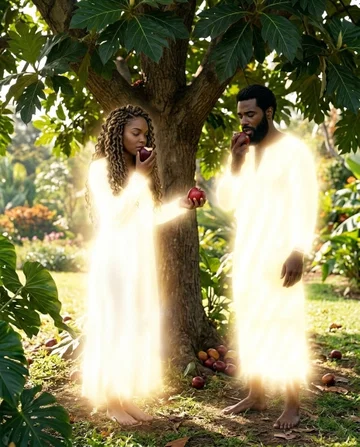

Cross-references 20 of 110
- Genesis 3:1-19
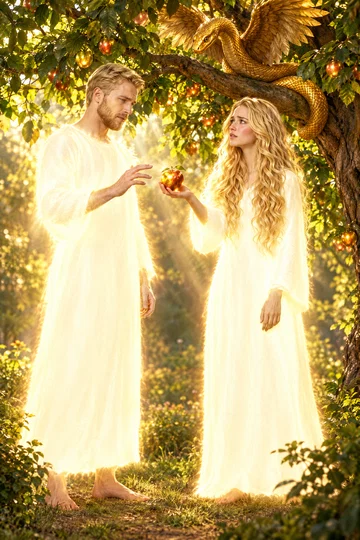
Now the serpent was more subtil than any beast of the field which the LORD God had made. And he said unto the woman, Yea, hath God said, Ye shall not eat of every tree of the garden?
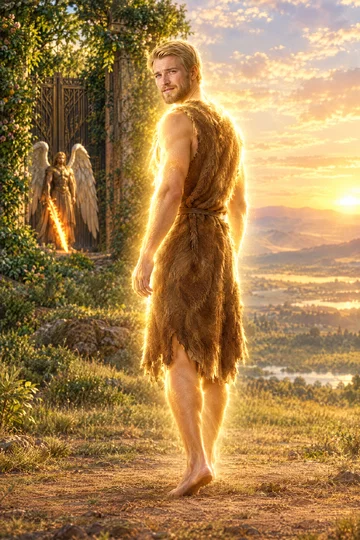
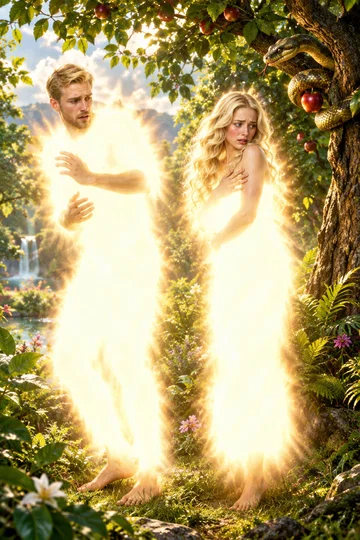
Adam’s disobedience brought sin and death into the world and its consequences.
- Genesis 2:17
But of the tree of the knowledge of good and evil, thou shalt not eat of it: for in the day that thou eatest thereof thou shalt surely die.
Its warning of death for disobedience grounds the death sentence traced to Adam.
- Romans 6:23
For the wages of sin is death; but the gift of God is eternal life through Jesus Christ our Lord.
Both state that death is sin’s wage.
- 1 Corinthians 15:21-22
For since by man came death, by man came also the resurrection of the dead.
Death came through Adam, while resurrection and life come through Christ.
- Genesis 3:19
In the sweat of thy face shalt thou eat bread, till thou return unto the ground; for out of it wast thou taken: for dust thou art, and unto dust shalt thou return.
Adam’s sin brings death and humanity’s return to dust.
- Romans 5:18-19
Therefore as by the offence of one judgment came upon all men to condemnation; even so by the righteousness of one the free gift came upon all men unto justification of life.
Contrasts Adam’s disobedience and condemnation with Christ’s obedience, justification, and life.
- Romans 3:23
For all have sinned, and come short of the glory of God;
Both state that all people have sinned.
- James 1:15
Then when lust hath conceived, it bringeth forth sin: and sin, when it is finished, bringeth forth death.
Both connect sin with death as its result.
- 1 Corinthians 15:45
And so it is written, The first man Adam was made a living soul; the last Adam was made a quickening spirit.
Christ is the life-giving last Adam contrasted with Adam, who brought sin and death.
- Genesis 3:22-24
And the LORD God said, Behold, the man is become as one of us, to know good and evil: and now, lest he put forth his hand, and take also of the tree of life, and eat, and live for ever:
Adam’s sin brought death and barred him from the tree of life.
- 1 Corinthians 15:26
The last enemy that shall be destroyed is death.
Death entered through sin and is named the last enemy to be destroyed.
- Hebrews 2:14
Forasmuch then as the children are partakers of flesh and blood, he also himself likewise took part of the same; that through death he might destroy him that had the power of death, that is, the devil;
Christ defeats the devil, who holds the power of death.
- Romans 5:19
For as by one man’s disobedience many were made sinners, so by the obedience of one shall many be made righteous.
Adam’s disobedience makes many sinners, while Christ’s obedience makes many righteous.
- 2 Timothy 1:10
But is now made manifest by the appearing of our Saviour Jesus Christ, who hath abolished death, and hath brought life and immortality to light through the gospel:
Christ abolished death and brought life and immortality to light through the gospel.
- Genesis 3:15
And I will put enmity between thee and the woman, and between thy seed and her seed; it shall bruise thy head, and thou shalt bruise his heel.
The promised Seed will defeat the serpent, offering hope after sin entered.
- Genesis 3:4-5
And the serpent said unto the woman, Ye shall not surely die:
The serpent denies that disobedience brings death and promises godlike life.
- Revelation 21:4
And God shall wipe away all tears from their eyes; and there shall be no more death, neither sorrow, nor crying, neither shall there be any more pain: for the former things are passed away.
It promises the final removal of death, the consequence of sin.
- Ezekiel 18:4
Behold, all souls are mine; as the soul of the father, so also the soul of the son is mine: the soul that sinneth, it shall die.
Both connect sin with the consequence of death.
- Genesis 2:7
And the LORD God formed man of the dust of the ground, and breathed into his nostrils the breath of life; and man became a living soul.
Adam was formed from dust, to which death returns humanity.
- 1 John 3:4
Whosoever committeth sin transgresseth also the law: for sin is the transgression of the law.
Defines sin as transgression of the law, the sin linked with death.
Commentary part 1 of 2
Each commentary is drawn from primary sources: the writings of Ellen G. White and Adventist pioneers and periodicals. Each commentary is separate. Its own words are not a quotation; follow the references to read the source passages.
Ellen G. White
156 sources
By one man, Adam, sin entered the world through disobedience to God's express command in Eden, and that one transgression brought condemnation and loss upon the whole race.ST Jun 14, 1905Ms 153, 1899, par. 36–37Ms 128, 1897, par. 15 Death came by that sin and passed upon all men, for all have sinned, as the penalty of transgression and not part of God's original design.GC88 532.2–533.1STBk 129.1CTBH 169.3–4 By the fall humanity came under the power of darkness, marred in the divine image, inheriting disobedience and death with a corrupted nature unable to redeem itself.LC1 137.1MYP 69.4ST Jun 17, 1889LC1 118.2Lt 301, 1904, par. 7–9 Against Adam's disobedience making many sinners stands Christ's obedience making many righteous, the second Adam who passed over the same ground, overcame where Adam fell, and proved humanity joined to God can keep the law.ST Jun 14, 1905Ms 128, 1897, par. 15Ms 57, 1902, par. 24Lt 189, 1909, par. 17–184T 293.2–3 What the first Adam lost will be restored through Christ, who bore human guilt as substitute, recovered forfeited dominion, and brings life and immortality to light so the redeemed may eat again of the tree of life.GC88 532.2–533.12RED 49.2LC1 118.2ST Nov 25, 19132SP 10.3–11.1
How Sin Entered World
By one man, Adam, sin entered the world through disobedience to God's express command and law in the garden of Eden, and death entered by that sin and passed upon all men because all have sinned.ST Jun 14, 1905Ms 153, 1899, par. 36–37Ms 128, 1897, par. 15Ms 57, 1902, par. 24Ms 76, 1903, par. 26–30 That one transgression brought condemnation, wretchedness and loss upon the whole race, causing all to sin.Ms 153, 1899, par. 36–37Ms 128, 1897, par. 15ST Jun 13, 1900
Adam's sin was refusing to take God's word as supreme, disobeying and falling under the enemy's temptation.Ms 80, 1900, par. 79MR 121.1–122.1 He freely yielded to appetite, lost innocence, became a sinner, and chose to act independently and as his own law.Ms 76, 1903, par. 26–30Ms 132, 1902, par. 5–69MR 37.1–2 That choice broke humanity's relation to God and brought separation from God and from His favor, with discord, unhappiness, loss of divine favor, holiness and happiness, and weakened human powers where selfishness displaced love.Ms 76, 1903, par. 26–30Ms 132, 1902, par. 5–69MR 37.1–2RH Jan 16, 1913
The test was small, for every want was generously supplied and everything in Eden was pure and undefiled.Ms 97, 1901, par. 3–8Ms 20, 1898, par. 2–3 Only one prohibition was laid upon Adam and Eve, not to eat of the tree of the knowledge of good and evil under penalty of certain death, and happiness and trust and confidence in God depended on that obedience.Ms 97, 1901, par. 3–8Lt 79, 1900, par. 7–10 That one act of disobedience, though considered small, was by no means small in its results, for it opened the floodgates of woe upon the world.Ms 97, 1901, par. 3–8Lt 100, 1895, par. 27–30
Eve was deceived by Satan's flattering words, insinuations against God's wisdom and goodness, and accusations of selfishness against the heavenly Father and Sovereign.RH Jun 4, 1901ST Oct 8, 1894Ms 20, 1898, par. 2–3 Enticed by the promise that they would be as gods if they ate the forbidden fruit, and seeking a knowledge of transgression God never designed them to have, she ate and felt no immediate harm.RH Jun 4, 1901Ms 96, 1898, par. 26–27Lt 79, 1900, par. 7–10 She then gave the fruit to Adam, who accepted the forbidden fruit from his wife's hand and fell under the smallest test of obedience by listening to the suggestions of the enemy.Ms 20, 1898, par. 2–3Lt 79, 1900, par. 7–10 Adam had been made pure and noble with no tendency to evil, richly endowed with reason and knowledge of God and duty, with law around him as a safeguard and God's warning that eating meant certain death.RH Jun 4, 1901Ms 96, 1898, par. 26–27
Adam was a free moral agent placed on probation and under a test of perfect obedience to God's law not for himself alone but in behalf of all his posterity.Ms 126, 1901, par. 1–36MR 2.1 If he had stood the trial, preserved allegiance to the Creator, his obedience would have insured acceptance and favor with God and he would have been forever established in holiness and happiness, with those blessings extending to all his descendants.Ms 126, 1901, par. 1–39MR 229.1–2 Because he failed and revolted against God's law, all his descendants have become sinners.Ms 126, 1901, par. 1–39MR 229.1–2 God had power to hold Adam back from touching the forbidden fruit but did not, so man would remain not a mere machine but a free moral agent, and so Satan could not be sustained in charging that God's rule is arbitrary.RH Jun 4, 1901
Sin originated with Satan, not with God who made only good like Himself, and evil, sin and death were not created by God.5T 503.3RH Aug 4, 1910 Sin and death are the result of disobedience that originated in Satan, once an angel of light in the heavenly courts, whose apostasy brought sin into the world.5T 503.3RH Aug 4, 1910Lt 22, 1900, par. 7 After expulsion from heaven he determined to set up his kingdom on this earth, and entered humanity when he came disguised as a serpent with misrepresentation of God, cunning, and the offer of forbidden knowledge.Ms 97, 1901, par. 3–8RH Jun 4, 1901 Eve's inquisitiveness and presumption in seeking forbidden knowledge opened that experience to the sons and daughters of Adam, bringing loss of their Eden home, sickness, suffering and death as part of human life under sin's curse with glory and purity lost.5T 503.3RH Aug 4, 1910ST Feb 22, 1883
The entrance of sin into the world is a mystery too deep for the human mind to explain or fully comprehend.5T 699.3–4SC 106.2 Scripture gives sufficient evidence for this fact in the world's early history, which the Bible records authentically, and it is to be accepted on God's authority even when it does not explain why or how, with inability to comprehend no reason to doubt God's Word.RH Nov 10, 19045T 699.3–4SC 106.2 The fall of man remains a foundational Christian teaching that is rejected in practice by many who claim to be Christian.ST Aug 27, 1885
Sin is transgression of God's law, and Adam's transgression brought death and wretchedness upon the human race, with disobedience bringing discord and misery among God's creatures while obedience brings peace and joy.ST Jan 30, 1879ST Feb 5, 1885 Sin is not measured by the greatness of the act but by variance with God's expressed will in the least particular.Lt 5, 1896, par. 9–11 Such variance proves that sin reigns in the heart, that there is still communion with the enemy and cherishing of his attributes, that the heart is divided, and that there is virtual denial of the Holy Spirit of God and rebellion against His law.Lt 5, 1896, par. 9–11
Death Passed Upon All
Sin brought death into the world, and death passed upon all because all have sinned; evil, sin and death were not created by God, who made only good like Himself, nor were they part of His original design.GC88 532.2–533.1STBk 129.15T 503.3 In that design the life of no creature was to be taken, and death in man and in beast came only in consequence of sin.CTBH 169.3–4ST Jul 29, 1886 If there had been no sin there would have been no death.ST Jul 29, 1886
Death is the penalty for transgression of God's law, meaning return to dust and extinction of life.GC88 532.2–533.1ST Jul 29, 1886 All go down to the grave, and apart from redemption humanity is doomed to death and lies under sentence of death, even eternal death, for choosing its own way of disobedience instead of God's way.RH Mar 15, 1906ST Apr 16, 1885ST Jun 27, 19004SP 364.1–2 Those who refuse Christ and persist in disobedience learn by experience that sin and death have come upon all.ST Jun 27, 1900
Adam lost the life that depended on obedience and access to the tree of life, so he could not pass immortality to his descendants, having forfeited what he no longer possessed.GC88 532.2–533.1GC 533.1Lt 21, 1867, par. 4–6 The tree of life had power to sustain life and immortality, its fruit serving as an antidote to death.8T 288.1–2Ms 41, 1902, par. 12–1517MR 351.3–352.2 Through redemption purchased by Christ's blood people may again receive life from the tree of life, for life and immortality are now found through Jesus Christ, the source of life, and obedience to Him gives life.8T 288.1–2Ms 41, 1902, par. 12–15Lt 31, 1898, par. 20–21
After disobedience access was removed and man was shut out from the life-giving tree by an angel with a flaming sword, so that sin must not be immortalized.Lt 31, 1898, par. 20–21Lt 79, 1900, par. 7–10 To have eaten then would have perpetuated sin and made men immortal sinners.Lt 31, 1898, par. 20–2117MR 351.3–352.2 Christ averted the immediate execution of the death sentence by giving His life for man, and now life and immortality are brought to light only through Jesus Christ, the one great source of immortality and fountain of life.Lt 79, 1900, par. 7–10Lt 180, 1902, par. 3–717MR 351.3–352.2
Had Adam obeyed God there would have been no death of man or beast.PP 68.1 The whole practice of taking the life of God's creatures to sustain human life is the fruit of transgression; had Adam and Eve kept their Eden innocence and had the curse never fallen on man or beast, the earth would never have been stained with blood, and flesh-eating with its pain and death would never have been known.CTBH 169.3–4 Death became the portion of every living thing, first shown to Adam and Eve in drooping flowers and falling leaves and in trees casting off their leaves, and their sorrow over the death of plants was deeper than the sorrow people now feel over their dead.PP 62.1
Sickness, suffering, pain, disease, deformity, decay, decrepitude and burdens come as fruit of sin and as the sure result of man's continual transgression for over six thousand years.STBk 129.1ST Oct 31, 1878CTBH 154.2Lt 22, 1900, par. 8 The whole race groans under accumulated woe and feebleness of mental, moral and physical power, with poverty, sickness and suffering under sin's curse.ST Feb 18, 1913ST Oct 31, 1878 The whole world is now tainted, corrupted and stricken with mortal disease, and the earth groans under the continual transgression of its inhabitants, changed from the holy and beautiful condition in which it was created.Lt 22, 1900, par. 8
Through the plan of salvation all will be brought forth from their graves, all alike though they go down into the grave.ST Apr 16, 18854SP 364.1–2 Those who have not received pardon will then suffer the penalty for their sins.ST Apr 16, 1885 Christ entered death to destroy its power, and He promises to bring believers who die back to life.Lt 98, 1903, par. 3
Humanity's Fallen Condition
By Adam's fall humanity came under the power of the prince of darkness, sold to the enemy of righteousness and left under Satan's claimed control and dominion.MYP 69.4LC1 118.25MR 112.1Lt 23, 1904, par. 14–15 That transgression of the expressed law divorced earth from heaven and finite man from the infinite God, cutting the race off from communion with Him and bringing wrath, misery and death upon all.ST Jun 17, 1889LC1 118.2SG3 46.2 Adam's sin gave Satan occasion to claim the whole family with its calamities, diseases and death, and to charge that God would have no mercy and that no man after Adam could keep His law.5MR 112.1Ms 16, 1893, par. 3–4 God's law nevertheless remains unchanged and retains all its claims, and the fall therefore calls for the world's Redeemer to come over the same ground where Adam fell to lift humanity and give probation to learn obedience.ST Jun 17, 1889LC1 118.2SG3 46.25MR 112.1Ms 16, 1893, par. 3–4
The fall marred and nearly obliterated the divine likeness and moral image in man, destroying perfect holiness and happiness and leaving the race ruined, enslaved and subject to death.LC1 137.1SA 59.1ST Oct 19, 1915ED 15.2Lt 23, 1904, par. 14–15 Physical powers were weakened, mental capacity lessened, and spiritual vision dimmed, with widespread ruin following as sin and death spread through continued transgression.LC1 137.1ST Oct 19, 1915ED 15.2 Of itself the fallen race can do no good thing and cannot redeem itself, yet through Christ what was lost may be recovered by thorough transformation of soul, body and spirit, a work that takes a lifetime.SA 59.1Lt 23, 1904, par. 14–152T 448.1 God sends light to reveal this condition, and to refuse that light is to choose darkness rather than allow deeds to be reproved.2T 448.1
Adam's disobedience entailed sin upon all his posterity, so that the whole of his posterity became sinners and death came to all.Lt 143, 1900, par. 13–15Lt 301, 1904, par. 7–91SP 49.1–50.2 Children receive from Adam an inheritance of disobedience, of guilt and death, are born in sin with no natural goodness of their own, and remain subject to the penalty of the unchanging law.1SP 49.1–50.2Lt 8, 1895, par. 1–4ST Feb 20, 1879 The disobedience was transmitted, and cultivated tendencies toward wrongdoing are passed on, with tendencies cultivated by departing from God likewise passing to offspring.ST Mar 12, 1912ST May 27, 1897 Only Christ's death on Calvary can save from perishing and give everlasting life, restoring the moral image and reshaping character, a redemption secured at infinite sacrifice that calls for diligent striving to cease from sin and become partakers of the divine nature having escaped corruption through lust.Lt 301, 1904, par. 7–9Lt 8, 1895, par. 1–4
Human nature was corrupted at its source, and sin has continued to spread from mind to mind with each sin echoing the original sin.LC1 137.1RH Apr 16, 1901 The race deteriorated under sin and death, losing God's favor and happiness and becoming physically, mentally and morally corrupted through successive generations.ST Aug 1, 1878Lt 143, 1900, par. 13–15 The fall is repeated from generation to generation as indulgence of appetite and passion, luxurious living and use of wine corrupt the blood, inflame the passions and weaken vital force, and parents transmit corrupted blood, disease, licentious inclinations, evil tendencies, enfeebled intellects and polluted morals as an inheritance of woe from father to son, with the tendency more swiftly downward.ST Oct 31, 1878 Present misery exists because fallen man continually breaks God's law including nature's laws, leaving the whole race groaning under accumulated woe, disease, deformity, decrepitude, imbecility and feebleness of mental, moral and physical power.4T 293.2–3ST Oct 31, 1878
The whole earth was tainted, corrupted and stricken with mortal disease, groaning under continual transgression of its inhabitants and changed from the holy and beautiful condition in which it was created.ST Jun 27, 1900Lt 22, 1900, par. 9–10Lt 22, 1900, par. 8 One after another men fall under the sure result of decay, deformity, depravity, disease and death, and the curse increases as transgression increases until the earth is prepared for purification by fire.ST Jun 27, 1900Lt 22, 1900, par. 9–10 Adam's transgression involved the entire future of the family, bringing loss of Paradise, a curse upon all creation, confusing all nature and forbidding the earth to carry out its originally designed purpose, so there is no peace to the wicked and the curse is felt more decidedly every year.ST Jan 17, 1911Ms 76a, 1901, par. 8–9 Adam's weak faith opened the floodgates of woe with moral defilement, and perpetuated sin keeps a malarious atmosphere that darkens intellect, dulls conscience by repetition until sin no longer arrests the transgressor, turns the heart from reflecting God's character into a place of abominations, and in the old world brought violence and prevailing iniquity that called forth the flood destroying all but one family as testimony of sin's result.ST Jun 27, 1900Lt 22, 1900, par. 9–10Lt 124, 1900, par. 30
The fallen race stands under just condemnation and the sentence of the transgressed law, helpless, degraded, ignorant, hopeless and ready to perish, with no human being able to atone for another.ST Sep 13, 1877Ms 199, 1899, par. 11–12Ms 196, 1899, par. 11 Man by nature cannot overcome by his own strength, the original apostasy having taken from him power to govern his own heart, and he can accomplish nothing without God as the source of strength.CTBH 15.317MR 26.5 Because it was impossible for man to redeem himself, Christ clothed His divinity with humanity to associate with the fallen race, stand at its head, reach human need and elevate man to be a partaker of the divine nature through His merits.ST Jun 17, 188917MR 26.5Ms 196, 1899, par. 11 Missionary work must therefore be weighed by whether it produces true conversion, for where there is little show of true conversion something is out of the way and the methods are not after the gospel order.Ms 199, 1899, par. 11–12
Adam's guilt and natural defects and tendencies do not excuse personal sin or remove personal responsibility for acting them out, and they do not make God responsible.1MR 142.321MR 116.1–2Ms 8, 1888, par. 6–8 A whole Saviour was given: the sacrifice on Calvary was perfect, with sufficient grace and power to work away natural defects, resist those tendencies, advance in the divine life and recover God's moral image.1MR 142.3Ms 8, 1888, par. 6–8 To plead inability and blame inherited nature is to claim that sacrifice was imperfect and to cast reproach upon God.1MR 142.3 Sin dims and nearly erases the writing of the law in the human heart, and Adam's revolt left all his descendants sinners, whereas his obedience would have secured favor, holiness and happiness for them.9MR 229.1–28MR 98.1
Every human being through disobedience has become a transgressor sold under sin with nature perverted by sin.8MR 98.1Ms 143, 1897, par. 1–2 Unless a person repents and is converted he remains under bondage of the law, serving Satan, falling into the enemy's deceptions and bearing witness against the precepts of Jehovah.8MR 98.1 Only perfect obedience to the requirements of the holy law can justify, so those whose natures have been perverted must ever keep eyes fixed on Christ, the author and finisher of faith.8MR 98.1 Christ came as humanity's representative to disprove the claim that men cannot keep God's law, showing that humanity connected with God can obey every requirement, while sin separates from God and keeps that separation in place.8MR 98.1Ms 143, 1897, par. 1–2
Christ the Second Adam
Romans 5:12 sets Adam's disobedience making many sinners against Christ's obedience making many righteous, the offence of one bringing condemnation against the righteousness of One bringing justification of life.Ms 128, 1897, par. 15ST Jun 28, 1899 Sin entered the world through one man and death through sin spreading to all because all have sinned, and this reign of sin and death is overcome by grace through righteousness unto eternal life in Jesus Christ.ST Jun 14, 1905Ms 128, 1897, par. 15Ms 57, 1902, par. 24 While enemies men are reconciled to God by the death of His Son and being reconciled shall be saved by His life, joying in God through Jesus Christ by whom the atonement is received.ST Jun 28, 1899 The death inherited from Adam is met by life imparted through faith in the Son of God, for Christ was made sin for men that they might be made the righteousness of God in Him, and those who have Christ and abide in Him have life, even eternal life, and shall never become extinct.Lt 8, 1891, par. 13–15 Through His strength people may obey, following His example of perfect obedience.ST Jun 14, 1905
Adam's fall in Eden caused all to sin, and set against this Christ in Gethsemane drank the bitter cup of suffering and death that whosoever believes in Him may not perish but have everlasting life.Ms 153, 1899, par. 36–37 In Adam all was lost through transgression, for by breaking God's law man separated himself far from God and could not humble himself before God in proportion to his grievous sin.ST Jul 23, 1874 The humiliation and agonizing sufferings of Christ in the wilderness of temptation were for the race, for the sinless Son of God alone could fully understand the aggravating sins of the transgressor and make an acceptable atonement by suffering the agonizing sense of His Father's displeasure, with sorrow and anguish proportionate to His divine excellence and purity and to the magnitude of the offense.ST Jul 23, 1874 Adam's transgression let sin into the world and opened the floodgates of woe upon the world, placing mankind under the penalty of a just law so that all from Adam to the close of time belong to an apostate, perishing world that has willed to sin.ST Dec 2, 1897 In Gethsemane the destiny of that lost world hung in the balance as the sins of the whole apostate world were laid upon Christ, all innocent and undeserving, as man's substitute and surety to give man another trial and probation, and though He could have refused the awful cup, wiped the blood drops from His brow, cast off the guilt, let wilful transgressors receive the penalty, and gone back to the Father, He chose to drink the cup and become the propitiation of the race.ST Dec 2, 1897 The death of the Son of God saves all who repent and receive Christ as personal Saviour and Redeemer, giving life to the believer, while upon those who refuse His sacrifice the sentence of eternal death is passed.Ms 153, 1899, par. 36–37
Christ as the second Adam bore the sin of the whole world to redeem man, overthrow Satan's kingdom, and glorify God.Ms 134, 1905, par. 9 To regain what Adam lost for himself and for the world, the Son of God clothed His divinity with humanity and took upon Himself sinful, fallen human nature in order to associate with fallen humanity, though He Himself was ever pure and undefiled with no guile or sinfulness, manifesting the character of God in a life of pure, disinterested benevolence.ST Jul 30, 190220MR 324.1–2 He took humanity, and with divinity and humanity combined He reaches the race with His human arm while His divine arm grasps the Infinite, and His name is the link that unites man to God and God to man.10MR 65.2–4 Taking human nature as man's Elder Brother with intense interest in human beings, feeling keenly the sinfulness and shame of sin, He passed over the same ground where Adam stumbled and fell, proving that human beings can through the power of God live sinless lives.Ms 134, 1905, par. 9 The only begotten Son, who is the express image of the Father's person, became man's Advocate and Redeemer by humbling Himself to take the nature of man in its fallen condition without taking the taint of sin, to stand at its head and through His own merits elevate man to be a partaker of the divine nature.20MR 324.1–217MR 26.5 After Adam's fall sin had marked humanity for generations with physical, mental, and moral decline, and Christ took human nature with the infirmities of fallen humanity and stood in Adam's place, facing Satan's temptations on the race's behalf and overcoming where Adam had failed.ST Jun 11, 1874
Adam by disobedience to the Father's express commands and law lost divine favor and destroyed his own perfect holiness and happiness, and his sin plunged the whole race into hopeless misery, despair and perishing.4T 293.2–3 God in wonderful pitying love did not leave men to perish but gave His well-beloved Son for their salvation, and Christ, His divinity clothed in humanity, entered the world to pass over the same ground where Adam fell, to bear the test Adam failed to endure, and in the long fast in the wilderness to contend single-handed with Satan where man's salvation was at stake, and by overcoming every temptation of Satan He redeemed Adam's disgraceful failure and fall.4T 293.2–32MR 120.4–121.2Ms 20, 1898, par. 1 The sin of Adam and Eve divorced earth from heaven and finite man from the infinite God, leaving man unable to redeem himself, and against that fall stands Christ, who passed over the very ground where Adam failed and was a conqueror at every step, with every victory elevating humanity in the scale of moral value before heaven.ST Jun 17, 1889 Because it was impossible for man to redeem himself, Jesus took human nature upon Himself, that through humanity His divine nature might reach and lift up humanity.ST Jun 17, 1889 Christ stood as representative of the fallen race over the same ground on which Adam stumbled and fell, and by a life of perfect obedience to God's law redeemed man from the penalty of Adam's fall, bearing the penalty of the law Himself to give the sinner another chance, a second trial, and open a way to be reinstated in God's favor.Ms 126, 1901, par. 57 He bears man's past transgressions and by imparting His own righteousness makes it possible for man to keep God's holy law, though His blood avails only for those who return to their allegiance to God and obey the law they have violated, for Christ never becomes a party to sin.Ms 126, 1901, par. 57 That second trial is due wholly to Christ, making His victory over temptation central to temperance.2MR 120.4–121.2
The first Adam was a free moral agent who abused his freedom, allowed appetite to overcome him, and by disobedience lost his innocence and by his own free will became a sinner, separating himself from the favor of God.Ms 132, 1902, par. 5–618MR 113.1–2 Adam began where Christ the second Adam began, in purity and holiness, connected with God and beloved by God, with a holy, sinless, pure, undefiled nature, more favorably situated than Christ, abundantly supplied in Eden where everything in nature was pure and undefiled.Ms 20, 1898, par. 2–3 To test loyalty God prohibited eating the fruit of the tree of knowledge, but Satan insinuated doubts of God's wisdom and accused the heavenly Father and Sovereign of selfishness, Eve fell under temptation and Adam accepted the forbidden fruit from his wife's hand and fell under the smallest test of obedience by listening to the suggestions of the enemy.Ms 20, 1898, par. 2–3 By that one man's disobedience sin entered, the floodgates of woe were opened upon the world, many were made sinners, and his posterity became depraved.Ms 20, 1898, par. 2–3Lt 4, 1897, par. 2–4 The second Adam, Christ, was also a free moral agent held responsible for His conduct, placed in a much less favorable situation for leading a sinless life, surrounded by intensely subtle and misleading influences in the midst of sinners, yet He resisted every temptation to sin and maintained His innocence, remaining ever sinless.Ms 132, 1902, par. 5–618MR 113.1–2 Adam was tempted while still possessing perfect strength and living in Eden, yet he believed Satan's lie, while Christ faced Satan after humanity had been weakened by generations of sin and took on the infirmities of degenerate humanity in order to rescue people from degradation, and unlike Adam did not yield to the tempter.Ms 113, 1902, par. 6–9 Christ came in human nature over the same ground where Adam fell, met a most powerful series of temptations, was tempted in all points as man is tempted, yet stood firm in man's behalf and redeemed Adam's disgraceful failure and fall, saving all who receive Him and giving them power to become sons of God.Lt 4, 1897, par. 2–4
Where Adam fell, Christ overcame the three leading temptations whereby man is beset, including appetite, by living by every word of God and refusing to tempt God or to worship Satan.Ms 9, 1893, par. 27–32 It was the divine nature combined with the human that enabled Christ to overcome alone, and that victory makes it possible for every son and daughter of Adam to be safe and to come off more than conquerors by taking hold of the crucified and risen Saviour, so that none need go into iniquity because the same divine power given to Christ is given to them.Ms 9, 1893, par. 27–32 He endured every test man will ever endure and met every temptation of human life-experience, traveling the path He calls His followers to walk in self-denial and daily cross-bearing.Ms 176, 1899, par. 5 His victory was gained in full dependence upon God, and those finally crowned must depend upon Deity as He did.Ms 176, 1899, par. 5 Had He transgressed the law in one point He would have been a sinner and His offering a failure, but the enemy overcame Him on not one point, so His overcoming secures the way for others to endure and overcome.Ms 176, 1899, par. 5 As the counterpart to Adam, Christ bore the sins of the whole world, endured human punishment and the wrath of God against transgression, and in His trial and closing hours on the cross experienced to the full what men experience striving against sin, including fierce temptation to feel forsaken by God and horror of great darkness, and realized how corrupt man becomes by yielding to sin and the terrible consequence of breaking God's law because the iniquity of the whole world was upon Him.6MR 2.1 Temptation is no temptation unless yielding is possible, so Christ being tempted in all points like men are tempted means He could have failed, for Adam was a free agent placed on probation just as Christ was and as every man is.6MR 2.1 Christ the second Adam redeemed humanity from the results of that fall, He overcame the enemy in every point, and through His strength people can receive the reward of eternal life.Ms 80, 1903, par. 37
Sin entered the world by one man Adam through disobeying the expressed law of Jehovah, leaving the whole race under Satan's claimed control.5MR 112.1 That disobedience gave occasion for Satan, the fallen angel, to declare that no man after Adam could keep God's law, and therefore calls for the world's Redeemer, the only begotten Son of God, to come as a man over the same ground where Adam fell to reveal that men can keep God's law.5MR 112.1 Adam's transgression gave Satan a claim to the whole human family with its calamities, diseases and death, while Satan charged that God would have no mercy on them.Ms 16, 1893, par. 3–4 Because the transgression of God's law bred the belief that the law cannot be kept, Christ took human nature and combined humanity and divinity in Himself to elevate humanity in moral value with God, passed over the same ground where Adam fell, stood against Satan's temptations and came off conqueror, and thereby gives men probation and trial to learn obedience in His nature.Ms 16, 1893, par. 3–4 By keeping the law Himself He showed that man can keep it, standing alone as light in the darkness even through suffering that ended in His crucifixion, and through Him there is abundant grace for man to be an overcomer, with man's only hope against sin and death in Christ.Ms 2, 1893, par. 13 Humanity connected with God can obey every requirement, for sin separates people from God and keeps that separation in place, and human nature is able through faith to grasp the divine nature and overcome as He overcame, because God so loved the world that He gave His only begotten Son.Lt 189, 1909, par. 17–18Ms 143, 1897, par. 1–2
Redemption Restores Lost Life
The whole family of Adam is lost through his transgression, dead in Adam under death, corruption, condemnation, misery and sickness, with no escape for the offender apart from the plan of salvation.2RED 49.2SG1 22.2GC88 179.2–3EW 120.1 Jesus offers His life as a ransom, takes the sentence of death upon Himself, and through His blood and obedience to God's law makes pardon and favor with God possible.SG1 22.25RED 82.2–83.1EW 120.1 Being sinless He alone could make acceptable atonement, and His suffering for the sins of the world corresponded to the greatness of His purity and of the offense.2RED 49.2 The guilt of humanity in every age rested upon Him as substitute and surety; He was counted a transgressor, bore sin and its judicial punishment and the wrath due for disobedience, endured the curse of the law, and thereby redeems from death and opens the way to immortal life and restoration to God's favor and to the garden and tree of life.2RED 49.25RED 82.2–83.1EW 120.12RED 13.2
As soon as man sinned Christ took up the work of redemption, taking man's guilt upon Himself as substitute and surety to save the race from eternal ruin and immediate death.Ms 8, 1902, par. 28Ms 162, 1899, par. 159MR 237.1–2 As propitiation for sins He stood in Adam's place and took the penalty of his sin, standing between the living and the dead to bear the punishment and purchase pardon, peace, life and immortality.ST Jun 27, 1900Ms 8, 1902, par. 28 By this He secured another trial and a second probation with the privileges and opportunities of a free man to exercise God-given power of choice, postponing the day of arraignment so man is bound over to appear at the bar of God in the judgment.ST Jun 27, 1900ST Aug 10, 1915Ms 8, 1902, par. 28Ms 162, 1899, par. 15 In this probation all now live, Adam and Eve with all descendants included in a plan of probation and return to loyalty, where every son and daughter of Adam is tested whether they will return to allegiance, having chosen God's way of obedience rather than their own way of disobedience.ST Jun 27, 1900Ms 162, 1899, par. 159MR 237.1–2
Christ's redemption does not abolish God's law, abrogate one precept to meet man fallen, permit continued transgression, or do everything so men need do nothing.PP 66.43MR 103.2–3Ms 143, 1898, par. 28Lt 31, 1898, par. 20–21Ms 30, 1886, par. 2 The law remains the sacred, immutable foundation of His government in heaven and earth retaining all its claims, so that even the life of an angel could not be accepted as sacrifice for its transgression, but the Son of God who created man could make atonement.PP 66.4Ms 30, 1886, par. 2 The Father does not put benevolence above justice nor set aside principles of righteousness to give unconditional pardon, for that would exalt the impenitent sinner and encourage transgression; His blood avails to pay the debt for past transgressions only for those who come through Christ, return to loyalty and keep the commandments, producing zeal for good works and never making Him a party to sin.GC 180.13MR 103.2–3Ms 143, 1898, par. 28Lt 31, 1898, par. 20–21 By clothing divinity with humanity to reconcile man to the Father, He honored the law and gave dignity to it, bringing back to His law, uniting heaven and earth again as at His baptism heaven was opened to humanity.3MR 103.2–3Ms 45, 1886, par. 14–15
Without the fall humans would never have learned the meaning of grace, for grace is God's attribute shown to undeserving beings who have sinned, not given to sinless angels who do His service obedient to all commands and know nothing of grace because they never sinned and never needed it.Lt 98b, 1896, par. 5 Grace was not sought by man but sent in search of man, and God rejoices to bestow it on everyone who hungers for it, not because worthy but because utterly unworthy, so that human need itself is the qualification giving assurance of receiving the gift.Lt 98b, 1896, par. 5 Through redemption purchased by Christ's blood, life and immortality are brought to light by the gospel, and immortality forfeited by Adam, who lost life depending on obedience and access to the tree of life and could not pass on what he no longer possessed, is available only through Christ.GC88 532.2–533.1GC 533.11SP 64.1Ms 12, 1868, par. 16–17 Those who have Christ and abide in Him have life, even eternal life, and shall never become extinct, and the redeemed may again receive life from the tree of life that had power to sustain life and immortality but was removed after sin, and be restored to Eden and Paradise.1SP 64.18T 288.1–2Lt 8, 1891, par. 13–15
What the first Adam lost will be restored through Christ the second Adam, who pays sin's penalty, redeems humanity, recovers the forfeited dominion usurped by Satan the prince of darkness, and renews the earth freed from sin and sorrow as the eternal home of the redeemed.LC1 118.2ST Nov 25, 1913ST Jul 23, 1912 The communication cut off by transgression is reopened through His mediation giving the guilty sinner access to God, restoring to God's favor, reuniting what sin separated, and providing through humble firm obedience another trial and a way to overcome Adam's failure and regain lost Eden.LC1 118.22SP 10.3–11.1ST Jul 23, 1912Ms 45, 1886, par. 14–15 God ordained sacrificial offerings as perpetual reminder and penitential acknowledgment of sin and confession of faith in the promised Redeemer, teaching that had Adam obeyed there would have been no death of man or beast, but his transgression caused death of man and animals and could be expiated only by the death of God's dear Son, the spotless Lamb given as ransom to save the guilty.1SP 53.1–2PP 68.1ST Nov 25, 1913 The first innocent victim made this vivid to Adam, showing him death's consequence which would not have occurred had he remained faithful, and pointing forward to the Son whose death alone could atone and give hope.1SP 53.1–2PP 68.1ST Nov 25, 1913 With the curse upon earth and dark future without hope came Heaven's pity in the plan of salvation and gospel first preached in Eden with promise of pardon through a Saviour to come, and by sincere repentance and belief in that promise Adam and Eve, bearing human guilt borne by Christ, were saved from utter ruin.ST Jan 22, 1880
Living in Light Today
Romans 5:12 shows that death passed to all because all have sinned through Adam's disobedience, and set against it stands Christ's obedience bringing justification and life, so that through His strength human beings may obey by following His perfect example.ST Jun 14, 1905 The race deteriorated under sin and death after Adam fell, yet Christ took human nature and passed over the same ground to be tested as all are tested, meeting Satan as an angel of light and remaining victorious, thereby placing the race on vantage ground with every advantage to withstand temptation.Lt 143, 1900, par. 13–15 Where Adam yielded to a small temptation in Eden and opened the floodgates of woe, Christ came in human nature over the same ground, met a most powerful series of temptations in all points as man is tempted, stood firm and redeemed Adam's disgraceful failure, giving power to become sons of God to all who receive Him, so that every person now decides whether to follow the first Adam in yielding or to stand firm and resist as Christ did.Lt 4, 1897, par. 2–4
Sin and death entered by Adam's transgression with loss of God's image, debasement, and a bias to evil, yet God did not give a new order of energies and passions after the fall nor implant sinful propensities in the race.Ms 60, 1905, par. 10–11 Christ began conversion work as soon as man transgressed, so that through obedience to God's law and faith in Christ men might regain the lost image, and through cultivation of righteous principles and heaven-bestowed grace the bias to evil may be overcome, the warped senses and perverted faculties restored, words and thoughts and energies purified, and a new character formed over the debasement of sin.Ms 60, 1905, par. 10–11 Children receive from Adam an inheritance of disobedience, guilt, and death, and Jesus Christ was given to restore God's moral image in man and reshape character.Lt 8, 1895, par. 1–413MR 14.1–15.1 Adam's transgression made Christ's sacrifice necessary, and Christ gave Himself as ransom while taking sinless human nature, serving as both priest and offering who could lay down life and take it again, fulfilling the conditions for the free gift of grace and removing every barrier to mercy, peace, and love for sinners.Ms 92, 1899, par. 13–16
Adam sinned and all his posterity became sinners so that death came to all, and only Christ's death on Calvary can save from perishing and give everlasting life, a redemption secured at infinite sacrifice that calls for diligent, earnest, faithful striving to cease from sin and through Christ become partakers of the divine nature having escaped corruption through lust.Lt 301, 1904, par. 7–9 Adam lost life and standing through disobedience and Christ redeemed fallen humanity from the enemy by humiliation and suffering, purchasing believers with a price and placing them on vantage ground where through obedience they can win back what Adam lost, so redeemed youth are to reach God's standard, resist Satan, glorify God in body and spirit which are His, and live thankful with God's peace dwelling in the heart.Ms 65, 1901, par. 25–26
Since sin entered, men have served self, forgetting God, breaking His commandments, and taking satisfaction in human progress, art, science, and inventions, so that railways, telegraphs, and cables have brought the fallen world no nearer the higher world.ST Feb 1, 1899 Obedience to God's law brings men back into harmony with heavenly intelligences through whole-hearted service, self-denial, and travel on the narrow way that leads through the gate of self-denial into the city of God, while self-serving indulgence travels the broad road that leads to death.ST Feb 1, 1899
Adam's fall brought sin into the world and left man needing a second trial due wholly to Christ, who redeemed Adam's disgraceful failure by withstanding every temptation of the wily foe, making His victory central to temperance.2MR 120.4–121.2 Continual transgression for over six thousand years has brought sickness, pain, and death as its fruit, the controlling power of appetite will prove the ruin of thousands, conquering appetite gives moral power to gain victory over every other temptation while slavery to appetite causes failure to perfect Christian character, and as the close of time draws near Satan's temptations to indulge appetite will be more powerful and more difficult to resist.CTBH 154.2
Adam and Eve's listening to the enemy's specious temptations brought guilt and sorrow upon the world and led the Son of God to leave Heaven's royal courts, take a humble place, endure insult, rejection, and crucifixion by those He came to bless, and be sacrificed to save man from that crime's penalty, warning against any disobedience including partial Sabbath observance and showing the Lord means what He says and man cannot set aside His commands with impunity at such infinite expense.4T 248.1 Adam's weak faith and obedience gave to the world the sin Satan introduced, opening floodgates of woe and cursing the earth with moral defilement, widespread violence, and prevailing iniquity that brought the flood destroying all but one family as testimony of sin's result, and in contrast faith and obedience now must be just as firm as Adam's was weak, keeping God's commandments from hearts and lives controlled by love to God and fellow men and sustaining His great memorial, the creation Sabbath defining the true and living God, regardless of inconvenience and trial.Lt 124, 1900, par. 30
Suffering, trouble, and burdens come to every life as a result of sin, and had God's law always been obeyed people would never have known suffering.ED 295.1 Humanity fell through Adam's sin with loss of the divine image, recovery from that fallen condition takes a lifetime, through Christ people may regain the lost image and estate, God sends light to reveal the condition, and refusing the light is choosing darkness rather than letting deeds be reproved.2T 448.1 Man is fallen by nature under the just condemnation of a holy God, so missionary work must be weighed by whether it produces true conversion, and where little true conversion appears something is out of the way and methods are not after Christ's gospel order.Ms 199, 1899, par. 11–12
Sin entered through Adam's fall and death came as its consequence, and the first parents' disloyalty brought consequences humanity still faces, making labor for God increasingly trying until earth's history closes.RH Jul 21, 1904Lt 29, 1903, par. 4–5 Jesus, the express image of the Father's person, became Advocate and Redeemer by humbling Himself to take fallen human nature without its taint of sin, and as second Adam He passed over the ground where Adam fell, met the wily foe who caused Adam and Eve's fall, was tempted in all points as man will be tempted, and overcame every temptation in man's behalf.20MR 324.1–2 To Him man is to look for help and guidance, loving every human being for Christ's sake but looking to no human as supreme in counsel and unerring in wisdom.20MR 324.1–2
One sin brought death, woe, and loss of Eden, so even one wrong act can have far-reaching results and serve as warning to others.ED 150.2–4 After sin entered, people grew increasingly bold in disobeying God's law.RH Aug 16, 1906 Adam's fall was followed by further falls as people disobeyed God's law and indulged appetite and passion even while grieving the sin that began with Adam, ignoring his example and warning.2RED 74.3ST May 25, 1915LC1 178.3 That succession of falls continues despite Adam's example, and the worsening sin with its physical and moral harm comes through human disregard of God's law, not by God's special providence.RH Mar 4, 1875
Sin entered and death by sin brought decay, deformity, and death, with human beings degenerating and falling one after another under the curse while the whole earth is tainted, corrupted, stricken with mortal disease, groaning under continual transgression, and the curse increases as transgression increases.ST Jun 27, 1900 Its perpetuating keeps a malarious atmosphere that darkens mind and intellect, makes truth fade, dulls conscience by repetition until sin no longer arrests the transgressor, turns the heart from enthroning God and reflecting His character into a place of abominations, dims humanity's fine gold, and defiles the earth under its inhabitants until prepared for purification by fire.ST Jun 27, 1900Lt 22, 1900, par. 9–10 Adam's transgression opened the floodgates of woe with the penalty of sin, God's wrath, and death upon all, yet Christ clothed divinity with humanity as substitute and surety to suffer in man's stead and die every man's death by His own will, bringing life and immortality to light, defeating Satan's purpose to exterminate the race, raising believers from graves, giving power to become partakers of the divine nature and workers with Christ in saving perishing souls, and granting all believers entrance into the city of God peopled with the redeemed.Lt 100, 1895, par. 23–25
Because of Adam's fall the race needs redemption, and Christ the second Adam met temptation and through suffering and death worked out redemption, providing the way to overcome temptation through divine power since none can form a righteous character alone.ST Mar 12, 1912 After the fall God gave His Son, who took man's nature and passed over the same ground where Adam fell to be tested as all are tested, and though Satan came as an angel of light to induce Him if possible to commit sin and place the race entirely under evil's dominion, Christ was victorious and by that victory placed man on vantage ground with God.6MR 3.1 As Elder Brother with intense interest in human beings, feeling keenly sin's sinfulness and shame, Christ as second Adam bore the world's sin to redeem man, overthrow Satan's kingdom, glorify God, and passed over the same ground where Adam stumbled, proving human beings can through God's power live sinless lives.Ms 134, 1905, par. 9 His victory over temptation with His crucifixion and resurrection redeems Adam's failure, places humanity on vantage ground, and makes overcoming possible through His merits.Lt 148a, 1897, par. 3–4 Where Adam fell Christ overcame the three leading besetting temptations including appetite by living by every word of God and refusing to tempt God or worship Satan, and it was divine nature combined with human that enabled Him to overcome alone, so every son and daughter of Adam may be safe and come off more than conquerors by taking hold of the crucified and risen Saviour, with the same divine power given to Christ given to them so none need go into iniquity.Ms 9, 1893, par. 27–32
Adam's one sin opened the floodgates of sin upon the world, for man made in God's image richly endowed with reason and knowledge of God and duty fell by listening to Satan's deceptive talk, that richly endowed being fallen by rebellion, and thereby gained a knowledge of transgression God never designed.Ms 96, 1898, par. 26–27 That sin called for God's only begotten Son to pledge His life to restore God's moral image, and men are indebted to Christ for present probation with choice of master and opportunity to become co-workers with Him, through obedience winning the prepared home, humbling themselves to be lifted as sons and daughters of God with eternal life, though even those knowing the history still walk the same path of transgression working on the enemy's side by word and example.Ms 96, 1898, par. 26–27 Through Adam's transgression God's kingdom laws were broken and the whole family was numbered with the enemy's subjects under Satan's claim, sinful, lost, and ready at any time to die through his power, but Christ the sinless One numbered with transgressors on Calvary released the captives because bought with a price from that claim.Lt 100, 1900, par. 4–5 It remains within man's power to become free from Satan's wiles and destructive influence, for no man is compelled to be saved, and his own course determines whether he remains Satan's subject or becomes God's subject, an heir of God and joint-heir with Christ.Lt 100, 1900, par. 4–5
Sources
Pioneers and periodicals
299 sources
Through one man, Adam, sin entered the world, and through sin death entered, and so death spread to all people because all have sinned.ST Jun 14, 1905RH Apr 8, 1902ST Feb 11, 1886RH Dec 22, 1859ST May 10, 1905
Adam acted as head and representative of the race, so his posterity sinned in him and inherit from him a fallen, corrupt, dying nature with no life higher than he had left to give.ST Feb 11, 1886RH Aug 22, 1854ST Dec 21, 1915RH Oct 31, 1854ST Mar 29, 1905
Death does not pass merely because Adam sinned, but because each person also has transgressed from an evil heart within, while even infants who have not personally sinned suffer and die through inherited mortality.ST Jan 13, 1888RH Sep 7, 1869ST Apr 23, 1896RH Sep 7, 1869ST Jan 20, 1887
The death in view is literal bodily death, universal and reigning over all, the penalty and wages of transgression, which proves God's law was already in force before Sinai, for where there is sin and death there is violated law.STST Jan 30, 1912RH Aug 5, 1862ST Jan 11, 1877RH Jan 5, 1864
In contrast to Adam's disobedience bringing judgment to condemnation, Christ as second Adam brings obedience unto justification of life, taking humanity's death sentence as substitute and regaining what was lost, including resurrection, the tree of life, and a renewed earth.ST Jun 14, 1905STST Mar 12, 1896RH Aug 2, 1870
Verse Text and Context
Through one man sin entered the world, and death came through sin, and death spread to all people because all have sinned.ST Jun 14, 1905RH Apr 8, 1902STST Dec 21, 1915 That one man was Adam, whose disobedience brought sin and death upon the race, and in contrast Christ's obedience brings the free gift of justification and life, giving strength to obey after His example of perfect obedience.ST Jun 14, 1905ST When Adam fell he became subject to decay, with death gradually displacing life until it ended, and the same wasting affected the animal and vegetable world while his children shared his mortality and grew old under death's shadow.RH Apr 8, 1902 The statement must be read with representation in view, for Adam acted for the whole human race, sinning personally while his posterity sinned through him as representative, or its argumentative force is lost.ST Feb 11, 1886RH Aug 22, 1854 He passed on only the mortal, corruptible, dying nature he had incurred, with the death penalty threatened in Eden resting on all mankind, so humanity inherited a condition it could not overcome by itself and could neither rise above what he brought nor receive more from him than he possessed.RH Aug 22, 1854ST Dec 21, 1915 Adam was a figure of Christ, for as the trespass of one brought death to many, God's grace and the gift through Jesus Christ abound to many.ST
The comparison begun here is left unfinished until verse 18, with verses 13-17 standing as a parenthesis between.ST Mar 12, 1896RH Aug 2, 1870ST Mar 12, 1896 The first part of verse 18 repeats the substance of verse 12 so its force is kept, setting the entrance of sin and death through one man upon all men as judgment to condemnation upon all men, and then gives the completing conclusion that by the righteousness of One the free gift came upon all men unto justification of life.RH Aug 2, 1870ST Mar 12, 1896 Joined to what goes before, the verse shows that while enemies people are reconciled to God by the death of His Son and being reconciled shall be saved by His life, and joined to what follows it sets the offense of one bringing condemnation against the righteousness of One bringing justification of life, with Adam's disobedience making many sinners set against Christ's obedience making many righteous.ST Jun 28, 1899 The death that passed upon all comes unconditionally as consequence of Adam's transgression and is removed unconditionally by Christ's obedience and intervention, even for those not obedient as Christ was righteous, so that Christ takes Adam's forfeited place toward those accepting His aid as Redeemer and source of life to the saved.RH Aug 2, 1870 Verses 12-19 are difficult because of the long parenthesis and much repetition of the same form of expression, yet there is no greatly involved argument but one main thought running through the whole.ST Mar 12, 1896
The verse belongs to the Romans 4 to 7 portion accounting for the moral depravity of mankind in general and carrying the full argument concerning justification and sanctification.RH Oct 19, 1916 It stands in a letter written in A.D. 58 from Corinth and sent by Phebe from Cenchrea to the Christian church at Rome, made up of Gentile converts and Jewish believers in Jesus as Messiah, showing the blessings of salvation open equally to Jew and Gentile apart from the rites and ceremonies of the Mosaic law.RH Oct 19, 1916 It stands in the doctrinal first eight chapters, where its opening wherefore is to be weighed carefully as part of the fuller argument parallel with Galatians that salvation, justification, and keeping are through faith in Jesus Christ with emphasis upon Christ, not by human doing and works, with peace belonging to those walking in Christ.ST Nov 21, 1911 In that inspired argument for justification and life through Jesus Christ building toward no condemnation for those in Christ Jesus, it proves that all are under sin irrespective of nationality.ST Jul 28, 1909
Genesis explains who Adam was and how all die in him, and without its account of Adam and the origin of sin the statement gives little tangible instruction. Genesis 3 explains the sentence upon Adam as a return to the ground and dust.ST Jul 16, 1912 The account of humanity's origin and fall in the books of Moses is to be treated as historical fact and as the word of God, real foundation and true creation-fall teaching, definite and trustworthy, not myth, allegory, legend, or poetry made false.ST Nov 1, 1905ST Nov 2, 1882ST Mar 9, 1888 It belongs to the world's early history, which the Bible records authentically.RH Nov 10, 1904
The verse goes back to the very beginning and lays first principles for the gospel, and no presentation of the gospel is possible if these facts are ignored.ST Mar 12, 1896 Recognizing how sin and death came upon humanity is essential to understanding the fullness of the salvation Christ brought and the need for that salvation.RH Oct 9, 1900 It affirms that sin and death are real and not illusions, for sin entered by one man and death by sin passed upon all because all have sinned, so a Saviour and the gospel are needed.STST Oct 20, 1914ST May 2, 1916ST Dec 5, 1911 It vindicates the government of God both in maintaining His law and in providing grace for a fallen, sinful, and sinning race.ST Feb 11, 1886 The fall of man is as literally true as the cross, and the cross depends entirely upon the fall.ST Mar 12, 1896
Fall in Eden History
The one man through whom sin entered is Adam, the first father and father of all living, placed in Eden as public head, and his own death proves that he himself had sinned.RH Dec 22, 1859ST May 10, 1905ST Sep 27, 1910 All people sprang from him, all nations share his fall, and all are his descendants inheriting sin from him, while he himself was created perfect and sinless.ST Sep 27, 1910RH Jan 15, 1914 He stands as the first head of the family, the common representative head of all people, so that all are fallen sinners subject to the disabilities brought through him.RH Jan 27, 1874
Satan is the real cause and bringer of sin and death, while Adam was only the channel through whom they came.RH Dec 3, 1857 By lying to Eve and leading her into sin Satan brought death upon the whole human race and thus became the murderer of the whole human family, fixing his own fall about the beginning of this world.ST Dec 17, 1874RH Dec 3, 1857 He denied that disobedience would bring death, enticed the first parents to seek forbidden knowledge, stood behind the first Adam, and introduced sin whose consequence is death.ST Feb 18, 1913 Once entered through Adam's transgression, sin continued to spread from mind to mind, each sin echoing the original, with continued transgression bringing poverty, sickness, suffering and human woe and corrupting human nature at its source.ST Feb 18, 1913RH Apr 16, 1901
Eve was deceived by flattering words, turned from counsel, and ate the forbidden fruit with Adam's willing concurrence.RH Jul 30, 1861ST May 24, 1905 Her delusion and brief choice to believe the tempter opened the way for sin, misery and death to spread and become dominant throughout the earth.ST Nov 22, 1899ST May 24, 1905 Humanity disbelieved God and accepted the serpent's word despite Satan's claim that they would not die, so death followed, and Adam's disobedience after Eve was tempted brought sin and death into the world extending to all humanity.ST Nov 22, 1899ST Feb 27, 1893RH Mar 17, 1874 Their choice brought the human family under the enemy's control and left it lost.ST Jul 12, 1910
God placed Adam on probation with free access to the tree of life and withheld one tree with warning that eating would bring death that very day.ST Aug 25, 1914RH Apr 7, 1874ST May 6, 1875 Adam held life conditionally with absolute immortality withheld until probation was completed, and if he had never disobeyed he would never have died but would have lived on by continuing to eat of the tree which would perpetuate life forever.RH Apr 7, 1874ST May 6, 1875ST Jan 14, 1875 Had humanity remained loyal death would not have been experienced and the original inheritance would not have been lost.ST Sep 18, 1884 Life depended on obedience and death on disobedience, so death entered and spread to all because all have sinned.ST Sep 18, 1884
That entrance was disobedience, disbelief and unbelief in truth opening the way, for sin would not have entered if God's truth had not been discredited.ST Jan 30, 1912ST Apr 2, 1896RH Nov 6, 1866 Adam's transgression was not made innocent by original innocence, a sacred Eden home, high standing or close fellowship with God, which rather increased its guilt.RH Aug 17, 1869 He broke the law of love by eating the forbidden fruit, violated moral principles by seeking elevation, coveting, rebellion and self-exaltation, and did more than merely eat, while God left man a free moral agent rather than a machine.ST Mar 24, 1881ST Nov 20, 1901 Sin entered through Adam and Eve's fall when they yielded to temptation and was not always present.ST Mar 24, 1881
When Adam ate he forfeited the life Christ had given, lost innocence, became sinful and brought ruin on himself, with the sentence of death passed that very day and only its execution delayed until he would cease to exist.ST Aug 25, 1914RH Sep 14, 1869 He had forfeited the right to live and could transmit to posterity no higher life than he possessed, so sin began its reign and death shares with it the empire of the world.RH Sep 14, 1869 He would have died that day if Christ had not intervened, but at the first transgression Jesus became life to the sinner by saving him from immediate death and granting continued existence for a probationary period despite repeated offenses, so every breath is owed to Christ's mercy moment by moment.ST Jun 25, 1896ST Apr 19, 1905ST Jan 7, 1886ST Feb 7, 1906 Death follows sin with swift, inexorable certainty, yet its immediate execution was deferred to allow probation, choice and time for repentance.STRH Mar 17, 1874
Sources