Genesis 3:6
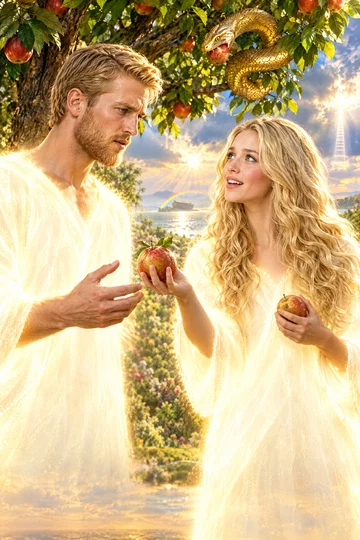
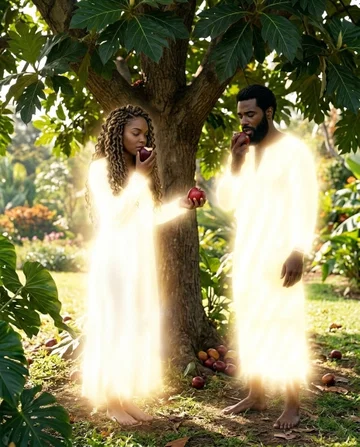
And when the woman saw that the tree was good for food, and that it was pleasant to the eyes, and a tree to be desired to make one wise, she took of the fruit thereof, and did eat, and gave also unto her husband with her; and he did eat.
Translations
And when the woman saw that the tree was good for food, and that it was pleasant to the eyes, and a tree to be desired to make one wise, she took of the fruit thereof, and did eat, and gave also to her husband with her; and he did eat.
King James Version, KJV Cambridge Paragraph Bible
And when the woman saw that the tree was good for food, and that it was pleasant to the eyes, and a tree to be desired to make one wise, she took of the fruit thereof, and did eat, and gave also unto her husband with her; and he did eat.
And when the woman saw that the tree was good for food, and that it was pleasant to the eyes, and a tree to be desired to make one wise; she took of its fruit, and ate, and gave also to her husband with her, and he ate.
Revised Version, American Standard Version
And when the woman saw that the tree was good for food, and that it was a delight to the eyes, and that the tree was to be desired to make one wise, she took of the fruit thereof, and did eat; and she gave also unto her husband with her, and he did eat.
And the woman seeth that the tree [is] good for food, and that it [is] pleasant to the eyes, and the tree is desirable to make [one] wise, and she taketh of its fruit and eateth, and giveth also to her husband with her, and he doth eat;
And the woman saw that the tree was good for food, and that it was a pleasure for the eyes, and the tree was to be desired to give intelligence; and she took of its fruit, and ate, and gave also to her husband with her, and he ate.
And, when the woman saw that the tree was good for food, and that it was desirable to the eyes and the tree was pleasant to make one knowing, then took she of the fruit thereof, and did eat, and she gave to her husband also, along with her, and he did eat.
Berean Standard Bible, Majority Standard Bible
When the woman saw that the tree was good for food and pleasing to the eyes, and that it was desirable for obtaining wisdom, she took the fruit and ate it. She also gave some to her husband who was with her, and he ate it.
When the woman saw that the tree was good for food, and that it was a delight to the eyes, and that the tree was to be desired to make one wise, she took some of its fruit, and ate. Then she gave some to her husband with her, and he ate it, too.
And when the woman saw that the tree was good for food, and a delight to the eyes, and to be desired to make one wise, she took of its fruit, and gave it to her husband.
So the woman (seeing that the tree was good for meate, and that it was pleasant to the eyes, and a tree to be desired to get knowledge) tooke of the fruite thereof, and did eate, and gaue also to her husband with her, and he did eate.
Douay-Rheims (Challoner revision)
And the woman saw that the tree was good to eat, and fair to the eyes, and delightful to behold: and she took of the fruit thereof, and did eat, and gave to her husband who did eat.
Pictures




















Cross-references 20 of 64
- Genesis 2:16-17
And the LORD God commanded the man, saying, Of every tree of the garden thou mayest freely eat:
God forbade eating from the tree and warned that disobedience would bring death.
- Romans 5:12
Wherefore, as by one man sin entered into the world, and death by sin; and so death passed upon all men, for that all have sinned:
Adam’s transgression brought sin into the world, and death through sin.
- Matthew 4:1-4
Then was Jesus led up of the Spirit into the wilderness to be tempted of the devil.
Christ resists the appetite temptation that overcame Adam and Eve.
- Genesis 3:22-24
And the LORD God said, Behold, the man is become as one of us, to know good and evil: and now, lest he put forth his hand, and take also of the tree of life, and eat, and live for ever:
Adam and Eve’s disobedience leads to expulsion from Eden and the guarded way to the tree of life.
- Genesis 3:15
And I will put enmity between thee and the woman, and between thy seed and her seed; it shall bruise thy head, and thou shalt bruise his heel.
God promises the serpent’s defeat through the woman’s seed after the fall.
- Genesis 3:17-19
And unto Adam he said, Because thou hast hearkened unto the voice of thy wife, and hast eaten of the tree, of which I commanded thee, saying, Thou shalt not eat of it: cursed is the ground for thy sake; in sorrow shalt thou eat of it all the days of thy life;
Adam’s disobedience brings a cursed ground, burdensome toil, and return to dust.
- 1 Timothy 2:14
And Adam was not deceived, but the woman being deceived was in the transgression.
Eve was deceived and entered transgression, while Adam was not deceived.
- 2 Corinthians 11:3
But I fear, lest by any means, as the serpent beguiled Eve through his subtilty, so your minds should be corrupted from the simplicity that is in Christ.
Eve’s deception by the serpent warns of minds being led astray.
- Revelation 12:9
And the great dragon was cast out, that old serpent, called the Devil, and Satan, which deceiveth the whole world: he was cast out into the earth, and his angels were cast out with him.
Identifies the Eden serpent as Satan, the deceiver of the world.
- 1 Corinthians 15:45
And so it is written, The first man Adam was made a living soul; the last Adam was made a quickening spirit.
Contrasts Adam’s fall with Christ, the life-giving last Adam.
- Genesis 2:9
And out of the ground made the LORD God to grow every tree that is pleasant to the sight, and good for food; the tree of life also in the midst of the garden, and the tree of knowledge of good and evil.
God planted trees pleasing to the sight and good for food, including the tree of knowledge.
- Revelation 22:14
Blessed are they that do his commandments, that they may have right to the tree of life, and may enter in through the gates into the city.
Access to the tree of life, lost through Eden’s disobedience, is promised to the obedient.
- Romans 5:19
For as by one man’s disobedience many were made sinners, so by the obedience of one shall many be made righteous.
Contrasts Adam’s disobedience with Christ’s obedience.
- 1 Corinthians 15:22
For as in Adam all die, even so in Christ shall all be made alive.
Contrasts all dying in Adam with being made alive in Christ.
- 1 John 2:16
For all that is in the world, the lust of the flesh, and the lust of the eyes, and the pride of life, is not of the Father, but is of the world.
Names the worldly desires that Eve’s temptation exemplifies.
- Hebrews 4:15
For we have not an high priest which can not be touched with the feeling of our infirmities; but was in all points tempted like as we are, yet without sin.
Christ resisted temptation without sin where Adam yielded.
- Revelation 22:2
In the midst of the street of it, and on either side of the river, was there the tree of life, which bare twelve manner of fruits, and yielded her fruit every month: and the leaves of the tree were for the healing of the nations.
contrasts forbidden tree with Christ's tree of life
- Revelation 2:7
He that hath an ear, let him hear what the Spirit saith unto the churches; To him that overcometh will I give to eat of the tree of life, which is in the midst of the paradise of God.
Overcomers receive access to the tree of life lost through the fall.
- Genesis 1:29
And God said, Behold, I have given you every herb bearing seed, which is upon the face of all the earth, and every tree, in the which is the fruit of a tree yielding seed; to you it shall be for meat.
God’s original provision of plant food contrasts with the appetite that led to disobedience.
- Genesis 3:19
In the sweat of thy face shalt thou eat bread, till thou return unto the ground; for out of it wast thou taken: for dust thou art, and unto dust shalt thou return.
God sentences Adam to death and a return to dust for his transgression.
Commentary part 1 of 6
Each commentary is drawn from primary sources: the writings of Ellen G. White and Adventist pioneers and periodicals. Each commentary is separate. Its own words are not a quotation; follow the references to read the source passages.
Ellen G. White
496 sources
The woman saw the tree as good for food and pleasing to the eye and desirable for making one wise, and she took its fruit and ate and gave to her husband with her and he ate.ST Dec 23, 1886ED 25.1LC1 115.1 The tree stood in the midst of the garden as a test of obedience and loyalty, where the pair might eat freely of every other tree but were forbidden this one on pain of death.ST Feb 17, 19099MR 235.1–3 Through the serpent Satan denied certain death and set his word against God's word, claiming the prohibition withheld exaltation and equality with God and a higher good.ST Dec 23, 1886ST Oct 21, 1886Lt 159, 1903, par. 23 Eve was deceived and believed his words instead of God's, while Adam was not deceived but knowingly broke the plain command out of love for her and choice to share her fate.Ms 56, 1897, par. 7–11ST Jan 23, 18791SP 39.2LC1 192.2EW 118.2 By that eating sin entered the world and death by sin with guilt, separation from God and loss of Eden, yet Christ began redemption just where ruin began by meeting and overcoming the same test of appetite where Adam fell.Ms 97, 1901, par. 3–8ST Jul 12, 1910Ms 56, 1897, par. 7–11STBk 134.1ST Jun 11, 1874
Words and Garden Test
The woman regarded the forbidden tree as nourishing to eat, delightful to look upon, and promising the wisdom she craved, then she took its fruit and ate and handed it to her husband beside her and he ate.ST Dec 23, 1886ED 25.1LC1 115.12RED 11.1 She judged by appetite, sight, and promised mental gain, tasting what seemed pleasant and imagining it lifted her to a higher existence, and after she transgressed she became a tempter to her husband.ED 25.1LC1 115.12RED 11.1Ms 97, 1901, par. 3–8 Her earlier adding that they must not even touch it opened the way to argue the command false, and when touching and first tasting brought no visible death she grew bolder.ST Dec 23, 18862RED 11.1 The serpent, bright as burnished gold, leisurely eating the fruit himself, set his word against God's word of certain death, calling God a liar who withheld exaltation, equality with Himself, great good and higher felicity, claiming the fruit was harmless, delicious and exhilarating with power to impart speech, wisdom and power, that prohibition even of touching hid its virtue, that threat was only fright, and that death was impossible because they had eaten of the tree of life which perpetuates immortality.ST Dec 23, 1886 She came to think his words wise that eyes would open and they would be as gods knowing good and evil with new superior knowledge making her equal with God, while the disobedience was without excuse amid generous provision with only one prohibition, opening floodgates of woe as sin and death entered the world and teaching that God's Word must be sacredly respected and implicitly obeyed.ST Dec 23, 1886Ms 97, 1901, par. 3–8
The tree of knowledge stood near the tree of life in the midst of the garden as the check upon self-indulgence and the test of obedience, faith, love, trust and confidence.9MR 235.1–3ST Oct 10, 1900PP 48.4 The pair might eat freely of every other tree but were forbidden to taste this one on pain of death, to be exposed to temptation while enjoying communion with God and holy angels, and if they endured they would finally be placed beyond Satan's power to enjoy perpetual favor.PP 48.4 Their failure brought them under Satan's jurisdiction and gave him supremacy, for he sought to carry his heavenly rebellion to earth by declaring man could not obey and by falsehood turning them from allegiance. The restriction would have deprived them of no blessing and they could have called on God for help, but disobedience broke the bond between humanity and God, brought sin's curse, perverted and defiled their pure godlike nature, and made necessary Christ's propitiation and perfect human life to elevate humanity again.ST Feb 17, 1909ST Oct 10, 1900ST Aug 26, 1897 There was nothing in the fruit itself that was the point; the vital issue was disobedience in listening to Satan rather than God and choosing whom to believe.9MR 235.1–3
They stood on probation under one character test with the universe watching whether they would keep faith and love or accept falsehood, refuse and obey or yield to deceptive reasoning, with loss of Eden and life stated as consequence and destiny decided thereby.ST May 12, 1890ST Nov 18, 1913Ms 17, 1893, par. 3–5 Their fall opened the way for sin and proved human beings in their own strength cannot overcome Satan, leaving human nature so depraved as to have neither power nor inclination in itself to resist him.ST Nov 18, 1913Ms 8, 1885, par. 3 The same principles that caused the fall still work to the same end, every person now being on trial in probationary time with Satan playing the game of life for each soul and Christ working for each soul, the choice of character continuing as receiving God's moral image by laying hold of the Saviour and His merits or refusing Christ's character and losing heaven.SPBC 178.2–4 God still proves people to reveal faithfulness, as their testing in Eden exemplifies, and their recorded history of happiness in obedience and ruin in disobedience leaves those who come after even more responsible, since God's law is no less binding now.HSFM 232.1Ms 17, 1893, par. 3–5
They were free moral agents, not irresponsible machines moved to disobey, created free from every taint with will and power to refuse the forbidden tree and to obey the expressed injunction under the one test that eating would bring death.Lt 15a, 1896, par. 1–218MR 113.1–2Lt 66, 1893, par. 2–3 God warned that obedience would bring happiness and life and disobedience death and woe, gave all help required to become an overcomer, yet compelled obedience from no one and used no physical restraint to make eating impossible, leaving each free to place tendencies under the Spirit or follow evil imaginations.Lt 15a, 1896, par. 1–2Lt 66, 1893, par. 2–34MR 198.2–4 Their eating was their own choice to disobey, Adam acting by free will and abusing freedom by allowing appetite to overcome him, costing innocence, making him a sinner by choice, separating him from favor, and opening floodgates of woe, thus proving man must cooperate with God in salvation.18MR 113.1–2Lt 66, 1893, par. 2–34MR 198.2–4 Christ in humanity had the same free will Adam had in Eden and could have yielded as Adam yielded, but kept His will ever on God's side, showing resistance turns on believing and doing God's word and keeping the will in obedience.ST Dec 20, 1899Ms 48, 1899, par. 3–4
Eve was alone at the forbidden tree after unconsciously wandering from her husband's side in their pleasing daily garden labor, though angels had cautioned she would be in less danger with him than alone.PP 53.5EW 118.2SG1 20.2 Absorbed in her task she felt apprehension at being alone but dismissed fear, deciding she had sufficient wisdom and strength to discern evil and withstand it.PP 53.5 Unmindful of caution she gazed with mingled curiosity and admiration, finding the fruit very beautiful and questioning within why God had withheld it, and that lingering attention gave the tempter opportunity.PP 53.5SG3 39.2 She fell by steps, first wandering, then lingering, then listening, then daring to doubt that eating would bring sure death that day by thinking the Lord did not mean just what He said, then putting forth her hand because it was pleasing to eye and pleasant to taste and from jealousy that God withheld real good.EW 118.2SG1 20.2 Instead of fleeing she remained wonderingly to hear the musical voice with subtle praise of her loveliness, having no thought the fascinating creature could be the fallen foe's medium, where an angel-like being would have excited fear.PP 53.5
Satan accomplished his work unperceived by employing the serpent as medium and disguise well adapted for his line of temptation, regarding that creature as best suited to bewilder and confuse.Ms 92, 1894, par. 9PP 53.4Ms 39, 1894, par. 11–12 The serpent was then one of the wisest and most beautiful creatures, winged and dazzling with the color and brilliancy of burnished gold in flight, resting in the rich-laden branches and regaling itself with delicious fruit as an object to arrest attention and delight the eye, while the destroyer lurked in the garden of peace watching for prey.PP 53.4 He is not a monstrous being with hoofs and horns but a fallen angel once exalted, capable of mingling highest intellectual greatness with basest cruelty, working by mysterious insinuation, subtle fascinating charm, attractive representations and delusion even among the educated and refined, with purpose then as now the ruin of mankind by practicing upon the mind with increasing skill.Ms 92, 1894, par. 9 In Eden he took a form suited to his subtle work and began usurpation over kingdoms and conflict with Christ that waxes more intense toward the close and the second appearing, when he will use the same subtlety and even appear as a human being and impersonate Christ.Ms 39, 1894, par. 11–12 Through supernatural power he brought about the fall by this medium, as seen in the garden history from the serpent's approach to the eating.5T 698.1Lt 46, 1889, par. 1–321MR 130.1–4
Inhabitants of other worlds have the same kind of test with two trees of beautiful fruit they have power to eat but one forbidden, and they have lived in strict obedience with none eating, while those on earth fell by eating the appealing fruit through disobedience.CET 97.3–98.1ExVEGW 22.2SLGB 1.10 If those unfallen inhabitants should eat they too would fall just as earthly people did.SLGB 1.10EW 32.2
The history is authentic inspired true history, not fable but living acting experience, of creation, the fall, the introduction of sin and the origin of the earth with the fall of the covering cherub, a foundational pillar and most important definite truth of the Christian faith.ST Jul 17, 1907Ms 42, 1904, par. 7GC88 582.316MR 182.2–183.1 Searching its jewels and tracing its place step by step gives light, mental strength and sharp clear intellect from God's throne, a boundless ennobling field far above unsanctified imaginings, while without it the mind is left to fables, conjecture, unreliable theories, superstition and enfeebled intellect.RH Nov 10, 1904MYP 254.2–255.1Ms 42, 1904, par. 7 Yet many professing Christianity practically reject it wholly or in part in favor of conjecture.ST Jul 17, 1907GC88 582.3 Their test was far less than Christ's, who met temptation in fallen but uncorrupted human nature without sinful propensities, capable of yielding yet kept from corruption by holding God's words instead of receiving Satan's, steadfast in allegiance and therefore not reckoned with the transgressor.16MR 182.2–183.1
Holiness of place does not exclude the tempter, for Satan found entrance even into beautiful holy Eden where God pronounced everything very good and every flower, shrub and tree fulfilled its purpose filling the mind with divine love.7T 87.1Ms 1, 1877, par. 3–42MR 1.3–2.1 His purpose was to counteract divine love flowing to the race, but his work called forth new deeper manifestations of mercy and goodness.7T 87.1 Because of that entrance at the gates of Paradise no mountain home or secluded place in bush or woods can shut him out, and wicked people are found everywhere, since seclusion cannot sanctify or cleanse moral defilement.Ms 181, 1897, par. 8–11 Both tempter and tempted have access even where God's work is centered, so pride, vanity and love of display in dress can appear there, showing some care more for outward adornment than heavenly adornment.Ms 1, 1877, par. 3–4
The test was given to prove whether the race would be loyal and fit to re-populate heaven for God's glory, which Satan as fallen jealous prince determined by subtilty, cunning and deceit to defeat.ST May 29, 1901Lt 91, 1900, par. 4–5 He approached Eve not as an angel but as a subtle serpent whose voice appeared to come from it, in the manner wicked angels still use through various agencies and even through unconsecrated human members to hedge up the path of righteousness.ST May 29, 1901Lt 91, 1900, par. 4–5Lt 77, 1896, par. 3–8 As she listened the warnings God had given faded from mind and she yielded, then as she tempted Adam he also forgot warnings and believed the enemy's words.ST May 29, 1901Lt 91, 1900, par. 4–5 Consenting to such propositions through human agents repeats the yielding of the first parents and puts man's wisdom before God's wisdom.Lt 77, 1896, par. 3–8
Satan used the serpent as means of temptation, and the serpent was cursed for serving as that instrument.ApM 30.1SA 29.2 Those who let themselves be used to lead others into sin likewise incur guilt for the sins they encourage.ApM 30.1
Tempter Identity and Motive
The tempter was Lucifer, who in heaven had desired to be first in power and authority and to be God with the rulership of heaven, who won many angels to his side, and who with all his sympathizers was cast out from the courts of God.CT 32.3Lt 78, 1900, par. 4–5 Being no longer free to stir up rebellion in heaven, and moved by envy at the happiness and peace of the holy pair in which he saw a vision of the bliss forever lost to him, he resolved to conform the father and mother of all humanity to his own nature and to unite them with his ranks of rebellion.TBC1882 32.3–33.2PP 52.1Ms 39, 1894, par. 8 His aim was to defeat God's purpose in creating man and to re-people heaven, to prove Jehovah mistaken in giving law to govern His creatures, and so to carry to earth the rebellion and self-seeking begun in heaven and begin the controversy over God's law on earth.ST Jul 12, 1910ST Oct 8, 1894CT 32.3 Eve stood near the forbidden tree when Satan voiced the query of her mind, and she and Adam believed the serpent's words that contradicted the words of God their Maker, taking falsehood instead of truth, which opened the floodgates of woe upon the world.ST Jul 12, 1910ST Oct 8, 1894 Her seeing the tree as good for food and pleasant to the eyes and to be desired to make one wise and then taking and eating and giving to her husband was disobedience to the divine will, accepting Satan's bribe of attaining a higher position and gaining knowledge and wisdom beyond what the Creator had endowed them with, doubting divine wisdom and casting reflection upon divine providence.ST Jul 12, 1910ST Oct 8, 1894
His purpose was mankind's ruin, to separate man from God by deception and bring Adam and Eve under his power, to gain possession of this world and make the earth his kingdom and establish his kingdom on earth.GC 531.1PP 69.2Ms 1, 1902, par. 20–21 By eating they chose him as their ruler, so the fallen race became his rightful subjects and the world became his, and the earth became the very field he claimed as his on which the great controversy begun in heaven over the law of God was to be decided.PP 69.2 He sought to change their love to distrust and their songs of praise to reproaches against their Maker, to cast dishonor upon God and cause grief in heaven, and to plunge these innocent beings into the same misery he himself was enduring.PP 52.1 As originator of evil filled with implacable hatred against God, he succeeded in his persistent effort to efface God's image from the human family and stamp his own satanic image in its place, gaining control of man's power of action through the senses influencing the mind, so that man placed himself under Satan's control and was made selfish and began a downward career.Ms 55, 1902, par. 9–13Ms 39, 1894, par. 8 Their fall through disobedience also served his effort to turn them against God's law, whose goodness their prior obedience had demonstrated, and their transgression began the continuing effort to replace God's will with Satan's.GC 531.1ST Sep 14, 1882
While they obeyed God and kept His favor he could exercise no power over them, so they had to be led to disobey, forfeit His favor, incur His frown, and come under the direct influence of Satan and his angels.SG1 19.1 To do this he judged that cunning and deceit, rather than force or intimidation, could accomplish their fall, showing interest for man, insinuating against God's truthfulness, creating doubt whether God meant what He said, exciting curiosity, and leading them to pry into the unsearchable plans of God and to reason about the cause of His restriction concerning the tree of knowledge.SG1 19.11SP 31.1–32.2 He worked upon their minds so cautiously and secretly that the sin was not detected until they disobeyed God and fell, first deceiving and then seeking to destroy by controlling the mind, perverting the senses, putting enchantment before the eyes, and covering the course of transgression with great desirableness.Lt 110, 1896, par. 9–15Lt 22, 1900, par. 12–13 He must deceive in order to succeed, working not openly but in secrecy under cover of garments of righteousness, holding out glorious prospects and great good to be obtained by doing the very thing God told not to do, and he works just as sharply and decidedly now to prevent people from deciding for Christ and the changeless law of God.Lt 156, 1897, par. 12–16Ms 10, 1894, par. 14–16
He deliberately drew them toward the one tree God had forbidden, regarding the serpent as best adapted for temptation, and the danger lay not in approaching the other trees but in eating from this tree against God's command.RH Aug 4, 19105T 504.1 He spoke through the serpent with a voice that appeared to come from it, using the talent of speech God gave for His glory to work against God and deceive, coming as a flattering friend with soft words and fair speeches promising exaltation rather than by open attack, as an angel of light under a cloak of piety.ST Jul 12, 1910Ms 77, 1896, par. 2–3Ms 174, 1898, par. 14 By flattering their pride he caused them to forget God, using flattery, envy, distrust, questioning, and unbelief with persuasive arguments to lead them away from God and obedience, and they could have called upon God when threatened by the fallen foe and angels would have shielded them and broken his fascinating charm.RH Aug 4, 1910ST Jul 12, 1910
Through the serpent he denied certain death and set his word against God's word that eating would bring certain death, making God a liar and promoting the falsehood that God's law had no binding force.ST Dec 23, 1886ST Oct 21, 1886 He claimed God had withheld the fruit to keep them from exaltation and equality with Himself and from great good and higher felicity and more exalted happiness, insinuating God had deceived them and defrauded them of rich blessings, honor and exaltation that were theirs by right.ST Dec 23, 1886Lt 159, 1903, par. 23 He pointed to himself as proof, as a beautiful serpent bright like burnished gold standing in the tree of knowledge and leisurely eating its fruit and finding it harmless, delicious and exhilarating, saying its wonderful properties to impart wisdom and power were why God had prohibited even touching it and saying eating was why he himself had gained speech.ST Dec 23, 1886 He said God's word was only a threat to frighten them and would not be carried out, and the same deception is repeated by those who claim the Ten Commandments were done away and that men need not obey and will not die if they transgress.ST Dec 23, 1886Ms 59, 1899, par. 10–11Ms 12b, 1896, par. 21–22
He said they could not die because they had eaten of the tree of life which perpetuates immortality.ST Dec 23, 1886 Eve came to think his words wise that their eyes would be opened and they would be as gods knowing good and evil, with a new and superior knowledge that would make her equal with God.ST Dec 23, 1886 God had freely given them the good but withheld the evil because it was not His will that they should know evil, and they already had sufficient knowledge of God through creation and the instruction of holy angels, yet they took and ate hoping to gain a flattering position as gods and to rise to greater heights.ST Dec 23, 1886LC1 115.2Lt 22, 1887, par. 7–8 They listened because his words sounded more pleasant than God's words of prohibition, believing the tempter's promise that they would be wise as gods, and he promised they would be as gods made wise by eating, as he still tempts men and women today.Ms 175, 1897, par. 8–9Lt 22, 1900, par. 12–13Ms 139, 1899, par. 17–21 The advantage they gained was only a knowledge of evil, for that little act of disobedience opened the floodgates of woe upon the world.Ms 175, 1897, par. 8–9Ms 139, 1899, par. 17–21
Those Eden falsehoods told by deceptive misrepresentation that led to Adam's transgression stand on record against Satan in the controversy over the justice of God's law and his claim of unfair treatment.10MR 159.3–6 Christ could have brought that cruel work against him when Satan contended for the body of Moses and claimed Moses as his property by sin, but Christ did not use it to answer Satan's accusations.10MR 159.3–6
Deceptive Tactics and Lies
He mixed truth with falsehood to make disobedience look like a blessing and a source of great good, promising opened eyes and godlike knowledge and power, and made God appear unkind and selfish and severe and cruel and unjust and tyrannical for withholding what would advance them, so that Eve was charmed to think liberty was unnecessarily restricted and forgot His great love in giving life and a beautiful garden and pleasant employment and mercies.Ms 21, 1898, par. 29–33ST Feb 13, 1896ST Jun 18, 1894SG3 43.1SG3 42.2 She judged the tree good for food and pleasant to the eyes and desirable to make one wise, distrusted His goodness despite abundance and beauty, judged for herself what was right and wrong, and viewed the serpent as a friend who cared for her welfare, drawn by hope of rising to a higher state of knowledge and wisdom like God.ST Feb 13, 1896SG3 42.3SG3 43.1SG3 42.2 There was nothing poisonous in the fruit itself and the sin was not in appetite but in disobedience to law, yet though appearing the smallest sin the act made her a transgressor, brought knowledge of sin and guilt, removed the covering of light, and opened the floodgates of woe upon the world, an act arising from unbelief and ingratitude that placed man on Satan's side.Ms 21, 1898, par. 29–33SG3 42.3ST Jun 18, 1894
He worked by insinuating against God's truthfulness and creating doubt whether God meant just what He said, exciting curiosity and a spirit of irreverent curiosity and restless inquisitive desire to pry into unsearchable plans and withheld secrets and to reason about the cause of the restriction concerning the tree of knowledge, the same prying of which he himself had been guilty.Ms 164, 1905, par. 13–15SG1 19.1PP 54.3COL 108.1 He judged that cunning and deceit rather than force or intimidation could accomplish the fall, denying the warning of death and promising opened eyes and being as gods knowing good and evil, and exalting man where God should be in opposition to God and His commandments.Ms 164, 1905, par. 13–15SG1 19.11SP 31.1–32.2 In seeking what is withheld multitudes overlook revealed truths essential to salvation, believing they enter a wonderful field of knowledge and are elated with ideas of progression, but by trampling requirements they set feet in the path to degradation and death, and when truth is unwillingly seen because it involves a cross the door is opened to pleasing delusion by the destroyer.PP 54.3Ms 100, 1893, par. 31COL 108.1
He used flattering inducements and fair speeches and soft words and subtle mysteries and seducing statements and misquoting of God's word and deceptive reasoning and sophistry and hypnotic power and false science to shake confidence in the Creator, to lead to doubt of the wisdom of His government and justice of His laws, to misrepresent His character and law, and to turn what He gave for good into a snare.Ms 164, 1905, par. 13–154SP 354.1–3Lt 83, 1905, par. 13STB 373.1–2 He clothes the Creator and Benefactor with his own cruelty and presents liberty under his own mild sway in contrast with bondage imposed by stern decrees, to lure souls from allegiance and excuse his own malignity and rebellion, exulting in ruin when he has made sure of his victim and sweeping the race into his net were it not for interposition of divine power.4SP 354.1–3 By listening to deceptive reasoning as truth Adam opened the door through which access to human beings could ever after be gained, losing the spiritual life that would have remained by continual endowment, and the same sophistry and hypnotic power and deceptive science now deceives ministers and physicians and church members into deceptive underhand courses condemned by law.Lt 83, 1905, par. 13STB 373.1–2 He perverted precepts to give an unfavorable impression of the Lawgiver as unjust and tyrannical, working constantly by deception under cloak of piety and purity and holiness as an angel of light, blinding eyes so men cannot see beneath the surface and discern his purpose, leaving man a transgressor sold under sin in bondage unless repenting and converted and accepting atonement through faith for justification and perfect obedience.ST Jan 23, 1879
He perverted Eve's understanding and beguiled the pair by seductive influence so that senses and understanding were misled and transgression seemed desirable and safe, and though they had walked and talked with God they let another power influence minds and could no longer discern what was leading them into apostasy, when heeding warning against evil would have kept and guided them.MWISDAP 53.2ED 25.3STB 396.2–3Lt 156, 1901, par. 8–12Ms 120, 1905, par. 5–6 Speaking through the serpent he lied against God and bore false witness of the Creator and exalted himself in preference to God, and the sinless pair believed the false statements and were so fully seduced they could not discern the power leading them.STB 396.2–3Ms 120, 1905, par. 5–6 The choice to take evil together with good confused the human mind and weakened mental and spiritual powers and made people unable to appreciate the good freely given, and the same work is done when a man yields and perverts associates to regard muddy mixture of ideas and sophistry as superior wisdom, harming spirituality and marring purity and injuring perceptions until minds cannot take a sober sanctified view of Christ and holiness.ED 25.3Lt 156, 1901, par. 8–12 The temptation arose from his envy and brought ruin to them and the race.5T 56.1
He stirred desire for speculative forbidden knowledge and persuaded them it would improve their condition and give higher perceptions and enlarged understanding and a higher sphere like angels, a course grounded in disobedience rather than divine truth.RH Aug 4, 19105T 502.2MH 428.1RH Aug 4, 1910 Eve believed she could judge right and wrong and treated the serpent as a friend concerned for welfare, and if she had gone to Adam and they had told God what was said they would have been delivered.1SP 40.1 The desire for knowledge gained through disobedience is not true knowledge, and the same temptation to pursue forbidden knowledge through vain imaginings and pleasing falsehoods and speculation about God continues to lead away from obedience and to keep from saving knowledge.RH Aug 4, 19105T 502.2MH 428.1
He tempted by leading them to believe disobeying command would secure great good and liberty and freedom as gods, gilding temptation with attractions until they yielded and cast evil seed into the soil.17MR 223.2–3Ms 82, 1899, par. 13Ms 66, 1898, par. 6Ms 45, 1898, par. 20 That seed grows when a man reasons upon a matter once regarded as decidedly opposed to Scripture until he views it in a more favorable light, until the tempter secures the once steadfast soul with confederacies of evil, the same fall as when those resolving not to be untrue follow suggested methods contrary to word and counterwork the very work wanted for the time.17MR 223.2–3Ms 66, 1898, par. 6 He worked on the mind by deceptive sophistry promising a forbidden act would make as gods, leading to doubt God's word and put a false theory in its place which led to transgression, a sophistry still working, and with inviting appearance still solicits youth with glowing advantages drawing thousands into the broad road to destruction and leading to unite in apostasy by a spurious sabbath.Ms 82, 1899, par. 13Ms 45, 1898, par. 20
The same deceiving science and logic and charming specious theories mingling truth with error and mind-upon-mind influence used in heaven and in Eden still misleads ministers and medical workers and church members and youth, leavens minds with human sophistry, and draws into infidelity and courses condemned by law.STB 373.1–2Lt 276, 1904, par. 1–6Ms 130, 1906, par. 34–35MOPP 8.3–4Lt 132, 1900, par. 31–33 Misrepresenting God as withholding higher education to make as God, that sophistry is still presented to impregnate with the idea of popular religion developing into gods until no place for God or Christ, and consenting even to listen lets subtle influence weave seductive theories like a deadly viper poisoning the soul, a branch of hypnotism deadening sensibility.Lt 276, 1904, par. 1–6 Coiled in disguise he spoke specious seductive false science filling minds with questions to question and distrust God and believe satanic origin and go astray, the same delusive snare when minds accept scientific problems exalting science above God and give themselves to be educated unto infidelity making Christ nothing.Ms 130, 1906, par. 34–35 Eve was charmed by listening and yielding to seductive reasoning instead of keeping the word clearly in mind, the same charming when listening and agreeing with brilliant sparkling philosophical speculations from a mind influenced by Satan especially in long night talks when weary, which steals faith, and cheap miserable inventions of theories are disguised and mingled with truth to stamp work that should stand in purity, so the message must be given in straight lines free from every thread, while stealth and misleading representations by scientific devising draw away from warnings and sound principles.STB 48.3Lt 132, 1900, par. 31–33MWISDAP 30.3
His method must deceive to succeed, working not openly but secretly under cover of garments of righteousness, holding out glorious prospects and great good to be obtained by doing the very thing told not to do, with deceiving speech to mislead and hoodwink and blind.3T 455.2MOPP 9.1Lt 156, 1897, par. 12–16 These are the same corrupting principles by which he worked in heaven and works through human agents to corrupt the world and empires and churches from beginning to ending, with skillful deception leading from innocence into sin and misery and with increasing effort to perplex and confuse, presenting falsehood as truth and sending messages purporting to be from the Lord to pervert principles and hinder work by leading to look to a man in position as example.3T 455.2Ms 142, 1903, par. 120–121Lt 156, 1897, par. 12–16 That deceptive scientific devising of the father of falsehood now works through men sent as spies in conferences and churches to mislead and sow evil, and charming deception as seducing heresy still charms and spoils the flock and must be met with firm testimony.Ms 100, 1905, par. 2Lt 320, 1905, par. 17–19
The serpent's deception of the first woman stands as an early example of his cunning by which he still gains control of minds by presenting himself as departed friends to make people believe the dead communicate with the living.SLP 138.3–139.2ST Feb 18, 1886Lt 271b, 1903, par. 4 The same deceiver who through the serpent deceived the race still disguises himself under that guise, and the same deceptive inspiring mind that caused the fall still inspires spiritualistic ideas that misinterpret truth.SLP 138.3–139.2ST Feb 18, 1886Lt 271b, 1903, par. 4
Eve Deceived and Tempting
Eve was deceived by the serpent's lies and believed his words instead of God's words, doubting the warning that eating would bring sure death that day and thinking the Lord did not mean just what He said, and her sincere belief did not save her from the penalty.Ms 56, 1897, par. 7–11LC1 192.2EW 118.2SG1 20.2ST Mar 11, 1875 She fell by steps, first wandering from her husband, then lingering around the forbidden tree, then listening to the tempter and daring to doubt, then putting forth her hand because the fruit was pleasing to the eye and pleasant to the taste, then becoming jealous that God had withheld what was really for their good.EW 118.2SG1 20.2 Adam's part was different, for he was not deceived as she was but was tempted by his wife, and after listening to her recital doubts arose whether God meant just what He said, yet he rashly and knowingly broke God's positive command without excuse in presumptuous transgression.Ms 56, 1897, par. 7–11LC1 192.2ST Mar 11, 18752RED 88.2 That transgression opened the floodgates to the world, comprising all deceptions, prevarications and misrepresentations in temptation, so that any who yields even in little things will be taken as birds entrapped in the snare of the fowler.Ms 56, 1897, par. 7–11
She saw the fruit as good for food, pleasant to the eyes and to be desired to make one wise, and believed it offered special influence over body and mind and equality with God and the angels.ED 25.1CH 677.1–2CTBH 186.3–187.2LC1 114.1 She imagined yielding would make her wonderfully wise and highly exalted and free her from ignorance, that eating would enlarge understanding and raise her to a higher sphere like angels, and she judged the promise of happiness by gratifying appetite to be true.MYP 75.32T 560.1–2CTBH 186.3–187.2LC1 114.1 She imagined she would be highly exalted and happy if she could have her own way unrestrained, even to touch and eat what God had forbidden on pain of death, but she ate and lost all the glories of Eden.MYP 75.32T 560.1–2 Though the act appeared minor, it broke allegiance to God and brought guilt and suffering upon the world, warning that people cannot foresee the terrible consequences of a wrong step and must guard against treating evil as good.3T 324.2–3
Her earlier addition that they must not touch the fruit gave opening to argue the command was false, and the serpent placed the fruit in her half-reluctant hands assuring her that eating would harm her no more than touching had.2RED 11.1Ms 140, 1903, par. 14PP 55.3–56.2 When touching and then first tasting brought no death and no perceived evil result she grew bolder, judging the tree good for food and desirable to make one wise.2RED 11.1Ms 140, 1903, par. 14PP 55.3–56.2 She was persuaded that touching and eating would bring no harm, and eating brought no immediate visible harm to check her.2RED 11.1ST Jan 16, 1879ST Dec 23, 1886
She tasted it as pleasant and imagined it gave a pleasing exhilarating vivifying power and a new elevated more exalted existence like the angels and heavenly messengers, thrilling every faculty with new life.Ms 140, 1903, par. 14ST Jan 16, 1879ST Dec 23, 18861SP 38.1PP 55.3–56.2 She felt no immediate harm that could be interpreted as death but a pleasurable sensation she imagined was as the angels felt, believing the promised effects were already taking place, though the sensation was deceptive and did not mean she had escaped consequences or gained promised wisdom.CTBH 42.1–3ST Dec 23, 18861SP 38.1 Without fear she plucked and ate further herself, imagining she was entering a higher state of existence.ED 25.1Ms 140, 1903, par. 14PP 55.3–56.2
Setting feeling and supposed wonderful experience against God's express command, she trusted what she saw and what she was told rather than trusting God.CTBH 42.1–33T 72.1 That pattern is still followed when men and women follow their own inclinations contrary to God's expressed will and claim divine leading for it, while true experience is always in harmony with natural and divine law.CTBH 42.1–33T 72.2 An experience or impression that conflicts with God's clear command cannot justify disobedience or be treated as guidance from God, for feeling did not prove the serpent's claim true or cancel God's command.3T 72.13T 72.2
Having transgressed herself she became a tempter and Satan's agent in her husband's ruin by bringing the fruit to him in strange unnatural excitement with her hands full, telling him what the serpent had said, expressing astonishment at its power of speech, urging him to risk consequences, and prevailing upon him.Ms 56, 1897, par. 7–11Ms 21, 1898, par. 29–33EW 118.2PP 55.3–56.2SG1 20.2 After disobeying she became a means of leading Adam to eat as well, and a powerful means of bringing about her husband's fall.ED 25.1ST Jan 16, 1879ST Dec 23, 18861SP 38.1 She acted on appetite, curiosity and ambition overruling reason, desiring the one withheld fruit with promise of a higher sphere, though she had all she needed and was happy in Eden.CTBH 186.3–187.23T 483.1–484.1Ms 60, 1902, par. 5 Her attempt to rise above the place God had assigned her brought her lower instead, a lesson for those who neglect God-given duties while reaching for positions they are not qualified to fill, and Eve was first in the transgression with Adam's rule over her part of the curse.3T 483.1–484.1 If she had gone to Adam and they had told God what the serpent said, they would have been delivered from the temptation, for she had treated the serpent as a friend concerned for her welfare and believed she could judge right and wrong.1SP 40.1
She was first in the transgression and became her husband's ill-adviser instead of his helpmeet, warning wives not to follow her but with firm hold on Jesus to be a true helpmeet leading away from sin, pride and love of show into meekness and lowliness of heart.Ms 35, 1896, par. 8–146MR 43.1–46.114MR 303.3–306.1Lt 14, 1897, par. 1 A wife has great power over her husband for good or evil, for mind influences mind, and temptation is never so dangerous as when it comes in the garb of affection and close relationship, so that when one sees things in a wrong light the other is led to view them the same way.Lt 9, 1892, par. 39–4712MR 339.3–340.2 When a wife plants suspicion and evil thoughts and her husband agrees and thinks and talks evil, he eats fruit plucked from the forbidden tree just as Adam ate what his wife gave him.12MR 339.3–340.2 Even those who think they want to serve God will have evil prevail over good unless Christ is abiding in the heart, and an unconverted wife opens the way for the enemy to work through her to deceive her husband and mar his usefulness in home and church.Lt 9, 1892, par. 39–47Lt 14, 1897, par. 1
Eve's being beguiled through subtlety is the pattern for corrupting minds from the simplicity that is in Christ, causing godly jealousy to present believers as a chaste virgin to Christ for fear the same deception will enter the church.Ms 97, 1899, par. 18–20 She believed herself wiser than her Creator and followed human wisdom and its dictates in preference to the commands of the Omniscient One, a course Satan constantly seeks to make men take.ST Jun 17, 1913ST Nov 24, 1881 Her sin is the pattern of parents who in self-confidence think they know a better way of training children than God has given in His word, with results of disaster, death and ruin.ST Jun 17, 1913
Adam Yielding With Her
Unlike Eve, Adam was not deceived by the serpent; he was tempted by his wife, and after listening to her recital of the serpent's words his constancy wavered and doubts arose whether God meant just what He said, yet he rashly and knowingly broke God's positive command without excuse.Ms 56, 1897, par. 7–11LC1 192.2ST Mar 11, 18752RED 88.2RH Apr 1, 1875 Eve had been deceived into believing God had withheld something most desirable that would make them as gods knowing good and evil, but Adam was persuaded by his wife and in eating transgressed, an inexcusable presumptuous act that opened the floodgates to every deception and snare in which even little yieldings entrap.Ms 56, 1897, par. 7–112RED 88.2Ms 77, 1896, par. 2–3 He knew Eve had broken the only prohibition given as a test of faithfulness and love, but because he loved her and feared separation he chose to share her fate instead of trusting God.ST Jan 23, 18791SP 39.2SG3 44.1SG3 42.1 He forgot that the Infinite Power who formed him from dust and in love gave him a companion could supply her place, and his love and fear of losing her overcame love, gratitude and loyalty to the Creator.1SP 39.2ST Nov 18, 1913PP 55.3–56.2 He reasoned the serpent might be true because Eve stood before him beautiful and apparently as innocent as before with greater love and no sign of death, and tasting good he imagined no harm had come.ST Nov 18, 1913PP 55.3–56.2
He ate with full knowledge and inward struggle, with sadness, trouble, fear, astonishment and discouragement, for he recognized the serpent as the warned foe and felt sure Eve must die and they must be separated.LC1 192.2EW 118.3SG1 21.1ST Mar 11, 1875 His love for Eve was strong, and in utter discouragement he resolved not to let her fall alone but to share her fate rather than be separated from her, so he seized the fruit and quickly ate it and fell with her.EW 118.3SG1 21.1Ms 32, 1885, par. 4 Eve after her transgression had prevailed upon him, telling him no harm had come to her and urging him to eat and risk the consequences, and he yielded to her temptation because he could not endure separation.SG3 42.1Ms 32, 1885, par. 4 His act arose from unbelief, ingratitude and distrust though only one tree was prohibited and all wants were generously supplied, trusting Satan's claims over God's word that good was being withheld and godlike knowledge promised.ST Jun 18, 1894ST Sep 3, 1912RH Apr 1, 1875 By that disobedience to a slight prohibition he placed himself on Satan's side, and violating even the least command was grave sin bringing the fall.ST Jun 18, 1894ST Sep 3, 1912
He yielded directly contrary to God's express command without considering or reckoning what the consequences would be and without stopping to calculate the result.ST Aug 29, 19116MR 336.3–338.1 He did not set his mind in defiance against God nor in any way speak against God; he simply went contrary to His expressed will.ST Aug 29, 19116MR 336.3–338.1 Sin is not constituted by the greatness of the act of disobedience but by variance from God's expressed will in the least particular, for this is a virtual denial of God and rebellion against the laws of His government.ST Aug 29, 19116MR 336.3–338.1 Studied beside Gethsemane where Christ consented to do His Father's will and bear the curse of transgression even unto death of the cross, Adam's experience gives clear warning light so those with clear truth now have no excuse and bear guilt of much greater magnitude.ST Aug 29, 19116MR 336.3–338.1 He reasoned and parleyed with Satan, and by reasoning gave Satan the advantage, for Satan exercised his power of hypnotism over Adam and Eve to bring them to sin.Lt 159, 1903, par. 12–1321MR 9.5–10.2Lt 72, 1903, par. 5–6 If they had held to what God had said and kept repeating His words in belief without distrusting His mercy, goodness and love, they would not have been overcome, and no one should argue with Satan but dismiss him and stand on God's declared word.Lt 1b, 1873, par. 3Lt 72, 1903, par. 5–6
Unlike Adam, Christ passed over that same ground where sin entered, clothing divinity with humanity at the head of the family and enduring all assaults without yielding in a single instance when the salvation of a world was at stake.Lt 1b, 1873, par. 3Lt 156, 1897, par. 7–10Ms 21, 1898, par. 34 Christ would not argue or parley with temptation or enter into controversy but conquered by meekness and humility and reliance on the Word of God, resting in His Father's love and answering only with It is written, so the tempter was foiled.Lt 159, 1903, par. 12–13Ms 21, 1898, par. 3421MR 9.5–10.2 In behalf of man He had to conquer as a man, and in that very same manner man must conquer, with earnest prayer bringing Jesus alongside as Helper to vanquish clamoring feelings and desires.Lt 1b, 1873, par. 3Lt 156, 1897, par. 7–10 By believing a stranger's words and disbelieving the Lord's words Adam insulted his Maker, turning from a plain Thus saith the Lord, discarding God's words and heeding Satan's words.Ms 180, 1897, par. 4Lt 31, 1898, par. 41 By heeding that inspiration opposite to God's, with the tempter standing by his side inspiring him, he came to look at God in a false light.Ms 180, 1897, par. 411MR 314.4–315.2Lt 253, 1903, par. 1 That transgression did not pay, for by it he lost Eden and access to the tree of life, though God did not leave the pair but gave the gospel promise of an invincible Deliverer, the Only Begotten full of grace and truth, and the same loss of heaven and eternity follows transgression now.Ms 180, 1897, par. 4Lt 31, 1898, par. 41
He acted as a free moral agent who abused his freedom by allowing himself to be overcome by appetite, and by his own free choice became a sinner, lost his innocence, and separated himself from God's favor.18MR 113.1–2Ms 48, 1899, par. 3–4Ms 132, 1902, par. 5–6 In His humanity Christ had the same free will Adam had in Eden and would have yielded as Adam yielded, but He kept His will ever on the side of God's will while Adam did not.Ms 48, 1899, par. 3–4Ms 132, 1902, par. 5–6 Adam by believing God and being a doer of His word could have resisted as Christ resisted, for resisting turns on keeping the will in obedience to God, in contrast to the second Adam who amid far less favorable surroundings and subtle misleading influences resisted every temptation and maintained sinless innocence.Ms 48, 1899, par. 3–4Ms 132, 1902, par. 5–6 God had made Adam after His own character, pure and upright, as faultless as the angels before the throne, with no corrupt principles and no corrupt propensities or tendencies to evil.Lt 191, 1899, par. 7–11 The strength of Satan's assault did not lie in any indwelling sin or inward corruption, and how such a faultless being could yield remains unexplainable now, to be made plain when men see as they are seen and know as they are known.Lt 191, 1899, par. 7–11
Sources