Genesis 37:3
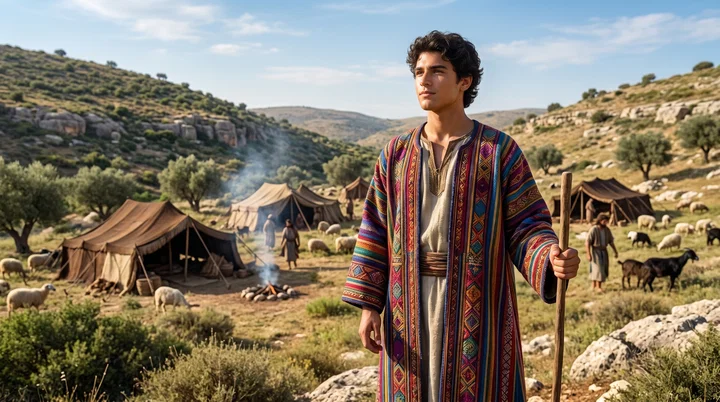
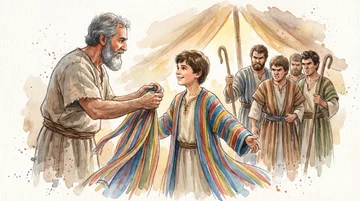
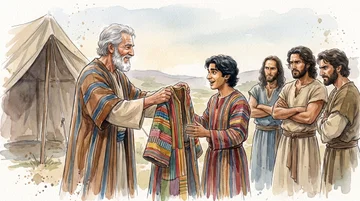
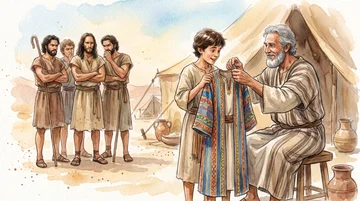
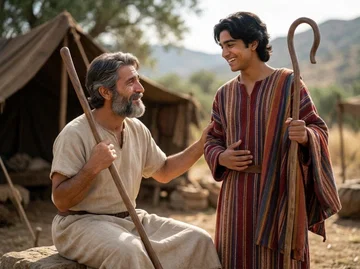
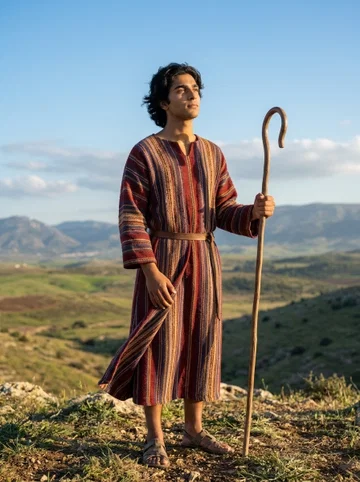
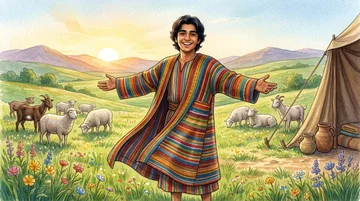
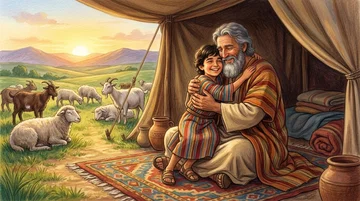
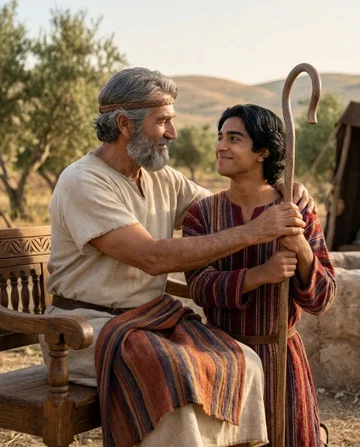
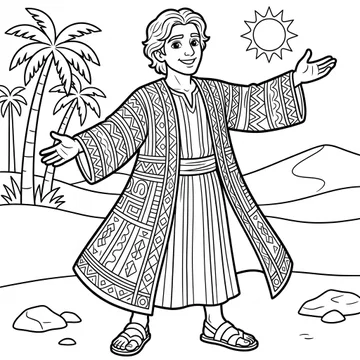
Now Israel loved Joseph more than all his children, because he was the son of his old age: and he made him a coat of many colours.
Translations
American King James Version, Webster Bible, American Standard Version
Now Israel loved Joseph more than all his children, because he was the son of his old age: and he made him a coat of many colors.
King James Version, KJV Cambridge Paragraph Bible, Revised Version
Now Israel loved Joseph more than all his children, because he was the son of his old age: and he made him a coat of many colours.
And Israel hath loved Joseph more than any of his sons, for he [is] a son of his old age, and hath made for him a long coat;
And Israel loved Joseph more than all his sons, because he was son of his old age; and he made him a vest of many colours.
Now, Israel, loved Joseph more than any of his sons, because he was to him, the son of his old age, and he had made him, a long tunic.
Berean Standard Bible, Majority Standard Bible
Now Israel loved Joseph more than his other sons, because Joseph had been born to him in his old age; so he made him a robe of many colors.
Now Israel loved Joseph more than all his children, because he was the son of his old age, and he made him a tunic of many colors.
Now the love which Israel had for Joseph was greater than his love for all his other children, because he got him when he was an old man: and he had a long coat made for him.
Nowe Israel loued Ioseph more then all his sonnes, because he begate him in his old age, and he made him a coat of many colours.
Douay-Rheims (Challoner revision)
Now Israel loved Joseph above all his sons, because he had him in his old age: and he made him a coat of divers colours.
Pictures
Cross-references
- Genesis 37:23
And it came to pass, when Joseph was come unto his brethren, that they stript Joseph out of his coat, his coat of many colours that was on him;
Joseph’s brothers strip off the coat that marked their father’s love.
- Acts 7:9
And the patriarchs, moved with envy, sold Joseph into Egypt: but God was with him,
Envy over Joseph’s favored status led his brothers to sell him into Egypt.
- Genesis 37:18-22
And when they saw him afar off, even before he came near unto them, they conspired against him to slay him.
Joseph’s brothers conspire against him, but Reuben intervenes to save him.
- Genesis 37:27-28
Come, and let us sell him to the Ishmeelites, and let not our hand be upon him; for he is our brother and our flesh. And his brethren were content.
Judah proposes selling Joseph, and his brothers sell him to traders.
- Genesis 37:24
And they took him, and cast him into a pit: and the pit was empty, there was no water in it.
Joseph’s brothers cast him helplessly into an empty pit.
- Genesis 42:6
And Joseph was the governor over the land, and he it was that sold to all the people of the land: and Joseph’s brethren came, and bowed down themselves before him with their faces to the earth.
brethren's bowing fulfilled dreams
- Genesis 37:11
And his brethren envied him; but his father observed the saying.
The brothers’ jealousy over Joseph’s favored position is further described.
- Genesis 37:7
For, behold, we were binding sheaves in the field, and, lo, my sheaf arose, and also stood upright; and, behold, your sheaves stood round about, and made obeisance to my sheaf.
both point to Joseph being exalted
- Genesis 41:39-43
And Pharaoh said unto Joseph, Forasmuch as God hath shewed thee all this, there is none so discreet and wise as thou art:
from prison God raised to throne
- Genesis 37:9
And he dreamed yet another dream, and told it his brethren, and said, Behold, I have dreamed a dream more; and, behold, the sun and the moon and the eleven stars made obeisance to me.
both point to Joseph being exalted
- Genesis 45:5
Now therefore be not grieved, nor angry with yourselves, that ye sold me hither: for God did send me before you to preserve life.
Joseph’s sale into Egypt was overruled as God’s sending him there to preserve life.
- Genesis 39:7-12
And it came to pass after these things, that his master’s wife cast her eyes upon Joseph; and she said, Lie with me.
Joseph shows integrity by refusing his master’s wife and fleeing temptation.
- 1 Samuel 2:19
Moreover his mother made him a little coat, and brought it to him from year to year, when she came up with her husband to offer the yearly sacrifice.
Hannah brings Samuel a coat each year.
Commentary
Each commentary is drawn from primary sources: the writings of Ellen G. White and Adventist pioneers and periodicals. Each commentary is separate. Its own words are not a quotation; follow the references to read the source passages.
Ellen G. White
13 sources
Israel loved Joseph above all his other sons because he was the child of his old age and the eldest son of his beloved Rachel, and he marked that love by giving him a costly coat of rich and varied colors.PP 209.1ST Dec 18, 1879ST Dec 18, 1879ST Dec 18, 1879PP 209.2–3 Joseph was beautiful and cheerful and pure in spirit, loving his father and reproving evil, while his brothers were wicked and unkind and a bitterness to their father.ST Dec 18, 1879ST Dec 18, 1879ST Dec 18, 1879ST Dec 18, 1879 Jacob's open partiality was unwise and wrong, and it stirred his sons to envy, jealousy and hatred, for they took the coat as proof that Joseph had stolen their father's affection and might be set over them in the birthright, not seeing that their own conduct had turned him from them.PP 209.1ST Dec 18, 18791SP 126.2ST Dec 18, 1879 Their envy ripened into hatred like Cain's toward the innocent and righteous, and at last into a murderous purpose that led them to seize Joseph when he came to them in joy, strip the hated coat from him with scorn and taunts, and leave him terrified and pleading while he thought of his father's grief.SG3 138.1ST Dec 18, 18791SP 128.1–2ST Dec 18, 1879 The indulgence also injured Joseph himself, encouraging self-sufficiency and leaving one reared in tender care unprepared for hardship.PP 213.1–2
Jacob's Favoritism and Reasons
Israel loved Joseph more than all his other children because he was the son of his old age and the eldest son of his beloved wife Rachel.PP 209.1ST Dec 18, 1879ST Dec 18, 1879 After his mother died his affection clung especially closely to his father, and Jacob's heart was bound up in him.PP 209.1ST Dec 18, 1879 Jacob's hopes centered on him because of his qualities, as the son of Rachel.ST Dec 18, 1879
Joseph was a son of remarkable beauty, cheerful and happy, with great love for his father, pure and righteous and of another spirit from his brothers.ST Dec 18, 1879ST Dec 18, 1879ST Dec 18, 1879 He stood before them in virtuous innocence like a youthful prophet, his countenance lighted with inspiration, pure and good in a way they could admire but would not imitate by leaving their wicked course to become virtuous and noble like him.ST Dec 18, 1879 By contrast his brothers were grown men who were wicked, unjust and unkind to one another, a grief and shame to their father, and their conduct made his life bitter.ST Dec 18, 1879ST Dec 18, 1879ST Dec 18, 1879ST Dec 18, 1879 They failed to see that their own wicked conduct turned their father from them, and that his affection centered on Joseph because of his purity and excellent character.ST Dec 18, 1879 As Cain hated his brother and was a grief to his father, so they hated Joseph because he was innocent and righteous and beloved of his father.ST Dec 18, 1879
This love existed in a polygamous family where strife, envy, jealousy, revenge and lack of self-control prevailed, and the sons had learned hatred from the envy and jealousy cherished by their different mothers.ST Dec 18, 1879 Each mother was envious and jealous lest her own children not receive due attention from the father and became bitter when another was preferred before them, for polygamy dries up human affection and loosens ties that should be held sacred.ST Dec 18, 1879 Jacob hoped God would greatly bless Joseph, and was confident that God was revealing the future to him.ST Dec 18, 1879 When Joseph reproved his brothers for their wicked course and found his entreaties only stirred wrath, he laid their evil plans and purposes before his father, giving Jacob knowledge of many things he otherwise would not have known.ST Dec 18, 1879 Joseph was still young when God chose him to do special work for His people.Ms 38, 1895, par. 38–40
Coat and Its Consequences
The coat of many colours was beautiful, costly and richly coloured, a visible token of special paternal love that made partiality plain to the other sons.ST Dec 18, 1879ST Dec 18, 1879PP 209.2–31SP 128.1–2 It was given as an open expression of favour, and that open preference was unwise and a wrong partiality and indulgence.PP 209.1ST Dec 18, 1879ST Dec 18, 1879PP 209.2–3PP 213.1–2 Such indulgence both angered the brothers and helped provoke what followed.PP 213.1–2
The favouritism stirred envy, jealousy, hatred and a desire for revenge.ST Dec 18, 18791SP 126.2ST Dec 18, 1879 The brothers believed Joseph had taken their father's affection and deprived them of his confidence and love, and they took the coat as evidence that he might be favoured for the birthright over the older sons.ST Dec 18, 1879PP 209.2–3 They failed to see that their own wicked conduct had brought shame to their father and turned him from them, while his affection centered on Joseph because of purity and excellent character.ST Dec 18, 1879 The open preference called out their revengeful disposition, and that hatred was increased by Joseph's reproof of their wicked course and his laying of their evil plans before their father.ST Dec 18, 1879
As with Cain, who hated his brother and was a grief to his father, so the brothers hated Joseph because he was innocent and righteous and beloved of his father.ST Dec 18, 1879 He stood before them in virtuous innocence like a youthful prophet, his countenance lighted with inspiration, pure and good in a way they could admire, yet they would not leave their wicked course to become virtuous and noble like him.ST Dec 18, 1879 Their envy grew into hatred and finally into a desire to murder him.1SP 126.2SG3 138.1
That hatred issued in the cruel deed that separated Joseph from home.PP 213.1–2 When he came to them glad and joyful after his long search, bearing the blessing with which his father had sent him, they met him with scorn, abuse and fierce looks.ST Dec 18, 1879 They seized him and stripped the hated coat from him with taunting remarks, leaving him terrified, expecting to be killed and pleading for his life while thinking of his father's sorrow and his murderers' guilt.1SP 128.1–2ST Dec 18, 1879 The indulgence also harmed Joseph himself, encouraging faults in his character so that he became self-sufficient and exacting and, accustomed to tender care, felt unprepared for hardship.PP 213.1–2
Sources
Pioneers and periodicals
37 sources
Israel loved Joseph more than his other children because he was the son of his old age, and showed it by giving him a costly, conspicuous coat of distinction that marked elevated standing and heirship to the birthright.ST Mar 26, 1894ST Oct 27, 1898ST Oct 27, 1898RH Dec 15, 1910ST Oct 2, 1901 That open favoritism was unwise and partial, a sad fruit of having many wives, yet it centered on Joseph's purity and excellent character in contrast to the wicked, strife-filled conduct of his older brothers, though some hold it was not unjust favoritism because Joseph was more worthy of love and did no wrong.ST Dec 18, 1879ST Dec 18, 1879ST Jan 3, 1911STST Apr 20, 1888 The special love and the visible coat provoked his brothers to envy, hatred and resentful speech that grew into deceit and selling him into Egypt, bringing long sorrow and mourning upon their father.ST Mar 26, 1894ST Oct 27, 1898ST Oct 27, 1898 His story beginning here reveals God's providence overruling human wrath, ambition and jealousy for good, preparing him while young to do special work and preserve the lives of God's people and the holy Seed.ST Jan 16, 1912STST Jan 21, 1913RH Jan 19, 1860RH Nov 19, 1908 It warns parents against partiality shown in dress and other distinctions and against indulging children in luxurious adornment, since partiality in family or school inevitably breeds envy, hatred, disturbed peace and murderous schemes.ST Jun 11, 1894ST Oct 27, 1898ST Aug 1, 1916RH Jan 21, 1909
Words and Family Setting
Israel loved Joseph above all his other children because Joseph was born to him in his old age, and he showed that love by having a coat of many colors made for him.ST Mar 26, 1894ST Oct 27, 1898ST Oct 27, 1898ST Feb 18, 1913 Joseph was the oldest son of Rachel, the wife Jacob loved, a child both of his old age and of his youth, and a son of remarkable beauty.ST Dec 18, 1879ST Jan 3, 1911ST Oct 2, 1901 Jacob's hopes centered on Joseph because of his qualities, and he was confident that God was revealing the future to him.ST Dec 18, 1879 He lived in a polygamous household where his older sons were grown men, unjust and unkind to one another and full of strife, envy, jealousy, revenge and lack of self-control, having learned hatred from the envy and jealousy cherished by their different mothers, each of whom was envious and jealous lest her own children not receive due attention and became bitter when another was preferred before them.ST Dec 18, 1879
The coat was costly, beautiful, magnificent, conspicuous and distinctive, marking Joseph out from his brothers like clothing worn by people of distinction.ST Dec 18, 1879RH Jan 21, 1909ST Oct 27, 1898RH Dec 15, 1910ST Oct 2, 1901 It was a richly colored garment whose open bestowal made Jacob's partiality plain to his other sons.ST Dec 18, 1879ST Oct 2, 1901 The Hebrew term for the garment can mean not only colors but also pieces, ends or extremities, suggesting a garment with colored pieces at its ends comparable to the colored borders on Israelite clothing and to details of the priestly garments.RH Dec 15, 1910
The garment was a sign of elevated status marking Joseph as the rightful heir to the family patrimony, since as Rachel's firstborn he held the birthright by the patriarchal rule of primogeniture.RH Dec 15, 1910 His older brothers suspected from Jacob's favor and the conspicuous coat that he intended Joseph to receive the birthright and to have pre-eminence over them, an envy also stirred by Joseph's dreams which they understood to mean he would be exalted above them.ST Oct 2, 1901 The gift expressed the desire for Joseph to be exalted to family headship including the sacred calling of the priesthood, as his brothers likely understood it, and it is described as a special seamless garment given to a dearly beloved son.RH Jan 27, 1916ST Dec 10, 1912 Inherited firstborn privileges could pass to others when the firstborn proved unworthy, and Joseph's character even as a youth gave him an excellency above his brothers.ST Dec 10, 1912
The Genesis account behind the verse agrees admirably in its whole color with Egypt at that time in habits, customs, land and people, a match that draws wonder.ST Nov 20, 1884ST Jul 30, 1885 Egyptian monuments corroborate the record of Joseph and serve as valuable evidence for understanding Egyptian history.ST Jul 30, 1885 Pictures and accounts show slaves with Hebrew features working at brick-making, and the discovery of Pithom bearing its own name has brought to light great windowless brick store-houses for preserving grain for war or famine, while Egyptian pictures, stories and pious books illustrate the setting.ST Nov 20, 1884 Egyptian monuments give no record of such miracles because kings do not report their disasters and the Egyptian annals fail at that point.ST Nov 20, 1884
Reasons for Jacob's Favor
Jacob's open display of special love for Joseph was unwise, partial, imprudent favoritism and a mistake.ST Dec 18, 1879ST Dec 18, 1879ST Jan 3, 1911ST Oct 27, 1898 As a loving but unwise father he favored Joseph as the son of his favorite wife and the petted child of his old age, giving too little affection to his other sons in comparison, and he expressed it by giving a coat of beautiful, richly colored colors that made his partiality plain.ST Dec 18, 1879ST Dec 18, 1879ST Jan 3, 1911ST Oct 27, 1898 Such favoritism was imprudent because it could foster envy among siblings and bring trouble, so parents should instead love their children without partiality and follow principle rather than lesser distinctions.ST Oct 27, 1898 His hopes centered on Joseph and his heart was bound up in the child, and his confidence that God was revealing the future to Joseph did not hide his affection, giving his other sons grounds for jealousy, hatred, revenge, murderous schemes, deceit, and fearful expectation of wrath.ST Dec 18, 1879ST Dec 18, 1879ST Oct 27, 1898
That partial love was a sad fruit of the mistake of having more than one wife.ST Jan 3, 1911ST The evils of having many wives produced jealousies not only between the wives but between their families, with partiality, jealousy, envy, low standards of morality, and crime.ST Dec 18, 1879ST Jan 3, 1911ST Each mother was envious and jealous lest her own children not receive due attention from the father and became bitter when another was preferred, and the older sons, grown men unjust and unkind to each other and full of strife, envy, jealousy, revenge, and lack of self-control, had learned hatred from the envy and jealousy cherished by their different mothers.ST Dec 18, 1879 Polygamy in this way dries up human affection and loosens ties that should be held sacred.ST Dec 18, 1879
Jacob's affection centered on Joseph because of his purity and excellent character, his cheerfulness and happiness and great love for his father, and his having another spirit from his brothers.ST Dec 18, 1879ST Dec 18, 1879 Joseph was the eldest son of the beloved Rachel, a child of old age and a son of remarkable beauty, innocent and righteous while his brothers were wicked, standing before them like a youthful prophet in virtuous innocence with countenance lighted with inspiration.ST Dec 18, 1879ST Dec 18, 1879 The conduct of the older sons made Jacob's life bitter and brought shame to him, and Jacob hoped God would bless Joseph greatly.ST Dec 18, 1879ST Dec 18, 1879ST Dec 18, 1879ST Dec 18, 1879 Jacob showed the preference openly and unwisely, which called out the revengeful disposition of the other sons, and the hatred grew when Joseph reproved his brothers for their wicked course and, finding his entreaties only stirred wrath, laid their evil plans and purposes before his father.ST Dec 18, 1879
By a contrary account, the love was not unjust favoritism and did not cause the discord in the family.ST Apr 20, 1888 Joseph was more worthy of love than his brothers, did no wrong to provoke them, had the fear of God before his eyes, and is one of the few Bible characters of whom no evil is recorded, though not born without faults.ST Apr 20, 1888 His brothers' envy and hatred, which led them to think of killing him and then to sell him, grew only out of their own wicked, corrupt hearts, because his works were righteous while theirs were evil, the same thing that moved Cain to kill Abel.ST Dec 18, 1879ST Apr 20, 1888 Although Jacob had nearly spoiled Joseph by petting and flattering him as a boy, he had instilled in him principles of integrity and purity that appeared in his later righteous character as a living character.ST Jan 3, 1911ST Jan 16, 1912
Envy and Its Consequences
The marked preference for Joseph above all the other children, shown because he was born in the father's old age and made visible in a costly, distinctive, magnificent coat of beautiful colors, helped provoke the brothers' hatred, envy, jealousy and resentment.ST Mar 26, 1894ST Oct 27, 1898ST Oct 27, 1898ST Oct 2, 1901 The richly colored garment made the partiality plain to the other sons and gave them grounds for jealousy, hatred and revenge, so that they could not speak peaceably to him but sneered at and criticized him.ST Dec 18, 1879ST Mar 26, 1894ST Oct 2, 1901 The hopes centered on him because of his purity and excellent character and because he was the eldest son of the beloved wife, with confidence that God was revealing the future to him, did not hide the affection but increased the hatred.ST Dec 18, 1879ST Dec 18, 1879
They believed he had taken their father's affection and deprived them of confidence and love, failing to see that their own wicked conduct brought shame to their father.ST Dec 18, 1879 While their conduct made the father's life bitter, Joseph was cheerful and happy and had great love for his father, and the father's heart was bound up in the child because Joseph had another spirit from his brothers.ST Dec 18, 1879ST Dec 18, 1879 The preference was shown openly and unwisely, which called out their revengeful disposition, and the hatred grew when Joseph reproved them for their wicked course and, finding his entreaties only stirred wrath, laid their evil plans and purposes before his father, giving the father knowledge of many things he otherwise would not have known.ST Dec 18, 1879
Hatred grew into schemes of murder and deceit, joined with the evils of many wives producing jealousies between wives and between their families, leading them first to try to kill him and finally to sell him as a slave into Egypt.ST Jan 3, 1911ST Apr 20, 1888ST Oct 27, 1898 The father's special love precedes the brothers' envy and the sale into slavery, and partiality in family or school inevitably produces envy, hatred, schemes of murder, deceit, and fearful expectation of wrath upon the wrongdoers.ST Oct 27, 1898 When he came to them glad and joyful after his long search, they met him with scorn, abuse and fierce looks, seized him, and stripped the hated coat from him with taunting remarks, leaving him terrified, expecting to be killed, pleading for his life, and thinking of his father's sorrow and his murderers' guilt.ST Dec 18, 1879ST Mar 17, 1887 Their hatred bore bitter fruit in the long sorrow they brought upon their father, causing him to mourn for days, weeks, months and years.
Indulgence with the costly, showy coat like clothing worn by people of distinction also contributed to Joseph's own vanity, pride, love of luxury, and lack of readiness for life's responsibilities and temptations.RH Jan 21, 1909 Yet he feared God and stood before his wicked brothers in virtuous innocence like a youthful prophet, his countenance lighted with inspiration, pure and good in a way they could admire, though they would not leave their wicked course to become virtuous and noble like him.ST Dec 18, 1879RH Jun 8, 1916ST Apr 20, 1888 He did no wrong to provoke them and is one of the few Bible characters of whom no evil is recorded, and they hated him because he was innocent and righteous and beloved of his father, just as Cain hated his brother.ST Dec 18, 1879ST Apr 20, 1888 This proves that the wicked persecute the righteous because their own works are evil and their brother's are righteous, that he that is born after the flesh persecutes him that is born after the Spirit.RH Jun 8, 1916ST Apr 20, 1888
Providence and Preservation
Joseph's story beginning with a father's special love for a younger son is a revelation of divine providence overruling human wrath, ambition and jealousy for good.ST Jan 16, 1912 Whatever God has intended a person for, He can be safely trusted to bring them to it, leading by a roundabout way yet still guiding right.RH Jan 19, 1860
The verse belongs to the record of the channels through which the Promised Seed should come, to be read with that Promised Seed ever kept in mind.ST It falls within the account of one whom the Lord was preparing to preserve the holy Seed.ST Jan 21, 1913 God chose him while he was still young to do special work for His people.ST Apr 23, 1912 Introduced as a boy whom God used, the specially loved son incurred his brothers' envy and passed through sale into Egypt and rising from prisoner to ruler, by which he preserved the lives of God's people.RH Nov 19, 1908
The father's special love comes first, then the envy of the brothers and the sale into slavery, and afterward God's good dealings with him in Egypt. That same course from favored son to envied brother to slave in Egypt to ruler from prison preserved the lives of God's people.RH Nov 19, 1908
Beloved by his father and envied by his brothers, Joseph is an example of God's dealings with His people in earlier generations. He was truthful, obedient, noble, spirited, and willing to do right.RH Oct 9, 1900
The story is wholesome and nutritious spiritual food, part of the word of God filled with principles of life and light and health, to be fed upon for strength of mind and soul instead of cheap, trashy literature and religious novels that stimulate and excite.RH Jun 12, 1900 To dismiss it as too tame, tasteless, dry and uninteresting shows a pampered and perverted mental and moral appetite that craves moral pepper and spiritual mustard.RH Jun 12, 1900
His life sets before children a high ideal worthy of imitation and helps in forming a strong character.RH Dec 14, 1911 He stands among the mighty men of old who accomplished wonderful things for God through faith in Him.RH Dec 14, 1911
Lessons and Application
Jacob's open preference for Joseph, shown by giving him a coat of many colors, stands as a warning to parents not to express partiality and favoritism through dress and other distinctions.ST Oct 27, 1898RH Jan 21, 1909 Such favoritism was imprudent and mistaken, for displaying special love to one child over the others fosters envy among siblings and brings trouble upon those who envy.ST Oct 27, 1898 Parents are instead to love their children without partiality, following principle rather than lesser distinctions. Even the father of the favored nation erred in clothing his beloved son above the rest, and his error is written as a lesson calling parents not to adorn their children in the same way but to train them in humility, simplicity and sobriety as children of God.RH Jan 21, 1909
The discord in Jacob's family, whose principal scene is Joseph's dreams, yields the warning about the wickedness of envy.ST Jun 11, 1894 Partiality in the family or in the school inevitably produces envy, hatred, schemes of murder, deceit, disturbed peace and a fearful expectation of wrath to be visited upon the wrongdoers.ST Oct 27, 1898 The jealousy of Joseph by his brothers led to a sad experience and unhappiness, showing how jealousy between children disturbs the peace of a family.ST Aug 1, 1916
The costly, showy coat, like clothing worn by people of distinction and made with many colors and pieces, illustrates the folly of indulging children with luxurious adornment.RH Jan 21, 1909 That indulgence helped provoke the brothers' envy and hatred, while at the same time contributing to Joseph's vanity, pride, love of luxury, and lack of readiness for life's responsibilities and temptations.RH Jan 21, 1909
The coat of many colors is tokens of a heavenly Father's loving favor, and in that coat America is robed.RH Apr 2, 1857 Blessed because its God is the Lord, the nation is viewed with a jealous eye by the old world, which cannot fail to see its blessedness.RH Apr 2, 1857
Sources