Translations
And they said one to another, Behold, this dreamer comes.
King James Version, Revised Version, American Standard Version
And they said one to another, Behold, this dreamer cometh.
And they said one to another. Behold, this dreamer cometh.
And they said one to another, Behold, this dreamer is coming.
And they say one unto another, 'Lo, this man of the dreams cometh;
And they said one to another, Behold, there comes that dreamer!
And they said each man unto his brother, Lo! that master of dreams yonder, coming in!
Berean Standard Bible, Majority Standard Bible
“ Here comes that dreamer!” they said to one another.
They said to one another, “ Behold, this dreamer comes.
Saying to one another, See, here comes this dreamer.
For they sayd one to another, Behold, this dreamer commeth.
Douay-Rheims (Challoner revision)
And said one to another: Behold the dreamer cometh.
Pictures
Cross-references
- Genesis 37:5-11
And Joseph dreamed a dream, and he told it his brethren: and they hated him yet the more.
Joseph’s dreams of preeminence provoke his brothers’ envy and resentment.
- Genesis 37:28
Then there passed by Midianites merchantmen; and they drew and lifted up Joseph out of the pit, and sold Joseph to the Ishmeelites for twenty pieces of silver: and they brought Joseph into Egypt.
Joseph’s brothers sell him to traders who take him to Egypt.
- Acts 7:9
And the patriarchs, moved with envy, sold Joseph into Egypt: but God was with him,
Envy moved Joseph’s brothers to sell him into Egypt.
- Genesis 50:20
But as for you, ye thought evil against me; but God meant it unto good, to bring to pass, as it is this day, to save much people alive.
God turned the brothers’ evil intent toward good.
- Genesis 42:6
And Joseph was the governor over the land, and he it was that sold to all the people of the land: and Joseph’s brethren came, and bowed down themselves before him with their faces to the earth.
Joseph’s brothers bow before him, fulfilling the dreams that had provoked their envy.
- Genesis 37:23-24
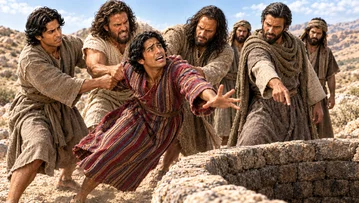
And it came to pass, when Joseph was come unto his brethren, that they stript Joseph out of his coat, his coat of many colours that was on him;
Joseph’s brothers strip his coat and cast him into an empty pit.
- Psalms 105:17
He sent a man before them, even Joseph, who was sold for a servant:
The psalm says God sent Joseph ahead of his people.
- Genesis 45:5
Now therefore be not grieved, nor angry with yourselves, that ye sold me hither: for God did send me before you to preserve life.
Joseph says God sent him ahead to preserve life.
- 2 Kings 6:16
And he answered, Fear not: for they that be with us are more than they that be with them.
Both accounts are associated with the hills around Dothan.
Commentary
Each commentary is drawn from primary sources: the writings of Ellen G. White and Adventist pioneers and periodicals. Each commentary is separate. Its own words are not a quotation; follow the references to read the source passages.
Ellen G. White
12 sources
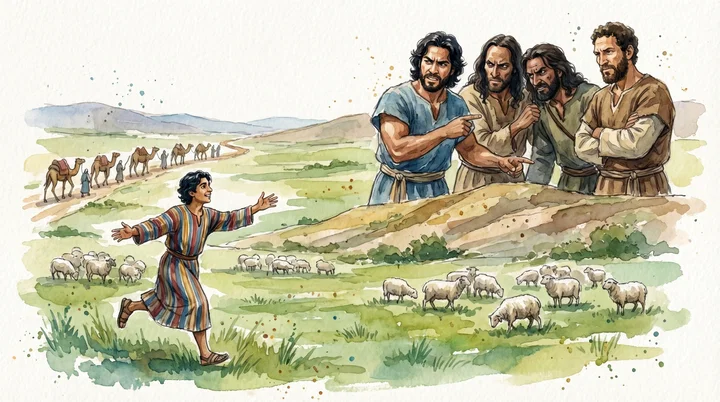
At Dothan the brothers recognized Joseph from a distance as he came toward them, and greeted his approach with the sneering name for the dreamer.SG3 140.11SP 128.1–2PP 210.6–211.1ST Dec 18, 1879PP 213.1–2 By calling him that they contemptuously and mockingly identified him with the dreams he had told them, making the dreams themselves his name.SG3 140.11SP 128.1–2PP 210.6–211.1SG3 138.11SP 157.2–158.2 Their mockery was the voice of envy, jealousy, hatred, revenge, and anger, directed both against Joseph himself and against his dreams.SG3 140.11SP 128.1–2PP 210.6–211.1ST Dec 18, 1879SG3 138.1
That jealousy and resentment had been stirred by Jacob's open preference for Joseph, displayed in the distinctive coat, and the partiality and indulgence of the family had both helped provoke the brothers' deed and encouraged faults in Joseph himself.PP 209.1ST Dec 18, 18791SP 126.2PP 213.1–2 They also resented his righteousness and his reports of their wrongdoing, and his efforts to turn them from wrongdoing only intensified their hostility until it became murderous.1SP 126.2SG3 138.1 Their words introduced a murderous plot already formed before he reached them, meeting his pleas with insulting words and intending to kill him while mockingly challenging what would become of his dreams.SG3 140.11SP 128.1–2PP 210.6–211.1ST Dec 18, 1879ST Feb 5, 1880
By killing him they meant to prevent his dreams, his future greatness, and his rise to dominion over them, then instead abused him, cast him into a pit, and sold him into slavery, cruelly separating him from his father.ST Dec 18, 1879ST Feb 5, 1880PP 213.1–21SP 157.2–158.2 God heard Joseph's cries and kept His eye upon him, and overruled the crime for good so that Joseph gained authority in Egypt, ruled over his brothers, and became a savior to his family.ST Dec 18, 1879ST Feb 5, 18801SP 157.2–158.2 His goodness and strength of purpose did not spare him from being maligned, persecuted, and treated as a criminal for doing right, yet God gave him signal victories through his suffering for righteousness.ST Dec 18, 1879ST Feb 5, 1880Lt 10, 1879, par. 4–9 The attempt to stop the dreams illustrates Christ, for jealous leaders sought to keep Jesus from gaining authority and being accepted as king, but His death made Him Redeemer and ruler of humanity, and God's overruling of these crimes for good did not lessen the guilt of those who committed them.ST Feb 5, 18801SP 157.2–158.2
Sources
Pioneers and periodicals
36 sources
The brothers speak the words to each other when they see Joseph approaching from afar at Dothan, mocking him with contempt as the dreamer because of his dreams that he would rule over them.ST Mar 17, 1887ST Oct 27, 1898ST Oct 2, 1901ST Aug 25, 1898ST Nov 29, 1905 He comes to them innocently and gladly on his father's errand to seek their welfare, yet they meet him with hatred, seize him violently and treat him cruelly.ST Mar 17, 1887ST Feb 18, 1913ST Apr 29, 1908 Their mockery springs from envy and hatred at his dreams, his coat and his father's love for him, and grows into a conspiracy to kill him and cast him into a pit to stop his dreams from coming true.ST Jan 3, 1911ST Oct 27, 1898ST Oct 27, 1898 God overrules their jealousy and cruelty to bring about His own purpose, so that their evil becomes the step by which Joseph is carried into Egypt, raised to rule, and made a savior of his family and preserver of God's people.ST Feb 5, 1880ST Jan 16, 1912ST Jan 21, 1913ST Jan 16, 1912ST Apr 2, 1894 The rejected one entrusted with a mission to save foreshadows Christ, whom jealous leaders also reject to prevent His kingship, yet whose rejection becomes redemption for humanity.ST Feb 5, 1880ST Nov 22, 1899RH Jan 9, 1855ST Jul 21, 1909
Words and Setting
The words are spoken by the brothers to one another as they see Joseph approaching from afar, recognizing him by his dreams.ST Mar 17, 1887ST Oct 27, 1898ST Nov 29, 1905 The name they give him, the dreamer or this dreamer, is contemptuous mockery referring to the dreams he had told them, of the sheaves and of the sun, moon and stars, which were understood to mean his pre-eminence and rule over them.ST Oct 27, 1898ST Oct 2, 1901ST Oct 2, 1901 Their scorn accompanies their conspiracy to kill him before he reaches them, for envy, jealousy and hatred stirred by his distinctive coat and by resentment of the prophetic dreams have hardened into a plot to slay him and stop his dreams from coming true.ST Dec 18, 1879ST Oct 2, 1901ST Oct 2, 1901 Their intent in the mocking name is to slay him and cast him into a pit and say an evil beast devoured him, to see what will become of his dreams.ST Mar 17, 1887ST Oct 27, 1898
Joseph comes unsuspiciously with gladness of heart to greet them after his long wearisome journey, sent by his father on an errand to find them and inquire of their welfare, as a young boy visiting them with a message from home and hoping for affection.ST Mar 17, 1887ST Feb 18, 1913 Though he knows of their ill will and jealousy he does not complain.ST Apr 29, 1908 They rudely repulse him, do not answer his errand, meet him with angry looks that turn his joy to fear and dread, seize him violently and treat him cruelly, taunting him with the admonitions he had given them in the past.ST Mar 17, 1887ST Apr 29, 1908 They accuse him of relating his dreams to exalt himself above them in their father's mind so their father would love him more than themselves, accuse him of hypocrisy, and speak from envious feelings in which Satan controls their minds so they have no sense of pity and no feelings of love for their brother.ST Mar 17, 1887 They cast him into a pit and sell him into slavery, leaving him frightened, heartbroken and separated from home, yet his suffering does not mean God has abandoned him, for the Lord remains with him and affliction is followed by deliverance.ST Feb 18, 1913
The meeting is at Dothan, where the brothers are tending their flocks before selling him to Ishmaelite traders, taking advantage of his absence from home.ST Aug 25, 1898ST Oct 19, 1904 Dothan's broad grazing valley lets them see Joseph from far away, and its position on the caravan route from Gilead to Egypt fits the account of the Ishmaelite and Midianite traders who carry him to Egypt.ST Aug 25, 1898ST Oct 19, 1904 His arrival in Egypt through his brothers' cruelty later makes it possible for Jacob's family to settle there before becoming dependent on others' land and falling into slavery, so that his visit to inquire of their welfare becomes through their wickedness a step toward the place God appointed for him in Egypt.ST Nov 29, 1905ST Nov 23, 1904
The verse belongs to Joseph's childhood, before he is sold into Egypt, and follows as result after its causes: his bringing an evil report of his brothers, his father's greater love and costly distinctive coat, and his dreams of the sheaves and of the sun, moon and stars.ST Oct 27, 1898ST Oct 14, 1913 It belongs to the sad fruits of Jacob's mistakes, where having more than one wife led to partiality, jealousy, envy, low moral standards and crime.ST Their contempt belongs to downward steps from envy to hatred to a scheme of murder to deceit to fearful expectation of wrath to be visited upon them, while Jacob understood and believed Joseph's dreams even while his sons despised them, and their treatment of the dreamer was part of the divine plan concerning the children of Israel being developed toward bondage and deliverance.ST Oct 27, 1898 It belongs to the Genesis story whose Egyptian color agrees with Egypt at that time, a match regarded with wonder, for Egyptian pictures and accounts show slaves with Hebrew features working at brick-making as the Hebrews worked, and Egyptian pictures, stories and religious books illustrate the habits and customs behind the Bible accounts of the land and people of the Nile, while Egyptian monuments contain no record of Bible miracles because kings do not report their disasters and Egyptian annals give only clues to history.ST Nov 20, 1884
Envy Turning to Violence
The brothers were moved by envy, jealousy and hatred stirred by the dreams of pre-eminence, by the distinctive coat, and by their father's greater love and preference for Joseph.ST Jan 3, 1911ST Oct 2, 1901ST Apr 29, 1908 That envy and hostility grew into hatred, contempt and resentment at the prospect that he would rule over them, and their persecution brought years of grief to their father and painful conflict in the family.ST Jan 3, 1911ST Oct 2, 1901ST Apr 29, 1908 The contempt in calling him the dreamer as they recognized him from afar belonged to downward steps from envy to hatred to a scheme of murder to deceit to fearful expectation of wrath to be visited upon them.ST Oct 27, 1898 Envy is pain felt at the sight of superior excellence or happiness, hatred is the offspring of envy, and malice is the offspring of hatred, increasing by imperceptible degrees until there is no ability to escape.ST Oct 27, 1898RH Jan 9, 1855
The mocking words belonged to a conspiracy to kill him and stop his dreams from coming true and remove him from their way.ST Mar 17, 1887ST Oct 27, 1898ST Oct 27, 1898ST Oct 2, 1901 Their intent was to slay him and cast him into a pit and say an evil beast had devoured him, to see what would become of his dreams.ST Mar 17, 1887ST Oct 27, 1898ST Oct 27, 1898 That plan stood as a result following its causes in his bringing an evil report of them, his father's greater love and the costly coat, and his dreams of the sheaves and of the sun, moon and stars.ST Oct 27, 1898 Their hostility led on to abusing him, casting him into a pit, and selling him as a slave into Egypt, first seeking to kill him and ultimately selling him.ST Dec 18, 1879ST Jan 3, 1911
Joseph had done no wrong to provoke them, for the account gives no evidence that he did wrong and says he feared God.ST Apr 20, 1888 They seized him, taunted him with the admonitions he had given them in the past, and accused him of relating his dreams to exalt himself above them and gain his father's greater love, accusing him of hypocrisy.ST Mar 17, 1887 Those words came from envious feelings, and in giving utterance to envy Satan controlled their minds so that they had no sense of pity and no feelings of love for their brother.ST Mar 17, 1887 As with Cain's hatred of Abel, their own evil works and Joseph's righteousness lay behind their intent to harm the God-fearing Joseph.ST Apr 20, 1888
Providence Bringing Good From Evil
The mocking greeting belongs to a history in which God overrules human jealousy, ambition, wrath and cruelty to bring about His own purposes.ST Jan 16, 1912ST Jan 16, 1912RH Jan 19, 1860 Joseph's life shows that God can guide a person by a winding path to the purpose He has for them and bring them safely to it.RH Jan 19, 1860 His visit to inquire of his brothers' welfare became, through their wickedness, a step toward the place God had appointed for him in Egypt.ST Nov 29, 1905 Their evil plan to plot his death and test what would become of his dreams was taken up into God's providence, so that intended harm was turned to good even for them.RH Nov 17, 1910
They meant to kill him and then sold him into slavery, believing they had stopped the dreams from being fulfilled.ST Feb 5, 1880 In this they unknowingly helped bring about the very outcome they opposed, for their contempt led to the plot that carried him to Egypt.ST Apr 2, 1894 There he was brought from prison to the throne, raised to rule with authority, and made a savior to his family.ST Feb 5, 1880RH Nov 17, 1910RH Nov 19, 1908 The Lord was in this preparing him to preserve the holy Seed and the lives of God's people.ST Jan 21, 1913RH Nov 19, 1908 The envied boy sold into Egypt who from a prisoner became a ruler preserving lives stands as an example of a child used of God.RH Nov 19, 1908 His father understood and believed the dreams even while his sons despised them, and their treatment of the dreamer was part of the divine plan concerning the children of Israel being developed toward bondage and deliverance.ST Oct 27, 1898
His suffering did not mean God had abandoned him.ST Feb 18, 1913 Though he had traveled far at his father's request to find them and was met with abuse, cast into a pit and sold as a slave, left frightened, heartbroken and separated from home, his cries reached God whose eye remained upon him.ST Dec 18, 1879ST Feb 18, 1913 The Lord remained with Joseph, and affliction was followed by deliverance.ST Feb 18, 1913 While it was happening he could not see the purpose, but he had faith in God that all would come out right in the end in God's own good time, and his experiences offer practical lessons for people facing similar circumstances.ST Nov 29, 1905ST Nov 29, 1905
God's overruling of these crimes for good did not lessen the guilt of those who committed them.ST Feb 5, 1880 Reuben's failure to firmly protest the cruelty and take his stand for right when opportunity offered showed weakness.ST Nov 29, 1905 If he had stood firm he might have shared Joseph's fate and also shared in the glorious vindication of right and principle later brought to light in him.ST Nov 29, 1905 Joseph's later life shows righteousness formed into living character.ST Jan 16, 1912 His preservation as one guided and saved by God in youth shows divine providence guarding those who fear God in time of trouble, and with Samuel he proves that children and youth who make God their friend and seek Him early will find Him and have angels guard them.ST Jan 16, 1912RH Nov 24, 1874
Foreshadowing of Christ
Joseph's brothers tried to stop his dreams and his future greatness by plotting to kill him and then selling him into slavery, believing they had prevented what was foretold from coming to pass, yet their deed led directly to his authority in Egypt and to his becoming a preserver of his family.ST Feb 5, 1880 In the same way jealous leaders sought to keep Jesus from gaining authority and from being accepted as king, but his death made him the Redeemer of humanity.ST Feb 5, 1880 Their conduct sprang from envy and hatred and malice toward one of superior excellence, for envy is pain felt at superior excellence or happiness, hatred is the offspring of envy, and malice is the offspring of hatred.RH Jan 9, 1855 That conduct was repeated in still greater measure in the treatment of Jesus, in whom all excellence met.RH Jan 9, 1855 That God overruled these crimes for good did not lessen the guilt of those who committed them.ST Feb 5, 1880
The rejected man proved to be entrusted with a divine mission to save and bless and benefit humanity.ST Nov 22, 1899 Joseph was rejected by his own brothers and put out of the way as an unpopular man, illustrating God's pattern of bringing salvation through men first rejected by their own, as Christ came to His own and His own received Him not and was wounded in the house of His friends.ST Nov 22, 1899 Though rejected by his brothers, Joseph was afterward made a ruler in Egypt and a means of preserving life.ST Jul 21, 1909 This shows that God sees beyond human judgment and chooses people the world despises to bring life and salvation to those who follow His providence.ST Jul 21, 1909
The mocking greeting is an instance of those whose works are evil persecuting one who is righteous, of him born after the flesh persecuting him born after the Spirit, proving that the wicked persecute the righteous.RH Jun 8, 1916 It was the wayward and envious sons of Jacob persecuting Joseph, who feared God.RH Jun 8, 1916ST Apr 20, 1888 The account gives no evidence that he had done wrong, and his brothers treated him with contempt because of their envy.ST Apr 20, 1888 As with Cain's hatred of Abel, their own evil works and Joseph's righteousness lay behind their intent to harm him.ST Apr 20, 1888
Warnings and Lessons for Life
The verse carries envy as the lesson to consider, for the brothers hated Joseph and sold him into bondage. Their conduct is a striking example of envy, hatred and malice, where envy is pain felt at the sight of superior excellence or happiness, hatred is the offspring of envy, and malice is the offspring of hatred.RH Jan 9, 1855 It warns to suppress every rising of envy, hatred and malice lest they increase by imperceptible degrees until there is no ability to escape, and to seek righteousness and meekness instead.RH Jan 9, 1855
The story warns against withholding love from family and against envy toward those who should receive warmest love, for Joseph came as a young boy visiting them with a message from home and hoping for affection, yet they greeted him with contempt, called attention to his dreams as they saw him approaching, treated him cruelly and sold him into slavery. Though he knew of their ill will and jealousy, he did not complain when sent on his father's errand, commending mutual helpfulness in the home.ST Apr 29, 1908 He stands as an example of a child used of God, the boy envied by his brothers for his dreams and sold into Egypt, where from a prisoner he became ruler and preserved the lives of God's people.RH Nov 19, 1908 The verse belongs to the account of his childhood before he was sold into Egypt, and introduces their resentment of him and his dreams when they see him approaching and answer with the hostile name of dreamer.ST Oct 14, 1913 His preservation shows divine providence guarding those who fear God in trouble, and together with Samuel he proves that children and youth who make God their friend and seek Him early will find Him and have angels guard them.RH Nov 24, 1874
The mocking name shows that people focused on earthly things may mock someone whose hopes are fixed on heavenly visions by calling that person a dreamer.RH Jun 7, 1915 It also shows how those given to vanity treat a warning of death and coming wrath, when one comes to tell those who may never see the morrow that every sunset is the last to myriads and they must flee for refuge, and they call him a dreamer and mock him and turn him away, while men in the streets pity him and pass by on the other side.RH Sep 23, 1873
Sources