Genesis 37:20
Come now therefore, and let us slay him, and cast him into some pit, and we will say, Some evil beast hath devoured him: and we shall see what will become of his dreams.
Translations
Come now therefore, and let us slay him, and cast him into some pit, and we will say, Some evil beast has devoured him: and we shall see what will become of his dreams.
King James Version, KJV Cambridge Paragraph Bible
Come now therefore, and let us slay him, and cast him into some pit, and we will say, Some evil beast hath devoured him: and we shall see what will become of his dreams.
Come now therefore, and let us slay him, and cast him into some pit; and we will say, Some evil beast hath devoured him; and we shall see what will become of his dreams.
Revised Version, American Standard Version
Come now therefore, and let us slay him, and cast him into one of the pits, and we will say, An evil beast hath devoured him: and we shall see what will become of his dreams.
and now, come, and we slay him, and cast him into one of the pits, and have said, An evil beast hath devoured him; and we see what his dreams are.'
And now come and let us kill him, and cast him into one of the pits, and we will say, An evil beast has devoured him; and we will see what becomes of his dreams.
Now, therefore, come! let us slay him and cast him into one of the pits, and we will say A cruel beast, hath devoured him,—And let us see what will become of his dreams.
Berean Standard Bible, Majority Standard Bible
“ Come now, let us kill him and throw him into one of the pits. We can say that a vicious animal has devoured him. Then we shall see what becomes of his dreams!”
Come now therefore, and let’s kill him, and cast him into one of the pits, and we will say, ‘ An evil animal has devoured him.’ We will see what will become of his dreams.”
Let us now put him to death and put his body into one of these holes, and we will say, An evil beast has put him to death: then we will see what becomes of his dreams.
Come now therefore, and let vs slay him, and cast him into some pitte, and wee will say, A wicked beast hath deuoured him: then wee shall see, what will come of his dreames.
Douay-Rheims (Challoner revision)
Come, let us kill him, and cast him into some old pit: and we will say: Some evil beast hath devoured him: and then it shall appear what his dreams avail him:
Pictures
Cross-references
- Genesis 37:11
And his brethren envied him; but his father observed the saying.
His brothers’ envy over Joseph’s dreams leads to their plot against him.
- Acts 7:9
And the patriarchs, moved with envy, sold Joseph into Egypt: but God was with him,
The patriarchs’ envy led them to sell Joseph into Egypt.
- Genesis 37:28
Then there passed by Midianites merchantmen; and they drew and lifted up Joseph out of the pit, and sold Joseph to the Ishmeelites for twenty pieces of silver: and they brought Joseph into Egypt.
The brothers abandon their plan to kill Joseph and sell him instead.
- Genesis 50:20
But as for you, ye thought evil against me; but God meant it unto good, to bring to pass, as it is this day, to save much people alive.
God turned Joseph’s brothers’ evil intent toward good and the saving of many.
- Matthew 26:15
And said unto them, What will ye give me, and I will deliver him unto you? And they covenanted with him for thirty pieces of silver.
Joseph is sold by his brothers, foreshadowing Jesus being sold by a disciple.
- Genesis 42:6
And Joseph was the governor over the land, and he it was that sold to all the people of the land: and Joseph’s brethren came, and bowed down themselves before him with their faces to the earth.
His brothers bow before him, fulfilling the dreams that stirred their hatred.
- Psalms 105:17
He sent a man before them, even Joseph, who was sold for a servant:
God sent Joseph ahead of his people.
- Genesis 39:1-6
And Joseph was brought down to Egypt; and Potiphar, an officer of Pharaoh, captain of the guard, an Egyptian, bought him of the hands of the Ishmeelites, which had brought him down thither.
helpful child grew to be trusted manager
- Matthew 27:18
For he knew that for envy they had delivered him.
both show envy delivering the righteous to death
- Amos 6:6
That drink wine in bowls, and anoint themselves with the chief ointments: but they are not grieved for the affliction of Joseph.
Joseph’s affliction exposes callous indifference to suffering.
Commentary
Each commentary is drawn from primary sources: the writings of Ellen G. White and Adventist pioneers and periodicals. Each commentary is separate. Its own words are not a quotation; follow the references to read the source passages.
Ellen G. White
12 sources
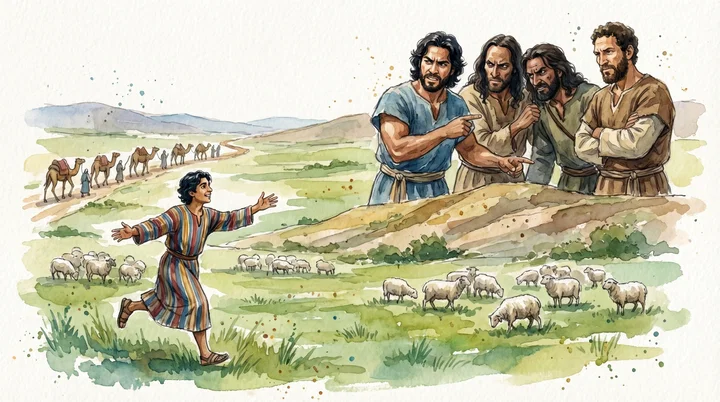
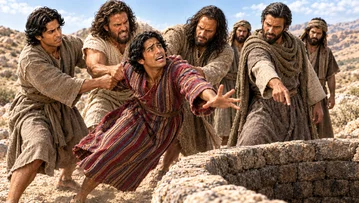
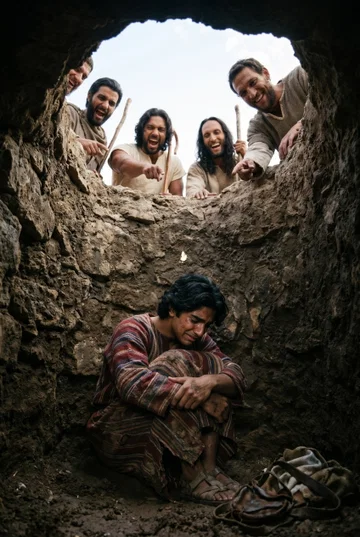
Jacob loved Joseph more than his other children, and that partiality and indulgence helped in part to provoke his brothers' hostility toward him.PP 209.1PP 213.1–2 That envy and hatred grew until it became murderous intent, with envy joined by cruelty, contempt, and desire for revenge overcoming them.SG3 140.11SP 128.1–2PP 210.6–211.11SP 126.2SG3 138.1 The verse records their proposal to kill Joseph because of his dreams, to cast his body into a pit to hide it, and to deceive their father by saying a wild beast had devoured him.SG3 140.11SP 128.1–2PP 210.6–211.1ST Dec 18, 1879ST Dec 18, 1879
Their question about what would become of his dreams was mocking contempt for dreams they resented, expecting them to come to nothing.SG3 140.11SP 128.1–2PP 210.6–211.1ST Dec 18, 1879ST Dec 18, 1879 It also expressed a deliberate purpose to thwart the resented future, to stop the dreams from coming true, to prevent Joseph from becoming greater than themselves, to be troubled by his dreams no more, and to make fulfillment impossible.ST Dec 18, 1879ST Feb 5, 1880PP 213.1–21SP 157.2–158.2 Reuben opposed the murder, warning that it would bring guilt and God's curse, and proposed putting Joseph alive into a pit so he could later rescue him and return him to his father, which prevented outright killing at that time.SG3 140.11SP 128.1–2ST Dec 18, 1879
The plot still led to Joseph being thrown into a pit and separated from home, but Judah then persuaded the brothers to sell him as a slave instead, and God saw Joseph's distress.ST Dec 18, 1879PP 213.1–21SP 157.2–158.2 Joseph's suffering appeared to defeat the purposes revealed in his dreams, but God overruled the very course meant to prevent his rise to bring about his dominion over his brothers, making him a savior to his father's family and giving him signal victories despite persecution for doing right.ST Feb 5, 18801SP 157.2–158.2Lt 10, 1879, par. 4–9 The experience also exposed faults in Joseph fostered by that upbringing, including self-sufficiency and demandingness, which hardship would correct.PP 213.1–2
The plan foreshadows how Christ's enemies sought to prevent his authority and kingship by having him killed, for the chief priests and elders were jealous lest he draw the people away and become higher in authority and king of the Jews, so they agreed to take him privately with false witnesses and put him to death while crying for crucifixion, thinking to prevent his becoming king.ST Feb 5, 18801SP 157.2–158.2 Yet by murdering him they brought about his becoming Redeemer of mankind, Savior of the fallen race, and ruler over the whole world.ST Feb 5, 18801SP 157.2–158.2 God's use of such crimes for his own glory and the good of man did not lessen the guilt of those who committed them, which remained just as heinous as though his providential hand had not controlled events.ST Feb 5, 18801SP 157.2–158.2
Sources
Pioneers and periodicals
38 sources
The brothers agreed together to murder Joseph, throw his body into a pit out of sight, and hide the crime from their father with the lie that a wild animal had torn him apart, mocking his dreams of rule over them as dreams they would now bring to nothing.ST Jan 3, 1911STST Jan 3, 1911 They did this not for any wrong he had done, but from envy, hatred, jealousy and malice in their own hearts against his father's love, his coat, and his dreams of pre-eminence which they understood to foretell his rule.ST Oct 2, 1901ST Apr 20, 1888ST Aug 1, 1916 Their wicked plan to be rid of him and defeat his dreams did not defeat God's purpose but was overruled by God to bring those very dreams to pass when they later bowed before him in Egypt as ruler and savior of his family.ST Feb 5, 1880ST Jan 16, 1912RH May 3, 1870RH Nov 17, 1910 In seeking to prevent his rise by killing him they foreshadowed those who sought to prevent Christ's kingship by having him killed, whose death made him the Redeemer of the world.ST Feb 5, 1880ST Nov 22, 1899RH Jan 9, 1855 The plot stands as a warning that envy bears destructive fruit, for hatred cherished against a brother ripened into persecution, murderous intent, and a deceiving lie that brought long sorrow upon their father.ST
Words and Historical Setting
The word devoured means eaten up and destroyed, consumed with rapidity and violence.ST May 2, 1878ST Apr 17, 1879ST Apr 15, 1875 It is the same sense in which the condition of the wicked is described.ST May 2, 1878ST Apr 17, 1879ST Apr 15, 1875
The plot belongs at Dothan, where the brothers pastured their flocks and formed their plan to kill Joseph, throw him into a pit, claim a wild animal had devoured him, and challenge what would become of his dreams.ST Aug 25, 1898ST Oct 19, 1904 Dothan's valley grazing land explains how they could see him approaching from far away.ST Aug 25, 1898 Its position on the caravan route from Gilead to Egypt fits the arrival of the traders who carried him away.ST Aug 25, 1898
There the brothers later sold him to Midianite traders, who carried him to Egypt, more than nine hundred years before the events involving Elisha at Dothan. The Genesis account set in Egypt agrees in its whole color with Egypt at that time.ST Nov 20, 1884 Egyptian pictures and stories and sacred books illustrate the habits and customs and land and people of the Nile behind the account, and they show slaves with Hebrew features making bricks as the Hebrews made them.ST Nov 20, 1884 The region where the Hebrews lived holds store cities like Pithom, one of the two store cities built by the children of Israel and found bearing the name Pithom on an inscription, whose chief buildings are great brick storehouses without windows or doors for preserving grain for use in war or famine.ST Nov 20, 1884
Genesis 37 is to be read together with Genesis 38 and Psalm 17, keeping ever in mind the Promised Seed and the channels through which that Seed should come.ST
Plot and Motives
The verse records the brothers' agreement to kill Joseph, cast him into a pit and hide his body, and deceive their father by saying a wild beast had devoured him.ST Jan 3, 1911STST Jan 3, 1911ST Oct 2, 1901RH May 3, 1870 Their words about seeing what would become of his dreams were mockery, expressing contempt and defiance toward the dreams and intent to put him out of their way and make the dreams fail.ST Dec 18, 1879ST Jan 3, 1911STST Jan 3, 1911ST Oct 2, 1901 The murderous plan was restrained only by God's power and providence.RH May 3, 1870
They conspired when they saw him still far off before he reached them.ST Mar 17, 1887 Joseph approached unsuspicious and glad after his long wearisome journey, but they rudely repulsed him with angry looks that turned his joy to fear and dread, seized him violently, and gave the weary and hungry one neither rest nor food, having no pity or brotherly love.ST Mar 17, 1887 They taunted him for his past admonitions, accused him of telling his dreams to exalt himself above them and win greater love from their father, accused him of hypocrisy, and stripped from him his coat of many colors as the token of his father's love.ST Mar 17, 1887
What culminated here followed Joseph's reporting of his brothers' evil deeds, his father's love shown in the costly coat, and his dreams of the sheaves and of the sun, moon, and stars.ST Jan 3, 1911ST Oct 27, 1898 That hostility arose amid jealousy between Jacob's wives and families, worsened by Jacob's favoring Joseph.ST Jan 3, 1911 It was the third downward step after envy and hatred, leading on to deceit and fearful expectation of wrath to be visited upon them.ST Oct 27, 1898
They acted from envy, hatred, jealousy, and malice growing out of their own wicked hearts, not from any wrong done by Joseph.ST Apr 20, 1888ST Aug 1, 1916RH Jan 9, 1855 Joseph did no wrong and caused none of the discord, and was more worthy of love because he had the fear of God before his eyes, though not without faults.ST Apr 20, 1888 They envied his dreams of pre-eminence which they understood to foretell his rule over them, and envied his coat, and for the same reason Cain killed Abel, because their own works were evil while his were righteous, since a corrupt heart is the only soil where such envy can grow.ST Mar 17, 1887ST Oct 2, 1901ST Apr 20, 1888 Envy is pain felt at superior excellence or happiness, hatred is the offspring of envy, and malice is the offspring of hatred, and these malignant dispositions increase by imperceptible degrees until those who indulge them are engulfed beyond ability to escape.RH Jan 9, 1855
Reuben opposed the murder, arguing it would bring guilt and God's curse, and proposed putting Joseph alive in a pit so he could later rescue him, while Judah afterward persuaded them to sell him instead.ST Dec 18, 1879ST Dec 18, 1879 They did throw him frightened and heartbroken into the pit, treating him with cruelty and indifference.ST Dec 18, 1879ST Feb 18, 1913 Reuben's failure to firmly protest shows the weakness of those who fail to take a firm stand for right when opportunity offers.ST Nov 29, 1905
Providence and Fulfillment
The brothers' plot to get rid of Joseph and defeat his dreams by killing him, casting him into a pit, and hiding the deed under the claim that a wild beast had devoured him did not defeat God's purpose but became the roundabout way by which God still guided Joseph right to what He had intended for him.RH May 3, 1870RH Jan 19, 1860RH Nov 17, 1910 God overrules human wrath, ambition, and jealousy to accomplish His purposes and bring good to His people, and the murderous plan was restrained only by His power and providence.ST Jan 16, 1912RH May 3, 1870ST Apr 2, 1894 He saw Joseph's distress when thrown frightened and heartbroken into the pit with cruelty and indifference, and did not forsake him in his suffering, though His use of their crimes for good did not lessen their guilt.ST Feb 5, 1880ST Feb 18, 1913
Their jealous aim to remove Joseph and prevent his dreams of ruling over them unknowingly helped bring those dreams about.ST Jan 3, 1911ST Apr 2, 1894 The dreams were fulfilled when the brothers bowed before him in Egypt.ST Feb 5, 1880ST Jan 3, 1911 There Joseph rose from prison to the throne, came to rule over them, became a savior to his family, and became a means of blessing even to his brothers.ST Feb 5, 1880RH Nov 17, 1910
The wicked act instead became a step in God's plan to bring Joseph to the place of work and responsibility appointed for him and to preserve life.RH Nov 19, 1908ST Nov 29, 1905 God used the boy Joseph through being envied, cast off, and sold to the Ishmaelites as a slave into Egypt, raising him from prisoner to ruler to preserve the lives of God's people.RH Nov 19, 1908 In him the Lord was preparing to preserve the holy Seed, and his arrival in Egypt through his brothers' cruelty came before famine drove Jacob and his family there to depend on others' land.ST Jan 21, 1913ST Nov 23, 1904
Joseph in his youth was in mortal danger from the plot to slay him and cast him into a pit, but God guided and saved him.ST Nov 29, 1905RH Nov 24, 1874 His preservation shows that the God of Israel befriends and guards children and youth who seek Him early, sending angels to guard them in the time of trouble.RH Nov 24, 1874 He could not see the plan while he was suffering, but he had faith in God and knew all would come out right in the end in God's own good time.ST Nov 29, 1905
Christ and Doctrinal Connections
The brothers plotted to kill Joseph and make it appear that a wild beast had devoured him in order to stop his dreams of pre-eminence from coming true, and though they afterward sold him instead, God overruled their effort so that Joseph came to rule over them and became a savior to his family.ST Feb 5, 1880ST Nov 22, 1899 Their attempt to prevent his rise by putting him out of the way foreshadows the enemies of Christ seeking to prevent His authority and kingship by having Him killed, yet His death made Him the Redeemer of the world.ST Feb 5, 1880 As one rejected by his own brothers and put out of the way, Joseph stands as the unpopular man destined by God to save, bless and benefit humanity, who afterward proves entrusted with a divine mission.ST Nov 22, 1899 In lesser form, their treatment of him foreshadows the treatment of Jesus, in whom all excellence met, by the Jews.RH Jan 9, 1855 That God turns such crimes to good does not lessen the guilt of those who commit them.ST Feb 5, 1880
The wayward and envious sons of Jacob persecuting Joseph, who feared God, proves that he that is after the flesh persecutes him that is after the Spirit.RH Jun 8, 1916 It proves that the wicked persecute the righteous because their own works are evil and their brother's are righteous.RH Jun 8, 1916
Joseph's rejection by his brothers, followed by his being made a ruler in Egypt and a means of preserving life, shows that God chooses people rejected or overlooked by others.ST Jul 21, 1909 It shows that He can use them to bring life and salvation.ST Jul 21, 1909
Moral Warnings and Examples
Envy bears destructive fruit in the plot to kill Joseph, cast him into a pit, hide his body, and falsely claim that a wild beast had devoured him.ST The words about seeing what would become of his dreams express defiance of the dreams and desire to make them fail.ST Family partiality and jealousy lead on to envy and crime, and the jealousy of the older brothers led to a plot that brought sorrow.STST Aug 1, 1916 Hatred turned into persecution when they first hated him and then plotted his death and covered it with a lie. That hatred bore bitter fruit in causing their father to mourn for days and weeks and months and years, and those long years of sorrow were only part of its fruit.
Envy, hatred, and malice are strikingly exemplified in the plan to kill him and cover it with a lie in order to defeat his dreams.RH Jan 9, 1855 Envy is pain felt at superior excellence or happiness, hatred is the offspring of envy, and malice is the offspring of hatred.RH Jan 9, 1855 These malignant dispositions increase by imperceptible degrees until those who indulge them are engulfed beyond ability to escape.RH Jan 9, 1855 Every rising of them must therefore be suppressed, and righteousness and meekness sought instead, in order to be hid in the day of the Lord's anger.RH Jan 9, 1855
Joseph came to visit them and bring a message from home, yet they answered with hatred instead of the love he longed for, while sneering at his dreams. Their envy and betrayal warn families to examine whether they withhold affection or harbor envy toward their own. Reuben's failure to firmly protest the cruel treatment shows the weakness of those who fail to take a firm stand for right when opportunity offers.ST Nov 29, 1905 If he had stood firm he might have shared Joseph's fate and also shared in the glorious vindication of right and principle later brought to light in Joseph's life, for the decision to kill Joseph and throw him into a pit belonged to God's great plan for his life and not to good or bad luck, and Joseph in suffering had faith in God and knew all would come out right in the end in God's own good time.ST Nov 29, 1905
Though he knew their ill feeling, he went without a word of complaint when his father unthinkingly and unsuspectingly sent him to them on that never-to-be-forgotten errand that put him in their power.ST Apr 29, 1908 His faithfulness in that home duty amid cruel hatred and jealousy prepared the way for him to become the trustworthy manager of a great man in Egypt and finally prime minister of the kingdom.ST Apr 29, 1908 He thus leaves Christians an example of helpfulness at home to study and imitate.ST Apr 29, 1908 His story is wholesome and nutritious food for mind and soul that strengthens rather than merely stimulating and exciting the emotions, and gives principles of life and light and health from the word of God, unlike cheap trashy literature craved by a pampered and perverted appetite that calls it tame and dry and uninteresting, for moral exercise restores desire for it.RH Jun 12, 1900
Sources