Genesis 42:21
And they said one to another, We are verily guilty concerning our brother, in that we saw the anguish of his soul, when he besought us, and we would not hear; therefore is this distress come upon us.
Translations
And they said one to another, We are truly guilty concerning our brother, in that we saw the anguish of his soul, when he sought us, and we would not hear; therefore is this distress come on us.
King James Version, KJV Cambridge Paragraph Bible, Webster Bible
And they said one to another, We are verily guilty concerning our brother, in that we saw the anguish of his soul, when he besought us, and we would not hear; therefore is this distress come upon us.
Revised Version, American Standard Version
And they said one to another, We are verily guilty concerning our brother, in that we saw the distress of his soul, when he besought us, and we would not hear; therefore is this distress come upon us.
And they say one unto another, 'Verily we [are] guilty concerning our brother, because we saw the distress of his soul, in his making supplication unto us, and we did not hearken: therefore hath this distress come upon us.'
Then they said one to another, We are indeed guilty concerning our brother, whose anguish of soul we saw when he besought us, and we did not hearken; therefore this distress is come upon us.
And they said each man unto his brother—Verily guilty, we are, respecting our brother, in that we saw the distress of his soul when he appealed unto us for favour and we hearkened not,—therefore, hath come in unto us this distress.
Berean Standard Bible, Majority Standard Bible
Then they said to one another, “ Surely we are being punished because of our brother. We saw his anguish when he pleaded with us, but we would not listen. That is why this distress has come upon us.”
They said to one another, “ We are certainly guilty concerning our brother, in that we saw the distress of his soul, when he begged us, and we wouldn’t listen. Therefore this distress has come upon us.”
And they said to one another, Truly, we did wrong to our brother, for we saw his grief of mind, and we did not give ear to his prayers; that is why this trouble has come on us.
And they said one to another, We haue verily sinned against our brother, in that we sawe the anguish of his soule, when he besought vs, and we would not heare him: therefore is this trouble come vpon vs.
Douay-Rheims (Challoner revision)
And they talked one to another: We deserve to suffer these things, because we have sinned against our brother, seeing the anguish of his soul, when he besought us, and we would not hear: therefore is this affliction come upon us.
Pictures

Cross-references
- Genesis 37:28
Then there passed by Midianites merchantmen; and they drew and lifted up Joseph out of the pit, and sold Joseph to the Ishmeelites for twenty pieces of silver: and they brought Joseph into Egypt.
fear enslavement as punishment for selling Joseph
- Genesis 37:7
For, behold, we were binding sheaves in the field, and, lo, my sheaf arose, and also stood upright; and, behold, your sheaves stood round about, and made obeisance to my sheaf.
The brothers’ obeisance fulfills Joseph’s sheaf dream.
- Genesis 42:6
And Joseph was the governor over the land, and he it was that sold to all the people of the land: and Joseph’s brethren came, and bowed down themselves before him with their faces to the earth.
Their bowing fulfills Joseph’s dreams and shows their humiliation before him.
- Genesis 37:35
And all his sons and all his daughters rose up to comfort him; but he refused to be comforted; and he said, For I will go down into the grave unto my son mourning. Thus his father wept for him.
Jacob mourned Joseph’s supposed death.
- Genesis 37:4
And when his brethren saw that their father loved him more than all his brethren, they hated him, and could not speak peaceably unto him.
Their father’s favoritism bred the brothers’ hatred of Joseph.
- Amos 6:6
That drink wine in bowls, and anoint themselves with the chief ointments: but they are not grieved for the affliction of Joseph.
Both texts describe Joseph’s affliction and distress that others failed to heed.
- Genesis 41:54-56
And the seven years of dearth began to come, according as Joseph had said: and the dearth was in all lands; but in all the land of Egypt there was bread.
Egypt has grain during the famine.
Commentary
Each commentary is drawn from primary sources: the writings of Ellen G. White and Adventist pioneers and periodicals. Each commentary is separate. Its own words are not a quotation; follow the references to read the source passages.
Ellen G. White
6 sources
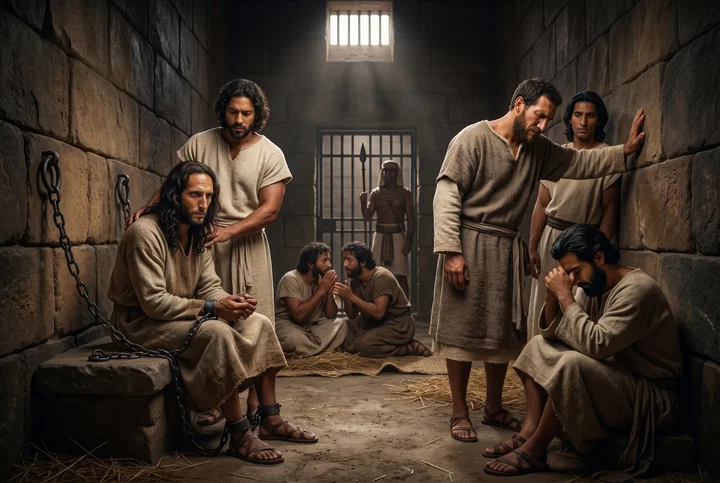
The words were spoken in bitter sorrow during the three days of confinement in Egypt, after the agreement on the third day that one brother would remain bound while the rest would go to bring Benjamin to prove their words.SG3 156.1SG3 155.2 As they reflected on their past wrong course, especially their cruelty to Joseph, the brothers accused themselves and one another and confessed their guilt.SG3 156.1SG3 155.2 They remembered seeing the anguish of his soul when he besought and pleaded with them, and that they would not hear but refused to listen.1SP 141.1–142.2SG3 156.1PP 225.41SP 151.1
They understood their present distress of facing death or slavery as accused spies as having come upon them for that sin.1SP 141.1–142.2SG3 156.1PP 225.4SG3 155.21SP 151.1 They believed God had seen their sins and was visiting them for their wrongs, even fearing He designed to punish them by letting them become slaves themselves because they had sold Joseph as a slave.1SP 141.1–142.2SG3 155.2 They had little hope that any effort would move their father to let Benjamin go from him and return with them, especially after the cruel death Joseph was thought to have suffered.SG3 156.1SG3 155.2
Their words convinced Joseph that they had repented of their cruel treatment of him and would in no case treat Benjamin as they had treated him.SG3 155.2 At the same time Joseph remained concerned that his father and the brothers' families might be suffering for food.SG3 155.2 When they later learned Joseph was alive, they humbly confessed the wrongs committed against him and entreated his forgiveness.1SP 151.1SG3 167.1 Knowing they were not guilty of his blood, their troubled minds were relieved and they greatly rejoiced.1SP 151.1SG3 167.1
Sources
Pioneers and periodicals
22 sources
The brothers, speaking freely together after their release because they thought the Egyptian ruler could not understand them, confessed that they were truly guilty toward Joseph in refusing to heed his anguish when he begged for mercy, and they recognized their imprisonment and distress as the deserved consequence and punishment of that cruelty.ST Feb 3, 1914ST Nov 17, 1898ST Nov 17, 1898ST Jan 3, 1911ST Apr 16, 1894 Their confinement forced their past wrongdoing back upon their conscience, showing a divine circle of recompense in which present trouble follows past hardness and evil returns upon the doer.ST Jan 22, 1880ST Jul 27, 1915ST Jan 21, 1886RH May 3, 1870ST Dec 6, 1883 Only God can break that circle, through the divine circle of forgiveness in which those who forgive are forgiven while those who refuse to forgive remain hardened and unforgiven.ST Jul 27, 1915 In their sore straits from famine they became ready to repent and seek forgiveness, for God brings His people through the fires of affliction to burn out self-love and weld divided hearts together in love fit for His Spirit.ST Sep 28, 1904 The lesson for posterity is not to deride another's weakness today, since the storm that darkened his life may yet enshroud the unfeeling tomorrow.RH Jul 11, 1871
Words and Egyptian Setting
The verse belongs to a family history in which Jacob unwisely favored Joseph as the petted child of his old age and son of his favorite wife, while plurality of wives produced jealousies between Jacob's wives and between their families, so that hatred against Joseph grew until his brethren first attempted to slay him and finally sold him as a slave into Egypt.ST Jan 3, 1911 Joseph kept the integrity and purity instilled by his father, passed through prison and was called to the throne of Egypt, where his brethren came and humbly bowed before him without knowing him, fulfilling the dreams that had aroused their envy against him.ST Jan 3, 1911 His story in Egypt is marked by faithfulness, conscientiousness and integrity, and by that fulfilment of the dreams that had made his brothers hate him.ST
The brothers stood humiliated before Joseph without recognizing him while he recognized them.ST Oct 23, 1901 Thinking he could not understand them, they protested their innocence to him through an interpreter and then spoke freely to one another in their own language, while Joseph understood all they said and they supposed they would be put to death as spies.ST Oct 23, 1901 He had charged them with being spies and put them in prison for three days to test whether their characters had changed and whether their word could be trusted, and their conscience was awakened and their guilt brought to mind during that confinement.ST Oct 23, 1901ST Jan 21, 1886 After accepting his proposition to prove themselves, all but Simeon were released and sent home with corn, required not to return without the younger brother they had told him about.ST Nov 17, 1898ST Oct 23, 1901 Simeon, the most guilty in the sin toward Joseph, was kept bound as a hostage until Benjamin should come, and with money found in their sacks on the return these events brought Jacob to grieve that everything was against him.ST Oct 23, 1901ST Dec 14, 1915
Speaking freely to one another in their own language, their first words after release were an emphatic confession with verily that they were guilty concerning their brother.ST Nov 17, 1898ST Oct 23, 1901ST Jan 21, 1886 They remembered that years earlier when they sold him they saw the anguish of his soul as he begged for mercy from the pit and they would not hear.ST Feb 3, 1914ST Jan 3, 1911ST Apr 16, 1894ST Apr 2, 1894 Their remorse recalled the wrong they had done when they sold him into Egypt, and they judged that their present distress had come upon them because of that sin against him.ST Feb 3, 1914ST Nov 17, 1898ST Jan 3, 1911ST Apr 16, 1894
Guilt and Divine Retribution
The verse means the brothers recognized that the distress that had come upon them in Egypt was punishment for their guilt and cruelty toward Joseph, and that remembrance awakened remorse of conscience and conviction of guilt.ST Feb 3, 1914ST Nov 17, 1898ST Nov 17, 1898ST Jan 3, 1911ST Jan 28, 1913 They had seen the anguish of his soul when he pleaded with them and had refused to listen, and they judged that this present trouble had come upon them because of that sin against him.ST Feb 3, 1914ST Nov 17, 1898ST Nov 17, 1898ST Jan 3, 1911ST Jan 28, 1913 Their imprisonment brought that past wrongdoing to mind as the cause of their trouble, so that after accepting the proposition to prove themselves they said to one another with emphatic verily that they were guilty concerning their brother.ST Nov 17, 1898ST Nov 17, 1898ST Jan 3, 1911STST Jan 21, 1886
Their confinement during three days in prison in Egypt led them to reflect on what they had done, so that their earlier wrongdoing came back to their conscience during the Egyptian crisis.ST Jan 22, 1880ST Jan 21, 1886ST Dec 6, 1883 Their first words after release showed that awakening, for they confessed that they had sinned against their brother whom they had sold years earlier.ST Jan 21, 1886ST Dec 6, 1883 They remembered his anguish and pleas when they refused to listen, and recognized their present distress and confinement as the consequence of that cruelty.ST Jan 22, 1880ST Dec 6, 1883
Their experience shows a divine circle of recompense by which evil returns upon the doer, so that present trouble follows past hardness toward a suffering brother and present distress is retribution for refusing to heed his anguished pleas.ST Jul 27, 1915RH Jul 11, 1871RH May 3, 1870 In their own affliction they remembered their former cruelty in seeing the anguish of his soul when he begged them and refusing to hear.ST Jul 27, 1915RH Jul 11, 1871RH May 3, 1870 Their earlier indifference in ignoring his cries for mercy while he was in anguish in the pit illustrates how sin can harden the heart against mercy, kindness and sympathy, with the distress they later faced bringing that remembered cruelty to mind.ST Apr 2, 1894 Their remembered cruelty in recognizing that present distress is connected to guilt over ignoring his anguish and pleas illustrates how a guilty conscience can trouble people in prison, in contrast with a clear conscience, as when Paul and Silas prayed and sang hymns while imprisoned.RH Oct 29, 1861
Warning and Mercy for Believers
The guilt the brothers confessed reveals a circle of recompense in which evil returns upon the doer, so that distress in Egypt came as retribution for refusing to hear a brother's anguished pleading.ST Jul 27, 1915 Only God can break that circle of retribution, and He does so through a circle of forgiveness.ST Jul 27, 1915 In that divine circle those who forgive others are forgiven, while those who refuse to forgive show hardened hearts and are not forgiven.ST Jul 27, 1915
In sore straits because of famine the brothers became ready to repent of cruelty to their brother and to seek forgiveness.ST Sep 28, 1904 Affliction united a household all but separated by jealousy in the closest bonds of love.ST Sep 28, 1904 God brings His people through fires of affliction to burn out the dross of self-love and to weld their hearts firmly together, so that their hearts become fit temples for His Holy Spirit instead of low shrines of passion, hatred, and jealousy.ST Sep 28, 1904 He who made each delicate nerve of the body knows just when affliction and beating have been enough to make hearts pliable and weld them together.ST Sep 28, 1904
Present trouble follows past hardness toward a suffering brother, and posterity is therefore taught not to deride weakness today because that weakness may become their own tomorrow.RH Jul 11, 1871 The storm-cloud that robbed another's life of brightness may yet enshroud the unfeeling in gloom.RH Jul 11, 1871 As part of Joseph's history, the confession illustrates that God may lead people by a winding path yet guide them rightly.RH Jan 19, 1860 As part of the account of Joseph, whom time may cause his brothers to forget, it shows that human knowledge and remembrance can fail, but God always knows His own.RH Nov 4, 1858 No change of time, place, speech, or appearance can hide them from Him.RH Nov 4, 1858
Sources