Hebrews 11:19
Accounting that God was able to raise him up, even from the dead; from whence also he received him in a figure.
Translations
Accounting that God was able to raise him up, even from the dead; from where also he received him in a figure.
Accounting that God was able to raise him up, even from the dead; from whence also he received him in a figure.
accounting that God was able to raise him up, even from the dead; from whence also he received him in a figure.
Accounting that God was able to raise him even from the dead; from whence also he received him in a figure.
accounting that God is able to raise up, even from the dead; from whence he did also in a parable receive him back.
accounting that God is able to raise up, even from the dead; from whence he did also in a figure receive him back.
reckoning that even out of the dead God is able to raise up, whence also in a figure he did receive [him].
counting that God [ was] able to raise [ him] even from among [ the] dead, whence also he received him in a figure.
Accounting that, even from among the dead, God, was able, to raise [him],—whence, even in similitude, he bare him away.
Berean Standard Bible, Majority Standard Bible
Abraham reasoned that God could raise the dead, and in a sense, he did receive Isaac back from death.
concluding that God is able to raise up even from the dead. Figuratively speaking, he also did receive him back from the dead.
Judging that God was able to give life even to the dead; and because of this he did get him back as if from death.
For he considered that God was able to raise him vp euen from the dead: from whence he receiued him also after a sort.
Douay-Rheims (Challoner revision)
Accounting that God is able to raise up even from the dead. Whereupon also he received him for a parable.
Pictures
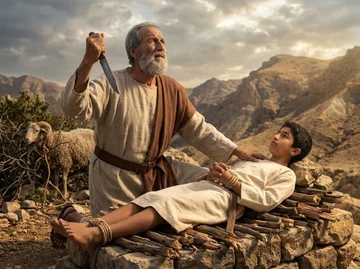
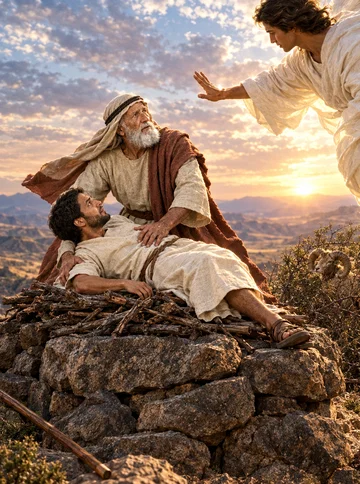
Cross-references 20 of 62
- Genesis 22:1-14
And it came to pass after these things, that God did tempt Abraham, and said unto him, Abraham: and he said, Behold, here I am.
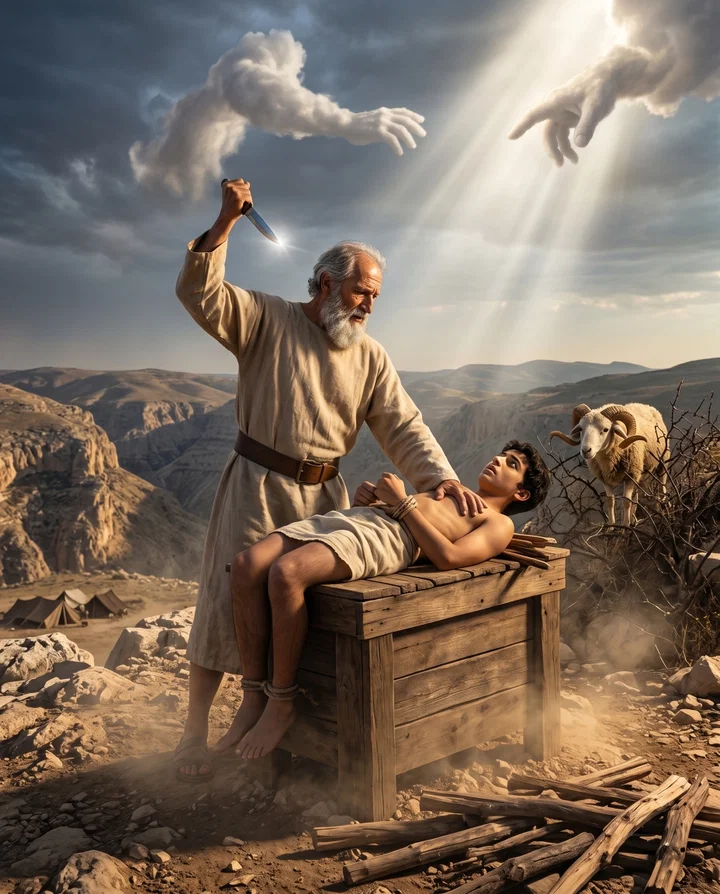
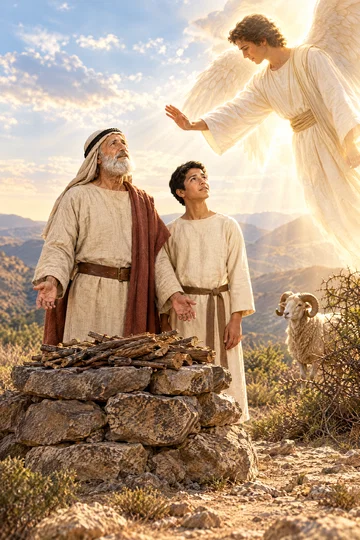
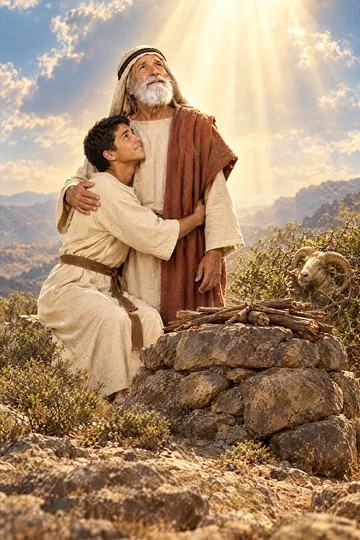
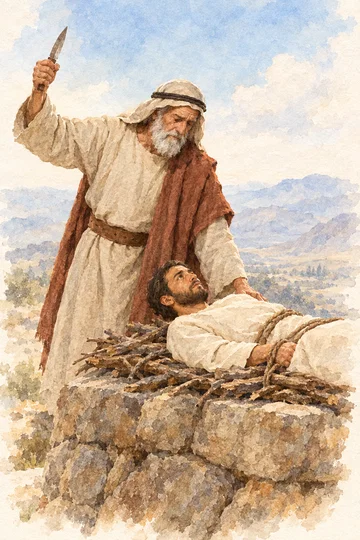
Abraham trusts God to raise Isaac if necessary, then receives him back alive.
- Genesis 21:12
And God said unto Abraham, Let it not be grievous in thy sight because of the lad, and because of thy bondwoman; in all that Sarah hath said unto thee, hearken unto her voice; for in Isaac shall thy seed be called.
God’s promise that the seed would come through Isaac made Abraham expect resurrection.
- Hebrews 11:35
Women received their dead raised to life again: and others were tortured, not accepting deliverance; that they might obtain a better resurrection:
Women received their dead raised to life, and others endured suffering for a better resurrection.
- Hebrews 11:1
Now faith is the substance of things hoped for, the evidence of things not seen.
Defines the faith Abraham exercised as confidence in what God promised but had not yet seen.
- Romans 4:20-21
He staggered not at the promise of God through unbelief; but was strong in faith, giving glory to God;
Abraham trusted that God could fulfill his promise despite the apparent obstacle.
- Genesis 22:5
And Abraham said unto his young men, Abide ye here with the ass; and I and the lad will go yonder and worship, and come again to you.
Abraham says he and Isaac will return, accounting for receiving him back from the dead.
- Isaiah 26:19
Thy dead men shall live, together with my dead body shall they arise. Awake and sing, ye that dwell in dust: for thy dew is as the dew of herbs, and the earth shall cast out the dead.
Both affirm that the dead will live and rise again.
- John 8:56
Your father Abraham rejoiced to see my day: and he saw it, and was glad.
Abraham rejoiced by faith to see Christ’s day.
- Genesis 22:17-18
That in blessing I will bless thee, and in multiplying I will multiply thy seed as the stars of the heaven, and as the sand which is upon the sea shore; and thy seed shall possess the gate of his enemies;
God renews the promise of countless descendants and blessing through Abraham’s seed after his faithful obedience.
- James 2:21-23
Was not Abraham our father justified by works, when he had offered Isaac his son upon the altar?
Abraham’s offering of Isaac showed his faith at work and brought it to maturity.
- Hebrews 11:8
By faith Abraham, when he was called to go out into a place which he should after receive for an inheritance, obeyed; and he went out, not knowing whither he went.
Abraham obeyed God’s call without knowing his destination.
- Acts 7:5
And he gave him none inheritance in it, no, not so much as to set his foot on: yet he promised that he would give it to him for a possession, and to his seed after him, when as yet he had no child.
Abraham received no land inheritance in life, yet trusted God’s promise beyond death.
- Job 19:25-26
For I know that my redeemer liveth, and that he shall stand at the latter day upon the earth:
Both express faith that God will raise the dead and grant life beyond bodily death.
- Romans 4:17
( As it is written, I have made thee a father of many nations,) before him whom he believed, even God, who quickeneth the dead, and calleth those things which be not as though they were.
Both describe faith in God’s power to bring the dead to life.
- Genesis 15:5-6
And he brought him forth abroad, and said, Look now toward heaven, and tell the stars, if thou be able to number them: and he said unto him, So shall thy seed be.
Abraham trusted God’s promise of descendants, and his faith was counted for righteousness.
- Genesis 12:1-4
Now the LORD had said unto Abram, Get thee out of thy country, and from thy kindred, and from thy father’s house, unto a land that I will shew thee:
Abraham’s departure from his homeland illustrates his obedience to God’s call.
- Hosea 13:14
I will ransom them from the power of the grave; I will redeem them from death: O death, I will be thy plagues; O grave, I will be thy destruction: repentance shall be hid from mine eyes.
God promises redemption from death and the grave, pointing to resurrection.
- Genesis 22:12
And he said, Lay not thine hand upon the lad, neither do thou any thing unto him: for now I know that thou fearest God, seeing thou hast not withheld thy son, thine only son from me.
God stops the sacrifice after Abraham’s faith is proved.
- Luke 20:38
For he is not a God of the dead, but of the living: for all live unto him.
God speaks of the dead as living in view of their future life.
- Acts 26:8
Why should it be thought a thing incredible with you, that God should raise the dead?
Paul connects the hope of God’s promise with God’s power to raise the dead.
Commentary
Each commentary is drawn from primary sources: the writings of Ellen G. White and Adventist pioneers and periodicals. Each commentary is separate. Its own words are not a quotation; follow the references to read the source passages.
Ellen G. White
21 sources
Abraham concluded while preparing to offer Isaac that God was able to raise him up even from the dead, and when Isaac was spared and a ram was offered in his place, receiving him back alive was like receiving him back from death.CTBH 238.1PP 151.4STSE 41.1SG3 105.1–106.2Ms 19, 1886, par. 15–16
He reasoned this way because Isaac was the child of miracle given to Sarah in old age by power that could restore life, and because he held to the promise that in Isaac his seed would be called into a numberless multitude and great nation, which could not be fulfilled through Ishmael.PP 151.41SP 98.3–99.3SG3 105.1–106.21SP 99.4–101.1
Though the command seemed terrible and contrary to the promise and he had three days on the way to Moriah to doubt, he did not murmur, question, hesitate or complain, but obeyed with implicit trust strengthened by dwelling on God's goodness and faithfulness.PP 151.41SP 98.3–99.31SP 99.4–101.1
Isaac's near-sacrifice was a figure of God's Son offered for the sins of the world, impressing on Abraham the cost of redemption, yet unlike Isaac who was spared, Christ was not spared but endured suffering and crucifixion.STSE 41.2–42.13T 368.1–369.1
His trust was counted to him for righteousness and stands among the heroes of faith as a cloud of witnesses, calling believers to trust God through severe trials and mysterious providences with patient obedience, confident that God sees the end from the beginning and still works with power through faithful hearts.CTBH 238.1PK 175.2Ms 19, 1886, par. 15–1610MR 119.2ED 256.1
Abraham's Faith at Moriah
Accounting that God was able to raise him up even from the dead means Abraham concluded while preparing to offer Isaac that God could bring his son back to life from death.CTBH 238.1PP 151.41SP 98.3–99.3SG3 105.1–106.2Ms 19, 1886, par. 15–16 He obeyed because he trusted that power to restore Isaac even as the knife was lifted.STSE 41.11SP 99.4–101.1SG3 106.3–108.1ST Apr 3, 1879Lt 110, 1897, par. 1–8
He reasoned this way because Isaac had been unexpectedly given as the child of miracle, and the same power that gave life to Sarah's son in her old age could restore that life again.PP 151.41SP 98.3–99.3SG3 105.1–106.21SP 99.4–101.1 He who had bestowed the precious gift had a right to recall His own.PP 151.4 He told Isaac of this hope when he laid him on the altar.1SP 99.4–101.1
He held fast to the promise that in Isaac his seed would be called, a seed numberless as grains of sand upon the shore.PP 151.4 That promise still required Isaac to live and have descendants and to become a great nation, looking beyond what was seen to grasp the divine word with faith.PP 151.41SP 99.4–101.1SG3 106.3–108.1ST Apr 3, 1879 He did not distrust God or reason that the promise could be fulfilled through Ishmael, for Isaac was the only son of promise, and he staggered not at the promise.1SP 98.3–99.31SP 99.4–101.1
Though he had three days on the journey to Moriah to reason and doubt, he did not murmur, question God's justice, hesitate, or complain.PP 151.41SP 98.3–99.3ST Oct 25, 1910 Though the command seemed terrible and appeared to conflict with the promises about Isaac, and though he believed God meant literally what He said to offer him as a burnt offering, his trust was implicit and his obedience without complaint.1SP 98.3–99.31SP 99.4–101.1ST Oct 25, 1910 He strengthened his soul by dwelling on evidences of the Lord's goodness and faithfulness.PP 151.4
From whence also he received him in a figure means that because Abraham had truly given Isaac up in his heart and made the sacrifice in his heart, receiving him back alive and spared was like receiving him back from death.SG3 105.1–106.2Ms 19, 1886, par. 15–16SG3 106.3–108.1ST Apr 3, 1879Lt 110, 1897, par. 1–8 When God stopped the sacrifice and a ram was offered in his place, Isaac spared from death was restored as though from the dead.SG3 105.1–106.2SG3 106.3–108.1ST Apr 3, 1879Lt 110, 1897, par. 1–8 His trust that God could do this was counted to him for righteousness.Ms 19, 1886, par. 15–1610MR 119.2
Isaac as Figure of Christ
Isaac's being offered and then restored alive stands as a figure of God's Son offered for the sins of the world.STSE 41.2–42.13T 368.1–369.1 The anguish Abraham felt in giving up his son impressed upon his own mind the plan of redemption.STSE 41.2–42.13T 368.1–369.1 It taught him the self-denial God Himself would show in giving His Son to die to rescue humanity and save mankind.STSE 41.2–42.13T 368.1–369.1
The parallel holds a decisive contrast, for Isaac was spared death while Christ was not.STSE 41.2–42.1 Christ endured humiliation and suffering and the crucifixion itself.STSE 41.2–42.1
Isaac was not a small child but a full-grown young man when this occurred.3T 368.1–369.1 He willingly submitted because he trusted his father and believed Abraham was obeying God.3T 368.1–369.1Lt 110, 1897, par. 1–8 In that submission his own faith was tested together with Abraham's.3T 368.1–369.1Lt 110, 1897, par. 1–8
Faith's Example for Believers
Hebrews 11:19 belongs to the account of the heroes of faith, including Isaac, whose faith is held up as an example for Christians, for Abraham reckoned that God was able to raise Isaac from the dead and in receiving him back in a figure showed faith in God's power.CTBH 238.1PK 175.2ED 256.14T 253.2 It stands in the record of the faith of God's servants in sacred history and in the cloud of witnesses who met evils and difficulties in their way and in the Lord's name stood successfully against opposing forces of evil, sustained and strengthened with the Lord holding them by His hand.PK 175.2Ms 61, 1907, par. 1–3ED 256.1 Their fidelity to God and obedience made their faith visible as an example, leading others to glorify God.20MR 41.4–5
The chapter on faith in which it stands calls believers to turn their minds from discouraging things that are seen to things that are unseen and to seek a better country, the heavenly city built by God.Ms 63, 1893, par. 26–27 Abraham's obedience in trusting that God could raise Isaac from the dead teaches confidence in God's requirements even when they are painful, and shows that nothing is too precious to give to God.STSE 41.13T 368.1–369.1 His willingness to sacrifice his son rested on confidence in God's power and promise even though the command seemed to conflict with the promise that Isaac would carry his descendants, and when God stopped the sacrifice Abraham received Isaac back as though from the dead.3T 368.1–369.1Lt 110, 1897, par. 1–8 Their example, in which Abraham's faith and Isaac's submission were both tested, shows that God's gifts belong to Him and that confidence in His word leads to obedience.Lt 110, 1897, par. 1–8
That same faith can work in believers now, helping them trust God through trials and mysterious providences and preparing them for service.PK 175.2 Abraham had made the sacrifice in his heart, trusting God even though Isaac would die, and this faith was counted to him for righteousness and teaches believers to trust God through severe trials, confident that God sees the end from the beginning and is their best friend.10MR 119.24T 253.2 His faith is an example of patient, humble obedience to God even under a severe test, and God works with no less power wherever faithful hearts serve as channels of His power.ED 256.14T 253.2 Their lives were brought before the world so their light could guide people in darkness, and their fidelity made them examples that lead others to glorify God.20MR 41.4–518MR 138.1
Sources
Pioneers and periodicals
108 sources
Abraham offered his beloved, long-awaited son of promise believing God was able to bring him back even from the dead if he obeyed and slew him.ST Jul 7, 1890GSAM 42.3RH Feb 5, 1861RH Apr 9, 1908ST Aug 21, 1884 He received him back alive and unharmed, spared from death as though restored from the grave, which is what is meant by receiving him in a figure.GSAM 42.3RH Feb 5, 1861ST Jul 7, 1914ST Jun 2, 1881 He reasoned thus because God's standing word was that seed, nation and inheritance would come through Isaac alone, and because the same God who gave Isaac by miracle could restore him, though no resurrection had yet been seen.RH Feb 5, 1861ST Jul 22, 1886RH Feb 23, 1911ST Aug 21, 1884ST Nov 5, 1912 His faith was no mere belief but trust in God's word and supernatural power proved by obedient action, made perfect through works in harmony with the law.ST Aug 30, 1877RH Jan 29, 1861RH Jun 22, 1916 That trust looked beyond a temporal blessing to death and resurrection before the inheritance, picturing Christ the promised Seed who would truly die and rise, and the new earth and city to be received only by resurrection at the last day.ST Jul 22, 1886RH Aug 28, 1900ST Jun 2, 1881ST May 29, 1884
Words and Historical Setting
Accounting means reckoning or counting upon God's ability to bring back to life even from death, and in that confidence Abraham lifted Isaac to offer him.ST Jul 7, 1890GSAM 42.3RH Feb 5, 1861ST Jul 7, 1914RH Apr 9, 1908 He did not go up the mount expecting a substitute to be provided, but trusting that the power that could restore the dead would restore this son, so the command stood as a genuine trial rather than a foreseen exchange.ST Jul 7, 1890ST Jul 22, 1886 His trust overcame tender feeling for a beloved only son, and the miraculous birth of that son stood as a pledge of divine truthfulness bound up with all future hope.RH Feb 5, 1861ST Jul 22, 1886 To receive the promises gladly and yet offer the only begotten through whom the word concerning the seed must be fulfilled was righteousness, because he counted on resurrection and on that ground received him back.RH Apr 9, 1908ST Aug 21, 1884
From whence also he received him in a figure means Isaac was spared and given back alive, as though brought back from death.GSAM 42.3ST Jul 7, 1914ST Mar 23, 1888RH Aug 28, 1900ST Jun 2, 1881 The sparing was a receiving back from the threat of death, a likeness of resurrection rather than resurrection itself.RH Feb 5, 1861ST Mar 23, 1888RH Aug 28, 1900 Because Isaac was the promised seed through whom the inheritance must come, this figurative restoration taught that the inheritance would be reached through the raising of the dead.RH Aug 28, 1900ST Jun 2, 1881
The surrender was so complete that Abraham regarded Isaac as already slain, resigned to the Lord as one dead.ST Jun 2, 1881 Those who hold the three days reckon him as dead during that journey to Moriah, after which the return alive was a limited, symbolic experience of resurrection.ST Feb 2, 1915 He expected to slay him and saw no other hope but restoration to life, and therefore his word to the servants that he and the lad would return was confidence in that restoration and not falsehood.ST Feb 12, 1894RH Mar 16, 1869AUST Jun 14, 1920 Even when the command seemed to destroy the promise centered in Isaac and seemed to conflict with the command against killing, his faith held firm.ST Feb 2, 1915AUST Jun 14, 1920
The command was a real and severe test meant to try and prove faith, and what faith did there illustrates that God may permit a trial even when the expected outcome does not occur.ST Jul 7, 1890RH Mar 16, 1869RH Jun 9, 1851 To human appearance there was no prospect for the promise if Isaac died, for the word was that the promised seed would come through Isaac alone and through no other offspring, making the order to offer him as a burnt offering deeply mysterious.ST Jul 7, 1890ST Aug 21, 1901 The act lay beyond ordinary human ability, and its force as faith's triumph depends on the offering on Moriah being a real event. Though Abraham and Sarah had already counted a child of their own impossible when at least thirty-five years younger, he went forward trusting the promise given nearly fifty years before, believing God would bring Isaac back to life.ST Aug 21, 1901
The setting was Abraham's late and severest trial, when Isaac had reached young manhood and the whole plan hung on Abraham's faith.ST Aug 21, 1901ST Feb 26, 1894 Isaac was the only son, long awaited and divinely promised, the only begotten and beloved son of promise through whom alone the promise of seed, descendants, great nation and inheritance could continue.RH Feb 5, 1861RH Apr 9, 1908ST Aug 21, 1884 Ishmael was rejected from being heir, so Abraham could not fall back upon another son, and the naming of Isaac as the only son whom he loved made the test complete. Abraham was about 120 and Sarah about 110, and the greatness of the promised possession with the earlier anguish over having no heir to perpetuate name and house pressed the question how the word could stand if Isaac were slain.ST Aug 21, 1901
Ground of Abraham's Reasoning
Abraham reasoned from God's still-standing promise that his seed, descendants, great nation and inheritance would come through Isaac, so that word could not fail even if Isaac were slain.ST Jul 22, 1886RH Feb 23, 1911ST Mar 23, 1888ST Feb 27, 1896ST Aug 14, 1879 Isaac was the promised heir through whom alone the promise could be fulfilled, with Ishmael rejected as heir, and the greatness of the promised possession pressed the question of how the promise could stand if the beloved only son were slain.ST Jul 22, 1886ST Aug 21, 1884 His willingness to offer Isaac therefore rested on trust that God would raise him from the dead in order to keep the promise to make a great nation of him, and receiving Isaac back spared from the brink of death was as receiving him restored from death in a figure of resurrection.ST Jul 22, 1886RH Feb 23, 1911ST Aug 21, 1884ST Mar 23, 1888ST Feb 27, 1896 That faith in the promise was faith in the death and resurrection of Christ, and it looked beyond his own lifetime toward the heavenly city, for resurrection was essential to fulfillment.ST Jul 22, 1886RH Feb 23, 1911
He trusted God's power and faithfulness shown in Isaac's miraculous birth as a pledge, believing the same God who gave Isaac by miracle to fulfill the impossible promise of a son could restore him from the dead.RH Feb 5, 1861ST Nov 5, 1912ST May 17, 1899ST Jan 18, 1883 He had learned this reasoning from God himself, knowing the promise of the world-inheritance to Abraham, Isaac and Jacob contemplated a resurrection so the multitude of faithful descendants could partake in it.ST Aug 21, 1884 He reasoned that if God would raise all the faithful at the last day He was able to raise the single one on whom their existence depended.ST Aug 21, 1884 Like Noah he was tested concerning things not yet seen, for neither he nor anyone else at that time had ever seen a person raised from the dead, yet faith in that promise enabled him to obey without staggering and to prevail over tender feeling for his beloved only son.RH Feb 5, 1861ST May 17, 1899ST Jul 17, 1901 The test was complete because he knew the long-promised Messiah was to come through Isaac's posterity, so in offering Isaac he was cutting off his own hope of salvation and that of the world, yet his faith did not waver.ST Nov 5, 1912
His faith rested only on the power and testimony of the word of promise, not on Isaac's physical life or visible results.ST Apr 23, 1902ST Apr 30, 1894ST Apr 23, 1902RH Apr 9, 1872RH Jan 14, 1904 The offering tested whether his faith rested in the flesh of Isaac as itself the fulfilled promise of a son in whom the Seed should be called, or only in the power of the word, and he rested only on the power of the word as present reality dealing with unseen things.ST Apr 23, 1902 The miraculous birth had taught that no power resides in the flesh to accomplish what God promised, so even after Isaac was born faith must rest on the invisible word rather than outward appearances, looking to Isaac in the promise and not to Isaac in the flesh because the promised Seed, the Redeemer, was still in the promise and not yet in the flesh.RH Jan 14, 1904 He depended on the naked promise alone, fully persuaded God was able to perform what He promised, expecting Him to keep it even by bringing Isaac back to life from the ashes after the sacrifice, and leaving the responsibility for its performance wholly with God.RH Jan 14, 1904RH Jul 3, 1900 Such faith receives God's word as its own and acts on the duty it reveals, looking ahead rather than backward, and it was counted for righteousness.ST Apr 30, 1894RH Jan 14, 1904
By offering his only son and receiving him in a figure of resurrection Abraham was taught and learned that death and a resurrection must take place before his seed received the inheritance, grasping realities of the life to come beyond temporal blessings.RH Aug 28, 1900ST Jun 2, 1881ST Feb 20, 1896RH Oct 27, 1874 Because Isaac was the promised seed through whom Abraham was to receive the inheritance, this figurative receiving from the dead taught that the promised inheritance would be received through resurrection of the dead.RH Aug 28, 1900 Having surrendered Isaac so completely that he regarded him as already slain, receiving him back alive was like receiving him raised from the dead, and that faith grasped the resurrection and sustained hope that God would fulfill the promise of an inheritance even though he died without receiving it.ST Jun 2, 1881ST Feb 20, 1896 The offering of the son of promise foreshadowed the offering of Christ as the true Seed and heir, who must suffer death and rise before entering glory, and it shows all saints must suffer and wait for the morning of resurrection to be made fit to inherit a holy and eternal inheritance.ST Jun 30, 1881
Abraham obeyed without questioning God's justice or murmuring, though the command seemed terrible and to conflict with the promise and with the commandment against killing.ST Oct 25, 1910RH Oct 23, 1866AUST Jun 14, 1920 His obedient faith trusted God to resolve the apparent conflict, his words that he and the boy would return expressing confidence in resurrection, and his trust was implicit and his obedience without complaint or hesitation.ST Oct 25, 1910RH Oct 23, 1866AUST Jun 14, 1920 Isaac also accepted the possibility of resurrection and willingly submitted to God's requirement.ST Apr 1, 1875 By that faith proved in attempting to offer Isaac, which was accounted to him for righteousness because it led him to obey, he redeemed the past time in which he had wavered concerning the promised heir.ST Sep 12, 1878
Faith Proved by Obedience
Hebrews 11:19 stands in the roll of faith's heroes as a monument to what faith does and to the efficacy of saving faith, able to accomplish for believers now what it accomplished in the past.RH Oct 15, 1857ST Oct 16, 1884ST Jun 7, 1883 It lifts up Abraham with Abel, Enoch and Noah as proof that faith is a great worker, that strong conviction fashions the world and confidence girds a man and nerves him to put forth all his energy.ST Oct 16, 1884ST Jun 7, 1883ST Jan 17, 1884 Its deeds remembered include subduing kingdoms, stopping the mouths of lions and quenching the violence of fire, in a list so full that time would fail to tell of Gideon, Barak, Samson, Jephthah, David, Samuel and the prophets.ST Oct 16, 1884ST Dec 8, 1887ST Mar 27, 1884 Faith is thus the crowning virtue of those who overcome, whether prosperous or afflicted, honored or dishonored, wealthy or poor, interwoven with the experiences of faithful people in every age and circumstance and providing an inspired model for faithfulness under trials.ST Jun 7, 1883ST Jan 17, 1884ST Mar 27, 1884 Such trust touches the heart of God with tenderness because whatever good is in man exists far more strongly in God, and it implies perfect worship, inseparable humility, a low opinion of self, and perfect willingness to do whatever God requires.ST Dec 8, 1887
The faith in the verse takes hold and works and is proved by obedient action, measured and shown by works.ST Aug 30, 1877ST Jun 23, 1887 It is not the easy doctrine of doing nothing and believing into heaven, but faith made perfect through works, as when Abel obtained witness that he was righteous by offering a more excellent sacrifice than Cain because he united works with faith in the Redeemer to come, and as when Noah, being warned of God of things not seen, moved with fear and prepared an ark to the saving of his house with mental effort in planning and work in building the great ship and became heir of the righteousness which is by faith.ST Aug 30, 1877 Abraham offered Isaac when tested, demonstrating obedience to God, and his willingness to offer him demonstrated his faith that God could raise him from the dead and still fulfill the promise that his descendants would come through Isaac.ST Jun 23, 1887ST Sep 4, 1901 His action made his faith visible and showed that it was genuine; his works did not earn righteousness but testified to his saving faith, and the faith that justifies must likewise be shown by an obedient spirit.ST Jun 23, 1887ST May 21, 1896 True faith is obedience and is always in harmony with the law, connecting with God's power, submitting to God's will, bringing the soul into agreement with God, working by love, and issuing in perfect willing obedience to all God's commands, the working faith that is pleasing to God.ST May 21, 1896ST Sep 4, 1901 That one unchanging lesson was shown before Christ's coming in the flesh by offering clean beasts and ceremonies looking forward to the cross, and since the crucifixion by gospel ordinances showing His death and pointing to His second coming, without changing God's moral law of Ten Commandments lived out in Jesus Christ, bringing believers to Christ just as truly as faith brings men today so that after exercising faith they walk not after the flesh but after the Spirit.ST May 21, 1896ST Sep 4, 1901
Faith is confidence in God, His word and His supernatural power concerning unseen things, the substance of things hoped for and evidence of things not seen together as one definition.RH Jan 29, 1861RH Feb 6, 1900RH Dec 29, 1859 It believes the Word of God without any visible evidence of its fulfilment and acts on that belief, obeying beforehand as Noah entered the ark seven days before the rain began, while those who believe only when the storm is seen find it too late.RH Jun 22, 1916RH Feb 6, 1900RH Dec 9, 1915 It is founded on the promise and command of God, taking God at His word and trusting Him for the final result, not on feeling, convenience, or the customs of men, and not merely believing strongly that a thing will happen, which devils can have without hope.RH Feb 6, 1900RH Dec 29, 1859RH Dec 9, 1915 Abraham rested only on the power of the word of promise, counting that God was able to raise Isaac even from the dead, which tested whether his faith rested in the flesh of Isaac as itself the fulfilled promise or only in the power of the word of promise, showing dealing with unseen things through faith in the Word as a present reality.RH Jan 29, 1861RH Feb 6, 1900ST Apr 23, 1902 Such faith comes by hearing the word of God and asks for great things only when the word or providence of God brings the need, perceives future ages God is working out, grows only through hardship, trusts God and hopes in His mercy, and leads to obedience and everlasting life, with miracles wrought, help received through prayer, the persecuted proved faithful, and sinners made saints.RH Feb 6, 1900RH Dec 29, 1859RH Dec 9, 1915
This faith enabled people to act courageously and faithfully amid opposition and great difficulties through reliance on God's unfailing promises.ST Jun 20, 1906ST Apr 20, 1882RH Apr 5, 1870 Abraham is a model of believing God and trusting Him enough to bear whatever cross obedience requires, obeying despite an unpopular or uncertain path and valuing God's approval above human applause.RH Dec 10, 1867ST Apr 20, 1882RH Aug 3, 1869 Living faith gives moral courage to endure, as seen in the history of the martyrs, enabling loyalty even when facing death and joining people to God's strength to produce the mighty acts recorded in Scripture.RH Apr 5, 1870ST Jan 27, 1904RH Aug 3, 1869
Living faith comes only from Jesus, the leader and perfecter of faith, whose life in the flesh was not merely an example of faith but the gift of Himself and His own life of faith to dwell in men and become the leader and perfecter of faith in them.RH Apr 29, 1902ST Mar 25, 1913RH Apr 29, 1902 The same kind of experience Abraham had in accounting God able to raise Isaac from the dead can be had now and in the same way, in men subject to like passions, but dwelling on his experience will not impart it, trying to copy him will not give it, and he cannot impart it.RH Apr 29, 1902RH Feb 16, 1869 His example stands among the ancient worthies noted for faith that is pleasing to God, whose faith was tested by trials and persecutions, now compassing believers as so great a cloud of witnesses calling them to lay aside every weight and the sin which easily besets them and to run with patience the race set before them while looking unto Jesus, which means cleansing from all filthiness of flesh and spirit and perfecting holiness in the fear of God.RH Apr 29, 1902RH Feb 16, 1869ST Mar 25, 1913
The chapter shows both deliverance through faith and endurance without deliverance.ST Jan 16, 1907RH Aug 15, 1907ST Aug 24, 1904 Some were delivered from suffering and death and escaped danger, while others were destitute, afflicted, tormented and killed, yet still trusted God and submitted to His will.ST Jan 16, 1907ST Sep 21, 1904ST Aug 24, 1904 God's favor does not necessarily bring gold, silver, or material prosperity, and faith is needed to endure when deliverance does not come.ST Jan 16, 1907ST Sep 21, 1904ST Aug 24, 1904 Abraham trusted God's power to raise Isaac from the dead, and receiving Isaac back after the command to offer him was like receiving him back from death, showing faith enduring suffering rather than accepting deliverance on human terms, because the faithful looked for a better resurrection.ST Jan 16, 1907RH Aug 15, 1907
Resurrection and Promised Inheritance
Hebrews 11:19 belongs to a chapter that presents resurrection as the hope for which the ancient believers trusted God, suffered and died, enduring hardship in order to obtain a better resurrection.RH Apr 14, 1874RH May 29, 1855ST Feb 24, 1881RH Feb 23, 1860RH Aug 15, 1907 That faith in resurrection was already present in the Old Testament, before the New Testament, for Abraham obeyed the call to offer Isaac because he believed God had power to raise the dead.RH May 29, 1855RH Feb 23, 1860ST Aug 7, 1884 Their hope, like the later hope, was in God's future restoration of His people, when the Second Adam will raise His children from mortality, bring them back to Paradise and restore them to its glories.RH May 29, 1855RH Feb 23, 1860 The reward they awaited was resurrection to life, when they would receive life and possess the heavenly country and lasting city promised to them.RH Feb 23, 1860RH Aug 15, 1907
They did not hope to go to heaven at death.RH Apr 14, 1874ST Feb 24, 1881 Abraham's faith rested on God's power to bring the dead to life, not on receiving a reward at death, and Isaac's return from the threatened sacrifice pictured resurrection. The worthies of faith from all ages in Hebrews 11:1-40 are now dead, resting unconsciously in sleep.RH Jun 10, 1862 They wait for the last trumpet to sound, which will wake the righteous dead and gather the good of all ages to the prepared feast.RH Jun 10, 1862
Hebrews 11:19 belongs to the account of Abraham's faith, alongside Isaac, Jacob and others who died trusting God's promises.RH Apr 17, 1900RH Apr 23, 1857RH Apr 9, 1857 These faithful people saw the promises from afar without receiving their fulfillment, confessing themselves strangers and pilgrims on the earth.RH Apr 17, 1900ST Feb 21, 1878 They looked beyond their life in Canaan to the promised inheritance, for living in Canaan did not mean they had received the full promise.RH Sep 11, 1856RH Jan 9, 1900 God had prepared something better, a heavenly country whose city God prepared, the city which hath foundations, and they are to be made perfect together with later believers.RH Apr 17, 1900RH Sep 11, 1856RH Jan 9, 1900RH Apr 23, 1857 The promise will be fulfilled to them after the resurrection.RH Apr 9, 1857ST Feb 21, 1878
The promise to Abraham embraced more than the literal land of Canaan.RH Jan 9, 1900RH Apr 23, 1857RH Dec 8, 1859 Canaan's possession by his descendants was only temporary and a type of the final inheritance, and though all was theirs by promise they actually inherited nothing on the earth but dwelt in the land of promise as in a strange country.RH Dec 8, 1859 The promised inheritance embraces the literal land of Palestine but is not confined to it, for it includes the whole world and the world to come rather than an inheritance possessed on earth.RH Jan 9, 1900RH Dec 8, 1859 It is to be realized in the earth after it is restored to Eden beauty and glory, when the promise that he should be heir of the world is fulfilled in the new earth where the meek inherit the earth and God dwells with men.RH Apr 23, 1857ST Feb 21, 1878 That fulfillment is centered in the holy city New Jerusalem coming down from heaven, the city which hath foundations whose builder and maker is God for which Abraham looked in faith.RH Apr 23, 1857 This inheritance belongs to Christ as the Seed of Abraham and to faithful followers of Christ as Abraham's seed and heirs according to the promise, and it is obtainable only through resurrection.RH Apr 23, 1857ST Feb 21, 1878
This points to the resurrection of the body — the whole person — as the means of future life, because God's promise that Abraham's descendants would come through Isaac had to be fulfilled even if Isaac were slain.ST Aug 14, 1879RH Aug 4, 1874 Abraham trusted God to fulfill the promise through Isaac even if Isaac died, since the promised multiplication of descendants through Isaac was central to the promise.RH Aug 4, 1874 The dead will rise because God has promised it and has power to fulfill His word, and Abraham's confidence that God could raise Isaac, receiving him back in a figure when he was spared, taught that assurance.RH Apr 9, 1857ST Aug 14, 1879ST Jun 15, 1882
Gospel and Christ Foreshadowed
Abraham's trust that God could raise Isaac from the dead was trust in the promise centered in Isaac as the promised heir, and that trust in the promise was trust in the death and resurrection of Christ, the promised Seed.ST Jul 22, 1886ST May 29, 1884RH Dec 31, 1903 Receiving Isaac back alive when the sacrifice was stopped was receiving him as though from death, in a figure or symbolic, limited experience of resurrection that pictured resurrection, after Abraham had in purpose regarded him as dead for three days.ST Jul 22, 1886RH Dec 31, 1903ST Feb 2, 1915 Christ is the antitype who carried the promise to the tomb and rose from the dead, so that faith in the promise rested on the truth of resurrection and Christ's resurrection is its basis and assurance of forgiveness of sin, and those who accepted Jesus as Messiah could trust God to raise Him after death and receive Him not merely in figure but as the risen Savior.ST May 29, 1884RH Dec 31, 1903ST Feb 2, 1915 The restoration of the promised son was joined to the offering of a ram in his place, pointing to Christ's substitutionary sacrificial death and the salvation He gives in place of the judgment sinners deserve, revealing God as the Provider who supplied a sacrifice in Isaac's stead.ST Jul 26, 1905
Salvation by faith in Christ has been the same in every age since creation, already present in the time of Abel and not a new doctrine after Christ, the one unchanging lesson and one system preached from the beginning.ST May 21, 1896ST Aug 3, 1882ST Oct 25, 1877RH Nov 8, 1864 The patriarchs trusted in the promised Seed and rejoiced by faith to see Christ's day, knowing salvation would come somehow through the work of the promised Redeemer represented in the ritual service and prophecies, though they could not fully understand the plan before the Redeemer came and died and their knowledge was less full than after His coming.ST Aug 3, 1882RH Mar 14, 1854 Before His coming in the flesh that faith in the Redeemer to come was shown by offering clean beasts and ceremonies looking forward to the cross, and since the crucifixion by gospel ordinances showing His death and pointing to His second coming, without changing God's moral law of Ten Commandments lived out in Jesus Christ.ST May 21, 1896 God's appointed ceremonies benefited people only when observed by faith in Christ whom they prefigured, and whenever they received the word of promise they found freedom.ST Mar 7, 1906 The only condition of salvation is the working faith that connects with God's power, submits to His will, brings the soul into agreement with God, works by love, and issues in perfect willing obedience to all His commands.ST May 21, 1896
Abraham gladly received the promises, with the promise concerning his seed to be fulfilled in Isaac his only begotten son, yet when tried he offered him up, counting God able to raise up even from the dead and to renew life even to the dead, and on that account received him back in a figure, so far as faith was concerned receiving him back from the dead.RH Apr 9, 1908ST Sep 25, 1901RH Apr 9, 1908 The Gospel promise included resurrection, and his willingness to offer Isaac was counted as an offering in a figure, credited as having offered him though he was spared, with faithful obedience accounted to him for righteousness.ST Sep 25, 1901 The people of faith were justified by faith and not by the law, their hearts purified by faith with righteousness imputed through faith and not works, and this faith that is reckoned for righteousness is the same childlike trust that secures pardon for sin.ST Feb 19, 1894RH Nov 8, 1864ST Dec 8, 1887RH Apr 9, 1908 Faith is confidence in another, a giving up of one's own ideas and will in childlike trust that touches the heart of God with tenderness, because whatever good is in man exists far more strongly in God, and Abraham with such trust believed a promise which to all human appearance could never be accomplished.ST Dec 8, 1887 Such perfect faith implies perfect worship, inseparable humility, a low opinion of self, and perfect willingness to do whatever God requires, and it suffices to secure pardon and the cleansing of the sinner from defilement, the greatest of all miracles daily performed in response to faith, so that whenever God sees such trust and submission nothing asked is denied.ST Dec 8, 1887
Those reaching clear back to Abel saw Jesus by faith and were willing to submit to trials and persecutions in defense of the faith, and Abraham's faith was sight of Jesus, as when the Lord in person came to his tent with two angels, partook of his hospitality, promised a son by Sarah, and told of the impending destruction of Sodom, and as looking forward to a city which hath foundations whose builder and maker is God, rejoicing to see Christ's day and being glad.ST Oct 17, 1895 They obtained a good report through faith and will eventually see their Lord in the everlasting kingdom, proving His work as Redeemer did not begin with New Testament history.ST Oct 17, 1895 Abraham obeyed the command to offer Isaac because he trusted God could raise him from the dead, looking forward in faith to Christ, and God honored his faith and patience. His willingness to give up his son reflected the patience the Father would exercise in giving up His own Son as the only effective sacrifice, revealing God as the Provider who supplied a sacrifice in Isaac's place.ST Jul 26, 1905
The Old Testament record gives only the outward experience without calling it faith, while Hebrews supplies its inspired meaning by declaring briefly that the experience was faith.RH Sep 1, 1904 That experience is a type of individual Christian experience written for instruction, and with the whole catalogue it urges believers not to cast away confidence in view of the near coming of the Lord.RH Sep 1, 1904
Encouragement for Believers Today
The roll of ancient believers stands as a cloud of witnesses to what saving faith is and does, showing what faith can accomplish in men of like passions and that what it accomplished then it can accomplish for believers now.RH Oct 15, 1857RH Apr 29, 1902RH Jun 2, 1904 They trusted promises not yet received and obeyed without knowing the way ahead, as when Abraham went out at God's call, valuing God's approval above human applause even when the path was unpopular, uncertain and opposed.ST Oct 22, 1885RH May 30, 1865ST Apr 20, 1882 Their lives together cure unbelief, illustrate saving faith, and encourage Christians in trial to walk by faith rather than sight, to trust the promised coming of Christ to gather His people through great tribulation to behold Him face to face just as Noah trusted the warning of the flood.RH Oct 15, 1857RH May 30, 1865ST Apr 20, 1882 That same experience may be had now and in the same way, yet dwelling on Abraham's experience will not impart it nor will copying him give it, for living faith comes only from Jesus the leader and perfecter of faith, whose own life of faith is given to dwell in men, conquer sin, endure trials, and reveal God's power and wisdom in unselfish love and service.ST Oct 22, 1885RH Apr 29, 1902RH Jun 2, 1904
Trials are necessary to develop brawny, all-conquering faith, for living faith conquers everything and grows strong only through hardship rather than smooth sailing.ST Jan 27, 1904 Its muscle gains strength, firmness and stability by walking against adverse winds and circumstances at every step, even as Christ did, inspiring courage and resolution to face danger, do what others call impossible, and move from bondage to lasting freedom.ST May 12, 1909 Abraham so trusted God's power to raise Isaac even amid the anguish of offering his beloved son that his faith triumphed in a test that proved him without exposing a defect, and Isaac's restoration served as a figure of receiving him back from death.ST Jan 27, 1904ST Dec 28, 1888 That victory enables loyalty even facing death and has encouraged and strengthened God's people in their own trials.ST Jan 27, 1904ST May 12, 1909ST Dec 28, 1888
Abraham's willingness to surrender what he most valued calls believers to place even cherished loves, ambitions and plans beneath love for God, seeking strength for trials rather than boasting of ability to endure them.ST Apr 1, 1875RH May 26, 1904ST Feb 26, 1894 If plans laid before God are right He can restore them, and if they are consumed it is best so, as was pictured when a surrendered crutch given to help the mission was returned after its service, like Isaac received back in a figure.RH May 26, 1904ST Jan 10, 1900ST Feb 26, 1894 Christians are not called to sacrifice an only son but to real and permanent self-sacrifice by putting off the old man with his deeds, requiring no less faith than Abraham's, and not as a figure with expectation that the things clung to will be restored.ST Apr 1, 1875ST Feb 26, 1894ST Aug 21, 1901
The chapter commends the faith of its people, not their sins or faults, for Abraham's willingness rested on faith in God's power to raise the dead.ST Apr 11, 1906ST Jun 30, 1881 Its statement that dead Abel still speaks is figurative personification, not proof that the dead are conscious.ST Jun 30, 1881RH May 12, 1874 Abraham's test in offering Isaac belongs to the contrast between Satan's aim to destroy and God's aim to save, in which God's purpose was salvation.ST Apr 11, 1906ST Sep 8, 1898
Abraham's accounting that God was able to raise from the dead stands among the noble examples of faith set against the easily besetting sin, which is unbelief.RH Aug 5, 1873RH Feb 16, 1869 That sin is distinct from hindering weights such as a bad tongue, a bad temper or an avaricious spirit, though those hinder.RH Aug 5, 1873RH Feb 16, 1869 The cloud of witnesses, tested by trials and persecutions and exemplary before God, is held before believers to encourage them to lay aside every weight and the besetting sin and to run with patience the race set before them, which means cleansing from all filthiness of flesh and spirit and perfecting holiness in the fear of God.RH Oct 15, 1857RH Aug 5, 1873RH Feb 16, 1869
Sources