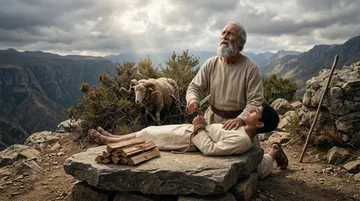
Genesis 22:12
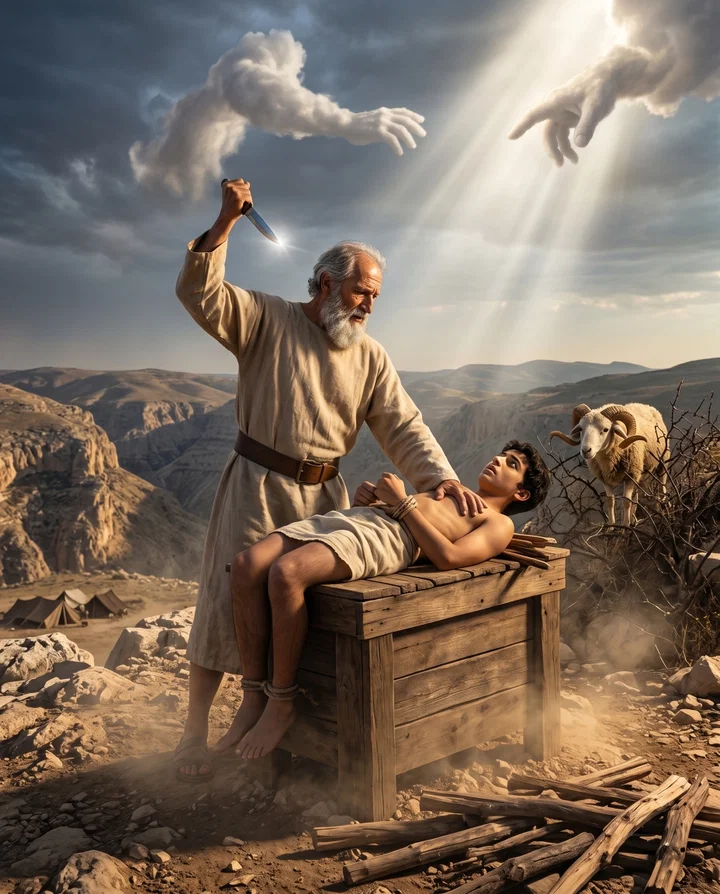
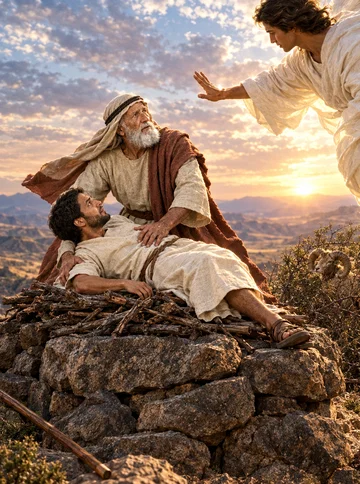
And he said, Lay not thine hand upon the lad, neither do thou any thing unto him: for now I know that thou fearest God, seeing thou hast not withheld thy son, thine only son from me.
Translations
And he said, Lay not your hand on the lad, neither do you any thing to him: for now I know that you fear God, seeing you have not withheld your son, your only son from me.
King James Version, KJV Cambridge Paragraph Bible
And he said, Lay not thine hand upon the lad, neither do thou any thing unto him: for now I know that thou fearest God, seeing thou hast not withheld thy son, thine only son from me.
And he said, Lay not thy hand upon the lad, neither do thou any thing to him: for now I know that thou fearest God, seeing thou hast not withheld from me thy son, thy only son.
And he said, Lay not thine hand upon the lad, neither do thou any thing unto him: for now I know that thou fearest God, seeing thou hast not withheld thy son, thine only son, from me.
And he said, Lay not thy hand upon the lad, neither do thou anything unto him; for now I know that thou fearest God, seeing thou hast not withheld thy son, thine only son, from me.
and He saith, 'Put not forth thine hand unto the youth, nor do anything to him, for now I have known that thou art fearing God, and hast not withheld thy son, thine only one, from Me.'
And he said, Stretch not out thy hand against the lad, neither do anything to him; for now I know that thou fearest God, and hast not withheld thy son, thine only [ son], from me.
Then he said, Do not put forth thy hand unto the young man, neither do to him—anything at all,—for, now, know I that one who reverest God, thou art, when thou hast not withheld thy son, thine only one, from me.
Berean Standard Bible, Majority Standard Bible
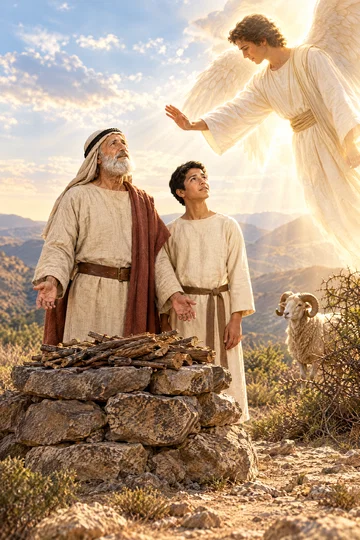
“ Do not lay a hand on the boy or do anything to him,” said the angel, “ for now I know that you fear God, since you have not withheld your only son from me.”
He said, “Don’t lay your hand on the boy or do anything to him. For now I know that you fear God, since you have not withheld your son, your only son, from me.”
And he said, Let not your hand be stretched out against the boy to do anything to him; for now I am certain that the fear of God is in your heart, because you have not kept back your son, your only son, from me.
Then he said, Lay not thine hand vpon the childe, neither doe any thing vnto him: for now I know that thou fearest God, seeing for my sake thou hast not spared thine onely sonne.
Douay-Rheims (Challoner revision)
And he said to him: Lay not thy hand upon the boy, neither do thou any thing to him: now I know that thou fearest God, and hast not spared thy only begotten son for my sake.
Pictures
Cross-references 20 of 44
- Hebrews 11:17-19
By faith Abraham, when he was tried, offered up Isaac: and he that had received the promises offered up his only begotten son,
Abraham offered Isaac in faith, trusting God could raise him from the dead.
- James 2:21-22
Was not Abraham our father justified by works, when he had offered Isaac his son upon the altar?
Abraham’s willingness to offer Isaac demonstrated his faith through action.
- Romans 8:32
He that spared not his own Son, but delivered him up for us all, how shall he not with him also freely give us all things?
God’s gift of his Son parallels Abraham’s willingness to offer Isaac.
- John 3:16
For God so loved the world, that he gave his only begotten Son, that whosoever believeth in him should not perish, but have everlasting life.
Abraham’s willingness to surrender Isaac foreshadows God giving His Son to save the world.
- Genesis 22:2
And he said, Take now thy son, thine only son Isaac, whom thou lovest, and get thee into the land of Moriah; and offer him there for a burnt offering upon one of the mountains which I will tell thee of.
The command to offer Isaac begins the test that Abraham obeys.
- Genesis 22:16-18
And said, By myself have I sworn, saith the LORD, for because thou hast done this thing, and hast not withheld thy son, thine only son:
God confirms by oath the promise of blessing because Abraham obeyed.
- Hebrews 11:19
Accounting that God was able to raise him up, even from the dead; from whence also he received him in a figure.
Abraham believed God could raise Isaac from the dead and received him back in a figure.
- Hebrews 11:8
By faith Abraham, when he was called to go out into a place which he should after receive for an inheritance, obeyed; and he went out, not knowing whither he went.
Abraham obeyed God’s call without knowing where he was going.
- Genesis 15:5-6
And he brought him forth abroad, and said, Look now toward heaven, and tell the stars, if thou be able to number them: and he said unto him, So shall thy seed be.
Abraham trusted God’s promise of descendants while obeying, and his faith was counted as righteousness.
- James 2:23
And the scripture was fulfilled which saith, Abraham believed God, and it was imputed unto him for righteousness: and he was called the Friend of God.
Abraham’s obedience in the test is linked to his faith and being called God’s friend.
- Romans 4:20-22
He staggered not at the promise of God through unbelief; but was strong in faith, giving glory to God;
Abraham trusted God’s promise and was fully persuaded God could fulfill it.
- Genesis 22:8
And Abraham said, My son, God will provide himself a lamb for a burnt offering: so they went both of them together.
Abraham trusts that God will provide the offering.
- Galatians 3:29
And if ye be Christ’s, then are ye Abraham’s seed, and heirs according to the promise.
Those who belong to Christ are Abraham’s seed and heirs of the promise.
- John 8:56
Your father Abraham rejoiced to see my day: and he saw it, and was glad.
Abraham’s test lets him see Christ’s day and rejoice.
- Genesis 21:12
And God said unto Abraham, Let it not be grievous in thy sight because of the lad, and because of thy bondwoman; in all that Sarah hath said unto thee, hearken unto her voice; for in Isaac shall thy seed be called.
God identifies Isaac as the heir through whom Abraham’s promised line would continue.
- Galatians 3:7
Know ye therefore that they which are of faith, the same are the children of Abraham.
People of faith are identified as Abraham’s children.
- John 1:29
The next day John seeth Jesus coming unto him, and saith, Behold the Lamb of God, which taketh away the sin of the world.
The provided lamb points to God’s Son as the sacrifice.
- Genesis 15:2-3
And Abram said, Lord GOD, what wilt thou give me, seeing I go childless, and the steward of my house is this Eliezer of Damascus?
Abraham’s earlier distress over having no heir precedes the test of Isaac.
- 2 Chronicles 3:1
Then Solomon began to build the house of the LORD at Jerusalem in mount Moriah, where the Lord appeared unto David his father, in the place that David had prepared in the threshingfloor of Ornan the Jebusite.
Mount Moriah, where Isaac was offered, became the temple site.
- John 8:39
They answered and said unto him, Abraham is our father. Jesus saith unto them, If ye were Abraham’s children, ye would do the works of Abraham.
Abraham’s children are shown by doing his works.
Commentary
Each commentary is drawn from primary sources: the writings of Ellen G. White and Adventist pioneers and periodicals. Each commentary is separate. Its own words are not a quotation; follow the references to read the source passages.
Ellen G. White
54 sources
At the final instant on Mount Moriah, with his hand raised to take his beloved only son, Abraham was stopped by a call from heaven commanding him to lay no hand on the lad nor do him any harm, declaring that his willingness proved he feared God because he had not withheld his son.GW92 214.11SP 99.4–101.1Lt 110, 1897, par. 1–8Ms 81, 1898, par. 15ST Apr 3, 1879 To fear God here means reverent, loyal trust and perfect obedience that withholds nothing, even the dearest gift.GW92 214.1DA 468.3–469.2Ms 81, 1898, par. 15 His faith held firm through anguish without questioning or rebelling, trusting God could even raise Isaac to fulfill the promise, and his prompt, unhesitating obedience repaired his earlier failure of trust and won him commendation as the father of the faithful and friend of God.1SP 99.4–101.1Lt 110, 1897, par. 1–8SG3 106.3–108.1ST Mar 27, 18791SP 101.2 The declaration vindicated him before heavenly beings and disproved the charge that he was unworthy of the covenant, while the ram offered in Isaac's place made God's provision for salvation clearer to them.PP 154.3–155.2PP 154.1–2 Isaac's offering was designed to prefigure the sacrifice of God's Son, yet unlike Isaac Jesus was not spared but was allowed to die, giving Abraham a measure of the Father's love in giving His only Son and enabling him to see by faith the coming Saviour, and teaching through all ages that nothing is too precious to surrender to God.DA 468.3–469.2ST Apr 3, 1879STSE 41.2–42.1PP 154.1–2
Moment and Setting
The voice from heaven broke in at the final instant, when Abraham's uplifted hand grasped the instrument of death and the knife was raised but did not fall, after a last embrace with Isaac on Mount Moriah.GW92 214.11SP 99.4–101.1Lt 110, 1897, par. 1–8ST Apr 3, 18794T 144.1–145.1 The command had been carried to its last moment, and he was stopped before he harmed the lad or did anything to him.GW92 214.11SP 99.4–101.1PP 152.3–153.14T 144.1–145.1 The intervention came as a call out of heaven addressing him twice by name, Abraham, Abraham, bidding him lay not his hand upon the lad nor do anything unto him.ST Apr 3, 1879
The lad was his only son, beloved, the son of his old age and love, given in old age and loved deeply.GW92 214.1Ms 81, 1898, par. 15ST Apr 3, 1879 He was the son of promise, the son through whom God had said the promise would be fulfilled and a great nation would come.4T 144.1–145.1ST Mar 27, 1879PP 153.3Ms 149, 1898, par. 18 To obey therefore seemed to leave Abraham childless.ST Mar 27, 1879
The place was Mount Moriah, near Salem, on ground that would later become Jerusalem, about eight hundred years before David was crowned.PP 703.1RH Dec 15, 1874 There Abraham had wakened his son Isaac to go at the command of God to offer him up as a burnt offering.RH Dec 15, 1874Lt 144, 1896, par. 20
The declaration, now I know that thou fearest God, meant the test had been fully carried out and proved.Lt 110, 1897, par. 1–8STSE 39.2 It tested both the faith of the father and the submission of the son.Lt 110, 1897, par. 1–8STSE 39.2 God looked on and read the heart and saw full consecration, that Abraham had not withheld his son, his only son.ST Apr 3, 1879ST Feb 22, 1899Ms 41, 1898, par. 4–6 His obedience was complete in heart purpose, as fully as if he had taken his son's life with his own hand.ST Feb 22, 1899Ms 41, 1898, par. 4–6
It was the most severe test that could ever come to a human being.Lt 110, 1897, par. 1–8 It came to Abraham in old age, under a command that seemed terrible and contrary to the promises concerning his son.ST Nov 17, 1881ST Oct 25, 1910Ms 147, 1899, par. 9
Test Proved Faithful
To fear God in this verse means reverence, complete confidence, trust, loyalty and obedience that withholds nothing from God, not even an only son, shown by willingness to sacrifice even the dearest gift.GW92 214.1Ms 81, 1898, par. 15PP 152.3–153.14T 18.2ST Apr 3, 1879 The beloved, only son of promise given in old age was the proof of that fear, for Abraham's readiness to offer Isaac demonstrated faithful obedience and trust under severe trial.GW92 214.1DA 468.3–469.2Ms 81, 1898, par. 15PP 152.3–153.14T 18.2 His willingness to give up the promised son proved complete surrender to the divine will, and that severe test made his faith and character shine.GW92 214.14T 18.2ST Apr 3, 1879 Faith here is shown by works, and nothing a person possesses is too precious to give to God.Ms 81, 1898, par. 15ST Apr 3, 1879
His faith held firm through grief and anguish without letting feeling or self-will rebel against what he understood God required.1SP 99.4–101.1ST Mar 27, 18791T 453.2–454.1 He resisted doubts while facing a command that seemed to leave him childless, holding to the promise concerning the son through whom the promise would be fulfilled.ST Mar 27, 18791T 453.2–454.1PP 153.3 He did not stop to question how the promise could be fulfilled if Isaac died, but trusted God to fulfill it even by raising Isaac from the dead.1SP 99.4–101.1SG3 106.3–108.1PP 153.310MR 119.2 That complete inward sacrifice, made in the heart as believing God could raise the dead, was counted to him for righteousness.1SP 99.4–101.1SG3 106.3–108.110MR 119.2
His obedience was prompt, willing and perfect, without questioning, murmuring, complaining, hesitating or giving up along the way.ST Nov 17, 18814T 145.2ST Oct 25, 1910Ms 149, 1898, par. 18 Old age did not excuse him, though the command in old age seemed terrible and contrary to the promises concerning his son.ST Nov 17, 18814T 145.2ST Oct 25, 1910 He could not reason out the command, so he stopped reasoning and obeyed, at once beginning the long, painful journey to offer his only son who was to become a great nation.ST Oct 25, 1910Ms 147, 1899, par. 9Ms 149, 1898, par. 18 By so obeying he came off conqueror, and his trust was implicit.ST Nov 17, 1881ST Oct 25, 1910Ms 147, 1899, par. 9
His faith was not belief alone but trust in God producing fruits and works.10MR 119.2Ms 46, 1891, par. 5LS 104.1–105.1 He acted in accordance with what he believed God commanded, giving up the pleasures of the world in view of the promised reward.Ms 46, 1891, par. 5LS 104.1–105.1 He knew the commanding voice as the same voice that had told him to leave his country for a land God would show him.Ms 46, 1891, par. 5 He was not saved by works through this obedience but saved by faith in Christ and counted righteous, as the sinner today is saved by faith in Christ.10MR 119.2Ms 46, 1891, par. 5 His faithfulness in this test repaired his earlier failure to trust God fully when he took Hagar as wife.1SP 101.2
For this obedience he is registered and commended as the father of the faithful and the friend of God.Lt 110, 1897, par. 1–8Ms 149, 1898, par. 18Ms 41, 1898, par. 4–6 He carried out the fearful test in heart purpose as fully as if he had taken his son's life by his own hand.Lt 110, 1897, par. 1–8Ms 41, 1898, par. 4–6 His prompt obedience is the mark of true children of Abraham, in contrast to those who claim Abraham's name and claim to keep truth and law while disobeying.Lt 110, 1897, par. 1–8Ms 149, 1898, par. 18
Vindication Before Heaven
The word from heaven cleared Abraham before the watching heavenly host, answering the charge that he was unworthy to receive the blessings of the covenant.PP 154.3–155.2PP 154.1–2 His readiness to yield Isaac proved reverence for God and settled loyalty, exposing the accuser's claims as false.PP 154.3–155.2PP 154.1–2 The verdict established that nothing short of complete, perfect obedience can be accepted.PP 154.3–155.2
When the uplifted hand was stayed and the ram was offered instead of Isaac, the onlooking heavenly beings gained a clearer insight into God's provision for human salvation.PP 154.3–155.2PP 154.1–2 The ram standing in Isaac's place pointed to God's Son given in humanity's place, opening the plan of redemption more fully to view.PP 154.3–155.2PP 154.1–2 The covenant then confirmed by oath before the beings of other worlds stands as testimony that obedience will be rewarded.PP 154.3–155.2
Picture of Christ's Sacrifice
The offering of Isaac was arranged to foreshadow the sacrifice of the Son of God, with Isaac standing as a figure of the Son offered for the sins of the world.ST Apr 3, 1879STSE 41.2–42.1 The ram caught and offered in Isaac's place represented the Son of God sacrificed in the place of humanity.PP 154.1–2 That rescue forms a deliberate contrast with the death of Jesus, for unlike Isaac He was not spared, no voice was uttered to stop His death, and no angel was permitted to release Him.ST Apr 3, 1879STSE 41.2–42.13T 369.2–3 That unsparing gift stands as the supreme proof of divine love.3T 369.2–3 The command to spare Isaac together with the provision of a substitute shows that no human being can make atonement for himself, and that only the Son of God can bear the guilt of the world.DA 468.3–469.2
Through the ordeal Abraham was enabled to look forward to the sacrificial mission of Christ and to grasp the greatness of God's love in giving His only begotten Son to save sinners.DA 468.3–469.2 As he prepared to obey he was shown by faith the coming Just One, the incarnate Saviour, the Lamb who would die for human sin, and seeing Him he rejoiced.DA 468.3–469.2 His anguish in consenting to give up his son gave him a measure of the self-denial and love involved when the Father accepted the death of His beloved Son.ST Apr 3, 18793T 368.1–369.1STSE 41.2–42.1 His obedience was complete in heart purpose, as though he had taken his son's life with his own hand.ST Feb 22, 1899Ms 41, 1898, par. 4–6 That experience was permitted so that through it people might know something of the great sacrifice by which fallen humanity, which could never rescue and restore itself, is ransomed by God the Father giving His beloved Son to save a guilty and rebellious race.Ms 41, 1898, par. 4–6
As the Father was satisfied with Abraham's willingness, so He was satisfied with Christ's willingness to enter the path of suffering.ST Dec 16, 1913DA 117.4–120.1 Therefore He sent an angel to strengthen and deliver Christ, just as He had sent an angel to stay Abraham's hand.ST Dec 16, 1913DA 117.4–120.1
Twisted in Temptation
In the wilderness temptation the adversary falsely presented himself as the angel who stayed Abraham's hand from harming Isaac.2RED 37.1–3LC1 141.1–32SP 89.2–90.1RH Aug 4, 1874ST Dec 16, 1880 He pointed to Moriah, where Abraham's perfect obedience had been tested and proved when his willingness to give up his son caused his hand to be stopped.2RED 37.1–3LC1 141.1–32SP 89.2–90.1RH Aug 4, 1874ST Dec 16, 1880 Abraham had entered the blood-stained path of sacrifice but was not required to travel it to the end, for as the knife was raised to slay Isaac the hand was stayed and the life was saved, God designing only to prove willingness to endure.2RED 37.1–3RH Aug 4, 1874ST Dec 16, 1880ST Jun 25, 1874 On that ground the tempter argued that Christ likewise need only set foot in the blood-stained path of suffering to prove willingness, without enduring painful hunger and starvation, suffering and death, claiming to have come to save His life and release Him from further endurance.2RED 37.1–3LC1 141.1–3RH Aug 4, 1874ST Dec 16, 1880ST Jun 25, 1874
Christ rejected that plea and remained steadfast, committed to carrying out the plan of redemption fully in every particular rather than stopping at willingness alone.LC1 141.1–3RH Aug 4, 1874
Call to Wholehearted Obedience
Nothing is too precious to give to God, for all He gives remains His to be used in His service, and possessions and even the most cherished relationships must be surrendered and laid on the altar when He calls, with entire surrender of the whole will and obedience to the whole will of God placing one under divine protection.ST Apr 3, 1879STSE 39.2STSE 41.13T 368.1–369.1ST Mar 9, 1876 Confidence in the divine Word leads to doing that Word, so faith is shown by works and by trusting God through testing, confident that God sees the end from the beginning.Lt 110, 1897, par. 1–8ST Apr 3, 187910MR 119.2 The lesson is given to shine through the ages that the Lord who gave can also take away.Lt 110, 1897, par. 1–8
Abraham's readiness to give what was most precious rebukes those who cling to earthly possessions and refuse to impart abundance to suffering people or to sacrifice for others and for God's cause and eternal life.Ms 81, 1898, par. 15CET 165.2–3SG4 266.2–31T 351.1–2RH May 20, 1862 In contrast, faithful stewardship regards every entrusted gift as the Lord's and secures heavenly benediction and greater trust, while keeping possessions brings no reward in this life and loss of the life to come.Lt 110, 1897, par. 1–8 His example stands recorded as God's commended pattern of willing, perfect obedience and self-sacrifice in service to God, teaching that obedience to God's voice is essential to receiving His favor and blessing.ST Nov 17, 1881ST Oct 25, 1910GW92 68.23T 406.1–2Lt 82, 1895, par. 25 God's people today will likewise be tested, with the Lord putting His purposes in place of their own devising even when contrary to human desires and the dictates of the flesh.Ms 147, 1899, par. 9
The account teaches confidence in God's requirements however difficult or painful, and perfect submission by children to parents and to God.STSE 41.13T 368.1–369.1 The severe test made Abraham's faith and character shine and illustrates how affliction can prove people firm and true and purge them from unrighteousness, revealing character through complete confidence in God.4T 18.2ST May 24, 1883ST Mar 9, 1876 Had Abraham then turned from God or deviated from the command, he would never have been registered as the father of the faithful and the world would have lost this rich example of faith and victory over unbelief.Lt 110, 1897, par. 1–8
The obedience and sacrifice shown at Moriah is applied as an example for courageous missionary labor, sowing beside all waters and going out beyond one's own country and beyond hovering about the churches to the unbelieving world to convert souls despite opposition from selfish motives, bigotry and prejudice.RH Dec 15, 1874 Laying a child on the altar can mean parents, after many prayers, tears and severe soul conflict in a heart bound up with a very young child, surrendering daily care to another faithful household so they can give themselves fully to the work God has given them.Ms 5, 1863, par. 8–10 God accepts the child so offered, guards and loves him, strengthens and heals the mother for important work, and gives tears yet peace and firm confidence that the child is loved and cared for.Ms 5, 1863, par. 8–10
Sources
Pioneers and periodicals
117 sources
At the instant Abraham stretched out his hand with the knife, the Angel of the Lord called to him out of heaven and forbade him to harm the lad in any way.ST Apr 3, 1879ST Aug 21, 1901ST Aug 21, 1901 The words now I know announced that the test was finished and proved, because he had not withheld his son, that Abraham feared God with a reverence and love that withholds nothing.ST Feb 12, 1894ST Sep 8, 1898ST Sep 8, 1898 What was required was Abraham's full consecration, not Isaac's death, so when that surrender was complete the sacrifice was stayed.ST Feb 26, 1894ST Feb 26, 1894RH Jun 9, 1851 Isaac was the promised heir through whom blessing and a multitudinous seed were to come, and Abraham trusted that the God who had miraculously given him could even raise him from the dead, receiving him back alive as in figure from the dead.ST Nov 5, 1912ST Apr 11, 1900ST Mar 1, 1905 The offering was appointed to foreshadow God's own great offering, yet with this contrast, that Abraham was told to spare his son while God spared not His own Son but delivered Him up for humanity.ST Apr 3, 1879ST Jun 3, 1908ST Aug 21, 1901
Setting and Wording
The angel of the Lord called to Abraham out of heaven at the very moment he stretched forth his hand with the knife to slay Isaac, commanding him to lay not his hand upon the lad and to do nothing unto him, staying the sacrifice before any harm was done.ST Apr 3, 1879ST Aug 21, 1901ST Aug 21, 1901ST Mar 26, 1894 The uplifted hand grasping the instrument of death was arrested after the last embrace on Mount Moriah, following the three days' journey, the building of the altar, the binding of the son, and the raising of the knife to take his life-blood, and the staying of the hand brought relief and light when obedience had withheld nothing.ST Apr 3, 1879ST Mar 26, 1894ST Dec 23, 1913 The command and its timing belong to real events, not merely to Abraham's changing inner impressions.ST Jul 7, 1887
The speaker who stopped Abraham is the Angel of Jehovah speaking with God's authority, who is the Son of God, Jesus Christ, also identified as Michael, the chief servant of God who took the form of a servant to give Himself for His creatures.ST Jun 3, 1908ST Jan 11, 1905 He publicly attested Abraham's love and faith before the universe, and worked for Abraham in the patriarchal age, when Abraham's faith in God's gift of His only-begotten Son enabled him to offer his own only son.ST Jun 3, 1908ST Jun 3, 1908 This test foreshadowed Christ's own death as mankind's ransom, when the stroke of wrath would not be turned away.ST Jun 3, 1908
The words now I know mark the revealed proof of the test, declaring Abraham proved to fear God and to be unreservedly on God's side because he had not withheld his son, his only son.ST Sep 8, 1898ST Feb 12, 1894 His outward obedience made visible to others the righteousness and trust God had already seen when he believed, and announced the test finished with the sacrifice forbidden to proceed.ST Jul 12, 1910 Failing in it would have kept Abraham from being the factor God wanted him to be in His plan, for the command to offer Isaac and its dread ending were only the means by which the test was applied.
Both the command to sacrifice and its reversal came directly from the same divine authority, and the apparent contradiction did not mean God was absent or that the test was not God's work.RHST Dec 7, 1882ST Jul 7, 1887 The release from the command came from God Himself, so that Abraham received the change directly from the same authority that had given the original command, requiring an explicit word from God before treating an earlier command as revoked.ST Dec 7, 1882 Thine only son means Isaac, the only legitimate son and sole heir of the promise through whom the promise was to be fulfilled, with no substitute in Ishmael.ST Nov 5, 1912ST Jun 2, 1881 He was the son of old age and love and pride of Abraham's heart, about twenty to twenty-five years old, the promised heir and hope of posterity whose offering seemed to leave Abraham childless and without human support.ST Apr 3, 1879ST Mar 27, 1879ST Jul 15, 1913
The event took place on Mount Moriah in the land of Moriah, meaning provided by Jehovah, most likely at Jerusalem, where Abraham built an altar and laid the wood in order and received his crowning blessing.RH Jul 21, 1868ST Sep 22, 1909ST Sep 20, 1899 About 860 years before the temple it became Ornan's threshing floor where David built an altar, then the site of Solomon's temple built without sound of hammer, later the place where Jesus taught and drove out the money-changers, and the future site of God's sanctuary in the heavenly Jerusalem to be set among His people forevermore after loss through unfaithfulness and the crucifixion of Christ.ST Nov 5, 1912ST Sep 22, 1909RH Sep 12, 1912 In the immediate context a ram caught in the thicket was offered as a burnt offering in the stead of the son, Isaac being restored alive as though from the dead.ST Aug 21, 1901RH Jun 8, 1916 This shows that altars were erected for making offerings to the Lord and that before the Exodus patriarchal fathers acted as priests of the family.ST Jul 30, 1912RH Aug 3, 1916 An angel, though unseen by Abraham before, was present throughout and intervened in human affairs, showing that angels execute God's will and minister to those who shall be heirs of salvation.ST Sep 17, 1874ST Apr 14, 1898ST Jan 16, 1907
Faith Tested and Proved
The staying of the hand proves that Abraham feared God because he had not withheld his son, his only son.ST Feb 12, 1894ST Sep 8, 1898ST Sep 8, 1898ST Mar 23, 1888ST Jul 17, 1901 That willingness to give up Isaac proved reverence and love and trust and loyalty, a wholehearted obedience that withholds nothing from God.ST Sep 8, 1898ST Sep 8, 1898ST Jul 17, 1901ST Feb 26, 1894 What was required was full consecration, not the death itself, and when consecration was fully given the sacrifice was withheld.ST Feb 26, 1894ST Feb 26, 1894RH Jun 9, 1851 The test was intended to prove faith rather than to require the death, exposing whether Abraham loved God more than his cherished son.ST Jun 25, 1874ST Feb 26, 1894RH Jun 9, 1851
The offering of Isaac was the real crisis of Abraham's life, the supreme and severest test, laying open the struggle between love for his son and duty to God.ST Sep 25, 1901ST Jun 2, 1881ST Jul 26, 1905ST Feb 26, 1894 Hopes waited for nearly fifty years were placed in the balance, since Isaac was the sole heir through whom the promise was to be fulfilled with no substitute in another.ST Sep 25, 1901ST Jun 2, 1881ST Sep 4, 1901 Not only Abraham's faith was tried but Isaac's faith also, grown to comely youth and young manhood as the pride of his father's heart.ST Sep 25, 1901ST Jul 26, 1905ST Sep 4, 1901 Abraham came off conqueror in the victory of faith that overcomes the world, meeting the greatest test of his old age when commanded to offer his only son and great support in life.ST Sep 25, 1901ST Feb 26, 1894ST Apr 20, 1915
Readiness for that greatest test had grown through years of walking with God in the school of faith, forming settled character able to endure trial rather than strength only for a moment.ST Dec 20, 1910ST Jul 22, 1908ST Dec 28, 1888 He strengthened his soul by dwelling on the evidence of God's goodness and faithfulness rather than on appearances, even when the command seemed to contradict them.RH Jun 7, 1906 His simple faith is preserved to encourage and strengthen God's people through their own trials, with the Promised Seed to be kept in mind.ST Dec 20, 1910ST Dec 28, 1888RH Jun 7, 1906 He obeyed promptly without question or murmur or hesitation, not consulting flesh and blood, not conferring with others, but rising early and acting with childlike simplicity of trust.ST Nov 17, 1881ST Oct 25, 1910ST Feb 26, 1894ST Apr 17, 1893RH Mar 26, 1901 Though old and faced with grief and a command that seemed terrible and contrary to the promises concerning his son, he did not let age or uncertainty keep him from acting, trusting completely.ST Nov 17, 1881ST Jan 20, 1887ST Oct 25, 1910 That willing obedience fulfilled the test and established him as father of the faithful, his faith growing and developing as he believed and obeyed.ST Apr 17, 1893RH Mar 26, 1901
God risked nothing because He knew beforehand that Abraham would prove faithful, placing the power of the Holy Spirit underneath frail humanity.ST Sep 4, 1901 Yet the test was everything, for failing in it would have kept Abraham from being the factor God wanted him to be in His plan. The command and its dread ending were only the means by which the test was applied, proving him to be unreservedly on God's side.
Promise and Resurrection Hope
Isaac was the promised seed through whom the blessing, the multitudinous seed, extensive possessions, and the whole world as inheritance were to come, and he was the only legitimate son and sole heir through whom the promise was to be fulfilled, with no substitute in Ishmael.ST Mar 27, 1879ST Nov 5, 1912ST Jun 2, 1881ST Aug 30, 1877RH Jan 14, 1904 The command to offer him therefore seemed to destroy hope and end all hopes, placing the promise waited for nearly fifty years in the balance and hanging the plan of salvation on Abraham's faith.ST Mar 27, 1879ST Nov 5, 1912ST Sep 25, 1901ST Jun 2, 1881ST Aug 30, 1877 Obedience appeared to leave Abraham childless and without human support, cutting off his own hope of salvation and that of the world, since he knew the long-promised Messiah was to come through Isaac's posterity.ST Mar 27, 1879ST Nov 5, 1912ST Sep 25, 1901ST Jun 2, 1881RH Jan 14, 1904 Abraham faced this real crisis and severest test with grief and resisted doubts, holding to God's promise while both his faith and the faith of his young son were tried.ST Mar 27, 1879ST Nov 5, 1912ST Sep 25, 1901ST Jun 2, 1881ST Aug 30, 1877 His obedience in preparing to offer Isaac proved the victory of faith that overcomes the world and perfected it before those who knew him and future generations, also giving him opportunity to redeem his stumbling in taking Hagar.ST Mar 27, 1879ST Sep 25, 1901ST Jun 2, 1881ST Aug 30, 1877RH Jan 14, 1904
Abraham did not expect a substitute but believed that the same God who had miraculously given him a son could bring him from the dead to fulfill the promise, and his faith did not waver.ST Apr 1, 1875ST Nov 5, 1912ST Apr 11, 1900RH Mar 16, 1869 He had given Isaac over so completely that he regarded him as already dead during the three days' journey, going so far as to raise the knife before he was stopped.ST Apr 1, 1875ST Nov 5, 1912RH Mar 16, 1869ST Jun 2, 1881 When Isaac's life was spared and a ram was offered in his place, Abraham received him back in figure from the dead.ST Apr 1, 1875ST Apr 11, 1900ST Mar 1, 1905RH Mar 16, 1869 This willingness not to withhold his only son proved complete consecration and living faith expressed in works, accepted as victory bringing Heaven's approval.ST Apr 1, 1875ST Nov 5, 1912ST Mar 1, 1905RH Mar 16, 1869
Abraham's faith rested on God's promise, not on Isaac as a visible human guarantee, leaving fulfillment wholly in God's hands even when he could not see how it would be fulfilled.ST Dec 11, 1901RH Jan 14, 1904ST Jun 2, 1881RH Jun 7, 1906ST Dec 11, 1901 He trusted that God could fulfill His promise and provide what was needed without human schemes or aid, without recourse to Eliezer or Hagar.ST Dec 11, 1901RH Jan 14, 1904ST Jun 15, 1904RH Jun 7, 1906ST Dec 11, 1901 That trust had been learned slowly through clinging to Terah and Lot, expecting the promise through Eliezer, and taking Hagar at great cost in trouble and heartache, until after separating from Lot he received the child of promise from his barren wife.ST Dec 11, 1901RH Jan 14, 1904ST Jun 15, 1904ST Dec 11, 1901 He strengthened his soul by dwelling on evidence of God's goodness, character and faithfulness rather than on appearances, even when the command appeared to contradict them and to put the promised inheritance and its future in jeopardy.ST Dec 11, 1901RH Jan 14, 1904ST Jun 2, 1881RH Jun 7, 1906 In giving Isaac back to God he demonstrated trust and submission, and God met the need just when required by providing a lamb in Isaac's place.ST Dec 11, 1901ST Jun 2, 1881ST Jun 15, 1904ST Dec 11, 1901
The trial tested and perfected Abraham's faith and demonstrated that the promised seed, heir, blessing, salvation and inheritance come by God's power, not by human schemes, weakness or temporary lack of faith.ST Apr 11, 1900ST Mar 1, 1905RH Aug 28, 1900 Isaac's being spared and received back from the dead in a figure taught Abraham that he and his descendants would receive the promised inheritance through the resurrection of the dead, and that death and resurrection would precede possession of the inheritance.ST Apr 11, 1900ST Mar 1, 1905ST Jun 2, 1881RH Aug 28, 1900 The experience teaches the resurrection of the dead and is to be read with the Promised Seed in mind, the promised Redeemer being still future since Isaac's birth did not itself fulfill the promise of the Seed.ST Apr 11, 1900ST Mar 1, 1905RH Jan 14, 1904RH Aug 28, 1900 The chapter's lesson of faith is confirmed by God's immutable promise and oath as part of His providential care for the ancestors of the promised Seed, testifying that Abraham's faith had been perfected through preparation and growth in the revelation of the Gospel.ST Apr 11, 1900ST Jan 9, 1912ST Mar 1, 1905
Foreshadowing of Christ
Abraham's offering of Isaac stands as the sacrifice in Genesis nearest to the great offering of Christ and was designed to prefigure it.ST Apr 3, 1879ST Apr 1, 1875ST Nov 5, 1912 On Moriah Abraham was taught about Christ's day, and as he prepared to obey he was shown the coming Just One, the incarnate Saviour and Lamb who would die for human sin, whom by faith he saw and in whom he rejoiced.ST Oct 31, 1906ST Jun 3, 1908 That vision gave him a clearer and grander view of God's love and sacrifice and care, and of the profound love expressed in God's gift of His only-begotten Son, enabled by his own faith in offering his only son.ST Oct 25, 1905ST Oct 31, 1906ST Jun 3, 1908 In offering Isaac he was cutting off his own hope of salvation and that of the world, because he knew the long-promised Messiah was to come through Isaac's posterity.ST Nov 5, 1912 His faith did not waver because he believed the same God who had miraculously given him a son could bring him from the dead to fulfill the promise, and this proved that he feared God because he did not withhold his only son.ST Nov 5, 1912
God gave Abraham full credit as though the offering were complete, because his obedience was wholehearted and complete as far as God allowed it to go.ST Aug 21, 1901 His sorrow was as great as if the sacrifice had been completed.ST Feb 22, 1899ST Aug 2, 1910 The Angel of Jehovah who stopped him publicly attested his love and faith before the universe, and this test foreshadowed Christ's own death as mankind's ransom, when the stroke of wrath would not be turned away.ST Jun 3, 1908 By contrast with Isaac there was no staying hand and no substitute provided at the sacrifice of Jesus Christ, because He Himself was the Substitute for humanity.ST Apr 3, 1879ST Apr 1, 1875ST Aug 21, 1901 Unlike Isaac, Jesus was not spared and no voice stopped His death, for God spared not His own Son but delivered Him up, while Abraham was told to spare his son.ST Apr 3, 1879ST Apr 1, 1875
The lamb offered in the boy's place shows that God provides what is needed.ST Feb 1, 1905 A sacrifice was still to be offered, but God provided the substitute, the ram caught in the thicket, which typifies the only-begotten Son of God.ST Mar 26, 1894 The lamb pointed to God's own Son, whom He would provide, and the experience revealed the significance of the Lamb whose antitype is that Son.ST Oct 25, 1905ST Dec 11, 1901 In this God revealed Himself as Jehovah-jireh, meaning Jehovah will provide, demonstrating His love through preserving the lives of His children in common blessings of light and air and water and bread.ST Jul 26, 1905ST Mar 26, 1894 The provided substitute points to the great uncommon unique gift in which all these blessings are bound up, Heaven's best Gift, the sacrifice and life of the Son of God's love, by whose blood this redeemed world lives, so that in the light of the cross all common and uncommon blessings are blood-bought gifts from His hand whether believed or not.ST Jul 26, 1905
Through willingness to offer his only son Abraham learned in small measure the cost of salvation.ST Feb 22, 1899ST Aug 2, 1910 The test taught him about Christ's day and revealed the greatness of God's love, for God gave His only-begotten Son to save sinners, making a sacrifice greater than any human being could make, when no greater sacrifice was possible.ST May 3, 1899ST Oct 25, 1905 His obedience was complete in purpose, as though he had taken his son's life with his own hand, and that gave him a measure of the sacrifice made when God gave His Son.ST Feb 22, 1899 His ordeal helps reveal the Father's self-denial and love in giving His Son for guilty humanity, and His patience also reflected the patience God would exercise in giving up His own Son as the only sufficient sacrifice, including patience and agony in giving Him to bear sin and separation.ST Apr 3, 1879 Abraham's experience thus taught him something of God's sacrifice in giving up His Son.AUST Jun 14, 1920
Isaac's willingness to yield his life also served as a type of God's Son, who freely gave Himself for humanity.AUST Jun 14, 1920 Isaac willingly joined in the sacrifice and thereby better understood the voluntary offering of God's Son to save humanity.ST Aug 2, 1910 His submission was connected to Abraham's instruction of his son in daily life, at home and on the way.RH Apr 17, 1900 The angel's intervention after Abraham had shown willingness to obey and trust God is compared with the Father sending an angel to deliver Christ after Christ had shown His willingness to enter the path of suffering, yet Satan's claim that Christ, like Abraham, had only to prove willingness and need not continue to hunger and death was false and was rejected by Christ, who remained steadfast to complete redemption in every particular.ST Dec 16, 1913RH Aug 4, 1874
Doctrine and Covenant Teaching
Abraham's willingness not to withhold his son proved that he feared God and was wholly surrendered to His will, and that obedient action brought his faith into visible proof and to completion.ST Apr 3, 1879RH Mar 19, 1861ST May 13, 1897ST Aug 23, 1877ST Oct 31, 1878 Faith was not mere inward consent but confidence demonstrated by doing what was commanded, and that willingness measures faith and justifies before God because he believed and obeyed.RH Mar 19, 1861ST Aug 23, 1877 His outward obedience made righteous character visible to others, while God had already seen and accepted the trust within him when he believed.RH Mar 19, 1861 Duties are not merits or a price paid for salvation, which is by grace, but acts of dependence and gratitude through which God reveals Himself, and God gives work as opportunity to show love and develop faith that prepares for translation.RH Mar 19, 1861ST Oct 31, 1878
The trial tested and perfected faith to show that the promised seed, heir and blessing come by God's power and not by human schemes, weakness or temporary lack of faith in devising a way of fulfillment.ST Apr 11, 1900ST Mar 1, 1905ST Sep 23, 1913RH Mar 19, 1861 In the trial he received his son back in figure from the dead, and the lesson of faith is confirmed by God's immutable promise and oath as part of providential care for the ancestors of the promised Seed.ST Apr 11, 1900ST Jan 9, 1912ST Mar 1, 1905 The promise or covenant made to Abraham pledges a rehabilitated earth and, as Romans 4:13 explains, the whole world as inheritance, realized through Abraham's Seed, Christ, so that all who belong to Christ by faith become Abraham's heirs according to that promise.ST Apr 11, 1900ST Jan 28, 1903
The account shows altars erected for making offerings to the Lord, for Abraham built an altar, laid the wood in order, and then offered a ram for a burnt offering in the stead of his son.ST Jul 30, 1912RH Aug 17, 1876 It stands as an example of patriarchal sacrifice before the later order of priesthood and sanctuary service was established, when the father served as priest of his family before the Exodus.RH Aug 31, 1911RH Aug 3, 1916 People in early times were thus taught the worship of God and what was essential for atonement for sin and faith, expressing the conviction that blood must be shed to expiate sin.RH Aug 17, 1876
On Moriah, meaning provided by Jehovah, God revealed Himself in a new light under a new name, Jehovah-jireh, meaning Jehovah will provide, proving Himself a present Provider in the direst hour who meets need just when required.ST Jul 26, 1905ST Mar 26, 1894ST Sep 22, 1909ST Sep 10, 1902 After the command to offer the beloved promised heir, the three days' journey, the building of the altar, the binding, and the raising of the knife, the staying of the hand declared the test finished and taught trust that God would provide without human schemes.ST Feb 1, 1905ST Mar 26, 1894ST Dec 11, 1901 A sacrifice was still to be offered, but God furnished the substitute, the ram or lamb caught in the thicket in place of the son loved, showing He provides what is needed.ST Jul 26, 1905ST Mar 26, 1894ST Dec 11, 1901 That deliverance is a lesson for the ages of tender love, faithful watchcare and provision in common blessings of light and air and water and bread, and the substitute typifies and points to the great uncommon unique gift in which all blessings are bound up, Heaven's best Gift, the sacrifice and life of the only-begotten Son of God's love, by whose blood the world lives, so that in the light of the cross all common and uncommon blessings are blood-bought gifts from His hand whether believed or not.ST Jul 26, 1905ST Mar 26, 1894 As a patient and generous teacher He thereby showed His promised provision, fullest in the gift of His own Son, to be sufficient.ST Feb 1, 1905ST Dec 11, 1901
God's tempting of Abraham meant testing and proving him, never enticing to evil, and the command to offer Isaac with its dread ending was only the means by which the test was applied, never the temptation itself or the main issue. The words suspending the offering declare him proved to fear God and to be unreservedly on God's side, and the test was everything, for failing in it would have kept him from being the factor God wanted him to be in His plan.
God would never call fathers or mothers to take their children's lives as offerings to Him, and He did not accept a human first-born sacrifice for sin.ST May 3, 1899ST Jun 28, 1905 The command was not given to teach child sacrifice as the Ammonites offered to Molech, but to teach faith, confidence and obedience, with confidence that all would be right in the end.RH Mar 11, 1873 The first-born sacrifice necessary for transgression was not to be the son of the transgressor, as heathen religions teach, but the Son of Him against whom man transgressed, so while Abraham was told to spare and withhold not harming his son, God spared not His own Son but delivered Him up for all, and the Sacrifice for sin has been provided by God Himself, leaving man to do justly and to love mercy and to walk humbly with God.RH Mar 11, 1873ST Jun 28, 1905
Abraham's obedience in being willing to offer Isaac tested his faith and confidence and demonstrated that he feared God, presenting obedience to God's moral will and moral law as essential alongside faith and showing that religious observance without such obedience is not enough.RH Dec 15, 1868RH Dec 15, 1868 His willingness would not have been murder if God had required it, which applies to the duty of obeying God rather than violating His law even when obedience seems likely to bring death.RH Oct 30, 1855
Example for Daily Living
Abraham's willingness to surrender Isaac proved that he feared God, for Isaac was the dearest thing he possessed, like the dearest thing any person has, and true happiness lies in being willing to offer such a treasure to God.ST Apr 3, 1879ST Mar 9, 1876RH Sep 11, 1856 He loved his only promised son above lands, flocks, gold, health and life itself, with only God deeper in his love, yet his instant obedience without murmur proved he put God first and withheld nothing.ST Apr 1, 1875ST Mar 9, 1876ST Feb 26, 1894 Genuine faith is shown by works in complete surrender to God's will, so that nothing possessed — possessions, talents, self — is too precious to give to God when called.ST Apr 3, 1879ST Apr 1, 1875ST Apr 1, 1875 What God requires is not the sacrifice itself but full consecration, and when consecration is fully given the sacrifice is withheld; like Christ on Calvary, Abraham's perfection was won on that summit and followed by a rush of glory and joyful promise.ST Feb 26, 1894 Believers must likewise lay their cherished Isaac on the altar, enduring the anguish of putting base ambitions underfoot and subordinating everything to character, prizing victory above every tie, for the death of self must come before the dawn of entire redemption.ST Feb 26, 1894ST Apr 7, 1914 Love for friends must remain unselfish and submissive to Christ's will, surrendering the dearest earthly treasure in implicit trust and obedience.ST Apr 3, 1879RH Sep 11, 1856
Trials test character to develop holiness, purge unrighteousness and make faith and loyalty visible to others.ST Mar 9, 1876RH Dec 2, 1915ST Aug 8, 1906 Abraham's example of simple faith in the greatest test of all was preserved to encourage and strengthen God's people through their own trials, and his obedience brought God's blessing.ST Dec 28, 1888RH Mar 26, 1901 He did not hesitate, look for deception, consult Sarah, ask a minister, or confer with flesh and blood, but rose early and obeyed with mighty supernatural faith in childlike simplicity of trust.RH Mar 26, 1901 The voice of the Lord is known as the voice of a father or dearest friend is known, by living with Him in daily secret communion as the most real intimate friend, yielding all without reservation and being led continually by the Holy Spirit into discipleship.RH Mar 26, 1901 Victory comes by prizing victory above every earthly tie or treasure and surrendering it to God, and daily victory is obtained by sweet secret communion with God in prayer kept before His throne, culminating in glorious rest.ST Apr 7, 1914 In surrendering Isaac, the son in whom his hopes rested for this life and for the coming Saviour, Abraham was left without human support and leaned wholly upon God, learning to trust God alone through tribulation as part of the Christian journey.ST Aug 8, 1906ST Feb 7, 1911
The trial reveals the goodness of God, who knows a mother's love and will not try anyone beyond strength.ST Nov 5, 1894ST Sep 21, 1882 It comforts mothers in the depth of their love with the assurance that God measures strength in testing.ST Nov 5, 1894ST Sep 21, 1882 God would never call fathers or mothers to take their children's lives as offerings to Him.ST May 3, 1899 Parents may yet be called to sacrifice what is dearest to them, since all they have belongs to God.RH Dec 2, 1915 Abraham's fidelity in the greatest test of his old age — commanded to offer Isaac, his only son and great support in life, and not withholding him before the command was stopped — encourages aged Christians in later generations to trust God.ST Apr 20, 1915 Mount Moriah is where God met Abraham and Abraham received his crowning blessing, and such Moriah obedience is blessed.ST Sep 20, 1899
The trial gave Abraham opportunity to redeem past failure by decisive reversal and stand approved by Heaven.RH Mar 16, 1869RH Mar 16, 1869RH Mar 16, 1869 By grace it canceled his earlier weakness and unbelief in wanting his servant Eliezer to be his heir and in taking Hagar, bringing him to a truly wonderful degree of faith as he raised the knife believing God could raise Isaac from the dead.RH Mar 16, 1869RH Apr 8, 1875 As Abraham was tested to stand firmly against his former failure, so those who have fallen into sin are given opportunity to vindicate character by decisively turning from wrong.RH Mar 16, 1869 Those who have loved money, neglected the poor, or pursued pride and worldly amusements should take the opposite course — giving generously, caring for the vulnerable, and devoting themselves to God's work.RH Mar 16, 1869 Brethren should follow with undaunted courage and living faith in sowing beside all waters, not confining labor to their own country or hovering about the churches, but going out to the unbelieving world to convert souls to the truth despite opposition from selfish motives and from bigotry and prejudice.RH Dec 15, 1874
Satan falsely claimed to be the angel who stayed Abraham's hand and argued from the test that Christ in the wilderness need only prove willingness to enter the blood-stained path without enduring hunger and death.RH Aug 4, 1874ST Dec 16, 1880ST Jun 25, 1874 Abraham entered the blood-stained path of sacrifice but was not required to travel it to the end, for as the knife was raised the hand was stayed and Isaac's life was saved, God designing only to prove willingness to endure.ST Jun 25, 1874ST Jul 12, 1910 Satan invoked that staying to say Christ, like Abraham, had only to prove willingness to obey and need not continue along the path of suffering or face death, claiming to have come to save Christ's life.RH Aug 4, 1874ST Dec 16, 1880 Christ rejected the plea and remained steadfast in carrying out the plan of redemption in every particular, completing redemption rather than stopping short.RH Aug 4, 1874 The staying of Abraham's hand came by commission from the Father to announce the proving complete and forbid the sacrifice to proceed, and the same pattern holds for Jesus after forty days eating nothing: His fast as a test of obedience and Sonship is declared at an end and He may now be strengthened by eating.ST Jul 12, 1910
Abraham's daring, wholehearted faith is the model for acting on what God is believed to have commanded, even under severe test and at the risk of seeming foolish.RH Apr 21, 1868RH Oct 6, 1904RH Apr 21, 1868 His willingness to offer his only son shows a faith ready to give up worldly pleasures in view of the promised reward.ST Mar 7, 1878RH Apr 21, 1868 It stands as the great example of faith, unparalleled until the penitent thief on the cross trusted a dying Saviour for a future kingdom. The faith called for by the final message is compared to Abraham's willingness to offer his son, as was the faith of those proclaiming the 1844 time.ST Mar 7, 1878RH Apr 21, 1868 God so tests people to reveal whether they will stand by faith even before a scoffing multitude or persecuting rulers, and those awaiting Christ's advent must so stand.RH Nov 26, 1861RH Apr 21, 1868
Maggie's willingness to give up the crutch she depended on is compared to Abraham's blind faith and total surrender, her gift being accepted and returned to her.ST Jan 10, 1900ST Jan 10, 1900 Costly giving with anguished face on Moriah belongs to the same surrender.ST Feb 26, 1894ST Jan 10, 1900 Isaac's submission on Moriah is connected to Abraham's instruction of his son in daily life, at home and on the way.RH Apr 17, 1900 Abraham's faith and sacrifice display deep, cross-bearing, scrupulous Christianity with power of intercession, in unfavorable contrast to wearying oneself in every kind of worldly pleasure and to Lot's dubious type of godliness in the plains of Sodom. Gaining breadth while losing depth means losing what is displayed here.RH Dec 3, 1901
The lesson is not to boast of steadfastness before hardship comes, but to wait in prayer for strength to endure sorrow.ST Feb 26, 1894 Abraham's bravery under a trial that could shatter deepest hopes teaches waiting dependence rather than beforehand boasting.ST Feb 26, 1894 Daily victory before God's throne unto glorious rest comes through such prayer.ST Apr 7, 1914ST Feb 26, 1894
Sources