Translations
Of whom it was said, That in Isaac shall your seed be called:
King James Version, Webster Bible
Of whom it was said, That in Isaac shall thy seed be called:
of whom it was said, That in Isaac shall thy seed be called:
Revised Version, American Standard Version
even he to whom it was said, In Isaac shall thy seed be called:
of whom it was said — 'In Isaac shall a seed be called to thee;'
as to whom it had been said, In Isaac shall thy seed be called:
Even him of whom it had been said—In Isaac, shall there be called to thee, a seed:
Berean Standard Bible, Majority Standard Bible
even though God had said to him, “ Through Isaac your offspring will be reckoned.”
to whom it was said, “ Your offspring will be accounted as from Isaac,”
Of whom it had been said, From Isaac will your seed take their name:
(To whom it was said, In Isaac shall thy seede be called.)
Douay-Rheims (Challoner revision)
( To whom it was said: In Isaac shall thy seed be called.)
Pictures
Cross-references 20 of 46
- Genesis 21:12
And God said unto Abraham, Let it not be grievous in thy sight because of the lad, and because of thy bondwoman; in all that Sarah hath said unto thee, hearken unto her voice; for in Isaac shall thy seed be called.
God declares that Abraham’s seed will be called through Isaac.
- Genesis 22:1-14
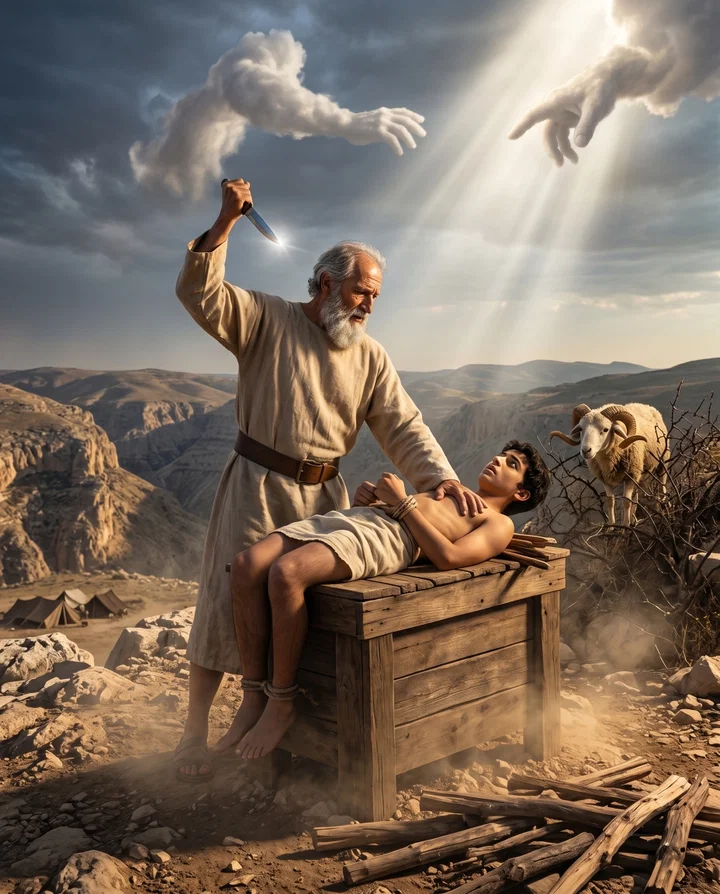
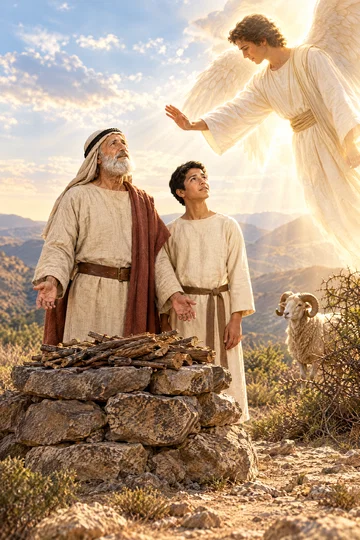
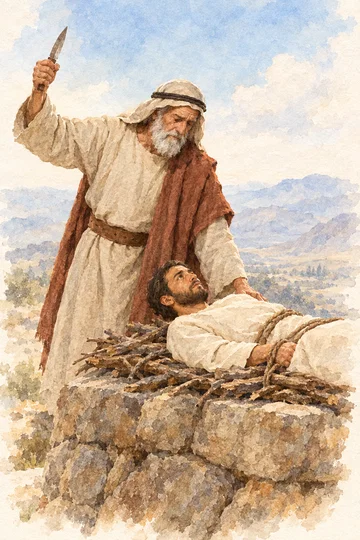
And it came to pass after these things, that God did tempt Abraham, and said unto him, Abraham: and he said, Behold, here I am.
Abraham’s faith is shown in offering Isaac, the promised heir, while trusting God to provide.
- Romans 4:13
For the promise, that he should be the heir of the world, was not to Abraham, or to his seed, through the law, but through the righteousness of faith.
Abraham and his seed are promised the world as their inheritance.
- Galatians 3:16
Now to Abraham and his seed were the promises made. He saith not, And to seeds, as of many; but as of one, And to thy seed, which is Christ.
Identifies Christ as the promised Seed of Abraham.
- Galatians 3:29
And if ye be Christ’s, then are ye Abraham’s seed, and heirs according to the promise.
Those who belong to Christ are Abraham’s seed and heirs of the promise.
- James 2:21-23
Was not Abraham our father justified by works, when he had offered Isaac his son upon the altar?
Abraham’s offering of Isaac showed his faith working and made perfect.
- John 8:56
Your father Abraham rejoiced to see my day: and he saw it, and was glad.
Abraham rejoiced by faith to see Christ’s day.
- Genesis 15:6
And he believed in the LORD; and he counted it to him for righteousness.
Abraham believed God’s promise of descendants, and God counted his faith for righteousness.
- Romans 4:20-21
He staggered not at the promise of God through unbelief; but was strong in faith, giving glory to God;
Abraham remained fully persuaded that God could perform his promise.
- Acts 7:5
And he gave him none inheritance in it, no, not so much as to set his foot on: yet he promised that he would give it to him for a possession, and to his seed after him, when as yet he had no child.
Abraham received no land in life, though God promised it to him and his seed.
- Romans 4:3
For what saith the scripture? Abraham believed God, and it was counted unto him for righteousness.
Abraham’s belief was counted to him for righteousness.
- Hebrews 11:13
These all died in faith, not having received the promises, but having seen them afar off, and were persuaded of them, and embraced them, and confessed that they were strangers and pilgrims on the earth.
The faithful died in faith without receiving the promises, seeing them from afar.
- Genesis 22:5
And Abraham said unto his young men, Abide ye here with the ass; and I and the lad will go yonder and worship, and come again to you.
Abraham’s confidence that he and Isaac would return reflects his belief that God could raise Isaac.
- Galatians 3:8
And the scripture, foreseeing that God would justify the heathen through faith, preached before the gospel unto Abraham, saying, In thee shall all nations be blessed.
Paul says the gospel was announced beforehand to Abraham.
- Hebrews 11:8
By faith Abraham, when he was called to go out into a place which he should after receive for an inheritance, obeyed; and he went out, not knowing whither he went.
Abraham obeyed God’s call and left his land by faith.
- Romans 9:7
Neither, because they are the seed of Abraham, are they all children: but, In Isaac shall thy seed be called.
Identifies Isaac as the seed through whom Abraham’s promised descendants are reckoned.
- Genesis 22:12
And he said, Lay not thine hand upon the lad, neither do thou any thing unto him: for now I know that thou fearest God, seeing thou hast not withheld thy son, thine only son from me.
God recognizes Abraham’s faith in being willing to withhold nothing.
- Galatians 3:7
Know ye therefore that they which are of faith, the same are the children of Abraham.
Those who have faith are identified as Abraham’s children.
- Genesis 13:16
And I will make thy seed as the dust of the earth: so that if a man can number the dust of the earth, then shall thy seed also be numbered.
God promises Abraham descendants as numerous as the dust of the earth.
- Genesis 22:17-18
That in blessing I will bless thee, and in multiplying I will multiply thy seed as the stars of the heaven, and as the sand which is upon the sea shore; and thy seed shall possess the gate of his enemies;
God magnifies and confirms Abraham’s promise after his obedience.
Commentary
Each commentary is drawn from primary sources: the writings of Ellen G. White and Adventist pioneers and periodicals. Each commentary is separate. Its own words are not a quotation; follow the references to read the source passages.
Ellen G. White
19 sources
The promise meant that Abraham's seed would be reckoned through Isaac, the son of promise, and not through Ishmael, making him the line through which Abraham would become a great nation.SG3 105.1–106.21SP 98.3–99.3SG3 106.3–108.1 The command to offer Isaac on Moriah seemed to contradict that word, yet Abraham did not abandon it or shift it to Ishmael but obeyed without questioning, believing God meant exactly what He said.1SP 98.3–99.3Ms 19, 1886, par. 15–163T 368.1–369.1ST Oct 25, 1910 He trusted that the God who gave Isaac in old age and sees the end from the beginning could raise him from the dead to fulfill the promise, and having truly made the sacrifice in his heart, his faith was counted for righteousness.1SP 98.3–99.3Ms 19, 1886, par. 15–16SG3 106.3–108.1 Isaac was a figure of the Son of God offered for the sins of the world, and Abraham's own agony taught him the unutterable self-denial of God in giving His Son to rescue humanity from ruin.STSE 41.2–42.13T 368.1–369.1 With this great difference, Isaac was spared by an angel at the last moment while God gave His own Son to humiliation and crucifixion with no deliverance, and Abraham's trusting obedience with Isaac's willing submission stands as the pattern of faith that strengthens believers to submit to God and keep every command.STSE 41.1STSE 41.2–42.13T 368.1–369.1ST Apr 3, 18794T 253.2
Promise and Test of Faith
The promise was that Abraham's seed would be called in Isaac, the son of promise through whom his descendants would be reckoned.SG3 105.1–106.21SP 98.3–99.33T 368.1–369.11SP 99.4–101.1ST Apr 3, 1879 Through Isaac, and not through Ishmael, he was to become a great nation, for Isaac was the only son through whom the promised line would be fulfilled.1SP 98.3–99.3SG3 106.3–108.11SP 99.4–101.1 The command to take Isaac to Moriah and offer him there as a burnt offering seemed to stand directly against that word, and for that reason it was a severe test of trust in what God had said.1SP 98.3–99.3Ms 19, 1886, par. 15–163T 368.1–369.1ST Oct 25, 1910Lt 110, 1897, par. 1–8
Abraham did not let go of the word spoken about Isaac nor transfer the promise to Ishmael when the command came.1SP 98.3–99.3 He obeyed without questioning, holding that God meant exactly what He said both in the promise concerning Isaac and in the command to offer him as a burnt offering.1SP 98.3–99.3ST Oct 25, 1910
He reasoned that God could still keep the promise even if Isaac died, because the same God who had given Isaac to Sarah in her old age could give him life again.1SP 98.3–99.3SG3 106.3–108.1ST Apr 3, 1879 Since God sees the end from the beginning, Abraham trusted Him to raise Isaac from the dead in order to fulfill what had been promised.1SP 98.3–99.3Ms 19, 1886, par. 15–16SG3 106.3–108.11SP 99.4–101.110MR 119.2 In his heart he had truly made the sacrifice already, and that complete faith was counted to him for righteousness.Ms 19, 1886, par. 15–1610MR 119.2
Type of Christ's Sacrifice
Isaac was the promised son through whom the seed was to be called, and in that place he stood as a figure of the Son of God who would be offered as a sacrifice for the sins of the world.STSE 41.2–42.13T 368.1–369.1 The command to slay him was given to test Abraham's faith and to make the gospel of salvation a living reality to him, impressing the plan of redemption for fallen humanity deeply upon his understanding.STSE 41.2–42.13T 368.1–369.1 Abraham's own sorrow and agony in obeying taught him by experience how unutterable was the self-denial of the infinite God in giving His own Son to die to rescue humanity from utter ruin.STSE 41.2–42.13T 368.1–369.1
The likeness holds with one great difference.STSE 41.2–42.1 Isaac was spared at the last moment when an angel intervened, while God gave His own Son to humiliation and reproach and to the agonizing death of crucifixion with no angel sent to say He need not die.STSE 41.2–42.1 Though legions of angels waited sorrowfully, hoping to prevent His shameful death, they were not permitted to deliver Him.STSE 41.2–42.1
Example for Believers Today
Hebrews 11:18 belongs to the chapter on faith, which turns the mind from visible and discouraging things to unseen realities and to seeking a better country, the heavenly city built by God.Ms 63, 1893, par. 26–27 It stands in the great cloud of witnesses that compasses believers, holding up one who breasted the evils and difficulties in his way and in the name of the Lord braced himself successfully against the opposing forces of evil, sustained and strengthened and held by the Lord's hand.Ms 61, 1907, par. 1–3 That witness urges laying aside the weights of evil habits and practices formed by following natural dispositions and running with patience the race set before them.Ms 61, 1907, par. 1–3
The record of faith in God's servants of old shows a faith that can work in believers now and strengthen them for service.PK 175.2ED 256.1 God works through faithful hearts as channels of His power, and the same faith that worked in them can work in us.ED 256.1 Examples of faithfulness make faith visible and lead others to glorify Him.20MR 41.4–5
Abraham's faith in obeying the command concerning Isaac is a pattern of trusting obedience.STSE 41.14T 253.2 It teaches confidence in God's requirements even when they are painful, submission to God, and willing meeting of His requirements.STSE 41.14T 253.2 It teaches keeping every command, since to disregard even one makes a transgressor, and that nothing is too precious to give to God.STSE 41.14T 253.2 The promise that descendants would be reckoned through Isaac made Isaac the son of promise and the line through which God's word would be fulfilled, so the command to offer him was an especially severe test of faith.3T 368.1–369.1Lt 110, 1897, par. 1–8CTBH 238.2 Abraham obeyed, trusting God to fulfill the promise even if Isaac had to die, believing He could raise him from the dead, and Isaac willingly submitted to the sacrifice, confident in God's promises and requirements.ST Apr 3, 1879Lt 110, 1897, par. 1–8 That willing submission, like Abraham's obedience, is a model of confidence in God and submission to parents and to God, placing Isaac among the ancient worthies commended for faith and firm principle whose lives serve as patterns for Christians.3T 368.1–369.1CTBH 238.2
Abraham's faith was complete, for in obeying he had in heart truly offered Isaac, trusting the God who sees the end from the beginning.10MR 119.2 That faith was counted to him for righteousness.10MR 119.2 His experience stands as an example meant to give strength and courage and faith in God.10MR 119.2
Sources
Pioneers and periodicals
85 sources
God had declared that Abraham's promised seed would be called and reckoned through Isaac alone, his only begotten son and sole heir, so that no other offspring could fulfill the promise.RH Feb 5, 1861RH Feb 23, 1911ST Aug 21, 1884ST Jun 2, 1881ST Aug 21, 1901
The command to offer Isaac was the supreme test of faith because all covenant hope and the salvation of the world hung on him through whom the Messiah was to come.ST Nov 5, 1912ST Aug 21, 1901ST Mar 23, 1888
Abraham obeyed without staggering, counting that God was able to raise Isaac even from the dead, since God's word could not fail though no one had yet seen a resurrection.ST Jul 7, 1890RH Feb 5, 1861RH Feb 23, 1911ST Aug 21, 1901
Having given Isaac up as slain, he in a figure received him back from the dead when God stopped his hand and provided a substitute, showing that death and resurrection must come before the seed inherits.ST Jul 7, 1890RH Feb 5, 1861ST Jul 22, 1886RH Apr 9, 1908ST Jun 2, 1881
That inheritance is still future, for Abraham and Isaac died without receiving it, but all who are Christ's, the true Seed of Isaac, are counted Abraham's seed and will receive the whole earth made new together at the resurrection.RH Apr 17, 1900ST Oct 22, 1885RH Feb 23, 1860RH Apr 23, 1857ST Apr 23, 1912
Promise Centered On Isaac
The declaration repeats that the promised seed would be called and reckoned through Isaac, binding the continuance of the promise to him as the promised line.RH Feb 5, 1861RH Feb 23, 1911ST Jun 2, 1881ST Jun 11, 1894 Through Isaac the descendants would be counted, so that if Isaac died Abraham could rely on no other heir for fulfillment.RH Feb 5, 1861RH Feb 23, 1911ST Jun 2, 1881 The account belongs to the story of faith in which Abraham and Isaac trusted the promise, and it presents Isaac's birth and offering on Mount Moriah as real examples of what faith makes possible.RH Apr 17, 1900ST Jun 11, 1894
Isaac stands as the only begotten, only son and sole heir who had received the promises, the single individual through whom alone the promise could be fulfilled.ST Aug 21, 1884ST Aug 21, 1901ST Mar 23, 1888ST Aug 21, 1901 With Ishmael decidedly rejected from being co-heir, every other offspring is shut out and Abraham could not fall back on Ishmael or any human expedient.ST Aug 21, 1901ST Jan 18, 1883 The test was therefore peculiarly strange and supreme, because Abraham had no earthly hope of another son and the call to sacrifice Isaac seemed to end all human prospect for a promise given nearly fifty years before.ST Aug 21, 1901ST Mar 23, 1888ST Aug 21, 1901 Abraham was about 120 and Sarah about 110, and when thirty-five years younger they had counted a child of their own impossible, so death for Isaac left fulfillment impossible by natural means.ST Aug 21, 1901ST Jan 18, 1883
The promise embraced the making of a great nation from Isaac and the inheritance of the world, embracing a multitude of faithful descendants who would share in it.ST Aug 21, 1884ST Jul 17, 1901 That seed would become as numerous as the stars, specifically the Hebrew nation descending through Isaac's line.RH Apr 17, 1900ST Aug 21, 1884ST Jun 11, 1894ST Jul 17, 1901 Because the existence of those faithful ones depended on Isaac, only trust that God could raise him from the dead to perform the promise could sustain obedience.ST Aug 21, 1884ST Jul 17, 1901
Isaac's birth was miraculous and pledged God's truth and faithfulness, carrying Abraham's future hope when natural birth seemed impossible.RH Feb 5, 1861ST Aug 21, 1901RH Mar 16, 1869 It was a work of God's Spirit and God's power in old age, not of human power, showing that no power resides in the flesh to accomplish what was promised.RH Feb 5, 1861ST Jan 1, 1894ST Jan 18, 1883RH Jan 14, 1904RH Mar 16, 1869 Even after God's powerful word brought Isaac in the flesh, the promised Seed the Redeemer was still in the promise and not yet in the flesh, so faith must rest on the invisible word of promise rather than on visible results and must look to Isaac in the promise and not to Isaac in the flesh.RH Jan 14, 1904 Such faith leaves performance wholly with God, fully persuaded He is able to perform what He promised, and is counted for righteousness.RH Jan 14, 1904
The verse functions as divine commentary recalling the Genesis promise that the seed would be called in Isaac.RH Dec 8, 1859ST Jun 15, 1882 The promised inheritance embraced the whole world, while the descendants' possession of Canaan was a type of the final glorious inheritance.RH Dec 8, 1859 Paul's account thereby shows the resurrection was taught to Abraham, and these events anchor real history, for if they never happened the faith they depict would be mythical and faith's beauty in enabling extraordinary acts would be lost.ST Jun 15, 1882
Abraham's Supreme Test
The command to offer Isaac was the supreme and severe test of Abraham's faith because all covenant hope hung on Isaac, the only-begotten son who had received the promises and through whom the promised seed and the Messiah would come as the hope of salvation for Abraham and the world.ST Nov 5, 1912ST Aug 21, 1901ST Mar 23, 1888ST Apr 23, 1902 It was a peculiarly strange test, for Isaac was his only son with no earthly hope of another, yet God had promised that a numerous seed would be called through him, shutting out every other offspring or human fallback.ST Aug 21, 1901ST Mar 23, 1888ST Aug 21, 1901 The test was meant to reveal whether his faith rested in the flesh of Isaac as the fulfilled promise or rested only upon the power of the word of promise, dealing with the unseen things of the kingdom through faith in the Word.ST Apr 23, 1902 This steadfastness came after about fifty years of repeated tests and slow and steady growth since his first call, and in this crowning ordeal he was called to realize to some degree what it means deliberately to give up an only-begotten son, and so prove his faith in God's power and wisdom and justice.ST Aug 21, 1901 He offered him without staggering at the promise through unbelief, but strong in faith, giving glory to God and fully persuaded that what God had promised He was able also to perform.ST Aug 21, 1901
The command appeared to conflict with the promise and to end all human prospect for it, for Isaac alone was the child through whom the seed would come, yet Abraham was commanded to offer him as a burnt offering.ST Apr 1, 1875ST Oct 25, 1910ST Aug 21, 1901ST Jan 10, 1900 Abraham was about 120 and Sarah about 110, and the promise had been given nearly fifty years before, so that when thirty-five years younger they had counted a child of their own impossible, death for Isaac left no human prospect for its fulfillment.ST Aug 21, 1901 It was an act of blind faith to go forward, for obedience seemed to make fulfillment impossible, yet he trusted that God's word concerning Isaac could not fail even by raising him from the dead.ST Apr 1, 1875ST Aug 21, 1901ST Jan 10, 1900 He told Isaac the promise would still be fulfilled and obeyed without questioning the command.ST Apr 1, 1875ST Oct 25, 1910
He obeyed without staggering, questioning, or following feeling, walking by faith and not by feeling, with faith as the principle of both action and feeling.ST Oct 25, 1910ST Aug 21, 1901RH Jul 9, 1857 Isaac's miraculous birth had pledged God's truth and faithfulness and carried Abraham's future hope, yet when tested faith overcame both parental love and feelings because he believed God could raise Isaac from the dead.RH Feb 5, 1861 His act testified to a faith made perfect through preparation and growing understanding of the gospel after long proving, showing love for God above even his beloved son.ST Aug 21, 1901RH Mar 2, 1852 It was a triumph of faith through a trial that brought deep human anguish but exposed no defect in character, for his trust and submission made him ready in heart to sacrifice his beloved son, through which he became heir of the better world and father of the faithful.ST Dec 28, 1888RH Mar 2, 1852 He stands in the ancient army of faith with Abel, Enoch, Noah, Moses, Rahab, Gideon, Barak, Samson, Jephthah, David, Samuel and the prophets, whose faith subdued kingdoms, wrought righteousness, obtained promises, stopped the mouths of lions, quenched fire, escaped the sword, made the weak strong and endured torture, mocking, scourging, bonds, imprisonment, stoning, death and destitution, winning a reputation as imperishable as eternity that will shine when the archangel's voice breaks death and proclaims eternal victory for the saints.RH Jul 9, 1857
He did not expect God to provide a substitute as the solution, since that expectation would have left no need to trust in resurrection, for because the promise was specifically through Isaac he could not rely on another heir if Isaac died.ST Jul 7, 1890ST Jun 2, 1881 He obeyed, believing God able to raise Isaac from the dead, and God stopped him before Isaac was killed and provided a sacrifice in his place, revealing Himself as Jehovah-jireh, Jehovah will provide.ST Jul 7, 1890RH Mar 16, 1869ST Jul 26, 1905 Receiving Isaac back after willingness to offer him was like receiving him from death.RH Feb 5, 1861ST Jun 2, 1881 The trial proved his faith and showed God's promise concerning Isaac remained sure, and it taught that death and resurrection would precede the descendants' inheritance, showing the hope of life beyond death.ST Jun 2, 1881RH Mar 16, 1869
Isaac willingly submitted to the sacrifice, confident in God's promises and requirements.ST Apr 3, 1879 His birth illustrates Christ's birth, and his near-sacrifice is linked to Christ the antitype who carried the promise to the tomb, paralleling the Father and Son before and at Calvary.ST May 29, 1884ST Sep 8, 1898 Faith in Christ's resurrection is therefore central to the hope of inheriting God's promises.ST May 29, 1884
Trust In Resurrection
Abraham offered Isaac counting that God was able to raise him even from the dead, because God's word could not fail and resurrection was essential to fulfill the promise that the seed should be called through Isaac. ST Jul 7, 1890RH Feb 5, 1861RH Feb 23, 1911ST Jul 22, 1886RH Apr 9, 1908 The promise was bound to Isaac alone as his only begotten son and sole heir, with Ishmael rejected so that Abraham could fall back on no other son, and Isaac's miraculous birth pledged God's truth and faithfulness and carried Abraham's future hope. RH Feb 5, 1861ST Aug 21, 1884 That promise embraced the inheritance of the world and the making of a great nation, a multitude of faithful descendants whose very existence depended on Isaac, so Abraham could offer him only because he believed God would raise him to perform the promise. RH Feb 5, 1861RH Feb 23, 1911ST Aug 21, 1884 He had learned from God Himself that the promise contemplated the resurrection of all the faithful at the last day, and that the God who would raise them all was able to raise the one, and he looked beyond his own lifetime for its fulfillment and for God's heavenly city. RH Feb 23, 1911ST Aug 21, 1884 He had gladly received the promises, and when tried he offered up his only begotten son while holding that promise, his faith overcoming parental love and feeling, though neither he nor anyone then had ever seen a person raised. RH Feb 5, 1861RH Apr 9, 1908
Having fully given Isaac to the Lord as one already slain, Abraham in a figure received him back from the dead, and receiving him back after willingness to offer him was like receiving him from death. ST Jul 22, 1886RH Apr 9, 1908ST Jun 2, 1881 This confidence that God could fulfill the promise even if Isaac died, relying on God's power to give life, is reckoned for righteousness. RH Apr 9, 1908RH Apr 9, 1908 The trial taught that death and resurrection must take place before the seed receives the inheritance, as affliction and oppression must befall his posterity before they possess the land. ST Jun 2, 1881
The resurrection Abraham expected was bodily, concerning the whole person and the raising of Isaac's body, not an inherently immortal soul, since fulfillment through Isaac made multiplication of that seed central to the promise. ST Jul 22, 1886ST Aug 14, 1879RH Aug 4, 1874 It included the raising of all the faithful at the last day, the great hope that has always belonged to the church of God, proving the faith of the patriarchs looked beyond temporal blessings to the realities of the life to come. RH Feb 23, 1911ST Aug 21, 1884
Abraham did not expect God to provide a substitute as the solution, since that expectation would have left no need to trust in resurrection. ST Jul 7, 1890 His offering was a test to reveal whether his faith rested in the flesh of Isaac as the fulfilled promise or rested only upon the power of the word of promise, dealing with the unseen things of the kingdom through faith in the Word. ST Apr 23, 1902RH Jan 14, 1904 Even after God's powerful word brought Isaac in the flesh, the promised Seed, the Redeemer, was still in the promise and not yet in the flesh, teaching that no power resides in the flesh to accomplish what God promised. RH Jan 14, 1904 So faith must rest on the invisible word of promise rather than on visible results, looking to Isaac in the promise and not to Isaac in the flesh, fully persuaded God was able to perform what He promised and leaving the responsibility for performance wholly with God, obeying even when obedience seemed to destroy all hope of fulfillment. ST Apr 23, 1902RH Jan 14, 1904
The verse shows the resurrection was taught to Abraham and grasped by the patriarchs as part of the plan of salvation brought to view in Genesis. ST Jun 15, 1882 God's assurance of life beyond death was repeated from time to time in various ways to maintain and strengthen the faith of dying men, for faith comes by hearing the Word of God. ST Sep 7, 1904 God further strengthens faith in that assurance by illustrative partial fulfillments of His promise and demonstrations of His power and faithfulness over death and the grave. ST Sep 7, 1904
Inheritance Yet Future
Abraham, Isaac and their descendants died in faith without receiving the promised inheritance, seeing it afar and confessing themselves strangers and pilgrims who inherited nothing on earth in their lifetime.RH Apr 17, 1900ST Oct 22, 1885RH Feb 23, 1860ST Feb 21, 1878 Though all was theirs by promise they actually received no inheritance in this present world, not so much as to set foot on, but dwelt in the land of promise as in a strange country.ST Feb 21, 1878RH Jan 9, 1900 They trusted God's promise of life as a reward and looked toward a better, heavenly country, to be made perfect together and to possess the heavenly country and city only after the resurrection.RH Apr 17, 1900RH Feb 23, 1860RH Jan 9, 1900 The promise that the seed would be called through Isaac led to descendants as numerous as the stars, yet the faithful died without receiving it in full.RH Apr 17, 1900ST Oct 22, 1885
The promised inheritance embraces the whole world, while the descendants' possession of Canaan was a type of the final, glorious inheritance.RH Dec 8, 1859 The promise to Abraham and his Seed is the promise of the world, identified with the land ultimately given to Christ as Abraham's seed and shared with those who become Abraham's children through faith.RH Dec 8, 1859RH Apr 9, 1857 The command to look eastward and westward and northward and southward takes in the whole earth, so Abraham should be heir of the world, which includes the new earth.RH Jan 9, 1900ST Apr 23, 1912 That word that in Isaac shall the seed be called points far beyond literal Canaan, to be realized in the earth restored to Eden beauty and glory.RH Jan 9, 1900RH Apr 23, 1857 Abraham cannot enjoy that reward before it exists as the new earth, and the faithful, living and dead, will receive the inheritance together.ST Feb 21, 1878RH Jan 9, 1900
The promised Seed and heir of the world is Christ, to whom the inheritance was promised, and Abraham's holding to that promise was saving faith in Jesus Christ by whom alone salvation comes by grace.RH Apr 23, 1857RH Jun 8, 1869ST Feb 17, 1890 The seed through whom the new earth comes is Jesus Christ, and the promise comes through faith, so all who are Christ's are Abraham's seed and heirs according to promise.RH Apr 23, 1857ST Apr 23, 1912RH Jun 8, 1869 Those who belong to Christ are Abraham's heirs of the purchased inheritance — the city with foundations, the better country Abraham sought, and ultimately the New Jerusalem and new earth as the eternal home of the immortal saints.RH Apr 23, 1857ST Apr 23, 1912RH Jun 8, 1869 The promised seed are not counted by birth or national distinction or by the male-only seal of circumcision, but by faith, so all who are Christ's and have the Spirit of Christ in the heart, which is now circumcision and sealing, are Abraham's seed and heirs according to the promise, with no difference of Jew or Greek, bond or free, male or female.RH Apr 23, 1857ST Apr 23, 1912ST Dec 19, 1878
The inheritance is the better heavenly country and the city with foundations whose builder and maker is God, which God hath prepared for Abraham and his children and which was seen by faith.RH Apr 17, 1900RH Feb 23, 1860RH Jan 9, 1900 It is the world to come for an everlasting inheritance, containing that city, the New Jerusalem prepared for the patriarchs.RH Jan 9, 1900RH Apr 23, 1857RH Jun 8, 1869 It will be received together by living and dead at resurrection and Christ's return, when they receive life, and not at death and not before it exists as the new earth.RH Apr 17, 1900RH Feb 23, 1860ST Feb 21, 1878 Abraham and his children died believing they would receive the land promised to Abraham and his seed, without receiving it in this life, so the promise was not fulfilled to them before death and can only be fulfilled to them after the resurrection.RH Feb 23, 1860ST Feb 21, 1878
Because fulfillment depended on resurrection, Abraham could offer Isaac despite the promise that the promised seed would come through Isaac, trusting that God could raise the dead.ST Feb 20, 1896RH Oct 27, 1874 God's promise concerning Isaac was the ground for Abraham's confidence that God could fulfill His word even when called to offer Isaac, reckoning that God could do so by raising Isaac from the dead.ST Feb 20, 1896RH Oct 27, 1874 This confidence illustrates how Abraham could trust God to fulfill the promise that he would inherit the world, though he died without receiving it, so the promise of the inheritance remained sure.ST Feb 20, 1896RH Oct 27, 1874 Isaac was the son of promise, and his offering was a type of the offering of Christ, the true seed of Abraham and heir, teaching that his seed must die and rise again before inheriting the promises, so Christ must suffer and rise before entering His glory, and all the saints must suffer and wait for the morning of the resurrection to be raised immortal and made fit to inherit the holy and eternal inheritance.ST Feb 20, 1896RH Oct 27, 1874ST Jun 30, 1881
Christ And Gospel Hope
The promised seed was to be called through Isaac because the Messiah Himself was to descend from him, making Isaac the child of promise and the hope of salvation for Abraham and the world.ST Nov 5, 1912ST Jun 1, 1882RH Oct 23, 1866 Abraham's holding to that word was saving faith in Christ, by whom alone salvation comes by grace, and it placed him in covenant relation with God.ST Jun 3, 1908ST Feb 17, 1890 His willingness to offer Isaac on Moriah showed that faith in God's gift of His only-begotten Son enabled him to offer his own only son, choosing obedience rather than doubt even though the kingdom of the Messiah was to unfold through that line.ST Jun 3, 1908ST Jun 1, 1882RH Oct 23, 1866 That is why the test was so severe, yet the difficulty was resolved to his satisfaction because he trusted God to raise Isaac and keep the promise.ST Nov 5, 1912RH Oct 23, 1866
The patriarchs had the same continuing religion of Christ practiced by later believers, for they trusted in the promised Seed and rejoiced by faith in His coming.ST Aug 3, 1882 They were justified, purified in heart, and made right with God by faith and not by works, believing they would be made righteous through the promised Redeemer whose work was foreshadowed in ritual service and prophecy though they did not yet fully understand the plan.ST Feb 19, 1894RH Mar 14, 1854 That faith connects with God's power, submits to His will, brings the soul into agreement with Him, works by love, and issues in perfect willing obedience to all His commands, which alone is pleasing to God.ST May 21, 1896 Differences in dispensations do not change God's law, plan, or purpose, but only change how faith in the coming Redeemer is manifested, before His coming in the flesh by the offering of clean beasts and other ceremonies looking forward to the cross and since the crucifixion by the ordinances of the gospel showing forth His death and pointing to His second coming, while the moral law of the Ten Commandments lived out in Jesus Christ remains unchanged.ST May 21, 1896 In this way Abraham stands among the faithful who accepted the gospel promise of restored rest after humanity lost its joy and innocence in God's presence.ST Dec 19, 1900
Isaac's birth illustrates Christ's birth, and Abraham and Isaac's experience before and at the offering parallels the Father and the Son before and at Calvary.ST Sep 8, 1898 Abraham and Sarah waited many years for the promised son through whom the descendants and the promise would continue, and Abraham's willingness to offer him tested patience as well as faith, reflecting the sacrifice the Father would make in giving up His Son. By the offering of Isaac was taught that his seed must die and rise again before inheriting the promises, so Christ the true seed and heir must suffer and rise before entering His glory, and all the saints must suffer and wait for the morning of the resurrection to be raised immortal and made fit for the holy and eternal inheritance.ST Jun 30, 1881 Isaac's restoration served as a type of Christ's resurrection, which Abraham looked forward to in faith when he expected God to raise Isaac from the dead, and that connection between seeing Christ's day and resurrection gives no ground for establishing Sunday as the Lord's day.RH May 20, 1909
Abraham belongs to one unbroken faith reaching back to Abel and on through Enoch, Noah, Moses and the prophets to those like Simeon who confessed the infant Messiah, proving Christ's work as Redeemer did not begin with New Testament history because He is the Lamb slain from the foundation of the world and the kingdom was prepared from the foundation.ST Oct 17, 1895ST Feb 17, 1890 Those named saw Jesus by faith and were willing to submit to trials and persecutions in defense of the faith, and having obtained a good report they will eventually see their Lord in the everlasting kingdom, as Enoch walked with God and was translated without death, Elijah received a like blessing, Noah built the ark for temporal saving as a type of Jesus the everlasting Redeemer, and Abraham saw the Lord in person at his tent and looked forward by faith to a city whose builder and maker is God and rejoiced to see Christ's day and was glad.ST Oct 17, 1895 Faith came long before the advent of Christ, and since the days of Abel men have found freedom by faith whenever a man receives the Word of God, the Word of promise, and yields to it instead of fighting it, so that the only fixed time for its coming is now, today.ST Sep 4, 1901ST Mar 1, 1899 As representatives of all ages they were verily brought to Christ by faith just as believers are today, and after exercising faith were no more under the tutor and under condemnation of the law as long as they walked after the Spirit, for Abraham's trial concerning Isaac proves true faith is obedience that only by the power of the Spirit of Christ through faith enables men to keep God's commandments.ST Sep 4, 1901
Isaac was the one through whom God's promise to Abraham was to be fulfilled, and Abraham trusted God's power to raise him when called to offer him.ST May 29, 1884 His near-sacrifice is linked to Christ, the antitype who carried the promise to the tomb, so that faith in Christ's resurrection is central to the hope of inheriting God's promises.ST May 29, 1884 When tested, Abraham trusted God could raise Isaac from the dead and received him back in a figure, and his faith in the promise rested on resurrection, ultimately the resurrection of Christ, through whom believers receive assurance of forgiveness.RH Dec 31, 1903
Pattern Of Saving Faith
Hebrews 11:18 stands in the roll of ancient heroes set forth as a cloud of witnesses to what real faith is and what it makes possible, with Isaac placed alongside Abel, Enoch, Noah, Abraham and Jacob among the heirs of glory held up as examples and a pattern for those who live afterward.ST Aug 30, 1877RH Apr 14, 1874RH Apr 29, 1902 The chapter commends these people for their faith even though they had faults and some committed grievous sins, and that commendation does not approve their sins.ST Apr 11, 1906 Their example shows faith tested amid opposition and difficulty, relying on God's sure promises and enabling obedience, with faith in the resurrection as the hope for which they believed, suffered and died, including those who endured torture rather than accept deliverance.RH Apr 14, 1874ST Jun 20, 1906ST Feb 24, 1881 Dwelling on Isaac's experience and trying to copy him cannot impart the same experience, since his life shows what faith can accomplish in a man subject to like passions as others, and the same kind of experience comes in the same way he had it, not from him, because Jesus alone is the leader and perfecter of faith, giving His own life of faith to dwell in the flesh and by that indwelling life becoming the leader and perfecter of faith within.RH Apr 29, 1902 The chapter is thus offered as showing they did not hope to go to heaven at death, but obtained a good report and call believers to lay aside unbelief and run the race with patience while awaiting the Lord's coming.ST Aug 30, 1877ST Feb 24, 1881
The faith commended is trust in God's testimony, word and promises even when fulfillment is unseen or seemingly impossible, illustrated by Abraham's willingness to trust God and take up every required cross.RH Dec 10, 1867RH Aug 26, 1862ST Apr 30, 1894 It makes what is hoped for and still unseen so certain on God's authority that it becomes real and influential in the believer's life, perceiving God's working beyond present appearances.RH Feb 27, 1900 True faith is founded on the promise and command of God rather than merely believing strongly that something will happen, receiving what God has declared even when human reason cannot see how it will come to pass, trusting that word in present duty while looking forward to its fulfillment.RH Feb 6, 1900ST Apr 30, 1894 The record presents people who exercised such confidence in God, and none had that trust betrayed, so trusting God is reliable and not a mere experiment.ST Nov 8, 1883
True faith obeys and acts and is proved and made perfect by works, shown when Abraham tested by God obeyed and offered Isaac.RH Feb 6, 1900RH Nov 19, 1857 The heirs of glory did not obtain the eternal reward by merely believing themselves into heaven without special effort, but by taking hold and working, so that works are the measure of faith.ST Aug 30, 1877 Abraham's willingness to offer Isaac demonstrated faith that God could raise him from the dead and still fulfill the promise that descendants would be called through him, and that act did not earn justification but showed his faith was real and saving.ST Jun 23, 1887 Such faith takes God at His word, submits to His will and trusts Him for the final result, not by feeling, wisdom, law or mere strong belief, for faith is the one righteous quality in man that God commends, not wisdom, and Abraham was counted righteous because he believed God, with all other qualities that commend a person to God built upon faith and added to it.RH Feb 6, 1900ST Sep 24, 1902 So Abel offered a more excellent sacrifice by faith not by superior wisdom though Cain had as good instruction and knew the letter as well, Enoch was translated by faith not by wisdom, and Moses though learned in all the wisdom of the Egyptians failed when he tried to deliver Israel in his own wisdom and fled fearing the wrath of the king, while by faith he later forsook Egypt with Israel not fearing the wrath of the king.ST Sep 24, 1902
Such faith both conquers and endures, binding God's people to Him, enabling them to gain victories, work righteousness and please God, and sustaining them through opposition and even death as essential to receiving God's promises.ST Jan 16, 1907RH Jan 29, 1861ST Jan 27, 1904 Enduring faith is as necessary as conquering faith, for faith may mean enduring suffering and death and not only being delivered from them, and believers may need grace to bear trouble rather than escape it.ST Jan 16, 1907 Brawny, living faith that conquers everything is not gained by smooth sailing but is strengthened by meeting adversity, standing alone against opposition, unpromising circumstances and want, following the same walk by faith against adverse winds and circumstances seen in Elijah and in Christ Himself at every step. This is shown among miraculous signs of divine favor and interpositions in favor of Abraham and Isaac, and by Abraham leaving his country and relatives without knowing where he was going when his family had been idolaters, proving faithfulness may require acting without popular approval.RH Jan 29, 1861ST Nov 18, 1889
The verse applies to present life by requiring belief in God's word and action upon it before fulfillment is visible, as Noah obeyed God's command to enter the ark seven days before the rain began, when the storm made the warning visibly evident it was too late for others to enter, for faith is necessary preparation for entering heaven and outward attendance does not save.RH Jun 22, 1916 Faith that a course is the Lord's will is the only warrant needed for doing it, without consulting relatives in the flesh, worldly interests or personal safety, since all a good and conscientious man needs to know about any course of conduct is whether it is the will of God, and to take anything else into consideration puts that other thing on a par with the will of the Lord.RH Dec 25, 1900 Abraham's trial proves true faith is obedience, for he could not have obeyed God in offering Isaac had it not been for his faith, and only by the power of the Spirit of Christ through faith are men enabled to keep the commandments of God, as seen in Abel, Enoch, Noah, Abraham, Isaac, Jacob, Joseph, Moses and the prophets who as representatives of all ages were brought to Christ by faith just as believers today.ST Sep 4, 1901 The promise that seed would be called in Isaac is still waiting for fulfillment and was the foundation of Paul's hope, and the promised seed are not counted by birth or national distinction or by the male-only seal of circumcision, but by faith, so all who are Christ's and have the Spirit of Christ in the heart are Abraham's seed and heirs according to the promise, with no difference of Jew or Greek, bond or free, male or female, and therefore women as well as men may share its full privileges including the Lord's supper.ST Dec 19, 1878 Abraham was willing to surrender Isaac even though the promise of descendants was to be fulfilled through him, trusting God could restore what was surrendered even by raising it from the dead, which teaches setting aside personal plans confident what is right will be restored and what is lost is best surrendered, and these moral heroes were ordinary men subject to the same weaknesses and temptations as people today who became honored by God simply because they were willing to be regarded as peculiar and thought more of God's approval than of the applause of men, so their cases were recorded for encouragement that anyone who wishes to be like them can be like them by doing what they did, including trusting promises such as Christ's second coming.ST Nov 18, 1889RH May 26, 1904
Sources