Hebrews 7:2
To whom also Abraham gave a tenth part of all; first being by interpretation King of righteousness, and after that also King of Salem, which is, King of peace;
Translations
American King James Version, King James Version, Webster Bible
To whom also Abraham gave a tenth part of all; first being by interpretation King of righteousness, and after that also King of Salem, which is, King of peace;
to whom also Abraham gave a tenth part of all; first being by interpretation King of righteousness, and after that also King of Salem, which is, King of peace;
Revised Version, American Standard Version
to whom also Abraham divided a tenth part of all ( being first, by interpretation, King of righteousness, and then also King of Salem, which is, King of peace;
to whom also a tenth of all did Abraham divide, (first, indeed, being interpreted, 'King of righteousness,' and then also, King of Salem, which is, King of Peace,)
to whom Abraham gave also the tenth portion of all; first being interpreted King of righteousness, and then also King of Salem, which is King of peace;
To whom even a tenth of all Abraham apportioned, first, indeed, when translated, King of Righteousness, but, after that, King of Salem also, which is King of Peace,—
Berean Standard Bible, Majority Standard Bible
and Abraham apportioned to him a tenth of everything. First, his name means “king of righteousness.” Then also, “king of Salem” means “king of peace.”
to whom also Abraham divided a tenth part of all ( being first, by interpretation, “king of righteousness”, and then also “king of Salem”, which means “king of peace”,
And to whom Abraham gave a tenth part of everything which he had, being first named King of righteousness, and then in addition, King of Salem, that is to say, King of peace;
To whom also Abraham gaue the tithe of all things: who first is by interpretation King of righteousnes: after that, he is also King of Salem, that is, King of peace,
Douay-Rheims (Challoner revision)
To whom also Abraham divided the tithes of all: who first indeed by interpretation, is king of justice: and then also king of Salem, that is, king of peace:
Pictures
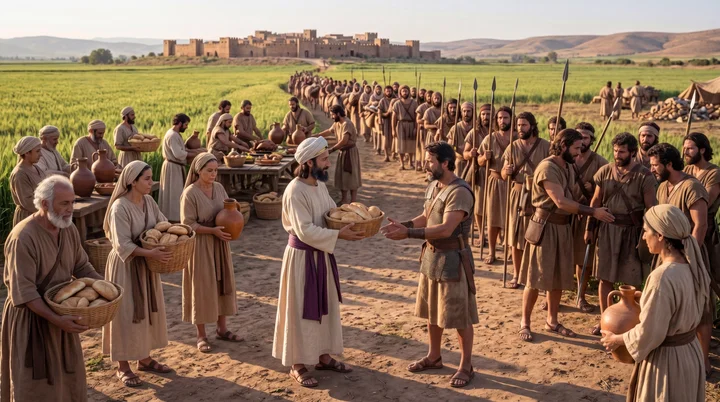
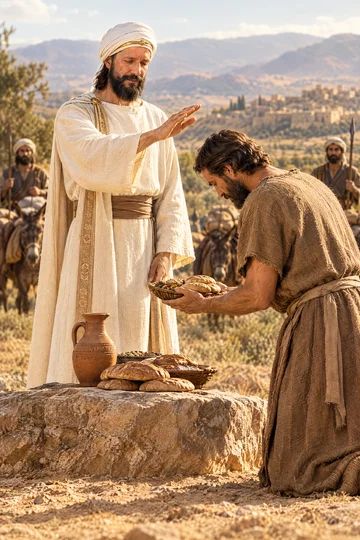
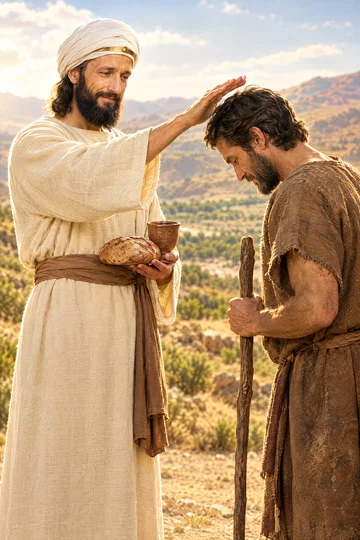
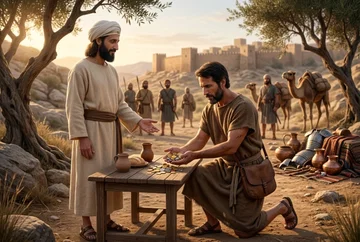
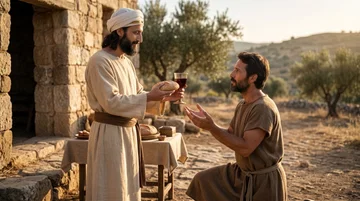
Cross-references 20 of 41
- Genesis 14:18-20
And Melchizedek king of Salem brought forth bread and wine: and he was the priest of the most high God.
Melchizedek blesses Abraham and receives his tenth.
- Psalms 110:4
The LORD hath sworn, and will not repent, Thou art a priest for ever after the order of Melchizedek.
Declares the Messiah a priest forever after Melchizedek’s order.
- Hebrews 8:1-2
Now of the things which we have spoken this is the sum: We have such an high priest, who is set on the right hand of the throne of the Majesty in the heavens;
Christ is seated in heaven as High Priest and ministers in the true tabernacle.
- Hebrews 7:17
For he testifieth, Thou art a priest for ever after the order of Melchisedec.
Christ is a priest forever after Melchizedek’s order.
- Hebrews 6:20
Whither the forerunner is for us entered, even Jesus, made an high priest for ever after the order of Melchisedec.
Identifies Christ as High Priest forever after Melchizedek’s order.
- Hebrews 7:23-25
And they truly were many priests, because they were not suffered to continue by reason of death:
Contrasts mortal priests with Christ’s unchangeable, continuing priesthood and intercession.
- Isaiah 9:6
For unto us a child is born, unto us a son is given: and the government shall be upon his shoulder: and his name shall be called Wonderful, Counsellor, The mighty God, The everlasting Father, The Prince of Peace.
The promised Son is called the Prince of Peace, matching the King of Peace.
- Jeremiah 23:6
In his days Judah shall be saved, and Israel shall dwell safely: and this is his name whereby he shall be called, THE LORD OUR RIGHTEOUSNESS.
Jeremiah calls the coming king the Lord our righteousness, echoing the title King of righteousness.
- Zechariah 6:13
Even he shall build the temple of the LORD; and he shall bear the glory, and shall sit and rule upon his throne; and he shall be a priest upon his throne: and the counsel of peace shall be between them both.
The Branch rules as king and serves as priest, with counsel of peace between them.
- Ephesians 2:14
For he is our peace, who hath made both one, and hath broken down the middle wall of partition between us;
Both identify Christ as peace.
- Malachi 3:10
Bring ye all the tithes into the storehouse, that there may be meat in mine house, and prove me now herewith, saith the LORD of hosts, if I will not open you the windows of heaven, and pour you out a blessing, that there shall not be room enough to receive it.
Calls for bringing tithes and offerings to God and promises blessing.
- Hebrews 5:6
As he saith also in another place, Thou art a priest for ever after the order of Melchisedec.
Christ is a priest forever in Melchizedek’s order.
- Galatians 3:29
And if ye be Christ’s, then are ye Abraham’s seed, and heirs according to the promise.
Those who belong to Christ are Abraham’s seed and heirs according to the promise.
- Hebrews 7:7
And without all contradiction the less is blessed of the better.
The greater Melchizedek blesses Abraham, showing his superiority.
- Hebrews 7:11
If therefore perfection were by the Levitical priesthood, ( for under it the people received the law,) what further need was there that another priest should rise after the order of Melchisedec, and not be called after the order of Aaron?
Contrasts the Levitical priesthood with the Melchizedek order.
- Leviticus 27:30
And all the tithe of the land, whether of the seed of the land, or of the fruit of the tree, is the LORD’s: it is holy unto the LORD.
Declares the tithe the Lord’s and holy to him.
- Genesis 14:20
And blessed be the most high God, which hath delivered thine enemies into thy hand. And he gave him tithes of all.
Abraham gives Melchizedek a tenth of all.
- Isaiah 32:1
Behold, a king shall reign in righteousness, and princes shall rule in judgment.
Describes a king who reigns in righteousness.
- Hebrews 5:10
Called of God an high priest after the order of Melchisedec.
Cited alongside Hebrews 7:2 concerning Christ’s priestly role.
- Psalms 110:1
The LORD said unto my Lord, Sit thou at my right hand, until I make thine enemies thy footstool.
The Messiah’s rule is joined to his priesthood after Melchizedek’s order.
Commentary
Each commentary is drawn from primary sources: the writings of Ellen G. White and Adventist pioneers and periodicals. Each commentary is separate. Its own words are not a quotation; follow the references to read the source passages.
Ellen G. White
12 sources
By interpretation the name in the verse means Melchizedek is King of righteousness, and after that also King of Salem, which is King of peace.ST Jul 22, 1886Ms 34, 1887, par. 13Ms 64, 1910, par. 15–16 The verse records that Abraham, the father of the faithful, gave to Melchizedek, priest of the Most High God, a tenth part of all he had and possessed.Lt 44, 1876, par. 5–63T 393.1–394.3DA 616.3–617.1ST Oct 2, 1879Ms 34, 1887, par. 13 Melchizedek was one of the witnesses God has always kept on the earth, and at that time he represented Jesus Christ in person to reveal heavenly truth and perpetuate God's law.Lt 190, 1905, par. 2
Melchizedek points to and is identified with Jesus Christ, the Messiah, the Prince of Peace, the Prince of Life, and the Redeemer of the world.ST Jul 22, 18864RED 127.22SP 395.2COS 96.2–97.10 Abraham's testimony about Melchizedek answers the question Who is this at Jerusalem by identifying Jesus entering the city as that King.4RED 127.2 The King of righteousness in the verse is the King whom believers prepare to meet.Ms 64, 1910, par. 15–16 Christ as the King of righteousness has riches of grace to be made known, and His abiding in the soul develops its resources so that the blessings He gives are diffused to others.Lt 396, 1904, par. 4–6
Abraham's gift establishes that tithing was ordained by God and kept from the earliest times as part of God's plan, before the Mosaic system and the time of Moses.3T 393.1–394.3DA 616.3–617.1ST Oct 2, 1879Ms 34, 1887, par. 13 The tenth was a voluntary offering expressing gratitude for God's blessings and part of a continuing principle of giving for religious purposes by returning a portion of God's gifts to support God's work on earth, and as God gave it the system is just and reasonable.DA 616.3–617.1ST Oct 2, 1879Ms 34, 1887, par. 13 The obligation to tithe remains binding and is not set aside, as a duty for believers in every age and for those under the Melchizedek priesthood, so that if Abraham was obligated they are obligated as well.Lt 44, 1876, par. 5–6DA 616.3–617.1Ms 34, 1887, par. 13 Christ recognizes paying tithes as a duty that ought to be done while condemning only abuse of the sacred obligation and neglect of the weightier matters of justice, mercy, and faith alongside it.DA 616.3–617.1
Sources
Pioneers and periodicals
87 sources
Abraham gave a tenth of the spoils from his victory over the kings to Melchizedek after being blessed by him, recognizing that the tenth belonged to the Lord.ST Aug 26, 1913RH Jul 9, 1901ST Jan 22, 1880 Melchizedek's name means King of righteousness, and his title King of Salem means King of peace, with Salem being the old name of Jerusalem.ST Aug 26, 1913ST Dec 10, 1894ST Sep 11, 1879RH Jul 7, 1874 He was a real historical priest of the Most High God and king, greater than Abraham because he received tithes from him and blessed him, uniting priesthood and kingship in one office as no Levitical priest could.ST Aug 26, 1913RH Jul 9, 1901ST Sep 11, 1879RH Mar 20, 1856ST Sep 11, 1879 Righteousness comes first and peace follows as its fruit, so these titles describe his character and are fulfilled in Christ as the King of righteousness and Prince of Peace.ST Jul 1, 1908ST Dec 2, 1889ST Jun 11, 1902ST Aug 30, 1905ST Jun 26, 1907 Abraham's gift proves tithing was already a binding obligation long before Moses and Levi, and since that priesthood now belongs to Christ, His people by faith owe to Him what Abraham gave to Melchizedek.ST Sep 3, 1912ST Jan 22, 1880RH Jan 16, 1913ST Feb 16, 1915RH Mar 18, 1873
Words and Titles Explained
By interpretation the name Melchizedek means King of righteousness, joining the Hebrew melchi meaning king with zedek meaning righteousness, with one rendering giving the sense My king is righteous.ST Aug 26, 1913ST Sep 11, 1879RH Jul 7, 1874ST Dec 2, 1889ST Feb 15, 1910 The translation is literal rather than figurative, and its meaning belongs to the Spirit's teaching through the record.ST Jul 1, 1908ST Dec 2, 1889ST Feb 15, 1910 Abraham gave to this priest of the Most High God a tenth of everything, and his lack of recorded parentage and of beginning or end of life refers to having no literal beginning as an infant or end through death.ST Aug 26, 1913ST Sep 11, 1879 He was greater than Abraham, but not Christ Himself, for Jesus was made high priest after his order.ST Aug 26, 1913ST Sep 11, 1879 His combined kingship and priesthood supplies what Aaron's order did not represent, making him the type of Christ as both King of Righteousness and Prince of Peace ministering in the heavenly sanctuary without inherited family line, predecessor, or successor.ST Sep 11, 1879RH Jul 7, 1874ST Jul 1, 1908
Salem means peace, so King of Salem means King of peace.ST Aug 26, 1913ST Sep 11, 1879RH Jan 16, 1913RH Mar 20, 1856RH Jul 7, 1874 Salem is the old name of Jerusalem, meaning founded peaceful or abode of peace, and Salem or Jerusalem can include God's people as well as the city.ST Aug 26, 1913ST Dec 10, 1894ST Sep 11, 1879 As priest-king he reigns over his people ministering righteousness and peace with power to give life, strength, and victory over foes.ST Dec 10, 1894RH Mar 20, 1856 Receiving tithes belonged to this order before the Aaronic priesthood existed, and when that temporary priesthood ended at the cross the privilege reverted to the eternal priesthood now held by Christ as high priest, so the tithe belongs to God's service and supports those who minister in it.RH Jan 16, 1913RH Mar 20, 1856 The lack of recorded parents or genealogy distinguishes this non-hereditary office from Aaron's hereditary order rather than proving he had no parents, and in having no inheritance through family line and no end of ministry through death it represents Christ's continuing priesthood.ST Sep 11, 1879RH Mar 20, 1856
The order of the titles matters, for peace follows righteousness and peace is the fruit and result of righteousness.ST Jun 11, 1902ST Aug 30, 1905ST Jun 26, 1907ST Aug 16, 1905 Only the righteous are truly at peace with God and His universe, so a King of righteousness is necessarily a King of peace.ST Jun 11, 1902ST Aug 30, 1905ST Aug 16, 1905 Because Christ conquered sin and is righteous and king, He is King of Righteousness, and because He ministers His life and fullness as Creator, giver of life, and Priest of the universe, He is also King of Peace.ST Jun 26, 1907 This points to the future time when sin is banished and righteousness brings peace, quietness, and lasting confidence, and to His present reign on His Father's throne as King-Priest since His ascension.ST Aug 30, 1905ST Jun 26, 1907 Righteousness and peace thus describe the role of the world's appointed king and priest, who as righteous father and teacher under Christ ministers and teaches his children the life bestowed in him through Christ.
King of righteousness and King of peace describe true character and office rather than mere position or official authority.ST Aug 30, 1905ST Nov 15, 1905ST Dec 2, 1880ST Nov 15, 1905ST Sep 20, 1905 Uprightness gave recognition as a true priest of the living God, and piety and practical righteousness made him an arbiter and minister of justice between God and man, a master mind to the tribes round about as the one light in an almost universally idolatrous and dark age by virtue of character, not by virtue of position.ST Aug 30, 1905ST Dec 2, 1880 Melchizedek is a title of the priestly order and of the office belonging to those of that order, not only a personal name, and every priest in that order bore the title and served as both priest and king.ST Nov 15, 1905ST Nov 15, 1905ST Sep 20, 1905 The man who met Abraham was an intelligent man, one of those called Melchizedek.ST Nov 15, 1905ST Nov 15, 1905 This is the same as the promised name THE LORD OUR RIGHTEOUSNESS for the King who shall reign and prosper and execute judgment and justice in the earth, showing Christ entered a priestly order that existed before He stepped into it, composed of a group or class of high priests whose office must then be determined.ST Aug 30, 1905ST Aug 20, 1912
Abraham's Gift in History
Abraham gave Melchizedek a tenth part of all he had gained, namely a tenth of the spoil and booty and substance from his victory in the slaughter of the kings.ST Aug 26, 1913RH Jul 9, 1901ST Jan 22, 1880ST Sep 11, 1879ST Feb 16, 1915 Melchizedek met him returning from that battle and blessed him, and Abraham's gift followed that meeting and blessing.ST Aug 26, 1913RH Jul 9, 1901ST Sep 11, 1879 It was his first act after God blessed him, given before he returned the remaining goods to the king of Sodom, and in it he recognized that the tenth belonged to the Lord.ST Jan 22, 1880CO 93.5ST Feb 16, 1915 The gift, together with the blessing Abraham received, shows Melchizedek's greatness and his double office as both king and priest, representing Christ who holds both offices.ST Aug 26, 1913RH Jul 9, 1901ST Sep 11, 1879
Melchizedek was a real historical person as much as Abraham was, king of Salem and priest of the Most High God.ST Aug 26, 1913ST Sep 11, 1879ST Sep 11, 1879ST Jun 25, 1896 He met Abraham returning from battle, blessed him, and received tithes from him, and his name and character and lack of recorded pedigree and double office are noted though little is told of his genealogy.ST Sep 11, 1879ST Sep 11, 1879RH Jul 20, 1916 His earthly ancestry is not preserved, and his lack of recorded parentage and of beginning or end of life refers to no recorded beginning as an infant or end through death, distinguishing a non-hereditary office with no predecessor or successor.ST Aug 26, 1913ST Sep 11, 1879RH Jul 20, 1916 He was made like the Son of God and abides as a priest continually, a fitting type of Christ but not Christ himself, with his order of work maintained in the Lord Jesus who serves at the right hand of God's throne in heaven.ST Sep 11, 1879ST Jun 25, 1896RH Jul 20, 1916
Salem signifies peace, and Salem was the old name of Jerusalem, meaning founded peaceful or abode of peace.ST Dec 10, 1894RH Oct 3, 1907ST Jul 18, 1900ST Jan 31, 1906 Ancient testimony is cited as confirming Melchizedek's kingship there at Jerusalem, and Salem or Jerusalem can include God's people as well as the city.ST Dec 10, 1894RH Oct 3, 1907ST Jan 31, 1906 Salem is presented as the capital of his righteous, peaceful kingdom, denoting his righteous peaceful kingdom and people, while Christ is to reign in the New Jerusalem.ST Dec 10, 1894ST Apr 12, 1905 That reign is a priest-king ministry over His people, ministering righteousness and peace with power to give life and strength and victory over foes.ST Dec 10, 1894
Melchizedek's Person and Order
Melchizedek was greater than Abraham, since Abraham gave him a tenth of all and received his blessing, yet he was not Christ himself but more than an ordinary man.ST Aug 26, 1913ST Jun 11, 1912ST Jun 25, 1896 Christ was made like him, as a priest of the same order rather than as his successor, and Jesus was made high priest after Melchizedek's order.ST Aug 26, 1913ST Jun 11, 1912ST Sep 20, 1883 To identify him as Shem or as Christ, or to establish his genealogy, would obscure the comparison and undo the argument about Christ's priesthood after his order.ST Sep 14, 1882ST Sep 20, 1883 His priesthood supplies features needed to portray Christ's priesthood that are missing from Aaron's, above all that he is presented as king as well as priest.ST Sep 14, 1882ST Sep 20, 1883 His name and titles make him a fitting type in whom righteousness and peace are fulfilled in Christ as the LORD OUR RIGHTEOUSNESS and our peace.ST Jun 25, 1896
In the testimony Abraham bears, Jesus is Melchizedek, King of Salem, which is King of Peace.ST Jun 22, 1882 Melchizedek is Christ the Priest-King.RH Aug 28, 1856 The appointed time ending in 1844 was when this Priest-King went to the marriage and received dominion, glory, and a kingdom from the Ancient of Days.RH Aug 28, 1856
Melchizedek was a visitor from another world and its head, as Adam was intended to be the head of this world.ST Dec 17, 1912ST Jun 11, 1912 Adam would have been like Melchizedek if he had not sinned, living forever and serving as priest or head of the human family and king of the earth, but by becoming a servant of Satan he lost that kingship.ST Jun 11, 1912ST Aug 26, 1913 Each inhabited world has its own Melchizedek as righteous father, teacher, representative and high priest, and the Melchizedek order is described as rulers of worlds.ST Jul 4, 1911ST Apr 19, 1905 The titles king of righteousness and king of peace describe a father and priest-king who imparts the righteousness and peace he possesses to his children by birth, which is applied to the first created being and ruler of a world.ST Jul 4, 1911 Adam was the first priest and by right the high priest of this world and would have retained an endless unchangeable priesthood if he had not surrendered rulership.ST Apr 19, 1905
After Adam lost his priesthood Satan became the prince of this world but did not become its Melchizedek, because in character he is the direct opposite of the King of righteousness and Prince of peace.ST Apr 19, 1905 His seat of government is Babylon meaning confusion rather than Salem meaning peace.ST Apr 19, 1905 The titles King of righteousness and King of peace carry no thought of intercession for sin but state exactly what Melchizedek is, a priest of the Most High God who leads and represents his people in worship under God whose throne is in heaven and whose kingdom rules over all.ST Apr 26, 1905 Christ likewise remains a Priest-King after the order of Melchizedek even when His intercession for sin ends.ST Apr 26, 1905 Christ imparts righteousness and peace to His children through the new birth and is to become this world's ruler and Priest-King.ST Jul 4, 1911 As the last Adam He redeems Adam's failure and becomes this world's everlasting Father, High Priest and King of righteousness and peace, transcendent above all other Melchizedeks as Creator, Redeemer, and King of kings.ST Jul 4, 1911ST Apr 26, 1905ST Apr 19, 1905
Without father, without mother, without genealogy, and having neither beginning of days nor end of life means that no pedigree, birth, death, or length of priesthood is recorded, not that he had no parents or did not die.ST Aug 26, 1913RH Mar 20, 1856ST Oct 21, 1889 His lack of recorded natural parentage and of a beginning or end of life refers to having no literal beginning as an infant or end through death in the record.ST Aug 26, 1913 This distinguishes his non-hereditary office from Aaron's hereditary order, for his priesthood was not inherited through a family line and death did not end its ministry.RH Mar 20, 1856 No royal ancestry or succession is recorded for him, just as no genealogical descent is reckoned for his priesthood.RH Mar 20, 1856 In these respects his combined office of king and priest serves as a pattern for Christ's priestly kingship, for Christ takes the throne of God to carry out His priestly work not by descent, which differs from His future rule on Israel's throne as the Son of David, which requires a traced genealogy.RH Mar 20, 1856
He was a real historical person and real king of the city of Salem in Abraham's time, whose name means My king is righteous, and whose name, character, lack of recorded pedigree, and double office made him a fitting type of Christ in His kingly priesthood.RH Mar 20, 1856RH Feb 20, 1913ST Jul 18, 1900 Like Christ, he was both priest and king, and his beginning and end and genealogy are not recorded, making him a type of Christ and Christ's continuing priesthood.RH Mar 20, 1856RH Feb 20, 1913 Salem was the old name of Jerusalem, whose name means founded peaceful.ST Jul 18, 1900
The Melchizedek priesthood is an order shared by Christ, who is preeminent in it, and Melchizedek is not merely a shadow or figure of Christ, for both are priests of this order.ST Oct 25, 1905 Unlike the Levitical priesthood, which served the needs of a sinful world by dealing with sin, the Melchizedek priesthood is suited to every condition and time, including what is still to come.ST Oct 25, 1905 Righteousness, sonship, fatherhood, and eternal life are essential features of the Melchizedek priesthood, making it an everlasting priesthood. This preeminent Melchizedek priesthood belongs to the teaching about Christ's fitness to redeem, and those He saves are kings and priests to Him forever.ST Oct 25, 1905 Melchizedek is a title of the priestly order borne by its priests as priest-kings, not only a personal name of the intelligent being called a man who met Abraham.ST Nov 15, 1905ST Nov 15, 1905ST Nov 15, 1905 Differing views that he was Shem, Christ, the Holy Spirit, or a Canaanite king are reported without deciding among them.ST Nov 15, 1905
Type of Christ's Kingship
Melchizedek joined kingship and priesthood in one person, being both priest and king at once.RH Jul 9, 1901ST Sep 11, 1879RH Jul 7, 1874ST Dec 10, 1902 That combination was absent from Aaron's order, from Levi, and from David, and it supplies what Aaron could not typify and completes the type of Christ's priesthood.RH Mar 20, 1856RH Jul 7, 1874ST Dec 10, 1902 His priesthood was not inherited through a family line, had no predecessor or successor, and was not ended by death in its ministry, and in these respects it represents Christ's continuing priesthood in the heavenly sanctuary.ST Sep 11, 1879RH Mar 20, 1856 As king and priest he represented Christ, who holds both offices in a royal priesthood.RH Jul 9, 1901ST Dec 10, 1902
Abraham gave him a tenth of everything and received his blessing, and this shows Melchizedek was greater than Abraham.ST Aug 26, 1913RH Jul 9, 1901CO 93.5ST Sep 5, 1895 That greatness extends therefore to Abraham's descendants, including the priestly tribe of Levi.ST Dec 10, 1902 The superiority lay in office as priest and king, since Abraham as stranger and pilgrim was otherwise doubtless not inferior, and the tithe recognized his divinely conferred office.RH Jul 9, 1901ST Dec 10, 1902ST Jun 11, 1912 His description shows he was more than an ordinary man, but he was not Christ, because Christ was made a high priest after his order and made like him.ST Aug 26, 1913ST Jun 11, 1912
By interpretation his name means King of righteousness and his title as king of Salem means King of peace.ST Jul 1, 1908ST Dec 2, 1889ST Jun 25, 1896ST Dec 2, 1889RH Nov 18, 1862 These titles are fulfilled in Christ as King of righteousness and Prince of Peace, truly King of Salem and our peace on the throne of grace.ST Jul 1, 1908ST Dec 2, 1889ST Dec 2, 1889RH Nov 18, 1862 Melchizedek means King of righteousness, fulfilled in Christ as the LORD OUR RIGHTEOUSNESS, and King of Salem means King of peace, fulfilled in Christ who is our peace.ST Jun 25, 1896 He is a type of the Messiah and promised Seed, a righteous King and Prince of peace, the revelation of God in humanity who appears for the salvation of His people.RH Nov 18, 1862RH Feb 4, 1904
He is presented as a preacher and teacher of righteousness who taught God's system of religion grounded in the commandments, his priestly office being likened to Christ's.RH Aug 17, 1876 His mediatorial work, with Christ's work to reconcile men to God, is the heart of both the old and the new dispensation. The Melchizedek priesthood centers in Jesus Christ as great High Priest over that service just as over Aaron's, making Christ and His work for man the central theme in which all truths of Scripture meet.
Christ's Heavenly Priesthood and Reign
Christ's priesthood after this order has no predecessor and no successor, for it is not inherited through a family line but made after the power of an endless life.ST Sep 11, 1879ST Nov 23, 1904 Where the Levitical priests were dying men so the office had to pass to others, He having once assumed the office as priest forever never passes it to another, because He ever lives to make intercession.ST Oct 13, 1909RH Jan 20, 1853 The change is from many mortal priests with repeated sacrifices to one Priest with one offering and one continual sacrifice, by which He perfects those who are sanctified and gives complete salvation.ST Sep 11, 1879ST Oct 13, 1909 The Melchizedek priesthood therefore does not pass to another but has taken the place of the Levitical priesthood as its unchangeable pattern.ST Nov 23, 1904RH Jan 20, 1853
He ministers in the heavenly sanctuary in the true tabernacle which the Lord pitched and not man, not on earth.ST Sep 11, 1879ST Oct 13, 1909ST Oct 21, 1880ST Jul 2, 1885 He sprang from Judah rather than Levi and could not serve as priest under the earthly order or in the earthly sanctuary, yet as priest after Melchizedek's order without recorded descent from Levi He could serve in heaven.RH Dec 16, 1858RH Jul 29, 1858ST Jul 2, 1885 His offering at Calvary was preparatory to the atonement He afterward makes as High Priest, doing in heaven what Moses and Aaron did in its earthly pattern.ST Oct 13, 1909RH Jul 29, 1858ST Oct 21, 1880
The Levitical priesthood with its ordinances of divine service performed the ministration of the first covenant, in contrast to the more excellent ministry of Christ in all its branches fulfilling the ministration of the second covenant.ST Oct 13, 1909RH Jan 20, 1853RH Mar 8, 1906 That first order was superseded at the cross, at the termination of the seventy weeks, where shadow gave place to substance, the tabernacle made with hands gave place to the true tabernacle, the offering of bulls and goats gave place to the great sacrifice, the example and shadow of heavenly things was terminated by the more excellent ministry it shadowed, and the holy places which were figures of the true were succeeded by the true holy places in heaven.RH Jan 16, 1913ST Oct 13, 1909RH Jan 20, 1853 The change of priesthood required a change of the law governing the priesthood, from many mortal priests in the earthly sanctuary to Christ's ministry in heaven, because perfection did not come through the Levitical service.ST Oct 13, 1909ST Dec 23, 1889RH Jan 20, 1853
Christ now serves as Priest-King on His Father's throne in heaven, sitting at the Father's right hand as priest and king at the same time and sharing the rule of the universe with the Father.ST Aug 29, 1878RH May 29, 1856ST Jun 7, 1883 This priest-king after the order of Melchizedek, who was both king and priest, builds the spiritual temple from Jews and Gentiles redeemed by His blood.ST Aug 29, 1878ST Jun 7, 1883ST Jun 7, 1883 His priestly rule is on the Father's throne exclusively, distinct from His own throne on which He will not serve as priest, not on David's throne, and He never sits on two thrones at once nor officiates as priest on David's throne.RH May 29, 1856RH Dec 6, 1870ST Aug 21, 1879 It continues as long as His mediation and probation continue, including entering the Most Holy Place to cleanse the sanctuary, blot out transgressions, and finish the priestly work.RH May 29, 1856RH Dec 6, 1870
He receives His own throne, kingdom, dominion and glory at the close of His priestly work, a subordinate throne on which He becomes subject to the Father, and then reigns forever as King of righteousness and peace.RH May 29, 1856ST Jul 24, 1893ST Apr 9, 1896RH Jul 6, 1916 The appointed time ending in 1844 was when this Priest-King went to the marriage and received dominion, glory, and a kingdom from the Ancient of Days, a progressive work that commenced in 1844 and will terminate just previous to the pouring out of the plagues.RH May 29, 1856RH Aug 28, 1856 His present reign on the Father's throne as kingly priest is therefore preliminary to receiving the throne of eternal glory, when as the great peacemaker and King of the coming kingdom He ends strife and fills the earth with peace.RH Jul 24, 1855ST Jul 24, 1893ST Apr 9, 1896 The mysterious king-priest himself will rise to meet his Antitype in that eternal reign that begins with the destruction of sin.RH Jul 6, 1916
Tithe Obligation and Righteous Peace
Abraham's payment of a tenth to Melchizedek belonged to the time of the Melchizedek priesthood before Moses lived and before the Levitical law existed.ST Sep 3, 1912ST Mar 27, 1893ST Sep 9, 1880 It proves the tithing system dates back to the days of Abraham and was already an established practice and binding obligation in the patriarchal age before him.ST Jan 22, 1880RH Mar 18, 1873 It is no more Jewish than the promises made to Abraham, with the later Jewish economy only adapting that earlier system to support the Jewish priesthood.RH Mar 18, 1873 Abraham gave a tenth of all he had gained, including the booty, spoil and goods recovered by victory after God blessed him, recognizing Melchizedek as God's priest, and it was his first act after being met and blessed.ST Jan 22, 1880ST Sep 9, 1880 Since Christ is priest after Melchizedek's order, the change spoken of in Hebrews 7 concerns the priesthood, not the obligation to tithe, so Abraham's example supports tithing by his children of faith.ST Sep 3, 1912
Receiving tithes belonged first to the Melchizedek priesthood before the Aaronic priesthood existed, was assigned to Levi under Israel's sanctuary service and temple service, and when the temporary Aaronic priesthood ended at the cross this privilege reverted to the eternal priesthood now held by Christ as High Priest forever.RH Jan 16, 1913RH Mar 18, 1873RH Apr 8, 1902 Melchizedek was a priest of the same order as Christ and represented Christ, while Levi who received tithes under the law paid tithes in the loins of Abraham, and the change of the priesthood requires a change of the law relating to the priesthood.RH Mar 18, 1873 Those who are Abraham's children by faith therefore sustain to Christ the same relation Abraham sustained to Melchizedek in tithing, and Melchizedek's priesthood being supported by tithes shows Christians should pay tithes to Christ their High Priest.ST Sep 3, 1912RH Mar 18, 1873 There is far more propriety in them doing so for the support of His cause and those who minister in it, because He has purchased them by His own blood and they owe all to Him.RH Jan 16, 1913RH Mar 18, 1873 Abraham's gift confirms the link, for he regarded a tenth of the property he had gained as belonging to the Lord and gave it to Melchizedek before returning the remaining goods to Sodom's king.ST Feb 16, 1915
The tenth belongs to the Lord even for those who do not recognize His claim, as a voluntary offering of gratitude set apart for God's service and the support of His servants, ministers and work.RH Jan 16, 1913RH Apr 8, 1909RH Mar 3, 1904 Abraham gave Melchizedek a tenth part of all the spoil brought back from the battle of the kings, giving the tenth as recognition that it belonged to the Lord and honoring God with what belonged to Him before returning the rest.ST Jan 22, 1880ST Feb 16, 1915RH Mar 3, 1904 Giving it was the first thing he did after God blessed him, presented as evidence that the patriarchs observed the tithe as an established rule for supporting God's ministers.ST Jan 22, 1880 The verse supports the continuing recognition of the tithe in Christ's priesthood, which is forever after Melchizedek's order.ST Feb 16, 1915 Melchizedek's name means king of righteousness and Salem means peace, so he is also called king of peace.ST Oct 15, 1902
As King of righteousness and King of peace, with Salem signifying peace and including God's people as well as the city, Christ's priest-king ministry reigns over His people ministering righteousness and peace.ST Dec 10, 1894ST Jun 11, 1902ST Dec 2, 1889 The order matters, for peace follows and is the fruit of righteousness, so a King of righteousness is necessarily a King of peace, and because Christ is priest after Melchizedek's order He is the Priest-King of righteousness and peace on the throne of grace.ST Jun 11, 1902ST Dec 2, 1889 He exercises power to give them life, strength and victory over their foes.ST Dec 10, 1894 As King of Peace and High Priest in His priestly office He makes peace between humanity and God through the cross, obtaining redemption by shedding His own blood and sacrificing His life to bring reconciliation, repentance and forgiveness.ST Dec 20, 1883RH Oct 27, 1863RH Apr 14, 1874
These titles fitly represent the Son of God, who is truly King of righteousness and King of peace and our peace on the throne of grace.ST Dec 2, 1889 Righteousness and peace belong together in Him and in everyone who is saved, and righteousness in the human heart is evidence that Christ has established His throne there and that His everlasting kingdom is present.ST Aug 22, 1900RH May 21, 1908 His kingdom is spiritual, shown in the lives, hearts, thoughts and affections of willing subjects through mercy, justice and freedom for the oppressed, served from love and not advanced by force or civil authority.ST Jan 21, 1903 Only those who are morally clean, with the whole law of God written in the heart and its principles shining in the life, are in harmony with heaven's rule and can bear His vessels and follow Him, for because He is righteous He cannot fellowship iniquity and because He is peace He cannot fellowship discord or use anyone who practices iniquity to proclaim the true gospel.RH May 21, 1908 His reign calls believers to be at peace together now, following Him with suffering, work and prayer, yielding all to let Him rule and change corruption to purity, with heaven beginning below as the earnest of eternal rest in the land beyond the river where dwellers live tranquil as a star without tumult.ST Jun 23, 1887 Loyalty to the King of peace means refusing arms even when called, looking beyond the world's final harvest to a glorious inheritance when sin is destroyed.RH Jan 4, 1912
Sources