Hebrews 7:3
Without father, without mother, without descent, having neither beginning of days, nor end of life; but made like unto the Son of God; abideth a priest continually.
Translations
Without father, without mother, without descent, having neither beginning of days, nor end of life; but made like to the Son of God; stays a priest continually.
Without father, without mother, without descent, having neither beginning of days, nor end of life; but made like unto the Son of God; abideth a priest continually.
without father, without mother, without descent, having neither beginning of days, nor end of life; but made like unto the Son of God; abideth a priest continually.
Without father, without mother, without descent, having neither beginning of days, nor end of life; but made like to the Son of God; abideth a priest continually.
Revised Version, American Standard Version
without father, without mother, without genealogy, having neither beginning of days nor end of life, but made like unto the Son of God), abideth a priest continually.
without father, without mother, without genealogy, having neither beginning of days nor end of life, and being made like to the Son of God, doth remain a priest continually.
without father, without mother, without genealogy; having neither beginning of days nor end of life, but assimilated to the Son of God, abides a priest continually.
Without father, without mother, without pedigree, having, neither beginning of days, nor of life an end, but made like unto the Son of God, abideth a priest evermore.
Berean Standard Bible, Majority Standard Bible
Without father or mother or genealogy, without beginning of days or end of life, like the Son of God, he remains a priest for all time.
without father, without mother, without genealogy, having neither beginning of days nor end of life, but made like the Son of God), remains a priest continually.
Being without father or mother, or family, having no birth or end to his life, being made like the Son of God, is a priest for ever.
Without father, without mother, without kinred, and hath neither beginning of his dayes, neither ende of life: but is likened vnto the Sonne of God, and continueth a Priest for euer.
Douay-Rheims (Challoner revision)
Without father, without mother, without genealogy, having neither beginning of days nor end of life, but likened unto the Son of God, continueth a priest for ever.
Pictures
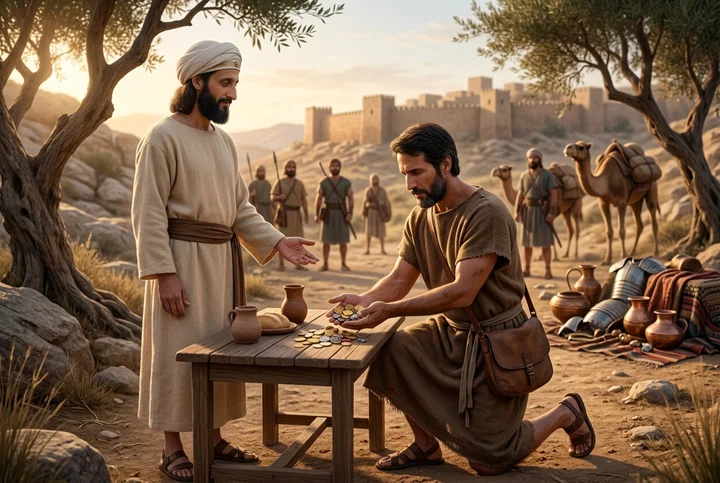
Cross-references 20 of 44
- Genesis 14:18-20
And Melchizedek king of Salem brought forth bread and wine: and he was the priest of the most high God.
Melchizedek, king and priest, blesses Abraham and receives his tithe.
- Hebrews 8:1-2
Now of the things which we have spoken this is the sum: We have such an high priest, who is set on the right hand of the throne of the Majesty in the heavens;
Christ is the High Priest seated at God’s right hand, ministering in the true sanctuary.
- Hebrews 7:24-25
But this man, because he continueth ever, hath an unchangeable priesthood.
Christ’s unchangeable priesthood continues forever, enabling him to intercede and save completely.
- Psalms 110:4
The LORD hath sworn, and will not repent, Thou art a priest for ever after the order of Melchizedek.
God’s oath establishes Christ’s enduring priesthood after Melchizedek’s order.
- Hebrews 6:20
Whither the forerunner is for us entered, even Jesus, made an high priest for ever after the order of Melchisedec.
Jesus is High Priest forever after Melchizedek’s order.
- Hebrews 5:6
As he saith also in another place, Thou art a priest for ever after the order of Melchisedec.
Calls Christ a priest forever in Melchizedek’s order.
- Hebrews 7:17
For he testifieth, Thou art a priest for ever after the order of Melchisedec.
It witnesses that Christ is a priest forever after this order.
- Zechariah 6:13
Even he shall build the temple of the LORD; and he shall bear the glory, and shall sit and rule upon his throne; and he shall be a priest upon his throne: and the counsel of peace shall be between them both.
The Branch rules as king and serves as priest upon his throne.
- Psalms 110:1
The LORD said unto my Lord, Sit thou at my right hand, until I make thine enemies thy footstool.
Christ sits at God’s right hand as Priest and ruler after Melchizedek.
- Hebrews 9:11-12
But Christ being come an high priest of good things to come, by a greater and more perfect tabernacle, not made with hands, that is to say, not of this building;
Christ ministers in the greater tabernacle
- Hebrews 7:25
Wherefore he is able also to save them to the uttermost that come unto God by him, seeing he ever liveth to make intercession for them.
Christ ever lives to intercede and carry out his priestly work.
- Hebrews 8:4-5
For if he were on earth, he should not be a priest, seeing that there are priests that offer gifts according to the law:
Earthly priestly ministry prefigures Christ’s heavenly priestly ministry.
- Hebrews 7:21
( For those priests were made without an oath; but this with an oath by him that said unto him, The Lord sware and will not repent, Thou art a priest for ever after the order of Melchisedec:)
Christ is declared a priest forever after Melchizedek’s order.
- Hebrews 7:12
For the priesthood being changed, there is made of necessity a change also of the law.
A change of priesthood necessitates a change of law.
- Hebrews 7:23
And they truly were many priests, because they were not suffered to continue by reason of death:
Mortal Levitical priests could not continue in office because of death.
- Hebrews 7:8
And here men that die receive tithes; but there he receiveth them, of whom it is witnessed that he liveth.
Melchizedek is witnessed to live and receives tithes.
- Hebrews 7:16
Who is made, not after the law of a carnal commandment, but after the power of an endless life.
The power of endless life is the basis for the Melchizedek priesthood’s permanence.
- Hebrews 7:14
For it is evident that our Lord sprang out of Juda; of which tribe Moses spake nothing concerning priesthood.
Christ came from Judah, not Aaron’s priestly line.
- Hebrews 7:7
And without all contradiction the less is blessed of the better.
The greater blesses the lesser.
- Hebrews 9:24
For Christ is not entered into the holy places made with hands, which are the figures of the true; but into heaven itself, now to appear in the presence of God for us:
Christ’s continual priesthood is exercised in heaven itself for us.
Commentary
Each commentary is drawn from primary sources: the writings of Ellen G. White and Adventist pioneers and periodicals. Each commentary is separate. Its own words are not a quotation; follow the references to read the source passages.
Ellen G. White
4 sources
Melchizedek was Jesus Christ Himself appearing in person on earth as King of Salem, meaning King of Peace.Lt 190, 1905, par. 24RED 127.2 His appearing was to reveal the truth of heaven and to perpetuate the law of God.Lt 190, 1905, par. 2 He is proof that God has never left Himself without a witness on the earth, being one of God's appointed, heaven-sent agencies with abundant evidence of divine appointment.Lt 190, 1905, par. 2 Abraham recognized Him as the coming One, declaring Him to be the Messiah, the Prince of Life, and the Redeemer of the world, as witnessed when He comes to Jerusalem.4RED 127.2
The verse belongs to the account of the Melchizedek priesthood, under which believers are now living.Lt 44, 1876, par. 5–6 The tithing system connected with Melchizedek was ordained by God and observed from the earliest times.DA 616.3–617.1 As God gave it, the system was just and reasonable.DA 616.3–617.1 Abraham the father of the faithful paid tithes of all that he possessed to Melchizedek.Lt 44, 1876, par. 5–6DA 616.3–617.1
Abraham's example makes tithe-paying a continuing duty for believers, for if Abraham gave a tithe of all he possessed, that duty applies to believers as well.Lt 44, 1876, par. 5–6 The obligation itself remains binding, and Christ affirmed that tithes ought to be paid and not left undone, alongside judgment, mercy, and faith.DA 616.3–617.1
Sources
Pioneers and periodicals
116 sources
The record is silent about his parents, ancestry, birth and death, not teaching that he literally had none but presenting him without genealogy or dates so that his priesthood appears without predecessor or successor.RH Dec 16, 1858RH Mar 20, 1856ST Sep 11, 1879 He was a real man, king of Salem and priest of the Most High God, who met Abraham, blessed him and received a tenth from him, yet Scripture purposely conceals all else about him to make him a fitting pattern.ST Sep 11, 1879RH Jul 9, 1901RH Sep 7, 1869 That silence makes him a likeness of the Son of God, picturing a priesthood not received by descent from Aaron, not interrupted by death, and not passing to another, which belongs in full only to Christ.ST Sep 11, 1879RH Jul 9, 1901 Christ is therefore priest after this order in the heavenly sanctuary, not as an earthly priest from Levi, made priest by God's oath and the power of endless life to offer Himself once and ever live to intercede.RH Jan 16, 1913ST Dec 10, 1902ST Oct 13, 1909RH Jul 29, 1858RH Dec 6, 1870 As priest-king of righteousness and peace He unites royalty with priesthood, superseding the mortal Levitical priesthood, and Abraham's tithe to His type shows tithing belongs to His everlasting priesthood and continues under the gospel.ST Sep 3, 1912ST Jan 3, 1905ST Dec 10, 1902RH Sep 7, 1869RH Mar 18, 1873
Words and Record
Without father, without mother, without descent means no recorded parents, ancestry, or pedigree, not that he literally had none.RH Dec 16, 1858RH Mar 20, 1856ST Sep 11, 1879RH Sep 7, 1869 It is a common Jewish way of speaking of one whose genealogy is unknown, and the Greek word means without genealogy.RH Dec 16, 1858ST Sep 14, 1882ST Dec 2, 1889ST Aug 13, 1885 In the Jewish priesthood a candidate had to establish descent from Aaron to qualify for office, and one unable to trace that ancestry was called without father.RH Dec 16, 1858RH Mar 20, 1856ST Sep 11, 1879 By contrast Melchizedek is identified only as king of Salem and priest of the Most High God, with no father, mother, pedigree, birth, death, or descendants written in the genealogies.RH Dec 16, 1858ST Sep 11, 1879RH Sep 7, 1869ST Aug 26, 1913
Having neither beginning of days nor end of life means Scripture records no birth, death, or dates for him and no beginning or ending of his priestly service, not that he had no beginning of existence or never died.RH Dec 16, 1858ST Sep 11, 1879RH Sep 7, 1869RH Jul 7, 1874 Taken absolutely, endless existence without beginning or end belongs to God alone, and only God the Father has that quality in the absolute sense.RH Sep 7, 1869 In his priestly character the phrases mean he had no predecessor or successor in office, did not receive priesthood by lineal descent from Aaron's line, and was not removed by death as Aaron's priests were.RH Mar 20, 1856ST Sep 11, 1879RH Jul 9, 1901RH Jul 7, 1874 His priesthood did not come by being born into a certain line, death did not end his ministry as it did for Aaron's priests, and the lack of information about his identity allows him to stand as a type.RH Mar 20, 1856ST Sep 11, 1879RH Jul 7, 1874
Made like unto the Son of God and abiding a priest continually means his priesthood is presented as remaining forever, unchangeable, and not passing to another, which is fulfilled only in Christ's continual priesthood in the heavenly sanctuary and nowhere else.ST Sep 11, 1879RH Jul 9, 1901ST Jul 1, 1908 The record gives no genealogy or succession for him, so he represents a priesthood that does not depend on genealogy and is of the same order as Christ's everlasting priesthood.ST Jul 1, 1908ST Dec 2, 1889 Made like the Son of God marks likeness derived from another and distinct persons sharing the same priestly order.RH Jul 9, 1901ST Apr 12, 1905ST Jun 11, 1912ST Jul 21, 1909ST Aug 13, 1885 Christ is made like Melchizedek and after his order, not Melchizedek himself, for that would make Christ a priest after the order of Christ and a type of himself, and God the Father is not made like His Son.ST Sep 14, 1882ST Apr 12, 1905ST Jun 11, 1912ST Jul 21, 1909ST Aug 13, 1885
The omission of ancestry, birth, and death is deliberate by the Holy Spirit to make Melchizedek a fitting type, and Scripture's silences carry meaning as much as its stated details.ST Sep 11, 1879RH Sep 7, 1869RH Sep 28, 1905ST Sep 20, 1883 Establishing a genealogy would undo the argument, since the type depends on his remaining without an identifiable genealogy to supply what is lacking in Aaron and furnish a complete pattern of Christ's priesthood.ST Sep 14, 1882ST Sep 20, 1883 Prying into what is not revealed would destroy the truth, and Paul's words prevent a definite answer to further questions about him.ST Sep 14, 1882ST Apr 5, 1883 All that is known of him comes only from Genesis 14, Psalm 110, and Hebrews; he appears briefly as king of Salem and priest of the Most High God, superior to Abraham by virtue of office, meeting Abraham, receiving tithes and blessing him, and then disappears, leaving his race, parents, lifespan, and death purposely concealed.RH Sep 7, 1869RH Feb 3, 1910RH Dec 1, 1910 The word for day in the verse is used for a span of time, illustrating that it can mean a full twenty-four-hour day.RH Dec 12, 1871
Identity of Melchizedek
Melchizedek was a real man and distinct person who lived in Abraham's time as king of Salem and priest of the Most High God, meeting Abraham returning from the slaughter of the kings, blessing him, and receiving a tenth part of all from him.ST Sep 11, 1879ST Oct 21, 1889 He stood alone on earth as a representative of God and high priest, by interpretation King of righteousness and King of Salem meaning peace, thus King of peace, uniting royalty with priesthood in one person.ST Sep 11, 1879ST Oct 21, 1889 He was made like the Son of God and abides a priest continually.ST Oct 21, 1889 He was not Shem, whose father, genealogy, and age at death are recorded, whereas no father, mother, pedigree, birth, or death is recorded for Melchizedek.ST Sep 14, 1882ST Aug 13, 1885ST Aug 13, 1885 He was not Christ himself, for that would make Christ a priest after the order of Christ and a type of himself; being made like the Son of God marks distinct persons sharing the same priestly order, Melchizedek having no pedigree while Christ was born, died, and had ancestry traced from Adam.ST Sep 14, 1882ST Apr 12, 1905ST Jul 21, 1909ST Aug 13, 1885 The plain statement of his office and act fully tells who he was as a distinct man, and identifying him further by prying into what is not revealed would destroy the truth supplied to furnish a complete type of Christ's priesthood lacking in Aaron.ST Sep 14, 1882ST Aug 13, 1885
He was a man and not an angel or a manifestation of God in human guise, holding priesthood not by birth or succession to office or belonging to a priestly order but by personal character and singular uprightness as a witness to and servant of the one God in an idolatrous community.RH Jul 9, 1901ST Dec 2, 1880 Calling him a man does not prove he was an inhabitant of this world, since angels are also called men; he could have been a son of God from another world temporarily representing God on earth.ST Jan 3, 1905 Taken absolutely, without father, without mother, without descent, having neither beginning of days nor end of life fits no human being, for every member of the human family except Adam has had parents and beginning of days, and with two exceptions has had end of life.RH Sep 7, 1869 Adam alone was without father and mother and descent, yet Adam had beginning of days and end of life; Enoch had no end of life but had father, mother, descent, and beginning of days; Elijah was taken without dying but did not exist till long after Melchizedek's days.RH Sep 7, 1869 Even the angels have all had beginning of days, and the Son of God is excluded from the absolute sense, for He had God for His Father and did at some point in the eternity of the past have beginning of days; only God the Father is without father, mother, descent, beginning of days, and end of life in the absolute sense, yet Melchizedek was not God the Father.RH Sep 7, 1869RH Sep 7, 1869RH Sep 7, 1869 Being made like unto the Son of God means having a likeness derived from another, while God the Father is not made like His Son and has no existence derived from another, but the Son is the express image of His Father.RH Sep 7, 1869
Endless existence without beginning or end belongs to God alone, so claiming that endless past and future for man himself as a conscious life-principle superior to death is blasphemous arrogance and the legitimate result of the doctrine of inherent immortality.RH Apr 28, 1868 He came into existence by creation as a full-grown man directly made priest by God, not by birth as an infant, without human parents or descent into the human family whose only created members were Adam and Eve; without beginning of days describes how his life began.ST Aug 27, 1912ST Aug 27, 1912ST Apr 12, 1905 Being made like the Son of God means he was created in the Son's likeness as head of another world, and without descent follows from having no birth lineage.ST Aug 27, 1912 His life without a human beginning fits the endless life essential to the Melchizedek priesthood, and his having no end of life means he never died, which points to belonging to a sinless world and never knowing sin.ST Aug 27, 1912 Since no later human fits the description of created rather than born with no parents or ancestry and no beginning or end of life, remaining a priest continually, he must be from another world, as Adam likewise created in God's image as a mature man would have continued to live had he not sinned.ST Jul 4, 1911ST Apr 12, 1905ST Apr 12, 1905
He was a distinguished visitor and head from another unfallen, sinless world whose peaceful capital was Salem, sent for a time under God's plan to cooperate with Abraham, to receive homage from him, and to illustrate what God designed this world to be.ST Dec 17, 1912ST Nov 29, 1910ST Apr 26, 1905ST Jun 3, 1913 His never dying points to belonging to a world that never knew sin, and he still lives and continues as its father, priest-king, and giver of righteousness and peace.ST Sep 20, 1905ST Aug 27, 1912ST Apr 12, 1905 He was greater than Abraham, and Christ is the priest made like Melchizedek, not Melchizedek himself.ST Jan 3, 1905ST Jun 11, 1912 In an unfallen world priest does not mean one who intercedes for pardon for sin, for there is no sin needing pardon, and king of righteousness and king of peace carries no thought of intercession but states exactly what he is; as there were teaching priests in the ancient Jewish economy, so in an unfallen world a priest is leader and representative of his people in worship, a priest-king of righteousness and peace under Him whose kingdom rules over all.ST Jun 11, 1912ST Apr 26, 1905 Christ, having once offered Himself and now pleading His blood, will when the necessity passes cease to act as intercessor yet still remain Priest-King, our Melchizedek.ST Apr 26, 1905
The Melchizedek priesthood is the office of representative, everlasting father, and high priest of a world, holding an endless, unchangeable priesthood, existing before the people of his world and remaining with them to the end.ST Nov 29, 1910ST Sep 20, 1905ST Apr 19, 1905 Adam was created to be this earth's first Melchizedek, first priest and high priest after this order, priest or head of the human family and king of the earth, a king of righteousness and peace, who would have kept it continually with endless life and an unchangeable priesthood if he had not sinned and surrendered rulership to the usurper.ST Nov 29, 1910ST Aug 26, 1913ST Apr 19, 1905ST Aug 27, 1912 Since God did not leave the world without a Melchizedek, the office was foreshadowed for 4,000 years in the sacrificial service pointing to the last Adam, while Satan temporarily occupied the place of earth's representative with access to heaven.ST Apr 19, 1905 Christ as the last Adam, greater than Adam, redeems that failure by taking man's nature and sinful condition and by His righteous life, receiving His priesthood from above by the oath of God to become this world's Melchizedek, everlasting Father, and eternal King, the glorious Melchizedek who is High Priest forever, both King and Priest.ST Nov 29, 1910ST Jun 3, 1913ST Aug 27, 1912 As the great Melchizedek of the universe He ministered even before sin entered and before He came to this world, and when He became man He took upon Himself also the Melchizedek priesthood of this world lost by Adam, becoming the antitype not only of the Aaronic priesthood but the one who fills it out to fullness to put away sin.ST Mar 21, 1911
Without descent can refer to priestly office rather than personal ancestry, supporting that Melchizedek is a title for the order; there was more than one Melchizedek priest and the order existed before Christ entered it as a group of high priests.ST Nov 15, 1905ST Jul 21, 1909ST Aug 20, 1912 Satan, though he thereby became prince of this world by Adam's fall, did not become its Melchizedek, because his character is the direct opposite of the King of Righteousness and Prince of Peace, belonging to Babylon-confusion rather than Salem-peace.ST Apr 19, 1905
Type of Christ
The absence of recorded father, mother, ancestry, birth, death, predecessor, or successor was arranged to make Melchizedek a type, figure, and pattern revealing the greatness of Christ's priesthood.RH Dec 16, 1858RH Mar 20, 1856ST Sep 11, 1879RH Sep 7, 1869RH Jul 9, 1901 Scripture gives no genealogy, birth, death, or descendants beyond king of Salem and priest of the Most High God, and that silence is deliberate so his identity cannot be traced and he can stand as a continuing priest-king.RH Dec 16, 1858ST Sep 11, 1879RH Sep 7, 1869RH Jul 9, 1901RH Sep 7, 1869 The omission does not mean he literally had no parents, birth, death, or beginning of existence, but that none are recorded, and only in that representative sense is he made like the Son of God and abiding a priest continually.ST Sep 11, 1879RH Sep 7, 1869RH Jul 9, 1901RH Jul 7, 1874ST Dec 10, 1902 His priesthood is presented as remaining forever, unchangeable, and not passing to another, which is fulfilled only in Christ's continual priesthood in the heavenly sanctuary and nowhere else.RH Mar 20, 1856ST Sep 11, 1879ST Apr 19, 1910RH Jul 9, 1901ST Dec 10, 1902 In this way he supplies what Aaron's order could not typify and reveals the true greatness and vital importance of Christ's priesthood, surpassing what the Aaronic type indicates.ST Apr 19, 1910ST Sep 11, 1879ST Dec 9, 1889RH Mar 20, 1856RH Feb 20, 1913
Unlike Aaron's priests, whose descent from Aaron had to be documented and carefully preserved to qualify for office, Melchizedek's priesthood did not come by lineal descent and pictures a priesthood not dependent on genealogy.RH Dec 16, 1858RH Mar 20, 1856ST Sep 11, 1879RH Jul 7, 1874ST Sep 11, 1879 Without father and without mother is the common way of speaking of one whose genealogy is unknown or obscure, and the Greek means without genealogy, as with a candidate unable to establish descent from Aaron.RH Dec 16, 1858RH Mar 20, 1856ST Sep 11, 1879ST Sep 11, 1879ST Dec 2, 1889 He had no father or son in office, meaning no predecessor or successor, and no beginning of days or end of life in office, meaning his ministry was not received by being born into a certain line and was not stopped by death as was the case with all of Aaron's order.RH Mar 20, 1856ST Sep 11, 1879RH Jul 7, 1874ST Dec 2, 1889
As priest-king uniting royalty with priesthood, Melchizedek is a higher and more complete type of Christ than Aaron, whose priesthood had no kingship and therefore gave a limited, imperfect picture.ST Dec 10, 1902ST Sep 11, 1879ST Dec 9, 1889RH Mar 20, 1856RH Feb 20, 1913 His superiority to Abraham, shown by receiving tithes from him and blessing him, proves him greater than Abraham's posterity including Aaron and Levi, since Levi himself paid tithes in Abraham.ST Jan 3, 1905ST Dec 10, 1902RH Sep 7, 1869ST Dec 9, 1889RH Feb 20, 1913 That greatness belongs to him in his office as priest-king, for Abraham was not a king but a stranger and pilgrim, while in other respects Abraham was not inferior.ST Jan 3, 1905RH Sep 7, 1869ST Dec 9, 1889 The description of no genealogy and neither beginning of days nor end of life belongs literally to Jesus alone and to Melchizedek only in a secondary, metaphorical, and representative sense concerning the record.RH Jul 9, 1901ST Dec 10, 1902
Christ has a genealogy establishing His claim to David's throne, but it does not determine His place as High Priest on His Father's heavenly throne.ST Dec 2, 1889RH Mar 20, 1856 His priestly kingship is not held by genealogical descent and has no predecessor or successor in that office as the one mediator exalted to God's throne.ST Dec 2, 1889RH Mar 20, 1856 This is distinct from His future occupation of Israel's throne as Son of David, which requires a traced genealogy.ST Dec 2, 1889RH Mar 20, 1856 Christ did have human descent from Judah and began His priestly service at His ascension, yet His Melchizedek priesthood is everlasting and of the same order as Melchizedek's continual pattern without recorded ancestry, beginning of service, or ending.ST Dec 2, 1889RH Mar 20, 1856
Unlike the Levitical priesthood, which served the needs of a sinful world by dealing with sin, the Melchizedek priesthood is royal and everlasting, suited to every time and condition including those yet to come.ST Oct 25, 1905 Christ is preeminent in that same order, not merely shadowed by it, and His saved people share in this enduring royal priesthood as kings and priests.ST Oct 25, 1905 The Melchizedek priesthood includes righteousness, sonship, fatherhood, and eternal life, and therefore is an everlasting priesthood.ST Sep 20, 1905ST Sep 20, 1905 Its Melchizedek existed before the people of his world and remains with them to the end, continuing as priest and everlasting Father whose love, mercy, sympathy, grace, power to help, and life to give never end, unlike an earthly father who may die and leave his child without help.ST Sep 20, 1905ST Sep 20, 1905 Melchizedek was a priest without inherited line whose priesthood was directly conferred by God, and as king of peace and priest of the Most High God he figures the Son through whom the world is blessed as mediatorial miniature of God's eternal kingdom.ST Sep 11, 1879RH Feb 20, 1913ST Apr 28, 1914
Christ's Heavenly Priesthood
Christ is priest after the order of Melchizedek in the heavenly sanctuary, not an earthly priest, for earthly priests came from Levi while he sprang from Judah, and if he were on earth he could not be a priest.RH Jul 29, 1858RH Dec 6, 1870ST Jul 2, 1885ST Dec 5, 1892 His offering on Calvary was preparatory to the atonement he later makes as High Priest in heaven.RH Jul 29, 1858 His present position on his Father's throne in heaven and not on David's throne on earth overthrows the teaching that he will fill both kingly and Levitical priestly positions upon David's throne.RH Dec 6, 1870
His ministry is in the true tabernacle which the Lord pitched, doing what Moses and Aaron did in its earthly pattern and shadow, including continual service and the yearly cleansing.RH May 8, 1856RH Jan 20, 1853RH Dec 12, 1854RH Aug 18, 1863RH Aug 10, 1916 He entered within the veil after his ascension and ministers before God's ark, presenting his own blood before the ark of God's testament, able to save completely those who come to God through him.RH May 8, 1856RH Dec 12, 1854RH Mar 4, 1862 His ministry there began with the anointing of the Most Holy, the Holy of holies, near the close of the seventy weeks, when he ascended and entered heaven and consecrated it with his own blood.RH Jan 20, 1853RH Aug 18, 1863
Hebrews 7 belongs to the full account of the ministrations of the first and second covenants found in Hebrews 7-10, showing the Levitical priesthood with its ordinances of divine service performing the ministration of the first covenant in contrast to the more excellent ministry of Christ fulfilling the ministration of the second covenant.RH Mar 8, 1906RH Jan 1851RH Feb 7, 1856 The subject was introduced in Hebrews 5:6 and then interrupted by exposure of unpreparedness to receive weighty truths, solemn warning of great danger, and encouragement from the example of Abraham and the faithfulness and righteousness of God in keeping his promises.ST Dec 23, 1889 The hope resting on the promises made to Abraham leads back to the priesthood of Christ after the order of Melchizedek, which is the great object of the letter to the Hebrews, and the old covenant and its priesthood typified the new covenant and his ministry as High Priest.ST Dec 23, 1889RH Feb 7, 1856
His priesthood superseded and replaced the Levitical priesthood at the cross, so the Levitical priesthood in force in Ezekiel's time is no longer in force.RH Jan 20, 1853RH Jan 20, 1853RH Sep 11, 1856RH Mar 1, 1870 The priesthood of Melchizedek abides continually and passes not to another, and has taken its place, marking the change from the earthly sanctuary's ministry to the more excellent ministry of the true heavenly sanctuary.RH Jan 20, 1853RH Jan 20, 1853RH Sep 11, 1856 Duties and privileges temporarily assigned to the Aaronic priesthood returned to the Melchizedek priesthood when the Aaronic order ended at the cross, except for those fulfilled in Christ, requiring a change in the law of who could serve.RH Jan 16, 1913
Unlike mortal Levitical priests who died so the office had to pass to others, he was made priest not after the law of a carnal commandment but after the power of an endless life and by God's oath, with an unchangeable priesthood that never passes to another.RH Jan 16, 1913ST Dec 10, 1902ST Oct 13, 1909 Having assumed the office of priest forever, he ever lives to make intercession, intercedes continually, and saves completely those who come to God through him.ST Oct 13, 1909ST Jul 1, 1908 The description of no genealogy and neither beginning of days nor end of life belongs literally to Jesus alone and belongs to Melchizedek only in a secondary, metaphorical, and representative sense, and together with Abraham giving tithes to Melchizedek, Levi paying tithes in Abraham, Melchizedek blessing Abraham, and Melchizedek being king as well as priest, it proves Melchizedek greater than Abraham and therefore greater than Abraham's posterity including Aaron and Levi.ST Dec 10, 1902
His one sacrifice is continual forever and his continual service fulfills the sanctuary's continual service, giving assurance of complete salvation. His priesthood does not pass from one to another in continual succession but continues ever in himself alone as the only priest, in contrast to the many priests and many sacrifices in the type.
He serves as Priest-King on his Father's throne in heaven, not on David's throne or his own throne, and like Melchizedek who was both king and priest he is priest on his Father's heavenly throne.ST Nov 16, 1882RH May 29, 1856ST Aug 21, 1879RH Dec 6, 1870 He holds the title King of Peace, the same as Prince of Peace, only in his priestly office as priest after the order of Melchizedek, and he is our peace and makes peace for us on his Father's throne as our High Priest.RH Oct 27, 1863ST Dec 20, 1883 As that King of Peace and High Priest he obtains redemption by his own blood and reconciles people to God, which proves the exalted pre-existent Son himself shed his blood and laid down his life for man.RH Oct 27, 1863ST Dec 20, 1883
That joint priest-king rule with the Father upon the throne of the universe is temporary while mediation and probation continue, including the cleansing of the sanctuary in the Most Holy Place begun in 1844 as a progressive work ending just before the plagues.ST Aug 29, 1878RH May 29, 1856RH Feb 15, 1870 He sits at the Father's right hand and shares rule with the Father while his priestly work continues, until the Father makes his enemies his footstool.ST Aug 29, 1878RH Apr 14, 1874RH Jun 29, 1916 Then this shared reign ends when he delivers the kingdom to the Father alone that God may be all in all, leaves that throne, finishes his priestly rule, receives his own throne and kingdom inherited as David's heir, and reigns over the immortal saints for endless ages with his people sharing rule with him, and he will not be acting as priest when he comes in judgment.RH May 29, 1856RH Apr 14, 1874RH Feb 15, 1870RH Jun 29, 1916RH Apr 1, 1873
His priestly work is complete and sufficient, requiring no other priest to begin or end it, standing apart with no predecessor or successor in priestly line.ST Nov 12, 1894 He continues as priest without interruption by death or another cause until his work as advocate is finished, and the verse does not mean his priesthood continues forever after that work is complete.ST Nov 12, 1894 He is High Priest over both the Aaronic and Melchizedek priesthoods, and his mediatorial work is central to both the old and new dispensations. The priests who served under the Mosaic system prefigured his work as the great High Priest, and his sacrifice is the antitype of the sacrifices of the past and he is the antitype of the Melchizedek priest.ST Oct 21, 1880RH Jan 20, 1874RH Jun 19, 1856 His superiority to the Levitical priests is part of his presentation as superior to all beings and as God's Son in a higher sense than the prophets, angels, Moses, or Aaron.ST Oct 25, 1877
The Levitical law was abolished by Christ, who is the substance and antitype of the old-covenant types and shadows, supporting the conclusion that the ceremonial law was abolished at the cross.RH Jul 4, 1854RH Aug 20, 1872 The new covenant concerns the same thing as the old covenant, in which the Lord promises to put his law in the hearts of his people, and that law is the moral law taught by Christ in the new covenant ratified by his blood.RH Apr 30, 1872 The appointed time made plain on the charts and proclaimed until the fall of 1844 was the specified time for him as Melchizedek Priest-King to go to the marriage to receive dominion and glory and a kingdom from the Ancient of Days.RH Aug 28, 1856
Tithe and Gospel
Abraham gave a tenth of everything, a tenth of the spoils, to Melchizedek king of Salem and priest of the Most High God who met him returning from the slaughter of the kings and blessed him.RH Aug 22, 1912ST Jul 24, 1884 That paying of tithes was in practice long before the Levitical priesthood and before Moses lived, and is first mentioned in connection with the Melchizedek priesthood, showing tithing did not begin with the Levitical system.ST Jan 21, 1886RH May 18, 1869 Melchizedek is made like the Son of God and abides a priest continually, a type of Christ and of the great High Priest, and the priesthood under which Christians serve existed before the Levitical priesthood.ST Jan 21, 1886ST Jul 24, 1884RH May 18, 1869 Levi himself, who later received tithes, paid tithes in Abraham, since he was still in his ancestor when Melchizedek met him, recognizing the tithe as binding before the Mosaic law and remaining an obligation for Christians.ST Jul 24, 1884RH May 18, 1869
Because Melchizedek's priesthood is the likeness of the Son of God's continual priesthood and the pattern for Christ's priesthood forever, tithing belonged to that priestly order.ST Sep 3, 1912RH Mar 9, 1905ST Feb 16, 1915 Melchizedek was of the same priestly order as Christ, and since Christ is priest after the order of Melchizedek the priesthood supported by tithes continues, so tithing remains recognized under Christ's priesthood and continues with the gospel.RH Mar 18, 1873RH Mar 9, 1905ST Feb 16, 1915 Abraham's giving tithes to Melchizedek is the precedent for believers as children of Abraham by faith and children of faith to give tithes to Christ.ST Sep 3, 1912RH Mar 18, 1873RH Apr 8, 1902 That tithe paid to Melchizedek as representing Jesus Christ links the tithe with recognition of Christ and God's claim to the tithe, given to Christ for the support of His cause and ministry and the support of gospel workers, so Christians should be tithe-paying people as Abraham was.RH Mar 18, 1873RH Apr 8, 1902
The proportion given under earlier dispensations is no less required under the gospel.CO 93.5 Abraham as representative of believers and father of the faithful gave a tenth to Melchizedek the type of Christ, and the example shows the giving of a tenth as acceptable to God.CO 93.5ST Jan 28, 1875 Abraham's tithing is an obligation under that Melchizedek priesthood recognized by Abraham, and those who hope to be Abraham's children under Christ's antitypical priesthood are likewise bound to tithe.ST Sep 9, 1889
Before Israel the tithe was received by the Melchizedek priesthood, and when Israel's sanctuary service began God transferred the tithe's recipient to the Levitical priesthood for that time, the tithe itself not being a new obligation, then returned to Melchizedek when Aaron ended.ST Apr 26, 1905RH Jan 9, 1913 Abraham paid tithes to him as the most prominent heaven-approved man of that day to provide for his material entertainment because he deserved that privilege, and so that as father of the faithful he could set the example of tithe-paying as the system for supporting the priesthood and ministry and receive the blessing of true conformity.ST Apr 26, 1905
Titles and Application
Melchizedek by interpretation is King of righteousness, and as King of Salem, Salem meaning peace, he is King of peace, for true peace comes through righteousness.ST Dec 17, 1912ST Oct 21, 1889ST Feb 15, 1910ST Jun 25, 1896ST Jul 18, 1900 As priest of the Most High God he preached righteousness under God's universal system founded on the unchangeable principles of the Decalogue, with its laws, doctrines, faith, promises and hopes, and his likeness to the Son of God points to Christ's priesthood.ST Dec 17, 1912ST Oct 21, 1889RH Aug 17, 1876 His name, his rule over Salem, and his priesthood make him a fitting pattern of Christ, who is righteousness and peace and the great High Priest, whose priesthood comes from no other, passes to no other, and is age-lasting, so that as priest Christ has no genealogy.RH Aug 17, 1876ST Jun 25, 1896ST Jun 3, 1913 He met Abraham, blessed him and received a tenth of his goods, abiding a priest continually, made like unto the Son of God.ST Dec 17, 1912ST Oct 21, 1889ST Jun 3, 1913
Jesus is King of Peace, which is the same as Prince of Peace, and He holds that title only in His priestly office as priest after the order of Melchizedek.RH Oct 27, 1863ST Dec 20, 1883RH Apr 14, 1874 He is our peace and makes peace for us on His Father's throne as our High Priest, reconciling people to God.RH Oct 27, 1863ST Dec 20, 1883RH Apr 14, 1874 In that office He obtains redemption by His own blood, having shed His blood and laid down His life, which proves the exalted pre-existent Son of God Himself died for man.RH Oct 27, 1863ST Dec 20, 1883RH Apr 14, 1874
As Melchizedek supplied Abraham with food and drink, so Christ is the bread and water of life to Abraham's seed, priest of the Most High God and head over all things to the church, bearing the titles King of righteousness and King of peace in a pattern of an eternal priesthood without recorded ancestry or beginning or end.RH Dec 1, 1910RH Dec 1, 1859 The Son of God is eternal, from eternity with days having no end, yet He treated His time for work as limited and made good use of present opportunities, setting an example of diligence for mortals whose lives and opportunities soon end in death.RH Dec 1, 1910RH Dec 1, 1859
In an unfallen world priest does not mean one who intercedes for pardon for sin, for there is no sin needing pardon; king of righteousness and king of peace carries no thought of intercession but states exactly what he is.ST Apr 26, 1905 As there were teaching priests in the ancient Jewish economy, so in an unfallen world a priest is leader and representative of his people in worship, a priest-king of righteousness and peace under Him who has prepared His throne in the heavens and whose kingdom rules over all.ST Apr 26, 1905 Christ, having once offered Himself and now pleading His blood, will when the necessity passes cease to act as intercessor yet still remain our Priest-King, our Melchizedek.ST Apr 26, 1905 As the great Melchizedek of the universe He ministered even before sin entered and before He came to this world, His everlasting priesthood holding good as long as He failed not in every test, and when He became man He took upon Himself also the Melchizedek priesthood of this world lost by Adam, filling it out to its fullness to put away sin, becoming antitype not only of the Aaronic priesthood.ST Apr 26, 1905ST Mar 21, 1911
Salem was the old name of Jerusalem, meaning founded peaceful, of which Melchizedek was king near Sodom, greater than Abraham and an express representative of Christ.ST Oct 4, 1883ST Jul 18, 1900 His name and its meaning, his character, his lack of priestly pedigree, his joint office as both king and priest, and his rule over Salem make him a fitting type of Christ in His kingly priesthood.ST Oct 4, 1883ST Jul 18, 1900 The mysterious king and priest of the Most High will rise from the dead to meet Christ his Antitype as Christ descends from heaven.RH Jul 1, 1858 The phrase without father or mother is also used ironically for a man who, if bodily change every seven years made him no longer the same person, could identify no man as father and no woman as mother.RH Mar 13, 1879
The earthly tabernacle and its priestly services are a type of the heavenly sanctuary not made by human hands but established by the Lord. Adam, if he had not sinned, would have lived forever like Melchizedek, who has no recorded parents or family line, no beginning as an infant, and no end of life; in that condition Adam would have been priest or head of the human family and king of the earth, a king of righteousness and peace.ST Aug 26, 1913ST Aug 26, 1913 Adam had no human father or mother and no beginning of days as other humans do, because he was created rather than born, the first member and head of the human family called a son of God in a special sense.ST Aug 26, 1913ST Aug 26, 1913 To serve as merciful and faithful High Priest Christ took human nature, suffered temptation and made reconciliation for sinners, with no predecessor or successor but living continually to intercede, while the Levitical services were shadows of heavenly realities.ST Sep 6, 1910ST Oct 25, 1905 He is the true Priest-King who unites the priestly and kingly offices, both priest of the Most High God and King of Salem, and the promise of this King is tied to the salvation of God's people.ST Sep 6, 1910ST Oct 25, 1905
Sources