Genesis 14:20
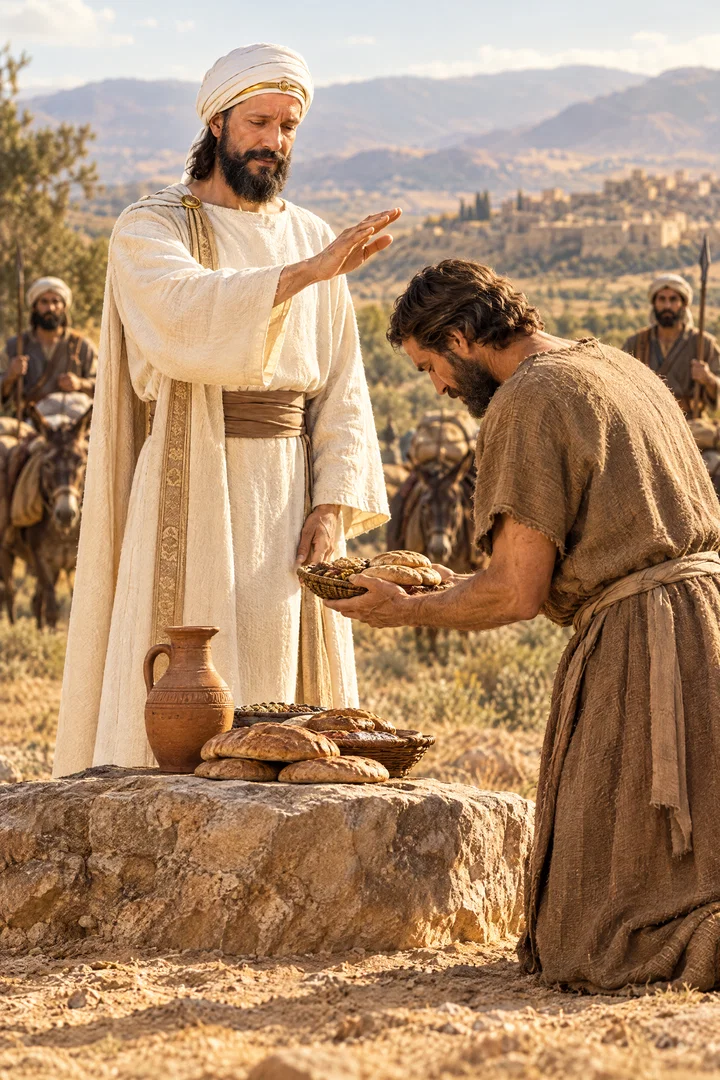
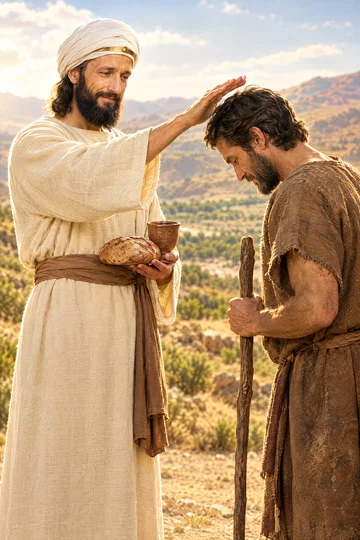
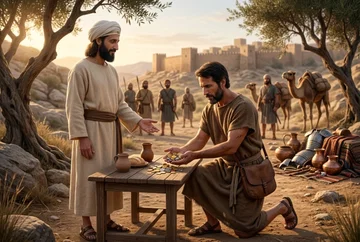
And blessed be the most high God, which hath delivered thine enemies into thy hand. And he gave him tithes of all.
Translations
And blessed be the most high God, which has delivered your enemies into your hand. And he gave him tithes of all.
And blessed be the most high God, which hath delivered thine enemies into thy hand. And he gave him tithes of all.
and blessed be the most high God, which hath delivered thine enemies into thy hand. And he gave him tithes of all.
And blessed be the most high God, who hath delivered thy enemies into thy hand. And he gave him tithes of all.
and blessed be God Most High, which hath delivered thine enemies into thy hand. And he gave him a tenth of all.
and blessed be God Most High, who hath delivered thine enemies into thy hand. And he gave him a tenth of all.
and blessed [is] God Most High, who hath delivered thine adversaries into thy hand;' and he giveth to him a tenth of all.
And blessed be the Most High God, who has delivered thine enemies into thy hand. And he gave him the tenth of all.
And blessed be GOD Most High, who hath delivered thine enemies into thy hand. So he gave unto him a tenth of all.
Berean Standard Bible, Majority Standard Bible
and blessed be God Most High,
who has delivered your enemies into your hand.”Then Abram gave Melchizedek a tenth of everything.Blessed be God Most High, who has delivered your enemies into your hand.”Abram gave him a tenth of all.
And let the Most High God be praised, who has given into your hands those who were against you. Then Abram gave him a tenth of all the goods he had taken.
And blessed be the most high God, which hath deliuered thine enemies into thine hand. And Abram gaue him tythe of all.
Douay-Rheims (Challoner revision)
And blessed be the most high God, by whose protection the enemies are in thy hands. And he gave him the tithes of all.
Pictures
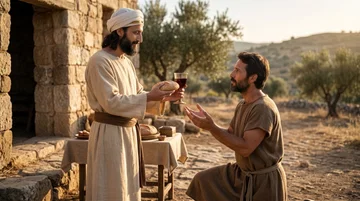
Cross-references 20 of 45
- Hebrews 7:1-2
For this Melchisedec, king of Salem, priest of the most high God, who met Abraham returning from the slaughter of the kings, and blessed him;
retells same tithe to Melchizedek
- Genesis 28:22
And this stone, which I have set for a pillar, shall be God’s house: and of all that thou shalt give me I will surely give the tenth unto thee.
Jacob vows to give God a tenth of all he receives.
- Leviticus 27:30
And all the tithe of the land, whether of the seed of the land, or of the fruit of the tree, is the LORD’s: it is holy unto the LORD.
Declares the tithe holy and belonging to the Lord.
- Malachi 3:8-10
Will a man rob God? Yet ye have robbed me. But ye say, Wherein have we robbed thee? In tithes and offerings.
Withholding tithes is called robbing God, while bringing them is linked with blessing.
- Matthew 23:23
Woe unto you, scribes and Pharisees, hypocrites! for ye pay tithe of mint and anise and cummin, and have omitted the weightier matters of the law, judgment, mercy, and faith: these ought ye to have done, and not to leave the other undone.
Jesus affirms tithing while stressing justice, mercy, and faith.
- Hebrews 7:17
For he testifieth, Thou art a priest for ever after the order of Melchisedec.
Identifies Christ as priest forever in Melchisedec’s order.
- Hebrews 7:4
Now consider how great this man was, unto whom even the patriarch Abraham gave the tenth of the spoils.
Abraham gave Melchizedek a tenth of the spoils.
- Numbers 18:21
And, behold, I have given the children of Levi all the tenth in Israel for an inheritance, for their service which they serve, even the service of the tabernacle of the congregation.
Israel’s tithe is assigned to the Levites for their tabernacle service.
- Psalms 110:4
The LORD hath sworn, and will not repent, Thou art a priest for ever after the order of Melchizedek.
Both connect Melchizedek with Christ’s enduring priesthood.
- Hebrews 7:3
Without father, without mother, without descent, having neither beginning of days, nor end of life; but made like unto the Son of God; abideth a priest continually.
Melchizedek is described as without recorded ancestry or life dates and made like the Son of God.
- 1 Corinthians 9:13-14
Do ye not know that they which minister about holy things live of the things of the temple? and they which wait at the altar are partakers with the altar?
Gospel ministers are ordained to live from sacred offerings, as temple ministers did.
- Hebrews 7:7
And without all contradiction the less is blessed of the better.
Says the lesser is blessed by the greater, linking Abraham and Melchizedek.
- Hebrews 7:9-10
And as I may so say, Levi also, who receiveth tithes, payed tithes in Abraham.
Levi paid tithes to Melchizedek through Abraham, before Levi was born.
- Hebrews 7:8
And here men that die receive tithes; but there he receiveth them, of whom it is witnessed that he liveth.
Contrasts mortal recipients of tithes with the living recipient.
- Hebrews 5:6
As he saith also in another place, Thou art a priest for ever after the order of Melchisedec.
Christ is a priest forever after Melchizedek’s order.
- Malachi 3:10
Bring ye all the tithes into the storehouse, that there may be meat in mine house, and prove me now herewith, saith the LORD of hosts, if I will not open you the windows of heaven, and pour you out a blessing, that there shall not be room enough to receive it.
Bringing the tithe is linked with God’s promise of blessing.
- John 8:39
They answered and said unto him, Abraham is our father. Jesus saith unto them, If ye were Abraham’s children, ye would do the works of Abraham.
Abraham’s children do his works, including faithful tithing.
- Hebrews 6:20
Whither the forerunner is for us entered, even Jesus, made an high priest for ever after the order of Melchisedec.
Christ is a priest forever after Melchizedek’s order.
- Genesis 14:14-16
And when Abram heard that his brother was taken captive, he armed his trained servants, born in his own house, three hundred and eighteen, and pursued them unto Dan.
Abram rescues Lot and the other captives.
- Luke 11:42
But woe unto you, Pharisees! for ye tithe mint and rue and all manner of herbs, and pass over judgment and the love of God: these ought ye to have done, and not to leave the other undone.
Jesus affirmed tithing while warning against neglecting justice and love for God.
Commentary
Each commentary is drawn from primary sources: the writings of Ellen G. White and Adventist pioneers and periodicals. Each commentary is separate. Its own words are not a quotation; follow the references to read the source passages.
Ellen G. White
20 sources
After rescuing Lot and the captives from the invading kings by strength from God, Abraham was met by Melchizedek, priest of the Most High God at Salem, who blessed him and gave thanks to God for delivering his enemies into his hand.Lt 158, 1896, par. 2–3PP 157.2–3ST Feb 7, 1884 In that meeting Melchizedek stood in person for Jesus Christ, bearing witness to heaven's truth.Lt 158, 1896, par. 2–3Lt 190, 1905, par. 2 Abraham answered by giving him a tenth of all he possessed.Lt 158, 1896, par. 2–3ST Oct 2, 1879PP 135.2 That gift shows tithing was already practiced long before the Hebrew nation and the system given to Moses, reaching back to the earliest believers, and it remains an obligation ordained by God and binding in every age.Lt 158, 1896, par. 2–3ST Oct 2, 1879PP 525.1–23T 393.1–394.3DA 616.3–617.1 The required portion is one-tenth of the increase, to be given voluntarily and not by compulsion, in grateful acknowledgment that God is the giver of all and for the support of His work.ST Oct 2, 18793T 393.1–394.3RH Aug 25, 1874ST Apr 29, 1875Ms 34, 1887, par. 13
Victory and Blessing
The verse belongs to Abraham's return after rescuing Lot and the captives from the invading kings.Lt 158, 1896, par. 2–3ST Feb 7, 1884PP 134.3–135.1ST Apr 29, 1875 Jehovah was the source of his strength and the author of his victory.PP 157.2–3PP 134.3–135.1ST Apr 29, 1875 The Lord aided him against the enemy, so the triumph was achieved under divine aid.PP 157.2–3ST Feb 7, 1884PP 134.3–135.1 God delivered his enemies into his hand.Lt 158, 1896, par. 2–3PP 157.2–3ST Apr 29, 1875Ms 34, 1887, par. 13
Melchizedek was priest of the Most High God at Salem, the later site of Jerusalem.Lt 158, 1896, par. 2–3PP 136.1–3PP 703.1 On Abraham's return he blessed Abraham.Lt 158, 1896, par. 2–3PP 136.1–3 In that blessing he gave thanks to God and credited God with delivering Abraham's enemies into his hand.Lt 158, 1896, par. 2–3PP 136.1–3
In this encounter Melchizedek represented Jesus Christ in person.Lt 158, 1896, par. 2–3Lt 190, 1905, par. 2 As priest of God and representative of Christ he bore witness to heaven's truth.Lt 158, 1896, par. 2–3Lt 190, 1905, par. 2 In that work he perpetuated God's law.Lt 190, 1905, par. 2
In the surrounding account Abraham refused the spoils and would take none of the king of Sodom's goods.PP 135.2ST Feb 7, 1884 He did so that no one could claim to have made him rich, giving God the glory for his prosperity.PP 135.2ST Feb 7, 1884 His integrity, unselfishness, courage, and benevolence made him a representative through whom the God of heaven was revealed to the surrounding peoples.PP 368.2 That victory and conduct testified to the people of Sodom that divine power was at work and bore witness to the true faith.PP 157.2–3PP 368.2
Tithing Duty and Practice
After his victory Abraham gave Melchizedek, priest of the Most High God, tithes of all, a tenth of all, of everything he possessed and had received.Lt 158, 1896, par. 2–3ST Oct 2, 1879DA 616.3–617.1Ms 159, 1899, par. 14Ms 169, 1899, par. 45–46 His gift was made upon his return after the deliverance of his enemies into his hand, in response to God's blessing and mercy.Lt 158, 1896, par. 2–3RH Aug 25, 1874ST Apr 29, 1875 It was an act of worship to God through His priest, who blessed him in the name of the God who had given the victory.Lt 158, 1896, par. 2–33T 393.1–394.3RH Aug 25, 1874
This shows the tithing system reaches back beyond the days of Moses and before the Hebrew nation was established, for men were required to offer gifts to God for religious purposes before the definite system was given to Moses.ST Oct 2, 1879PP 525.1–23T 393.1–394.3RH Aug 25, 1874ST Apr 29, 1875 It reaches even as far back as the days of Adam, was continued through successive generations, was carried out by Abraham in giving tithes of all, the same principle existed in the days of Job, and was later vowed by Jacob.ST Oct 2, 1879 The practice was therefore not first established in the Mosaic system but was observed from the earliest times.3T 393.1–394.3DA 616.3–617.1RH Aug 25, 1874
Tithing was thus recognized as an obligation ordained by God from ancient times and from the earliest believers, a duty for believers in every age and for those living under the Melchizedek priesthood.Lt 158, 1896, par. 2–3DA 616.3–617.1Lt 44, 1876, par. 5–6Ms 34, 1887, par. 13 Christ recognized it as a duty, while teaching that careful tithing does not excuse neglecting justice, mercy and faith.DA 616.3–617.1 The amount required is one-tenth of the increase, definite enough for all, yet left to conscience and benevolence with free play of judgment.ST Oct 2, 1879
All giving must be voluntary and not by compulsion, for God will not have His treasury replenished with unwilling offerings.ST Oct 2, 18793T 393.1–394.3Ms 34, 1887, par. 132MR 132.5–133.2 Abraham's gift was given in appreciation of God's mercies and blessings, to acknowledge God as the giver of all, and tithes and offerings support God's work.3T 393.1–394.3RH Aug 25, 1874ST Apr 29, 1875Ms 34, 1887, par. 132MR 132.5–133.2 His example teaches people to faithfully return to God a tithe of all they possess and receive.Ms 159, 1899, par. 14Ms 169, 1899, par. 45–46Ms 34, 1887, par. 13
Sources
Pioneers and periodicals
120 sources
After Abraham rescued Lot and defeated the allied kings, Melchizedek, king of Salem and priest of the most high God, met him with bread and wine and blessed God for delivering his enemies into his hand, and Abraham gave him a tenth of all the spoil.ST Aug 13, 1885ST Sep 2, 1889RH Apr 1, 1915ST Jan 22, 1880ST Sep 9, 1880 Melchizedek was a real man greater than Abraham in priestly office, whose names signify king of righteousness and peace, and by blessing Abraham and receiving his tithes he proved himself greater also than Levi and the Aaronic priesthood descended from Abraham.RH Sep 7, 1869ST Jan 3, 1905RH Jun 29, 1916RH Feb 15, 1870 By the deliberate omission of his ancestry, birth, death, and beginning or end of life he stands as a fitting type of Christ, the true priest-king of righteousness and peace whose royal and unending order has no predecessor or successor.ST Dec 2, 1889ST Jun 25, 1896RH Jun 29, 1916ST Aug 29, 1878 Abraham's gift is the first recorded payment of tithe, made long before Moses, Sinai, Israel, and Levi, not as a new thing but as the performance of an already recognized duty, showing that tithing belongs to the Melchizedek priesthood and remains as moral and Christian obligation under Christ as priest forever after that order.ST Oct 21, 1880ST Aug 8, 1916ST Apr 13, 1882 The tenth is one-tenth of the whole taken first for God before expenses or shares, acknowledging Him as possessor of heaven and earth, supporting His ministers and cause, voluntary yet universally binding, so that withholding it is robbery and faithful giving brings blessing.RH Mar 31, 1903RH Apr 1, 1915RH Jan 2, 1913ST Oct 17, 1906
Narrative Words and Setting
The verse records two linked acts after battle: Melchizedek blesses the Most High God for delivering Abraham's enemies into his hand, and Abraham gives Melchizedek tithes of all.ST Aug 13, 1885ST Sep 2, 1889RH Mar 31, 1903RH Feb 20, 1913RH Apr 1, 1915 Melchizedek, king of Salem and priest of the Most High God, blessed Abraham as Abraham returned from defeating the kings, and blessed God for giving Abram victory over his enemies.ST Aug 13, 1885RH Mar 31, 1903RH Apr 1, 1915RH Sep 7, 1869 Abraham then gave him a full tenth of all the spoil and recovered goods, recognizing the tithe as the Lord's share and Melchizedek as greater than himself by priestly office.ST Sep 2, 1889RH Mar 31, 1903RH Feb 20, 1913RH Sep 7, 1869 The tithe was not payment for Melchizedek's need but was due to the God whose altar he served, recognizing God's ownership and abiding sovereignty and supporting the Lord's cause.RH Mar 31, 1903RH Feb 20, 1913RH Apr 1, 1915
The setting is Abraham's return from defeating the kings after rescuing Lot and the captives of Sodom and Gomorrah, when Melchizedek meets him with bread and wine.RH Apr 1, 1915ST Jan 22, 1880ST Sep 9, 1880ST Feb 16, 1915RH Jul 2, 1901 It was upon return from a successful campaign against the four kings who had taken Lot and his family captive, after the slaughter of the kings and the recovery of great spoil, that Abraham gave a tenth of everything to Melchizedek, king of Salem and priest of the Most High God.ST Jan 22, 1880ST Sep 9, 1880RH Jul 2, 1901 The gift was the very first thing Abraham did before deciding what to return to the king of Sodom, keeping nothing for himself, not even a thread or shoe latchet, with food eaten by the young men on the march coming from the remainder.ST Jan 22, 1880ST Sep 9, 1880ST Feb 16, 1915 Abraham came with 318 servants to rescue Lot and the captives of Sodom, and when the king of Sodom offered him to keep all the goods he refused to take anything lest the king should say he had made Abraham rich.RH Jul 2, 1901RH Nov 4, 1873 God was Abraham's portion, so he was content with what he had, could not be bought, and waited instead for the city that has foundations whose builder and maker is God.RH Nov 4, 1873
The giver is Abraham and the recipient is Melchizedek, the Lord's priest, and tithes of all means a tenth of the whole spoil and of everything in Abraham's possession, including recovered property.RH Nov 5, 1901ST Sep 3, 1896RH Jul 29, 1862 A tithe is one-tenth, given here from all the goods captured in war and from the whole amount captured without first subtracting expenses.ST Sep 2, 1889 Though the recovered goods had originally belonged to the king of Sodom and Abraham had sworn to take nothing of the king's, he still set apart the tenth for Melchizedek because the tenth always belonged solely to God no matter whose hands held the property.ST Sep 3, 1896 Since the king of Sodom had never paid tithe on it and never had any just claim to it, giving the tithe was consistent with restoring all the king's rightful property, and the verse stands as an early example of giving a tithe to God's service after recognizing God Most High as the one who delivered his enemies into his hand.ST Sep 2, 1889RH Jul 29, 1862
The captured goods were Abraham's by right of conquest, but he first gave God the tithe and then refused to keep any of the remainder for himself.ST Sep 2, 1889RH Feb 20, 1913AUST Jun 14, 1920ST Sep 9, 1880 He returned the remaining goods to their original claimants and took nothing for himself, while allowing his companions their portions and the young men what they had eaten on the march and the share of his confederates from the remaining nine-tenths.ST Sep 2, 1889RH Feb 20, 1913ST Sep 9, 1880 His faithfulness in giving a tithe from all the booty he had recovered also shows his unselfishness and contentment with God as his portion.AUST Jun 14, 1920RH Nov 4, 1873
The meeting included a divine service in which Melchizedek's bread and wine were used, and the king of Sodom joined Abraham and Melchizedek in it.RH Dec 29, 1904 Its exact location is uncertain.RH Dec 1, 1910 Melchizedek offered bread and wine, not meat, and this temperance is linked with his moral excellence in contrast with serving meat to guests.RH Mar 12, 1867 The bread and wine Abraham received point to the body and blood of the promised Son, whom Melchizedek's blessing and priesthood represent as a type.ST Apr 28, 1914
The episode belongs to God's progressive dealings with Abram and with Abraham's family, showing God's providential care and interest among people to preserve the chosen line of the Seed and giving repeated lessons in faith.ST Dec 20, 1910ST By rescuing the people of Sodom from the kings who had taken them captive, Abraham gave them opportunity to know him and the truth associated with him, and Melchizedek and Abraham as holy men living near Sodom and Gomorrah held up the light of the gospel to its people.RH Jul 19, 1870ST Oct 24, 1895 His refusal to keep the spoil and his tithe of all after acknowledging God Most High as giver of victory are evidence of his generosity and humility, yet his brave rescue of Lot and his dealings with the spoils did not make him self-satisfied, for he remained concerned lest his actions had involved sin.ST Feb 7, 1884RH May 26, 1863
Historical Reliability Confirmed
Genesis 14, including the blessing of the Most High God for delivering enemies into Abraham's hand and the giving of tithes, is true history and not legend or parable.ST Dec 14, 1915 It records a real war between four kings and five at the invasion of Palestine in the time of Abraham, with its list of kings and its setting treated as historical fact.ST Dec 14, 1915ST Nov 23, 1904ST May 3, 1910 Abraham and Melchizedek were real persons, and Melchizedek as king of Salem met Abraham after the battle of the four kings against five, blessed him, and received a tithe from him by which Abraham honored him.ST Jan 3, 1905ST Nov 23, 1904 The verse stands as the conclusion of that historical event on the return from battle.ST Dec 14, 1915
Ancient tablets, inscriptions, monuments, and records vindicate the chapter in minute detail, including its names, setting, and political relationships.RH Jul 9, 1914ST May 3, 1910ST Sep 7, 1904 Inscribed tablets recording the same story, found buried in a Chamber of Records by the banks of the Euphrates, confirm the account of Abraham's time and support the identities and political relationships of the kings named in Genesis 14.RH Jul 9, 1914 Parallels with cuneiform inscriptions show the same historical setting in both, with Babylon divided into kingdoms under Elamite authority and rulers claiming power in the distant West.ST Dec 14, 1915 The names of the chapter have been found on ancient monuments, and ancient records in general support its reliability.ST May 3, 1910ST Sep 7, 1904 An inscription of Hammurabi provides historical evidence connected with the account in which Amraphel is identified with Hammurabi.RH May 13, 1909
That identification belongs to a wider fit of persons and powers to the period.ST Dec 14, 1915RH May 13, 1909ST May 20, 1913 Chedorlaomer of Genesis 14 was Kudur-lagamer king of Elam, also appearing under the name Kudur-la-ukhgamur on a tablet from the reign of Khammurabi of Babylon, who established imperial authority over the whole Mesopotamian plain and all the territory westward to the Mediterranean Sea almost to the border of Egypt and kept it all in subjection for twelve years.ST Jan 20, 1904ST Jul 8, 1897 The names of the kings fit the period and the kings were contemporaries.ST May 20, 1913 What was once counted impossible, because Abraham was thought to have lived about three hundred years before Hammurabi, is resolved by evidence that the Babylonian dynasties were contemporaneous, removing this chronological difficulty.ST Dec 14, 1915
Melchizedek's Person and Offices
Melchizedek was a real historical man living in Abraham's time, as real as Abraham himself, who met him on his return from the slaughter of the kings, blessed him, and received from him a tenth part of all.ST Jan 3, 1905ST Sep 11, 1879RH Mar 20, 1856 He was king of Salem and priest of the Most High God, combining kingship and priesthood in one office, and in that priestly office he was greater than Abraham.RH Jun 29, 1916RH Feb 15, 1870ST Oct 4, 1883RH Dec 1, 1910 The meeting and the tithe establish that Abraham honored him, for Abraham, great as he was and himself empowered to offer sacrifices, paid him homage by giving him tithes of all.ST Dec 17, 1912ST Jan 3, 1905 With Hebrews 7 this makes up what Aaron and his order could not supply, for Aaron's priests served only for a time and died, descended from father to son and had to prove genealogy to serve, and did not join kingship to priesthood, while Melchizedek was both king and priest.ST Sep 11, 1879
His name means king of righteousness and Salem means peace, signifying righteousness, peace with God, and a kingship of righteousness and peace.ST Dec 17, 1912ST Jun 25, 1896ST Jun 3, 1913ST Sep 11, 1879ST Oct 21, 1889 As priest of the Most High God that title connects him with Divinity and gives him an exalted place in God's earthly government.RH Dec 1, 1910 In this he is a fitting type of Christ, who is the Lord our righteousness and our peace and who is both King and Priest forever as High Priest.ST Jun 25, 1896ST Jun 3, 1913
That he blessed Abraham who had the promises, and credited the Most High God with delivering Abraham's enemies into his hand, and that Abraham gave him tithes of all the spoil, proves by office that he was Abraham's superior, for the less is blessed of the better and receiving tithes implies superiority of rank.RH Sep 7, 1869ST Dec 9, 1889RH Jul 9, 1901 Abraham thereby recognized his priesthood and priestly authority, though the account does not connect Melchizedek with the sacrifices Abraham offered at his own altars.RH Feb 3, 1910RH Jan 9, 1900 Levi, appointed under the Mosaic law to receive tithes of the people and thus superior to the other tribes, yet paid tithes in Abraham because he was yet in his loins when Melchizedek met him, proving the Melchizedek priesthood far superior to the Levitical priesthood.
He was a visitor from another world and the head of that world, even as Adam was designed to be the head of this world, coming to this world for a time in God's plan and staying briefly.ST Dec 17, 1912ST Aug 30, 1905ST Nov 29, 1910 He is presented not merely as a local king bearing Melchizedek as a personal name but as a temporary visitor and exalted representative of God, greater than Abraham, whom Abraham recognized by giving a tenth of the spoils.ST Aug 30, 1905 Those who so hold also present him as a king-priest type of Jesus Christ, the greater Melchizedek who became priest by God's oath.ST Nov 29, 1910
He was a man, not Christ and not an angel, distinct from the Messiah though belonging with Him to the same order of priesthood.ST Apr 12, 1905ST Sep 20, 1883ST Apr 12, 1905RH Jul 9, 1901 The limited biblical account does not identify him as Christ, and his blessing of the Most High God proves he is not the God whom he blesses.ST Sep 20, 1883RH Sep 7, 1869 Melchizedek is the title of an order of priesthood, meaning King of Righteousness, borne by every priest in that priestly order rather than the personal name of the individual who met Abraham.ST Nov 15, 1905ST Nov 15, 1905 Conjectures about his identity, such as that he was Shem, are vain, for the Genesis record gives no information beyond that he was king of Salem and priest of the Most High God, and that silence is deliberate.RH Mar 20, 1856 He stood alone on earth in Abraham's time as God's representative and high priest, like Christ in His everlasting priesthood. The phrase without father, without mother, without descent means no genealogy, ancestry, birth, death, or length of priesthood is given in the records, not that he literally had no parents or never died, in contrast with Aaron and his sons whose genealogy had to be carefully preserved, as one without provable genealogy was said among the Jews to be without father.ST Sep 11, 1879ST Oct 21, 1889RH Mar 20, 1856
Melchizedek Foreshadows Christ
Melchizedek is a type and representative of Christ and of the promised Son, not Christ himself.ST Oct 4, 1883ST Apr 12, 1905ST Jun 25, 1896ST Oct 4, 1883ST Jun 3, 1913 Abraham saw Christ represented in Melchizedek, just as he saw Christ represented in Aaron and in the sanctuary's sin offering, and just as Ezekiel saw Christ represented in David, while Christ is the antitype, a priest after the order represented by Melchizedek.ST Oct 4, 1883ST Oct 4, 1883 His name meaning king of righteousness and Salem meaning peace make him a fitting type of Christ, who is the Lord our righteousness and our peace and the true King of righteousness and peace, both King and Priest serving forever as High Priest.ST Dec 2, 1889ST Jun 25, 1896ST Jun 3, 1913 The account in Genesis 14:18-20 together with Hebrews 7:2-3 is all that is known of him, and his role and titles identify him as a figure distinct from the Messiah while connecting him with Christ through that priesthood.ST Dec 2, 1889ST Apr 12, 1905
The record gives no genealogy, ancestry, descent, parentage, birth, death, beginning or end of life or of priestly office, and this does not mean he had none but makes him by deliberate omission a fitting segment of an unending priesthood typifying Christ's priesthood.ST Dec 2, 1889ST Jun 25, 1896RH Sep 7, 1869 The omissions of descent, beginning, and end are purposeful, for the details and omissions of Scripture stand under the Holy Spirit's guidance and convey the truth developed in Hebrews.RH Sep 28, 1905 So understood, without father, without mother, without descent means no genealogy is given in the records, in contrast with Aaron and his sons whose genealogy had to be carefully preserved and proved in order to serve, since among the Jews one without provable genealogy was said to be without father.ST Sep 11, 1879 His priesthood therefore has no predecessor and no successor recorded, comes from no other and passes to no other, fittingly representing Christ's priesthood, which is not based on genealogical succession and has no predecessor and no successor.ST Dec 2, 1889ST Jun 25, 1896
As priest of the Most High God and king of Salem he foreshadows the coming Priest-King, Christ, in whom the priestly and kingly offices are joined, and like Melchizedek Jesus is a priest-king, a king of righteousness and peace.RH Jun 29, 1916ST Sep 6, 1910 Without Melchizedek there would be only a limited and very imperfect type of Christ's priesthood, since Aaron joined no kingship to priesthood and served only by descent from father to son for a time until death.ST Sep 11, 1879ST Dec 9, 1889 The priesthoods of Melchizedek and of Aaron were both types of the priesthood of Christ, but as a type Melchizedek stands highest because kingship was joined to his priesthood while Aaron had no kingship, and that union gives Melchizedek's priesthood its superiority over Aaron's, though in that office alone he was greater than Abraham, who was no king but only a stranger and pilgrim in the land.ST Dec 9, 1889 Unlike Aaron's priests who die and hold priesthood by succession, Christ like Melchizedek is both king and priest, ever lives to make intercession, and holds an unchangeable priesthood with no recorded genealogy.ST Sep 11, 1879 This priesthood is royal and enduring, suited to all times and conditions, unlike the Levitical priesthood which served the needs of a sinful world by dealing with sin, and though Melchizedek was a priest in the same order as Christ, Christ is preeminent, and Christ's saved people also become kings and priests to Him forever.ST Oct 25, 1905ST Jul 15, 1908
Abraham's encounter with Melchizedek teaches the same truth later set out in the tabernacle and its services, that the Son of God would come in the flesh and serve as mediator between God and humanity.ST May 7, 1902ST May 7, 1902 Melchizedek's blessing and priesthood make him a representative type of the promised Son, whom Abraham recognized by giving tithes after God delivered his enemies into his hand, and the bread and wine Abraham received point to the Son's body and blood.ST Apr 28, 1914 Christ as priest after this order shares joint rule with the Father on the throne of the universe as priest-king, and that priest-king office continues until the Father makes Christ's enemies His footstool and gives all enemies to Him for destruction.ST Aug 29, 1878 Then Christ delivers up the kingdom He shared with the Father to the Father alone that God may be all in all, His reign on the Father's throne ends, and He takes His own throne inherited as David's heir to reign over the immortal saints for endless ages, where His people share joint rule with Him.ST Aug 29, 1878
Tithing's Origin and Obligation
Abraham's gift is the first recorded instance of paying tithes, made more than four hundred years before the law of Moses and five hundred years before Moses, long before Israel existed as a nation, before Sinai, before the Jewish economy, and before the Levitical priesthood.ST Aug 8, 1916ST Apr 13, 1882RH Oct 24, 1912 After God delivered his enemies into his hand, he gave Melchizedek, priest of the Most High God, a tenth of everything, and this is presented as the earliest example of tithe paying.ST Aug 8, 1916RH Oct 24, 1912RH Mar 2, 1905 The father of the faithful thus paid a tithe of all his income to God's priest long before the Mosaic age, showing tithing was not limited to the time of the Levitical priesthood.ST Apr 13, 1882RH Oct 24, 1912RH Mar 2, 1905
The act was not new or unusual but the natural and fitting performance of an already recognized duty under God's common law, carrying divine authority taught from the beginning.ST Oct 2, 1879ST Oct 21, 1880ST Jan 24, 1906RH Jan 2, 1913RH Mar 11, 1873 Abraham regarded even battle spoil and property taken from Sodom and Gomorrah, which he held as steward and not as his own, as subject to the Lord's claim, and before deciding how to use the goods he first set apart one-tenth by right to the Lord and gave it to the Lord's representative.ST Oct 21, 1880ST Jan 24, 1906RH Jan 2, 1913 It was not done for the first time but from a well-understood principle already binding among God's people from a very early period long before the Jewish national establishment, the same proportion Jacob vowed and God afterward required by law in Israel.ST Oct 2, 1879RH Mar 11, 1873ST Sep 2, 1889 The tithing system reaches back beyond the days of Moses to the days of Adam, continued through successive generations, existed in the days of Job, and was carried out by Abraham in giving tithes of all, showing God's uniform system from the beginning for regular systematic giving for religious purposes.ST Oct 2, 1879RH Mar 11, 1873ST Sep 2, 1889
Tithing began under and belongs to the older Melchizedek order of priesthood, not with Moses, and Christians who live under that priesthood remain obligated to tithe as Abraham did.RH May 18, 1869ST Sep 9, 1880RH Mar 9, 1905ST Nov 5, 1896 That order ran from Adam to Moses, the Levitical or Aaronic order ran from Moses to Christ, and the Melchizedek order runs again from the first advent of Christ to the closing work of the gospel because Christ was made priest forever after the order of Melchizedek.ST Sep 9, 1880RH Mar 9, 1905 Melchizedek receiving tithes from Abraham and blessing him who had the promises proves Melchizedek was greater than Abraham, though Abraham was father of all the Jewish tribes, for the less is blessed of the better and receiving tithes implies superiority of rank. Levi, appointed under the Mosaic law to receive tithes and thus superior to the other tribes, yet paid tithes in Abraham because he was yet in his loins when Melchizedek met him, proving the Melchizedek priesthood far superior to the Levitical priesthood. Abraham is the type of all the faithful, so his example is the example for Christians under the same priesthood, and those who belong to the household of faith as children of Abraham must do the works of Abraham by paying a faithful tithe.ST Nov 5, 1896ST Dec 10, 1912
It is therefore not a Jewish institution originating with the law system, not merely Jewish, Mosaic, or Levitical, but moral, Christian, and part of the gospel plan founded on enduring principles.RH Mar 18, 1873RH Mar 11, 1873ST Apr 20, 1904ST Jan 3, 1905 Practiced before the Jewish people and the Jewish nation existed, under the Melchizedek priesthood, it records an already-known principle recognizing God as possessor of heaven and earth.RH Mar 13, 1879ST Apr 20, 1904ST Jan 3, 1905 It did not terminate with the laws peculiar to Moses nor was abolished at the cross, but remains a duty under every dispensation, and the first tithe remains binding unlike the specific Levitical regulations.RH Mar 11, 1873RH Mar 13, 1879 Approved by God in the patriarchal dispensation as a plan that puts God first and cultivates self-denial rather than selfishness, it continues alongside the gospel.RH Mar 9, 1905RH Mar 13, 1879
The tithe proves the Lord taught His people from the beginning to devote one-tenth for the support of His ministers, His cause, religious objects, gospel ministers, and those who give their lives for the advancement of Christ's kingdom on earth.RH Mar 31, 1903ST Jan 22, 1880RH Jul 2, 1901ST May 6, 1875ST Dec 10, 1912 Since the fall men devoted wholly to the service of God have been necessary, and Abraham's gift was the very first thing he did upon returning from the slaughter of the kings and recovering Lot, giving a full tithe of all to Melchizedek, king of Salem and priest of the Most High God.RH Mar 31, 1903ST Jan 22, 1880RH Jul 2, 1901 This is evidence that God had ordained priests and provided for their proper maintenance in the earliest ages, and that He designed the tithe for religious service rather than civil government.ST May 6, 1875RH Jun 6, 1912ST Mar 20, 1879 In the patriarchal age worship included a priestly service supported by regular, specified offerings including the payment of tithe as part of the service of God.RH Jun 6, 1912ST Mar 20, 1879
Melchizedek received the tithe directly before the Aaronic priesthood existed, while under the later arrangement the Levites received tithes and sent a tenth of what they received to the storehouse.RH Dec 29, 1904 Under Israel God transferred the disposition to Levi for sanctuary service without changing the obligation, and now the living Christ receives what is given to His priesthood.RH Mar 31, 1903 As Melchizedek received tithes then, Christ receives tithes from His people now, for Christ is he of whom it is witnessed that he lives, while under Levi men that die receive them.RH Nov 5, 1901 Abraham's tithe to Melchizedek is therefore the model for Christians, who as Abraham's children by faith and heirs of his promises give tithe to Christ under His ministry after the order of Melchizedek.RH Nov 18, 1915RH Mar 31, 1903
Tithing's Practice and Meaning
A tithe is one-tenth, and Abraham gave a full tenth of all to God and to His representative for ministry.ST Oct 17, 1906RH Mar 11, 1873ST Oct 15, 1902ST Jul 24, 1884 That tenth covered increase, income, property, and spoil, including the spoils recovered from the kings who had plundered Sodom.RH Mar 11, 1873RH Feb 28, 1871ST Oct 15, 1902ST Jul 24, 1884 It was set aside as a portion belonging to God, holy to the Lord and intended to sustain the ministry and religious objects, with its value judged by usefulness to the recipient.ST Oct 17, 1906RH Mar 11, 1873RH Feb 28, 1871ST Oct 15, 1902ST Jul 24, 1884 Abraham did not invent it but recognized its binding force and gave what he did not count as his own.RH Mar 11, 1873ST Jul 24, 1884
All means the whole amount captured, and the tenth was taken from the whole without first subtracting expenses.RH Jan 21, 1909ST Apr 25, 1906 God received His portion first, and only then were the remainder distributed as judged fair.RH Jan 21, 1909ST Apr 25, 1906 Food eaten by the young men on the march, the share of the confederates, and personal campaign costs came from the remaining nine-tenths, which was otherwise returned to the king of Sodom.RH Jan 21, 1909ST Apr 25, 1906 Though Abraham would keep none for himself and returned the rest to their rightful owners, he first gave God His share because God owns all things.RH Jan 21, 1909ST Apr 25, 1906
The tenth always belongs solely to God no matter whose hands hold the property, even when the property rightfully belonged to Sodom.ST Oct 21, 1880ST Jan 24, 1906RH Mar 3, 1904ST Feb 16, 1915 Since Sodom had never paid tithe on it and never had any just claim to that tenth, setting it apart was consistent with restoring all rightful property.ST Feb 16, 1915RH Feb 20, 1913 Abraham regarded the spoils as not his own and, as their steward, gave the Lord's tenth to the Lord's representative.ST Oct 21, 1880ST Jan 24, 1906ST Feb 16, 1915RH Feb 20, 1913 The Lord's claim on the tithe applies even to those who do not recognize it, and those entrusted with handling another's property remain responsible to set aside the tithe for the Lord's cause.RH Mar 3, 1904ST Feb 16, 1915RH Feb 20, 1913
Giving it acknowledges God as possessor of heaven and earth and owner of all things, and man as His steward.RH Apr 1, 1915RH Jan 2, 1913RH Mar 30, 1911RH Sep 30, 1902RH Feb 28, 1871 It honors God, expresses gratitude and faithfulness for blessing and victory, and was given as income was received.RH Apr 1, 1915RH Jan 2, 1913ST Aug 2, 1905RH Sep 30, 1902RH Feb 28, 1871 The tenth was reserved to God as a test of obedience, honesty, and loyalty, teaching His ownership whether a person possesses much or little.RH Apr 1, 1915RH Jan 2, 1913RH Mar 30, 1911ST Aug 2, 1905RH Sep 30, 1902 It was an established service rather than a new practice, due to the God whose altar Melchizedek served.RH Apr 1, 1915RH Jan 2, 1913RH Mar 30, 1911
It was given to the Lord's recognized representative as priest rather than as king or for his need, since the tithe recognized God's ownership and abiding sovereignty.RH Apr 1, 1915ST Aug 9, 1905RH Apr 7, 1904ST Jan 24, 1906 Abraham's tithe therefore predates Moses and the Levitical priesthood while showing the same obligation later defined in the Mosaic law.ST Aug 9, 1905RH Apr 7, 1904ST Jan 24, 1906 His handling of the spoils shows conscientiousness about tithing, and his example is presented as rebuking Sodom and showing that rulers and all people are obligated to pay tithes.ST Aug 9, 1905RH Apr 7, 1904
The gift was voluntary and left to conscience and benevolence without compulsion, with free play of judgment, yet of universal obligation like prayer.ST Oct 2, 1879ST Mar 18, 1886ST Sep 3, 1912ST May 1, 1879ST Oct 21, 1880 Like prayer it finds no specific mention in the Ten Commandments yet stands in equal obligation, so its wilful violation deserves condemnation as surely as breach of any commandment.ST Oct 2, 1879ST Sep 3, 1912ST Oct 21, 1880 It is distinct from charities and gifts, being a tenth set apart for the special purpose of supporting gospel work, gospel ministry, and those who give their whole time to preaching and building up the cause.ST Sep 3, 1912ST May 1, 1879ST Oct 21, 1880 Withholding it is robbery, while those who faithfully pay it in simple, glad faith are always blessed, bringing blessing to giver and receiver including ministers and missionaries.RH Aug 25, 1874ST Mar 18, 1886ST Sep 3, 1912ST May 1, 1879ST Oct 21, 1880 Men were required to offer gifts for religious purposes from Adam and Job onward, and Abraham's gift in appreciation of mercies and blessings continues that principle.ST Oct 2, 1879RH Aug 25, 1874ST Mar 18, 1886
Abraham's example shows faithfulness in giving from all the booty recovered, with unselfishness in refusing to keep any for himself.AUST Jun 14, 1920RH Nov 4, 1873RH May 26, 1863 When offered all the goods he refused even a thread or shoelatchet, lest Sodom's king claim to have made him rich, because God was his portion and he was content with what he had.AUST Jun 14, 1920RH Nov 4, 1873RH May 26, 1863 His generosity and humility did not make him self-satisfied, for he remained concerned lest his actions had involved sin.AUST Jun 14, 1920RH Nov 4, 1873RH May 26, 1863 Levi, though appointed under the Mosaic law to receive tithes and thus superior to the other tribes, yet paid tithes in Abraham because he was yet in his loins when Melchizedek was met.RH Jun 9, 1903 That setting illustrates representation of descendants in an ancestor, as believers are credited in Christ their head, while also proving the Melchizedek priesthood far superior to the Levitical since the less is blessed of the better.RH Jun 9, 1903
The verse also shows the law forbidding stealing already in force in Abraham's day, proved by God's punishment of theft then long before Moses.RH Jun 6, 1912RH Mar 14, 1871 Patriarchal worship included priestly service supported by regular, specified offerings, including the payment of tithe as part of the service of God.RH Jun 6, 1912RH Mar 14, 1871RH Feb 24, 1916ST Mar 13, 1901RH Jul 23, 1872 The reservation of a portion of money, like the reservation of time, tested human honesty and loyalty.RH Jun 6, 1912RH Feb 24, 1916ST Mar 13, 1901 Abraham the father of the faithful thus gives an early and continuing example of returning a tenth to God and of giving what belongs to God for instruction of later believers.RH Mar 14, 1871RH Feb 24, 1916ST Mar 13, 1901RH Jul 23, 1872
Sources