Hebrews 7:1
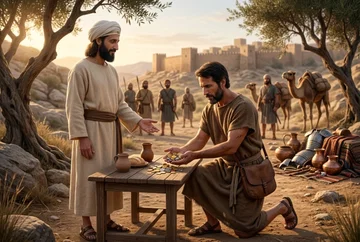
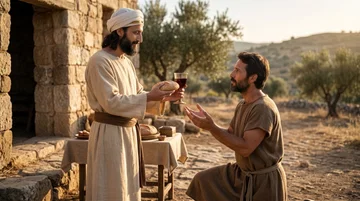
For this Melchisedec, king of Salem, priest of the most high God, who met Abraham returning from the slaughter of the kings, and blessed him;
Translations
American King James Version, King James Version, KJV Cambridge Paragraph Bible, Webster Bible
For this Melchisedec, king of Salem, priest of the most high God, who met Abraham returning from the slaughter of the kings, and blessed him;
For this Melchizedek, king of Salem, priest of God Most High, who met Abraham returning from the slaughter of the kings, and blessed him,
American Standard Version, World English Bible
For this Melchizedek, king of Salem, priest of God Most High, who met Abraham returning from the slaughter of the kings and blessed him,
For this Melchisedek, king of Salem, priest of God Most High, who did meet Abraham turning back from the smiting of the kings, and did bless him,
For this Melchisedec, King of Salem, priest of the most high God, who met Abraham returning from smiting the kings, and blessed him;
For, this Melchizedek, king of Salem, priest of God Most High, who met Abraham returning from the slaughter of the kings, and blessed him,—
Berean Standard Bible, Majority Standard Bible
This Melchizedek was king of Salem and priest of God Most High. He met Abraham returning from the slaughter of the kings and blessed him,
For this Melchizedek, the king of Salem, a priest of the Most High God, who gave Abraham his blessing, meeting him when he came back after putting the kings to death,
For this Melchi-sedec was King of Salem, the Priest of the most high God, who met Abraham, as he returned from the slaughter of the Kings, and blessed him:
Douay-Rheims (Challoner revision)
For this Melchisedech was king of Salem, priest of the most high God, who met Abraham returning from the slaughter of the kings, and blessed him:
Pictures
Cross-references 20 of 33
- Genesis 14:18-20
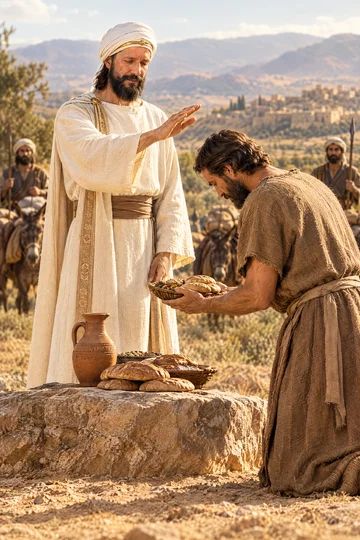
And Melchizedek king of Salem brought forth bread and wine: and he was the priest of the most high God.
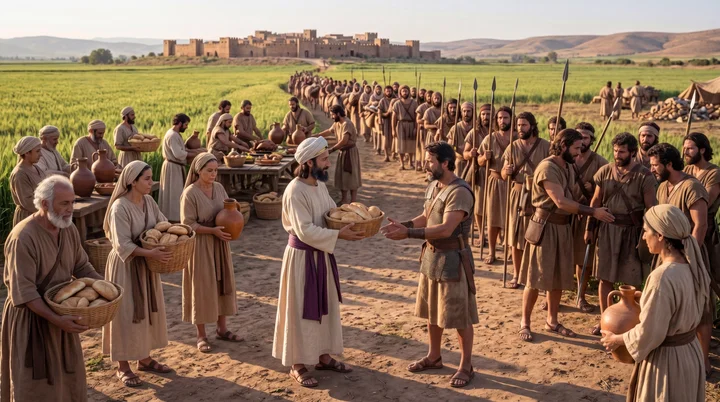
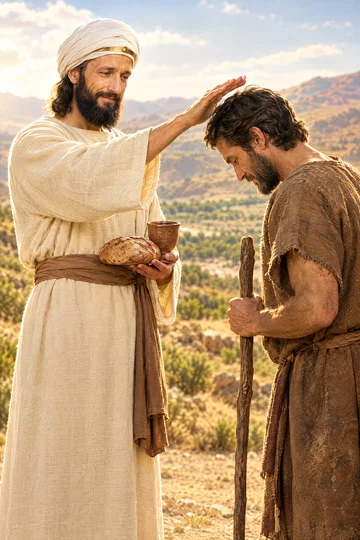
Melchizedek meets and blesses Abraham after the battle and receives his tithe.
- Hebrews 8:1-2
Now of the things which we have spoken this is the sum: We have such an high priest, who is set on the right hand of the throne of the Majesty in the heavens;
Christ ministers as High Priest in the true heavenly sanctuary, seated at the Father’s throne.
- Hebrews 6:20
Whither the forerunner is for us entered, even Jesus, made an high priest for ever after the order of Melchisedec.
Jesus enters behind the veil as High Priest forever in Melchizedek’s order.
- Psalms 110:4
The LORD hath sworn, and will not repent, Thou art a priest for ever after the order of Melchizedek.
God swears that the Messiah will be a priest forever after Melchizedek’s order.
- Zechariah 6:13
Even he shall build the temple of the LORD; and he shall bear the glory, and shall sit and rule upon his throne; and he shall be a priest upon his throne: and the counsel of peace shall be between them both.
The Branch is both king and priest upon his throne.
- Hebrews 5:6
As he saith also in another place, Thou art a priest for ever after the order of Melchisedec.
Christ is identified as a priest forever after Melchizedek’s order.
- Hebrews 7:17
For he testifieth, Thou art a priest for ever after the order of Melchisedec.
Affirms Christ’s enduring priesthood after Melchizedek’s order.
- Psalms 110:1
The LORD said unto my Lord, Sit thou at my right hand, until I make thine enemies thy footstool.
Christ rules at God’s right hand while serving as priest after Melchizedek’s order.
- Hebrews 9:11-12
But Christ being come an high priest of good things to come, by a greater and more perfect tabernacle, not made with hands, that is to say, not of this building;
Christ enters the greater heavenly sanctuary as High Priest, obtaining redemption through his own blood.
- Hebrews 7:23-25
And they truly were many priests, because they were not suffered to continue by reason of death:
Contrasts mortal priests with Christ’s enduring ministry.
- Hebrews 7:11
If therefore perfection were by the Levitical priesthood, ( for under it the people received the law,) what further need was there that another priest should rise after the order of Melchisedec, and not be called after the order of Aaron?
Contrasts the Levitical priesthood with the priesthood after Melchizedek’s order.
- Hebrews 7:7
And without all contradiction the less is blessed of the better.
The one who blesses is greater than the one blessed, showing Melchizedek’s superiority to Abraham.
- Hebrews 5:10
Called of God an high priest after the order of Melchisedec.
Connects Christ’s priesthood with Melchizedek.
- Hebrews 7:21
( For those priests were made without an oath; but this with an oath by him that said unto him, The Lord sware and will not repent, Thou art a priest for ever after the order of Melchisedec:)
Christ is a priest forever after Melchizedek’s order.
- Hebrews 7:14
For it is evident that our Lord sprang out of Juda; of which tribe Moses spake nothing concerning priesthood.
Christ’s priesthood differs from the Levitical line and is not based on priestly descent.
- Genesis 14:19
And he blessed him, and said, Blessed be Abram of the most high God, possessor of heaven and earth:
Melchizedek blesses Abraham.
- Hebrews 7:15
And it is yet far more evident: for that after the similitude of Melchisedec there ariseth another priest,
Another priest arises after the similitude of Melchizedek.
- Hebrews 7:6
But he whose descent is not counted from them received tithes of Abraham, and blessed him that had the promises.
Melchizedek received tithes from Abraham despite his descent not being counted.
- Hebrews 7:9-10
And as I may so say, Levi also, who receiveth tithes, payed tithes in Abraham.
Levi is counted as paying tithes through Abraham to Melchizedek.
- Hebrews 7:16
Who is made, not after the law of a carnal commandment, but after the power of an endless life.
The priesthood’s permanence rests on the power of an endless life.
Commentary
Each commentary is drawn from primary sources: the writings of Ellen G. White and Adventist pioneers and periodicals. Each commentary is separate. Its own words are not a quotation; follow the references to read the source passages.
Ellen G. White
8 sources
For this Melchisedec is king of Salem and priest of the most high God, who met Abraham returning from the slaughter of the kings and blessed him.Lt 190, 1905, par. 22SP 395.2 Salem means peace, so Melchisedek is the King of Peace, and Melchisedek is Jesus Christ.4RED 127.2COS 96.2–97.102SP 395.2 He was God's witness on earth who represented the Lord Jesus Christ in person to reveal the truth of heaven and perpetuate the law of God.Lt 190, 1905, par. 2 Abraham's encounter with Melchizedek testifies to who Jesus is, so that Abraham would be named when the question is asked to identify Jesus.4RED 127.2COS 96.2–97.102SP 395.2 That testimony identifies Jesus as the Messiah, the Prince of Life and the Redeemer of the world.4RED 127.2 That testimony identifies the One entering Jerusalem with a vast company of followers as that promised King of Peace.COS 96.2–97.10
Abraham gave tithes to Melchizedek, the priest of the Most High God.Lt 44, 1876, par. 5–63T 393.1–394.3ST Oct 2, 1879 The meeting belongs to the patriarchal age and shows that giving to God for religious purposes and the duty to return tithes existed before Moses and the Mosaic tithing system and was practiced in Abraham's time and was not a later requirement.3T 393.1–394.3ST Oct 2, 1879Ms 34, 1887, par. 13 Those living under the Melchizedek priesthood as Christians have the same duty to tithe.Lt 44, 1876, par. 5–6
Sources
Pioneers and periodicals
127 sources
Melchizedek was a real man who was both king of Salem and priest of the Most High God, who met Abraham returning from defeating Chedorlaomer and the confederate kings to rescue Lot and blessed him in God's name.RH Jul 9, 1901RH Dec 16, 1858ST Dec 17, 1912 His names declare his offices, for Melchizedek means king of righteousness and Salem means peace, so he is king of righteousness and king of peace, identified with Jerusalem as God's abode of peace.ST Dec 10, 1894ST Dec 17, 1912ST Oct 21, 1889RH Oct 3, 1907 In joining kingship and priesthood in one person he is the type and likeness of Christ, who is both King and Priest forever after his order, supplying what Aaron's priesthood alone could not represent.RH Jul 9, 1901RH Mar 20, 1856RH Jul 7, 1874ST Sep 20, 1883ST Dec 9, 1889 He was greater than Abraham because he blessed Abraham and received tithes from him, proving his priesthood superior to Levi's, for Levi yet unborn paid tithes in Abraham, and unlike dying Levitical priests his order has no predecessor or successor but abides as the pattern of Christ's endless life and unchanging priesthood.RH Jul 9, 1901RH Jan 16, 1913ST Dec 10, 1902ST Jun 11, 1912 Abraham's giving him a tenth of the spoil shows tithing predates Moses and belongs to the Melchizedek priesthood, so since Christ is priest forever after that order the tithe still belongs to the Lord and to the support of His cause under the gospel.ST Sep 3, 1912RH Jan 16, 1913RH Mar 9, 1905ST Mar 27, 1893ST Sep 9, 1880
Names Titles and Setting
Melchizedek is presented as king of Salem and priest of the most high God, uniting kingship and priesthood in one person to illustrate the combined priest-king office.ST Dec 10, 1894RH Jul 9, 1901RH Dec 16, 1858ST Dec 17, 1912ST Sep 11, 1879 His recorded kingship and priesthood supply what Aaron's priesthood alone does not represent.RH Mar 20, 1856 His blessing of Abraham shows he was greater than Abraham in priestly and kingly position, Abraham being a stranger and pilgrim rather than a king.RH Jul 9, 1901 The absence of recorded ancestry explains the description of him as without father or mother or genealogy, since priestly eligibility in Israel depended on proving descent and one unable to trace it could be so called, showing a priest of the Most High need not descend from Levi or Abraham.RH Dec 16, 1858
His name means king of righteousness by interpretation, from melech meaning king and zedek meaning righteousness, rendered in one statement as my king is righteousness.ST Jun 3, 1913ST Feb 15, 1910ST Oct 21, 1889ST Jun 11, 1912ST Jun 25, 1896 Salem means peace, so as king of Salem he is king of peace.ST Dec 10, 1894ST Dec 17, 1912ST Feb 15, 1910ST Oct 21, 1889 True peace comes through righteousness, for righteousness is always peace with God, so a king of righteousness must by nature be a king of peace.ST Jun 3, 1913ST Feb 15, 1910ST Jun 25, 1896 Salem is identified with Jerusalem, with Salem as the old name of Jerusalem which he ruled, understood as God's people or abode of peace over whom Christ as priest-king ministers righteousness and peace.ST Dec 10, 1894ST Oct 21, 1889RH Oct 3, 1907ST Jul 18, 1900 As king he gives life, strength, and power to overcome, and as advocate he pleads the merits of his blood for sins.ST Dec 10, 1894
The verse describes a historical meeting in which he met Abraham returning from the slaughter or defeat of the kings and blessed him.RH Jul 9, 1901RH Dec 16, 1858ST Dec 17, 1912ST Sep 11, 1879RH Jan 16, 1913 Abraham with his trained servants had pursued and conquered Chedorlaomer and the confederate kings to rescue Lot and other captives and recover spoil.ST Jan 22, 1880ST Feb 16, 1915 The blessing was given in God's name to the patriarch who had the promises.ST Dec 2, 1889ST Sep 5, 1895 At that meeting Melchizedek also brought bread and wine and received tithes from Abraham, and Abraham's first act after recovering Lot and great spoil and substantial booty was to give the Lord's priest a tenth of everything, of all the property that had fallen into his hands, before returning the rest to the king of Sodom.ST Jan 22, 1880ST Feb 16, 1915ST Sep 5, 1895ST Dec 2, 1889ST Aug 13, 1885 The tenth belonged to the Lord while the remaining nine-tenths he could return as he chose, and the act was not sudden impulse but a well-understood principle of singling out a tenth for the Lord.ST Feb 16, 1915
The location of Salem and of the encounter is uncertain, since Salem may have been Jerusalem or a place farther south, a tradition placed his ministry on Mount Gerizim, and the account is used to identify the place of encounter as the king's dale.RH Dec 1, 1910 The verse begins the full explanation of the Melchizedek priesthood first named in Hebrews 5:6, taken up after a digression because those addressed had not improved their opportunities and were not prepared to appreciate its weighty truths.ST Dec 23, 1889 That digression described their condition, warned of great danger, and gave encouragement by Abraham's example and God's faithfulness and righteousness in keeping promises.ST Dec 23, 1889 It thus turns hope resting on the promises made to Abraham toward Christ's priesthood after the order of Melchizedek, which is the great object of the letter.ST Dec 23, 1889
Scripture's silence about his descent, beginning, and end is deliberate and meaningful, notably in a book that carefully records genealogies, ages, and deaths, so that through that omission a fundamental truth is taught.RH Sep 28, 1905 The names Melchizedek and Salem also carry significance.RH Sep 28, 1905 The Genesis record gives no further information about him, including ancestry or beginning and end of life, and this lack of genealogical and life records makes the description meaningful.ST Sep 11, 1879
Who Melchizedek Was
Melchizedek was a real human man and distinct person with his own office, not Christ Himself, not an angel, not Shem, and not God the Father.RH Jul 9, 1901RH Mar 20, 1856RH Jul 7, 1874ST Sep 11, 1879ST Sep 14, 1882 As priest he made offerings to God and did not offer to himself.RH Sep 7, 1869 His blessing of Abraham and receipt of tithes and homage show he was greater than Abraham, because he who blesses is superior to him who is blessed, yet Christ was made like unto him as priest after the same order.RH Jul 9, 1901ST Jun 11, 1912 The description fully tells who he was, as David being king over Israel or Paul being apostle, Moses being prophet and leader of Israel, tells who they were.ST Aug 13, 1885 No knowledge of parents or fuller history is needed to answer who he was, and seeking his identity beyond what is stated is unprofitable and not essential to salvation.ST Aug 13, 1885ST Nov 27, 1884
Who Melchizedek was is a disputed question, with proposed identities including Shem, Christ, the Holy Spirit, and a Canaanite ruler living at Salem.ST Nov 15, 1905 Without father or mother, without genealogy, and without beginning of days or end of life refers to lack of recorded pedigree, ancestry, birth, and death in the Genesis record, not to literally having none.RH Jul 9, 1901RH Dec 16, 1858ST Sep 11, 1879RH Jul 7, 1874 Priestly eligibility in Israel depended on proving descent, so one unable to trace it could be called without father, and Melchizedek's priesthood therefore shows that a priest of the Most High God need not descend from Levi or Abraham.RH Dec 16, 1858 Having no beginning or end means he had no recorded beginning as an infant or literal end of life, and no recorded beginning or end of priesthood.ST Aug 26, 1913 If his identity or genealogy could be established, the argument based on his priesthood would be overturned.ST Sep 20, 1883
His priesthood had no predecessor and will have no successor, was not inherited through a family line, and did not end at death as Aaron's priests' ministry did.ST Sep 11, 1879RH Jul 7, 1874ST Nov 23, 1904ST Jun 25, 1896 The name of his order indicates he had no predecessor in that office, and his priesthood comes from no other and passes to no successor and has no genealogy.ST Sep 14, 1882ST Jun 25, 1896 Though greater than Abraham, he had a human descent even though its details were unknown, and his earthly pedigree has not been preserved.RH Sep 7, 1869RH Jul 20, 1916 The order of his priestly work continues in the Lord Jesus.RH Jul 20, 1916
Those who held the fuller teaching held that Melchizedek may have been a visitor from another world and its head, visiting this world for a time in God's plan, worthy of study rather than certain.ST Dec 17, 1912 In this view he was not a member of the human family and his kingdom was not of this world, but he was the Adam, the everlasting father, of another planet.ST Apr 19, 1905 He was the head and father of another unfallen world, holding the same relation to that world as Adam would have held to this world if he had not sinned as its priest, son of God, king of righteousness and king of peace.ST Jun 3, 1913ST Jun 11, 1912 He was placed here for a little time to cooperate with Abraham as an illustration of what God designed this world to be and an object-lesson for generations.ST Jun 3, 1913ST Jun 11, 1912 As such he was created, not born, understood as the first created being of another world like Adam would have been.ST Jul 4, 1911 He was a distinguished, heaven-approved, most prominent man of that day, and Abraham paid tithes to provide for his material entertainment.ST Apr 26, 1905
In that unfallen state priest does not mean intercessor for pardon for sin, since there is no sin to pardon, but means father, leader, and representative of his people in worship.ST Apr 26, 1905ST Aug 20, 1912 Teaching priests also served so in the ancient Jewish economy.ST Apr 26, 1905 Adam was by right the first priest, high priest, and Melchizedek of this world and would have kept an endless unchangeable priesthood if he had not sinned, living forever because death came through sin.ST Aug 26, 1913ST Apr 19, 1905ST Aug 20, 1912 By surrendering rulership to the usurper and becoming Satan's servant Adam lost priesthood and kingship of righteousness and peace, and Satan became prince, ruler and representative of this world with access to heaven in his place.ST Aug 26, 1913ST Apr 19, 1905 Satan did not become mankind's Melchizedek because his character is the direct opposite of the King of Righteousness and Prince of Peace.ST Apr 19, 1905
When the world lost its rightful representative, father, high priest, and Melchizedek, God immediately foreshadowed its replacement in the sacrificial service pointing for 4,000 years to the second or last Adam as earth's Representative, Everlasting Father, High Priest, and Melchizedek.ST Apr 19, 1905 When God's oath gave Christ the title, Christ took Adam's intended place as humanity's everlasting Father, representative, High Priest, and eternal King, redeeming Adam's failure by taking man's nature and sinful condition and by His righteous life winning the place man lost.ST Jun 3, 1913ST Aug 20, 1912 The order of Melchizedek is the order of representatives, everlasting fathers, and high priests of inhabited worlds, each planet having its own Melchizedek.ST Apr 19, 1905 The word this indicates an order with others, there was more than one Melchizedek priest, and Melchizedek was the title of an order, not the personal name of the one who met Abraham.ST Jul 4, 1911ST Jul 21, 1909ST Nov 15, 1905 The priestly order existed before Christ entered it.ST Aug 20, 1912
Christ offered Himself as supreme sacrifice and now pleads His blood, but when that necessity passes He will cease as intercessor and still remain Priest-King as Melchizedek is.ST Apr 26, 1905 The meeting was a complete miniature of the eternal kingdom, with king, subjects, territory, Salem as capital, and mediator implying righteous subjects in the little city over whom Melchizedek ruled.ST Apr 28, 1914 Abraham accepted bread and wine as emblems of the body and blood of the eternal Son and paid tithes in recognition of the divine offices of king and priest.ST Apr 28, 1914 Melchizedek is a mysterious king and priest who will rise from the dead and meet Christ, his Antitype, as Christ descends from heaven.RH Jul 1, 1858
Type of Christ the Priest-King
Melchizedek as both king of Salem and priest of the Most High God who met Abraham after the defeat of the kings and blessed him is a type, figure, likeness and title-picture of Christ, who is both King and Priest.RH Jul 9, 1901RH Mar 20, 1856RH Jul 7, 1874ST Sep 11, 1879ST Sep 14, 1882 His recorded kingship and priesthood supply features of Christ's priesthood not represented by Aaron's priesthood alone, making him a complete and fitting type of Christ's priesthood.RH Mar 20, 1856RH Jul 7, 1874ST Sep 11, 1879ST Sep 14, 1882ST Sep 20, 1883 The name of his priestly order indicates he had no predecessor in that office, and his office did not come by inherited descent and did not end at death, so he has no predecessor or successor in that office.RH Jul 7, 1874ST Sep 14, 1882 If his identity or genealogy could be established, the argument based on his priesthood would be overturned.ST Sep 20, 1883
Without Melchizedek the type of Christ's priesthood would be limited and incomplete.ST Sep 20, 1883ST Dec 9, 1889 Aaron's priesthood and service provide a shadow of Christ's ministry in the heavenly sanctuary, but Aaron alone gives an incomplete and misleading picture, and the deficiencies in that type are supplied by the type of Melchizedek.ST Sep 20, 1883ST Dec 9, 1889 Melchizedek's priesthood and Aaron's priesthood both served as types of Christ's priesthood, but Melchizedek was the higher type because Aaron's priesthood had no kingship attached to it.ST Dec 9, 1889
Melchizedek's superiority to Abraham was in his position as priest and king, Abraham being a stranger and pilgrim, not a king; in other respects Abraham was not inferior.ST Dec 9, 1889 He was greater than Abraham because he blessed Abraham and received tithes and homage from him, and he who blesses is superior to him who is blessed.RH Jul 9, 1901ST Dec 10, 1902ST Jun 11, 1912RH Sep 16, 1852ST Sep 5, 1895 The superiority is proved by five particulars: Abraham gave tithes to Melchizedek, Levi though yet unborn paid tithes in Abraham, Aaronic priests died but Melchizedek stands as type of an undying priesthood, Melchizedek blessed Abraham, and Melchizedek was king as well as priest.ST Dec 10, 1902 Most of these particulars taken literally apply to Jesus alone and apply to Melchizedek only in a secondary and metaphorical sense.ST Dec 10, 1902 Melchizedek's blessing of Abraham and receipt of tithes from him establish the superiority of his order to Levi's, and Christ's priesthood resembles his in having no priestly descent or successor and being unending.RH Sep 16, 1852
As king of righteousness by interpretation of his name and king of peace as king of Salem, he prefigures Christ as righteousness and peace.ST Jun 25, 1896ST Apr 25, 1900ST Jun 26, 1907RH Mar 8, 1906 He points to Christ as Lord of peace and Prince of peace who guides feet into the way of peace, as King who reigns in righteousness whose name is THE LORD OUR RIGHTEOUSNESS, and as Jesus who clothes those who come to Him with salvation.ST Apr 25, 1900RH Mar 8, 1906 Rendering Melchizedek as king of righteousness from melech meaning king and zedek meaning righteousness, and Salem as peace so that king of Salem means king of peace, by translating Hebrew words into their meaning in another language is literal interpretation, not figurative.ST Dec 24, 1885 As priest of the Most High God he prefigures Christ as great High Priest in the courts of heaven and surety of a better testament, a Priest forever after the order of Melchizedek.ST Jun 25, 1896ST Apr 25, 1900
He was a preacher and teacher of righteousness, teaching the system of religion founded on God's unchanging moral law, including its doctrines, faith, promises, and hopes, and his priestly office is a likeness of Christ's priesthood.RH Aug 17, 1876 His presence near Sodom as representative of Christ meant the people of Sodom had access to knowledge about Christ's second advent and the day of judgment, and he was greater than Abraham.ST Oct 4, 1883 He is a perfect figure of Christ, the true King of Righteousness and King of Salem meaning King of peace, and a prophetic picture of Christ the King of Peace and hope of the race.ST Jul 21, 1909ST Jul 2, 1894ST Sep 20, 1899 Salem cannot be reached by strife.ST Sep 20, 1899 He was a member of the order of Melchizedek priests, not Christ Himself, and the existence of an order means there was more than one Melchizedek priest.ST Jul 21, 1909
Christ, being priest after the order of Melchizedek, is therefore necessarily the Priest-King of righteousness and peace, since peace comes from righteousness, so a king of righteousness must by nature be a king of peace.ST Jun 11, 1902ST Jul 18, 1900 Christ conquered sin and is King-Priest, reigning on His Father's throne, having sat as priest at God's right hand since His ascension.ST Jun 26, 1907 The Melchizedek priesthood is not merely a shadow or figure of Christ but a royal, everlasting priesthood suited to all times and conditions, while the Levitical priesthood served as a type of Christ's work for a sinful world to put away sin.ST Oct 25, 1905 Christ is the glorious Melchizedek who won by taking man's nature and sinful condition and by His righteous life the place man lost, and therefore will be High Priest forever, both King and Priest.ST Jun 3, 1913
Enduring Priesthood Superior to Levi
This verse opens the account of the priesthood after the order of Melchizedek, which is Christ's own priesthood replacing the Levitical priesthood and ministering in the heavenly sanctuary.ST Oct 13, 1909RH Aug 28, 1856RH Sep 11, 1856 That Melchizedek order is distinct from and independent of Levi, has no predecessor and no successor, and is unchangeable in its continuance.ST Nov 23, 1904RH Jan 20, 1853 Its coming marks the end of the shadows of the earthly sanctuary and the bringing in of a more excellent ministry in the true tabernacle which the Lord pitched.RH Jan 20, 1853RH Jan 20, 1853RH Mar 1, 1870 The Levitical priesthood described by Ezekiel belonged to the Mosaic dispensation and is now ended, having been superseded.RH Jan 20, 1853RH Jan 20, 1853RH Sep 11, 1856
Christ as priest after Melchizedek is greater than a priest after Aaron, because Melchizedek himself was superior to Abraham and therefore to Abraham's posterity including Levi and Aaron and his descendants.ST Dec 10, 1902 The proof lies in five particulars: Abraham gave tithes to Melchizedek; Levi though yet unborn paid tithes in the person of his ancestor Abraham; the Aaronic priests were dying men but Melchizedek stands as the type of an undying priesthood; Melchizedek blessed Abraham, and he who blesses is superior to him who is blessed; and Melchizedek was king as well as priest.ST Dec 10, 1902 Most of these particulars taken literally belong to Jesus alone and belong to Melchizedek only in a secondary and metaphorical sense.ST Dec 10, 1902 The blessing of Abraham and the receipt of tithes from him therefore establish the superiority of this order to Levi's.ST Dec 10, 1902RH Sep 16, 1852
Christ's priesthood resembles Melchizedek's in having no priestly descent or successor and in being unending.ST Feb 15, 1910RH Sep 16, 1852 In contrast with Levitical priests who were dying men so that the office had to pass to others, Christ is made high priest not after the law of a carnal commandment but after the power of an endless life, by God's oath, Thou art a priest for ever after the order of Melchisedec.RH Jan 16, 1913RH Mar 28, 1854 Having assumed the office it can never pass to another, and He ever lives to make intercession.RH Jan 16, 1913 The Melchizedek priesthood is an order to which both Melchizedek and Christ belong, an order of king-priests in which each serves without predecessor or successor, and Christ meets its defining characteristics.ST Feb 15, 1910
That priesthood is associated with righteousness, sonship, fatherhood, and eternal life, and because it includes eternal life it is everlasting. Christ's priesthood for sinful humanity fulfills it, and is also the antitype of the Levitical priesthood. The Levitical service prefigured His work, while Melchizedek's represents its uninterrupted character as a continual priesthood fulfilled in Christ.ST Nov 23, 1904 Unlike the type where the priesthood passed from one to another in continual succession, Christ is the only Priest because He continues ever, and His continual priesthood joined with His one continual sacrifice is the assurance of complete salvation.ST Nov 23, 1904
The Messiah's priesthood was foretold to be after Melchizedek and not after Aaron, and Jesus though of the tribe of Judah fulfills that prophecy through an everlasting priesthood.RH Dec 16, 1858RH Nov 18, 1862 Since priestly eligibility in Israel depended on proving descent from Aaron, one unable to trace it could be called without father, and Melchizedek's priesthood shows a priest of the Most High God need not descend from Levi or Abraham.RH Dec 16, 1858 This answers the objection that Christ could not be priest for not descending from Levi.RH Dec 16, 1858RH Nov 18, 1862 Because Christ sprang from Judah, the law reserving priesthood to Aaron and his sons had to change for Him to be recognized as priest, and that Levitical law was abolished by Christ.RH Aug 20, 1872RH Feb 4, 1873
His priesthood therefore differs from the earthly priesthood: earthly priests were Levites, but He serves as priest in the heavenly sanctuary.RH Jul 29, 1858ST Jul 2, 1885 His offering on Calvary was preparatory to the atonement He later makes as High Priest.RH Jul 29, 1858 Because He belonged to Judah rather than Levi, He would not be a priest on earth under the earthly priesthood, and His ministry is wholly in the heavenly sanctuary.RH Jul 29, 1858ST Jul 2, 1885
Christ's Heavenly Ministry and Kingdom
Hebrews 7 belongs to the scriptural account of Christ's high-priestly work after His ascension in the true tabernacle which the Lord pitched in heaven, where He performs what Moses and Aaron performed in the earthly pattern, following the anointing of the heavenly Most Holy at the end of the seventy weeks.RH May 8, 1856RH Jan 20, 1853RH Mar 1, 1870RH Aug 18, 1863 It is part of the basis for studying Christ's heavenly priestly work through the earthly sanctuary service, speaking of the two stages of sanctuary service and of the high priesthood centered in Jesus.RH Aug 10, 1916 The transition from the Levitical priesthood to the order of Melchizedek marks the change from the earthly sanctuary and its shadow to Christ's ministry as High Priest in the heavenly sanctuary.RH Mar 1, 1870 Hebrews 7 with chapters 8, 9, and 10 gives the full account of the ministrations of the first and second covenants, the Levitical priesthood with its ordinances of divine service performing the ministration of the first, and the more excellent ministry of Christ in all its branches fulfilling the ministration of the second.RH Mar 8, 1906 The ark of God's testament found in the heavenly tabernacle where Christ ministers shows the tables of the testament remain the foundation of the divine government, distinct from the ministration of those tables in the handwriting of ordinances.RH Mar 8, 1906
The new covenant has a priesthood just as the first covenant had a priesthood ministering in the sanctuary, Melchizedek meeting Abraham after the battle with the kings and blessing him as king of Salem and priest of the Most High God.RH Mar 4, 1862 The word also in the statement that the first covenant had ordinances of divine service and a worldly sanctuary points back to the proof in Hebrews 7 and 8 that the second or new covenant likewise has its own divinely appointed service.ST Jan 27, 1890 The Mosaic priests prefigured Christ's work as the great High Priest under the new dispensation, and Hebrews 7-9 reveals that work including whether it contains a preliminary judgment before the Lord comes.ST Oct 21, 1880RH Aug 10, 1916RH Jan 20, 1874 As priest-king after Melchizedek's order, Christ now serves as priest on His Father's heavenly throne, sharing the dominion of the universe and enthroned with the Father as the one Mediator between God and humanity.ST Nov 16, 1882ST May 30, 1906RH May 29, 1856ST Jun 7, 1883RH Jun 29, 1916 His present throne is not the throne of David, which He will inherit and occupy after His priesthood ends, and His priestly reign is shared with the Father.ST Nov 16, 1882RH Jun 29, 1916RH Apr 1, 1873
His priestly rule and mediation continue while probation remains and until His enemies are put under His feet, when He then receives His own subordinate throne, gives the shared kingdom to the Father, becomes subject to the Father, and reigns with the immortal saints forever.RH May 29, 1856ST Aug 29, 1878RH Feb 15, 1870 Christ shares rule with the Father on the throne of the universe while serving as priest, and at the end of His priesthood receives His own throne as David's heir.RH May 29, 1856ST Aug 29, 1878 This priestly reign lasts until His enemies are subdued and is distinct from His later eternal reign on David's throne, where He will rule as king rather than priest and will not serve as priest.ST Nov 16, 1882ST Aug 21, 1879RH Apr 14, 1874 Christ's priesthood and kingship therefore do not require Him to occupy two thrones at once or to serve as priest on David's throne, and because His priesthood belongs to the non-Levitical order of Melchizedek He is not a Levitical priest on David's earthly throne but serves in heaven on His Father's throne.RH May 29, 1856RH Dec 6, 1870 He serves as a priest after the order of Melchizedek on the throne of God's heavenly majesty at the Father's right hand, as King of peace and priest distinct from His own throne.ST Aug 21, 1879RH Apr 14, 1874
Joshua's crowns represented Christ's kingly office alongside His priestly office, and his high-priestly service during the temple's construction represented Christ as High Priest under whom God's spiritual temple is built.ST Jun 7, 1883 As King of Peace and High Priest in Melchizedek's order, Christ makes peace for humanity with God and obtains redemption through shedding His own blood and giving His life.RH Oct 27, 1863ST Dec 20, 1883RH Apr 14, 1874 He has given His life for the world and can save completely those who come to God through Him, pleading His own sacrifice on behalf of humanity in the heavenly sanctuary rather than after the order of Aaron.ST Dec 20, 1883RH Dec 12, 1854ST Dec 5, 1892 As king He gives His people life, strength, and power to overcome, reigning over Jerusalem understood as God's people and ministering righteousness and peace to them as king of righteousness and king of Salem meaning peace, and as their advocate He pleads the merits of His blood for their sins.ST Dec 10, 1894
Christ's mediatorial work is central to both the old and new dispensations, over both Aaron's and Melchizedek's services as great High Priest, with Melchizedek's priesthood belonging to the order under which Christ serves as mediator.RH Feb 7, 1856RH Feb 7, 1856 The old covenant and its arrangements typified the new covenant under which Christ serves as High Priest and Mediator, and the earlier priestly system and its sanctuary foreshadowed this new ministry.RH Feb 7, 1856RH Feb 7, 1856 Christ is the fulfillment of the old-covenant types and shadows, in contrast with the moral law which remains in force.RH Jul 4, 1854 The appointed time ending in 1844 was when Christ, as the Melchizedek Priest-king, went to the marriage to receive dominion, glory, and a kingdom from the Ancient of Days.RH Aug 28, 1856 His reception of the kingdom follows the completion of that priestly work and takes place in heaven where He comes before the Father, serving meanwhile as kingly priest on His Father's throne during His present priestly ministry.ST Sep 6, 1899ST Jul 24, 1893ST Jun 26, 1907 He has sat as priest at God's right hand since His ascension, having conquered sin as King-Priest, and has not yet received the kingdom He will take at the close of that ministry.ST Jul 24, 1893ST Jun 26, 1907
Tithing Continues Under Gospel
Abraham gave Melchizedek a tenth of all, of the spoil and property that had fallen into his hands in the recovery of Lot and the captives, before returning the rest to the king of Sodom, because the tenth belonged to the Lord while the remaining nine-tenths he could return as he chose.ST Feb 16, 1915CO 93.5ST Sep 5, 1895ST Sep 9, 1880 The meeting that sets this giving took place after God blessed Abraham with victory over Chedorlaomer and the confederate kings, when Melchizedek as king of Salem and priest of the Most High God met and blessed Abraham returning from the slaughter or defeat of the kings.ST Feb 16, 1915ST Sep 5, 1895ST Sep 9, 1880RH Aug 22, 1912 Abraham gave the tenth to God's priest rather than treating it as his own to keep, and his first act after the recovery was to give the Lord's priest a tenth of everything.ST Sep 9, 1880RH Aug 22, 1912
Abraham lived under the Melchizedek priesthood and supported it with the tithe, and his act was not sudden impulse but a well-understood principle of singling out a tenth for the Lord.ST Feb 16, 1915ST Mar 27, 1893 He paid tithe to Melchizedek long before Moses was born, and Christians are under that same priesthood because Christ is their high priest, a priest forever after the order of Melchizedek.ST Feb 16, 1915ST Mar 27, 1893 His tithe shows that tithing predates the Levitical law and Mosaic dispensation, was practiced in the patriarchal age and earliest ages, and existed before the system given to Moses.ST Sep 3, 1912ST Mar 27, 1893ST Sep 9, 1880ST Jan 21, 1886 Giving to God for religious purposes thus existed before Moses, and Abraham paid tithes to Melchizedek long before Moses lived.ST Oct 2, 1879ST Jan 21, 1886
Tithing began under Melchizedek's priesthood, not under the later Levitical system, for Melchizedek lived in Abraham's time before the Levitical priesthood and Abraham met him and paid him tithes.ST Sep 9, 1889RH May 18, 1869ST Jul 24, 1884 Abraham recognized the obligation under that priesthood and regarded the tithe as an existing religious obligation devoted to God, not one instituted by Moses or by the Mosaic law.ST Sep 9, 1889RH May 18, 1869ST Jul 24, 1884 Tithing was already practiced before Abraham and was not a new command originating in his time, and Abraham as representative of believers and father of the faithful sets the example in giving a tenth to Melchizedek as type of Christ the great High Priest.ST Jan 28, 1875RH Jul 16, 1901 Giving a tenth in this example honors God.ST Jan 28, 1875RH Jul 16, 1901
The discussion in Hebrews 7 concerns a change in priesthood, not an ending of tithing, for Christ is a priest in Melchizedek's order and Abraham's tithe to Melchizedek remains an obligation for people of faith.ST Sep 3, 1912RH Jan 16, 1913 The Aaronic priesthood was temporary and ended at the cross, while the Melchizedek priesthood is eternal through the power of an endless life and God's oath, so duties and privileges that had belonged to the Melchizedek priesthood, including receiving tithes, returned to it when the Aaronic priesthood ceased.ST Sep 3, 1912RH Jan 16, 1913 Since Christ was made priest forever after the order of Melchizedek who received tithes from Abraham, the principle of tithing recognized in the Melchizedek priesthood is still recognized in the priesthood of Christ.ST Sep 3, 1912RH Jan 16, 1913RH Mar 9, 1905ST Feb 16, 1915ST Nov 5, 1896 The tithe therefore belongs to God's service under Christ its high priest, and the Melchizedek priesthood existing before the Levitical priesthood continues in Christ as a ministry for humanity with tithing continuing as part of the gospel.RH Jan 16, 1913RH Mar 9, 1905ST Nov 5, 1896
Abraham's giving tithes to Melchizedek shows the relation believers as Abraham's children by faith have to Christ whom Melchizedek represented, that they owe Christ tithes for the support of His cause.RH Mar 18, 1873ST Jan 28, 1875 Abraham's example establishes the tithe as a proportion of income owed to God under the gospel as well as in earlier times, and tithing is part of the gospel plan continuing with Christ's continuing ministry for humanity.RH Mar 9, 1905RH Aug 22, 1912 That payment recognized that the tenth belonged to the Lord, and the tenth belongs to the Lord even from those who do not recognize His claim.RH Mar 3, 1904ST Oct 15, 1902 Abraham recognized the obligation to return a tithe to the Lord.RH Mar 3, 1904ST Oct 15, 1902
Melchizedek acted as God's kingly priest assisting Abraham in his work, and Abraham gave him a tithe of the recovered goods, showing that tithing was treated as an established custom among God's people in ancient times.RH Feb 20, 1913 His genealogy being omitted makes him a type of Christ and Christ's priestly work, and like Christ he is both priest and king associated with righteousness and peace.RH Feb 20, 1913 The account connects Melchizedek with holy things set apart for God's service and for the support of His servants, and bears on the Mass and the true idea of sacrifice as over against claims made for the priesthood.RH Apr 8, 1909ST May 13, 1913 His order is a priesthood, not a secret society, for Aaron was priest alone while Christ is both king and priest after Melchizedek's arrangement, a king-priest and priest forever.ST Apr 30, 1896ST May 7, 1902
The verse belongs to the presentation of Christ's preeminent Melchizedek priesthood, setting forth His fitness to redeem and His sacrifice as antitype of past sacrifices, and the chapter sets forth the duration and fitness of that priesthood. Abraham's time marks the beginning of the tithing system as a matter of faith belonging to the Melchizedek priesthood, and that obligation bears on those who hope to be Abraham's children under Christ's priesthood.ST Sep 9, 1889RH Mar 8, 1906 The verse is part of instruction about Christ as High Priest and His Melchizedek priesthood, whose comparison with Aaron's forms the explanation of Christ's work as High Priest in the heavenly sanctuary.ST Nov 3, 1909ST Nov 18, 1880 Through that comparison the earthly priestly service pictured Christ's heavenly ministry.ST Nov 3, 1909ST Nov 18, 1880
Sources