Genesis 14:18
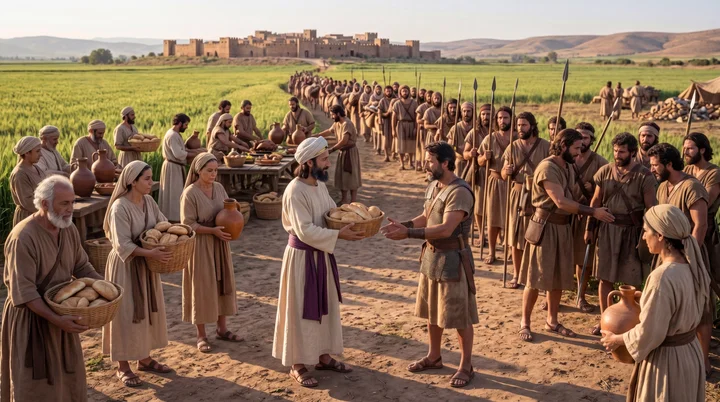
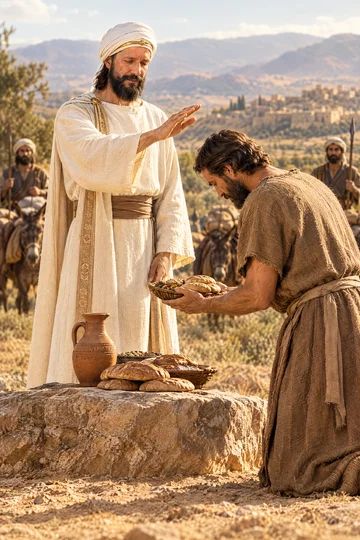
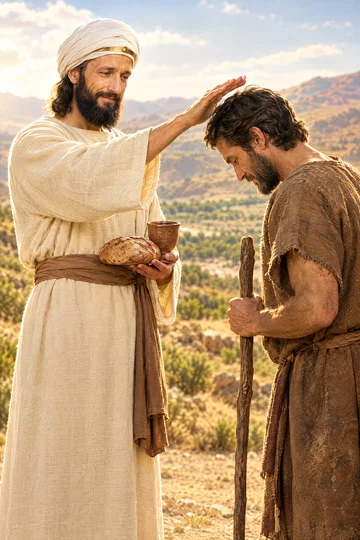
And Melchizedek king of Salem brought forth bread and wine: and he was the priest of the most high God.
Translations
American King James Version, King James Version, KJV Cambridge Paragraph Bible
And Melchizedek king of Salem brought forth bread and wine: and he was the priest of the most high God.
And Melchisedek, king of Salem, brought forth bread and wine: and he was the priest of the most high God.
Revised Version, American Standard Version
And Melchizedek king of Salem brought forth bread and wine: and he was priest of God Most High.
And Melchizedek king of Salem hath brought out bread and wine, and he [is] priest of God Most High;
And Melchisedec king of Salem brought out bread and wine. And he was priest of the Most High God.
Now Melchizedek king of Salem, had brought forth bread and wine,—he, being priest of GOD Most High.
Then Melchizedek king of Salem brought out bread and wine—since he was priest of God Most High —
Then Melchizedek king of Salem brought out bread and wine—since he was priest of God Most High—
Melchizedek king of Salem brought out bread and wine. He was priest of God Most High.
And Melchizedek, king of Salem, the priest of the Most High God, took bread and wine,
And Melchi-zedek King of Shalem brought foorth bread and wine: and he was a Priest of the most high God.
Douay-Rheims (Challoner revision)
But Melchisedech the king of Salem, bringing forth bread and wine, for he was the priest of the most high God,
Pictures
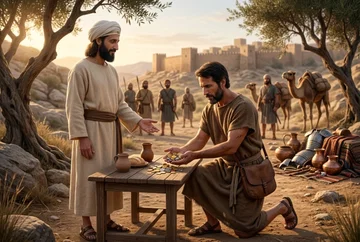
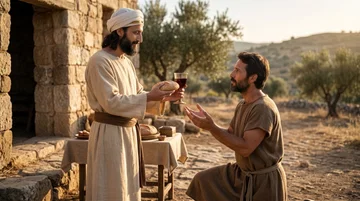
Cross-references 20 of 32
- Hebrews 7:1-3
For this Melchisedec, king of Salem, priest of the most high God, who met Abraham returning from the slaughter of the kings, and blessed him;
Explains Melchizedek’s combined offices and lack of recorded genealogy as a type.
- Psalms 110:4
The LORD hath sworn, and will not repent, Thou art a priest for ever after the order of Melchizedek.
Declares the Messiah a priest forever after Melchizedek’s order.
- Hebrews 7:17
For he testifieth, Thou art a priest for ever after the order of Melchisedec.
Jesus is a priest forever after Melchizedek’s order.
- Hebrews 6:20
Whither the forerunner is for us entered, even Jesus, made an high priest for ever after the order of Melchisedec.
Jesus is a high priest forever after Melchizedek’s order.
- Hebrews 7:3
Without father, without mother, without descent, having neither beginning of days, nor end of life; but made like unto the Son of God; abideth a priest continually.
Melchizedek’s unrecorded origins and priesthood illustrate Christ’s continual priesthood.
- Hebrews 5:6
As he saith also in another place, Thou art a priest for ever after the order of Melchisedec.
Applies the Melchizedek priesthood to the Son of God.
- Hebrews 7:4
Now consider how great this man was, unto whom even the patriarch Abraham gave the tenth of the spoils.
Abraham gives Melchizedek a tenth, demonstrating his greatness.
- Zechariah 6:12-13
And speak unto him, saying, Thus speaketh the LORD of hosts, saying, Behold the man whose name is The BRANCH; and he shall grow up out of his place, and he shall build the temple of the LORD:
The Branch’s priesthood and kingship unite in the royal-priestly role represented by Melchizedek.
- Hebrews 7:7
And without all contradiction the less is blessed of the better.
The greater person blesses the lesser, showing Melchizedek was greater than Abraham.
- Hebrews 7:11
If therefore perfection were by the Levitical priesthood, ( for under it the people received the law,) what further need was there that another priest should rise after the order of Melchisedec, and not be called after the order of Aaron?
Contrasts the Levitical priesthood with the priesthood after Melchizedek’s order.
- Hebrews 7:24-25
But this man, because he continueth ever, hath an unchangeable priesthood.
Christ’s unchanging priesthood endures, and he ever lives to intercede.
- Hebrews 8:1-2
Now of the things which we have spoken this is the sum: We have such an high priest, who is set on the right hand of the throne of the Majesty in the heavens;
Christ serves as the High Priest in the heavenly sanctuary.
- Hebrews 7:14
For it is evident that our Lord sprang out of Juda; of which tribe Moses spake nothing concerning priesthood.
Christ’s priesthood is distinguished from Aaron’s by his descent from Judah.
- Hebrews 7:21
( For those priests were made without an oath; but this with an oath by him that said unto him, The Lord sware and will not repent, Thou art a priest for ever after the order of Melchisedec:)
Christ is priest forever after the order of Melchizedek by God’s oath.
- Hebrews 7:8
And here men that die receive tithes; but there he receiveth them, of whom it is witnessed that he liveth.
Contrasts mortal priests with the living receiver of tithes.
- Hebrews 7:9-10
And as I may so say, Levi also, who receiveth tithes, payed tithes in Abraham.
Levi is counted as paying tithes to Melchizedek through Abraham.
- Genesis 14:22
And Abram said to the king of Sodom, I have lift up mine hand unto the LORD, the most high God, the possessor of heaven and earth,
Abram invokes the Most High God as possessor of heaven and earth in his oath.
- Psalms 110:1
The LORD said unto my Lord, Sit thou at my right hand, until I make thine enemies thy footstool.
Christ’s priestly office is joined to his rule at the Father’s right hand.
- Hebrews 5:10
Called of God an high priest after the order of Melchisedec.
Christ is called a high priest after Melchizedek’s order.
- Hebrews 7:2
To whom also Abraham gave a tenth part of all; first being by interpretation King of righteousness, and after that also King of Salem, which is, King of peace;
Interprets Melchizedek’s name and Salem as king of peace.
Commentary
Each commentary is drawn from primary sources: the writings of Ellen G. White and Adventist pioneers and periodicals. Each commentary is separate. Its own words are not a quotation; follow the references to read the source passages.
Ellen G. White
17 sources
After his victory over the Elamites in which he recovered the stolen goods and captives and rescued Lot, Abraham was met by Melchizedek, king of Salem and priest of the Most High God, Salem meaning peace and being his home that was later called Jerusalem and became David's capital.Lt 158, 1896, par. 2–3ST Feb 7, 18843T 393.1–394.3PP 136.1–3PP 703.1 He brought out bread and wine, which were unfermented, to refresh Abraham's army, and he blessed Abraham while acknowledging Jehovah, possessor of heaven and earth, as the source of his strength who had delivered his enemies into his hand.Lt 158, 1896, par. 2–3PP 136.1–3PP 157.2–3 He was a representative of Jesus Christ and a witness appointed by God to reveal heavenly truth and help preserve God's law, while those who held him to be more taught that Melchizedek King of Salem and King of Peace is Jesus the Messiah, the Prince of Life and Redeemer of the world.Lt 158, 1896, par. 2–3Lt 190, 1905, par. 2COS 96.2–97.102SP 395.2 Abraham gave him tithes of all as an offering to God in recognition of His mercies and blessings, which shows that tithing was practiced as part of God's plan before the Mosaic law established a definite tithing system.Lt 158, 1896, par. 2–33T 393.1–394.3RH Aug 25, 1874ST Apr 29, 1875 Returning tithes and offerings acknowledges God as the giver of blessings and supports His work, and the same duty remains obligatory for those living under the Melchizedek priesthood, to be carried out willingly and not by force.Lt 158, 1896, par. 2–3RH Aug 25, 1874Lt 44, 1876, par. 5–6
Melchizedek and Abraham's Meeting
Melchizedek is king of Salem and priest of the Most High God.Lt 158, 1896, par. 2–33T 393.1–394.3ST Apr 29, 1875ST Jul 22, 1886Lt 44, 1876, par. 5–6 Salem means peace, so king of Salem is king of peace.DA 578.2–579.5ST Jul 22, 1886 Salem was his home in Abraham's time and is the place later called Jerusalem, which centuries later became David's capital.PP 703.1
He brought forth bread and wine, which were unfermented, to refresh Abraham's army after its victory.Lt 158, 1896, par. 2–3PP 136.1–3 The meeting took place after Abraham's victory over the Elamites, when he had recovered the stolen goods and captives and rescued Lot.Lt 158, 1896, par. 2–3ST Feb 7, 1884PP 136.1–3PP 157.2–3 Melchizedek blessed Abraham and acknowledged Jehovah, God possessor of heaven and earth, as the source of Abraham's strength and victory who had delivered his enemies into his hand.Lt 158, 1896, par. 2–3PP 157.2–3
Christ, Tithing, and Witness
Melchizedek was a representative of Jesus Christ in person, a witness appointed by God who revealed heavenly truth and helped preserve God's law.Lt 158, 1896, par. 2–3Lt 190, 1905, par. 2 As priest of the Most High God he stood for the Lord Jesus Christ in the meeting with Abraham.Lt 158, 1896, par. 2–3Lt 190, 1905, par. 2
Melchizedek King of Salem is Jesus the Messiah, the Prince of Life and Redeemer of the world.2SP 395.2 Salem means peace, so King of Salem means King of Peace, and Abraham names Jesus as Melchizedek, King of Salem and King of Peace.COS 96.2–97.102SP 395.2 Abraham names him as a king of peace and as a king who served the Most High God, placing him among the prophetic witnesses who identify Jesus.DA 578.2–579.54RED 127.2 With the other prophets Abraham's witness to Melchizedek answers the question of who Jesus is when He comes to Jerusalem attended by a great crowd, declaring that Jesus is the promised Christ.2SP 395.2
Abraham gave tithes of all he possessed to Melchizedek, priest of the Most High God, which demonstrates that tithing was practiced before the Mosaic system was established and before the Mosaic law set up a definite tithing system.3T 393.1–394.3RH Aug 25, 1874ST Apr 29, 1875Lt 44, 1876, par. 5–6 It is an example of tithing in the days of Abraham and shows that tithing was part of God's plan from the beginning.3T 393.1–394.3RH Aug 25, 18742MR 132.5–133.2 Abraham's gift was an offering to God in recognition of His mercies and blessings, given in recognition of God, possessor of heaven and earth, who had delivered his enemies into his hand.Lt 158, 1896, par. 2–3RH Aug 25, 1874 Returning tithes and offerings acknowledges God as the giver of blessings and supports His work.2MR 132.5–133.2 The same duty of tithing remains obligatory for those living under the Melchizedek priesthood, not imposed by force but to be carried out willingly.Lt 44, 1876, par. 5–62MR 132.5–133.2
In the same account Abraham identifies the Lord as the Most High God and refuses the king of Sodom's goods, showing justice and regard for others' rights.ST Feb 7, 1884 Through his fidelity, integrity, unselfishness, courage, and kindness, God was revealed even to the inhabitants of Sodom.ST Feb 7, 1884PP 368.2
Sources
Pioneers and periodicals
117 sources
After Abraham defeated the kings and rescued Lot and the captives, Melchizedek king of Salem met him in the valley of Shaveh with bread and wine to refresh him, blessed him in the name of God as possessor of heaven and earth, and received a tenth of all the spoil.ST Aug 13, 1885ST Sep 2, 1889RH Mar 31, 1903ST Sep 2, 1889RH Feb 20, 1913 His name means king of righteousness and his city means peace, so that he stands as king of righteousness and king of peace, fitly representing Christ who is righteousness itself and the source of true peace with God.ST Oct 4, 1883ST Jun 11, 1912ST Dec 17, 1912ST Dec 2, 1889ST Jun 25, 1896 He was a real historical man, a human king-priest living in Abraham's time, distinct from Christ Himself and made like the Son of God.ST Oct 4, 1883ST Aug 26, 1913RH Mar 20, 1856ST Nov 23, 1904 In a differing teaching held by some, the Melchizedek who met Abraham is identified with Christ Himself holding that royal priesthood everlastingly.ST Apr 12, 1905ST Jul 15, 1908ST Oct 25, 1905 The record gives no ancestry, birth, death, predecessor or successor for his priesthood, and by that deliberate silence he typifies Christ whose priesthood is not inherited, has no end by death, unites kingship and priesthood in one person, and is greater than Abraham and Levi.RH Mar 3, 1904ST Sep 18, 1893RH Dec 16, 1858RH Mar 20, 1856 Abraham's gift was the spontaneous recognition of an established obligation to give one-tenth for God's service through His living priest, practiced long before Sinai, and because Christ is priest forever after that same order tithing did not terminate with Moses but remains binding upon Christians.ST Sep 2, 1889RH Nov 18, 1915RH Mar 31, 1903ST Aug 8, 1916ST Jan 24, 1906
Words Acts and Setting
The name Melchizedek means king of righteousness, formed from melech meaning king and zedek meaning righteousness, while Salem means peace or place of peace, so that he is both king of righteousness and king of peace.ST Oct 4, 1883ST Jun 11, 1912ST Dec 17, 1912ST Dec 2, 1889ST Oct 21, 1889 Righteousness itself is peace with God, and true peace comes only through righteousness.ST Oct 4, 1883ST Dec 17, 1912ST Jul 18, 1900 The name is also rendered my king is righteousness, and everything to be known of him in this life is found in this verse together with Psalm 110:4 and Hebrews 5:6, 10, Hebrews 6:20, and Hebrews 7:1, 10, 11, 15, 17, 21.ST Dec 16, 1913ST Dec 2, 1889
When he met Abraham he brought forth bread and wine to refresh Abraham and his weary companions after the battle and the long dangerous journey.RH Mar 31, 1903RH Feb 20, 1913RH Apr 1, 1915RH May 22, 1913 This bringing of bread and wine was a gospel rite and divine service in which he led the religious service, with the bread and wine as emblems of the body and blood of the promised Son.ST Oct 4, 1883RH Mar 31, 1903RH Feb 20, 1913ST Oct 21, 1889 His ministry of food and drink is compared to Christ as the bread and water of life to Abraham and his descendants.RH Dec 1, 1910RH Dec 1, 1910 His serving bread and wine rather than meat is also an example of temperance.RH May 22, 1913
The verse belongs to the account of Abraham returning from the slaughter and defeat of the kings after rescuing Lot and the captives and recovering the spoil.ST Aug 13, 1885RH Feb 20, 1913AUST Jun 14, 1920ST Feb 16, 1915 As Abraham returned toward Hebron, Melchizedek met him in the valley of Shaveh, probably just below Jerusalem, with the king of Sodom also present.ST Aug 13, 1885RH Feb 20, 1913AUST Jun 14, 1920 There he blessed Abraham in the name of God as possessor of heaven and earth and giver of victory, and received from him a tenth of all the spoil.ST Aug 13, 1885ST Sep 2, 1889ST Sep 2, 1889RH Feb 20, 1913 Abraham's gift gave God the tithe first before deciding how the remaining goods would be distributed.ST Sep 2, 1889ST Sep 2, 1889
Salem is the old name of Jerusalem, though the city's size in Melchizedek's reign is unknown.ST Apr 28, 1914ST Jan 31, 1906ST Jul 18, 1900ST Jun 13, 1900 The portion of Canaan later assigned to Judah included this city, as well as the place where Abraham built an altar, received God's promise, and was called to offer Isaac, and Judah and Benjamin did not take the city from the Jebusites until David's time.ST Apr 28, 1914
The location and nature of Salem's rule is left uncertain, since Salem may have been Jerusalem or a place farther south, even the small town of Salem near the valley of Shaveh where he met Abraham.RH Dec 1, 1910ST Aug 30, 1905RH Feb 3, 1910 Those who held that Salem was not an established city in Abraham's time teach that the later Jerusalem name and the sparsely inhabited area around Mount Moriah show Melchizedek was a temporary visitor rather than a local ruler.RH Dec 1, 1910ST Aug 30, 1905RH Feb 3, 1910
The word translated priest could also mean prince, in his case a title connecting him with the Ruler of heaven, while Salem is associated with summit of peace.RH Dec 1, 1910 Those who held that Melchizedek is a title teach that it is not a personal name but the title of a priestly order of priest-kings, so that every priest of that order bore the title and served as both priest and king.ST Jan 31, 1906ST Nov 15, 1905ST Nov 15, 1905ST Jul 21, 1909 In that teaching a Melchizedek is a world's representative and high priest, which Adam would have held for earth if he had not surrendered its rule through sin.ST Nov 15, 1905ST Apr 19, 1905
Identity of Melchizedek
Melchizedek was a real historical man, as real as Abraham, a human king-priest living in Abraham's time, not a mythical character.RH Mar 20, 1856ST Nov 23, 1904ST Jul 16, 1896ST Sep 11, 1879 The account belongs to true history confirmed letter for letter by ancient monuments, stone libraries of the Orient, thousands of tablets and eastern records.ST Jul 16, 1896 He held two offices at once as king of Salem and priest of the most high God, uniting royalty with priesthood in one person in a way the priests of Aaron never did.RH Mar 20, 1856ST Sep 11, 1879 He met Abraham returning from the slaughter and defeat of the kings, blessed him, and received a tenth part of all from him.ST Sep 11, 1879 The record gives only that simple statement, with no genealogy, parentage, birth, death, beginning or end, predecessor or successor, and that silence is intentional and inspired so that he remains a type of Christ's priesthood.RH Mar 20, 1856ST Sep 11, 1879
He was not Christ Himself, nor Shem, nor the Holy Spirit, nor an angel in human form, but a distinct individual who was made like the Son of God.ST Oct 4, 1883ST Jun 11, 1912RH Mar 20, 1856ST Dec 2, 1880 Christ was made like him and arose as another priest after his likeness and after the order he represented, the antitype represented by the earthly type without being that type.ST Oct 4, 1883ST Jun 11, 1912ST Aug 26, 1913ST Jun 25, 1896ST Oct 4, 1883 Abraham saw Christ through Melchizedek just as Israel saw Him in Aaron and in the sin offering.ST Oct 4, 1883ST Oct 4, 1883 Attempts to identify him beyond the statement, such as saying he was Shem, are vain and would destroy the typology.RH Mar 20, 1856 In a differing position, the Melchizedek who met Abraham is identified with Christ in that Christ is Melchizedek, holding the same royal priesthood in a preeminent and everlasting way rather than as a mere shadow or figure.ST Apr 12, 1905ST Jul 15, 1908ST Oct 25, 1905 Hebrews is held to reveal and establish this identity further.ST Apr 12, 1905
He was a visitor from another world and the head and father of another unfallen world, holding the same relation to that world as Adam was designed to hold to this world as its priest.ST Jun 11, 1912ST Dec 17, 1912 Placed here for a little time as an illustration and object-lesson for generations to come, he came to this world for a time in God's plan.ST Jun 11, 1912ST Dec 17, 1912 This would explain his having no recorded father, mother, beginning of days, or end of life.ST Nov 29, 1910 He appeared as a fully grown father-priest directly from God, and his endless life is essential to the priesthood which Christ possesses. Calling him a man does not prove he was an inhabitant of this world, and he may have been a representative of God from another world, though held by some only as a possibility rather than a certainty.ST Jan 3, 1905 In keeping with this, Salem is not taken to have been an established city in Abraham's time, since the later Jerusalem name and the sparsely inhabited area around Mount Moriah suggest he was a temporary visitor, not a local ruler, yet greater than Abraham, who recognized him as God's representative and gave him a tenth of the spoils.ST Aug 30, 1905
In another position, he was simply a man living among the peoples of Canaan in a community given over to idolatry.ST Dec 2, 1880ST He lived in that darkness as a witness to and servant of the one God and ministered as His priest in a plain way, the one light in almost universal darkness.ST Dec 2, 1880 Having no priestly lineage or order and no recorded beginning or end means his priesthood came not from official position or lineage but from personal character.ST Dec 2, 1880 He was a holy man of singular uprightness, piety and practical righteousness that earned him recognition among his contemporaries as a true priest of the living God and the title king of righteousness, and made him king of peace.ST Dec 2, 1880 By character rather than official authority he was trusted by the tribes around him as an arbiter and minister of justice between God and man and as a guiding mind in the whole region.ST Dec 2, 1880
He lived near Sodom and, with Abraham and Lot, held up the light of the gospel to its people as holy and renowned men.RH Jul 19, 1870ST Oct 4, 1883ST Oct 24, 1895 Being greater than Abraham, his presence near Sodom meant its people had access to the light of truth and to knowledge about Christ's second advent and the day of judgment.RH Jul 19, 1870ST Oct 4, 1883 His holy presence among the peoples of Canaan proves God had done all He could to help those nations, warning and entreating them through holy influence before their iniquity became full and destruction came upon them to give the land to Israel.ST No identity beyond the verse is established: alleged letters found in Egypt using the name do not show that the Genesis Melchizedek lived in Egypt, since the find is uncertain and there is nothing proving it is the same man, leaving the Genesis account unmodified.ST Oct 8, 1912 Melchizedek is a title, not a personal name, and the king named in those tablets concerning Jerusalem was Ebed-kheba, so the claim that they contain letters written by him is rejected.ST Jan 31, 1906 An ancient tablet discovered along the Nile naming a king of Salem in a letter dated about 1430 B.C. is cited only as possible evidence for his historical existence.RH Apr 3, 1900
He is a mysterious king of righteousness whose priesthood is known without detailed genealogy, and who gave Abraham evidence that he was priest of the most high God.RH Jul 1, 1858RH Dec 4, 1913 He is pictured among the ancient worthies who welcome the saved in heaven. He will rise from the dead to meet his Antitype descending from heaven.RH Jul 1, 1858
Type of Christ's Priesthood
Melchizedek was a real king and priest who served as a type and express representative of Christ, not Christ himself, and Christ is the antitype as priest after the order he represented.ST Oct 4, 1883ST Oct 4, 1883ST Jan 29, 1894 Abraham saw Christ in Melchizedek just as Israel later saw Him in Aaron and in the sin offering, Christ being represented by the earthly type without being that type.ST Oct 4, 1883ST Oct 4, 1883 Abraham's encounter was an early revelation of the same gospel truth later shown in the tabernacle and its services, that the Son of God would come in the flesh and mediate for humanity.ST May 7, 1902 His priesthood and kingship together make him a type of Christ who is both priest and king.RH Feb 20, 1913 The Old Testament record of him as king of Salem and priest of the Most High God is used to establish this typical relation.ST Dec 2, 1889
His names fitly represent the Son of God, for Melchizedek means king of righteousness and Salem means peace, making him king of righteousness and king of peace.ST Dec 2, 1889ST Jun 25, 1896ST Jun 3, 1913 Christ is truly the righteous King as King of Righteousness, the source of peace as King of Salem or King of Peace, and as Creator, Lifegiver and Priest of the universe the source of righteousness and peace.ST Dec 2, 1889ST Jun 25, 1896 He is the Lord our righteousness, our peace, and our great High Priest, and likewise a king of peace pointing to Christ.ST Jun 25, 1896 His peace is unlike the peace the world gives, for it is calm and deep, and Jesus as King of Peace bears the troubles of those who come to Him.ST Mar 29, 1899 Salem means peace, and this identifies Jesus as the King of peace.ST Jul 22, 1886ST Jun 22, 1882
The record gives only that he was king of Salem and priest of the Most High God, with no account of ancestry, birth, death, beginning or end of priesthood, predecessor or successor.RH Mar 20, 1856 This deliberate and inspired silence is essential to the comparison, allowing him to typify a priesthood not based on genealogical line or descent from Levi.ST Dec 2, 1889RH Dec 16, 1858RH Mar 20, 1856 Like Melchizedek, Jesus is a priest-king whose priesthood has no predecessor and will have no successor, comes from no other and passes to no other, is not inherited, and is not ended by death.ST Jun 25, 1896 The account shows only a segment of the same order of priesthood that belongs to Christ. This also answers the objection that Christ could not be priest because He was not of the tribe of Levi.RH Dec 16, 1858
Without father or mother and without beginning of days or end of life describes what is absent from the record, not an absence of actual parents, birth or death.RH Sep 7, 1869ST Oct 21, 1889 Scripture gives no record of his parents, ancestry, birth, death, or length of priesthood, and he had no children, yet this does not mean he had no ancestors or beginning of existence.RH Sep 7, 1869ST Oct 21, 1889 His solitary appearance in the record makes him a type of Christ whose priesthood is everlasting. Attempts to identify him beyond this statement, such as saying he was Shem, are vain and would destroy the typology.RH Mar 20, 1856
He belongs to the same priestly order to which Christ belongs as high priest forever, and his priesthood is the basis for calling Christ a high priest after the order of Melchizedek.ST Feb 15, 1910ST Nov 18, 1889 Unlike the Levitical priesthood which served as examples and shadows for a sinful world by dealing with sin and human need, the Melchizedek priesthood applies to all conditions and times.ST Jul 15, 1908 This order has endless life, Christ ever lives to intercede, and His priesthood is everlasting with His followers as kings and priests to Him forever.ST Jul 15, 1908 He was a priest in that same order, not merely a shadow or figure, while Christ holds that royal priesthood in a preeminent and everlasting way.ST Jul 15, 1908ST Oct 25, 1905 His endless life is essential to the Melchizedek priesthood which Christ possesses, and He appeared as a fully grown father-priest directly from God.
By virtue of his priestly office he was greater than Abraham and superior to him, meeting him, receiving tithes from him, and blessing him.RH Mar 3, 1904RH Sep 7, 1869 This held even though Abraham had the promises of God and was himself a patriarchal priest empowered to offer sacrifices as the patriarchs were, because receiving tithes and blessing proves superiority, since without contradiction the less is blessed of the better. Abraham's tithe acknowledged that the tenth belonged to God.RH Mar 3, 1904 The same act proves the Melchizedek priesthood superior to the Levitical priesthood, since Levi who received tithes under the Mosaic law paid tithes in Abraham. He was the exalted priest Abraham met and recognized as God's representative, giving him a tenth of the spoils.ST Aug 30, 1905
His priesthood is older than Aaron's, extending from Adam to Moses and onward from Adam, and greater than the Levitical order.ST Aug 8, 1916RH May 18, 1869ST Sep 9, 1880ST Dec 10, 1912 Abraham's payment of tithes to him shows tithing was practiced under the Melchizedek priesthood before the command from Sinai and did not begin with the Levitical priesthood.ST Aug 8, 1916RH May 18, 1869RH Oct 24, 1912 It fulfills the prediction that Messiah would be priest forever after Melchizedek's order, not descended from Levi.RH Dec 16, 1858 Because Christ is priest after that order, the order continues from Christ's first advent through the closing work of the gospel, and Christ's universal priesthood for all nations succeeded the temporary, hereditary Hebrew priesthood limited to Levi.ST Sep 9, 1880RH Mar 9, 1905 Since the cross believers live under the Melchizedek order of priesthood.ST Dec 10, 1912
He united royalty with priesthood in one person as priest-king, which the priests of Aaron never did, making him a fuller type of Christ who likewise unites kingship and priesthood.ST Sep 11, 1879RH Mar 20, 1856 Jesus is priest forever after Melchizedek's order, and as priest-king He is Saviour, intercessor and advocate with power to undertake His people's cases.ST Sep 18, 1893 Christ as priest after that order holds the same united office, belonging to Judah the kingly tribe as David's heir and priest after the arrangement of Melchizedek.ST Aug 29, 1878 The Genesis silence about genealogy, father, mother and descent supplies what Aaron could not typify of the ministry of Christ.ST Sep 11, 1879 As with Melchizedek, Christ's kingship united with His priesthood is not by hereditary right but by exaltation to God's throne to carry out His priestly work, while His separate rule on the throne of Israel is as Son of David whose genealogy must be traced.RH Mar 20, 1856
Christ's Melchizedek kingship and priesthood is exercised in joint rule with the Father upon the throne of the universe during His priestly work, distinct from Aaron's priesthood and David's kingship.RH Feb 15, 1870ST Aug 29, 1878ST Apr 15, 1886 His combined offices illustrate this priest-king role while His priestly office continues.RH Feb 15, 1870 That priest-king reign on the Father's throne continues until the Father makes His enemies His footstool, when He delivers up the shared kingdom to the Father alone that God may be all in all.ST Aug 29, 1878 This ends His reign on the Father's throne before taking His own throne as David's heir to reign over the immortal saints forever.ST Aug 29, 1878 His distinct kingly priesthood is the order after which He serves as priest on His Father's throne, supporting the distinction between His present priestly rule and His future reign on David's throne.RH Jun 29, 1916ST Apr 15, 1886
As priest of the Most High God he was the voice of God in the world, whom Abraham recognized, received blessing from, and later gave tithes to.RH Jan 9, 1900 The little known of him and his office shows him to be a preacher of righteousness and teacher of God's universal system of religion, grounded in the unchanging principles of the decalogue and including its laws, doctrines, faith, promises and hopes.RH Aug 17, 1876 His name and titles illustrate a righteous king and king of peace who serves as priest, teaching and ministering the life and fullness received from Christ.ST Aug 9, 1905 In an unfallen setting his priesthood did not require intercession for sin, for there he served as leader and representative of his people in worship.ST Apr 26, 1905 His role also points to Christ as Priest-King who, after His work of intercession for sin ends, remains Priest and King, and Christ won the place humanity lost through His righteous life in human nature to be High Priest forever.ST Jun 3, 1913ST Apr 26, 1905
History and Archaeology Confirmed
Genesis 14 is true history of a real invasion of Palestine in Abraham's time, not myth, late tradition, fable or parable.ST May 20, 1913ST Dec 14, 1915 It records an actual war of four kings against five in which Abraham took part, and the meeting with Melchizedek belongs to that historical narrative rather than to a late invention.RH Jul 9, 1914ST Dec 14, 1915ST Dec 14, 1915 The lists of kings and names in the chapter are confirmed letter for letter by ancient monuments and by the stone libraries of the Orient.RH Jul 9, 1914ST May 20, 1913 Thousands of tablets of sandstone and marble found in the Chamber of Records by the banks of the Euphrates tell the same story, corroborating Genesis in minute detail and placing confidence in the book as a historical record beyond question.RH Jul 9, 1914 This monumental evidence substantially confirms the account of Abraham's time and supports Melchizedek's existence as a historical person.ST May 20, 1913ST Dec 14, 1915
Amraphel in the chapter is identified with Hammurabi, and an inscription of Hammurabi is presented as confirming the biblical record.ST Dec 14, 1915RH May 13, 1909 Evidence that the Babylonian dynasties once thought successive were contemporaneous removes the objection that Abraham lived about three hundred years too early.ST Dec 14, 1915RH May 13, 1909 The chronology of the record is thus consistent with the period of Hammurabi.ST Dec 14, 1915RH May 13, 1909
Tithing Before Mosaic Law
Abraham's payment to Melchizedek is the first recorded instance of paying tithes.ST Nov 4, 1886ST Jul 2, 1885ST Oct 2, 1884ST Feb 12, 1885 The account of Melchizedek, king of Salem and priest of God Most High, receiving Abraham after his victory and bringing bread and wine records that first instance of tithing.ST Jan 1, 1885
Tithing belonged to the gospel plan and to the Melchizedek priesthood before the Levitical law and the Aaronic priesthood, and did not begin with the Levitical priesthood.RH Mar 31, 1903ST Aug 8, 1916RH May 18, 1869 Abraham gave tithes to Melchizedek more than four hundred years before the law of Moses, showing that the principle of tithing existed in Abraham's time before the instructions given to Israel.ST Apr 13, 1882ST Sep 9, 1880 Melchizedek belonged to a priestly order older than Aaron's, described as the order extending from Adam to Moses and onward from Adam, and because Christ is priest after that order it continues through the closing work of the gospel.ST Aug 8, 1916RH May 18, 1869ST Sep 9, 1880 In the account that follows the bringing of bread and wine as a gospel rite, Melchizedek blesses Abraham and Abraham gives him a tithe, presenting the first Bible account of income supporting gospel workers.RH Mar 31, 1903
Abraham's gift was not a new or unusual act but a spontaneous act of a recognized duty, done as a matter of course under an established system obligatory upon him.ST Jan 24, 1906ST Jan 22, 1880RH Mar 11, 1873 Giving one-tenth of increase for religious objects and for the support of ministers wholly devoted to God's service was a well-understood principle among God's people from a very early period far back of the Jewish national establishment, God's uniform system devised in the beginning for regular systematic giving, with the authority of God's law and obligation comparable to prayer.ST Jan 22, 1880RH Mar 11, 1873ST May 6, 1875 The Lord taught His people from the beginning to devote one-tenth to the support of His ministers, since men devoted wholly to God's service were necessary, so tithing was an established rule in the patriarchal age since the fall.ST Jan 22, 1880ST Aug 29, 1895 Although when and how the instruction was given is not stated, Abraham acted from that established rule and not as doing it for the first time, and the same exact proportion afterward required by law of Israel shows its continuity.RH Mar 11, 1873 The very first thing Abraham did after God blessed him in recovering Lot and in taking great booty was to give the Lord's priest a tithe of everything, illustrating giving God the tithe before deciding how the remaining goods would be distributed.ST Sep 2, 1889ST Jan 22, 1880
The tenth belonged to God and was due to God through His living priest and representative, not given to meet Melchizedek's need.RH Apr 1, 1915ST Jan 24, 1906RH Mar 3, 1904ST Oct 15, 1902ST Sep 2, 1889 Melchizedek's priestly service belonged to God when as priestly king he came to bless Abraham, and Abraham as steward gave the Lord's share to honor the Lord and support God's work, acknowledging God as rightful owner and recognizing the obligation to return a tithe to the Lord.RH Apr 1, 1915RH Mar 3, 1904ST Oct 15, 1902ST Sep 2, 1889RH Feb 20, 1913 The encounter shows recognition of God's ownership and enduring sovereignty as possessor of heaven and earth, with the tithing system properly belonging to the priesthood of Melchizedek.RH Apr 1, 1915ST Sep 2, 1889 Although Abraham did not regard the spoils as his own, he gave God's portion first before distributing the remainder.ST Sep 2, 1889ST Jan 24, 1906
Abraham gave a tenth of all, of the recovered goods, spoil and booty including property belonging to the Gentile tribes of Palestine, immediately after God delivered his enemies into his hand and blessed him in recovering Lot and the captives.RH Feb 20, 1913ST Feb 16, 1915RH Nov 4, 1873RH Dec 29, 1904 Melchizedek brought bread and wine and led in the religious service and divine service in which Abraham and the king of Sodom participated, then blessed Abraham and honored God as possessor of heaven and earth and giver of the victory.RH Feb 20, 1913RH Dec 29, 1904 Abraham recognized the Lord's claim to the tithe before returning the remaining spoils to the king of Sodom, refusing to take anything from a thread to a shoe-latchet from the king of Sodom and refusing the king of Sodom's goods.ST Feb 7, 1884ST Feb 16, 1915RH Nov 4, 1873 In this he showed trust in God the possessor of heaven and earth rather than seeking wealth, with justice and regard for others' rights.ST Feb 7, 1884RH Nov 4, 1873
Tithing Continues Under Gospel
Because Christ is priest forever after the order of Melchizedek, the requirements of that priesthood remain in force and tithing did not originate with Moses nor terminate at the cross.RH Nov 18, 1915ST Sep 9, 1880RH Mar 9, 1905ST Nov 5, 1896 It has nothing shadowy about it and remains obligatory even to the smallest particulars for Christians who are Abraham's children by faith and follow his example as a type of the faithful.RH Nov 18, 1915ST Nov 5, 1896ST Aug 9, 1905 The Melchizedek order extended from Adam to Moses and continues from Christ's first advent through the closing work of the gospel, so the tithing system contemporaneous with that priesthood endures with the gospel.ST Sep 9, 1880RH Mar 9, 1905 Abraham regarded it as duty to pay tithes to Melchizedek as king of Salem and priest of the Most High God and the Lord's representative, meeting him returning from the slaughter of the kings.RH Nov 18, 1915ST Nov 5, 1896ST Aug 9, 1905 Melchizedek was greater than Abraham even though Abraham had the promises and was himself a patriarchal priest empowered to offer sacrifices, because he received tithes from Abraham and blessed him, since without contradiction the less is blessed of the better. The same act proves that priesthood superior to the Levitical priesthood, since Levi who received tithes under Moses paid tithes in Abraham, so Christians live under the Melchizedek priesthood as Abraham did and are under obligation to pay tithes even more than those under Levi.
Abraham's tithe supported Melchizedek's priesthood, the order to which Christ belongs, and is the first Bible account of income supporting gospel workers before the Levitical law and Aaronic priesthood.RH Mar 31, 1903ST Dec 10, 1912ST May 6, 1875 God had blessed Abraham in recovering Lot and in taking great booty, and the very first thing he did was give the Lord's priest a tithe of everything and of all he had gained.RH Mar 31, 1903ST Jan 22, 1880 This shows the Lord taught His people from the beginning to devote one-tenth to the support of His ministers wholly devoted to God's service, as an established rule in the patriarchal age since the fall when such ministers were necessary and as provision for their maintenance.ST Jan 22, 1880ST Aug 29, 1895ST May 6, 1875 The tithe belongs to the Lord because all property is His, and the tithing system arose from humanity's need for a systematic way to support the work of the gospel.ST Aug 29, 1895 Abraham honored Melchizedek with tithes of the booty God had helped him recover, a practice he had learned through his fathers that continues as God's plan learned in turn by his descendants, and all who belong to the household of faith as children of Abraham do the works of Abraham by paying a faithful tithe to support those who give their lives for the advancement of Christ's kingdom.RH Mar 31, 1903ST Dec 10, 1912ST May 6, 1875
Tithes paid to the Lord's priest are received by Christ as the living one and living High Priest. In the account of Abraham's return with the recovered spoils, tithing was understood and practiced among God's people in early times, while the king of Sodom and his people were rebuked for not paying tithe on their property before the war. Abraham's example is thus presented as the pattern for Christians, who are children of Abraham by faith and should pay tithes.
The first-tithe system existed before Moses in the time before Israel when the tithe was given to the Melchizedek priesthood, and is therefore not merely a Levitical law but remains binding.RH Nov 12, 1908RH Jan 9, 1913 When Israel's Levitical priesthood was established the tithe's recipient changed to the Levites, but no new obligation to tithe was introduced.RH Jan 9, 1913 The specific Levitical second-tithe law belonged to Israel's system and is not legally binding today, though its underlying principle of systematic giving to God's work remains binding.RH Nov 12, 1908 The payment was made to Melchizedek because he was priest of the Most High God, for God's service with no civil ruler present to take any part of it for government use, proving God's design that the tithe belongs to religious purposes and not to civil taxes.RH Mar 11, 1873
Abraham gave a tenth of everything after God delivered his enemies into his hand, when Melchizedek appeared and blessed him, making Abraham an example of faithful tithing.ST Aug 2, 1905ST Jul 4, 1911 His gift before the Mosaic law established a definite tithing system was an early example of offering to God in recognition of His mercies and blessings.RH Aug 25, 1874 It falls within God's progressive dealings with Abram showing His providential care and interest among people and forming part of the lessons that lead Abram toward full trust in God, with the Promised Seed kept in view.ST Dec 20, 1910
Wider Gospel Applications
Melchizedek as both king of Salem, meaning place of peace, and priest of the Most High God held his priesthood by direct conferral from God and not by inheritance through a priestly line.ST Apr 28, 1914 The bread and wine he brought to Abraham were emblems of the body and blood of the promised Son through whom the world would be blessed.ST Apr 28, 1914 His city pictured the eternal kingdom with its king, subjects, territory, capital and priestly mediator, while Abraham's tithes recognized those divine offices and Abraham received his blessing.ST Apr 28, 1914 That meeting points to Christ the promised Seed and Redeemer as the everlasting High Priest in Melchizedek's order, exalted as the Son of Man, and shows that tithing belongs to that priesthood as truly as it belonged to the Aaronic priesthood.ST Apr 14, 1914 The portion of Canaan later assigned to Judah included this city as well as the place where Abraham built an altar, received God's promise and was called to offer Isaac, and Judah and Benjamin did not take the city from the Jebusites until David's time.ST Apr 28, 1914
Christ as king-priest takes the place Adam lost through failure and receives His priesthood by God's oath.ST Nov 29, 1910 He won the place humanity lost through His righteous life in human nature and will be High Priest forever.ST Jun 3, 1913 A Melchizedek is a world's representative and high priest, and Adam would have held that office for earth if he had not surrendered its rule through sin, while Christ became earth's high priest in that order as the last Adam.ST Apr 19, 1905 The Melchizedek who met Abraham is thus understood as a priest-king from another world, which explains his description in Hebrews as having no father, mother, beginning of days or end of life.ST Nov 29, 1910
Melchizedek bringing bread and wine and blessing Abraham as servant of the Most High after the battle shows that Abraham's defensive fighting was consistent with doing God's will.RH Oct 14, 1862 After defeating the armies of four victorious kings and rescuing Lot and the inhabitants of Sodom, Abraham gave a tithe of all to the priest of the Most High and refused to take anything of the spoil from a thread to a shoe-latchet.RH May 26, 1863 That giving with refusal of personal share proves his nobility, bravery, skill and self-denial in waiving the usual rewards of valor.RH May 26, 1863 Even with that righteous act he was not elated or self-satisfied but feared he had sinned and stood in need of a shield.RH May 26, 1863
The encounter with Melchizedek while Abraham was returning from battle is an example of a form of worship that existed before worship was organized into a regular system for the nation of Israel. That patriarchal worship included a priestly service supported by regular, specified offerings including tithe.RH Jun 6, 1912 This service was part of worship closely connected with setting apart holy time for God, with Melchizedek leading the religious service and honoring God.RH Jun 6, 1912
Melchizedek as king of Salem bears the title meaning king of peace, for peace is the result of righteousness and only the righteous are truly at peace with God and His universe.ST Aug 30, 1905 In the ideal time when sin is forever banished the King will reign in righteousness, bringing peace, quietness and lasting confidence.ST Aug 30, 1905 Unlike the Levitical priesthood which served a sinful world by dealing with sin and human need, the Melchizedek priesthood applies to all conditions and times, is everlasting and is not a mere shadow or figure.ST Jul 15, 1908 Christ's followers in that order are made kings and priests to Him forever.ST Jul 15, 1908
Sources