Psalms 110:4
The LORD hath sworn, and will not repent, Thou art a priest for ever after the order of Melchizedek.
Translations
The LORD has sworn, and will not repent, You are a priest for ever after the order of Melchizedek.
King James Version, Revised Version
The LORD hath sworn, and will not repent, Thou art a priest for ever after the order of Melchizedek.
The Lord hath sworn, and will not repent,
Thou art a priest for ever
After the order of Melchizedek.The LORD hath sworn, and will not repent, Thou art a priest for ever after the order of Melchisedek.
Jehovah hath sworn, and will not repent:
Thou art a priest for ever
After the order of Melchizedek.Jehovah hath sworn, and doth not repent, 'Thou [art] a priest to the age, According to the order of Melchizedek.'
Jehovah hath sworn, and will not repent, Thou art priest for ever after the order of Melchisedek.
Yahweh, hath sworn—and will not repent, Thou, [shalt be] a priest unto times age-abiding, after the manner of Melchizedek.
Berean Standard Bible, Majority Standard Bible
The LORD has sworn
and will not change His mind:
“ You are a priest forever
in the order of Melchizedek.”The LORD has sworn, and will not change his mind:
“ You are a priest forever in the order of Melchizedek.”The Lord has made an oath, and will not take it back. You are a priest for ever, after the order of Melchizedek.
The Lord sware and wil not repent, Thou art a Priest for euer after ye order of Melchi-zedek.
Douay-Rheims (Challoner revision)
The Lord hath sworn, and he will not repent: Thou art a priest for ever according to the order of Melchisedech.
Pictures
Cross-references 20 of 52
- Hebrews 7:17
For he testifieth, Thou art a priest for ever after the order of Melchisedec.
Identifies Christ as priest forever in Melchizedek’s order.
- Hebrews 8:1-2
Now of the things which we have spoken this is the sum: We have such an high priest, who is set on the right hand of the throne of the Majesty in the heavens;
Christ serves as High Priest at God's right hand in the heavenly sanctuary.
- Genesis 14:18-20
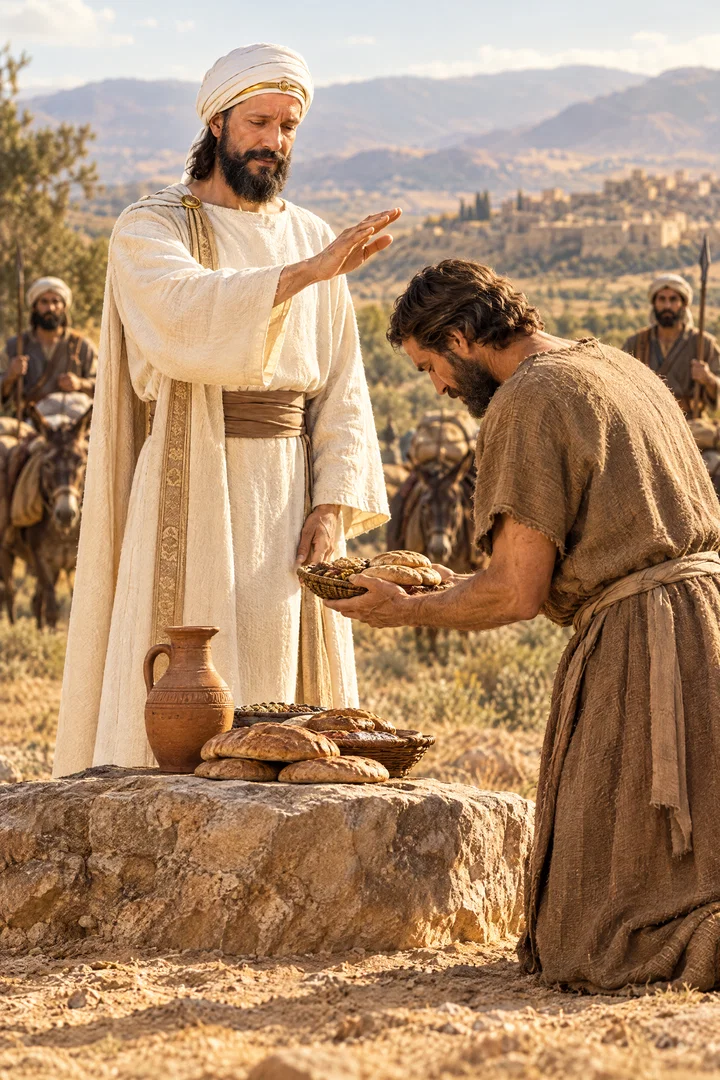
And Melchizedek king of Salem brought forth bread and wine: and he was the priest of the most high God.
Melchizedek is king and priest; Abraham gives him tithes, prefiguring Christ’s priesthood.
- Hebrews 7:1-3
For this Melchisedec, king of Salem, priest of the most high God, who met Abraham returning from the slaughter of the kings, and blessed him;
Explains Melchizedek’s role and his likeness to the Son of God.
- Zechariah 6:13
Even he shall build the temple of the LORD; and he shall bear the glory, and shall sit and rule upon his throne; and he shall be a priest upon his throne: and the counsel of peace shall be between them both.
The Branch is enthroned as both priest and ruler.
- Hebrews 5:6
As he saith also in another place, Thou art a priest for ever after the order of Melchisedec.
Identifies Christ as a priest forever in Melchizedek’s order.
- Hebrews 7:24-25
But this man, because he continueth ever, hath an unchangeable priesthood.
Christ’s permanent priesthood enables him to intercede continually and save completely.
- Hebrews 6:20
Whither the forerunner is for us entered, even Jesus, made an high priest for ever after the order of Melchisedec.
Identifies Jesus as a high priest after Melchizedek’s order.
- Hebrews 10:12-13
But this man, after he had offered one sacrifice for sins for ever, sat down on the right hand of God;
Christ offers one sacrifice, then waits at God’s right hand until his enemies become his footstool.
- Hebrews 7:21
( For those priests were made without an oath; but this with an oath by him that said unto him, The Lord sware and will not repent, Thou art a priest for ever after the order of Melchisedec:)
Quotes God’s oath appointing Christ priest forever after the order of Melchizedek.
- Hebrews 7:3
Without father, without mother, without descent, having neither beginning of days, nor end of life; but made like unto the Son of God; abideth a priest continually.
states the same Melchizedek priesthood person
- Hebrews 9:24
For Christ is not entered into the holy places made with hands, which are the figures of the true; but into heaven itself, now to appear in the presence of God for us:
Christ appears in heaven before God on behalf of his people.
- Hebrews 7:11-12
If therefore perfection were by the Levitical priesthood, ( for under it the people received the law,) what further need was there that another priest should rise after the order of Melchisedec, and not be called after the order of Aaron?
Contrasts Christ’s Melchizedek priesthood with Aaron’s and explains why the Levitical priesthood gave way.
- Hebrews 7:14
For it is evident that our Lord sprang out of Juda; of which tribe Moses spake nothing concerning priesthood.
Christ came from Judah, a tribe not assigned the priesthood under Moses’ law.
- Hebrews 9:11-12
But Christ being come an high priest of good things to come, by a greater and more perfect tabernacle, not made with hands, that is to say, not of this building;
Christ enters the greater tabernacle as High Priest and obtains eternal redemption.
- Hebrews 8:4-5
For if he were on earth, he should not be a priest, seeing that there are priests that offer gifts according to the law:
Earthly priests served as shadows, while Christ ministers as priest in heaven.
- Hebrews 7:1
For this Melchisedec, king of Salem, priest of the most high God, who met Abraham returning from the slaughter of the kings, and blessed him;
Melchizedek is identified as both king and priest, foreshadowing Christ’s dual office.
- Hebrews 7:24
But this man, because he continueth ever, hath an unchangeable priesthood.
Christ’s priesthood continues forever, unlike the mortal Levitical priests.
- Hebrews 7:12
For the priesthood being changed, there is made of necessity a change also of the law.
A change of priesthood requires a change in its governing law.
- Hebrews 2:17
Wherefore in all things it behoved him to be made like unto his brethren, that he might be a merciful and faithful high priest in things pertaining to God, to make reconciliation for the sins of the people.
Christ is the merciful and faithful High Priest who makes reconciliation for sins.
Commentary
Each commentary is drawn from primary sources: the writings of Ellen G. White and Adventist pioneers and periodicals. Each commentary is separate. Its own words are not a quotation; follow the references to read the source passages.
Ellen G. White
11 sources
The sworn words that the Lord will not repent are the everlasting covenant between the Father and the Son to give fallen humanity another chance through Christ's sacrifice, and that unchangeable pledge was fulfilled at the cross.Ms 111, 1897, par. 22–2612MR 407.2–408.4 Under that covenant, if humanity fell to Satan's deception Christ would become its substitute and surety, and His death on the cross completed the work of saving the world.12MR 407.2–408.4 It is the Father's declaration that the obedient Christ, who died as both Priest and Sacrifice, is a priest forever after the order of Melchizedek, and after His death Christ is received into eternal unity as both God and man.Ms 115, 1897, par. 28
The verse declares Christ to be a true, eternal high priest after the order of Melchizedek whose priesthood continues forever and will not pass to another or be superseded or replaced by another.LC1 13.11RED 13.12SP 12.1–13.112MR 397.2–398.1Ms 128, 1897, par. 30–32 Unlike the earthly priests who died and could not continue their ministry, Jesus lives as a priest forever.SG1 160.1EW 214.2–215.1 The office of the earthly high priest was designed and meant to represent Christ.LC1 13.11RED 13.12SP 12.1–13.1 This stands in contrast to corrupt human high priests who sought the office for ambition and power.LC1 13.1
The earthly sanctuary and its services were given so that Israel could lay hold of the merits of the coming Savior and so that the heavenly ministry of Jesus could be understood.SG1 160.1 Christ voluntarily endured humiliation, crucifixion and burial, then was raised from the grave and triumphed over death.12MR 397.2–398.1 His priestly work followed His death on the cross, when the way to God was opened and people no longer needed sacrificial offerings or a human priest, and after completing His work on earth He ascended and took His place at God's right hand.Ms 128, 1897, par. 30–32
Through the offering of His own blood He entered and ministers in both apartments of the heavenly sanctuary.SG1 160.1 His everlasting priesthood enables Him to minister in the heavenly sanctuary, offering His own blood and making atonement.EW 214.2–215.1 Jesus holds the office of priest as well as king as part of His divine mission, and when the people proclaimed Him King of Israel in fulfillment of prophecy He accepted their homage and His royal and priestly office.3SP 22.2
Sources
Pioneers and periodicals
157 sources
The Lord binds Himself by solemn oath that will never be revoked to appoint His Son a priest forever after Melchizedek's order.ST Dec 23, 1889ST Jul 30, 1902ST Apr 14, 1914 That appointment makes Him both king and priest upon His Father's throne, unlike the priests of Levi who were priests alone.RH May 11, 1869ST Sep 26, 1878RH Apr 18, 1871ST Nov 12, 1894ST Sep 1, 1881 Because He holds office by endless life and not by descent from Aaron, His priesthood supersedes and replaces the mortal Levitical priesthood with its repeated animal sacrifices.RH Dec 24, 1908RH Jan 20, 1853ST Dec 10, 1902RH Mar 13, 1900 He entered that ministry at His ascension into the true heavenly sanctuary to offer His own blood, intercede for sinners, and cleanse the sanctuary, a work begun in 1844 to close in judgment and acquittal before He lays aside mediation to reign as king.ST Mar 14, 1878ST Aug 29, 1878RH Dec 7, 1869ST Oct 13, 1909 Since He ever lives to intercede, He can save completely all who come to God through Him and stands surety of a better covenant, while the tithe Abraham paid to Melchizedek remains due to Him through the gospel age.RH May 26, 1904ST Sep 13, 1910ST Dec 23, 1897RH Oct 15, 1908
Oath, Wording, and Setting
The LORD's sworn appointment makes Christ priest forever after Melchizedek's order, and that oath will not be revoked or withdrawn.ST Dec 23, 1889ST Jul 30, 1902ST Apr 14, 1914ST Apr 7, 1914ST Sep 18, 1893 It is unchangeable and unrepentant, establishing an enduring and permanent priesthood in contrast with the mortal, imperfect priests appointed under the law of Moses.ST Dec 23, 1889ST Apr 14, 1914ST Apr 7, 1914ST Dec 23, 1897 It places that priesthood alongside His reign at the Father's right hand, where He remains until His enemies are subdued.ST Jul 30, 1902 By this oath He becomes surety of a better covenant, whose success rests on Christ and His ministry rather than on sinful people's promise to obey.ST Dec 23, 1897
"For ever" does not necessarily mean without end, but means for the age, for the duration of a life or appointed period.ST Aug 28, 1898ST Nov 11, 1889 It means as long as there shall be any priesthood at all, a priesthood that began with Christ and closes with Him, with no other after it.ST Jul 23, 1896 Christ is priest continually, without interruption or succession, as priest-king combining what Levi held as priest alone and David held as king alone.ST Jul 23, 1896ST Nov 11, 1889 As far as the record goes Melchizedek's priesthood began with himself and closed with himself, with no predecessor or successor, and so Christ has an age-lasting priesthood with no predecessor in this priest-king office, since earlier priests belonged to Levi while He was of Judah.ST Aug 28, 1898ST Jul 23, 1896 He now reigns as priest on His Father's throne, but His reign on David's throne and His own kingdom are future, taken up when that priesthood is over; His priestly ministry will end when He lays aside priestly robes and comes in vengeance, when the day of salvation and pleading gives way to the day of the wrath of the Lamb.ST Aug 28, 1898ST Jul 23, 1896ST Nov 11, 1889
The name Melchizedek means "my king is righteousness," also king of righteousness and king of peace, and priest forever of the Most High God.ST Dec 16, 1913ST Aug 20, 1912ST Aug 9, 1905 Priest means primarily father and secondarily representative.ST Aug 20, 1912 Every official title bestowed by Jehovah signifies in its root meaning the office of the one upon whom it is bestowed, so seeking the root signification of Melchizedek is the first way to discover what office Christ fills in receiving this permanent priesthood.ST Aug 20, 1912 That title carries exactly what Adam was and in God's purpose was to become to the world, namely father and representative of the whole family of earth and eventually its eternal king of righteousness and peace.ST Aug 20, 1912 It names the priesthood held under Christ by the righteous father-head of each inhabited world, each primal created head counted a son of God as Adam was, who as father-teacher is its king and as a righteous being is its king of righteousness and king of peace to his children, ministering life and fullness bestowed by Christ.ST Aug 9, 1905
The oath shows the honor and dignity of Christ's priesthood.ST Dec 16, 1889 It shows the superiority of His priesthood after Melchizedek's order over the Aaronic priesthood, because His was founded on God's oath, which the Levitical priesthood was not.ST Dec 10, 1902 That oath establishes an eternal, untransmissible priesthood after the order of an endless life, founded on better promises and ever new, in contrast to the many mortal, sinful, weak Levitical priests who died, had to be constantly replaced, offered daily animal sacrifices that could not take away sin, and served only the shadow, type and figure of the true heavenly tabernacle.ST Dec 10, 1902 It declares by God's irrevocable oath that He is priest forever after Melchizedek's order.ST Dec 16, 1889
The verse is part of a prophecy of Christ's kingdom. Psalm 110 is a Messianic Psalm explicitly describing the Saviour's work of redemption for the human race.RH Apr 14, 1903 It gives further light on God's promises to David concerning his seed, his house, and his throne and kingdom established forever.ST Jul 9, 1896 The Psalms to which it belongs reveal Christ's work in humiliation and glory.RH Feb 17, 1853
Psalm 110, including this verse, was written by David, and Jesus affirmed its Davidic origin.ST Nov 29, 1899 The Son of God is shown there as having a bodily form before He came to this earth.ST Feb 27, 1907
The verse belongs to the first and most important subject of prophecy, the coming Messiah and the manner of His arrival.RH Jun 22, 1911 Psalm 110:1-6 foretells the Messiah as a Prophet-King who would come to deliver the nation from the power of their common enemy, forming the center of the earliest traditions and of teaching from the first to look forward to a brighter and better age.RH Jun 22, 1911 It predicts Christ's ascension, His triumphant entry into the New Jerusalem to take His place on His Father's throne, in royal and priestly exaltation.ST Jun 1, 1882
The psalm is an incorruptible key opening the rest of Scripture, turning only according to the lock of the mystery of God manifest in flesh but justified by the Spirit.ST Dec 30, 1903 It opens and reveals paired truths of fall and resurrection, sin and righteousness, ascension and descension, height and depth, first and last, beginning and ending, flesh and spirit, wisdom and foolishness, strength and weakness, mortality and immortality, Jew and Gentile, light and darkness, unity and multiplication, fruitfulness and barrenness, curse and blessing, man and woman, kingdom and priesthood, heaven and earth, all-sufficiency and deficiency, God and man.ST Dec 30, 1903 Out of every unity made of two it opens the great two-leafed gate that is the sole entry into the city of God, New Jerusalem, into which none but the King of glory can enter, and as porter opens the door of the sheepfold by which whoever enters is the Shepherd of the sheep.ST Dec 30, 1903
Melchizedek's Identity and Type
"After the order of Melchizedek" describes the pattern of Christ's priesthood, not His identity, for if He were Melchizedek He would be priest after His own order and successor to Himself.ST Sep 20, 1883 Christ is not Melchizedek Himself, but Melchizedek of Genesis 14 was His type and He is the substance, antitype and fulfillment.ST Oct 4, 1883ST Aug 13, 1885ST Oct 4, 1883 Melchizedek was made like the Son of God, while Christ was made like Melchizedek as priest and serves in the order and similitude Melchizedek represented.ST Oct 21, 1889ST Jun 11, 1912 Speculation about Melchizedek's origin or descent goes beyond what is revealed, and the one is the type and the other its fulfillment.ST Aug 13, 1885ST Aug 13, 1885
Christ is Melchizedek in priestly identity, although the Melchizedek who met Abraham was not the Messiah.ST Apr 12, 1905 He was originally first of a great order of king-priests as Melchizedek of the universe, and Adam was meant to be the Melchizedek of this world but failed, so He came down and won the place Adam lost and became mankind's Melchizedek in a still closer sense as the Seed of Abraham.ST Nov 29, 1910 Melchizedek is the title of an order of priesthood rather than the personal name of the priest who met Abraham, just as Pharaoh is the general title of Egyptian kings and like Supreme Pontiff.ST Nov 15, 1905ST Sep 20, 1905 The word means King of Righteousness, from Melchi meaning king and zedek meaning righteousness, borne by every priest-king in that order who was both priest and king, and as being without descent pertains to the office so the term pertains to the order.ST Nov 15, 1905ST Sep 20, 1905
Scripture gives no genealogy or record of Melchizedek's birth, death, descendants, predecessor or successor, describing him as without father or mother and without beginning of days or end of life.RH Dec 16, 1858 As far as the record goes his priesthood began and closed with himself, and he stands as the sole representative of his order, unlike Levitical priests whose descent had to be traced to Aaron.ST Aug 13, 1885 His example answers the objection that Christ of Judah could not be priest for lack of Levitical descent, since Melchizedek was king of Salem and priest of the Most High God though descended neither from Levi nor from Abraham.RH Dec 16, 1858 Endless life is essential to the priesthood after the order of Melchizedek, unlike priests who die and are hindered from continuing, and the Melchizedek whom Abraham met, and every other Melchizedek, is so far as the human is concerned a full-grown father-priest from God's hand with no beginning of days.
The Genesis Melchizedek who met Abraham is the same figure discussed in Hebrews 5-7.ST Oct 21, 1889 As king of Salem and priest of the Most High God his priestly office made him Abraham's superior, and he received tithes from Abraham and blessed him.RH Sep 7, 1869 His priesthood is the pattern for Christ's enduring priesthood.RH Sep 7, 1869 The identity of that Genesis Melchizedek is disputed, with claims that he was Shem still living in Abraham's day, Christ Himself, the Holy Spirit, or a Canaanite inhabitant of Salem or Jerusalem, yet Salem at that time was neither a kingdom of righteousness in the earth nor a city of peace.ST Nov 15, 1905 Seeking broader, clearer views of Christ's priestly work is worthwhile and threatens no fundamental truth, and whatever is unscriptural should be rejected.ST Nov 15, 1905
He was a real person and member of that order, greater than Abraham because he blessed Abraham and received tithe from him.ST Jan 3, 1905 Calling him man does not prove he was an inhabitant of this world, since angels are also called men.ST Jan 3, 1905 He may have been one of the sons of God from another world, the Melchizedek of another world placed here for a little time as God's representative and type of Christ's later Melchizedekship.ST Nov 29, 1910ST Jan 3, 1905 This explains his being without father, without mother, without beginning of days or end of life.ST Nov 29, 1910
Divine Appointment of Christ
The verse is God's sworn appointment making Christ a priest forever after Melchizedek's order, publicly acknowledging and inducting Him into office to minister on behalf of His people.CO 27.3 The office comes from God, not from taking the honor to Himself or glorifying Himself to become high priest.CO 27.3 Forever means the priesthood does not pass to another, for unlike mortal Levitical priests He holds it by power of endless life and lives continually to intercede.
The appointment meets what every high priest requires, that he be called of God and not self-called.ST Dec 3, 1902 As a Messianic prophecy it proves Jesus of the tribe of Judah a lawful Priest apart from Aaron and Levi.ST Dec 3, 1902ST Dec 3, 1902 It shows the Aaronic priesthood with its restriction to Levi cannot continue without exception, since God would raise up a priest from another order.ST Dec 3, 1902
His priesthood is involved in and implied by His eternal Sonship, the two estates indissolubly united.ST Dec 3, 1902 Holding the Melchizedek priesthood requires being a son of God, with priesthood and sonship used as identical terms, so that divine sonship is equivalent to the divine Melchizedek priesthood.ST Aug 30, 1905 Only the eternal, timeless Son is qualified to perform this real and eternal work, because He voluntarily offered His own life in the necessary shedding of blood for salvation from sin and is Himself the Offerer and therefore Priest, standing alone the High Priest.ST Dec 3, 1902ST Dec 3, 1902
The prophecy foretells that the Messiah would be priest forever not from the tribe of Levi nor after Aaron's order but after Melchizedek's order.RH Nov 18, 1862RH Feb 19, 1861ST Dec 3, 1902 Though of Judah He is High Priest over God's people, who entered the most holy place by His own blood and lives continually to intercede for them.RH Feb 19, 1861 In Him the Mosaic priesthood finds its ultimate spiritual meaning.ST Dec 3, 1902
He is king by birth from Judah and priest by His Father's oath.RH Sep 16, 1852 He has no priestly descent or pedigree and no successor, and because He lives forever His priesthood is unchanging.RH Sep 16, 1852 As Melchizedek's superior He blesses and receives tithes from Levi through Abraham.RH Sep 16, 1852
United Priest-King Office
Because Melchizedek was both king of Salem and priest of God, the one appointed after his order is both king and priest, a priest upon his throne and a kingly priest.RH May 11, 1869ST Nov 12, 1894ST Sep 1, 1881RH Dec 21, 1905RH Nov 24, 1863 That united office could not come through Aaron, whose priesthood did not include kingship, and it could not come through Levi to one of Judah, so it stands as a Melchizedek priesthood exercised on the throne of God in the heavenly sanctuary rather than in the earthly temple.ST Nov 12, 1894ST Sep 1, 1881RH Nov 24, 1863 It did not begin during earthly life, for suffering outside the sanctuary came first and then entrance with His own blood to appear before God for humanity and make atonement.RH Nov 24, 1863
Read with verse 1, the oath places Christ at the Father's right hand sharing rule on the Father's throne of the universe during the kingdom of grace.ST Sep 26, 1878RH Apr 18, 1871RH Jul 7, 1874ST Apr 15, 1886RH Aug 28, 1856 That present office is not one to begin only on David's throne in the future, for without a present Melchizedek priesthood there would be no priest, intercessor, or mediator to grant repentance and forgiveness through appearing before God in heaven.RH Jul 7, 1874 He has a right to David's throne by birth, but He now serves as priest-king on His Father's heavenly throne and will take David's throne after His priesthood ends.RH Apr 18, 1871ST Apr 15, 1886
He has no predecessor in this priest-king office, since earlier priests belonged to Levi while He is of Judah, and like Melchizedek no genealogy determines His priesthood or the kingship united with it.ST Aug 28, 1898ST Oct 25, 1905RH Mar 20, 1856 As priest-king He has no predecessor or successor because He ever lives to make intercession, and He was fitted for that mediatorial office of Apostle and High Priest by partaking of the seed of Abraham and suffering temptation to become merciful and faithful to reconcile, bear sin, and intercede as set forth in Hebrews 2-10.ST Oct 25, 1905 The Levitical order served unto the example and shadow of heavenly things, but it did not represent these particulars of kingship and endless priesthood.ST Oct 25, 1905
This present priestly reign on the Father's throne is distinct from the future reign on His own throne inherited from David.ST Aug 28, 1898ST Aug 29, 1878ST Nov 16, 1882RH Apr 14, 1874ST Apr 30, 1896 At ascension He entered the heavenly temple and sat on His Father's throne in priestly office as priest forever after Melchizedek's order, seated at the right hand on the Father's throne as king-priest.ST Aug 29, 1878ST Apr 30, 1896 That position on the throne of the Majesty in the heavens, the Father's universal throne, is for a limited time while He expects till His foes are made His footstool, and it is different from the dominion He will receive afterward.ST Nov 16, 1882RH Apr 14, 1874RH Feb 15, 1870 When the priestly work in heaven closes He gives up His place on the Father's throne, receives a kingdom from the Father, and at His second coming takes His own kingdom to reign as king forever with no end where He will not be a priest.RH Apr 14, 1874ST Apr 30, 1896RH Feb 15, 1870
That priest-king rule of joint rule with the Father on the throne of the universe lasts until the Father makes His enemies His footstool and gives them to Him for destruction at probation's close.RH Feb 15, 1870RH Jun 29, 1916 Then it ends when He delivers up the shared kingdom to the Father alone that God may be all in all, and He takes His own throne as David's heir to reign over the immortal saints for endless ages.RH Feb 15, 1870RH Jun 29, 1916 His people share that reign as joint rulers with Him, sitting with Him upon His throne and cooperating with Him in the judgment, as the saints placed at His right hand answer to His own joint rulership at the Father's right hand.RH Feb 15, 1870RH Jun 29, 1916RH Mar 1, 1870
Entering the Most Holy Place to cleanse the sanctuary belongs to that continuing priestly rule while mediating, not to its completion.RH May 29, 1856 The work began in 1844 and proceeds until shortly before the plagues, continuing until His enemies are put under His feet.RH May 29, 1856 He does not occupy two thrones or serve as Priest on David's throne; after His priestly rule ends He receives His own subordinate throne and becomes subject to the Father.RH May 29, 1856 That throne is the New Jerusalem, and His reception of throne and kingdom stands among the events closing this world's history, associated with the marriage of the Lamb.RH May 29, 1856RH Oct 7, 1851
The crowns placed briefly on high priest Joshua foreshadowed the coming High Priest and King, the true Builder of God's temple the church, though the crowns were never placed on Christ's head, who wore thorns.ST Sep 6, 1910 He is entrusted with both the highest priesthood and the highest kingly power, ruling the religio-spiritual body that is His kingdom, so that priesthood and kingly power are intimately and indissolubly connected in Him and in His church.ST Sep 6, 1910ST Feb 7, 1900 In this way Psalm 110 presents Him in priestly office as great High Priest on His Father's throne, distinct from His kingly office on His own throne described in Psalm 45.ST Aug 29, 1878 By unchangeable oath Jehovah binds Him as priest forever after Melchizedek's order and gives dominion to Him.ST Oct 3, 1906
Heavenly Ministry and Its Close
The oath addresses Christ as He enters priestly office at ascension, entering the heavenly temple and sitting on the Father's throne as great High Priest after Melchizedek's order before later transition to kingly authority on His own throne.ST Mar 14, 1878ST Aug 29, 1878RH Dec 7, 1869RH Feb 15, 1870 It was spoken by the Father to Christ when He went to heaven, making Him a king-priest seated at the right hand who continues in that priestly work until its close, when He receives a kingdom, gives up His place on the Father's throne, and returns to take His own kingdom.ST Apr 30, 1896 He entered heaven as priest and ministers in the heavenly sanctuary, and when His intercession and atoning work are finished He leaves that station before His coming, after which no further remission is granted.RH Feb 16, 1860 He carries out that ministry in the true heavenly sanctuary with its two holy places, fulfilling the example and shadow of the earthly tabernacle, as High Priest for humanity.RH Feb 3, 1853RH Mar 15, 1870 This continuing work in heaven is central to Christian theology, the present antitype to the former priesthood of Aaron and his sons who ministered on earth in a sanctuary made by people, while Christ ministers in heaven in the sanctuary the Lord established.ST Apr 9, 1894 As risen and ascended High Priest He entered the heavenly sanctuary to appear before God for humanity and obtain eternal redemption, and His work is real and eternal, not merely ceremonial shadow.ST Jun 26, 1907
His ministry is in heaven, not on earth, and did not begin during earthly life.ST Oct 13, 1909RH Nov 24, 1863 His crucifixion was not a priestly act but His giving of Himself as victim to be slain outside the sanctuary, and upon ascending He began offering His own blood, life and self in mediation for penitent sinners, entering the heavenly holy places with His own blood to appear before God and make atonement.RH Nov 24, 1863 His priesthood replaces the Levitical priesthood because its services could not bring perfection, and He is the one Priest who lives forever to intercede.ST Oct 13, 1909 Because He was not of Levi He could not be priest on earth, which required a change of the law of the priesthood and disannulling of the commandment placing it in Levi, meaning priesthood endures as long as there shall be any priesthood at all. Before the Father's throne He presents prayers, tears and needs after completed sacrifice, holding the priestly office forever.RH Apr 21, 1859 As earthly priests symbolically transferred the penitent's sins to the sanctuary, Christ transfers them in fact to the heavenly sanctuary, so pardon is received through Him after He first shed His blood as offering and then began work as priest.ST May 17, 1877 In the first apartment He receives Christians' confessions as Aaronic priests received confessions of Hebrew penitents, and He appears before God for humanity to make atonement.RH Nov 24, 1863RH Oct 15, 1901
After crucifixion and resurrection He entered upon His Melchizedek priesthood for this world by God's oath, having been made perfect and having obtained eternal redemption to become Author of eternal salvation to all who obey Him. Then His ministry above began with anointing of the whole heavenly sanctuary, holy and most holy places with all furniture and utensils, appearing in God's presence by virtue of His own life to transfer confessed sins from sinner to sanctuary, ministering His life for His children as father of the race while ever looking to final cleansing. He ministered in the first apartment about eighteen hundred years, and in 1844 His ministry changed to the most holy place to bring the final period of probation to its close. His appointed time to go to the marriage and receive dominion, glory and kingdom from the Ancient of Days ended in 1844, and there is a space of time at conclusion of work in the heavenly temple when priestly office is exchanged for kingly dignity by relinquishing the Father's throne and assuming His own throne, with Daniel 7:9-14 showing the time and place of that transition.RH Feb 15, 1870RH Aug 28, 1856 The Day of Atonement, Yom Hakkippurim, types the closing work of this Melchizedek priest, the actual judgment for God's people bringing full acquittal and final justification before translation.ST Oct 18, 1883 At His death the priesthood transferred from Levi to Judah when the temple veil tore from top to bottom making two rooms one common room, ending the special services of the earthly apartments, and He became High Priest forever in Melchizedek's line by offering His own blood on the cross.RH Aug 17, 1916
His priestly work continues until His enemies are given to Him for destruction at the close of intercession, when He is crowned king, so the enduring priesthood lasts through that work, not beyond transition to kingship and judgment.ST Mar 14, 1878RH Dec 7, 1869 The word forever does not mean pleading for sinners without end, for He ceases that work, obtains acquittal and blotting out of sins, is crowned king, and His enemies become His footstool.ST Mar 14, 1878RH Dec 7, 1869 Because Melchizedek was both priest and king, this priest-king reign on the Father's throne continues until the Father gives enemies for destruction, when priesthood and shared rule end, while the one enthroned at the Father's right hand intercedes before later rule as King of kings, priesthood confirmed by oath distinct from prophetic office by promise and kingly office by decree.ST Mar 14, 1878ST Aug 29, 1878RH Sep 12, 1871 Through that ministry He reigns on the throne of grace during the reign of grace, offering pardon to the helpless and hope to the hopeless, seeking to bring Adam's lost descendants back to life and immortality as willing subjects of the restored kingdom and building a spiritual temple by offering His blood and calling people out of darkness.ST Jul 7, 1914ST Jul 4, 1911ST Oct 23, 1893 When His offering has perfected the sanctified and the work of grace ends, priestly work ends and the priesthood kingdom of grace ends, enemies are made footstool, sin and sinners are destroyed, earth is renewed, and the kingdom of glory is restored as He reigns eternally on David's throne with the saved of all nations.ST Jul 7, 1914ST Jul 7, 1914ST Oct 23, 1893 The promise of office is tied to resurrection, for redemption being complete and the Father purposing to raise and preserve His people death could not hold Him, and because He lives forever His priesthood remains unchangeable unlike Levitical priests who died, so He intercedes and saves completely from sin.RH Aug 14, 1900
Superior to Aaronic Priesthood
The sworn appointment makes the order of Melchizedek the ground of a superior ministry that supersedes the Levitical priesthood, for though descended from Judah and ineligible for Aaron's order, Christ became great High Priest when the earthly type gave way to its fulfillment in Him.RH Dec 24, 1908RH Jan 20, 1853ST Jun 24, 1880 That change took place at the cross at the close of the seventy weeks cut off from the 2300 days, where the shadow of good things to come ceased, the offering of bulls and goats gave place to the great sacrifice, and the sanctuary made with hands gave place to the true heavenly tabernacle and its more excellent ministry.RH Mar 1, 1870 His priesthood includes much more than fulfilling Aaronic patterns, for it is everlasting and universal, while His high-priesthood as antitype of the Aaronic order is only an incident in the drama of sin tied to a temporary sacrificial system.ST Sep 12, 1911ST Aug 20, 1912
Unlike the many mortal, sinful and weak Levitical priests who died and had constantly to be replaced, who offered daily animal sacrifices that could not take away sin and served only shadow, type and figure of the true tabernacle, Christ holds office by power of endless, indissoluble life, founded on better promises and ever new, with an eternal untransmissible priesthood that does not pass to another.ST Dec 10, 1902RH Mar 13, 1900ST Nov 12, 1894RH Mar 20, 1856 Because He lives forever His priesthood remains unchangeable without interruption or successor until His work as advocate is finished, and He is able to intercede for those who come to God through Him and save them completely from sin.RH Mar 13, 1900ST Nov 12, 1894 His priesthood replaces the Levitical because its services could not bring perfection, for animal offerings were types but no equal substitute for human life, so the Messiah cut off not for Himself gives His life for sinners, bears their sins and intercedes for them.ST Oct 13, 1909ST Oct 18, 1883 His ministry in that priesthood is in the heavenly sanctuary, not on earth.ST Oct 13, 1909
The Levitical priesthood with its sacrifice and offering was only the divinely appointed means of expressing faith already possessed, faith that had already brought the righteousness of God without deeds of law, faith in that greater heavenly Melchizedek priesthood belonging to Abraham's covenant by which salvation and perfection come.RH Feb 13, 1900RH Jan 16, 1900 The earthly sanctuary and its services were given together to teach about this true heavenly priesthood and its services, not to take its place, but Israel made the Levitical priesthood final and the earthly service final and expected salvation by them, and so lost sight of the covenant with Abraham.RH Jan 16, 1900 The Levitical service as example and shadow of heavenly things helps explain Christ's service and was written for learning and hope through patience and comfort of Scripture, yet it did not represent kingship and endless priesthood.ST Nov 12, 1894ST Oct 25, 1905 Every detail shadowed good things to come, and Christ was fitted by partaking human nature as Abraham's seed and suffering temptation to be a merciful and faithful High Priest to reconcile, bear sin and intercede, as detailed in Hebrews 2-10.ST Oct 25, 1905
In the Melchizedek order Christ is triumphant priest-king, not substitute or sin-bearer as represented in the Aaronic priesthood, a mystery once hidden now revealed to exalt Christ and edify the church.ST Aug 20, 1912ST Aug 20, 1912 With the close of mediatorial intercession for sinners He will lay aside the Aaronic antitypical high-priestly work and put on vestments and crown of kingly authority belonging to His office as Melchizedek.ST Aug 20, 1912 The Aaronic order is temporary, pertains to a sacrificial system for putting away sin and justifying men, has nothing pertaining to kingship, and its men are made priests without an oath, pointing to Christ as sacrifice and mediator; the Melchizedek order is eternal, is not connected with a sacrificial system, is established by Jehovah's oath, and its possessor must be a king who will eventually possess an eternal kingdom.ST Aug 20, 1912ST Apr 2, 1912 Sin is not eternal but a temporary incident, yet the Levitical object-lessons set forth Jesus' sacrifice and ministry in behalf of the sinful.ST Apr 2, 1912
Because Christ came from Judah not Levi He could not be priest on earth under the law limiting priesthood to Levi, and His crucifixion was not a priestly act but His giving of Himself as victim outside the sanctuary; God's oath established Him under another order when He ascended to offer His own blood, life and self in mediation for penitent sinners, requiring a change of the priesthood law and disannulling the commandment placing it in Levi.RH Nov 27, 1866 That change concerns only the ceremonial law regulating the priesthood, not God's eternal moral law of Ten Commandments which says nothing about priesthood.ST Feb 13, 1912 His Melchizedek priesthood is not of man and no longer rests on beast sacrifices and forward-pointing types taken away with sin, while God's law remains and His blood atones for transgressions of the Ten Commandments represented by the law kept in the ark.RH Jun 2, 1859ST Feb 13, 1912 The claim that this priesthood's arrival ended the former priesthood has been presented as an argument against the continuing force of God's law, but that argument is not accepted.RH Feb 19, 1857
The Melchizedek priesthood existed from Adam to Moses and with Christ's advent continues through the closing gospel work; after Levi ended at the cross Christ's is the priesthood in force, distinct from Aaron's house, and Christians are under it.ST Sep 9, 1880ST Dec 10, 1912RH Jun 21, 1864RH May 18, 1869 It came before the Levitical order and is superior to it, replacing the priesthood of the house of Aaron with service as High Priest in the true heavenly sanctuary of which the earthly was a pattern.ST Dec 10, 1912RH Jun 21, 1864 The verse points to that priesthood developed in Hebrews 7 and introduced in Hebrews 5:6, connected with hope resting on God's promises to Abraham.ST Dec 23, 1889
Adam's Office Restored Eternally
Christ won the official title Melchizedek as Adam's successor, and by sinless, sin-conquering life and the triumph of Calvary He redeemed Adam's failure, so that all offices held by Adam were won by Christ and conferred upon Him, with all involved in those offices embodied in the definition of the title, and Adam himself was a priest after the order of Melchizedek.ST Aug 20, 1912 Jehovah placed Himself under oath one thousand years before Christ's birth to make His Son priest forever, proving a subject of paramount importance, and the oath goes into full effect and becomes fully operative when Christ takes possession of this world as His rightful eternal kingdom as Adam's successor over the world renewed and purified.ST Aug 27, 1912 Discovering the meaning of the title and learning how Christ came into possession of it reveals exactly what that definite future office and position will be, and also the character of the offices held by each member of the Melchizedek priesthood.ST Aug 20, 1912 Set amid a Messianic psalm whose whole intent is ultimate triumph over Satan, eradication of enemies from the kingdom, and salvation by the cross, the oath follows waiting at Jehovah's right hand after one sacrifice for sins forever until enemies become footstool by gathering out all things that offend and reducing them to ashes.ST Aug 27, 1912 It follows sending the rod of strength out of Zion to rule amid enemies and completely overthrow the wicked, when His people shall be willing in the day of power for the wicked to be destroyed, and when in unfading holiness and youthful vigor He goes forth to final triumph.ST Aug 27, 1912
Fulfilling the oath required becoming and remaining part of the human family and suffering rejection and death, and despite that cost Jehovah will not turn back from completing redemption, binding the priesthood to eventual triumph over Satan, removal of evil, and salvation of His people.ST Aug 27, 1912 The order is the office of father, high priest, representative, and everlasting father of a world, for priest means primarily father and secondarily representative, and the title carries exactly what Adam was and in God's purpose was to become to earth as father and representative of the whole family and eventually its eternal king of righteousness and peace, now bestowed on Christ as last Adam and everlasting Father.ST Apr 19, 1905ST Aug 20, 1912 The title means priest forever of the Most High God, king of righteousness and king of peace, revealing the character of Christ and of every priest in the order.ST Aug 20, 1912 The priesthood is everlasting by very nature, for the priest is priest first because he is a son of God who does not die and secondly because he is father of his race most merciful, after power of endless, indissoluble life, the life of righteousness belonging to Melchizedek as king of righteousness.ST Sep 20, 1905
Adam was first priest and by right high priest of this world in the patriarchal dispensation when priesthood rested in the father of each family, and would have retained endless, unchangeable priesthood had he not surrendered rulership to the usurper, and by that surrender he lost priesthood and Satan became prince of this world.ST Apr 19, 1905 Satan did not become Melchizedek, for in character he is direct opposite of King of Righteousness and Prince of Peace, and his rule is Babylon meaning confusion rather than Salem meaning peace.ST Apr 19, 1905 The priest after the order of Melchizedek is king of a world under God, a son of God, which kingship-sonship-priesthood Adam held for this world, and when he yielded it Satan became king de facto in his place and came among the sons of God before the universal throne as holding Adam's dominion, while each son of God is king and Melchizedek priest of his own world.ST Aug 30, 1905 Every inhabited planet has its own Melchizedek, and when this world lost its rightful representative, father, high priest and Melchizedek, the Creator foreshadowed its new Representative, Everlasting Father, High Priest and Melchizedek in 4,000 years of sacrificial service pointing to the second or last Adam, while Satan still had access to heaven as this world's representative.ST Apr 19, 1905
Melchizedek names the priesthood held under Christ by the righteous father-head of each inhabited world, where each primal created head counted son of God as Adam was is as father-teacher its king and as righteous being its king of righteousness and king of peace to his children, rightly teaching and ministering life and fulness bestowed by Christ.ST Aug 9, 1905 As great Melchizedek of the universe He ministered even before sin entered and before coming to this world as long as He failed in no test, and becoming man He took the Melchizedek priesthood of this world lost by Adam, filling it to fullness as antitype not only of the Aaronic priesthood but to put away sin, though not yet priest of this world until member of it winning right as Everlasting Father.ST Mar 21, 1911ST Aug 16, 1905 During the 4,000-year warfare the Son as active Creator and Life-giver was universe Melchizedek Priest giving and ministering life to all, while each earthly father and patriarch was as far as mortal could be a priest after Melchizedek because under God his family sprang from him and he gave them life, with sacrifices typical of the Son accepted for the purposed sacrifice.ST Aug 16, 1905 Jesus was already sitting and ruling on His throne as everlasting Melchizedek priest hundreds of years before Bethlehem, as fully Son of God before resurrection and manifestation in flesh as afterward.RH Jan 20, 1903
He entered priesthood immediately after ascension by succeeding Adam in rulership of priest-kings ruling worlds, for the order is rulers of worlds both priest and king, but He does not take possession of the kingdom until after return when established on the throne and world kingdoms become the Lord's and His Christ's forever.ST Apr 26, 1905 At glorious triumph when everlasting kingdom is established He fills Adam's lost place as Priest-King meaning King of righteousness and King of His own city of peace, which rightful sovereignty He secured by becoming last Adam and vanquishing Satan conqueror of the first.ST Apr 19, 1905 As Redeemer He stands transcendent above all Melchizedeks and is King of kings because each Melchizedek reigns in righteousness and peace over his own world, and when His kingdom is established He is everlasting Father and Melchizedek of this world taking great power as King over all earth.ST Apr 19, 1905 As Great High Priest He is exalted above all Melchizedeks in the universe, alone Creator who saw His world lost and doomed unless heroic self-sacrifice redeemed it, alone enduring Gethsemane, forsaking, thorns, mocking, smiting, cross, nails, Father's withdrawal, death and poured-out blood for rebels, alone passing the tomb to triumph over sin, death and its originator, alone to wrest His family from the grave and destroy death and its author.ST Apr 26, 1905
The Melchizedek whom Abraham met, and every other Melchizedek, is so far as human concerned without father, without mother, with no beginning of days, a full-grown father-priest direct from God's hand, since endless life is essential to the order unlike priests hindered by death. The Aaronic order could not perfectly typify this father-priesthood of endless life, which constitutes Christ spiritual Head, everlasting Father, second Adam and second federal Head demonstrated Son of God by resurrection, King of Peace as eternally demonstrated King of Righteousness.ST Aug 16, 1905 It is one of the offices Christ fills in perfection and titles He bears, separate and distinct from His antitypical priesthood, with special importance because conferred by oath.ST Aug 20, 1912 The oath reveals what Christ has done for humanity and gives light on the priesthood, the sanctuary question, and the eternal future, showing Jesus originally first of a great order of king-priests as Melchizedek of the universe, with Adam meant to be Melchizedek of this world but failing, so Jesus came down and won the place Adam lost to become mankind's Melchizedek in still closer sense as Seed of Abraham, while the Melchizedek who met Abraham was of another world placed here briefly as type of that later Melchizedekship, explaining without father, mother, beginning or end.ST Nov 29, 1910
Assurance, Covenant, and Tithe
Because he lives forever and ever lives to intercede, he is able to save completely to the uttermost all who come to God through him, and his priestly ministry with shedding of blood is essential to cleanse sinners who have all sinned for entrance into the inheritance.RH May 26, 1904ST Sep 13, 1910 His priesthood continues forever without predecessor or successor, unlike mortal Aaronic priests who died and were replaced, and it is exercised in heaven where believers may draw near to God through him.ST Sep 13, 1910 He is the effectual sin-bearer and eternal priest to whom sanctuary, priesthood, and temple not made with hands pointed as Jehovah Our Righteousness, looked to by faith by Moses, Samuel, David, Hezekiah, Jeremiah and all the good of that age, whose faith regenerated character through life-connection with God.ST He is the true priest humanity needs, speaking pardon to the human heart.STST Nov 3, 1881
His priesthood is everlasting safety for those who take refuge in him and remain in him, illustrated by the cities of refuge where the slayer stayed until the high priest's death. Since Christ dies no more, the law's demand for the sinner's life is satisfied in him. The verse promises a trusting son an everlasting living, wise and loving father-priest to confide in during perplexity, unlike an earthly father spared only from year to year who then sickens and dies with cold silent lips giving no answer to anxious questioning and leaves earthly hope gone in unspeakable sadness.ST Sep 20, 1905 God's Melchizedek gives everlasting love, everlasting mercy, everlasting sympathy, everlasting riches of grace, everlasting power to help, and everlasting life to give, which is God's glorious plan for every sentient being so that every soul should trust the everlasting helper.ST Sep 20, 1905
By God's unrepentant sworn oath he is made surety of a better covenant, whose success rests on Christ and his ministry rather than on sinful people's promise to obey.ST Dec 23, 1897RH Oct 15, 1908 As surety he guarantees that God will fulfill his promise to give his life, law and Spirit within, and he undertakes before God to secure our obedience, overcoming evil within and enabling commandment-keeping by his power.ST Dec 23, 1897RH Oct 15, 1908 When the temporary Aaronic priesthood ended at Christ's cross, its duties and privileges not fulfilled in the cross, including receiving the tithe, returned to the eternal Melchizedek priesthood with Christ as its high priest.RH Jan 16, 1913 His priesthood continues through the gospel age to the close of his ministry as high priest, and because his approval settles the matter his teaching that tithing should continue shows the tithe remains binding.RH Jan 16, 1913ST Aug 8, 1916 Because Christians live under this priesthood as Abraham did, they are obligated to pay tithes, an obligation reinforced by the superiority of Melchizedek's priesthood over the Levitical.ST Aug 8, 1916
Melchizedek's priesthood prefigured Christ's ministry, and Melchizedek as Christ's representative received what was paid to Christ, so Abraham's tithe to Melchizedek serves as example for Abraham's children by faith to pay tithe to Christ under his ministry for the support of his cause.RH Feb 20, 1913RH Nov 18, 1915 The tithing system originated with and belongs to this priesthood from Adam to Moses and, with Christ's first advent, continues through the closing work of the gospel, so it did not begin or end with the Mosaic economy.ST Sep 9, 1880 With the change of priesthood away from the Levitical priesthood, which in the loins of Abraham paid tithes to Melchizedek, to Christ of the same order, came a necessary change of the law relating to the priesthood, yet the relation Abraham sustained to Melchizedek in the tithing system continues in those who are Abraham's children by faith toward Christ.RH Mar 18, 1873 It is therefore proper, indeed far more proper because Christ purchased them with his own blood and they owe all to him, for Abraham's children faithfully to pay tithe where it belongs so the cause of God will not lack funds.RH Feb 20, 1913RH Mar 18, 1873 Abraham recognized obligation under the Melchizedek priesthood whose antitype is Christ's, so tithing applies to Christians in all dispensations and belongs also to the Melchizedek priesthood, not only to Levi's.ST Sep 9, 1889ST Oct 29, 1912
The verse points to the preeminent everlasting priesthood of the Lord Jesus and Son of man as humanity's advocate and mediator after the all-sufficient sacrifice for sin, sitting with the Father on the throne of glory.RH May 26, 1904RH May 26, 1904 The psalm shows his coronation in order to execute judgment, presenting him as the Melchizedek priest and promised seed who carries out God's purpose to judge the nations and wound the heads of the enemy through his church.RH Mar 1, 1870RH Sep 7, 1911 When sin is wiped out of this world wars will cease because he will break the nations in pieces as punishment, ruling over the nations as such only with a rod of iron, followed by setting up his everlasting one kingdom under one ruler that displaces all nations, fills the whole earth, and continues throughout all eternity.ST Aug 24, 1904 The promise of a willing people in the day of power belongs to the close of the gospel day when God's people are willing to be used as co-workers with him.RH Aug 12, 1902 He sits on high as king-priest because he died and rose, having loved men and given himself to redeem them from sin and wrong, buying them with a price above all worldly wealth, fighting their fight, conquering the strong one, spoiling his house and triumphing over all foes, and enthroned above he waits to endow those who come to him with greater power and far richer gifts.RH Dec 18, 1913
Sources