Isaiah 39:1
At that time Merodach-baladan, the son of Baladan, king of Babylon, sent letters and a present to Hezekiah: for he had heard that he had been sick, and was recovered.
Translations
At that time Merodachbaladan, the son of Baladan, king of Babylon, sent letters and a present to Hezekiah: for he had heard that he had been sick, and was recovered.
King James Version, KJV Cambridge Paragraph Bible
At that time Merodach-baladan, the son of Baladan, king of Babylon, sent letters and a present to Hezekiah: for he had heard that he had been sick, and was recovered.
At that time Merodach-baladan, the son of Baladan, king of Babylon, sent letters and a present to Hezekiah: for he had heard that he had been sick, and had recovered.
At that time Merodach-baladan the son of Baladan, king of Babylon, sent letters and a present to Hezekiah: for he heard that he had been sick, and was recovered.
At that time Merodach-baladan the son of Baladan, king of Babylon, sent letters and a present to Hezekiah; for he heard that he had been sick, and was recovered.
At that time hath Merodach-Baladan, son of Baladan, king of Babylon, sent letters and a present unto Hezekiah, when he heareth that he hath been sick, and is become strong.
At that time Merodach-Baladan, the son of Baladan, king of Babylon, sent a letter and a present to Hezekiah; for he had heard that he had been sick and had recovered.
At that time, Merodach-baladan son of Baladan, king of Babylon, sent letters and a present unto Hezekiah,—for he had heard that Hezekiah had been sick, and had recovered.
Berean Standard Bible, Majority Standard Bible
At that time Merodach-baladan son of Baladan king of Babylon sent letters and a gift to Hezekiah, for he had heard about Hezekiah’s illness and recovery.
At that time, Merodach-baladan the son of Baladan, king of Babylon, sent letters and a present to Hezekiah, for he heard that he had been sick, and had recovered.
At that time Merodach-baladan, the son of Baladan, king of Babylon, sent letters with an offering to Hezekiah, because he had news that Hezekiah had been ill, and was well again.
At the same time, Merodach Baladan, the sonne of Baladan, King of Babel, sent letters, and a present to Hezekiah: for he had heard that he had bene sicke, and was recouered.
Douay-Rheims (Challoner revision)
At that time Merodach Baladan, the son of Baladan king of Babylon, sent letters and presents to Ezechias: for he had heard that he had been sick and was recovered.
Pictures
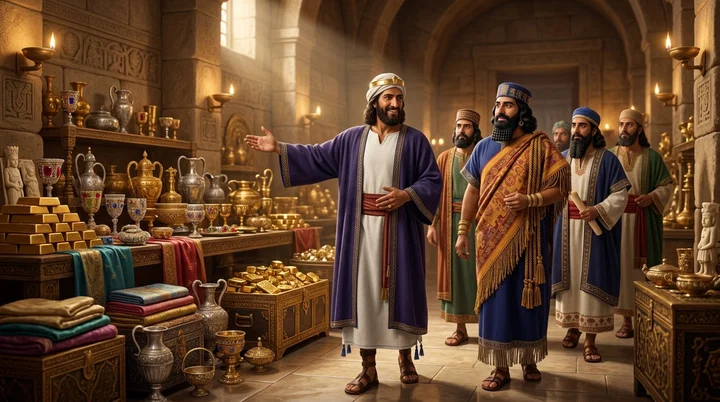
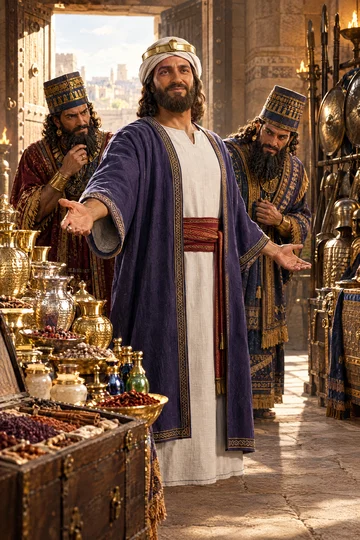
Cross-references
- 2 Chronicles 32:31
Howbeit in the business of the ambassadors of the princes of Babylon, who sent unto him to enquire of the wonder that was done in the land, God left him, to try him, that he might know all that was in his heart.
Babylon’s envoys visit Hezekiah as God tests and reveals his heart.
- 2 Kings 20:12-19
At that time Berodach-baladan, the son of Baladan, king of Babylon, sent letters and a present unto Hezekiah: for he had heard that Hezekiah had been sick.
Parallel account of Babylon’s envoys visiting Hezekiah and his showing them the royal treasures.
- Isaiah 38:8
Behold, I will bring again the shadow of the degrees, which is gone down in the sun dial of Ahaz, ten degrees backward. So the sun returned ten degrees, by which degrees it was gone down.
The turned-back shadow was the sign accompanying Hezekiah’s recovery and prompting the embassy.
- Isaiah 39:6-7
Behold, the days come, that all that is in thine house, and that which thy fathers have laid up in store until this day, shall be carried to Babylon: nothing shall be left, saith the LORD.
Isaiah foretells Jerusalem’s treasures and Hezekiah’s descendants being taken to Babylon.
- 2 Chronicles 32:25
But Hezekiah rendered not again according to the benefit done unto him; for his heart was lifted up: therefore there was wrath upon him, and upon Judah and Jerusalem.
Hezekiah’s pride followed his recovery and Babylonian contact.
- 2 Kings 20:8-11
And Hezekiah said unto Isaiah, What shall be the sign that the LORD will heal me, and that I shall go up into the house of the LORD the third day?
Records Hezekiah’s healing and the shadow’s reversal.
- Isaiah 38:1
In those days was Hezekiah sick unto death. And Isaiah the prophet the son of Amoz came unto him, and said unto him, Thus saith the LORD, Set thine house in order: for thou shalt die, and not live.
Hezekiah’s illness led to his appeal to God.
- Isaiah 38:10-20
I said in the cutting off of my days, I shall go to the gates of the grave: I am deprived of the residue of my years.
Hezekiah recounts his illness and recovery.
- Isaiah 38:3
And said, Remember now, O LORD, I beseech thee, how I have walked before thee in truth and with a perfect heart, and have done that which is good in thy sight. And Hezekiah wept sore.
Hezekiah wept and pleaded with God.
Commentary
Each commentary is drawn from primary sources: the writings of Ellen G. White and Adventist pioneers and periodicals. Each commentary is separate. Its own words are not a quotation; follow the references to read the source passages.
Ellen G. White
12 sources
At that time was after Hezekiah had recovered from a life-threatening sickness, and Merodach-baladan, the son of Baladan, king of Babylon, having heard that he had been sick and was recovered, sent him letters and a present by ambassadors who came into his house.ST Oct 1, 1902PK 344.1Ms 196, 1898, par. 6ST Oct 1, 1902 The envoys came to congratulate him and to inquire about and learn about the wonder God had done for him.ST Oct 1, 1902Ms 199, 1899, par. 1–4PK 344.1 That wonder was especially the sign in which the shadow on the sundial was turned back and the sun went back ten degrees, pointing to the God who performed it.ST Oct 1, 1902PK 344.1
The visit gave Hezekiah an opportunity to show gratitude by telling them about God's power, goodness and deliverance in healing him.ST Oct 1, 1902ST Oct 1, 1902 It became a test of his devotion that revealed what was in his heart, God leaving him to show what was within.ST Oct 1, 1902Ms 199, 1899, par. 1–4Ms 199, 1899, par. 5–6 Instead of giving God the glory and directing their attention to the Lord's deliverance, Hezekiah in pride, exaltation and self-exaltation, and seeking influence, displayed to them the riches and treasures in the Lord's house and in his own house, with his possessions and advantages.Ms 199, 1899, par. 1–4Ms 199, 1899, par. 5–610MR 248.1–252.1Ms 173, 1902, par. 24ST Oct 1, 1902 By that display he failed the test, and God's favor and wisdom were withdrawn from him.ST Oct 1, 1902Ms 199, 1899, par. 1–4Ms 199, 1899, par. 5–6
His display gave himself away, exposed the people's weakness, tempted Babylon to come and plunder his possessions, and marked the beginning of his downfall as a heinous sin that brought God's judgment.10MR 248.1–252.1Ms 173, 1902, par. 24Ms 197, 1899, par. 5–6Ms 1, 1853, par. 26–27 For the visitors left planning how to obtain and take those treasures and advantages for themselves.10MR 248.1–252.1Ms 173, 1902, par. 24 The episode warns God's people not to disclose their prosperity and success nor their troubles and vulnerabilities to an enemy, to those opposed to God, and to the wicked.Ms 196, 1898, par. 6Ms 1, 1853, par. 26–27
It warns against trusting foreign visitors, treating them as a source of influence, welcoming unbelievers into plans and councils, displaying resources without discernment, and forming alliances with unbelievers instead of relying on God.10MR 248.1–252.1Ms 173, 1902, par. 24Ms 197, 1899, par. 5–6 Doing so betrays sacred trusts, loses God's favor, and weakens the example set for others.Ms 197, 1899, par. 5–6 As Hezekiah showed the treasures in God's house, it warns against unwisely opening an institution's books and affairs to outsiders.4MR 146.2Ms 123, 1902, par. 9 Such inspection causes harm far greater than any small promised financial gift.4MR 146.2Ms 123, 1902, par. 9
The same test of heart came when the Sanitarium's riches were shown to strangers, revealing pride and being weighed and found wanting.Ms 199, 1899, par. 5–64MR 146.2 And church affairs are to be kept within the church except when confession is needed for a personal injury.Ms 1, 1853, par. 26–27
Sources
Pioneers and periodicals
23 sources
At that time Merodach-baladan, king of Babylon, sent letters and a present by envoys to Hezekiah after hearing that he had been sick with a life-threatening illness and had recovered.ST Oct 1, 1902ST Jan 13, 1888RH Aug 4, 1904 God had healed Hezekiah and added fifteen years to his life with the extraordinary sign of the sun's shadow turning back ten degrees, which Babylonian observers of the heavens noticed, so they came both to congratulate him and to inquire into the wonder and the message of life and health behind it.ST Oct 1, 1902ST Jan 13, 1888RH Aug 4, 1904 The visit was providentially sent to give Hezekiah opportunity to tell the nations of God's power, goodness, grace and healing and to proclaim the gospel of life and health to Babylon, which God desired to heal.ST Oct 1, 1902RH Aug 4, 1904 Instead of giving God the glory he welcomed the visitors in foolish pride and self-exaltation and displayed to them his treasures, possessions and wealth, magnifying himself rather than God.ST Oct 1, 1902ST Jan 13, 1888RH Aug 4, 1904ST Oct 6, 1909RH Dec 29, 1868 His display exposed his weakness and enslavement to sin and stirred Babylonian greed, bringing Isaiah's warning that his own sons would serve in the king's palace at Babylon and Jerusalem would be plundered, fulfilled when Daniel of the royal family was taken there, and warning believers today to show visitors God's deliverance and goodness rather than worldly treasure.RH Aug 4, 1904ST Oct 6, 1909RH Feb 2, 1905RH Feb 2, 1905
Persons and Occasion
At that time Merodach-baladan, the son of Baladan, was king of Babylon, and having heard that Hezekiah had been sick with a life-threatening illness and had recovered, he sent letters and a present to him by envoys.ST Oct 1, 1902ST Jan 13, 1888RH Aug 4, 1904ST May 3, 1877ST Jun 18, 1902 The visit followed the extraordinary reversal of the sun's shadow, which the Babylonian astronomers noticed, and the envoys came to inquire about that wonder.ST Oct 1, 1902ST Jan 13, 1888RH Aug 4, 1904 Their coming led Hezekiah to show them his treasures and all his possessions.ST Oct 1, 1902ST Jan 13, 1888RH Aug 4, 1904 Baladan is Belesis, also called Nabonassar, founder of the Chaldean or Babylonian empire in 747 B.C.ST May 3, 1877RH Nov 19, 1857ST Jan 8, 1880 That empire is traced to the ancient Assyrian empire and later became connected with God's people in 677 B.C. through the capture of Manasseh.ST May 3, 1877ST Jan 8, 1880
Merodach-baladan lived when Babylon's old kingdom had broken into smaller territories and rulers. He first ruled the coastal territory inherited from his father, then extended his authority over upper Babylonia and became king of Babylon in fact. At the time he sent his message and gift to Hezekiah after hearing that Hezekiah had been ill and recovered, he was rebelling against the king of Assyria at Nineveh, so Hezekiah's reception of his embassy was a serious political blunder rightly rebuked by Isaiah.ST Nov 27, 1884 This agrees with the inscriptional account that Merodach-baladan was in command at Babylon a year after the Judean war by Sennacherib.ST Jul 30, 1885
The occasion was God's healing of Hezekiah with an extension of life by fifteen years, accompanied by the extraordinary sign of the sun's shadow turning back ten degrees.ST Oct 1, 1902RH Aug 4, 1904ST Sep 13, 1905ST Jun 18, 1902RH May 21, 1908 Because the Babylonians carefully observed the heavens, the backward movement of the shadow on the sundial was observed in Babylon and naturally attracted their attention.ST Jan 13, 1888RH Aug 4, 1904RH May 21, 1908 The report of the recovery reached Babylon, and Merodach-baladan sent envoys with letters and a gift to congratulate Hezekiah and to inquire about the wonder and the message of life and health behind it.ST Oct 1, 1902ST Jan 13, 1888RH Aug 4, 1904ST Jun 18, 1902RH May 21, 1908
The verse belongs to the history of Hezekiah's reign in Isaiah 36-39.ST Oct 6, 1909ST Oct 6, 1909 It begins the account of the Babylonian visit after his sickness and healing, in which he failed to honor God.ST Oct 6, 1909ST Jun 18, 1912 That account is his sad mistake and its predicted result, preserved as an instructive warning in which self-exaltation aroused Babylon's cupidity and led to plunder for Jerusalem and captivity for his descendants.ST Oct 6, 1909ST Sep 13, 1905ST Jun 18, 1912
Missed Testimony and Judgment
The coming of the envoys was ordered by the Lord to give Hezekiah an opening to show gratitude for being raised from a life-threatening sickness by telling the nations of God's power and goodness and healing grace.ST Oct 1, 1902ST Oct 6, 1909 The embassy came to congratulate him and to inquire into the wonder that had accompanied his recovery and into the message of life and health behind it, for the turning back of the sun's shadow ten degrees had drawn the attention of a people who carefully watched the heavens.ST Oct 1, 1902RH Aug 4, 1904ST Jun 18, 1902 In this providence was prepared an opportunity for the gospel of life and health to be proclaimed in Babylon, which God desired to heal and to receive light.RH Aug 4, 1904ST Oct 6, 1909ST Jun 18, 1902 The visit thus tested Hezekiah's devotion and whether he would proclaim God's gracious dealings to Babylon.ST Oct 1, 1902ST Jun 18, 1902RH Feb 2, 1905
He failed that test and did not give God the glory, but welcomed and entertained the visitors instead.ST Oct 1, 1902RH Feb 2, 1905RH May 21, 1908 He showed them his treasures and possessions and wealth and all that he had accumulated, displaying earthly treasure rather than revealing heavenly treasure and spiritual truth.ST Jan 13, 1888RH Aug 4, 1904ST Jun 7, 1910RH Feb 2, 1905RH May 21, 1908 The backward movement of the sun's shadow that had stirred inquiry about the God who could save and deliver was left untestified to, while the riches of the house and kingdom were laid open to Babylonian eyes.ST Jan 13, 1888RH May 21, 1908ST Nov 21, 1911
In so doing he magnified himself instead of God, with heart lifted up in foolish pride and self-exaltation.ST Oct 6, 1909ST Nov 21, 1911 After God had extended his life by fifteen years he acted foolishly and backslidden, turning an opportunity for blessing into a source of trouble.ST Jun 28, 1905ST Sep 13, 1905ST Nov 21, 1911 His course stands as that of one who insisted that God's will yield to his own, preserved as a warning that even fervent prayer must be joined with complete submission to God's will.RH Dec 29, 1868
That display exposed his weakness and enslavement to sin, aroused Babylonian cupidity and greed, and foreshadowed Judah's later subjection and plundering.RH Aug 4, 1904ST Jun 7, 1910ST Nov 21, 1911 Isaiah declared as its predicted result that Hezekiah's own sons would be taken to Babylon and made servants in the king's palace and that Jerusalem would be plundered, which was fulfilled when Daniel, a young prince of the royal family, was taken there.ST Oct 6, 1909 The warning came about one hundred years before the calamity, after Babylon rose by conquering Assyria to bring judgment upon Judah, yet the people's reformation was only temporary and incomplete.ST Jun 28, 1905ST Jul 13, 1904 So even a godly king is shown accountable to God, and his pride brought a grievous message whose consequences fell upon the people.ST Jun 28, 1905
Warning for Believers Today
The king of Babylon sent envoys with letters and a gift to Hezekiah after hearing that he had been sick and had recovered, and what those visitors saw in his house stands as a warning to believers about how they receive guests.ST Jul 22, 1875RH Feb 15, 1870ST Jun 18, 1912 Hezekiah was given an opportunity in that visit to show what truly mattered in his house, but he displayed his possessions and treasures rather than the Lord's goodness, deliverance, and power.ST Jul 22, 1875RH Feb 15, 1870 Guests who enter a believer's home may therefore see only worldly treasures, riches, and vanity rather than anything that points them to God.ST Jul 22, 1875RH Feb 15, 1870 The lesson is to welcome visitors in a way that directs them to God's goodness and deliverance instead of to outward display.ST Jul 22, 1875RH Feb 15, 1870ST Jun 18, 1912
The same event asks the church what it is showing to Babylon when visitors come to observe its life.RH Feb 2, 1905RH Feb 2, 1905 Hezekiah could have used the embassy to testify of God's gracious dealings with Israel and of his own recovery as a wonder revealing divine power, yet he welcomed the visitors and showed them his worldly riches instead.RH Feb 2, 1905RH Feb 2, 1905 In failing to keep that testimony before them he failed to share the spiritual truth entrusted to him.RH Feb 2, 1905RH Feb 2, 1905
Sources