James 1:15
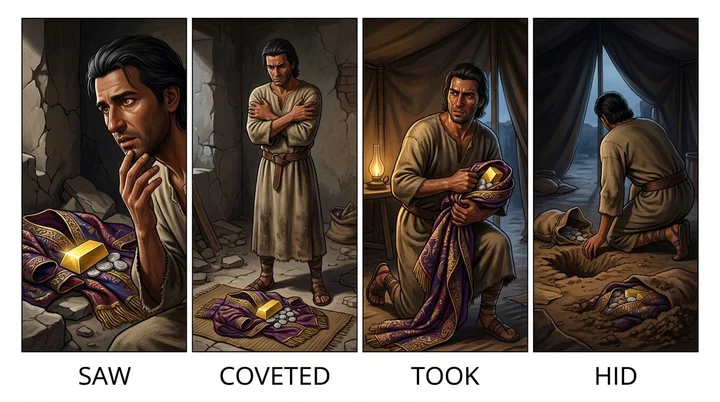
Then when lust hath conceived, it bringeth forth sin: and sin, when it is finished, bringeth forth death.
Translations
Then when lust has conceived, it brings forth sin: and sin, when it is finished, brings forth death.
King James Version, KJV Cambridge Paragraph Bible, Webster Bible
Then when lust hath conceived, it bringeth forth sin: and sin, when it is finished, bringeth forth death.
Revised Version, American Standard Version
Then the lust, when it hath conceived, beareth sin: and the sin, when it is fullgrown, bringeth forth death.
afterward the desire having conceived, doth give birth to sin, and the sin having been perfected, doth bring forth death.
then lust, having conceived, gives birth to sin; but sin fully completed brings forth death.
Then, the coveting, having conceived, giveth birth to sin, and, the sin, when full-grown, bringeth forth death.
Berean Standard Bible, Majority Standard Bible
Then after desire has conceived, it gives birth to sin; and sin, when it is full-grown, gives birth to death.
Then the lust, when it has conceived, bears sin. The sin, when it is full grown, produces death.
Then when its time comes, desire gives birth to sin; and sin, when it is of full growth, gives birth to death.
Then when lust hath conceiued, it bringeth foorth sinne, and sinne when it is finished, bringeth foorth death.
Douay-Rheims (Challoner revision)
Then when concupiscence hath conceived, it bringeth forth sin. But sin, when it is completed, begetteth death.
Pictures

Cross-references 20 of 63
- Romans 6:23
For the wages of sin is death; but the gift of God is eternal life through Jesus Christ our Lord.
Both describe death as the consequence or wages of sin.
- Romans 5:12
Wherefore, as by one man sin entered into the world, and death by sin; and so death passed upon all men, for that all have sinned:
Sin entered through one man, and death came through sin to all.
- 1 John 3:4
Whosoever committeth sin transgresseth also the law: for sin is the transgression of the law.
Sin is transgression of God’s law, the sin that brings death.
- Ezekiel 18:4
Behold, all souls are mine; as the soul of the father, so also the soul of the son is mine: the soul that sinneth, it shall die.
Both state that sin brings death.
- Genesis 2:17
But of the tree of the knowledge of good and evil, thou shalt not eat of it: for in the day that thou eatest thereof thou shalt surely die.
God warned Adam that disobedience would bring death.
- Ezekiel 18:20
The soul that sinneth, it shall die. The son shall not bear the iniquity of the father, neither shall the father bear the iniquity of the son: the righteousness of the righteous shall be upon him, and the wickedness of the wicked shall be upon him.
Both connect each person’s sin with that person’s death.
- Romans 7:7
What shall we say then? Is the law sin? God forbid. Nay, I had not known sin, but by the law: for I had not known lust, except the law had said, Thou shalt not covet.
The law identifies coveting as sin, while James describes lust giving birth to sin.
- Romans 8:2
For the law of the Spirit of life in Christ Jesus hath made me free from the law of sin and death.
The law of life in Christ frees from the law of sin and death.
- Galatians 6:7-8
Be not deceived; God is not mocked: for whatsoever a man soweth, that shall he also reap.
Both connect sowing to the consequences reaped, including corruption from sowing to the flesh.
- Genesis 3:4-6
And the serpent said unto the woman, Ye shall not surely die:
Eve’s desire for the forbidden fruit leads to disobedience, while the serpent denies its consequence: death.
- Romans 7:10
And the commandment, which was ordained to life, I found to be unto death.
The life-ordained commandment is experienced as bringing death through sin.
- Romans 3:23
For all have sinned, and come short of the glory of God;
All have sinned and fall short of God’s glory, and sin ends in death.
- 1 John 5:17
All unrighteousness is sin: and there is a sin not unto death.
Both identify unrighteousness as sin, which leads to death.
- 1 Corinthians 15:56
The sting of death is sin; and the strength of sin is the law.
Sin is the sting of death, linking sin’s consequence with death.
- Romans 8:6
For to be carnally minded is death; but to be spiritually minded is life and peace.
Carnal-mindedness is described as death, connecting sin with death.
- Proverbs 12:28
In the way of righteousness is life; and in the pathway thereof there is no death.
Contrasts the life of righteousness with death as sin’s consequence.
- Romans 6:16
Know ye not, that to whom ye yield yourselves servants to obey, his servants ye are to whom ye obey; whether of sin unto death, or of obedience unto righteousness?
Yielding to sin makes one its servant and leads to death.
- Matthew 5:28
But I say unto you, That whosoever looketh on a woman to lust after her hath committed adultery with her already in his heart.
A lustful look is adultery already committed in the heart.
- 1 John 2:16
For all that is in the world, the lust of the flesh, and the lust of the eyes, and the pride of life, is not of the Father, but is of the world.
Names worldly desires that tempt people toward sin.
- Romans 6:21
What fruit had ye then in those things whereof ye are now ashamed? for the end of those things is death.
Both describe death as the end of sin.
Commentary part 1 of 2
Each commentary is drawn from primary sources: the writings of Ellen G. White and Adventist pioneers and periodicals. Each commentary is separate. Its own words are not a quotation; follow the references to read the source passages.
Ellen G. White
50 sources
Sin begins when a person's own desire conceives and gives birth to it, and sin when brought to completion brings forth death.Lt 376, 1906, par. 28–3321MR 385.5–386.3Lt 144, 1901, par. 20 Temptation itself does not come from God but arises from within the person, and it is not sin until desire is allowed to conceive and the will consents and the heart yields.Lt 51, 1886, par. 23Lt 13, 1900, par. 7–8ST May 27, 1897ST Feb 16, 1882ST Feb 24, 1887 Once yielded to, sin grows step by step, where one transgression opens the way for another until the mind is overmastered and the course ends in ruin and death as separation from God.CH 242.36T 264.2–265.1Lt 96, 1896, par. 66MR 12.21MR 131.1 Desire allowed to grow becomes a current that carries the sinner onward with little power left to resist, and finished sin brings a bitter harvest of suffering, moral ruin, and death that were never part of God's original design.STBk 129.1ST Feb 16, 18828T 315.6Lt 51, 1886, par. 4–10Lt 51, 1887, par. 8 Therefore evil must be stopped at its beginnings by immediately repelling unholy thoughts and shutting every avenue to temptation, and victory comes by standing firmly for God with the will brought into conformity to His will and divine power joined to human effort.ST Feb 8, 1883Lt 144, 1901, par. 20Lt 134, 1901, par. 29–30ST Jan 28, 19135T 176.4
Words and Progression
Sin begins when a person's own desire conceives and gives birth to it, and when that sin is brought to completion and reaches its full course it brings death.Lt 376, 1906, par. 28–3321MR 385.5–386.3Lt 144, 1901, par. 20Lt 134, 1901, par. 29–30 Indulged desire gives birth to sin, and the progression runs from desire to sin and from completed sin to death, with desire allowed to conceive giving birth to sin and sin when finished giving birth to death.Lt 144, 1901, par. 20Lt 134, 1901, par. 29–30 A person's own desire draws and entices them, then develops into sin and when fully grown brings death.Lt 51, 1886, par. 23Lt 13, 1900, par. 7–8 Temptation and sinful choices are not caused by God, for God does not tempt anyone to evil but temptation arises from within the person, so cherished unholy desires lead to sin and its deadly result.21MR 385.5–386.3Lt 51, 1886, par. 23 God may prove people so they recognize their weakness, yet He does not tempt anyone to do evil, and yielding to deceptive temptation leads from desire to sin and finally to death.Lt 13, 1900, par. 7–8
Its warning calls for victory over the self, temper, and inclinations, with the human will brought into conformity with God's will and divine power joined to human effort.Lt 144, 1901, par. 20Lt 134, 1901, par. 29–30 The verse warns against unholy practices, including sexual sin, and shows the grave end of continuing in sin, so that overcoming requires sincere repentance and forsaking sin in this life.21MR 385.5–386.3 Open sin follows a gradual inner process in which spirituality declines, God is neglected in thought and prayer, selfish thoughts and feelings gain control, carnal desires grow stronger, and proud self-sufficiency takes hold before sin is committed.ST Oct 21, 1880 Inward corruption joined with outward temptation places the soul in danger, because temptation can awaken corrupt thoughts and purposes and lead toward sin and ruin.5T 507.2
Desire allowed to grow brings forth open sin, and that sin then becomes a current that carries the sinner onward toward death with very little power left to resist the clamors of passion.Lt 51, 1887, par. 8 Once in that current the character is borne on without resisting temptation, so the evil must be stopped at the start by taking every precaution to shut out whatever leads into sin.Lt 51, 1887, par. 8 This is true of unchaste evil between a man and a woman, which could have been prevented by guarding against the first familiarities that lead into sin.Lt 51, 1887, par. 8
Source of Temptation
God tempts no one to evil, for temptation rises from inside the person when his own desire draws him and entices him.Lt 51, 1886, par. 23Lt 13, 1900, par. 7–8 Desire so cherished conceives and gives birth to sin, and sin when fully grown and brought to completion brings death.Lt 51, 1886, par. 23Lt 13, 1900, par. 7–8 God may prove people in order that they may recognize their own weakness, but that proving is not tempting them to do evil.Lt 13, 1900, par. 7–8
Evil and sin and death were not created by God but are the result of disobedience, which originated with Satan.RH Aug 4, 1910 Forbidden curiosity and unsatisfied desires lead people into sin and bring loss of their Eden home, as they did for Adam and Eve.RH Aug 4, 1910 Satan seduces professed soldiers of Jesus Christ away from God step by step by devising deceptive allurements.MYP 139.2 He first uses transgression in what seem like little matters to draw youth away from Jesus when the word of God has plainly revealed their work and duty, which they refuse because it does not suit their inclination and because they let the attraction of the world allure them from the service of Christ, and then he presents larger attractions to seduce them fully from God.MYP 139.2
Temptation can lure a soul into self-deception that ends in death, when desire gives birth to sin and sin leads to death.Ms 69, 1898, par. 12–13Lt 5a, 1898, par. 10–11 Satan's inducements work toward that same end.Lt 5a, 1898, par. 10–11 As long as Satan exists he will put every inducement before the soul to lure it into such self-deception ending in death.Lt 79a, 1898, par. 8 Faith therefore must become greater than it is now, and each one who receives Jesus Christ must take the preparation for eternal life offered in the Word of God.Lt 79a, 1898, par. 8
Temptation Is Not Sin
Being tempted is not itself sin; sin comes only when temptation is yielded to and lust is allowed to conceive.ST May 27, 1897ST Feb 16, 1882ST Feb 24, 1887GW92 374.14T 357.4 Yielding lets temptation gain power to bring spiritual ruin, for ruin follows only when the person consents, and temptations test during earthly probation and reveal what is in the heart.ST Feb 24, 1887GW92 374.1Ms 70, 1894, par. 4 Sin follows when desire is allowed to conceive and the will consents and the heart yields, so that passion overpowers reason and wrongdoing prevails over truth and justice, and suffering comes from failing to resist at the start.2T 294.1ST Oct 4, 1883Lt 5, 1879, par. 6 No earthly power can compel the choice, for sin is the person's own act; even under strong pressure the heart must yield, and though Satan as originator makes evil appear enticing, his role does not excuse whether a person accepts or refuses.2T 294.1ST Oct 4, 1883Lt 5, 1879, par. 6
Even the best men who ever lived have been grievously assaulted by Satan and his agents, so the weakest should not be discouraged merely because they are assailed.ST Feb 16, 1882 Standing firm against temptation prevents it from bringing forth sin and death, whose finished harvest is separation from God, loss of heaven, agony and despair.ST Feb 16, 1882ST Feb 24, 1887 Whoever remains firm in doing right and keeps the mind unpolluted is not defiled by surrounding evil.Ms 70, 1894, par. 4 Still the evil heart that gives temptation room to grow must be confronted, since prayer alone does not overcome sin without the fruit of changed conduct and self-control.Lt 9, 1869, par. 7
Desire can lead to sin, and sin when it reaches its full result leads to death.LSEGW 83.2 Sanctification does not make a person's affections and desires always right.LSEGW 83.2 Nor does it remove the danger that they may lead into sin when fully developed.LSEGW 83.2
Sin's Course to Death
Sin grows step by step, where one sin leads to a second and the second prepares the way for a third and so on until the course ends in perdition.6MR 12.2 A moment's carelessness or swerving a single inch from duty can begin this course and plunge a soul into irretrievable ruin.6MR 12.2 The danger falls especially on those who think they stand firm because they have the truth while not having it as a living power.6MR 12.2 Sin grows from the first small deviation, for one transgression and even one neglect to manifest the spirit of Christ opens the way for another and still another until the mind is overmastered.CH 242.36T 264.2–265.1 A single step away from what is right can prepare the way for further wrongdoing and end in apostasy.CH 242.36T 264.2–265.1
Selfishness is cultivated by closing the heart to the needs and suffering of others, and if cultivated it becomes a devouring passion illustrated by Judas.6T 264.2–265.1 Practical sympathy is the test of purity and unselfishness of heart, and without being made one with Christ in sincere sympathy a person is outside Christ and the sport of temptation, which nothing but Christ's power can subdue.6T 264.2–265.1 Each act of transgression changes character and makes further sin easier, while choosing sin separates people from God and cuts them off from blessing and leads surely to ruin and death.Lt 96, 1896, par. 61MR 131.1 God is not waiting to punish, but human actions set in motion the consequences that follow.1MR 131.1 Unchecked desire shows itself when passion gains control over reason and impulse overcomes principle to violate God's law, and the danger may not be recognized until its results appear, including loss of purity.Lt 19, 1875, par. 5
The path of selfish and sensual pleasure may appear to promise happiness, but its hidden danger and fearful end are ruin in this life and the life to come.MH 371.3 Indulgence of appetite and passion wastes strength and destroys lives.MH 371.3 Finished sin brings forth death as a bitter harvest of separation from God, loss of heaven, agony and despair.ST Feb 16, 1882 Persistent sin brings moral ruin and risks eternal ruin, with greater light and knowledge increasing guilt when resisted, as seen when sensual practices turned what might have been Elder Himes's best years into his worst.ST Feb 16, 1882Lt 51, 1886, par. 4–10
Suffering and death are results of sin, not part of God's original design, and when that design is restored sickness and death will be absent.STBk 129.1 Continual transgression has brought sickness, pain, and death.CTBH 154.2 Natural tendencies such as self-love and self-indulgence carry seeds of moral death.8T 315.6
Examples and Warnings
Solomon illustrates the progression from lust to sin to death, for uncontrolled passion led him from greatness into ruin, and this warns people of every age, including the mature who think they stand firm, to watch and pray, keep grace in the heart, and resist inward corruption joined with outward temptation.Lt 51, 1886, par. 14–15 Misplaced affection and coveting what God has forbidden conceives lust, lust brings forth sin, and finished sin brings forth death, and Solomon though the greatest king, beloved of God and endowed with heavenly wisdom, failed to rule his passions, became contaminated, was forsaken of God, and dishonored God by choosing to be controlled by lust rather than partake of the divine nature.21MR 381.6–382.4 After a life of greatness and power he fell, and though he may have repented, repentance could not efface the high places and stones remaining as evidence of his crimes, leaving a legacy warning youth to bring gifts early to God and keep adding virtue to faith.21MR 381.6–382.4 Elder Himes was led away by his own lusts and enticed, and sensual practices turned what might have been his best years into his worst, showing how lust followed and allowed to grow brings moral ruin and destroys years that could have been fruitful, while persistent sin risks eternal ruin and greater light and knowledge increase guilt when resisted unless there is repentance and genuine conversion.Lt 51, 1886, par. 4–1021MR 380.2–6
Cornell's lustful passions show how passion can lead to downfall and seriously obstruct overcoming and developing Christian character.Lt 53, 1876, par. 46 Yielding to temptation produces sin such as embezzling the Lord's goods, and those claiming conversion must show changed character and principles rather than continue conduct God condemns.Ms 24, 1894, par. 8–9 Gratifying appetite for wine and cider can lead to stronger cravings, intoxication, loss of reason, and further sins ending in ruin, for uncontrolled appetite can ruin people and enslave them so they cannot perfect character.5T 356.2CTBH 154.2 Conquering appetite strengthens a person to overcome other temptations, yet humanity's continual transgression has brought sickness, pain, and death, and temptations to indulge appetite become harder to resist as the end approaches.CTBH 154.2 One glass of wine may lead to drunkenness and an indulged vindictive feeling may lead to murder, showing how a single step away from what is right can prepare the way for further wrongdoing and end in apostasy, and how corrupt habits form more quickly than habits of righteousness and can be difficult to abandon.CH 242.3
Evil-speaking begins with evil thoughts, and tolerating an impure thought or cherishing an unholy desire contaminates the soul and compromises its integrity.ST Feb 8, 1883ST Jan 28, 19135T 176.4 To avoid such sin a person must reject it at its beginnings, immediately repel unholy thoughts, and keep every emotion and desire under the control of reason and conscience.ST Feb 8, 1883ST Jan 28, 19135T 176.4 Reckless surrender to passion when temptation assails lets lust conceive and bring forth sin and finished sin bring forth death, and this applies to unbecoming familiarity and sentimental indulgence between men and women, the sensual flow of affections in the wrong channel, and an unreal sentimental life with no depth of character that is tossed like waves instead of cherishing virtue, purity, and love for Jesus and pressing toward the high calling.Lt 8b, 1891, par. 6–8 Unchaste evil between a man and a woman could have been prevented by guarding against the first familiarities that lead into sin, for desire allowed to grow brings forth open sin and that sin then becomes a current that carries the sinner onward toward death with little power left to resist the clamors of passion.Lt 51, 1887, par. 8 When desire is stirred and allowed to grow it brings forth sin, for dwelling on scenes of impurity or on thoughts of impurity arouses passion and ends in sin.MH 445.3–4CT 383.1
It is unsafe to linger contemplating advantages from yielding to Satan's suggestions, because sin is blinding and deceiving, entices with flattering presentations, and means dishonor and disaster to every soul indulging in it, and venturing onto Satan's ground removes assurance of protection so every avenue by which the tempter may find access must be closed.MYP 70.3 Desire for forbidden things gains mastery when the heart is not purified by divine grace, and this ruling desire is connected with self-glorification and failure to show sincere love.2MR 28.2
Resisting and Overcoming
Sin is to be rejected at its beginnings, with every emotion and desire held under the control of reason and conscience, and unholy thoughts immediately repelled rather than tolerated or cherished, since evil thoughts give rise to evil-speaking and tolerated impurity contaminates the soul and compromises its integrity.ST Feb 8, 1883ST Jan 28, 19135T 176.4 Prayer in faith is needed to resist temptation and escape ensnaring traps.ST Feb 8, 1883 The evil must be stopped at the start by taking every precaution to shut out whatever leads into sin and by closing every avenue by which the tempter may find access, for it is unsafe to linger contemplating the advantages of yielding, sin is blinding and deceiving and entices with flattering presentations yet means dishonor and disaster, and venturing onto forbidden ground removes assurance of protection.MYP 70.3Lt 51, 1887, par. 8 This is true of unchaste evil between a man and a woman, which could have been prevented by guarding against the first familiarities that lead into sin, since desire allowed to grow brings forth open sin that becomes a current carrying the sinner onward toward death with very little power left to resist the clamors of passion.Lt 51, 1887, par. 8 A person should not needlessly place himself in the way of temptation, since contact with a poisoned moral atmosphere can taint the life-blood of the soul before danger is perceived.ST Feb 16, 1882
Victory comes by standing fearlessly and firmly for God and the right, relying on the promises of Scripture with the armor of truth as sure defense against fiery assaults, while even the best who ever lived have been grievously assaulted so the weakest should not be discouraged merely because they are assailed.ST Feb 16, 1882 Its warning calls for victory over self, temper, and inclinations, with the human will brought into conformity to God's will and divine power joined to human effort.Lt 144, 1901, par. 20Lt 134, 1901, par. 29–30 Without the Holy Spirit and vital connection with God people cannot resist temptation and its effects, since natural tendencies such as self-love and self-indulgence carry seeds of moral death.8T 315.6 Conquering appetite strengthens a person to overcome other temptations, for uncontrolled appetite can ruin people and enslave them so they cannot perfect character, and temptations to indulge appetite become harder to resist as the end approaches.CTBH 154.2
Overcoming requires sincere repentance, genuine conversion, and forsaking sin in this life, turning from sensual and unholy practices including sexual sin because of their grave end, since desire yielded to gives birth to sin and completed sin brings death and temptation is not caused by God.21MR 385.5–386.3Lt 51, 1886, par. 4–10 Elder Himes was led away by his own lusts and enticed, and sensual practices turned what might have been his best years into his worst, showing that persistent sin brings moral ruin and risks eternal ruin, with greater light and knowledge increasing guilt when resisted.Lt 51, 1886, par. 4–10 God will not save a person while he continues in sin he knows to be sin, so making light of sin and dwelling only on God's love encourages fatal self-deception and keeps truth apart from life with no power to convict and convert.6MR 12.2 Hope is only by fastening to Christ, pleading constantly to be kept by His power, and straining every nerve and spirit and muscle to leave the world and attain perfection of character, since one sin leads to a second and the second prepares the way for a third until the course ends in perdition, and a moment's carelessness or swerving a single inch from duty can plunge a soul into irretrievable ruin, with special danger for those who think they stand firm because they have the truth without having it as a living power.6MR 12.2
Sources
Pioneers and periodicals
230 sources
Unlawful desire allowed to take hold conceives and gives birth to sin, and sin when finished and full-grown brings forth death as its fruit, wages and penalty.ST Apr 19, 1905ST Dec 20, 1899 Temptation, inward desire or outward occasion is not yet sin, for sin comes only when the mind agrees with, cherishes and yields to desire.ST Dec 20, 1899ST Apr 21, 1898ST Nov 4, 1889 That death is not an added decree but is inherent in sin itself, since sin separates from God the only Source of life and life apart from Him must end.ST Dec 15, 1909ST Jan 31, 1906 The death it brings is extinction of life and cessation of being, including the second death from which there is no resurrection, not continued life in misery.ST Nov 15, 1899ST Jun 11, 1894 Jesus saves from death because He saves from sin, triumphing over sin in the flesh and rising with power over sin and death to give life to all allied with Him.ST Dec 20, 1899ST Jul 10, 1893ST Sep 22, 1890ST Mar 20, 1893
Desire Conceives Sin
The verse lays out a fixed progression: unlawful desire allowed to take hold and conceive gives birth to sin, and sin when finished, completed, full-grown, fully developed and having run its full course brings forth death as its result, fruit, harvest, wages, penalty and final consequence.ST Apr 19, 1905ST Dec 20, 1899ST Aug 13, 1912ST Aug 19, 1913 Death is the penalty for Adam's transgression, defined as returning to the ground and becoming dust, and from the fall onward Adam was in a dying condition whose sinful condition under sentence of death passed to descendants.RH Apr 16, 1867 When consequences are allowed to become clear, death is the end for sin and for anyone who persists in clinging to it, since those who refuse the remedy go down with their sin. Human nature since the first parents yielded in Eden has been perverted and readily led into sinful indulgence, yet the verse presents the sure result and diagnosis that mankind is sinful and subject to death.ST Dec 20, 1899ST Aug 19, 1913
Temptation itself does not make a person evil, sinful, or subject to Satan's control, and neither inward desire, outward occasion, inherited tendencies, troubling thought, presence of lust, nor food entering the body is yet sin.ST Dec 20, 1899ST Apr 21, 1898ST Nov 4, 1889ST Mar 20, 1893RH Sep 24, 1901 Sin comes only when the mind agrees with, cherishes, yields to, fosters and allows desire to take hold and conceive, so each person is responsible and remains under control only while continuing in sinful practice and cannot blame another, circumstance or surroundings.ST Dec 20, 1899ST Mar 8, 1905ST Apr 21, 1898ST Nov 4, 1889ST Feb 2, 1882 The danger remains after conversion when the reign of sin is broken but lusts remain in the mortal body, and continuing to yield builds up a body of sin that can turn a person from Christ.ST Nov 4, 1889 Sin grows from desire into ruin and leads to further sin until it enslaves and ends in spiritual death, with the testing hour revealing weakened character rather than causing it.ST Feb 2, 1882
Lust is inordinate desire for what is wrong, unlawful desire and personal lust cherished in the heart, a perversion of the natural powers and faculties given by the Creator, desire to gratify selfish purposes with greed as its form and selfish ambition as its root.ST Dec 20, 1899RH Mar 19, 1867ST Apr 21, 1898ST Jul 7, 1890ST Apr 16, 1896 It belongs to the carnal mind which is hostile to God and cannot submit to His law, is forbidden by the tenth commandment so that keeping that desire perfectly means keeping the whole law and failing it means keeping no part, and includes the wish itself before the act such as coveting as a step to stealing.RH Oct 9, 1856RH Mar 19, 1867ST Apr 16, 1896 Uncrucified lusts give temptation entrance to heart and life but need not be allowed to reign, and they must be crucified or they will overcome the new life and mind of Christ.RH Mar 19, 1867ST Jul 7, 1890 The warning applies to enslaving lust and idol such as tobacco defiling the body, calling those who belong to Christ to resist such desires, become new creatures and grow in grace.RH Oct 9, 1856
Lust is pictured as the mother, enticement as the father, sin as their child, and death as the grown result, with temptation drawing a person away through desire and enticement leading desire to conceive until sin develops and brings death.RH Jan 13, 1874ST Nov 7, 1878 Sin and depravity develop progressively through each sin committed and each truth rejected, and people are not born totally depraved.ST Nov 7, 1878 Sin's consequences begin where sin begins, but death is not reached until sin's course is complete, so there are immediate disciplinary consequences that may be escaped and a final retributive consequence that is everlasting, with present suffering demonstrating sin's destructive course and pointing to its final result rather than justifying or saving.RH Jan 13, 1874 The death that is sin's final punishment was not fully executed on the day humanity first sinned, since remedy and mercy remain available, and while the Spirit still enlightens and strives with the heart a person is not totally depraved, total depravity and reprobation meaning being given over to hardness and a mind void of judgment, so the course can be interrupted by the gospel aimed at reconciliation and salvation.ST Nov 7, 1878
To be tempted in all points like men, Christ had to take a nature such as ours rather than coming with only a divine nature, with the nature of angels, or with the unfallen nature of man in Eden before sin entered.ST Sep 13, 1910 Temptation works by a person being drawn away by his own inner lust and enticed, and flesh without any desires for evil is not subject to temptation, so His flesh must have been subject to temptation just as human flesh is, having the same kind of flesh and the same desires for evil in the flesh yet without sin.ST Sep 13, 1910ST Sep 26, 1895 He had human infirmities that made temptation real but not passions in the worst sense, experiencing human desires and inclinations when tempted yet never cherishing, sanctioning, accepting or agreeing with them in soul.ST Dec 3, 1912RH Oct 2, 1900 A soul renewed by grace and kept connected to God by living faith abhors fleshly tendencies and overcomes temptation, while when the soul agrees with the flesh its desires become passions in the worst sense and lead to sin.ST Dec 3, 1912RH Oct 2, 1900
God cannot be tempted with evil and does not tempt anyone with evil or lead people to do evil, for every man is tempted when drawn away of his own lust and enticed.ST Sep 13, 1910ST Oct 14, 1908RH Feb 11, 1915 The cause and source of injury is desire within fostered into life rather than God's leading or outward environment, so environment is no excuse for sin.ST Mar 8, 1905ST Oct 14, 1908 The word tempt in Genesis 22:1 in the test of Abraham means to test or prove, not to entice to sin.RH Feb 11, 1915
Sin Matures Into Death
Finished sin produces death as its finished work, full consequence, wages, reward and penalty.ST Nov 29, 1910ST Feb 12, 1894ST Mar 11, 1913ST May 14, 1902 Death in this sense is harsh and ugly and evil, encompassing sickness, suffering, avarice, lust, crime, murder and every other devilish evil.ST Nov 29, 1910ST Aug 23, 1899 To call death the reward of a good man misuses the word reward, for the reward of the righteous is a crown of righteousness which is life received at the coming of the Lord, not at death.ST May 14, 1902 Sin may appear beautiful, pleasurable or rewarding and may dull conscience as it grows stealthily, but its ultimate fruit when it reaches its full result is eternal death for the unrepentant and unpardoned who leave this life unreconciled to God.ST Feb 12, 1894ST Aug 23, 1899
Death is not an arbitrary penalty, vengeance or decree added afterward, but is inherent in sin and already contained in it like an oak in an acorn and like seeds of death concealed within what first appears enticing and even necessary for happiness.ST Dec 15, 1909ST Jan 31, 1906ST Feb 12, 1902ST Mar 25, 1897 It grows naturally out of sin itself as fruit grows from seed, as a child that disobeys and struggles in water drowns by the nature of the act unless rescued, so Adam and Eve in eating died by the nature of disobedience.ST Feb 12, 1902ST Mar 25, 1897 This happens because sin separates from God the only Source and Fountain of life and breaks connection with Him, and life apart from Him must end, so sinners bring this result upon themselves by choosing the way of self and sin while love cannot compel obedience.ST Dec 15, 1909ST Mar 25, 1897 Death is therefore an enemy, not a beloved or natural good, and when sin and its results are destroyed death will also be destroyed.ST Nov 5, 1894
The death that finished sin brings is extinction of life and cessation of being in which the whole person dies, including the second death from which there is no resurrection.ST Nov 15, 1899ST Jun 11, 1894ST Jul 16, 1912ST Aug 30, 1877 It is not continued life in misery, conscious torment, endless dying, or immortal life in sin, for death cannot properly mean continued life.ST Nov 15, 1899ST Jun 11, 1894ST Aug 30, 1877ST Dec 12, 1911 Sin continued and persisted in to the end brings eternal death, and no person can escape or undo that consequence by his own power.ST Jun 11, 1894ST Jul 16, 1912
Sin is destructive in its very nature, like seed whose fruitage is death and like a crop ripened and gone to seed.STST Aug 11, 1909 It is a spiritual disease whose natural end is death, advancing toward death like leprosy preying on the body, developing from inward corruption so that even small signs reveal a disease working and growing within.ST Jul 24, 1907ST Jun 1, 1904ST Apr 24, 1893 It is a mortal disease, virus and plague infecting all mankind with no human remedy, more fatal than physical disease, whose beginnings may look like righteousness to the careless but are death in embryo.ST Jul 24, 1907ST Jun 1, 1904 Christ died the sinner's death, and without His righteous life that death would have been eternal for the human race, yet He rose and conquered the grave.ST
Sin means missing the mark, turning aside from the right course and departing from God's righteousness and law.ST Jul 24, 1907ST Oct 24, 1900ST Sep 5, 1895ST Nov 3, 1909 The mark is the prize of the high calling of God in Christ Jesus, which includes character and life everlasting, so to sin is to miss that character and die. Righteousness is the channel and path and way of life, while turning from it leads to death, and sin violates the law of human life and is destructive of life as well as happiness.ST Jul 24, 1907ST Oct 24, 1900ST Sep 5, 1895ST Nov 3, 1909 Everything contrary to God's character is sin and every standard below it misses the mark with death as the result, because the glory of God's presence cannot endure sin and sin cannot live under His burning glory.
Sin is perversion of God's good life-preserving law ordained to give life, and when turned toward sin the law works death for the transgressor.ST May 30, 1895ST Sep 23, 1897ST Jun 27, 1906ST Nov 5, 1896ST Jan 16, 1907 The law's power normally works for life, but when turned toward sin it works out the sinner's destruction, so earth's calamities and destruction are the fruit of good laws perverted from their life-preserving purpose rather than proof that God's law is evil.ST Sep 23, 1897ST Jun 27, 1906 Sin perverts life inward instead of using it for others, bringing decay and death, having entered not by God's creation but by perversion and misapplication of what is good.ST Nov 5, 1896ST Apr 3, 1901 The whole creation became involved in that sin, made subject to vanity, aimlessness and fruitlessness, out of course and contrary to the Creator's law, liable to accident and collision, in slavery to ruin, yet God subjected creation in hope as prisoners of hope through His mighty power and did not design sin to continue forever.ST May 30, 1895ST Apr 3, 1901
Sin's consequences begin where its action begins, so sin brings present suffering, disciplinary punishment, misery, sickness and decay as signs pointing toward death.ST Nov 7, 1878RH Jun 10, 1902ST Jul 17, 1901RH Jan 13, 1874 Those present pains are not yet the final penalty and do not thereby justify or save the sinner, for death is not reached until sin's course is complete, which allows repentance before the end because one moving toward death can still be turned back and saved.ST Nov 7, 1878RH Jan 13, 1874 Each sinful act is complete when committed and spiritual death follows immediately, while repeated sin and gradual loss of vitality develop toward complete physical death, a process hastened by yielding and retarded by resistance but with no escape apart from miraculous power.ST Jul 17, 1901 There is also a final retributive, fiery penal death, and a spiritual death in which people may appear alive or profess life while being dead in sin with respect to God's life until they have life through the Son and are born again.ST Nov 7, 1878RH Jun 10, 1902RH Jan 13, 1874
Sin when cherished and indulged becomes part of character and is transgression of God's law of love and life.ST Apr 27, 1904ST Aug 21, 1901ST Jul 7, 1909 Death lies outside obedience to that law in Christ, and disobedience turns power given by the Creator toward evil and ultimately toward destruction of those who misuse it, with the death and misery beginning with Adam and Eve's disobedience, including bodily disease and mental weakness, continuing in the world.ST Apr 27, 1904ST Aug 21, 1901ST Jul 7, 1909
Fall and Universal Mortality
Adam's disobedience began the process of death, for transgression of the law is moral rebellion separating from God and its completed consequence is death.RH Apr 16, 1867ST Nov 15, 1905RH Jul 10, 1860 That penalty is return to the ground and becoming dust, bringing bondage, toil, sorrow and hardship, with Adam from the fall onward in a dying condition.RH Apr 16, 1867ST Sep 24, 1894 His descendants inherited that sinful, mortal, dying condition under sentence of death, so death entered through one man's sin and passed to all because all have sinned.RH Apr 16, 1867ST Sep 24, 1894ST Oct 3, 1906RH Jul 10, 1860ST Man chose sin rather than righteousness and death rather than life, though warned from the beginning, and in love was shut away from the tree of life lest sinful existence be made endless, with persisting in sin meaning eternal death and extinction of being while righteousness through Christ by faith means eternal life now and immortality at His coming.ST Sep 24, 1894
Humanity is sinful and subject to death, and people die because they are sinners.ST Every person born stands naturally under the penalty with liberty or death before him, and the soul that sins shall die.ST There is no hope for the sinner in himself, for having sinned he is literally without strength and without God without hope, sunk to the lowest plane from which he cannot rise by his own strength or works.ST Nov 8, 1910ST Oct 16, 1901ST Dec 10, 1894 Even his best service falls short of God's righteousness, demanding a perfect righteousness he cannot supply.ST Feb 6, 1893
The existence of death proves that sin exists, since finished sin brings death as its full result.RH Feb 23, 1869ST Jan 2, 1893 Death is therefore the result of sin, not a superstition removable by changing human beliefs, and only God can abolish death by abolishing sin through Jesus Christ.ST Jan 2, 1893 Sin is the primal cause of death, so death can be removed only by removing sin.ST Mar 25, 1913 That makes Christ's death necessary as the means of salvation from sin, for if people did not truly die there would be no need for His death.ST Jun 8, 1915ST Mar 25, 1913
The Devil introduced sin into the world, and sin produced death, so Satan caused death through sin and, as author of sin, death displays his power.RH Dec 3, 1857ST Aug 12, 1889ST Apr 2, 1896 Sin is disorganizing and destructive not only of happiness but of life itself, beginning with a small barely noticed deviation that may appear beautiful or promising while its allure hides corruption, working stealthily to dull conscience until its harm becomes clear.ST Mar 31, 1909ST Apr 2, 1896 Sin carries within it the power of its own destruction, and when complete it brings death, which explains the death of Satan and the destruction of all who reject God and identify with sin as the just result of their course and his eventual end in eternal death.ST Dec 20, 1910ST Mar 31, 1909 Death arose when jealousy and an unholy thought were harbored in Lucifer's heart rather than being created by God, with envy and desire for higher honor growing into open rebellion.RH Apr 8, 1909ST Mar 8, 1905 Inward desire becomes sin when fostered into action, for lust itself is not yet sin until yielded to and brought to life, and his sin was found in him not in his perfect surroundings, so overcoming the inward desire would have been victory and environment is no excuse.RH Apr 8, 1909ST Mar 8, 1905
Sin's entrance into human life poisoned the ground and disrupted creation.ST Aug 24, 1904ST Jun 6, 1906ST Before sin the earth displayed abundant life and beauty as a witness to righteousness, but after departure from holiness it reflected sin through sterility, weakness, decay, pain, corruption and death through the universe.ST Aug 24, 1904ST The earth's final devastation demonstrates this consequence, with the weight of accumulated transgression bringing destruction upon it.ST Jun 6, 1906ST Death would prevent the earth from being populated by righteous people bearing God's image and thwart the purpose for which it was created, so restoring humanity and the earth belongs to the original creative purpose.RH Feb 1, 1906
Sources