Genesis 2:17
But of the tree of the knowledge of good and evil, thou shalt not eat of it: for in the day that thou eatest thereof thou shalt surely die.
Translations
But of the tree of the knowledge of good and evil, you shall not eat of it: for in the day that you eat thereof you shall surely die.
But of the tree of the knowledge of good and evil, thou shalt not eat of it: for in the day that thou eatest thereof thou shalt surely die.
KJV Cambridge Paragraph Bible, Revised Version, American Standard Version
but of the tree of the knowledge of good and evil, thou shalt not eat of it: for in the day that thou eatest thereof thou shalt surely die.
But of the tree of the knowledge of good and evil, thou shalt not eat of it: for in the day that thou eatest of it thou shalt surely die.
and of the tree of knowledge of good and evil, thou dost not eat of it, for in the day of thine eating of it — dying thou dost die.'
but of the tree of the knowledge of good and evil, thou shalt not eat of it; for in the day that thou eatest of it thou shalt certainly die.
but of the tree of the knowledge of good and evil, thou shalt not eat of it,—for in the day thou eatest thereof, thou shalt die.
Berean Standard Bible, Majority Standard Bible
but you must not eat from the tree of the knowledge of good and evil; for in the day that you eat of it, you will surely die.”
but you shall not eat of the tree of the knowledge of good and evil; for in the day that you eat of it, you will surely die.”
But of the fruit of the tree of the knowledge of good and evil you may not take; for on the day when you take of it, death will certainly come to you.
But of the tree of knowledge of good and euill, thou shalt not eate of it: for in the day that thou eatest thereof, thou shalt die the death.
Douay-Rheims (Challoner revision)
But of the tree of knowledge of good and evil, thou shalt not eat. For in what day soever thou shalt eat of it, thou shalt die the death.
Pictures
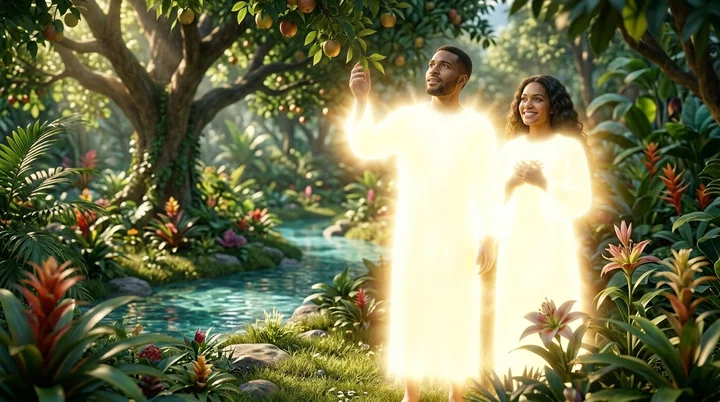


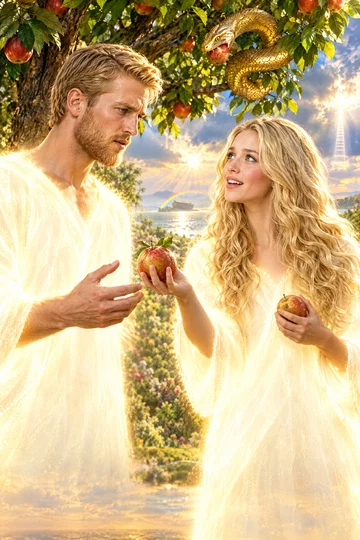



Cross-references 20 of 118
- Genesis 3:4
And the serpent said unto the woman, Ye shall not surely die:
The serpent directly denies the death sentence stated in Genesis 2:17.
- Genesis 3:19
In the sweat of thy face shalt thou eat bread, till thou return unto the ground; for out of it wast thou taken: for dust thou art, and unto dust shalt thou return.
Adam's sentence defines the threatened death as returning to dust.
- Romans 5:12
Wherefore, as by one man sin entered into the world, and death by sin; and so death passed upon all men, for that all have sinned:
Adam’s sin brought sin and death into the world, and death passed to all.
- Genesis 3:22-24
And the LORD God said, Behold, the man is become as one of us, to know good and evil: and now, lest he put forth his hand, and take also of the tree of life, and eat, and live for ever:
Access to the tree of life is barred after disobedience, preventing fallen humanity from living forever.
- Romans 6:23
For the wages of sin is death; but the gift of God is eternal life through Jesus Christ our Lord.
both teach death is the penalty for sin
- Genesis 3:6
And when the woman saw that the tree was good for food, and that it was pleasant to the eyes, and a tree to be desired to make one wise, she took of the fruit thereof, and did eat, and gave also unto her husband with her; and he did eat.
Eve and Adam eat the forbidden fruit, disobeying God's command.
- 1 Corinthians 15:22
For as in Adam all die, even so in Christ shall all be made alive.
All die in Adam, while all are made alive in Christ.
- Ezekiel 18:4
Behold, all souls are mine; as the soul of the father, so also the soul of the son is mine: the soul that sinneth, it shall die.
Both declare that the soul who sins will die.
- Genesis 2:9
And out of the ground made the LORD God to grow every tree that is pleasant to the sight, and good for food; the tree of life also in the midst of the garden, and the tree of knowledge of good and evil.
Names the tree of life alongside the forbidden tree in the garden.
- Genesis 3:15
And I will put enmity between thee and the woman, and between thy seed and her seed; it shall bruise thy head, and thou shalt bruise his heel.
After the fall, God promises the woman’s seed will defeat the serpent.
- Genesis 3:23-24
Therefore the LORD God sent him forth from the garden of Eden, to till the ground from whence he was taken.
Adam and Eve are driven from Eden after disobeying God.
- Genesis 3:3
But of the fruit of the tree which is in the midst of the garden, God hath said, Ye shall not eat of it, neither shall ye touch it, lest ye die.
Eve repeats the prohibition and its threatened consequence, adding a ban on touching the tree.
- James 1:15
Then when lust hath conceived, it bringeth forth sin: and sin, when it is finished, bringeth forth death.
Completed sin brings forth the death threatened to Adam.
- Genesis 3:5
For God doth know that in the day ye eat thereof, then your eyes shall be opened, and ye shall be as gods, knowing good and evil.
The serpent promised godlike knowledge to tempt humanity to disobey.
- Genesis 5:5
And all the days that Adam lived were nine hundred and thirty years: and he died.
Adam’s death fulfills the threatened penalty.
- Romans 5:19
For as by one man’s disobedience many were made sinners, so by the obedience of one shall many be made righteous.
Adam’s disobedience made many sinners, while Christ’s obedience makes many righteous.
- Revelation 22:14
Blessed are they that do his commandments, that they may have right to the tree of life, and may enter in through the gates into the city.
Commandment keepers are granted access to the tree of life.
- Genesis 3:1
Now the serpent was more subtil than any beast of the field which the LORD God had made. And he said unto the woman, Yea, hath God said, Ye shall not eat of every tree of the garden?
The serpent questions God’s command, prompting doubt about the prohibition.
- Genesis 3:8-10
And they heard the voice of the LORD God walking in the garden in the cool of the day: and Adam and his wife hid themselves from the presence of the LORD God amongst the trees of the garden.
After disobeying God’s command, Adam and Eve feel shame and fear and hide from his presence.
- Revelation 22:2
In the midst of the street of it, and on either side of the river, was there the tree of life, which bare twelve manner of fruits, and yielded her fruit every month: and the leaves of the tree were for the healing of the nations.
The restored tree of life contrasts with Eden’s forbidden tree.
Commentary part 1 of 3
Each commentary is drawn from primary sources: the writings of Ellen G. White and Adventist pioneers and periodicals. Each commentary is separate. Its own words are not a quotation; follow the references to read the source passages.
Ellen G. White
197 sources
God freely gave every beautiful pleasant tree for food and life but forbade the one attractive tree of knowledge on pain of certain death for disobedience.LC1 112.2CTBH 186.1–2ST Oct 10, 1900LC1 113.12RED 11.1 That single light prohibition was a probation test of obedience, trust, love and loyalty, requiring self-denial and self-control under free moral choice.LC1 112.2CTBH 186.1–22RED 8.2ST Oct 10, 1900Lt 79, 1900, par. 7–10 In the day did not mean instant physical death that day, but that the irrevocable sentence was pronounced that day, forfeiting conditional eternal life and dooming man to return to dust cut off from the tree of life.PP 60.2GC 532.2–34SP 352.2 By listening to the serpent's denial of the warning and promise of opened eyes and godhood, they disobeyed and gained only an experiential knowledge of sin, guilt and evil that God in love had withheld.LC1 146.1–147.22RED 42.1–43.2Ms 31, 1901, par. 4–8ED 23.2–3 Their transgression broke allegiance to the holy law, opened ruin, toil, sorrow and death upon the world and put the race under Satan, yet full execution was delayed because the Son undertook as surety to bear the wrath and redeem Adam's failure as the second Adam.Ms 1, 1902, par. 6Ms 31, 1901, par. 4–8Ms 16, 1897, par. 23–24LC1 123.12SP 85.3
Command Words and Setting
The command gave free permission to eat from every tree in Eden except one, amid abundant provision that was beautiful to look upon and pleasant to taste for delight and support of life.LC1 112.2CTBH 186.1–2ST Oct 10, 1900Lt 79, 1900, par. 7–10 The single exception was the tree of the knowledge of good and evil, forbidden on pain of certain death, and the prohibition was for moral good to place appetite as servant under judgment, reason, conscience and the moral and intellectual powers for character, glory to the Creator and human happiness.LC1 112.2CTBH 186.1–2RH Feb 24, 1874 The requirement was small and took nothing good away, depriving Adam of no necessity of life, so that obedience would have kept happiness intact while disobedience was inexcusable and brought sin and death into the world.ST Oct 10, 1900Lt 79, 1900, par. 7–10 The word must be treated as sacred and obeyed implicitly, for the fall came with the consequences warned of when Satan suggested God was withholding something desirable.
The forbidden tree was as attractive and lovely as any tree in the garden, standing in the midst of the garden near the tree of life, beautiful to sight and pleasant to taste.LC1 113.1CH 111.1–2PP 48.4Ms 140, 1903, par. 8–9 The restriction was kept in mind while enjoying the beauties and bounties given to gratify every want, yet yielding in that one act of eating broke allegiance to God and opened the flood of guilt and woe.LC1 113.1CH 111.1–2 The withholding of its very beautiful fruit while all other trees were freely given became the occasion for curiosity and admiration, for questioning why it was withheld, and for the serpent's distorted challenge whether God had said not to eat of every tree.Ms 140, 1903, par. 8–9 It is called the tree of knowledge because by eating what was forbidden Adam and Eve would gain a knowledge of sin and guilt through the experience of disobedience.LC1 113.1RH Feb 24, 18742RED 9.1 That forbidden knowledge was not wisdom as promised but guilt, degradation and an experience of sin, sought and found to loss rather than enlightenment.Ms 16, 1897, par. 23–24RH Feb 24, 1874
God clearly warned that in the day of eating they would surely die, with certain death as the penalty for disobedience.LC1 112.22RED 8.22RED 11.1LC1 146.1–147.2LC1 115.1 The warning stood contrary to the claim that eating would secure life and good, for had Adam obeyed he would have known neither want, sorrow nor death.LC1 146.1–147.2 In the day does not mean immediate physical death that day, but that the irrevocable sentence of death was pronounced that day, forfeiting eternal life and immortality promised only on condition of obedience.PP 60.2 The death sentence means returning to dust from which man was made, cut off from the tree of life and subject to utter extinction, not entrance into a higher existence with greater light and freedom.GC 532.2–34SP 352.2 The serpent's promise about opened eyes came true only in recognition of folly and experience of evil and its bitter fruit, while the same controversy continues where death is construed as the gate to life or as eternally burning torment.GC 532.2–34SP 352.2Ms 105, 1893, par. 3 Loss of access to the tree of life whose fruit perpetuates immortality meant they could not become immortal sinners, so they were driven from Eden with the way guarded.EW 103.2
Eve overstated the command by adding neither shall ye touch it, which God had not said, letting the serpent argue the warning false when touching brought no harm.2RED 11.1LC1 115.1Ms 16, 1897, par. 23–24RH Feb 24, 1874 The serpent used her own added words to gain advantage, plucking fruit and placing it in her hand and reasoning that since touching brought no death eating would bring no harm, and with no immediate harm appearing she was emboldened to judge the tempter wise and the threatened death unreal.LC1 115.1RH Feb 24, 18741SP 37.2 Adam understood she must die yet felt sadness, fear, astonishment and struggle of mind while she insisted she felt no ill effect but only a pleasant influence.1SP 39.1 The tempter treated the death threat as mere intimidation to keep them from great good, wisdom, power, higher felicity and equality with God, arguing they could not die because they had eaten of the tree of life which perpetuates immortality.1SP 37.2 The command is also stated as forbidding both touching and eating the fruit under penalty of death.Ms 16, 1893, par. 1–21SP 27.1SG3 35.28T 288.1–22T 560.1–2 In that form it stands as the law of God in Eden, with the tree especially designed as pledge of obedience, faith and love while free permission was given for all other trees, and breaking it by listening to the tempter's voice instead of God's brought transgression, exclusion from Eden, death entering the world and the flood-gates of woe, estranging humanity from God and separating earth from heaven.Ms 16, 1893, par. 1–21SP 27.18T 288.1–28T 290.1–3 If they had obeyed and never touched it, God would have imparted true knowledge resting under no curse, bringing everlasting joy, while all disobedience gained was acquaintance with sin and its results.8T 290.1–3
The Genesis 2 record was given by God for instruction presenting eternal truth and an unchangeable standard of right-doing.Ms 131, 1907, par. 13–14 The fruit itself was harmless with no injurious quality; it could have been eaten before the command without sin, and the vital point was listening to Satan and disobeying God after He forbade it.Ms 18, 1887, par. 3ST Jan 23, 18799MR 235.1–3 God used it merely as a test of whether they would obey His requirements, deliberately small and requiring little self-denial, with death attached to disobedience to show that even the slightest disregard of moral law brings death while obedience brings reward.ST Jan 23, 1879 Satan met them on appetite, telling Eve there was nothing bad in the tree and its fruit would give increased knowledge, presenting a course contrary to law as bringing gain, but after yielding they found terrible loss, as does everyone who indulges appetite contrary to law.Ms 18, 1887, par. 3 The verse belongs to God's instruction of Adam in Eden by communion with God as the method of education, a purpose for human development that was changed by the coming of a knowledge of evil.ED 14.3–4
Probation Test of Loyalty
God placed Adam and Eve on probation by a single prohibition, freely giving every other tree for food and forbidding only the tree of the knowledge of good and evil on pain of death, as the test and pledge of obedience, trust, confidence, faith, love and loyalty, on the principle obey and live or disobey and perish.CTBH 186.1–2ST Oct 10, 1900Lt 79, 1900, par. 7–10Ms 171, 1904, par. 4STMW9 69.2 Their happiness depended on obedience, and obedience would form character for the glory of the Creator and for their own happiness.CTBH 186.1–2ST Oct 10, 1900Lt 79, 1900, par. 7–10 Through yielding to deception and disobeying by not resisting temptation they came under Satan's jurisdiction, the enemy gained supremacy over the race, and death entered as the penalty for disobedience.Ms 1, 1902, par. 6
The test was deliberately small, mild and light, a command that seemed a small thing requiring little self-denial for what they did not need and had been generously supplied without, so that obedience took nothing good away, hurt nothing and deprived them of no necessity of life.ST Oct 10, 1900Lt 79, 1900, par. 7–10Ms 14, 1894, par. 2–4ST May 12, 1890 There could not be a lighter test, and God took that small test to reach the smallest test throughout mankind, teaching that His word must be treated as sacred and His commands obeyed implicitly.Ms 14, 1894, par. 2–4 Because needs were fully provided, Satan's suggestion that God was withholding something desirable was false, and failure showed disobedience inexcusable and untrustworthiness under stronger trials.ST Jan 23, 1879 The fruit itself was harmless and could have been eaten before the command without sin, but eating after God expressly forbade it was grave disobedience, proving that even the slightest disregard brings death while obedience brings reward, and that little acts of disobedience that seem very small are as large as the greatest, so none should follow inclination to the border of disorder, excuse a small wrong, or resist surrendering will and way to lawful rules.Ms 14, 1894, par. 2–4ST Jan 23, 1879
The first great moral lesson for the innocent pair was self-denial and self-control, placing the reins of self-government in their hands to be ruled by judgment, reason, conscience and the moral and intellectual powers, with appetite as servant under their watchcare and guardianship and not as master.LC1 112.2CTBH 186.1–22RED 8.2RH Feb 24, 1874 The command appealed to the nobler powers, graciously providing all needed for delight of taste and support of life, and the prohibition was for their moral good in probation and character formation, for God made man upright with powers of mind far above every other earthly creature.CTBH 186.1–2RH Feb 24, 1874 Desire for the forbidden fruit reversed that order, placing appetite above moral judgment and putting them outside favor, and the same test still applies, for indulgence weakens moral powers and shows appetite become master.CTBH 191.1–3 Their eating was base disobedience moved by appetite together with curiosity and ambition, revealing appetite as one of the weakest points even in perfection of manhood and womanhood, bringing moral darkness and a downward tendency increasing with each generation until the physical, mental and moral nature bears the taint of the fall, so that if appetite could overthrow perfect beings its power over fallen people is far greater.CTBH 193.2
They were left as free moral agents with power to obey or disobey, not compelled, physically restrained or made unable to disobey, for loyalty had to be tested before blessings could be given and service be voluntary rather than forced.1SP 32.3–34.21SP 40.2SG3 42.3ED 23.1ST Jan 9, 1879 God did not prevent eating, because to do so would have denied freedom of moral choice and appeared to support the charge that He ruled arbitrarily.RH Jun 4, 1901 The law safeguarded pure and noble man by setting a boundary to be obeyed, with power to eat, to believe God, obey and live, or to believe the tempter, disobey and perish, and the penalty applied to human beings as to angels because implicit obedience is required from all in heaven and on earth.1SP 32.3–34.2RH Jun 4, 19011SP 40.2 While perfectly obedient Satan had no power to deceive, harm or exert control, and if need be every angel would be sent to help, but transgression would lose high estate, suffer the penalty and expose them to harassment.1SP 32.3–34.2Lt 245a, 1903, par. 24–28
The reserved tree was the symbol of holy dependence under sovereignty and authority, showing God owner of the Eden home which they held under Him and reminding them whenever they looked at it of His authority and the prohibition lest they die.Ms 61b, 1895, par. 31–34Ms 102, 1903, par. 38–3910MR 326.4–327.2STMW9 69.2 Given Eden to tend with Himself as Educator and with perfect freedom to use every other tree, He reserved this one to give opportunity to demonstrate faith, trust and perfect obedience to His requirements.Ms 61b, 1895, par. 31–34STMW9 69.26T 386.1–2 The test was acknowledgment of sovereignty, for all sin is transgression of His will by man substituting his own will as if independent of higher claim, and none of His commandments are grievous and none suffer in obeying them, for it is life to obey.Ms 61b, 1895, par. 31–34
If they had endured the test God chose they would eventually have been rendered eternally secure, equal with the angels, enjoying God's favor and converse with angels, with minds and character molded after the divine similitude to repopulate heaven, while failure brought the fall.ST Jan 9, 18791SP 23.12RED 15.2LC1 119.22RED 6.1 The Father in counsel with Jesus purposed to make man to inhabit earth and place him upon probation to prove loyalty, deliberately not placing him beyond power of disobedience, after creating him in the image of God with perfectly developed organism and harmonious faculties and after making every provision for happiness and supplying every want.1SP 23.1LC1 119.2 After a time obedient humanity and the race would have been made equal to the angels, exalted and made immortal and at last put beyond Satan's power to enjoy lasting favor, but as Adam and Eve failed Christ proposed to become a voluntary offering.2RED 15.2LC1 119.22RED 6.1PP 48.4 Before they could be made eternally secure loyalty had to be tested, so at the very start God put a check on self-indulgence, the fatal desire that caused Satan's fall, setting the tree of knowledge near the tree of life in the middle of the garden as the test of obedience, faith and love for free agents able to understand the wisdom, kindness and justice of His character while enjoying fellowship with God and holy angels.PP 48.4
The same test of a forbidden tree rests on other unfallen worlds, where inhabitants have power and freedom to eat of two beautiful trees with beautiful fruit, one like the tree of life that may be eaten and one that may not be eaten.CET 97.3–98.1ExVEGW 22.2SLGB 1.10 None there have tasted the forbidden tree, and strict obedience to the commandments keeps them from falling and keeps them noble, majestic, lovely, bearing the express image of Jesus, with countenances beaming with holy joy in freedom and happiness.CET 97.3–98.1ExVEGW 22.2SLGB 1.10 Those on earth fell by disobedience in eating, but if the inhabitants of those worlds should eat they would fall likewise.CET 97.3–98.1ExVEGW 22.2EW 32.2 Their continued obedience shows the forbidden tree tests obedience everywhere, and eating its fruit would bring a fall as humanity's did.EW 32.2
While obedient they were safe and happy under continued favor with nothing withheld for good, for everything needed for happiness had been given and the command was for human good.Ms 61b, 1895, par. 31–34EW 117.2SG1 19.11T 565.1 Obedience to that one restriction was essential to safety, preserving happiness and keeping them under favor with Satan able to exert no power unless they disobeyed.EW 117.2SG1 19.1 Disregarding His will in this particular would incur guilt of transgression, forfeit rich gifts and favor, expose them to Satan's influence and wiles, and bring misery, ruin, sorrow, woe and death through disobeying a plain Thus saith the Lord.Ms 61b, 1895, par. 31–34SG1 19.1Lt 245a, 1903, par. 24–28ST Nov 18, 1913 Satan therefore planned to make them doubt truthfulness, question the restriction and disobey to bring them under his influence, deceiving Eve into believing she needed something more and that the fruit would exhilaratingly exalt body and mind to equality with God in knowledge, whereas the promised exaltation proved a terrible curse.EW 117.21T 565.1
Withheld Knowledge of Evil
God had freely given the knowledge of good and in love withheld the knowledge of evil, forbidding eating from the tree of the knowledge of good and evil to spare the sinless pair what that evil includes.ED 23.2–31SP 37.1SG3 41.1 That withheld knowledge was sin and its results — wearing toil, anxious care, disappointment, grief, pain and death — and it was for their happiness to remain ignorant of sin, content with what could be learned of God through created works and the instruction of holy angels.ED 23.2–3LC1 115.22RED 11.2 If they had obeyed, God would have given them knowledge free from sin's curse and bringing everlasting joy.MH 427.2
By listening to the deceiver instead of God through distrust of God, disbelief of His word and rejection of His authority, they gained only an acquaintance with sin and its results.Ms 31, 1901, par. 4–8ED 25.3MH 427.2 Eating brought no higher wisdom, only the knowledge of sin and a sense of guilt, with the covering of light and garment of innocence disappearing, leaving exposure, shivering, fear, hiding and blame-shifting.Ms 31, 1901, par. 4–81SP 40.2SG3 42.3 Evil thus mingled with good, confusing the mind and weakening mental and spiritual powers until people could no longer appreciate the good that God had freely given.Ms 31, 1901, par. 4–8ED 25.3 They had been fully instructed about Satan's fall and the danger of listening to his suggestions, left as free moral agents to believe God, obey and live or believe the tempter, disobey and perish, and they would have been perfectly safe if they had not touched or even investigated the fruit where Satan was masked.1SP 40.2SG3 42.3ST Jan 23, 1879 Curiosity to know what God had withheld and reaching for a high state of knowledge plunged them into the degradation of sin and guilt, opening the floodgates of woe upon the world and nature with sorrow, thorns, sweat and return to dust.Ms 31, 1901, par. 4–8LC1 115.2
Evil, sin and death were not created by God but entered through disobedience, which began with Satan and was brought into human experience through his deception.5T 503.3RH Aug 4, 1910 The forbidden knowledge is knowledge gained through disobedience, which God never intended people to acquire and which, when put into practice, ends in eternal death.5T 503.35T 504.2 Seeking knowledge driven by unsatisfied desires and unholy aims gave Adam and Eve an experience God had not intended for them and led to the loss of their Eden home.5T 503.3RH Aug 4, 1910
The tree of knowledge became an instrument of death, and its fruit stands against the life-giving knowledge of true holiness.FE 471.2CT 12.1–2 That one tree alone endangered their safety while there was no danger in approaching any other tree, yet Satan deliberately planned to attract the holy pair to it to lead them to do the very thing God had forbidden.20MR 40.1–3Ms 51, 1900, par. 1–23MR 332.2–3 The forbidden fruit offered a spurious knowledge, the knowledge of evil and sin, sought from unsanctified desire, inquisitiveness, curiosity and presumption, prompted by flattery, envy, distrust toward God and excitement of the desire for self-exaltation.20MR 40.1–3Ms 51, 1900, par. 1–23MR 332.2–3 It was dearly bought and better left unlearned, and Eve's gaining of it resulted in the loss of Eden, as all who venture contrary to the will of God to gain forbidden knowledge repeat her presumption and share her loss.20MR 40.1–3Ms 51, 1900, par. 1–23MR 332.2–3 Knowledge of the world gained while leaving eternity out of reckoning is like that forbidden knowledge, a failure from which there can never be recovery.Ms 15, 1898, par. 1
If they had obeyed and never touched the forbidden tree, God would have imparted to them true knowledge from His own word, resting under no curse of sin and bringing everlasting joy.MH 427.28T 290.1–3 That true knowledge would not be left behind with this world but would go with them to the paradise of God.STE 153.2FE 446.1 By disobeying and taking what God forbade, humanity was estranged from God and the earth was separated from heaven, led away into forbidden paths that wear minds out to death.MH 427.28T 290.1–3STE 153.2
Serpent Temptation and Fall
Satan fixed his attack on the single prohibited tree, working through appetite and the lure of sight and taste, and he denied God's plain warning that eating would bring death, insisting instead that it would bring no death but great good, opened eyes, and elevation to be as gods in wisdom, power, and a higher, more exalted existence and life.LC1 146.1–147.22RED 42.1–43.2ST Dec 15, 1887RH Aug 18, 1874 He pressed this reversal by flattery, envy, distrust, questioning and unbelief, telling them hunger for temporal food was no true calamity and that God's word about food need not stand first, so that obedience looked like bondage while disobedience promised freedom and safety from death.2RED 42.1–43.2ST Dec 15, 1887RH Aug 4, 1910 What was gained was not the promised good but want, sorrow, anxiety and death, for obedience would have left them knowing neither want nor sorrow nor death.LC1 146.1–147.22RED 42.1–43.2RH Aug 18, 1874
He charged God with lying, selfishness and jealous withholding, saying the command was unjust subordination and mere intimidation never to be fulfilled, meant to keep them from wisdom, power, higher felicity, nobler development, greater happiness and equality with God.1SP 37.2ST Nov 18, 1913LC1 114.1GC88 531.1–532.1Lt 245a, 1903, par. 29–31 He argued death was impossible because they had already eaten of the tree of life which perpetuates immortality, and claimed he himself had eaten of the forbidden fruit and thereby gained the power of speech.1SP 37.2Lt 245a, 1903, par. 29–31 Eve's touching without harm was then used to prove the threat false, emboldening her to judge the tempter wise and correct and the threatened death unreal.1SP 37.2GC88 531.1–532.1
Eve felt no immediate death but only a grateful taste and a delicious, exhilarating, vivifying influence thrilling every faculty, which she took for new life like the angels and for entrance into a higher state, so she grew bolder and ate without fear.CH 108.3–109.11SP 37.2ST Nov 18, 1913PP 55.3–56.2 Adam understood she had transgressed and must die and be separated from him, and the certainty brought sadness, fear, astonishment and inward struggle, yet seeing her still beautiful and apparently innocent with no sign of death, and hearing her repeat that they should not surely die, he reasoned the serpent might be true.SG3 42.11SP 39.1ST Nov 18, 19131SP 39.2 From strong love that could not bear separation, discouragement, and unwillingness to be left alone, he deliberately resolved to share her fate and brave the threatened death, forgetting God's companionship, the converse of angels, and the high destiny open to a faithful race, and failing to trust the merciful Creator who had formed him from dust and made Eve to supply her place.ST Nov 18, 19131SP 39.2PP 55.3–56.2
Eve had wandered alone from her husband in the daily labor and gazed on the very beautiful tree with curiosity and admiration, questioning within herself why God had withheld it, and the serpent's question whether God had said not to eat of every tree echoed her thought and gave the tempter his opportunity.SG3 44.1Ms 140, 1903, par. 8–9 Instead of obeying she entered into argument with the tempter, distrusting her Creator as restricting liberty and imagining great wisdom and exaltation by transgression, and her distrust and questioning of His wisdom led through her to Adam's disobedience.SG3 44.1GC88 531.1–532.1 She could have resisted by remembering God's love, turning and fleeing to God and to her husband, and defending her Creator, while Adam, unlike Eve, was not deceived yet, though troubled and tempted by doubt whether God meant what He said, rashly ate, and his doubt did not excuse him.ST May 12, 1890LC1 192.2GC88 531.1–532.1
They had been fully instructed about Satan's fall and the danger of listening to his suggestions, and warned by God and angels not to eat or even to investigate or touch the fruit, for that tree was the one place where Satan was permitted access.1SP 40.2SG3 42.3SG3 39.1ST Jan 23, 1879 They stood as free moral agents with power to believe God, obey and live, or believe the tempter, disobey and perish, and while perfectly obedient Satan had no power to deceive or harm them and every angel would help them, but transgression would lose their high estate, bring the law's penalty as upon angels, and expose them to his harassment.1SP 32.3–34.21SP 40.2EW 117.2 Eating brought no higher wisdom, only the knowledge of sin and guilt with the covering of light disappearing, leaving them shivering and seeking to cover their exposed bodies.1SP 40.2SG3 42.3ST Jan 23, 1879
Because no immediate harm appeared, they set pleasurable feeling against the express command and flattered themselves that the God who had given everything for their happiness would in great love excuse their disobedience or make punishment less dreadful.3T 72.1CH 108.3–109.1ST Jan 23, 18791SP 41.2 Eve added to the command that they must not touch it, though God had said not to eat, and the serpent used the harmless touch to argue the warning false, a lesson that experience is unreliable against God's will and delayed punishment does not make disobedience safe.3T 72.1CH 108.3–109.1RH Feb 24, 1874 Afterward their crime stood before them in its true light, seen more clearly in guilt and fear, with Adam blaming Eve for leaving his side and being deceived.SG3 42.1ST Jan 23, 18791SP 41.2
Results of Disobedience
Eating from the forbidden tree was crime, transgression and rebellion that broke loyalty to the divine law and opened the floodgates of woe, guilt and ruin upon the world.Ms 1, 1902, par. 6Ms 31, 1901, par. 4–8Ms 16, 1897, par. 23–24Ms 37, 1896, par. 2–3Ms 97, 1901, par. 3–8 It was failure under a very light test, with abundant provision freely given and only one tree reserved, leaving no excuse for disobedience.Ms 37, 1896, par. 2–3Ms 97, 1901, par. 3–8Ms 14, 1894, par. 2–4 Accepting the serpent's lie that eating would make them as gods in wisdom was the beginning of disobedience, and through listening to his misrepresentation and not resisting temptation the holy pair came under his jurisdiction and death entered as the penalty.Ms 1, 1902, par. 6Ms 16, 1897, par. 23–24Ms 97, 1901, par. 3–8 By yielding they became wise only in knowing the evil God meant them never to know, the knowledge of guilt He had sought to withhold.Ms 31, 1901, par. 4–8Ms 16, 1897, par. 23–24 Little acts of disobedience are as large as the greatest in God's sight, so none should follow inclination to the border of disorder, excuse a small wrong, or refuse surrender of will to lawful rules.Ms 14, 1894, par. 2–4
Disobedience brought want, sorrow, anxiety, toil, thorns, sweat, disappointment, grief, pain and death, whereas obedience would have left man knowing neither want nor sorrow nor death.LC1 146.1–147.22RED 42.1–43.2RH Aug 18, 1874 Nature itself became a lesson, with decay in drooping flowers and falling leaves and seeds of death in the air continually warning that every living thing must die.ED 26.2–3 That decline began the race's fall from Eden's perfect health and beauty.SG4 120.1 Taking animal life for food, with its pain and death, belongs to the consequences of transgression and not to God's original plan.CTBH 169.3–4 Hunger for temporal food is not the greatest calamity, and God's word and requirements about food must be put first before physical wants.2RED 42.1–43.2
Breaking the command stripped away the covering of light and garment of innocence, leaving them exposed, shivering under loss of the divine covering and trying to cover themselves.Ms 31, 1901, par. 4–81SP 40.2SG3 42.3 Eating brought no higher wisdom, only the knowledge of sin and a sense of guilt.1SP 40.2SG3 42.3 Fear of God followed, with hiding and shifting of blame.Ms 31, 1901, par. 4–8 They would have been perfectly safe if they had not touched and investigated the fruit where the masked tempter was allowed access.1SP 40.2SG3 42.3
The fruit had no peculiar harmful or injurious quality in itself but served merely as a test of obedience, and yielding brought terrible loss to all who indulge appetite contrary to God's law.Ms 18, 1887, par. 3 Transgression caused the fall from high estate and expulsion from Eden, with loss of the beautiful home, divine favor and happiness.Ms 18, 1887, par. 3ST Aug 1, 1878ST Feb 6, 1879 God drove them out and guarded the way with cherubim lest they become immortal sinners, depriving them of all right to the tree of life whose fruit perpetuates immortality and whose leaves sustain life as the antidote of death.8T 288.1–2EW 103.2SG3 88.1 That tree was taken from Eden to paradise above, yet through redemption purchased by Christ's blood its life-giving fruit may still be eaten by obedience to God's law.8T 288.1–2SG3 88.1 Adam's sin plunged the race into hopeless misery and despair, with every successive generation degenerating physically, mentally and morally as sin corrupted the world and almost obliterated God's image in man.ST Aug 1, 1878 Their experience teaches that every command is sacred, God's word is sure, and disregard brings the stated consequence of death.ST Feb 6, 18791SP 59.1
Through yielding they broke allegiance and came under Satan's jurisdiction, giving him complete triumph, vantage ground, advantage and control over the race.Ms 1, 1902, par. 6LC1 116.32RED 12.3 Obedience would have kept them beyond his power forever under God's favor, for he could exert no power unless they first doubted God's truthfulness, questioned the restriction and disobeyed.EW 117.2SG1 19.1 By that triumph he flattered himself he had thwarted God's purpose in creating man, hoping even to regain heaven and using his supremacy over humanity to that end.Ms 1, 1902, par. 6LC1 116.3 Disobedience forfeited favor and happiness and exposed them to his influence.EW 117.2SG1 19.1
The fall left in every person an inward bent to evil, an antagonistic force against perceived right and desire for goodness that cannot be resisted unaided.ED 29.1ST Nov 3, 1909 Man still perceives what is right and desires goodness and recognizes a worthy ideal, but only by cooperation with Christ's power can he withstand the force and pursue the good.ED 29.1ST Nov 3, 1909
While Adam lived the history of creation, the garden, the two trees, God's supreme authority and the obligation of His law remained undisputed fact, with Eden remaining among men for centuries as silent witness to the truth.PP 83.2–84.1 At its cherubim-guarded gate the glory of God was revealed, where the first worshipers reared altars and presented offerings, where Cain and Abel brought sacrifices and God communed with them, so skepticism could not deny Eden and men were slow to question God and His law.PP 83.2–84.1 God commanded Adam to instruct his posterity, so for nearly a thousand years to the ninth generation he lived as witness to the results of sin seeking to stem evil, describing man's holy happy estate in Paradise, repeating the fall, explaining merciful provisions for salvation and warning of the need to obey.PP 82.1 Yet few heeded his words, and many met him with bitter reproaches for bringing woe upon his posterity.PP 82.1
In the future school of the hereafter there will be no such tree as opportunity for temptation, no tempter and no possibility of wrong, for all will have endured the testing of evil and will no longer be susceptible to its power.ED 301.6 Adam's transgression introduced sin, and men grew more and still more bold in disobedience, proving God means exactly what He says and will surely punish the transgressor.SG3 52.2FE 504.1–31SP 59.1 The Flood, in which the rebellious race was swept away and death was their portion, exemplified the truth of the Eden warning.RH Aug 16, 1906FE 504.1–3 Sin steadily increased from Eden to the Flood with only Noah and his sons saved, and onward to Sodom destroyed by fire from heaven and Nineveh spared upon repentance but destroyed when its sins reached to heaven, showing the bitter fruits of disobedience and that discarding God's plain command repeats Adam's sin today.ST May 26, 1898Ms 90, 1897, par. 8
God Law and Justice
The prohibition in Eden was the holy law of God given by spoken word, not yet written, rehearsing to Adam and Eve the same law that already existed before man was created and governed the angels, by whose transgression Satan fell.1SP 30.3–41SP 261.1Ms 23, 1885, par. 6 That command not to eat or touch the tree of knowledge was part of God's law, and eating was transgression of that law, rebellion bringing wrath, fall from a high estate and expulsion from Eden.Ms 18, 1887, par. 3Ms 16, 1893, par. 1–21SP 30.3–4 It is the same law of Jehovah afterward proclaimed in awful grandeur from Mount Sinai as the Ten Commandments of universal obligation, given when the morning stars sang together and all the sons of God shouted for joy.4T 11.31SP 261.1Ms 23, 1885, par. 6 Disobedience with its punishment shows that sin brings death, that retributive justice does not fail, and that strict regard for the commandments is required.4T 11.3
Eating violated that law and brought its fixed sentence that transgression carries death as punishment, so that by disobeying Adam forfeited his life.Ms 18, 1887, par. 38MR 38.3–4Ms 99, 1903, par. 13–14 The word was spoken when Adam was free from the curse, perfect in thought and action and without effects of sin upon him when assailed, yet he yielded and fell.8MR 38.3–4Ms 99, 1903, par. 13–14 The law given in Eden joined obedience with reward and disobedience with penalty, and Adam's transgression introduced sin into the world, as the later destruction of the disobedient in the Flood exemplified the truth of the warning.Ms 16, 1893, par. 1–24T 11.3RH Aug 16, 1906 Perfect obedience then and now is the basis of all right conduct, with reward for obedience and death for disobedience.Ms 18, 1887, par. 3RH Aug 16, 1906
God means exactly what He says and will punish the transgressor, for the warning of certain death that very day made the consequence clear before choice.CH 108.3–109.1EW 118.2ST May 12, 1890 Eve recalled the warning but doubted whether God meant it exactly as stated, was beguiled to believe He would not do as He had said, and thought the command binding yet debatable.CH 108.3–109.1EW 118.2ST Sep 14, 1882SG1 20.2 After eating she felt no death but only a pleasurable exhilarating sensation she took for new and more exalted life like angels, and she set that feeling against the express command and carried the fruit to her husband.3T 72.1CH 108.3–109.1 Adam let himself be seduced by her experience rather than holding to what God had said, flattering themselves that delayed punishment made disobedience safe.3T 72.1CH 108.3–109.1 Personal experience can never be treated as reliable against expressed will, true experience agrees with divine and natural law, and requirements must be obeyed not debated.3T 72.1CH 108.3–109.1
The test was deliberately small and light, requiring little self-denial, for the fruit itself was harmless with no injurious quality and could have been eaten before the command without sin, but eating after express prohibition was disobedience and grave offense.ST Jan 23, 1879 That one transgression, which may be regarded as a very little thing, opened the floodgates of woe upon the world, and its consequences were anything but small.ST Jan 23, 1879CH 439.2–440.14T 573.3 Previous obedience in other matters could not excuse a single departure, for breaking even one requirement leaves the transgressor subject to penalty.ST Jan 23, 1879ST Dec 15, 1887 It is not the greatness of the disobedience but disobedience itself that is the crime, a virtual denial of God and refusal of the laws of His government, going directly contrary to expressed will even without set defiance or calculation of results.Ms 92, 1899, par. 33–346MR 336.3–338.1 Right is one and the same for people on earth and angels in heaven, though angels have a wider sphere, and unfaithfulness in least, if uncorrected, soon leads to transgression in great, a lesson for parents, educators, children and youth.CH 439.2–440.14T 573.3Ms 92, 1899, par. 33–34 What was involved is seen only beside Gethsemane, where Christ consented to do the Father's will and bear the curse obedient unto death, for happiness is in obedience which hedges man from evil while setting up self erects human will as supreme against God's high and holy will.6MR 336.3–338.1
God did not originate sin but left man free to choose, and does not work a miracle to save him from the sure result of his own course, just as a hand in fire burns and one throwing himself over a precipice or into the sea is not miraculously stopped.Lt 65, 1895, par. 6–7 He did not draw back Adam's arm by physical restraint to make taking impossible, did not make men machines without choice or move them as irresponsible beings, for that would make Him a hard master reaping where He has not sown.Lt 65, 1895, par. 6–7Lt 66, 1893, par. 2–3 Adam came from his Maker without taint of evil, pure and godlike with no predisposition to sin, able to keep innocence by living by every word from God's mouth and refusing the strange voice, possessing will to obey and power to resist.ST Aug 26, 1897Lt 66, 1893, par. 2–3Lt 15a, 1896, par. 1–2 He was also warned of the disobedience and disaffection of the highest created being, yet fell by listening to Satan disguised in the serpent whose lying story contradicted God's truthful warning, so that what was pure became perverted and defiled.ST Aug 26, 1897Lt 15a, 1896, par. 1–2 If man gives his will to Satan the sin and results lie at his own door, displaying the wisdom, love, holiness and justice of all God's doings, who compels no one but gives each agent all help needed to overcome and leaves each free to place inherited and cultivated tendencies under the Holy Spirit or follow his own way.Lt 65, 1895, par. 6–7Lt 15a, 1896, par. 1–2 His experience stands as constant warning never to turn aside from the Word under any circumstances, but to require human cooperation with a God who loves and gives freedom rather than forcing sin, until Christ came as propitiation to take away sin and restore humanity.ST Aug 26, 1897Lt 66, 1893, par. 2–3Lt 15a, 1896, par. 1–2
As God gave free use of abundant provision with every tree pleasant and good for food while keeping one tree reserved as His own, requiring acknowledgment of Him as possessor of all, so the single prohibition tested gratitude, loyalty, faith, trust and perfect obedience.Ms 37, 1896, par. 2–3Ms 60, 1896, par. 7–8 Eating what He forbade broke the test and opened the floodgates of woe, and the same reserve principle governs talents and goods lent for His glory, where He gives all for use but reserves a portion.Ms 37, 1896, par. 2–3 The same principle holds in His claim of one tenth to be faithfully laid aside as sacred for His treasury and the support of carrying salvation to the world, proving that all belongs to God.Ms 60, 1896, par. 7–8 It made every difference whether Adam obeyed or yielded to reasoning that it made no difference which tree he ate from, and the same rule holds for which day is kept, where Sabbath observance tests the same obedience as Eden.Ms 1, 1892, par. 86MR 336.2ST Jun 18, 1894 As disobedience by one made many sinners in contrast to obedience of One by which many are made righteous, so rejecting the command today brings terrible consequence.6MR 336.2ST Jun 18, 1894
Redemption Through Christ
The death sentence for disobedience placed an impassable barrier between a holy God and the sinner, so that guilty man in his deplorable condition under Satan's control could no longer come directly before God with supplication.LC1 123.12SP 85.3LC1 118.1 The law behind the command could not be reduced, set aside, or yield even the smallest part of its claim to accommodate fallen humanity, so deliverance required a mightier being to conquer Satan and ransom man.LC1 118.12RED 14.1 The wrath of God still hangs over fallen Adam, but the full execution of the sentence was delayed for a time because the Son undertook as surety and Redeemer to bear the wrath that in justice should fall upon man.LC1 120.2–121.12RED 16.2–17.1 Fallen man was thus placed in a new relation to his Creator with a door of hope opened, so that though a criminal deserving wrath he may by faith run into the refuge provided and be safe, and in the midst of death there is life if he chooses to accept it.LC1 120.2–121.12RED 16.2–17.1 Because the holy infinite God dwells in unapproachable light, no direct communication could exist between man and his Maker, but the Father gave the world into the hands of the Son to redeem it from the curse and disgrace of Adam's failure, so that through Christ alone man now finds access to God and God holds communication with man.LC1 120.2–121.12RED 16.2–17.1
The sentence must still take effect because death follows sin, so in the plan of redemption devised in heaven it rests upon a substitute and is transferred from the obedient and faithful, requiring the shedding of blood.LC1 123.12SP 85.3RH Mar 3, 1874 Slain sacrificial beasts prefigured Christ and displayed for the time being the fulfillment of God's word that sin brings death, showing the death sentence being met for the sinner.LC1 123.12SP 85.32RED 19.1 Their flowing blood signified atonement, though animal blood itself has no virtue or saving power in itself.LC1 123.12SP 85.3RH Mar 3, 1874 That shedding of blood pointed forward to a coming Redeemer who would die for human sins, whose death would atone for human sin and fully vindicate the Father's law and uphold its honor.LC1 123.12SP 85.3RH Mar 3, 18742RED 19.1 The system of sacrifices was established to keep the penalty before fallen humanity, teaching humility and repentance and leading people to trust in God and the promised Redeemer for pardon, and Cain and Abel understood that system and were tested on humble obedience to it just as Adam had been tested.1SP 261.3
Christ as the brightness of God's glory took man's nature and passed over the same ground where Adam fell, bore the test Adam failed to endure, and overcame every temptation of Satan, thus redeeming Adam's disgraceful failure and fall.ST Aug 1, 18784T 293.2–3 Adam had been made upright, perfectly holy and happy with a holy, sinless, pure, undefiled nature amid pure nature and abundantly supplied with everything required, yet by disobedience lost the favor of God and destroyed his own happiness.ST Aug 1, 1878Ms 20, 1898, par. 2–38MR 39.1–2 His sin plunged the race into hopeless misery and despair with successive degeneration physically, mentally and morally, opened the floodgates of woe upon the world, depraved his posterity, and almost obliterated the image of God in man.ST Aug 1, 1878Ms 20, 1898, par. 2–38MR 39.1–2 The prohibition was the smallest test the Lord could devise to prove loyalty, which Satan used to insinuate doubts of God's wisdom and accuse Him as Father and Sovereign of selfishness, and Eve yielded while Adam accepted the fruit from his wife's hand through listening to the enemy.Ms 20, 1898, par. 2–38MR 39.1–2 By that work the second Adam began where the first Adam began in order to redeem, revealing that men can keep the law of God which Satan had declared impossible to keep after Adam's disobedience, and the temptation Christ met and defeated by the Word of God alone was stronger and fiercer in form than that presented to Adam.Ms 20, 1898, par. 2–3Ms 1, 1892, par. 1Ms 27, 1886, par. 1–4
Through that disobedience death entered the world, and Adam and Eve became sinners under sentence of death, deprived of all right to the tree of life and driven from Eden with the way guarded lest they become immortal sinners.8T 288.1–2EW 103.2SG3 88.1 The tree of life, whose fruit perpetuates immortality and gives eternal life and whose leaves sustain life as the antidote of death, was taken from Eden to the paradise above.8T 288.1–2ST Mar 31, 1909 Yet Christ died so that through His blood obedience to God's law could restore the lost right and blessing of access, and through the redemption purchased by His blood its life-giving fruit may still be eaten.8T 288.1–2SG3 88.1ST Mar 31, 1909
Adam was placed under a required test of perfect obedience that counted not only for himself but for his posterity.9MR 229.1–2 If he had stood the temptation and preserved allegiance to the Creator, his obedience would have ensured God's acceptance and favor, established him forever in holiness and happiness, and extended those blessings to all his descendants.9MR 229.1–2 He failed to bear the test by revolting against God's law, and because of that revolt all his descendants have been sinners, so that by one man's disobedience many were made sinners.9MR 229.1–26MR 336.2 It made every difference whether Adam obeyed God or yielded to Satan's reasoning that it made no difference which tree he ate from, even as it matters which day is kept for the Sabbath, in contrast to the obedience of One by which many are made righteous.6MR 336.2
The law of Eden remains the rule of human conduct and basis of all right conduct, promising reward for obedience and setting death as penalty for disobedience, to be placed before rulers of nations and all in responsibility to show accountability and duty to obey all requirements.Lt 188, 1903, par. 7–9 God requires that same perfect obedience to His law in this age from those who would follow Him as He gave Adam in paradise before the fall in a single test, and the same test of love for God's pure and holy character is left for the whole human family with no less requirement.Lt 82, 1895, par. 27RH Sep 3, 1901 After transgression God gave His only begotten Son to a life of shame and humiliation bearing mockery and insult and to death, to make it possible for man to receive moral power to repent through the imputed righteousness of Christ.Lt 82, 1895, par. 27 Righteousness without blemish comes only through that imputed righteousness, and through God's provision for forgiveness and restoration sinners today can fulfill the same requirement given to Adam, while the blood of Christ remains the sinner's only hope running like golden threads through the fabric of the gospel to be magnified before all people.Lt 188, 1903, par. 7–9RH Sep 3, 1901 Those who receive Christ in truth by faith, with Christ abiding in the heart, will respect God's Word by obedience to His laws and heed His requirements, escaping hereditary and cultivated tendencies, pride, vanity, self-esteem, worldliness and every sin, which is eating the flesh and drinking the blood of the Son of God representing the tree of life.Ms 30, 1898, par. 23–24
The warning of certain death in the day of eating was joined to the promise of enmity between the serpent and the woman's seed as a ray of hope, and the transgression that excluded Adam and Eve from Eden is what brought Christ to this world, after which the first gospel promise was given.Ms 31, 1901, par. 4–8Ms 16, 1893, par. 1–2 This present life is a time of test and trial beginning with freedom to eat of every tree except the one forbidden on pain of death to prove loyalty, where Satan misrepresented God as withholding wisdom and yielding brought only wisdom in knowing the evil God meant them never to know, with covering of light lost, fear, hiding, blame-shifting, curse on the ground with sorrow, thorns, sweat and return to dust.Ms 31, 1901, par. 4–8 The Son did not take even Adam's innocent unweakened undefiled nature, which would have been almost infinite humiliation, but accepted humanity as it had become after four thousand years of sin, weakened and defiled and subject to the great law of heredity like every child of Adam, to share human sorrows and temptations and give the example of a sinless life.ST Dec 9, 1913
Sources