Jeremiah 29:5
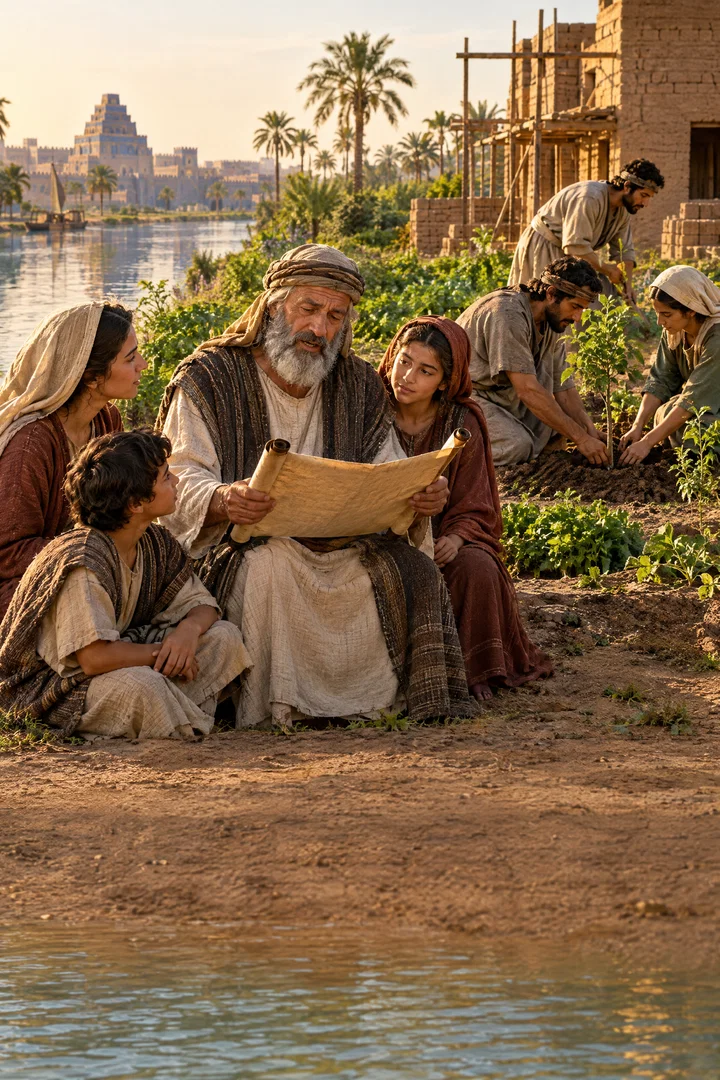
Build ye houses, and dwell in them; and plant gardens, and eat the fruit of them;
Translations
Build you houses, and dwell in them; and plant gardens, and eat the fruit of them;
King James Version, KJV Cambridge Paragraph Bible, Webster Bible, Revised Version
Build ye houses, and dwell in them; and plant gardens, and eat the fruit of them;
Build ye houses, and dwell in them; and plant gardens, and eat the fruit of them.
Build ye houses, and abide; and plant ye gardens, and eat their fruit;
Build houses, and dwell in them, and plant gardens, and eat the fruit of them.
Build ye houses and dwell in them,—And plant ye gardens and eat the fruit thereof;
Berean Standard Bible, Majority Standard Bible
“ Build houses and settle down. Plant gardens and eat their produce.
“ Build houses and dwell in them. Plant gardens and eat their fruit.
Go on building houses and living in them, and planting gardens and using the fruit of them;
Buylde you houses to dwell in, and plant you gardens, and eate the fruites of them.
Douay-Rheims (Challoner revision)
Build ye houses, and dwell in them: and plant orchards, and eat the fruit of them.
Pictures
Cross-references
- Jeremiah 29:10
For thus saith the LORD, That after seventy years be accomplished at Babylon I will visit you, and perform my good word toward you, in causing you to return to this place.
Promises return from Babylon after seventy years.
- Jeremiah 25:11-12
And this whole land shall be a desolation, and an astonishment; and these nations shall serve the king of Babylon seventy years.
Foretells the captivity’s seventy-year duration and its end.
- Jeremiah 29:28
For therefore he sent unto us in Babylon, saying, This captivity is long: build ye houses, and dwell in them; and plant gardens, and eat the fruit of them.
Repeats the instruction to settle in Babylon.
- Ezra 1
Now in the first year of Cyrus king of Persia, that the word of the LORD by the mouth of Jeremiah might be fulfilled, the LORD stirred up the spirit of Cyrus king of Persia, that he made a proclamation throughout all his kingdom, and put it also in writing, saying,
Records the Persian king’s decree allowing the Jews to return.
- Jeremiah 27:12-13
I spake also to Zedekiah king of Judah according to all these words, saying, Bring your necks under the yoke of the king of Babylon, and serve him and his people, and live.
Jeremiah urges submission to Babylon to preserve life.
- 2 Chronicles 36:20-23
And them that had escaped from the sword carried he away to Babylon; where they were servants to him and his sons until the reign of the kingdom of Persia:
Describes the end of the captivity and the return to the land.
- Daniel 9:2
In the first year of his reign I Daniel understood by books the number of the years, whereof the word of the LORD came to Jeremiah the prophet, that he would accomplish seventy years in the desolations of Jerusalem.
Daniel understood Jeremiah’s prophecy of the captivity’s seventy years.
- Ezra 5:12-13
But after that our fathers had provoked the God of heaven unto wrath, he gave them into the hand of Nebuchadnezzar the king of Babylon, the Chaldean, who destroyed this house, and carried the people away into Babylon.
Identifies the Persian ruler who restored the Jews as king of Babylon and Assyria.
Commentary
Each commentary is drawn from primary sources: the writings of Ellen G. White and Adventist pioneers and periodicals. Each commentary is separate. Its own words are not a quotation; follow the references to read the source passages.
Ellen G. White
6 sources
The instruction belongs to Jeremiah's letter to the Hebrew captives in Babylon during the captivity, the same prophecies Daniel studied to understand the promised seventy-year captivity and the return of the exiles.RH Mar 21, 1907 It taught that the return would not be immediate and deliverance was not near, but would come only at the close of the seventy years.PK 440.2–441.2PK 440.1 The exiles were therefore to accept a long exile during the appointed period rather than expect an immediate return to Jerusalem or a speedy deliverance.PK 440.2–441.2RH Mar 14, 1907ST Jun 1, 18764T 172.2–173.1PK 440.1
They were to submit quietly to the temporary rule of their conquerors and settle for a long stay.PK 440.2–441.2PK 440.1 They were to build houses and make homes, plant gardens and grow food, and pursue their ordinary productive work.PK 440.2–441.2RH Mar 14, 1907ST Jun 1, 18764T 172.2–173.1PK 440.1 Building and planting meant living a normal, productive life among their conquerors to make servitude as pleasant, bearable, peaceful and comfortable as possible.PK 440.2–441.2RH Mar 14, 1907ST Jun 1, 18764T 172.2–173.1PK 440.1
The counsel expressed tender compassion and merciful care for the captive people.PK 440.2–441.2PK 440.1 It was meant to keep them on vantage-ground with many liberties, honor the name of God far and wide, and spare further calamity.PK 440.2–441.2PK 440.1 Their own peace depended on seeking the peace of Babylon and praying for it.PK 440.2–441.2 It warned against acting on false prophets who promised a soon-broken yoke, a restored nation, and swift deliverance.PK 440.2–441.2RH Mar 14, 19074T 172.2–173.1PK 440.1 Disregarding this counsel to follow them would lead to fatal rebellion and insurrection, awaken the vigilance and severity of the Chaldean authorities, bring further restriction of liberties with suffering and disaster, and frustrate the merciful design to keep the exiles on vantage-ground.PK 440.2–441.2PK 440.1
Sources
Pioneers and periodicals
8 sources
Jeremiah 29:5 belongs to Jeremiah's letter to the Hebrew captives in Babylon, written during the captivity as part of the section concerned with the Babylonian exile.RH Mar 21, 1907RH Jul 27, 1916 It commands the exiles to settle in Babylon, build houses and dwell in them, and plant gardens and eat the fruit of them, making a life there.RH Mar 14, 1907ST Jun 1, 1876RH Apr 8, 1902ST May 24, 1883ST Oct 18, 1883 The command was given because the captivity would be long, seventy years, and the return would not be immediate.RH Mar 14, 1907ST Jun 1, 1876RH Apr 8, 1902ST May 24, 1883 They were to live as though Babylon were to be their permanent home while waiting for God's promised return to their own land after the appointed period.RH Mar 14, 1907ST Jun 1, 1876RH Apr 8, 1902ST May 24, 1883
They were to accept their situation, pursue their ordinary work, and establish peaceful homes among their conquerors.RH Mar 14, 1907ST Jun 1, 1876 God directed them to make life in captivity as bearable, peaceful, and comfortable as possible rather than expect an immediate return to Jerusalem.RH Mar 14, 1907ST Jun 1, 1876 They were not to act on false promises of swift deliverance.RH Mar 14, 1907 The chapter stands as God's word against men who prophesy lies in His name and make the people trust in a lie, which destroys the souls that believe them even when the teachers themselves are deceived.RH Apr 27, 1916
The call to build in Babylon contrasted with the disobedience of those in Jerusalem who continued building there.RH Apr 8, 1902 The letter containing the verse is part of the prophecies Daniel studied to understand the promised seventy-year captivity and the return of the exiles.RH Mar 21, 1907 The settlement and agricultural prosperity of the Waldensian colonies in southern Italy illustrate the pattern of settling, building homes, cultivating gardens, and enjoying the produce.ST Oct 18, 1883
Sources