Jeremiah 27:12
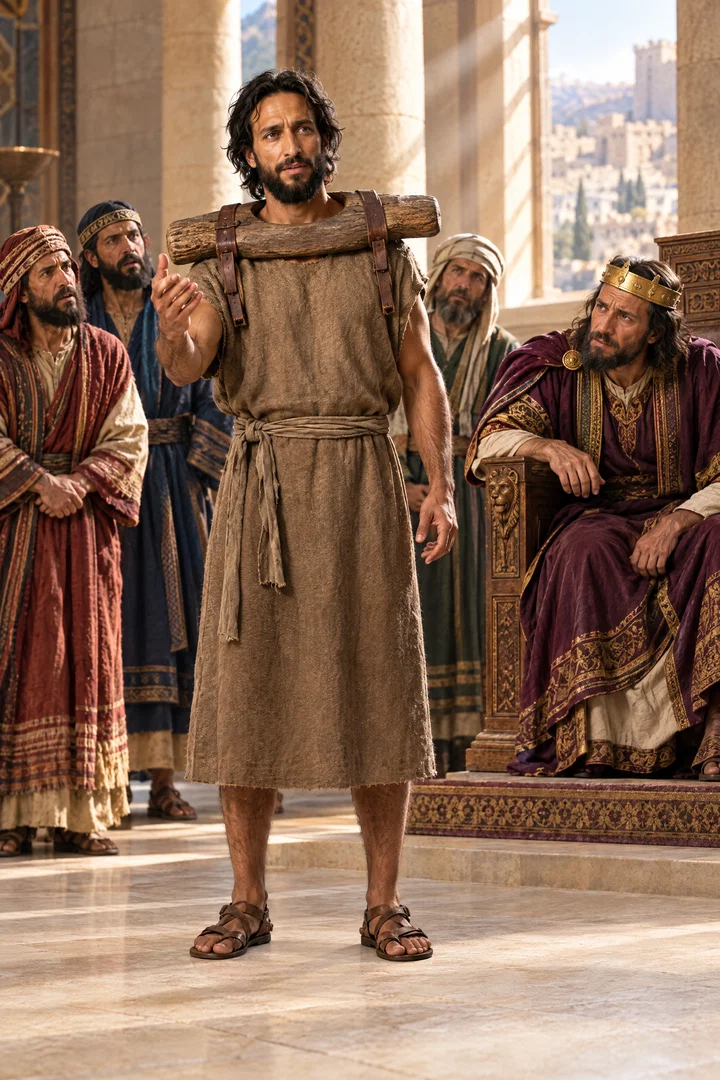
I spake also to Zedekiah king of Judah according to all these words, saying, Bring your necks under the yoke of the king of Babylon, and serve him and his people, and live.
Translations
American King James Version, Webster Bible
I spoke also to Zedekiah king of Judah according to all these words, saying, Bring your necks under the yoke of the king of Babylon, and serve him and his people, and live.
King James Version, KJV Cambridge Paragraph Bible
I spake also to Zedekiah king of Judah according to all these words, saying, Bring your necks under the yoke of the king of Babylon, and serve him and his people, and live.
Revised Version, American Standard Version
And I spake to Zedekiah king of Judah according to all these words, saying, Bring your necks under the yoke of the king of Babylon, and serve him and his people, and live.
And unto Zedekiah king of Judah I have spoken according to all these words, saying, 'Cause your necks to enter into the yoke of the king of Babylon, and serve him and his people, and live.
And I spoke to Zedekiah king of Judah according to all these words, saying, bring your necks under the yoke of the king of Babylon, and serve him and his people, and live.
Also unto Zedekiah king of Judah, spake I, according to all these words saying,-Bring your necks into the yoke of the king of Babylon, and serve him and his people and live!
Berean Standard Bible, Majority Standard Bible
And to Zedekiah king of Judah I spoke the same message: “Put your necks under the yoke of the king of Babylon; serve him and his people, and live!
I spoke to Zedekiah king of Judah according to all these words, saying, “Bring your necks under the yoke of the king of Babylon, and serve him and his people, and live.
And I said all this to Zedekiah, king of Judah, saying, Put your necks under the yoke of the king of Babylon and become his servants and his people, so that you may keep your lives.
I spake also to Zedekiah king of Iudah according to all these wordes, saying, Put your neckes vnder the yoke of the King of Babel, and serue him and his people, that ye may liue.
Douay-Rheims (Challoner revision)
And I spoke to Sedecias the king of Juda according to all these words, saying: Bend down your necks under the yoke of the king of Babylon, and serve him, and his people, and you shall live.
Pictures
Cross-references
- Jeremiah 29:4-10
Thus saith the LORD of hosts, the God of Israel, unto all that are carried away captives, whom I have caused to be carried away from Jerusalem unto Babylon;
The exiles are told to settle in Babylon until God restores them after seventy years.
- Jeremiah 28
And it came to pass the same year, in the beginning of the reign of Zedekiah king of Judah, in the fourth year, and in the fifth month, that Hananiah the son of Azur the prophet, which was of Gibeon, spake unto me in the house of the LORD, in the presence of the priests and of all the people, saying,
Hananiah falsely contradicts Jeremiah’s warning to submit to Babylon.
- Jeremiah 25:11
And this whole land shall be a desolation, and an astonishment; and these nations shall serve the king of Babylon seventy years.
Both texts describe Judah’s service under Babylon during the seventy years.
- Jeremiah 21:8-10
And unto this people thou shalt say, Thus saith the LORD; Behold, I set before you the way of life, and the way of death.
Surrendering to the Chaldeans would preserve life.
- 2 Kings 24:20
For through the anger of the LORD it came to pass in Jerusalem and Judah, until he had cast them out from his presence, that Zedekiah rebelled against the king of Babylon.
Judah’s rebellion against Babylon brings judgment.
- Ezekiel 17:12-20
Say now to the rebellious house, Know ye not what these things mean? tell them, Behold, the king of Babylon is come to Jerusalem, and hath taken the king thereof, and the princes thereof, and led them with him to Babylon;
Zedekiah broke his oath and covenant with Babylon, bringing judgment.
- 2 Kings 24:17
And the king of Babylon made Mattaniah his father’s brother king in his stead, and changed his name to Zedekiah.
Records Nebuchadnezzar placing Zedekiah on Judah’s throne.
- Jeremiah 37:9-10
Thus saith the LORD; Deceive not yourselves, saying, The Chaldeans shall surely depart from us: for they shall not depart.
Both warn that Babylon would not leave and Jerusalem would fall.
- Daniel 5:21
And he was driven from the sons of men; and his heart was made like the beasts, and his dwelling was with the wild asses: they fed him with grass like oxen, and his body was wet with the dew of heaven; till he knew that the most high God ruled in the kingdom of men, and that he appointeth over it whomsoever he will.
God appoints rulers and rules over earthly kingdoms.
- Jeremiah 27:1
In the beginning of the reign of Jehoiakim the son of Josiah king of Judah came this word unto Jeremiah from the LORD, saying,
Dates the message to the reign of Jehoiakim.
- Isaiah 39:5-8
Then said Isaiah to Hezekiah, Hear the word of the LORD of hosts:
Records Isaiah’s prophecy that Judah’s people and goods would be taken to Babylon.
- Jeremiah 1:1-3
The words of Jeremiah the son of Hilkiah, of the priests that were in Anathoth in the land of Benjamin:
Places Jeremiah’s warnings during Judah’s kings.
- Romans 13:1-7
Let every soul be subject unto the higher powers. For there is no power but of God: the powers that be are ordained of God.
Government is to be obeyed within its God-given sphere.
- Daniel 4:17
This matter is by the decree of the watchers, and the demand by the word of the holy ones: to the intent that the living may know that the most High ruleth in the kingdom of men, and giveth it to whomsoever he will, and setteth up over it the basest of men.
God rules human kingdoms and grants their authority.
- Daniel 9:2
In the first year of his reign I Daniel understood by books the number of the years, whereof the word of the LORD came to Jeremiah the prophet, that he would accomplish seventy years in the desolations of Jerusalem.
Daniel understood the seventy years by studying Jeremiah’s prophecies.
- Jeremiah 29:5-7
Build ye houses, and dwell in them; and plant gardens, and eat the fruit of them;
The exiles are told to settle in Babylon and seek the city’s peace.
- Daniel 2:21
And he changeth the times and the seasons: he removeth kings, and setteth up kings: he giveth wisdom unto the wise, and knowledge to them that know understanding:
God appoints rulers over earthly kingdoms.
- Daniel 4:32
And they shall drive thee from men, and thy dwelling shall be with the beasts of the field: they shall make thee to eat grass as oxen, and seven times shall pass over thee, until thou know that the most High ruleth in the kingdom of men, and giveth it to whomsoever he will.
Affirms that God rules human kingdoms and grants their authority.
Commentary
Each commentary is drawn from primary sources: the writings of Ellen G. White and Adventist pioneers and periodicals. Each commentary is separate. Its own words are not a quotation; follow the references to read the source passages.
Ellen G. White
4 sources
This counsel belongs to a series of warnings given to Judah as Babylonian danger drew near, forming part of Jeremiah's testimony amid the conflict between true and false prophets shortly after the Babylonian captivity began.RH Mar 21, 1907PK 423.1 It was addressed directly to Zedekiah king of Judah and to his people, commanding them to submit to Babylonian rule rather than resist its rulers.4T 168.4–169.2PK 423.1PK 440.1 That submission meant maintaining friendly and honorable relations with Babylon and heeding the messages given through Jeremiah.PK 423.1PK 440.1
The yoke was the sign of accepting this servitude as decreed by God, not as a permanent bondage but as a temporary subjection limited to the period He had appointed, after which He would deliver the captives.4T 168.4–169.2 Obedience to this command would preserve the people and let them live, while refusal would bring harsher punishment upon them.4T 168.4–169.2 Had they obeyed, those remaining in Judah would have been spared the terrible calamities that afterward fell upon them.4T 168.4–169.2PK 440.1
By acting honorably toward the Babylonians, Zedekiah could have retained their respect and confidence, helped make the true God known to them, and secured greater liberty and advantage for the exiles already in Babylon.PK 440.1 These prophecies of Jeremiah, including this message of submission, were afterward studied by Daniel as he sought to understand the promised seventy-year desolation of Jerusalem.RH Mar 21, 1907
Sources
Pioneers and periodicals
12 sources
Jeremiah commanded Zedekiah to bring his neck under the yoke of the king of Babylon and to serve him and his people, and thereby to live.ST Jul 12, 1910ST Jul 11, 1911ST Mar 6, 1907 God had appointed Nebuchadnezzar as His ruler over the nations including Israel, and could carry out His purposes through a heathen king.ST Mar 6, 1907ST Sep 29, 1898 The same command was sent with yokes to the surrounding kings through their ambassadors at Jerusalem, warning them of the coming conqueror.ST Jul 12, 1910ST Nov 11, 1897 Resistance would bring death and destruction as God's judgment, while peaceful submission would preserve life and have kept the kingdom standing under the covenant oath Zedekiah had sworn.ST Jul 12, 1910ST Jul 11, 1911ST Jan 14, 1886ST Nov 11, 1897 The yoke was a sign of service and submission and of bondage, picturing also the bondage in which sin rules a person until conversion to Christ, yet the appointment of Babylon over civil affairs gave civil government no authority to direct or change the worship owed to God.ST Mar 6, 1907ST Feb 15, 1905
Historical Setting and Terms
The message belongs to the reign of Zedekiah, not to the days of Jehoiakim, and it does not stand in chronological order in the book.ST Jul 12, 1910 Chapters up to Jeremiah 20 run in fairly chronological order, but chapters 20 through 46 are rearranged, and in chronological order Jeremiah 27 comes after Jeremiah 24, 29, 30 and 31 and before Jeremiah 28 and 21.ST Jul 12, 1910 It belongs to the record of Jeremiah's testimony shortly after the Babylonian captivity began, amid conflict between true and false prophets.RH Mar 21, 1907
Zedekiah received the same command as the surrounding kings, to bring the neck under the yoke of the king of Babylon and serve him and live.ST Jul 12, 1910ST Nov 11, 1897 The command was sent with yokes and messages to the rulers of the different countries through their ambassadors at Jerusalem, warning them of the coming conqueror.ST Jul 12, 1910 The warning naming Zedekiah was given before he took the throne, showing advance knowledge that he would rule, although it was Nebuchadnezzar who placed him on the throne.ST Nov 11, 1897
The yoke is a sign of service and submission, and it also represents bondage.ST Feb 15, 1905 The verse is part of Jeremiah's prophecies concerning Judah and the restoration from Babylon, which is distinct from the later, more glorious restoration under Christ.ST Oct 27, 1909
Submission Brings Life
God had given Nebuchadnezzar authority as His appointed ruler over the nations, including Israel, and He could use even a heathen ruler to carry out His purposes.ST Mar 6, 1907ST Sep 29, 1898 To Zedekiah, to the people of Judah and Jerusalem, the command was to bring the neck peacefully under the yoke of the king of Babylon and to serve him and his people, and by that submission to live.ST Jul 11, 1911ST Mar 6, 1907ST Aug 16, 1905ST Sep 29, 1898ST Jan 14, 1886 Resistance would bring death and destruction as God's judgment, while submission would preserve life and avert the destruction that comes through resisting that judgment.ST Jul 11, 1911ST Aug 16, 1905ST Jan 14, 1886 The same warning, sent with yokes and messages through the ambassadors of the different countries gathered at Jerusalem, told the rulers of all those surrounding kingdoms to serve the coming conqueror.ST Jul 12, 1910
The appointment of the Babylonian ruler did not extend beyond its appointed sphere, for civil government was entitled to govern civil matters but had no authority to direct or change the worship owed to God.ST Mar 6, 1907 The command to submit also set forth the covenant obligation Zedekiah had sworn to keep, and had he obeyed it the kingdom would have stood.ST Jan 14, 1886 He received the same command as the surrounding kings, given even before he took the throne, showing advance knowledge that he would rule, although it was Nebuchadnezzar who had placed him on the throne.ST Nov 11, 1897 Though inclined to rebel, he eventually did rebel, violating his oath and bringing Jehovah's judgment and the complete overthrow of himself and Judah.ST Jan 14, 1886ST Nov 11, 1897
Zedekiah and his officers rejected the prediction that Jerusalem would fall to Babylon, relying on Egypt despite warnings that such reliance would fail.ST Aug 16, 1905 The people at Jerusalem likewise disobeyed by continuing to build in the city rather than submitting, while the captives in Babylon were told to settle there for the seventy years.RH Apr 8, 1902 That course reflected loss of confidence in God's guidance and promises.RH Apr 8, 1902 The seventy years of serving the king of Babylon are dated not from the captivity of Judah but from the events when Nebuchadnezzar began his great campaign and swept the kingdoms in that vicinity under his power, a period ending in 536.ST Jul 12, 1910 The testimony belonged to the time shortly after the Babylonian captivity began, amid conflict between true and false prophets, and its prophecies of seventy-year desolation were later studied by Daniel as he sought understanding.RH Mar 21, 1907ST Jul 12, 1910
The yoke was a sign of service and submission, requiring Judah's king to submit to the king of Babylon and serve him.ST Feb 15, 1905 It also represents bondage, picturing spiritually the condition in which sin rules a person under its yoke until conversion to Christ.ST Feb 15, 1905
Sources