Jeremiah 38:4
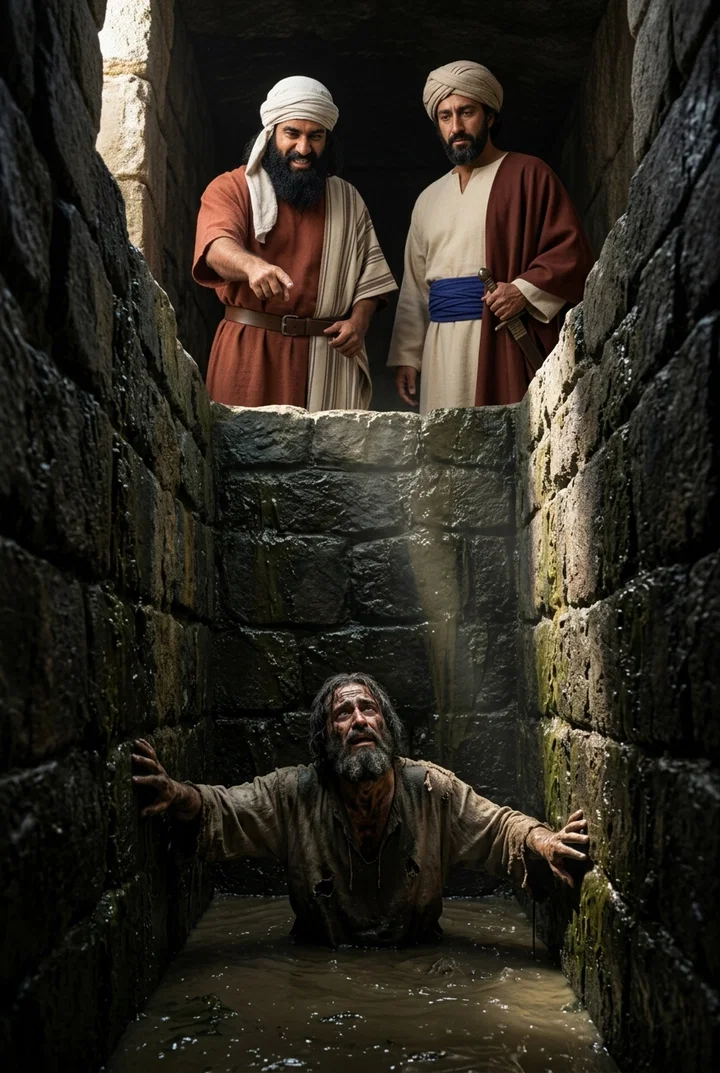
Therefore the princes said unto the king, We beseech thee, let this man be put to death: for thus he weakeneth the hands of the men of war that remain in this city, and the hands of all the people, in speaking such words unto them: for this man seeketh not the welfare of this people, but the hurt.
Translations
Therefore the princes said to the king, We beseech you, let this man be put to death: for thus he weakens the hands of the men of war that remain in this city, and the hands of all the people, in speaking such words to them: for this man seeks not the welfare of this people, but the hurt.
King James Version, KJV Cambridge Paragraph Bible
Therefore the princes said unto the king, We beseech thee, let this man be put to death: for thus he weakeneth the hands of the men of war that remain in this city, and the hands of all the people, in speaking such words unto them: for this man seeketh not the welfare of this people, but the hurt.
Therefore the princes said to the king, We beseech thee, let this man be put to death: for thus he weakeneth the hands of the men of war that remain in this city, and the hands of all the people, in speaking such words to them: for this man seeketh not the welfare of this people, but the hurt.
Revised Version, American Standard Version
Then the princes said unto the king, Let this man, we pray thee, be put to death; forasmuch as he weakeneth the hands of the men of war that remain in this city, and the hands of all the people, in speaking such words unto them: for this man seeketh not the welfare of this people, but the hurt.
And the heads say unto the king, 'Let, we pray thee, this man be put to death, because that he is making feeble the hands of the men of war, who are left in this city, and the hands of all the people, by speaking unto them according to these words, for this man is not seeking for the peace of this people, but for its evil.'
And the princes said unto the king, Let this man, we pray thee, be put to death; for why should he weaken the hands of the men of war that remain in this city, and the hands of all the people, in speaking to them according to these words? for this man seeketh not the welfare of this people, but the hurt.
Then said the princes unto the king,—Let this man we pray thee, be put to death, for in this way, is he weakening the hands of the men of war who are left in this, city, and the hands of all the people, by speaking unto them such words as these; for, this man, is not seeking prosperity for this people but misfortune.
Berean Standard Bible, Majority Standard Bible
Then the officials said to the king, “ This man ought to die, for he is discouraging the warriors who remain in this city, as well as all the people, by speaking such words to them; this man is not seeking the well-being of these people, but their ruin.”
Then the princes said to the king, “ Please let this man be put to death, because he weakens the hands of the men of war who remain in this city, and the hands of all the people, in speaking such words to them; for this man doesn’t seek the welfare of this people, but harm.”
Then the rulers said to the king, Let this man be put to death, because he is putting fear into the hearts of the men of war who are still in the town, and into the hearts of the people, by saying such things to them: this man is not working for the well-being of the people, but for their damage.
Therefore the Princes sayd vnto the King, We beseech you, let this man be put to death: for thus hee weakeneth the hands of the men of warre that remaine in this citie, and the hands of all the people, in speaking such wordes vnto them: for this man seeketh not the wealth of this people, but the hurt.
Douay-Rheims (Challoner revision)
And the princes said to the king: We beseech thee that this man may be put to death: for on purpose he weakeneth the hands of the men of war, that remain in this city, and the hands of the people, speaking to them according to these words: for this man seeketh not peace to this people, but evil.
Pictures
Cross-references
- Jeremiah 38:17-20
Then said Jeremiah unto Zedekiah, Thus saith the LORD, the God of hosts, the God of Israel; If thou wilt assuredly go forth unto the king of Babylon’s princes, then thy soul shall live, and this city shall not be burned with fire; and thou shalt live, and thine house:
Jeremiah urges the king to obey God’s warning and surrender to spare his life and the city.
- Jeremiah 38:15-16
Then Jeremiah said unto Zedekiah, If I declare it unto thee, wilt thou not surely put me to death? and if I give thee counsel, wilt thou not hearken unto me?
Jeremiah fears the king will kill him rather than heed his counsel.
- Jeremiah 38:20
But Jeremiah said, They shall not deliver thee. Obey, I beseech thee, the voice of the LORD, which I speak unto thee: so it shall be well unto thee, and thy soul shall live.
urges obeying the Lord for life
- Jeremiah 25:11-12
And this whole land shall be a desolation, and an astonishment; and these nations shall serve the king of Babylon seventy years.
Jeremiah’s warning is set within the foretold Babylonian conquest and captivity.
Commentary
Each commentary is drawn from primary sources: the writings of Ellen G. White and Adventist pioneers and periodicals. Each commentary is separate. Its own words are not a quotation; follow the references to read the source passages.
Ellen G. White
3 sources
The princes charged that his speaking weakened the hands of the soldiers left in the city and the hands of all the people, and that he was seeking not their welfare but their hurt.PK 455.4–456.1GC88 458.2Lt 10, 1879, par. 4–9 What they called weakening was his urging that the nation submit to Babylon.PK 455.4–456.1 He was branded a traitor because his message reproved the people and ran against what they wished, so that those who resisted his message accused him of injuring the nation.GC88 458.2
The accusation was false, for he was faithfully repeating God's warning while the princes' own policy of resistance stood against that warning.PK 455.4–456.1 They treated his faithful warning as a threat and pressed the king to have him put to death.Lt 10, 1879, par. 4–9 For his integrity he was cast into a pit, but God brought him out and caused his case to find favor with the princes.Lt 10, 1879, par. 4–9
Sources
Pioneers and periodicals
15 sources
While Jerusalem was besieged, its princes and officials pressed King Zedekiah to put Jeremiah to death for his prophetic message.RH Nov 20, 1900ST Jan 14, 1886ST Aug 16, 1905 They accused him of weakening the hands and resolve of the soldiers left in the city and of all the people by urging them not to fight but to surrender to the Chaldeans, charging that he sought their hurt and not their welfare.RH Nov 20, 1900ST Jan 14, 1886ST Aug 16, 1905 They treated his unwelcome warning as treasonous and aiding the enemy while false prophets promised rescue by Egypt, yet his word was the truth from God that the city would fall by sword, famine and pestilence and be burned, and that surrender alone could save lives.RH Nov 20, 1900ST Aug 16, 1905RH Jan 2, 1900RH May 5, 1859ST Jul 22, 1913 The call for his death shows Judah's rejection of the Lord's reproof, counsel and warning, and illustrates how a faithful prophet faces hostility and how opponents of truth, unable to silence persistent speech, may seek to kill the speaker.RH Jun 26, 1855RH May 29, 1913ST Jul 29, 1913ST Aug 16, 1905 Those who heeded his warning found it well with them while those who rejected it perished in the ruin their course made inevitable, and the account in chapters 34-39 holds a lesson to guide God's people in the last days in their relation to the humble instrument through whom God has spoken.RH Nov 20, 1900RH Jan 2, 1900
Setting Charge and Truth
Jeremiah 38 belongs to the historical section of the book, chapters 32-45, recording events of Zedekiah's reign during the two years before Jerusalem fell.RH Jul 27, 1916 In chronological order it comes after chapters 37, 32 and 33, since the chapters from chapter 20 on are not in chronological order.ST Jul 29, 1913ST Jul 12, 1910 It belongs to the chronological story of Jeremiah's experiences in Judah.ST Jul 29, 1913
While Jerusalem was besieged, the princes, counselors and officials urged King Zedekiah to put Jeremiah to death for his prophetic message.RH Nov 20, 1900ST Jan 14, 1886ST Aug 16, 1905RH May 29, 1913RH Jan 2, 1900 They charged that by preaching that the people should not fight but surrender to the Chaldeans or Babylonians, and by warning that Jerusalem would fall while surrender would save lives, he weakened the hands and resolve of the soldiers and men of war left in the city and of all the people.RH Nov 20, 1900ST Jan 14, 1886ST Aug 16, 1905RH Jun 26, 1855ST Aug 16, 1905 His words weakened confidence in the cause for which they were fighting.ST Aug 16, 1905 And on that ground they charged that he sought not their welfare but their hurt.RH Nov 20, 1900ST Jan 14, 1886ST Aug 16, 1905ST Aug 16, 1905ST Aug 16, 1905
They treated his unwelcome warning of captivity as harmful, treasonous, disloyal, and aiding the enemy rather than accepting it as a warning from God.RH Nov 20, 1900RH May 5, 1859 The charge was pressed because Jeremiah urged Jerusalem to yield to Babylon while the false prophets promised that Egypt would rescue it.ST Jul 22, 1913 What he spoke was in fact the truth and the message of God and Jehovah.RH Nov 20, 1900ST Aug 16, 1905 The city was doomed to come under sword, famine and pestilence and to be burned, and surrender was the only escape to save lives.RH Nov 20, 1900RH Jan 2, 1900 Babylon would take Jerusalem even if its army were reduced to wounded men, so in the fullest sense he was seeking the welfare of the people and not their hurt.RH Nov 20, 1900ST Jul 22, 1913
Persecution Pattern and Lesson
Jeremiah's persecution by vicious princes came amid a weak, vacillating king, a backslidden priesthood, and time-serving prophets, and stands as an example of apostate rulers persecuting a faithful prophet of God for his prophetic message.ST Sep 13, 1905RH Jun 8, 1916 The princes called for his death because his words were said to weaken the remaining soldiers and the people and to seek the city's harm rather than its welfare.ST Sep 13, 1905RH Jun 8, 1916 The call for his death shows Judah's rejection of the word and message of the Lord in reproof, counsel, and warning, and is counted among the iniquities and abominations of Judah. Together with the false prophets and the utter repudiation of the law of God and the principles of righteousness, his persecutions belong to the sad things in Judah that caused weeping, preserved to show the awful enormity of sin and its sure consequences.ST Jul 29, 1913
The verse illustrates the hostility a faithful prophet faces for delivering an unwelcome message from God, since the princes sought his death because his words discouraged the defenders and people of Jerusalem.RH Jun 26, 1855RH May 29, 1913ST Aug 16, 1905 People under distress may seek to silence God's messengers rather than heed their warning, falsely treating faithful warning as harmful to the nation.RH May 29, 1913 When opponents of truth cannot silence persistent speech by other means they may resort to killing the speaker, and their demand that he be killed shows they could not silence his message otherwise, which likely weakened confidence in the cause for which the soldiers were fighting.ST Aug 16, 1905 Those who listened to his words and ignored the political charge found it well with them, while those who rejected his message and warning perished in the ruin that came as the inevitable consequence of the course the nation was pursuing.RH Nov 20, 1900
Zedekiah at first yielded and Jeremiah was thrust into a dungeon to soon die, but the king's heart relented and was touched to feel for the prophet, so he had him taken out and promised not to deliver him again into their hands but to follow the light God would give.RH Jan 2, 1900 The account in chapters 34-39 holds a lesson to guide God's people in the last days in their relation toward the humble instrument through whom God has spoken and toward the Testimonies sent to leading men and people.RH Jan 2, 1900
Sources