Jeremiah 38:5
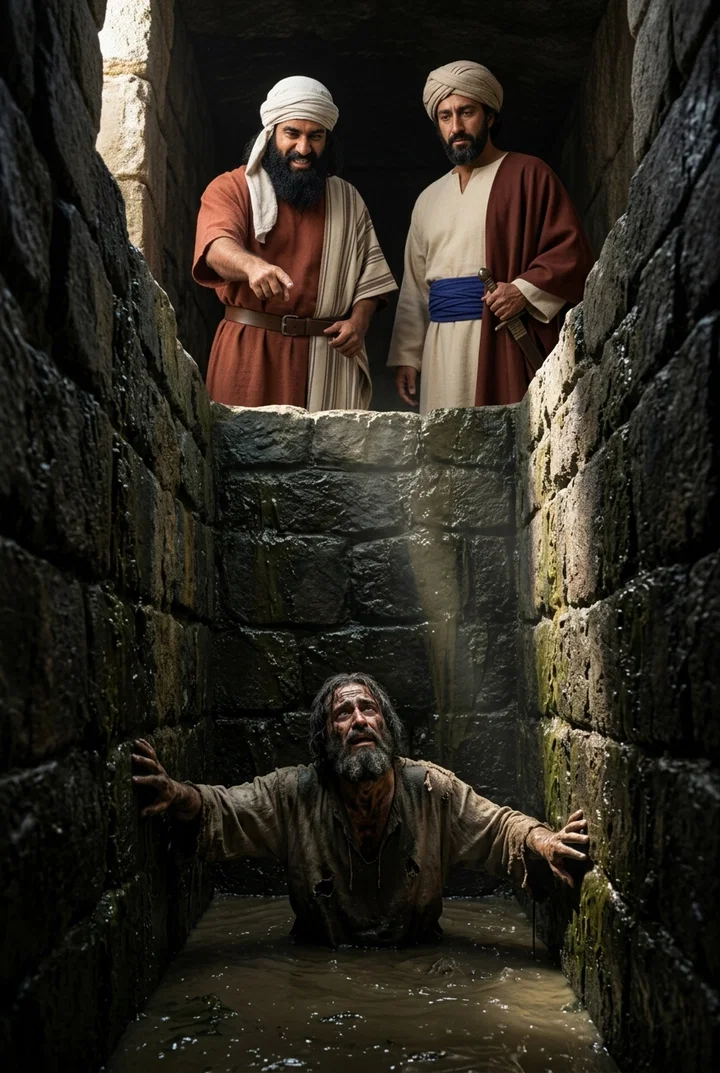
Then Zedekiah the king said, Behold, he is in your hand: for the king is not he that can do any thing against you.
Translations
American King James Version, King James Version, KJV Cambridge Paragraph Bible, Webster Bible
Then Zedekiah the king said, Behold, he is in your hand: for the king is not he that can do any thing against you.
And Zedekiah the king said, Behold, he is in your hand: for the king is not he that can do any thing against you.
And Zedekiah the king said, Behold, he is in your hand; for the king is not he that can do anything against you.
And the king Zedekiah saith, 'Lo, he [is] in your hand: for the king is not able for you [in] anything.'
And king Zedekiah said, Behold, he is in your hand; for the king is not he that can do a thing against you.
Then said King Zedekiah,—Lo! he is in your hand; for the king is not one who is able to do anything against you.
Berean Standard Bible, Majority Standard Bible
“ Here he is,” replied King Zedekiah. “ He is in your hands, since the king can do nothing to stop you.”
Zedekiah the king said, “ Behold, he is in your hand; for the king can’t do anything to oppose you.”
Then Zedekiah the king said, See, he is in your hands: for the king was not able to do anything against them.
Then Zedekiah the King sayd, Behold, he is in your hands, for ye King can denie you nothing.
Douay-Rheims (Challoner revision)
And king Sedecias said: Behold he is in your hands: for it is not lawful for the king to deny you any thing.
Pictures
Cross-references
- Jeremiah 37:19
Where are now your prophets which prophesied unto you, saying, The king of Babylon shall not come against you, nor against this land?
Jeremiah challenges the false prophets’ prediction that Babylon would not attack.
- Jeremiah 39:1-2
In the ninth year of Zedekiah king of Judah, in the tenth month, came Nebuchadrezzar king of Babylon and all his army against Jerusalem, and they besieged it.
Jerusalem falls as Jeremiah had warned.
- Jeremiah 38:17-18
Then said Jeremiah unto Zedekiah, Thus saith the LORD, the God of hosts, the God of Israel; If thou wilt assuredly go forth unto the king of Babylon’s princes, then thy soul shall live, and this city shall not be burned with fire; and thou shalt live, and thine house:
Fear kept Zedekiah from obeying the final offer to spare the city.
- Jeremiah 38:20
But Jeremiah said, They shall not deliver thee. Obey, I beseech thee, the voice of the LORD, which I speak unto thee: so it shall be well unto thee, and thy soul shall live.
Obeying the Lord’s voice brings welfare and life.
- Jeremiah 34:8-10
This is the word that came unto Jeremiah from the LORD, after that the king Zedekiah had made a covenant with all the people which were at Jerusalem, to proclaim liberty unto them;
Describes Zedekiah’s reform before he refused to act against Jeremiah.
- Jeremiah 39:8-9
And the Chaldeans burned the king’s house, and the houses of the people, with fire, and brake down the walls of Jerusalem.
Jerusalem falls after Jeremiah remains imprisoned.
- Jeremiah 40:2-3
And the captain of the guard took Jeremiah, and said unto him, The LORD thy God hath pronounced this evil upon this place.
Nebuzar-adan confirms that the Lord’s judgment on Jerusalem came to pass.
Commentary
Each commentary is drawn from primary sources: the writings of Ellen G. White and Adventist pioneers and periodicals. Each commentary is separate. Its own words are not a quotation; follow the references to read the source passages.
Ellen G. White
1 source
Jeremiah 38:5 belongs to the account of Jeremiah's suffering for faithful integrity, when his loyalty to duty brought him to be cast into a pit.Lt 10, 1879, par. 4–9 God brought him out of that pit and turned the course of events so that his case found favor with princes.Lt 10, 1879, par. 4–9 His seeming defeat was no sign that God had forsaken him, for God was able to work through those very circumstances to rescue His servant and vindicate him.Lt 10, 1879, par. 4–9
Sources
Pioneers and periodicals
15 sources
The verse belongs to the siege of Jerusalem by Babylon when ruin was at hand in the two years before the city fell.RH Nov 20, 1900RH Jul 27, 1916 Jeremiah was daily warning that the city was doomed and the only way to live was to surrender to the Chaldeans, and the princes accused him of treason for weakening the hands of the soldiers and the people and demanded that he be put to death.ST Aug 16, 1905RH Nov 20, 1900RH Apr 21, 1903ST Aug 16, 1905 Zedekiah answered that the prophet was in their hand and that he could do nothing against them, yielding his authority from weakness and fear of the princes and people rather than protecting him.ST Sep 13, 1905ST Aug 16, 1905ST Jan 14, 1886RH Apr 21, 1903ST Nov 11, 1897 That surrender exposed Jeremiah to death for faithfully delivering the Lord's message and led to his being thrown into the miry dungeon of Malchiah, showing that faithful warning was treated as disloyalty and that apostate rulers persecute God's righteous messengers.ST Jan 14, 1886RH Nov 20, 1900RH Apr 21, 1903RH Jun 26, 1855RH May 29, 1913 Their violence could not undo the Lord's purpose or prevent the prophecy from being fulfilled, and his weak vacillating spirit was the same spirit shown by Pontius Pilate, for the last resort of men opposing the truth is the death of those who persistently advocate it.ST Nov 11, 1897ST Aug 16, 1905ST Aug 16, 1905
Zedekiah Surrenders Jeremiah
The verse belongs to the siege of Jerusalem by Babylon when ruin was at hand, in the historical account of the two years before Jerusalem fell.RH Nov 20, 1900RH Jul 27, 1916 Jeremiah was delivering God's daily warning that the city was doomed and the only way to live was to surrender to the Chaldeans or Babylonians.RH Nov 20, 1900RH Apr 21, 1903 That certainty of Jerusalem falling into Babylonian hands had been foretold a hundred years earlier to Hezekiah and did not rest on Jeremiah's word alone, and his words weakened the confidence of many soldiers in the cause for which they were fighting.ST Aug 16, 1905
The princes and people accused him of treason for weakening the hands of the soldiers and the people and seeking their hurt.RH Nov 20, 1900 They demanded that he be punished and put to death because he could not be silenced by any other means.ST Aug 16, 1905ST Aug 16, 1905 Zedekiah answered that Jeremiah was in their hand and power and that the king could do nothing against them.ST Aug 16, 1905ST Jan 14, 1886ST Nov 11, 1897ST Aug 16, 1905 In so answering he yielded his authority and let them do as they pleased with the prophet because he would not stand against them.RH Nov 20, 1900
His yielding showed weakness, vacillation, and fear, for he feared the people and the princes and did not dare stand against them to protect the prophet.ST Sep 13, 1905RH Apr 21, 1903ST Nov 11, 1897RH Aug 3, 1916RH Jan 2, 1900 He would not order Jeremiah put to death himself but gave them power to do as they pleased.ST Aug 16, 1905 The surrender left Jeremiah exposed to their demand that he be killed and led to his imprisonment for faithfully delivering the Lord's message, when a king's authority did not protect the faithful prophet.ST Jan 14, 1886RH Jun 26, 1855 They threw him into the muddy and miry dungeon of Malchiah.ST Jan 14, 1886RH Nov 20, 1900RH Apr 21, 1903
Persecution of Faithful Warning
Faithful warning was treated as disloyalty and politics when the city was doomed and the only way to live was surrender to the Chaldeans, for the prophet was speaking truth and seeking the welfare of the people and not their hurt, yet was accused of treason for weakening the hands of the soldiers and the people.RH Nov 20, 1900 Those who listened to that daily warning lived, and those who rejected the message perished in the ruin at hand.RH Nov 20, 1900
It illustrates the pressure on God's faithful messenger when rulers yield to demands to silence a warning, for the king's authority did not protect the faithful prophet from imprisonment for faithfully delivering the Lord's message.RH Jun 26, 1855RH May 29, 1913 As an instance of apostate Israel persecuting God's prophet, handed over by the king to his opponents, it illustrates the pattern that the wicked persecute the righteous.RH Jun 8, 1916 Their violence could not undo the Lord's purpose or prevent the prophecy from being fulfilled.ST Nov 11, 1897
Their demand for his death shows that the last resort of men opposing the truth is the death of those who persistently advocate it, because he could not be silenced by any other means.ST Aug 16, 1905 The prediction they opposed was the certainty that Jerusalem and her people would fall into Babylonian hands, foretold a hundred years earlier to Hezekiah and not resting on Jeremiah's word alone.ST Aug 16, 1905 His words weakened the confidence of many soldiers in the cause for which they were fighting.ST Aug 16, 1905 The act belongs to Judah's rejection of the word and message of the Lord in reproof, counsel, and warning, counted as one of the iniquities and abominations of Judah.
Zedekiah's weak, vacillating spirit was the same spirit shown by Pontius Pilate, for he would not order Jeremiah put to death himself but gave the princes power to do as they pleased with him.ST Aug 16, 1905 His profession of faith in the prophet covered secret unbelief that broke under the final test, for he feared the people and did not dare stand against them.RH Jan 2, 1900 God made the king himself responsible for the salvation of Jerusalem by offering life for himself and his house and sparing of the city from burning if he would surrender to the princes of Babylon, but he refused because surrender was not his own way.RH Jan 2, 1900 The lesson guides God's people in the last days in their relation to the humble instrument through whom God speaks and to the Testimonies sent to leading men and people.RH Jan 2, 1900
Sources