Jeremiah 39:13
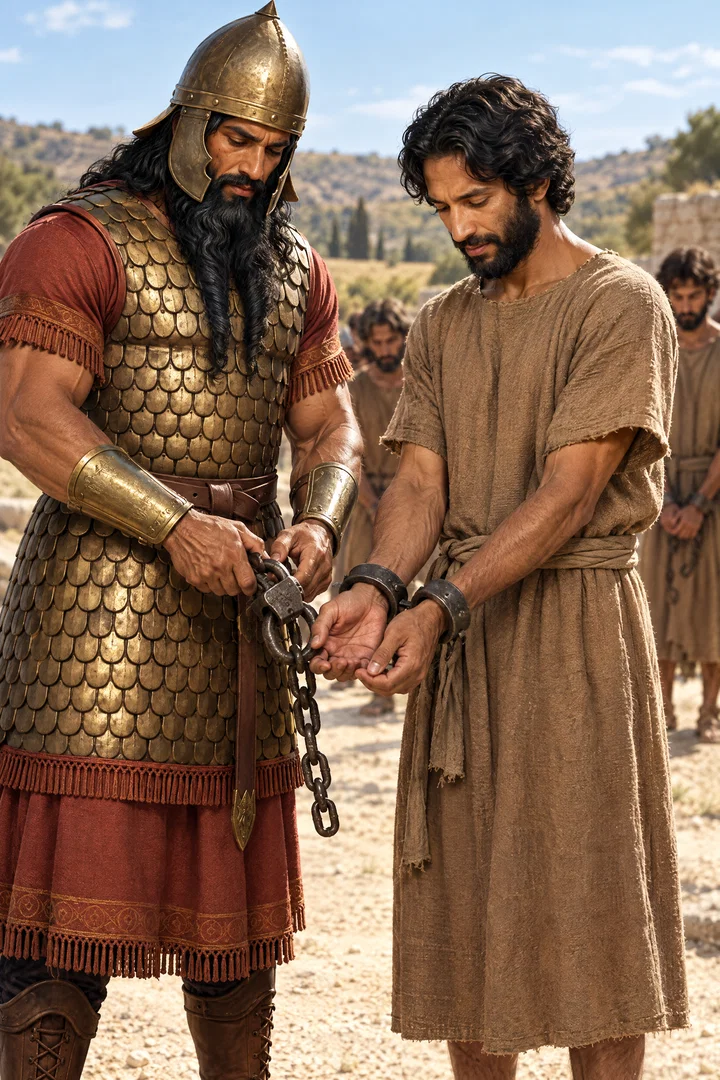
So Nebuzar-adan the captain of the guard sent, and Nebushasban, Rab-saris, and Nergal-sharezer, Rab-mag, and all the king of Babylon’s princes;
Translations
So Nebuzaradan the captain of the guard sent, and Nebushasban, Rabsaris, and Nergalsharezer, Rabmag, and all the king of Babylon’s princes;
King James Version, KJV Cambridge Paragraph Bible
So Nebuzar-adan the captain of the guard sent, and Nebushasban, Rab-saris, and Nergal-sharezer, Rab-mag, and all the king of Babylon’s princes;
So Nebuzar-adan the captain of the guard sent, and Nebushasban, Rab-saris, and Nergal-sharezer, Rab-mag, and all the king of Babylon's princes;
Revised Version, American Standard Version
So Nebuzaradan the captain of the guard sent, and Nebushazban, Rab-saris, and Nergal-sharezer, Rab-mag, and all the chief officers of the king of Babylon;
And Nebuzar-Adan, chief of the executioners sendeth, and Nebushazban, chief of the eunuchs, and Nergal-Sharezer, chief of the Mages, and all the chiefs of the king of Babylon;
So Nebuzar-adan the captain of the body-guard sent, and Nebushazban, chief chamberlain, and Nergal-sharezer, chief magian, and all the king of Babylon's princes,
So Nebuzaradan chief of the royal executioners, sent, also Nebushazban, chief of the eunuchs, and Nergal-sharezer chief of the magi, and all the chiefs of the king of Babylon;
Berean Standard Bible, Majority Standard Bible
So Nebuzaradan captain of the guard, Nebushazban the Rabsaris, Nergal-sharezer the Rabmag, and all the captains of the king of Babylon
So Nebuzaradan the captain of the guard, Nebushazban, Rabsaris, and Nergal Sharezer, Rabmag, and all the chief officers of the king of Babylon
So Nebuzaradan, the captain of the armed men, sent Nebushazban, the Rab-saris, and Nergal-shar-ezer, the Rabmag, and all the chief captains of the king of Babylon,
So Nebuzar-adan the chiefe steward sent, and Nebushazban, Rabsaris, and Neregal, Sharezar, Rab-mag, and all the King of Babels princes:
Douay-Rheims (Challoner revision)
Therefore Nabuzardan the general sent, and Nabusezban, and Rabsares, and Neregel, and Sereser, and Rebmag, and all the nobles of the king of Babylon,
Pictures
Cross-references
- Jeremiah 39:3
And all the princes of the king of Babylon came in, and sat in the middle gate, even Nergal-sharezer, Samgar-nebo, Sarsechim, Rab-saris, Nergal-sharezer, Rab-mag, with all the residue of the princes of the king of Babylon.
Both texts name Rab-mag among Babylon’s officials.
- 2 Kings 25:1-21
And it came to pass in the ninth year of his reign, in the tenth month, in the tenth day of the month, that Nebuchadnezzar king of Babylon came, he, and all his host, against Jerusalem, and pitched against it; and they built forts against it round about.
Both recount Jerusalem’s fall and the Babylonian conquest.
- Jeremiah 38:17-18
Then said Jeremiah unto Zedekiah, Thus saith the LORD, the God of hosts, the God of Israel; If thou wilt assuredly go forth unto the king of Babylon’s princes, then thy soul shall live, and this city shall not be burned with fire; and thou shalt live, and thine house:
Zedekiah’s refusal of the warning leads to Jerusalem’s fall in chapter 39.
- Jeremiah 43:5-7
But Johanan the son of Kareah, and all the captains of the forces, took all the remnant of Judah, that were returned from all nations, whither they had been driven, to dwell in the land of Judah;
The remnant later rejected Jeremiah’s counsel and fled to Egypt.
- 2 Kings 24:20
For through the anger of the LORD it came to pass in Jerusalem and Judah, until he had cast them out from his presence, that Zedekiah rebelled against the king of Babylon.
Zedekiah’s rebellion precedes Jerusalem’s fall.
Commentary
Each commentary is drawn from primary sources: the writings of Ellen G. White and Adventist pioneers and periodicals. Each commentary is separate. Its own words are not a quotation; follow the references to read the source passages.
Ellen G. White
2 sources
The verse belongs to the account in which the Babylonian officers carried out the king's instructions concerning Jeremiah by releasing him from prison.PK 460.2 After that release Jeremiah chose to remain with the poor people who were left in the land.PK 460.2 He had been cast into a pit for his faithful integrity, but God worked to bring him up out of the pit and to give his cause favor with princes.Lt 10, 1879, par. 4–9 Outward affliction and distress and appearances against him did not mean that his heavenly Father willingly afflicted him or withheld heavenly favor from him.Lt 10, 1879, par. 4–9 God vindicated His faithful servant even while permitting him to be humbled.Lt 10, 1879, par. 4–9
Sources
Pioneers and periodicals
5 sources
The verse belongs to the account of Zedekiah's reign at the fall of Jerusalem, when after the city was taken Nebuzar-adan the captain of the Babylonian guard sent and acted together with other Babylonian officials and princes who served the king in the events surrounding Jeremiah's release.RH Apr 21, 1903ST Nov 28, 1911ST Jul 12, 1910 In chronological order the verse, as part of Jeremiah 39:1-14, comes after Jeremiah 39:15-18, after Jeremiah 38 and before Jeremiah 40, though it appears earlier in the chapter.ST Jul 12, 1910ST Oct 27, 1909 Jeremiah's prophecies after chapter 20 are not placed in chronological order because of the gathering of the manuscript rolls together into one book, but the displacement makes no change in the teaching and the chapter itself shows its chronology.ST Oct 27, 1909
The verse names Rab-mag among the officials sent, a title borne by Nergal-sharezer meaning chief magician, the head of the magi.ST Sep 11, 1901 The magi were a highly educated priestly class of great influence between the ruler and the people, deeply versed in philosophy, the sciences, and especially astronomy.ST Sep 11, 1901 They at times accompanied the king as his advisers even in war, as when Nebuzar-adan and the other Babylonian officials and princes who served the king came against Jerusalem.ST Nov 28, 1911ST Sep 11, 1901
Sources