Jeremiah 52:12
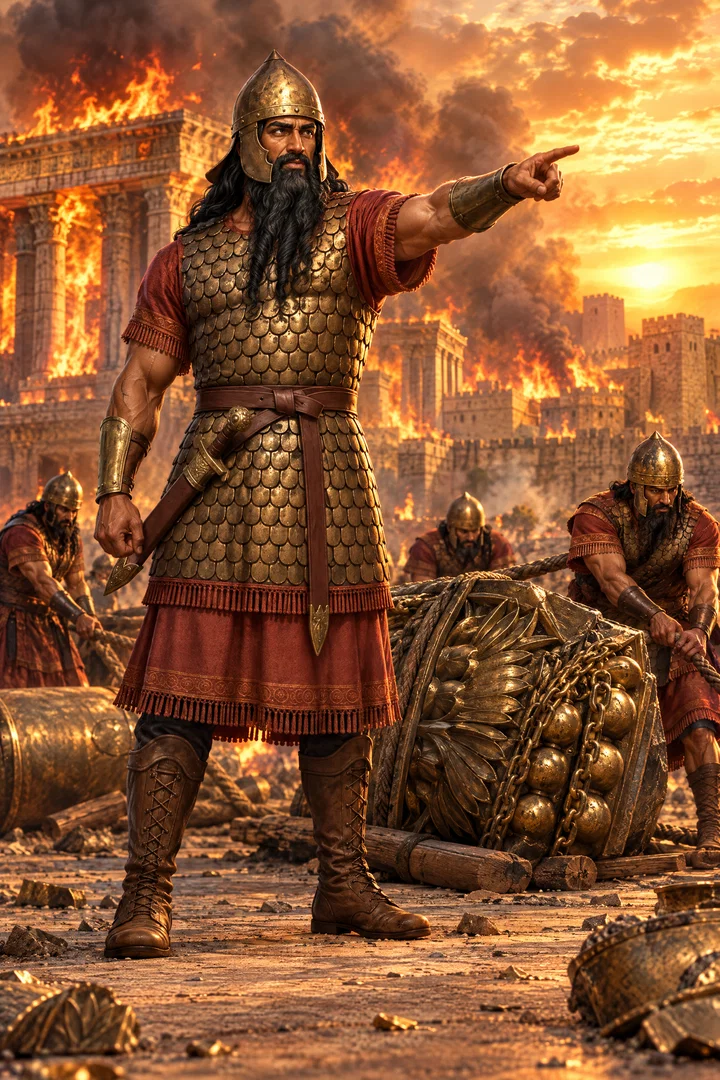
Now in the fifth month, in the tenth day of the month, which was the nineteenth year of Nebuchadrezzar king of Babylon, came Nebuzar-adan, captain of the guard, which served the king of Babylon, into Jerusalem,
Translations
Now in the fifth month, in the tenth day of the month, which was the nineteenth year of Nebuchadrezzar king of Babylon, came Nebuzaradan, captain of the guard, which served the king of Babylon, into Jerusalem,
King James Version, KJV Cambridge Paragraph Bible
Now in the fifth month, in the tenth day of the month, which was the nineteenth year of Nebuchadrezzar king of Babylon, came Nebuzar-adan, captain of the guard, which served the king of Babylon, into Jerusalem,
Now in the fifth month, in the tenth day of the month, which was the nineteenth year of Nebuchadrezzar king of Babylon, came Nebuzar-adan, captain of the guard, who served the king of Babylon, into Jerusalem,
Now in the fifth month, in the tenth day of the month, which was the nineteenth year of king Nebuchadrezzar, king of Babylon, came Nebuzaradan the captain of the guard, which stood before the king of Babylon, into Jerusalem:
Now in the fifth month, in the tenth day of the month, which was the nineteenth year of king Nebuchadrezzar, king of Babylon, came Nebuzaradan the captain of the guard, who stood before the king of Babylon, into Jerusalem.
And in the fifth month, in the tenth of the month — it [is] the nineteenth year of king Nebuchadrezzar king of Babylon — come hath Nebuzar-Adan, chief of the executioners; he hath stood before the king of Babylon in Jerusalem,
And in the fifth month, on the tenth of the month, which was in the nineteenth year of Nebuchadrezzar king of Babylon, Nebuzar-adan, captain of the body-guard, who stood before the king of Babylon, came unto Jerusalem;
And in the fifth month on the tenth of the month, the same, was the nineteenth year of King Nebuchadrezzar, king of Babylon, came Nebuzaradan, chief of the royal executioners,—who stood before the king of Babylon into, Jerusalem;
Berean Standard Bible, Majority Standard Bible
On the tenth day of the fifth month, in the nineteenth year of Nebuchadnezzar’s reign over Babylon, Nebuzaradan captain of the guard, a servant of the king of Babylon, entered Jerusalem.
Now in the fifth month, in the tenth day of the month, which was the nineteenth year of King Nebuchadnezzar, king of Babylon, Nebuzaradan the captain of the guard, who stood before the king of Babylon, came into Jerusalem.
Now in the fifth month, on the tenth day of the month, in the nineteenth year of King Nebuchadrezzar, king of Babylon, Nebuzaradan, the captain of the armed men, a servant of the king of Babylon, came into Jerusalem.
Now in the fift moneth in the tenth day of the moneth (which was the nineteenth yere of ye King Nebuchad-nezzar King of Babel) came Nebuzar-adan chiefe steward which stoode before the king of Babel in Ierusalem,
Douay-Rheims (Challoner revision)
And in the fifth month, the tenth day of the month, the same is the nineteenth year of Nabuchodonosor, king of Babylon, came Nabuzardan the general of the army, who stood before the king of Babylon in Jerusalem.
Pictures
Cross-references
- 2 Kings 25:8-9
And in the fifth month, on the seventh day of the month, which is the nineteenth year of king Nebuchadnezzar king of Babylon, came Nebuzar-adan, captain of the guard, a servant of the king of Babylon, unto Jerusalem:
Both recount Jerusalem’s burning and the temple’s destruction in the fifth month.
- 2 Kings 25:18-21
And the captain of the guard took Seraiah the chief priest, and Zephaniah the second priest, and the three keepers of the door:
Babylonian officials are taken to Riblah, executed, and Judah is carried into exile.
- 2 Chronicles 36:19
And they burnt the house of God, and brake down the wall of Jerusalem, and burnt all the palaces thereof with fire, and destroyed all the goodly vessels thereof.
Records Jerusalem’s destruction by fire and the breaking down of its wall.
- 2 Kings 25:7
And they slew the sons of Zedekiah before his eyes, and put out the eyes of Zedekiah, and bound him with fetters of brass, and carried him to Babylon.
Describes Zedekiah’s capture and Jerusalem’s destruction.
- Jeremiah 52:28-30
This is the people whom Nebuchadrezzar carried away captive: in the seventh year three thousand Jews and three and twenty:
Numbers those carried away in successive deportations.
- 2 Kings 24:10-16
At that time the servants of Nebuchadnezzar king of Babylon came up against Jerusalem, and the city was besieged.
Describes an earlier deportation of people and officials to Babylon.
- 2 Chronicles 36:20
And them that had escaped from the sword carried he away to Babylon; where they were servants to him and his sons until the reign of the kingdom of Persia:
Records the survivors being taken captive to Babylon.
- Lamentations 1
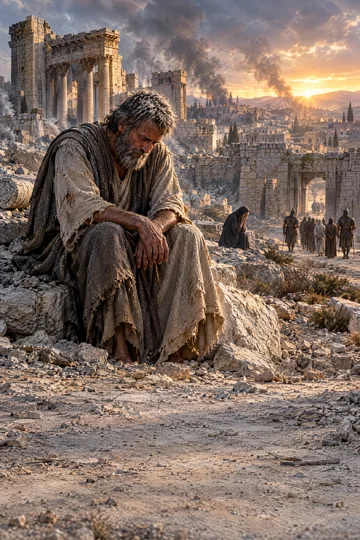
How doth the city sit solitary, that was full of people! how is she become as a widow! she that was great among the nations, and princess among the provinces, how is she become tributary!
Jerusalem’s suffering after its destruction is mourned.
- Lamentations 2
How hath the Lord covered the daughter of Zion with a cloud in his anger, and cast down from heaven unto the earth the beauty of Israel, and remembered not his footstool in the day of his anger!
Both recount Jerusalem’s suffering and destruction.
- Zechariah 7:3
And to speak unto the priests which were in the house of the LORD of hosts, and to the prophets, saying, Should I weep in the fifth month, separating myself, as I have done these so many years?
The fifth-month fast commemorates Jerusalem’s destruction and raises whether it should continue.
- Ezra 1:1-4
Now in the first year of Cyrus king of Persia, that the word of the LORD by the mouth of Jeremiah might be fulfilled, the LORD stirred up the spirit of Cyrus king of Persia, that he made a proclamation throughout all his kingdom, and put it also in writing, saying,
Cyrus’s proclamation authorizes the return from exile and rebuilding the temple after Jerusalem’s fall.
- Nehemiah 1:3
And they said unto me, The remnant that are left of the captivity there in the province are in great affliction and reproach: the wall of Jerusalem also is broken down, and the gates thereof are burned with fire.
Nehemiah learns Jerusalem’s walls and gates remain broken down after its destruction.
- Zechariah 8:19
Thus saith the LORD of hosts; The fast of the fourth month, and the fast of the fifth, and the fast of the seventh, and the fast of the tenth, shall be to the house of Judah joy and gladness, and cheerful feasts; therefore love the truth and peace.
The fifth-month fast is promised to become joy and gladness.
Commentary
Each commentary is drawn from primary sources: the writings of Ellen G. White and Adventist pioneers and periodicals. Each commentary is separate. Its own words are not a quotation; follow the references to read the source passages.
Pioneers and periodicals
15 sources
The verse dates the coming of Nebuzar-adan, captain of the Babylonian guard who served the king of Babylon, into Jerusalem to the tenth day of the fifth month in the nineteenth year of Nebuchadnezzar, marking the Babylonian burning of the houses, the Lord's house and temple, the king's palace and the great buildings of the city.ST Jun 14, 1883ST Mar 4, 1880RH Jul 14, 1874ST Jun 23, 1914RH Feb 17, 1853 It was the time God permitted Israel to lose its king and kingdom, when the nation was devastated under Zedekiah and carried away to Babylon with only a small remnant left.ST May 24, 1883ST Jun 23, 1914RH Feb 17, 1853 The destruction came because the people persisted in wickedness and reaped it as a harvest, fulfilling Jeremiah's prediction and carrying out the threatened destruction for breaking the Sabbath after the promise that Jerusalem would stand forever if no burdens were borne on the Sabbath.ST Mar 4, 1880RH Apr 7, 1851ST Aug 16, 1910 Together with the burning that followed, it shows that the fire called unquenchable continued until it had consumed the houses and then ceased of itself, proving that unquenchable means it cannot be stopped before consuming what is cast into it, not that it burns forever.ST Mar 4, 1880RH Jul 14, 1874 The wider chapter shows that the daughters of Babylon are a part of Babylon itself, so that great Babylon embraces all corrupt Christianity with its daughters.RH Sep 2, 1851 The month of the burning was commemorated by the Jews with mourning and fasting in the fifth month during their captivity, and the chapter stands as a warning of judgment upon places that forget and defy God, applied to cities such as New York, Chicago and others.ST May 2, 1906ST Jun 14, 1883ST May 23, 1906ST Jun 21, 1883ST Nov 19, 1902
Jerusalem's Destruction Dated
The tenth day of the fifth month in the nineteenth year of Nebuchadnezzar king of Babylon is the date of the coming of Nebuzar-adan, captain of the guard who served the king of Babylon, into Jerusalem.ST Jun 14, 1883ST Jun 23, 1914RH Feb 17, 1853ST Jun 21, 1883ST Nov 19, 1902 That arrival belongs to the account of Jerusalem's fall and devastation under Zedekiah when its people were taken captive, and stands as part of the account of Babylon's judgment on the city.RH Feb 17, 1853ST May 23, 1906
It marks the Babylonian burning of Jerusalem, including its houses, the Lord's house and temple, the king's palace, and the great buildings of the city.ST Jun 14, 1883ST Mar 4, 1880RH Jul 14, 1874ST Jun 21, 1883ST Nov 19, 1902 This burning in the fifth month is the calamity the Jews afterward commemorated by mourning and fasting in the fifth month during their captivity.ST Jun 14, 1883ST Jun 21, 1883ST Nov 19, 1902ST Jun 14, 1883
It is the time when God permitted Israel to lose its king and kingdom.ST Jun 23, 1914 It belongs to the destruction of Jerusalem under Nebuchadnezzar and the carrying away to Babylon, when the nation was devastated and only a small remnant was taken captive.ST May 24, 1883ST Jun 23, 1914RH Feb 17, 1853
Cause and Doctrine Taught
Jerusalem was destroyed because its people persisted in wickedness and wrongdoing, reaping that course as a harvest when Nebuchadnezzar came against the city in the nineteenth year of his reign.ST Mar 4, 1880ST Aug 16, 1910 More specifically, the ruin carried out the threatened destruction for breaking the Sabbath, for the promise had been that if no burdens were borne on the Sabbath day Jerusalem would stand forever, but that if the people refused to listen God would destroy it.RH Apr 7, 1851 A few years after that warning Nebuzar-adan entered Jerusalem to execute the judgment, and with its context the account records the fulfillment of Jeremiah's prediction that Babylon would destroy Jerusalem and its temple.RH Apr 7, 1851ST Aug 16, 1910
Together with the next verse on the burning, the coming into Jerusalem records the burning of the houses of the city, and the fire that God said would not be quenched continued until it had burned the houses and then ceased of itself.ST Mar 4, 1880RH Jul 14, 1874 That end proves that unquenchable means a fire cannot be stopped before it has consumed what is cast into it, not that it burns forever without end.ST Mar 4, 1880RH Jul 14, 1874 The wider chapter further shows that the daughters of Babylon form a part of Babylon itself, so that great Babylon embraces all corrupt Christianity with its daughters.RH Sep 2, 1851
Warning and Memorial Observed
Nebuzar-adan, captain of the Babylonian guard, came to Jerusalem on the tenth day of the fifth month in the nineteenth year of Nebuchadnezzar.ST Jun 14, 1883ST Jun 21, 1883ST Nov 19, 1902ST Jun 14, 1883 That date marks the month in which the city and its temple were burned by Babylon.ST Jun 14, 1883ST Jun 21, 1883ST Jun 14, 1883 The burning consumed the Lord's house, the king's palace, and the great buildings of Jerusalem.ST Nov 19, 1902 Because of that calamity the Jews mourned and kept a fast in the fifth month during their captivity.ST Jun 14, 1883ST Jun 21, 1883ST Nov 19, 1902ST Jun 14, 1883
The chapter is a lesson about warnings of judgment and the fate of places that forget and defy God.ST May 2, 1906ST May 23, 1906 It records Babylon's judgment upon the city as an example drawn from Babylon's own fate.ST May 23, 1906ST May 23, 1906 The same warning is applied to New York, Chicago, and other places.ST May 23, 1906
Sources