2 Kings 25:8
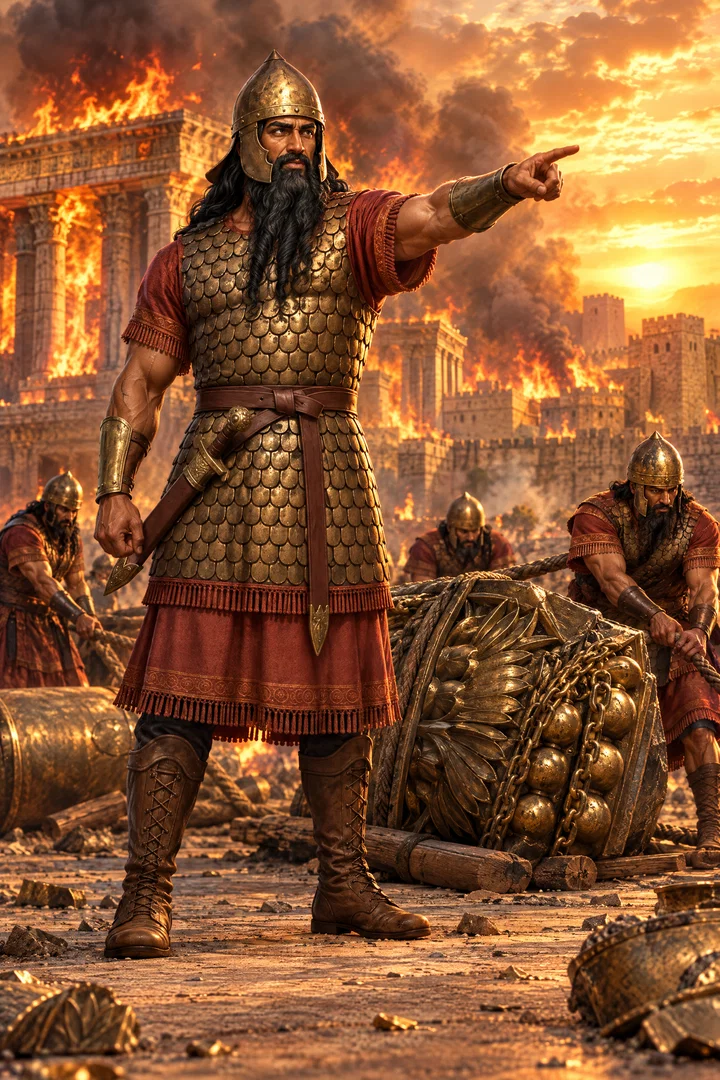
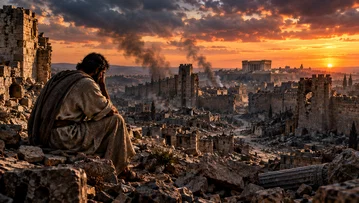
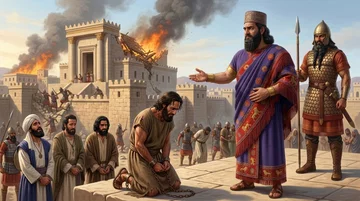
And in the fifth month, on the seventh day of the month, which is the nineteenth year of king Nebuchadnezzar king of Babylon, came Nebuzar-adan, captain of the guard, a servant of the king of Babylon, unto Jerusalem:
Translations
And in the fifth month, on the seventh day of the month, which is the nineteenth year of king Nebuchadnezzar king of Babylon, came Nebuzaradan, captain of the guard, a servant of the king of Babylon, to Jerusalem:
King James Version, KJV Cambridge Paragraph Bible
And in the fifth month, on the seventh day of the month, which is the nineteenth year of king Nebuchadnezzar king of Babylon, came Nebuzar-adan, captain of the guard, a servant of the king of Babylon, unto Jerusalem:
And in the fifth month, on the seventh day of the month, which is the nineteenth year of king Nebuchadnezzar king of Babylon, came Nebuzar-adan, captain of the guard, a servant of the king of Babylon, to Jerusalem:
Now in the fifth month, on the seventh day of the month, which was the nineteenth year of king Nebuchadnezzar, king of Babylon, came Nebuzaradan the captain of the guard, a servant of the king of Babylon, unto Jerusalem:
Now in the fifth month, on the seventh day of the month, which was the nineteenth year of king Nebuchadnezzar, king of Babylon, came Nebuzaradan the captain of the guard, a servant of the king of Babylon, unto Jerusalem.
And in the fifth month, on the seventh of the month (it [is] the nineteenth year of king Nebuchadnezzar king of Babylon), hath Nebuzaradan chief of the executioners, servant of the king of Babylon, come to Jerusalem,
And in the fifth month, on the seventh of the month, which was in the nineteenth year of king Nebuchadnezzar, king of Babylon, Nebuzar-adan, captain of the body-guard, servant of the king of Babylon, came unto Jerusalem;
And, in the fifth month, on the seventh of the month, the same, was the nineteenth year of King Nebuchadnezzar king of Babylon, came Nebuzaradan, chief of the royal executioners, servant of the king of Babylon, to Jerusalem;
Berean Standard Bible, Majority Standard Bible
On the seventh day of the fifth month, in the nineteenth year of Nebuchadnezzar’s reign over Babylon, Nebuzaradan captain of the guard, a servant of the king of Babylon, entered Jerusalem.
Now in the fifth month, on the seventh day of the month, which was the nineteenth year of King Nebuchadnezzar king of Babylon, Nebuzaradan the captain of the guard, a servant of the king of Babylon, came to Jerusalem.
Now in the fifth month, on the seventh day of the month, in the nineteenth year of Nebuchadnezzar, king of Babylon, Nebuzaradan, the captain of the armed men, a servant of the king of Babylon, came to Jerusalem;
And in the fift moneth, and seuenth day of the moneth, which was the nineteenth yere of King Nebuchad-nezzar King of Babel, came Nebuzar-adan chiefe stewarde and seruaunt of the King of Babel, to Ierusalem,
Douay-Rheims (Challoner revision)
In the fifth month, the seventh day of the month, that is, the nineteenth year of the king of Babylon, came Nabuzardan commander of the army, a servant of the king of Babylon, into Jerusalem.
Pictures
Cross-references
- Jeremiah 52:12-13
Now in the fifth month, in the tenth day of the month, which was the nineteenth year of Nebuchadrezzar king of Babylon, came Nebuzar-adan, captain of the guard, which served the king of Babylon, into Jerusalem,
Both record Nebuzar-adan’s arrival in Jerusalem and the city’s destruction.
- 2 Chronicles 36:19-21
And they burnt the house of God, and brake down the wall of Jerusalem, and burnt all the palaces thereof with fire, and destroyed all the goodly vessels thereof.
Describes Jerusalem’s destruction and exile as judgment for unfaithfulness, fulfilling the prophecy of desolation.
- 2 Kings 24:10-16
At that time the servants of Nebuchadnezzar king of Babylon came up against Jerusalem, and the city was besieged.
Recounts the earlier Babylonian siege of Jerusalem and deportation under Jehoiachin.
- Jeremiah 39:8-10
And the Chaldeans burned the king’s house, and the houses of the people, with fire, and brake down the walls of Jerusalem.
Recounts Jerusalem’s destruction and Nebuzar-adan’s treatment of its people.
- Jeremiah 32:1
The word that came to Jeremiah from the LORD in the tenth year of Zedekiah king of Judah, which was the eighteenth year of Nebuchadrezzar.
Both texts date events during the Babylonian siege of Jerusalem.
- 2 Chronicles 36:16
But they mocked the messengers of God, and despised his words, and misused his prophets, until the wrath of the LORD arose against his people, till there was no remedy.
The people’s rejection of God’s messengers brought judgment on Jerusalem.
- Micah 4:10
Be in pain, and labour to bring forth, O daughter of Zion, like a woman in travail: for now shalt thou go forth out of the city, and thou shalt dwell in the field, and thou shalt go even to Babylon; there shalt thou be delivered; there the LORD shall redeem thee from the hand of thine enemies.
Zion is carried from the city into captivity in Babylon.
- Zechariah 8:19
Thus saith the LORD of hosts; The fast of the fourth month, and the fast of the fifth, and the fast of the seventh, and the fast of the tenth, shall be to the house of Judah joy and gladness, and cheerful feasts; therefore love the truth and peace.
Identifies the fifth-month fast and promises it will become joy and gladness.
- 2 Kings 24:18-20
Zedekiah was twenty and one years old when he began to reign, and he reigned eleven years in Jerusalem. And his mother’s name was Hamutal, the daughter of Jeremiah of Libnah.
Records Zedekiah’s reign and rebellion preceding Jerusalem’s fall.
- Jeremiah 37:8-10
And the Chaldeans shall come again, and fight against this city, and take it, and burn it with fire.
Both texts describe the Babylonian siege and Jerusalem’s coming destruction.
- 2 Kings 25:22-26
And as for the people that remained in the land of Judah, whom Nebuchadnezzar king of Babylon had left, even over them he made Gedaliah the son of Ahikam, the son of Shaphan, ruler.
Continues the captivity with the poor, Gedaliah, and flight to Egypt.
- Ezekiel 17:15-17
But he rebelled against him in sending his ambassadors into Egypt, that they might give him horses and much people. Shall he prosper? shall he escape that doeth such things? or shall he break the covenant, and be delivered?
Zedekiah’s rebellion and reliance on Egypt led to Babylon’s attack.
- Revelation 18
And after these things I saw another angel come down from heaven, having great power; and the earth was lightened with his glory.
The passage links Judah’s captivity to Babylon’s eventual destruction.
- Jeremiah 44:30
Thus saith the LORD; Behold, I will give Pharaoh-hophra king of Egypt into the hand of his enemies, and into the hand of them that seek his life; as I gave Zedekiah king of Judah into the hand of Nebuchadrezzar king of Babylon, his enemy, and that sought his life.
Both identify Nebuchadnezzar as king of Babylon.
Commentary
Each commentary is drawn from primary sources: the writings of Ellen G. White and Adventist pioneers and periodicals. Each commentary is separate. Its own words are not a quotation; follow the references to read the source passages.
Ellen G. White
1 source
The arrival at Jerusalem recorded here is the moment when the long-foretold calamity upon the temple came to pass.SG4 114.3–4 It came as divine judgment because Israel had broken God's commandments and persisted in sin.SG4 114.3–4 Jerusalem with its temple was destroyed, and the people were carried away into Babylonian captivity.SG4 114.3–4 Yet beforehand a few faithful servants were divinely shown what was about to happen, and they took the sacred ark containing the stone tablets and hid it in a cave, where it was never recovered.SG4 114.3–4
Sources
Pioneers and periodicals
23 sources
The verse dates the arrival at Jerusalem of Nebuzar-adan, captain of the guard under Nebuchadnezzar king of Babylon, to the seventh day of the fifth month in the nineteenth year of Nebuchadnezzar, at the final Babylonian capture of the city after the rebellion of Zedekiah.ST Aug 20, 1885ST Jun 21, 1883ST Jul 23, 1885ST Sep 19, 1911ST Feb 11, 1897 His coming brought the burning of the house of the Lord and the king's house and every great house with fire, the breaking down of the walls, and the carrying away of the vessels of gold and silver and brass, ending the temple that had stood 424 years.ST Jan 14, 1886ST Aug 20, 1885ST Oct 9, 1884 Zedekiah the last king was captured, blinded and carried to Babylon, the remnant of the people were taken captive, and only a few of the poor were left as vinedressers and husbandmen until the land lay desolate seventy years to enjoy her Sabbaths.ST Jan 14, 1886ST Jun 10, 1913ST May 12, 1909ST Nov 4, 1897 God permitted the destruction because Judah turned from keeping His commandments to the idolatry of their neighbors, showing that temple and city could not protect a nation turned from God, and with Zedekiah the Davidic throne ceased and Judah never again had independent government.ST Nov 4, 1897ST Jan 14, 1886ST Oct 9, 1884ST Nov 9, 1882ST Jul 26, 1905 The burning of the city and temple in the next verse became the reason for the fast in the fifth month during the captivity, and the captivity and destruction are typical of events to transpire at the close of this dispensation.ST Jun 14, 1883ST Jun 21, 1883ST Jun 14, 1883RH Sep 17, 1872
Historical Context and Destruction
2 Kings 25:8 belongs to the closing history of the kingdom of Judah, the third great section of the history of the kings that carries the story from the accession of Solomon to the Babylonian captivity and covers the remaining kingdom after the ten tribes were swept away.ST Dec 9, 1897ST May 10, 1910 It stands among the closing chapters that record the wicked and weak reigns of the last kings of Judah in the decline that followed the death of Josiah.ST May 10, 1910 It belongs to the record of Judah's fall and Babylonian captivity under Nebuchadnezzar.
The verse dates the arrival at Jerusalem of Nebuzar-adan, captain of the guard and servant of Nebuchadnezzar king of Babylon, a Babylonian officer, to the fifth month on the seventh day in the nineteenth year of Nebuchadnezzar.ST Jun 21, 1883ST Sep 19, 1911ST Feb 11, 1897 It belongs to the fuller account in 2 Kings 24 and 25 and to the history of the Babylonian captivity and the empires mentioned in the Bible.ST Feb 11, 1897 This event belongs to the destruction of Jerusalem and the carrying of the Jews into captivity.ST Sep 19, 1911
The verse marks the final Babylonian capture of Jerusalem in the nineteenth year of Nebuchadnezzar, after the rebellion of Zedekiah and the final capture of the Jewish nation.ST Aug 20, 1885ST May 12, 1909 It was the third taking of the city, 238 years after its taking by Jehoash, when Nebuchadnezzar almost totally destroyed it.RH Jul 21, 1868 Jerusalem was conquered in 606 B.C., and the deportation was completed by 588 B.C., marking the beginning of the removal of its people to Babylon.ST Jul 23, 1885
His coming brought the burning of the house of the Lord and the king's house and all the houses of Jerusalem and every great man's house with fire.ST Jan 14, 1886ST Aug 20, 1885 It brought the breaking down of the walls of Jerusalem.ST Jan 14, 1886ST Aug 20, 1885 It brought the despoiling of the temple and the carrying away of all the vessels of gold and silver and brass, including the two great brass pillars Solomon had made and the brazen sea and the bases whose brass was without weight.ST Jan 14, 1886 The temple of Solomon was buried together with the king's palace, the temple that had stood 424 years after its construction being destroyed.ST Oct 9, 1884RH Jul 21, 1868
The account records the capture of Zedekiah the last king, the slaying of the captives at Riblah, the putting out of Zedekiah's eyes and his taking to Babylon where he died in captivity, and the carrying away of all the remnant of the people to Babylon.ST Jan 14, 1886ST Jun 10, 1913ST Nov 4, 1897 Babylon thus took the people captive and scattered them, completing the captivity of Judah and bringing the kingdom to an end.ST Jan 14, 1886ST Nov 7, 1906
Only a few of the very poor were left to be vinedressers and husbandmen under Gedaliah the son of Ahikam as governor, a little company left in the land.ST Jan 14, 1886ST May 12, 1909 After his slaying through treachery and murder, all the remainder went to Egypt for fear of the Chaldees contrary to Jeremiah's counsel.ST Jan 14, 1886ST Jun 10, 1913 So the city lay desolate for half a century and the land lay desolate to fulfill the word of the Lord by Jeremiah until it had enjoyed her Sabbaths for seventy years.ST Jan 14, 1886RH Jul 21, 1868
After the desolation Zerubbabel led back 52,000 of the captives and rebuilt the temple with a portion of the dwellings, 79 years later Ezra conducted a second colony, and 13 years after that Nehemiah guided the third colony and rebuilt the walls.RH Jul 21, 1868 Jehoiachin, who had reigned only three months before going out to the king of Babylon with his mother and servants and princes and officers, was carried with his family and all the mighty of the land and the craftsmen and smiths captive to Babylon.ST Jan 14, 1886 He was kept in prison at Babylon thirty-seven years until Evil-merodach spoke kindly to him, set his throne above the thrones of the kings with him in Babylon, and showed him kind treatment all the days of his life.ST Jun 10, 1913ST Jan 14, 1886
Judgment, Memory and Prophecy
God permitted the captivity of Judah because the king and people of Judah and Jerusalem turned away from keeping His commandments and did not heed Jeremiah's lesson from the obedience of the Rechabites.ST Jan 14, 1886ST Oct 9, 1884 They turned to the idolatry of their neighbors and adopted slavery along with idolatry, and the destruction and captivity under Nebuchadnezzar was the fulfillment of God's judgment upon them for it.ST Jul 26, 1905RH Oct 8, 1861 The destruction of the temple and city, after the temple had stood 424 years since its construction, followed Israel's idolatry and shows that those institutions could not protect the nation when its people had turned from God.ST Oct 9, 1884ST Jul 26, 1905 After Jehoiakim died following an eleven-year reign, his son Jehoiachin reigned only three months before Nebuchadnezzar besieged Jerusalem, and Jehoiachin with his mother and servants and princes and officers went out to the king of Babylon, who took the treasures of the house of the Lord and all the golden vessels of the temple and carried Jehoiachin and his family and all the mighty of the land and the craftsmen and smiths captive to Babylon, leaving only the poorest sort in the land.ST Jan 14, 1886 Jehoiachin was kept in prison at Babylon thirty-seven years until the death of Nebuchadnezzar, when Evil-merodach spoke kindly to him and set his throne above the thrones of the kings with him in Babylon, where he remained all the days of his life.ST Jan 14, 1886
The verse dates the arrival of Nebuzar-adan at Jerusalem to the fifth month in Nebuchadnezzar's nineteenth year, and the events that led to the burning of the city and temple recorded in the next verse.ST Jun 14, 1883ST Jun 21, 1883 The Babylonian destruction of Jerusalem and its temple by the king of Babylon in the fifth month is what the fifth-month fast observed during the Babylonian captivity commemorated.ST Jun 14, 1883ST Jun 14, 1883 That burning of the temple was the reason for the Jews' fast in the fifth month.ST Jun 21, 1883
The overthrow of Jerusalem and the burning of its temple during Zedekiah's reign subverted the kingdom, and the Davidic throne ceased to be occupied by his descendants.ST Nov 4, 1897ST Nov 9, 1882 Zedekiah was the last king of the chosen people; Nebuchadnezzar put out his eyes and took him to Babylon, where he died in captivity.ST Nov 4, 1897 Afterward Judah never again had independent government, but whatever measure of self-rule it enjoyed was only as a province subservient to the great kingdoms that ruled the world.ST Nov 4, 1897
The verse marks the Babylonian destruction of Solomon's temple under Nebuchadnezzar.ST Dec 8, 1881 Before the temple was destroyed, faithful people secretly hid the sacred ark containing the stone tablets in a cave because of Israel's sins, and it was never disturbed or restored to Israel. The temple later lay in ruins during Daniel's day, was restored, and remained until its final destruction by the Romans in A.D. 70.ST Dec 8, 1881
The history of the Jewish captivity in Babylon and the destruction of Jerusalem is typical of events to transpire either under the gospel or at the close of this dispensation, so it must be studied with care for the sudden transition from type to antitype lest what applies to the antitype be applied to the type.RH Sep 17, 1872 The verse records an event in the Babylonian captivity that was received as historical truth, concerning a past event whose truth did not by itself reveal God's will for later emergencies.ST May 11, 1915
Sources