John 15:2
Every branch in me that beareth not fruit he taketh away: and every branch that beareth fruit, he purgeth it, that it may bring forth more fruit.
Translations
Every branch in me that bears not fruit he takes away: and every branch that bears fruit, he purges it, that it may bring forth more fruit.
King James Version, KJV Cambridge Paragraph Bible
Every branch in me that beareth not fruit he taketh away: and every branch that beareth fruit, he purgeth it, that it may bring forth more fruit.
Every branch in me that beareth not fruit, he taketh away; and every branch that beareth fruit, he cleaneth it, that it my bring forth more fruit.
Revised Version, American Standard Version
Every branch in me that beareth not fruit, he taketh it away: and every branch that beareth fruit, he cleanseth it, that it may bear more fruit.
every branch in me not bearing fruit, He doth take it away, and every one bearing fruit, He doth cleanse by pruning it, that it may bear more fruit;
[ As to] every branch in me not bearing fruit, he takes it away; and [ as to] every one bearing fruit, he purges it that it may bring forth more fruit.
Every branch in me that beareth not fruit, He taketh it away; and, every one that beareth, fruit, He pruneth it, that, more fruit, it may bear.
Berean Standard Bible, Majority Standard Bible
He cuts off every branch in Me that bears no fruit, and every branch that does bear fruit, He prunes to make it even more fruitful.
Every branch in me that doesn’ t bear fruit, he takes away. Every branch that bears fruit, he prunes, that it may bear more fruit.
He takes away every branch in me which has no fruit, and every branch which has fruit he makes clean, so that it may have more fruit.
Euery branch that beareth not fruite in me, he taketh away: and euery one that beareth fruite, he purgeth it, that it may bring forth more fruite.
Douay-Rheims (Challoner revision)
Every branch in me, that beareth not fruit, he will take away: and every one that beareth fruit, he will purge it, that it may bring forth more fruit.
Pictures
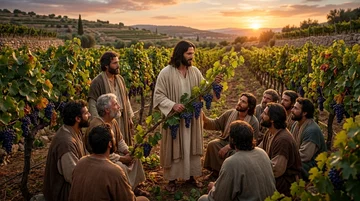
Cross-references 20 of 53
- Galatians 5:22-23
But the fruit of the Spirit is love, joy, peace, longsuffering, gentleness, goodness, faith,
Names the qualities of the spiritual fruit borne by Christ’s followers.
- John 15:8
Herein is my Father glorified, that ye bear much fruit; so shall ye be my disciples.
Bearing much fruit glorifies the Father and identifies Christ’s disciples.
- John 15:6
If a man abide not in me, he is cast forth as a branch, and is withered; and men gather them, and cast them into the fire, and they are burned.
The unfruitful branch is cast out, withered, and burned.
- Romans 11:17-22
And if some of the branches be broken off, and thou, being a wild olive tree, wert graffed in among them, and with them partakest of the root and fatness of the olive tree;
Olive-tree branches are removed or grafted in, warning believers to continue in God’s goodness.
- Matthew 7:16-20
Ye shall know them by their fruits. Do men gather grapes of thorns, or figs of thistles?
Fruit reveals character and faith; fruitless trees are cut down.
- John 15:10
If ye keep my commandments, ye shall abide in my love; even as I have kept my Father’s commandments, and abide in his love.
Keeping Christ’s commandments is linked to abiding in his love.
- Hebrews 12:11
Now no chastening for the present seemeth to be joyous, but grievous: nevertheless afterward it yieldeth the peaceable fruit of righteousness unto them which are exercised there by.
Painful discipline yields peaceable fruit of righteousness afterward.
- Isaiah 5:1-7
Now will I sing to my wellbeloved a song of my beloved touching his vineyard. My wellbeloved hath a vineyard in a very fruitful hill:
Both use vineyard imagery to show God seeking good fruit from His people.
- Luke 13:6-9
He spake also this parable; A certain man had a fig tree planted in his vineyard; and he came and sought fruit thereon, and found none.
The fruitless tree receives patient care but faces judgment if it remains barren.
- Matthew 3:10
And now also the axe is laid unto the root of the trees: therefore every tree which bringeth not forth good fruit is hewn down, and cast into the fire.
Both describe fruitless growth being removed and cast into the fire.
- Hebrews 12:6
For whom the Lord loveth he chasteneth, and scourgeth every son whom he receiveth.
The Lord’s loving chastening corresponds to his pruning of fruitful branches.
- Matthew 7:20
Wherefore by their fruits ye shall know them.
Fruit reveals a person’s character and identifies whether they are Christ’s branch.
- Psalms 1:3
And he shall be like a tree planted by the rivers of water, that bringeth forth his fruit in his season; his leaf also shall not wither; and whatsoever he doeth shall prosper.
Both picture God's people as fruitful trees.
- Colossians 2:19
And not holding the Head, from which all the body by joints and bands having nourishment ministered, and knit together, increaseth with the increase of God.
The body receives nourishment and growth from its Head, as branches do from the vine.
- John 15:16
Ye have not chosen me, but I have chosen you, and ordained you, that ye should go and bring forth fruit, and that your fruit should remain: that whatsoever ye shall ask of the Father in my name, he may give it you.
Christ chooses and appoints disciples to bear lasting fruit.
- Malachi 3:3
And he shall sit as a refiner and purifier of silver: and he shall purify the sons of Levi, and purge them as gold and silver, that they may offer unto the LORD an offering in righteousness.
Both describe purification that makes fruitful service possible.
- Matthew 21:19
And when he saw a fig tree in the way, he came to it, and found nothing thereon, but leaves only, and said unto it, Let no fruit grow on thee henceforward for ever. And presently the fig tree withered away.
The fruitless fig tree illustrates the judgment of branches that bear no fruit.
- Mark 11:13-14
And seeing a fig tree afar off having leaves, he came, if haply he might find any thing thereon: and when he came to it, he found nothing but leaves; for the time of figs was not yet.
The barren fig tree illustrates fruitless profession and its judgment.
- Romans 7:4
Wherefore, my brethren, ye also are become dead to the law by the body of Christ; that ye should be married to another, even to him who is raised from the dead, that we should bring forth fruit unto God.
Being joined to Christ enables fruit for God.
- Philippians 1:11
Being filled with the fruits of righteousness, which are by Jesus Christ, unto the glory and praise of God.
Believers bear fruits of righteousness through Christ, to God’s praise.
Commentary part 1 of 2
Each commentary is drawn from primary sources: the writings of Ellen G. White and Adventist pioneers and periodicals. Each commentary is separate. Its own words are not a quotation; follow the references to read the source passages.
Ellen G. White
121 sources
The Father is the husbandman, Christ is the living vine, and believers are the branches joined to him and wholly dependent on him for life, nourishment and fruitfulness.SG4 246.3–4ST Dec 10, 1896Ms 73, 1899, par. 1 Every branch that bears no fruit is cut off and taken away to complete ruin as a withered branch gathered and burned, for mere connection without fruit is not enough.ST Sep 14, 1882RH Aug 29, 1907Ms 145, 1906Ms 56, 1890, par. 1–2Lt 7, 1896, par. 8–11 Every branch that bears fruit is pruned by the Father with skilful and merciful care, never in forsaking or enmity, that it may bear more, richer and more abundant fruit unto eternal life.RH Aug 29, 1907Ms 81, 1910, par. 4–8Ms 79, 1909, par. 1–2 That pruning comes through bitter trials, afflictions, discipline and loving correction, cutting away useless growth, selfishness, worldliness and every hindrance so strength is put to best use and character perfected.RH Aug 29, 1907Ms 81, 1910, par. 4–8Ms 79, 1909, par. 1–2Ms 77, 1910, par. 30Ms 1, 1891, par. 1–3 Fruit can be borne only by abiding in Christ by living faith and obedience, and it appears as Christlike character and unselfish service that glorifies the Father and marks true discipleship.SG4 246.3–4ST Dec 10, 1896Ms 56, 1890, par. 1–2Ms 20, 1888, par. 1–7Ms 8a, 1888, par. 1–3
Vine Figures and Setting
The Father is the husbandman or vine-dresser, Christ is the true and living vine, and believers are the branches joined to him by living faith and abiding union.SG4 246.3–4ST Dec 10, 1896Ms 20, 1888, par. 1–7Ms 18, 1913, par. 1–2Ms 92, 1908, par. 1–2 Branches depend wholly on the vine for life, nourishment, strength, growth and fruitfulness, drawing sap, grace and the Spirit from the parent stock, and apart from him they are dead, helpless, hopeless and worthless.SG4 246.3–4ST Dec 10, 1896Ms 73, 1899, par. 1Ms 20, 1888, par. 1–7Ms 92, 1908, par. 1–2 The vine bears the branches and not the branches the vine, so fruit-bearing is impossible without daily sustenance from Christ joining divine power with human effort.ST Dec 10, 1896Ms 73, 1899, par. 1Ms 20, 1888, par. 1–7 To purge means to prune, to cleanse and purify by discipline and watchful care, removing what limits fruitfulness so fruitful branches bring forth more, richer and more abundant fruit.Ms 87, 1902, par. 1–2Ms 1, 1891, par. 1–3Ms 38, 1897, par. 22–24Ms 141, 1908, par. 1Ms 57, 1910, par. 8–9
In the broad sense “in me” encircles the whole human race purchased by Christ’s death as propitiation, made his servants by purchase, brought within mercy and covenant promise.Ms 85, 1901, par. 1–3 Those who stand in perfect indifference, who do not acknowledge him as Saviour, partake of his divine nature, or live by faith, bear no fruit and are taken away, drawn by worldly influences to the portion of the unfruitful branch.Ms 85, 1901, par. 1–3 Such a professed child of God bearing no fruit is taken possession of by the powers of darkness in mind, affections and service and becomes of the world, losing all the beauty, glory and satisfaction he is privileged to have, whereas abiding imparts Christ’s sweetness, fragrance and light shining in heart and face and changing the beholder into the same image.Ms 85, 1901, par. 5 Many have only an apparent, outward, spurious, superficial or mechanical connection by profession, church roll, or baptism without vital union by genuine living faith.17MR 198.2–199.2Lt 130, 1898, par. 2–321MR 227.3–228.1Ms 116, 1894, par. 1–321MR 228.2–3 Character, conduct and fruit show whether union is real, for the living Christian does the works of Christ while the dead fruitless professor claims to belong to Christ yet does not do his works; such false, dead, sapless branches, however attached or pious in appearance, are removed, separated, withered, cast forth and burned.17MR 198.2–199.2Lt 130, 1898, par. 2–3Ms 116, 1894, par. 1–3Ms 67, 1897, par. 5–721MR 228.2–3
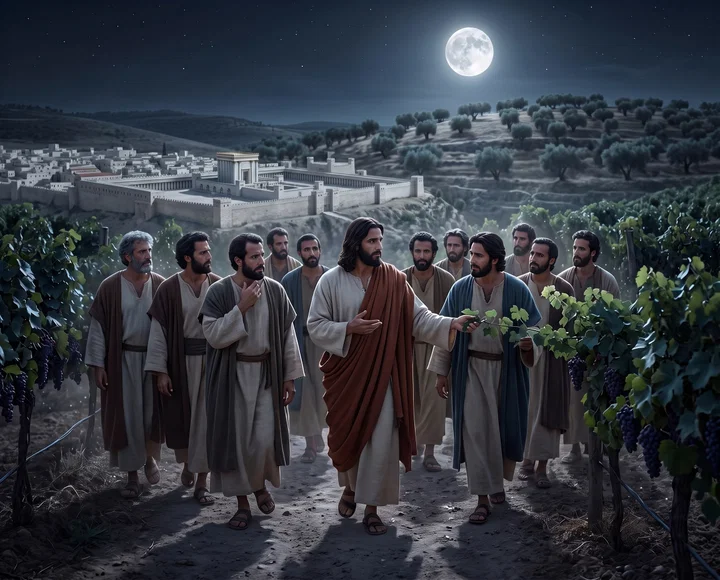
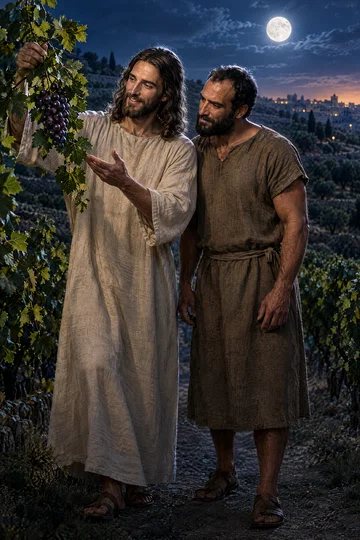
The words belong to Christ’s last lesson to his disciples before separation, spoken at the Passover supper on the night of great agony as they passed a beautiful vine on the way from the upper room to the Mount of Olives and at Gethsemane, and repeated again toward the Mount of Olives before the ascension amid unrequited love and forsaking.RH Sep 18, 1900RH Nov 4, 1902Ms 118, 1904, par. 1–2 They are part of John 13-17 and especially John 14-16 and John 15, mingling promises, encouragement, hope, warnings, privileges and advantages to prepare for affliction, temptation, severe testing and work, to be studied, committed to memory, lived, and needed in every home and Christian institution.RH Nov 4, 1902Ms 71, 1902, par. 5–8Ms 42, 1890, par. 16–19Lt 288, 1907, par. 9 The disciples repeated them without full understanding until after the resurrection opened the Scriptures, yet they are so simple even children may understand, giving courage to stand fast in the most trying hour with strength and assurance to the true believer as long as time shall last.Ms 71, 1902, par. 5–8 Christ used a familiar object in nature prized by the Jews as a sign of excellence and fruitfulness, pointing to himself as the reality to be prized above earthly things.RH Sep 18, 1900AAP 14.1ED 120.2–3 Rightly interpreted nature is the mirror of divinity, and looking on the vine was to recall his lessons, make plain his relation to followers and theirs to him, reach the heart and not the understanding merely of learned and unlearned by forcible, clear, easily understood speech, and leave no excuse for misunderstanding.RH Sep 18, 1900ED 120.2–3ST May 1, 1901
The vine itself was planted by the heavenly Husbandman on the hills of Palestine without remarkable form, coming as a root out of dry ground attracting little notice though some declared it of heavenly origin.Ms 67, 1897, par. 9–10 Men of Nazareth at first delighted in its beauty but then, unwilling for it to outshine them, wrestled to uproot and cast it over the wall, and men of Jerusalem bruised, rejected and trampled it underfoot to destroy it forever.Ms 67, 1897, par. 9–10 After men thought they had killed it he took it and replanted it on the other side of the wall hidden from view and from rude assault, while its branches are seen by the world and grafts are introduced into the stock to yield fruit and a harvest for passersby to pluck.Ms 67, 1897, par. 9–10 Its root as the living vine stock is planted in heaven beyond the reach of earth and hell so crucifixion could not destroy it and its branches still hang over the world.Ms 40a, 1890, par. 63–64 Christ consented to connect himself with the disloyal and sinful by partaking of human nature and giving his life, because no angel and no man was sufficient and only an infinite nature could undertake the redemptive process, understanding the possibility of the human soul, knitting grafted branches vein by vein and fiber by fiber into his own being until made one with it.STLt 10, 1887, par. 4–5ST Mar 5, 1896 The temple’s ornamental vine with clusters of grapes represented prosperous Israel, while a vine bearing wild grapes pictures departure from faith.2SP 389.1–390.1
Branches keep their individuality and are not blended or made uniform, for as leaves and branches differ so Christians differ in experience, thought, words, actions, gifts and work rather than duplicating one another.Ms 182, 1907, par. 96MR 104.1–27T 171.1–2 Drawing sap, life, nourishment and Spirit from the same parent stock they preserve unity, fellowship, sympathy, tenderness, harmony and love in diversity, with common life expressed in different ways.6MR 104.1–27T 171.1–2SW 77.15MR 362.2–363.1Lt 112, 1907, par. 13–14 No one branch sustains, absorbs or controls another, whether persons, workers, or institutions such as publishing houses, but each depends on the vine while keeping attention fixed on God’s Word and Christ.Ms 182, 1907, par. 97T 171.1–25MR 362.2–363.1Lt 112, 1907, par. 13–14 The branches of the True Vine also picture the Word of God, which holds unity in diversity with a perfect, mysterious, superhuman unity and contains the divine wisdom that is the foundation of all true education for youth in the decided conflict between the Prince of Heaven and the prince of hell.HCSSP 27.1Ms 76, 1897, par. 3–4
Removal of Fruitless Branches
Every branch joined to Christ that bears no fruit is taken away, removed and cut off by the Father and by Christ, for connection alone is not enough and fruit is required and expected.ST Sep 14, 1882RH Aug 29, 1907Ms 145, 1906Ms 56, 1890, par. 1–2Ms 145, 1906, par. 1–2 The Jewish nation as a fruitless branch was to be separated from Christ the living Vine, while Gentiles joined to Him by faith were to be pruned to fruitfulness.ST Sep 14, 1882 A profession of faith without Christlike works, especially a life directed toward selfish gain and personal advantage, fails to show the fruitful life required, and to keep professing godliness in that condition is self-deception.Ms 145, 1906Ms 145, 1906, par. 1–2 Careless indifference leads to removal, because without Christ a branch cannot bear fruit, and one that draws no life and nourishment from Him withers, while fruit-bearing branches have present opportunities to show that they belong to Christ and to glorify God each day.Ms 56, 1890, par. 1–2Ms 145, 1906, par. 1–2 Church members are to be living branches answering the mind and will of God, truly in Christ drawing nourishment from Him and bringing forth rich clusters of fruit as active living workers revealing Jesus in character, and every such fruitful branch is purged to bring forth more fruit, while a branch bearing none is taken away and is not of the Vine, leaving only withered branches, since bearing much fruit is the plain condition of discipleship by which the Father is glorified.Ms 41, 1890, par. 52–57
Being taken away means separation from Christ involving ruin as complete as that of a dead branch that is cast forth, withered, gathered and burned.Lt 7, 1896, par. 8–1117MR 198.2–199.2Ms 67, 1897, par. 5–7DA 676.5–6RH Jan 27, 1916 The power to produce fruit is in the parent stock and not in the branches, so daily sustenance from Christ is necessary, and branches that do not draw it cannot bear the fruit of the Vine and are cast forth as worthless branches to be consumed.Lt 7, 1896, par. 8–1117MR 198.2–199.2 A graft may be outwardly united to the vine with no vital connection and no growth or fruit, so a person may have an apparent connection with Christ without real union by faith, and though profession places men in the church, character and conduct show whether they are in connection with Him, and those bearing no fruit are false branches.DA 676.5–6 This includes people who appear attached and pious or are recorded as Christians but bear no fruit, whose separation and ruin become evident when they are consumed by fire.Ms 67, 1897, par. 5–7 Refusing to bear fruit makes His binding in Gethsemane, pleading, crucifixion and death vain for that person, for remaining in the Vine is eternal life while being cut off is eternal death at His coming.Ms 56, 1890, par. 1–2
Fruitlessness is careless indifference, selfish pursuit of gain, ease, display, worldliness, pride and self-sufficiency, neglected opportunities, spiritual inactivity, failure to grow and use talents, postponed service, choosing one's own course, and a backslidden life shut up to self bearing only leaves.Ms 145, 1906Ms 56, 1890, par. 1–2Ms 145, 1906, par. 1–2Lt 7, 1896, par. 8–11Ms 97, 1909, par. 1–2 It draws no life from Christ, withers, and is taken by the enemy, with greater light requiring more fruit.Ms 56, 1890, par. 1–2Lt 7, 1896, par. 8–11 A professing believer who does not meet the conditions of discipleship becomes increasingly separated from Christ and bears no fruits of righteousness, not imitating His life, whereas a true follower has no lower standard than His perfect life.Ms 97, 1909, par. 1–2 In the broad sense those encircled by mercy, purchased by His death as propitiation, made His servants by purchase and brought within His covenant of promise are in Him, yet those who stand in perfect indifference, do not acknowledge Him as Saviour and fail to partake of His divine nature bear no fruit and are taken away, with worldly influences drawing them away to the portion of the unfruitful branch, while fruit-bearing testifies whether a person is really abiding in Him.Ms 85, 1901, par. 1–3 The living Christian does the works of Christ, in contrast to the dead fruitless professor who claims to belong to Him yet does not do His works.Lt 7, 1896, par. 8–1117MR 198.2–199.2
Church membership or baptism alone, even if repeated, and profession of religion or truth and a name on the roll, do not by themselves prove living connection or produce fruit that glorifies God.Ms 130, 1909, par. 12–19Lt 80, 1894, par. 20–22Ms 116, 1894, par. 1–3Lt 83, 1894, par. 1–4RH Sep 18, 1900 Only a fruitful life shows true union, and fruitless members bring no strength to the church and are counted with tares unless they quickly partake of His Spirit.Ms 130, 1909, par. 12–19 Bearing fruit means living out His teachings in truth and righteousness, witnessing to the world, denying self, making sacrifices to save others, bearing burdens and working with Him, and hardship and disappointment do not excuse giving up, for His pruning develops greater fruitfulness, calling believers also to help others learn the truth and to seek God in perplexity.Ms 130, 1909, par. 12–19Ms 116, 1894, par. 10–11 Fruitfulness depends on remaining in Him because branches cannot produce fruit apart from the vine, and belonging to Him is tested by fruit borne rather than by profession alone, the branch receiving life and fruit-bearing power from the vine to overcome Satan, hate sin and speak the truth.Lt 80, 1894, par. 20–22Ms 116, 1894, par. 1–3 Baptism even if repeated and a name on the church roll have no power of themselves to change the heart, and hereditary and cultivated evil tendencies may still remain leaving the heart unchanged, whereas the fruitful branch is the regenerated person so united to Christ as to become part of Him and one with Him in principle and action, nourished by His roots and deriving life from Him who is life, living the life of the Son of God with heart united to His heart, will submerged in His will, mind one with His mind and thoughts brought into captivity to Him, so that storm cannot carry it away, frost cannot destroy its vital properties and nothing can separate it, and it bears much fruit by revealing the character of Christ in good words and good actions which are the fruits of the Spirit.Ms 116, 1894, par. 10–11RH Sep 18, 1900
Branches cut away through impenitence and rejection can be grafted back into the Vine when they repent, believe the gospel, receive Christ as Saviour and stand humbly, receiving life from the Eternal One and bearing fruit to God's glory.Ms 129, 1907, par. 38–40Ms 145, 1906, par. 16Ms 129, 1907, par. 32–37 The Jewish people refused Him and failed to recognize the divine nature of His mission, so they were cut off.Ms 145, 1906, par. 16 Jews and Gentiles who are converted are grafted into Him and receive life through Him, their union with Him transforming character through the Spirit and producing good works as fruit.Ms 129, 1907, par. 32–37
Pruning of Fruitful Branches
Every branch that bears fruit is purged or pruned by the Father with skilful, merciful, solemn and tender purpose, never with a wanton or indifferent hand.Ms 1, 1891, par. 1–3Ms 114, 1909, par. 1–2Ms 139, 1909, par. 2 Pruning is not forsaking, enmity, or proof of being cast away, but watchful care to remove what limits fruitfulness so the branch may bear more, richer and more abundant fruit of the best quality unto eternal life.Ms 43, 1894, par. 1–4Ms 114, 1909, par. 1–2Ms 139, 1909, par. 2Ms 19, 1909, par. 1–2Ms 77, 1910, par. 2 Christ removes branches that bear no fruit, while He prunes the fruitful so they will bear more, and trials under that pruning are reason for rejoicing, not rebellion.RH Aug 29, 1907Ms 81, 1910, par. 4–8Ms 79, 1909, par. 1–2 Such pruning may feel like misfortune, sadness or distress, yet it is purposeful to help believers bear fruit in saving themselves and others.Ms 79, 1909, par. 1–2Ms 140, 1909, par. 6–9Ms 70, 1911, par. 1 It represents trials that lead a person closer to God, draw the mind to God and heavenly things, bring an improved spiritual experience and restore right relation with Him.Ms 81, 1910, par. 4–8Ms 70, 1911, par. 1
Pruning comes as bitter trials, afflictions, discipline, chastening, reproof and loving correction, including poverty, sickness, loss, disappointment, bereavement, suffering, reproach, persecution and seeming failure or misfortune.RH Aug 29, 1907Ms 81, 1910, par. 4–8Ms 79, 1909, par. 1–2Ms 43, 1894, par. 1–4Ms 118, 1904, par. 1–2 Though painful and at first feeling like opposition or as though the Lord is against a person, it tests faithfulness, exposes weakness and defects, consumes dross, and displays the patience, forbearance, hope and grace that come from abiding in Christ.Ms 43, 1894, par. 1–4Ms 118, 1904, par. 1–2Ms 19, 1909, par. 1–2 It is to be endured with rejoicing, gratitude, patience and submission while staying close to Christ in prayer and yielding the will, rather than with rebellion.RH Aug 29, 1907Ms 77, 1910, par. 2 A living connection with God is essential under it, especially while associating and working with the world.Ms 81, 1910, par. 4–8
What is cut away is whatever hinders growth and spoils life: useless growth, excessive foliage drawing life from fruit, and trailing tendrils fastened to earthly supports.Ms 114, 1909, par. 1–2Ms 37, 1908, par. 1–4Ms 139, 1909, par. 2 It includes self-indulgence, selfishness, worldly treasure, ease and pleasure, idols, earthly and secular attachments, and superfluous plans.Ms 1, 1891, par. 1–3Ms 114, 1909, par. 1–2Ms 37, 1908, par. 1–4Ms 139, 1909, par. 2 It includes offensive defects, hereditary and cultivated tendencies, un-Christlike traits, errors, disobedience, and wrong words, attitudes and dispositions that do not agree with Christ's mind and will.Ms 77, 1910, par. 30Ms 1, 1891, par. 1–3Ms 114, 1909, par. 1–2Ms 139, 1909, par. 1 When these are removed strength is put to its best use, healing light enters, character is perfected, correction shows what must be done to please Him, and fruit is improved in quality and made richer and more abundant.Ms 77, 1910, par. 30Ms 114, 1909, par. 1–2Ms 139, 1909, par. 2Ms 118, 1904, par. 1–2
The pruning knife touches Christ the living Vine with living pain and wounds the divine heart, for no grief touches the believer without touching Him.Ms 79, 1909, par. 1–2Ms 140, 1909, par. 6–9Ms 118, 1904, par. 1–2 Permitted by infinite love closer than mother, lover, friend or brother, it proves His love and calls for self-examination about what has been left undone and what must be removed to stand in right relation to God.Ms 118, 1904, par. 1–2Ms 19, 1909, par. 1–2 It is sharing His suffering and reproach now in order to share His glory hereafter, and it yields the peaceable fruit of righteousness.RH Aug 29, 1907Ms 79, 1909, par. 1–2Ms 118, 1904, par. 1–2 Nothing should be allowed to block the light God gives when its conditions are met, and the aim is to be a fruitful branch, not one that is taken away.Ms 19, 1909, par. 1–2
The proper response is sober self-examination about relation to God and whether one is bearing fruit, earnest seeking in prayer, and coming to Jesus with felt needs so He can make the branch more fruitful.Ms 140, 1909, par. 6–9Ms 139, 1909, par. 2Ms 19, 1909, par. 1–2 It is renewed godly effort, yielding the will, clinging to Christ, resisting the devil, overcoming inherited passion by becoming like Jesus, and working to win others by representing godliness and doing Christ's work.Ms 140, 1909, par. 6–9Ms 130, 1909, par. 12–19Ms 182, 1907, par. 1 Those who come higher and endure are made more fruitful, bearing fruit in truth and righteousness, self-denial, sacrifice and witness, while hardship and disappointment do not excuse giving up.Ms 81, 1910, par. 4–8Ms 79, 1909, par. 1–2Ms 130, 1909, par. 12–19 Those who refuse are pruned away, for church membership or baptism alone is not evidence of belonging to Him.Ms 130, 1909, par. 12–19
Abiding Union with Christ
Bearing fruit is impossible apart from Christ, for the branch must abide in him by living, active faith and daily communion, feeding on his Word, doing what he commands, keeping his words and continuing in his love.SG4 246.3–4ST Dec 10, 1896Ms 56, 1890, par. 1–2Ms 20, 1888, par. 1–7Ms 170, 1907, par. 19–23 The branch draws sap and nourishment from the parent stock, with entire dependence upon him as personal Saviour, and it is the vine that bears the branch and not the branch the vine.ST Dec 10, 1896Ms 41, 1890, par. 52–57Ms 46, 1890, par. 3–417MR 198.2–199.2Lt 120a, 1898, par. 5 Separated from the vine the branch is dead, worthless, withered and helpless, without God and vulnerable to Satan's control, while united to him it constantly receives grace whose result is seen in fruit that is then imparted to others.SG4 246.3–4ST Dec 10, 1896Ms 56, 1890, par. 1–2Ms 182, 1907, par. 917MR 198.2–199.2 Abiding joins divine power with human effort to accomplish the work given in the world, so that no one can do work for the Master with converting power or succeed by natural inclinations without Christ abiding in the heart, and to try brings disappointment and failure.Ms 41, 1890, par. 52–57Ms 20, 1888, par. 1–7
Branches truly united to the vine yield the same fruit as the parent stock, drawing sap and nourishment from the living vine and bearing rich clusters by being active, living workers who reveal Jesus in character.Ms 41, 1890, par. 52–57Ms 46, 1890, par. 3–4Ms 43, 1894, par. 1–417MR 198.2–199.2Ms 116, 1894, par. 1–3 That fruit is seen in a beautiful character and unselfish heart, in words, actions and thoughts that testify to being in Christ, revealing his goodness, mercy, compassion, tenderness, loving-kindness, patience, meekness, humility and love.Ms 20, 1888, par. 1–7Ms 43, 1894, par. 1–4Lt 34, 1890, par. 38–39 The power to produce fruit lies in the parent stock and not in the branches, so daily sustenance from Christ is necessary to bear the fruit of the vine abundantly, and the living Christian is distinguished from the dead, fruitless professor by doing the works of Christ.17MR 198.2–199.2Ms 116, 1894, par. 1–3
Abiding includes receiving and living by Christ through his Word, keeping his words and commandments, bringing heart and character into conformity with them, and loving one another, with bearing much fruit glorifying the Father and marking his disciples.Lt 362, 1907, par. 5–6Ms 170, 1907, par. 19–23Lt 23, 1900, par. 2Lt 23, 1896, par. 22–23Ms 12d, 1896, par. 1–4 Obedience to the commandments is the Bible test of light received, and those who put the Word into practice and obey it have eternal life.Lt 23, 1900, par. 2Lt 23, 1896, par. 22–23 The Holy Spirit proceeding from Christ renews motives, affections and secret thoughts to produce holy deeds in agreement with Scripture, giving strength and moral power to overcome Satan, hate sin and speak the truth.Ms 116, 1894, par. 1–3 Cleansing is explained as being made clean through obedience to Christ's word, and this calls for humble hearts and earnest preparation to meet Christ at his coming with joy.Lt 362, 1907, par. 5–6Ms 170, 1907, par. 19–23Ms 57, 1910, par. 8–9
The vine and the branches explain genuine sanctification and the Christian life as transformation in which the disciple becomes a partaker of the divine nature.Ms 73, 1899, par. 1RH Sep 18, 1900BS 46.1–47.1Ms 97, 1909, par. 21 The fruitful branch is the regenerated person so united to Christ as to become part of him and one with him in principle and action, fiber to fiber, with heart united to his heart, will submerged in his will, mind one with his mind and thoughts brought into captivity to him.RH Sep 18, 1900 Such a living branch, rooted and grounded in him with self-assertion put away and self dead, becomes so one with the vine that storm cannot carry it away, frost cannot destroy its vital properties, and nothing is able to separate it.Ms 62, 1896, par. 45–48RH Sep 18, 1900 Christ forgives past guilt and does daily for the repenting believer as at first surrender, giving victory as Author and Finisher of faith, and enabling overcomers in every age to bear fruit to God's glory.Ms 97, 1909, par. 21Lt 120a, 1898, par. 5
Nature of Fruit Borne
Fruit is character formed day by day, hour by hour, as the inward working of the Holy Spirit appears outwardly in ripening fruit to the glory of God, not in flaunting leaves of profession, feeling and excitement.Ms 8a, 1888, par. 1–3Ms 62, 1896, par. 45–48 It is love, joy, peace, patience, gentleness, goodness, faith, meekness, self-control, kindness, compassion, pity, tenderness, humility, obedience and keeping God's commandments, with self-assertion put away, self not prominent and Christ first.Ms 62, 1896, par. 45–48Lt 31, 1891, par. 31–34Lt 10, 1890, par. 9–14Ms 67, 1897, par. 5–7 It is evidence of a change worked by God's grace and of fellowship with Christ, including kind words and deeds, holiness, purity, and doing the word and living the lessons of Christ rooted and grounded in Him.Ms 8a, 1888, par. 1–3Ms 62, 1896, par. 45–48Lt 10, 1890, par. 9–14Ms 67, 1897, par. 5–7 Abiding in Christ brings that purity and holiness, while self-sufficiency, pride, envy, jealousy and strife reveal fruit inconsistent with that union, and without the evidence of holiness a person has no right to the Christian name.Lt 31, 1891, par. 31–34Lt 10, 1890, par. 9–14 Fruit bearing is impossible without living connection with Christ by living faith, abiding in Him, which brings right relation with God and joins His power with human effort to accomplish the work given in the world.Ms 20, 1888, par. 1–7
That inward character becomes constant growth into a faithful witness for God, a guide and example in self-denial, cross-bearing, and prompt vigorous action, tempered character working as Christ worked, with strong faith, complete consecration and evidenced love for souls, with the eye single to glorify God and not self, bringing the light of truth before the world in clear bright rays.Ms 20, 1888, par. 1–7 Fruit is a life of service bearing burdens for souls, denying self, lifting the cross, missionary labor, opening the Scriptures, sharing Bible and literature, visiting in darkness, settling in neglected places, with medical missionary work inseparable from gospel work.Ms 41, 1890, par. 52–57Ms 20, 1888, par. 1–7Ms 140, 1909, par. 6–9Ms 146, 1903, par. 1–2 It is wise words and earnest, untiring efforts to win others to Christ, representing godliness in the world and doing Christ's work, renewing godly effort and exerting a Christlike influence of perfect goodness and disinterested benevolence that wins others and brings sheaves to God.Ms 20, 1888, par. 1–7Ms 140, 1909, par. 6–9Ms 146, 1903, par. 1–2 No one can do work for the Master, bear the message with converting power upon hearts for the salvation of souls, or succeed by natural inclinations without Christ abiding in the heart, for to try brings disappointment and failure.Ms 20, 1888, par. 1–7 A profession of faith without Christlike works, especially when life is directed toward selfish gain, fails to show the fruitful life required, and claiming to believe while failing to do His works and selfishly pursuing personal advantage is self-deception.Ms 145, 1906Ms 145, 1906, par. 1–2
Every branch that is truly in Christ draws nourishment from Him and brings forth rich clusters of fruit by being an active, living worker for God and revealing Jesus Christ in character.Ms 41, 1890, par. 52–57 Fruit means following Christ's unselfish pattern of humiliation, self-denial and sacrifice rather than self-indulgence, for the servant is not greater than the Lord and self-denial and self-sacrifice are essential conditions of discipleship.Ms 20, 1888, par. 1–7Ms 130, 1909, par. 12–19ST Apr 29, 1875ST Nov 25, 1886 It is living out His teachings in truth and righteousness, witnessing to the world, denying self, making sacrifices to save others and working with Christ, with daily emptying the heart of self, cleansing of hereditary and cultivated tendencies to wrong, depending wholly on Christ and being prepared to receive the Holy Spirit, so self does not rule and Christ appears in words, acts and life.Ms 130, 1909, par. 12–1918MR 168.1–169.1 It is an influence like the Redeemer's own influence, following His example of perfect goodness in obedience to all His commandments, by which believers become Christlike.Ms 72, 1902, par. 19–21 The vine's life-giving sap nourishes its branches to flourish and bear fruit, and to every one God has given his work, with all to be workers together with God in perfect unity and love, bearing fruit of the best quality to the glory of God.18MR 168.1–169.1ST Apr 29, 1875
Fruit is the test of life in the vine and the plain condition of discipleship by which the Father is glorified, for fruitfulness shows that the redeeming power of God's grace is working in believers, reshaping faulty character into symmetry and abundant fruitfulness.Ms 41, 1890, par. 52–57Ms 7, 1900, par. 8–9 Bearing much fruit to God's glory not self-glory, with full joy remaining, marks true branches, recommends Christ's love, and qualifies workers to be trusted with difficult and perilous responsibilities, as workers together with God whom He can trust.ST Dec 10, 1896Ms 41, 1890, par. 52–57Ms 20, 1888, par. 1–7 Fruitful living is evidence of discipleship seen in holiness, Christlike character and actions that help save others, and branches connected to Christ are judged by their fruit, with John 15:3 explaining that the disciples are made clean through obedience to Christ's word.Lt 362, 1907, par. 5–61MR 376.1–377.1 Separated from the vine the branch is dead and worthless, and apart from Christ there is helplessness, hopelessness and being without God, while united to the vine the branch receives nourishment drawn from the roots and is enabled to bear fruit, with Christ constantly supplying grace whose result is seen in fruit borne and imparted to others.ST Dec 10, 1896 God acknowledges this union, petitions are accepted through Jesus Christ, and those one with Christ as He is one with the Father are accepted in the Beloved and truly united to Him are a power for good.ST Dec 10, 1896
Fruit requires growth in capability by using talents, adding virtue, knowledge, self-control, patience, godliness, brotherly kindness and love, learning of Christ daily in forbearance, patience and heavenly wisdom, taking Christ along with the resolve not to go unless He goes.Ms 20, 1888, par. 1–7 Converted people must not remain stationary, for a branch in the living Vine that does not grow is pruned off and cast away as rubbish, and a Christian branch that remains spiritually inactive is cut off and discarded.6T 133.1Ms 20, 1895, par. 6 To fail to advance and grow is to retrograde into backsliding, pretension and not genuine godliness, into dead formality, for the seed of truth not nourished and cultivated does not spring up and grow and soon loses its power to germinate.TBC1882b 6.2–7.1Ms 84, 1893, par. 13–15 Those who still bear the name of Christians but make no advancement in piety in improving the entrusted talents receive no spiritual nourishment that they may grow thereby and become dead branches taken away, with the world and its amusements becoming the atmosphere most congenial to them.Ms 84, 1893, par. 13–15 The Lord looks for fruit in the life of every worker in proportion to the light received, the heart must be carefully cultivated and cleansed so it can bear fruit, and when the Husbandman finds no fruit He is disappointed, for greater light and responsibility require more fruit.TBC1882b 6.2–7.1Lt 144, 1906, par. 5–9
History Warning and Promise
The Jewish nation stood as a fruitless branch joined to the living vine, and for refusing Christ it was to be separated and cut off from Him.ST Sep 14, 18825RED 10.1–11.1ST May 23, 1878ST May 23, 18783SP 89.3–90.2 The Gentiles were to be grafted into Christ by faith, to share His life and have their natures changed so desire came into harmony with God's will.ST Sep 14, 18825RED 10.1–11.1ST May 23, 1878ST May 23, 18783SP 89.3–90.2 Joined to Him by repentance and humble faith they were to be pruned by the Father to become fruitful to God's glory, and even those cut off for rejecting Him could be grafted back when they stood humbly on the right ground.ST Sep 14, 18825RED 10.1–11.1ST May 23, 18783SP 89.3–90.2Ms 145, 1906, par. 16
At the hour the words were spoken one of the twelve was already as a withered branch about to be taken away, an example of knowing truth without daily conversion.DA 676.5–6 The Pharisees in rejecting light and spreading corrupt influence marked themselves as fruitless, to be removed as what the Father had not planted while fruitful branches were disciplined to bear more.Ms 65, 1897, par. 16–18 Many who profess truth but have no vital union prove fruitless when trial comes, when truth cuts across practice or income, when God's law is made void and the church is sifted by fiery trials; love waxes cold, they are offended and stumble, they give heed to seducing spirits, and being sapless they are removed from among God's people and bound with unbelievers unless reformed through a great reformation.Ms 48, 1891, par. 15–16Ms 78, 1897, par. 42–43ST Feb 20, 19017MR 188.4–189.4
The vineyard is Christ's whole worldwide cause and church, needing cultivating, watering, pruning, supporting and guiding, with revenue used for every part and not absorbed in a few places.Ms 7, 1891, par. 20–24 The publishing houses at Battle Creek and Oakland are distinct branches of the same vine, to remain separate in appointed work while drawing nourishment from the one source, preserving individuality and unity without one absorbing or controlling another.Lt 64, 1896, par. 3–67T 171.1–25MR 362.2–363.1Lt 112, 1907, par. 13–14 Sanitarium workers and all fellow workers are to serve together in harmony as branches of the same stock, showing vital union, and healthy growing churches as fruit-bearing branches let light shine; neglected fields such as Australia suffer when left unworked for the plans of others.Lt 112, 1907, par. 13–14STMW8 13.2Ms 7, 1891, par. 20–24
In the home instruction and discipline prune children to fruitfulness and save souls, for purging is cleansing in connection with obedience to Christ's word.Ms 57, 1910, par. 8–9 Fathers and mothers are to give up a scolding manner because it gains nothing, and instead bring children up in the nurture and admonition of the Lord by teaching the love and knowledge of Jesus.Ms 86, 1910, par. 52 Fruit borne in family life influences other souls, and addressing harmful traits in children through conversation and prayer softens both their dispositions and the parent's, laboring unitedly with the Saviour for victory and beauty of character fitted to enter through the gates into the city where there is no more death, sin, temptation, or devil and to have right to the tree of life.Ms 86, 1910, par. 54–55Ms 86, 1910, par. 52Ms 77, 1910, par. 20
The lesson belongs to believers in every age including those living near the end, when earthly history will soon close.Ms 97, 1909, par. 21Ms 86, 1910, par. 54–55 Fruit must be borne to God's glory now during the time given, for when Christ comes that opportunity will have ended, yet pruning though painful and even severe is to perfect character and is cause for gratitude and preparation for translation.Ms 73, 1910, par. 15Ms 119, 1909, par. 47–49 The instruction with John 14:1-3 is to be urged upon students and youth striving for eternal life, calling them to meet the highest standard, to keep the Word, to seek by diligent study and earnest prayer the training for acceptable service, to help one another to higher experience, and to put every power of heart and mind into learning Christ's way amid severe conflicts until every case is decided.Lt 44, 1911, par. 1–6 Humble hearts prepared in this way will meet Him with joy and be worthy to stand among His people when He comes in glory.Ms 170, 1907, par. 19–23Lt 288, 1907, par. 9
John 15 plainly expresses God's will to be lived out in practical daily life, making believers one with Christ in this life and through eternity as He is one with the Father.ST Dec 10, 1896RH Jun 18, 190121MR 346.1–3 Truly united to Him they are accepted in the Beloved, their petitions are accepted through Jesus Christ, they become a power for good, and their love and union convict the world.ST Dec 10, 189621MR 346.1–3 The connection must be real, living, dependent and faithful, with grace constantly supplied and imparted to others; separated from the vine the branch is dead and worthless, helpless and without God.ST Dec 10, 1896Ms 139, 1909, par. 4 Spoken amid His own terrible ordeal to prepare disciples for affliction and testing, the words give courage to stand fast in the most trying hour and bring strength and assurance as long as time lasts, so simple even children may understand, bringing full remaining joy and whole salvation from sin through His whole sacrifice against the darkness that says they cannot be saved.Ms 71, 1902, par. 5–8Ms 9, 1886, par. 14–16
Sources