Isaiah 5:1
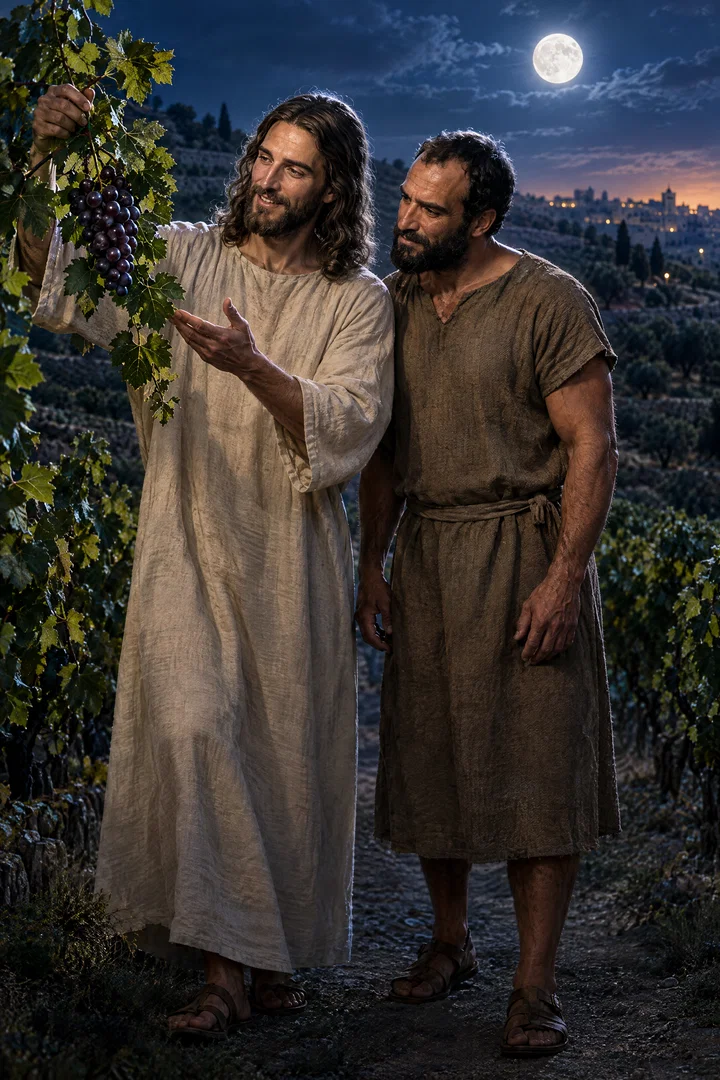
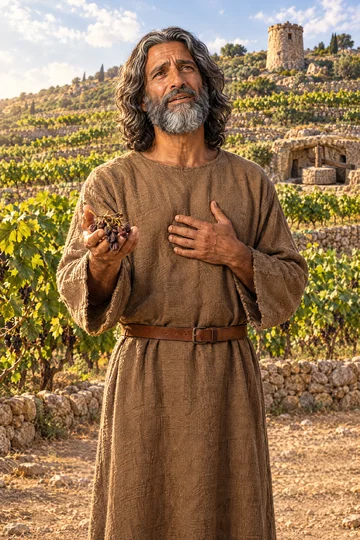
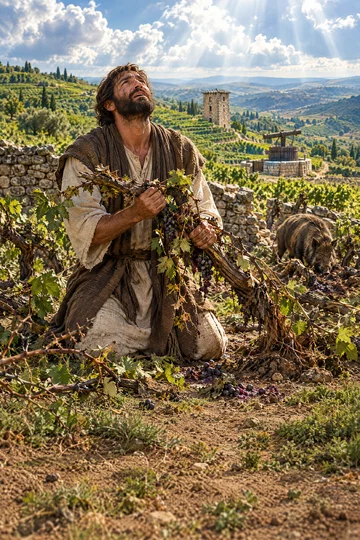
Now will I sing to my wellbeloved a song of my beloved touching his vineyard. My wellbeloved hath a vineyard in a very fruitful hill:
Translations
Now will I sing to my well beloved a song of my beloved touching his vineyard. My well beloved has a vineyard in a very fruitful hill:
King James Version, KJV Cambridge Paragraph Bible
Now will I sing to my wellbeloved a song of my beloved touching his vineyard. My wellbeloved hath a vineyard in a very fruitful hill:
Now will I sing to my well-beloved a song of my beloved concerning his vineyard. My well-beloved hath a vineyard in a very fruitful hill:
Revised Version, American Standard Version
Let me sing for my wellbeloved a song of my beloved touching his vineyard. My wellbeloved had a vineyard in a very fruitful hill:
Let me sing, I pray you, for my beloved, A song of my beloved as to his vineyard: My beloved hath a vineyard in a fruitful hill,
I will sing to my well-beloved a song of my beloved touching his vineyard: My well-beloved had a vineyard upon a fruitful hill.
Let me sing, I pray you, for a well-beloved of mine, The song of my beloved concerning his vineyard:—A vineyard, had my well-beloved on a very fruitful hill;
Berean Standard Bible, Majority Standard Bible
I will sing for my beloved a song of his vineyard:
My beloved had a vineyard
on a very fertile hill.Let me sing for my well beloved a song of my beloved about his vineyard.
My beloved had a vineyard on a very fruitful hill.Let me make a song about my loved one, a song of love for his vine-garden. My loved one had a vine-garden on a fertile hill:
Now will I sing to my beloued a song of my beloued to his vineyarde, My beloued had a vineyarde in a very fruitefull hill,
Douay-Rheims (Challoner revision)
I will sing to my beloved the canticle of my cousin concerning his vineyard. My beloved had a vineyard on a hill in a fruitful place.
Pictures
Cross-references 20 of 22
- Matthew 21:33-41
Hear another parable: There was a certain householder, which planted a vineyard, and hedged it round about, and digged a winepress in it, and built a tower, and let it out to husbandmen, and went into a far country:
Jesus applies Isaiah’s vineyard image to Israel’s leaders, who reject God’s messengers and Son.
- Isaiah 5:7
For the vineyard of the LORD of hosts is the house of Israel, and the men of Judah his pleasant plant: and he looked for judgment, but behold oppression; for righteousness, but behold a cry.
Identifies the Lord’s vineyard as Israel and Judah and describes its corrupt fruit.
- Psalms 80:8-9
Thou hast brought a vine out of Egypt: thou hast cast out the heathen, and planted it.
Israel is pictured as a vine brought out of Egypt and planted by God.
- John 15:1
I am the true vine, and my Father is the husbandman.
Both texts use the vineyard and vine image for Christ and his people.
- Luke 13:6-9
He spake also this parable; A certain man had a fig tree planted in his vineyard; and he came and sought fruit thereon, and found none.
The fruitless vineyard tree receives further patience before judgment.
- Luke 20:9-16
Then began he to speak to the people this parable; A certain man planted a vineyard, and let it forth to husbandmen, and went into a far country for a long time.
The vineyard parable condemns leaders who reject God’s messengers and beloved son.
- Isaiah 27:2-3
In that day sing ye unto her, A vineyard of red wine.
The Lord sings of His vineyard and promises to keep and water it continually.
- Jeremiah 2:21
Yet I had planted thee a noble vine, wholly a right seed: how then art thou turned into the degenerate plant of a strange vine unto me?
God’s good planting of Israel as a vine contrasts with its degeneration.
- Mark 12:1-9
And he began to speak unto them by parables. A certain man planted a vineyard, and set an hedge about it, and digged a place for the winefat, and built a tower, and let it out to husbandmen, and went into a far country.
The vineyard parable condemns tenants who mistreat God’s messengers and reject his beloved son.
- Matthew 21:43
Therefore say I unto you, The kingdom of God shall be taken from you, and given to a nation bringing forth the fruits thereof.
Vineyard privileges are taken away and given to a fruit-bearing nation.
- Isaiah 27:3
I the LORD do keep it; I will water it every moment: lest any hurt it, I will keep it night and day.
Also describes God’s care for his vineyard.
- Matthew 21:39
And they caught him, and cast him out of the vineyard, and slew him.
The vineyard parable depicts Christ cast out and killed.
- John 15:5
I am the vine, ye are the branches: He that abideth in me, and I in him, the same bringeth forth much fruit: for without me ye can do nothing.
vineyard branches explain union with Christ
- John 15:2
Every branch in me that beareth not fruit he taketh away: and every branch that beareth fruit, he purgeth it, that it may bring forth more fruit.
The vineyard is pruned so its branches may bear more fruit.
- Hosea 10:1
Israel is an empty vine, he bringeth forth fruit unto himself: according to the multitude of his fruit he hath increased the altars; according to the goodness of his land they have made goodly images.
Describes Israel as a fruitful vine that turned from God.
- Matthew 21:37
But last of all he sent unto them his son, saying, They will reverence my son.
The vineyard owner sends his son to the people.
- Song of Solomon 1:6
Look not upon me, because I am black, because the sun hath looked upon me: my mother’s children were angry with me; they made me the keeper of the vineyards; but mine own vineyard have I not kept.
Both mention the work of keeping a vineyard.
- Isaiah 27:6
He shall cause them that come of Jacob to take root: Israel shall blossom and bud, and fill the face of the world with fruit.
Israel takes root, blossoms, and fills the world with fruit.
- Jeremiah 11:16
The LORD called thy name, A green olive tree, fair, and of goodly fruit: with the noise of a great tumult he hath kindled fire upon it, and the branches of it are broken.
Israel is pictured as a fruitful planting.
- Hosea 14:7
They that dwell under his shadow shall return; they shall revive as the corn, and grow as the vine: the scent thereof shall be as the wine of Lebanon.
both use vine growth for Israel's experience
Commentary
Each commentary is drawn from primary sources: the writings of Ellen G. White and Adventist pioneers and periodicals. Each commentary is separate. Its own words are not a quotation; follow the references to read the source passages.
Ellen G. White
45 sources
The wellbeloved who owns the vineyard is Christ, and the vineyard planted in a very fruitful hill is Israel, His chosen church set in a fertile place with rich temporal and spiritual blessings and opportunities.PK 13.2–4GC88 20.1COL 284.2–285.1 He left nothing undone for its fruitfulness, hedging it about with His law, giving His oracles and servants to nurture it, setting His temple in its midst, and coming Himself to dig and prune and cherish it with unwearied mercy.GC88 20.1Ms 166, 1898, par. 1–34SP 19.2–20.1RH Jan 25, 1906 He called and trained it to represent His character, extend His kingdom and bless all mankind, looking for the fruit of obedience, righteousness, love and self-sacrificing service.PK 13.2–4COL 214.2–3COL 284.2–285.116MR 331.1COL 305.2–306.1 Instead it brought forth wild and degenerate fruit, as priests and teachers sought their own glory, withheld His due and turned the people from Christ, so judgment came in destruction of city and temple and the vineyard was taken from the unfaithful husbandmen and given to others bringing forth fruit.GC88 20.1GC 19.1–2COL 292.1–3COL 304.3–305.1ST Feb 17, 1898 The song stands as warning to the church in every generation that great privileges require corresponding returns, while the Lord's vineyard is the world to be worked with pity and the truth planted in the heart alone keeps the vine bearing good fruit.COL 296.2ST Oct 31, 1900STMW7 61.1–27MR 196.4
Identity of the Imagery
The wellbeloved who owns the vineyard is Christ, and the song is sung to Him concerning what He has done for His own planting.GC88 20.16MR 318.1–24SP 19.2–20.1 The vineyard is Israel, the Jewish church and house of Israel, God's chosen possession and church.PK 13.2–4GC88 20.1COL 284.2–285.1Ms 138, 1899, par. 13–16 It is very dear to the heart of God.16MR 331.16MR 318.1–2
The vineyard set in a very fruitful hill means Israel was planted in a fertile place, transplanted into a genial soil prepared to make fruitfulness possible.PK 13.2–4GC88 20.1COL 214.2–3ST Jan 6, 1909Ms 23, 1900, par. 2–3 The hill pictures the life and care bestowed upon the people, with the advantages, opportunities, and rich temporal and spiritual blessings God provided for them.PK 13.2–4COL 214.2–3ST Jan 6, 1909Ms 23, 1900, par. 2–3 That privileged planting carried glorious possibilities and expressed His purpose to bless and make fruitful.COL 214.2–3ST Jan 6, 1909Ms 23, 1900, par. 2–3
The song of the wellbeloved touching His vineyard is to be sung by God's people with the heart and with the understanding as saints assemble to worship Him from year to year.16MR 331.16MR 318.1–2 The care invested in the vineyard is shown by its fence set about it, its stones gathered out, its planting with the choicest vine, and its tower built and winepress made within it.COL 284.2–285.116MR 331.16MR 318.1–2 Fencing, clearing, choice planting, tower, and winepress together display the protection, best care, and abundant privileges given in preparation for fruit.COL 284.2–285.16MR 318.1–2
The great vine displayed at the entrance of the temple, a vine of gold with leaves and massive clusters of grapes, pictured Israel in the character of that prosperous vine.2SP 389.1–390.14RED 121.1–122.1 It represented the nation as planted and favored and made fruitful and beautiful in its fruitful place.2SP 389.1–390.14RED 121.1–122.1
God's Care and Protection
The planting is the bringing of Israel as a vine out of Egypt, the casting out of the heathen before it, and the transplanting of it into the genial soil of Canaan, where it was set in place and hedged about with guardian care.GC88 20.14SP 19.2–20.1ST Feb 27, 1896RH Jan 25, 1906 To nurture that vine God gave Israel His oracles, divine commandments through Moses, and appointed leaders and ministers, and He sent His servants to tend it.GC88 20.1 The fence or hedge around the vineyard is God's law, especially the Ten Commandments, which distinguished Israel from other nations.ST Oct 31, 1900 That law protects those who obey from evil, guards human happiness, and preserves harmony between people and God.Ms 153, 1899, par. 33–35 That protective law included the marriage and Sabbath laws, which were clearly established in Eden with the Sabbath blessed at creation.Ms 91, 1899, par. 17
The tower in the midst of the land was the temple, with God's glory dwelling above the mercy seat.RH Jan 25, 1906 God left nothing undone to make His church fruitful and an honor to its owner, providing everything needed for it to flourish.Ms 166, 1898, par. 1–3Ms 138, 1899, par. 13–16 The care lavished on the vineyard shows abundant provision in order to receive fruit from His people, for the vineyard represents the Jewish church as a precious possession cared for by the Beloved.Ms 166, 1898, par. 1–3Ms 138, 1899, par. 13–16
With yearning hope for fruitfulness, Christ came in person to His vineyard to plead with impenitent Israel and save it from destruction, digging about the vine and pruning and cherishing it with unwearied efforts.GC88 20.1GC 19.1–2 That coming to seek fruit was His three years going in and out among the people, knocking at the gate in steadfast ministry of love.4SP 19.2–20.1 His digging and pruning and cherishing were healing the sick, comforting the sorrowing, raising the dead, speaking pardon and peace to the repentant, and gathering the weak and weary and helpless and desponding.4SP 19.2–20.1 He extended mercy to all without respect to age or character, even while indifference and contempt beat back His mercy.4SP 19.2–20.1
Purpose and Expected Fruit
Israel was called, chosen and trained and set in a fertile place with abundant privileges and glorious possibilities in order to bear fruit, to represent God in the world, to display His kingdom's principles and His character in a fallen world, to restore His moral image in humanity, and to bring blessing to all mankind.PK 13.2–4COL 214.2–3COL 284.2–285.1ST Jan 6, 1909Ms 134, 1899, par. 5–6 Through holy and compassionate lives and through obedient life and worship, Israel's light was to reveal Him and His character and kingdom to other nations, so that His kingdom would extend throughout the earth.RH Jan 25, 1906Ms 134, 1899, par. 5–6 That prosperity and growth of the vineyard were conditional on obedience to God's law.Ms 134, 1899, par. 5–6
The fruit Christ looks for and desires from His vineyard, and from saints assembling to worship Him, is obedience to God's commandments, and that obedience makes souls precious in His sight.16MR 331.16MR 318.1–2Ms 123, 1899, par. 10–11 That fruit is righteous character and fruits of righteousness, including love, humility and self-sacrificing service.COL 305.2–306.1ST Jan 18, 18835T 240.2 Applied to Christians, it means Christianity should produce fruit unto righteousness and distinguish believers from the world, rather than being a strange or fruitless and degenerate vine turned toward human supports.ST Jan 18, 18835T 240.2Ms 83, 1901, par. 2–4
The husbandmen entrusted with the vineyard are responsible and accountable for returning its fruit to God to His glory.COL 305.2–306.1ST Oct 31, 1900 Religious teachers who lead people away from God's commandments withhold the fruits He seeks, and the protection He gave represents those commandments which the unfaithful failed to honor.COL 305.2–306.1ST Oct 31, 1900
Unfaithfulness and Judgment
Though every care had been given with yearning hope for fruitfulness, the vineyard looked for to bear good grapes brought forth only wild fruit, a degenerate growth turned aside from its purpose toward human supports.GC88 20.1GC 19.1–2ST Jan 18, 18835T 240.2 The people forgot God and rebelled, abusing their privileges, resisting grace, rejecting the warnings of the prophets sent to them, and turning religion into hollow formalism.Lt 20, 1892, par. 31–32ST Feb 27, 1896 Their resistance and persecution of the messengers spoiled the vineyard and brought the nation toward judgment, yet love continued to follow them, warning voices were still sent, and the sacrificial system kept ever before them the one great Sacrifice it prefigured.ST Feb 27, 1896
The priests and teachers placed in charge proved unfaithful, for instead of teaching the goodness of God and His claim upon love and service they sought their own glory and the fruit of the vineyard for themselves.COL 292.1–3COL 304.3–305.1 They misled the people, withheld from God the service He claimed, and turned the nation away from Christ, rejecting His authority and warnings and thereby becoming responsible for the nation's sin and ruin.COL 292.1–3COL 304.3–305.1 By that greed and misuse of trust they misrepresented the character of God and gave the Gentiles cause to misunderstand His kingdom.COL 292.1–3
The parable of the householder who planted a vineyard and let it out to husbandmen replays this song, faithfully illustrating the past and future history and true religious character of the Jews.ST Feb 17, 1898 The beating, killing and stoning of the servants and the murder of the son show the rejection of God's messengers and of Christ the heir.ST Feb 17, 1898 By their own answer they stand condemned, for the just sentence is that the Lord of the vineyard will miserably destroy the wicked husbandmen, take the kingdom of God and national privileges from them and give the vineyard to others who will bring forth its fruit, ending in destruction of temple and city and dispersion of the nation.ST Feb 17, 1898
Israel had received great light, blessings and prosperity but proved unfaithful and did not render the fruits sought, and that unfaithfulness brought desolation.Ms 73, 1901, par. 5–6 Such failure to fulfill expectation brings disappointment to God despite all the good things He has given.Ms 34, 1900, par. 71–72 The later trampling of the vineyard is judgment upon Jerusalem, for though all that could be done had been done, mercy and light were rejected; and grief over Jerusalem reveals long patience and sorrow over such unfaithfulness.Lt 20, 1892, par. 31–32Ms 41, 1886, par. 12–14 The divine Husbandman had planted a goodly vine upon the hills of Palestine, but the men of Israel despised it, cast it over the vineyard wall, bruised it and trampled it underfoot hoping to destroy it forever.PK 17.3 Then the Husbandman removed the vine and concealed it from sight, planting it again on the other side of the wall so that the stock was no longer visible and beyond the power of men to reach or harm, while the branches hung over the wall that grafts might still be joined to it.PK 17.3 The desolate wilderness reflects the ruined condition of the vineyard and the degradation of Israel, yet above that ruin shines the promised glory of the Messiah's reign, with covenant mercy spanning the clouds of wrath like a rainbow.DA 102.3–4
Warning and Call Today
The vineyard song is not confined to ancient Israel but speaks to the church in every generation, for great privileges and blessings have been given to the church and corresponding returns to His glory are expected.COL 296.2 It lays bare the sinful breach of trust of the once-chosen people and stands as a lesson and warning that unless people walk in the Lord's ways keeping all His commandments He cannot bless and sustain them.ST Oct 31, 1900 God's song about His vineyard is His church on earth today, making plain His love for the lost race and His eternal plan for their salvation as seen in Israel's call, successes and failures, restoration to favor, and rejection of the Master of the vineyard.PK 22.1
The keepers of the vineyard are God's church, and those now occupying it as faithful husbandmen are the goodly remnant by whom the plan of the ages is carried out and to whom all the covenant promises will be fulfilled.PK 22.1 The Lord will not serve with the sins of His people but suffers calamity and defeat to come upon them when they glorify themselves and weave false principles into their practice.ST Oct 31, 1900 He willingly forgives those who repent, but He will remove His favor from those who keep sinning, exalt self and mingle the sacred with the common, and terrible judgments will destroy those who misrepresent Him while claiming His temple as security though their example misleads.ST Oct 31, 1900
The fruitful hill that once bore grapes and now yields wild grapes pictures apostasy, where the grapes are believers' past faithful life and the wild grapes are their present departure into a bitter, evil course.7MR 196.4 That change of the same vine from sweet to bitter brings weariness, sorrow of heart and grief beyond words.7MR 196.4 The end is near when truth alone will triumph, and only the truth as it is in Jesus, planted in the heart by the Holy Spirit and daily tended by the grace of God, keeps the vine bearing good fruit.7MR 196.4
The Lord's vineyard is the world, which He regards with pity and compassion and which is all to be worked, for He is not partial to any part of it.STMW7 61.1–214MR 31.1–2 Those who have received the light of truth must share it with those without the same advantages rather than rejecting or condemning them for ignorance, laboring in every part to elevate the standard of truth and establish memorials that make a proper impression, for God judges the tree by the character of the fruit borne.STMW7 61.1–214MR 31.1–2 The Southern field is part of that vineyard and has been neglected, with the work there barely begun despite long-standing duty, and the Lord is Master of the vineyard to whom its needs and difficulties should be brought.SPBC 164.4CNA 140.2
God intended His people to take possession of the land and spread through it in faith rather than crowding into Jerusalem or concentrating people and resources in one place, which leaves other parts uncultivated and robs them.Ms 135, 1899, par. 13–14Lt 4, 1895, par. 214MR 31.1–2 Such spreading extends the work and brings more ground under cultivation, and their future history would have been different had they occupied the vineyard according to His plan.Ms 135, 1899, par. 13–14Lt 4, 1895, par. 2 The vineyard is still waiting for workers, so God's people should keep their means available to support missionary work in places ready for harvest.STB 291.1–2
Sources
Pioneers and periodicals
43 sources
The verse opens the Lord's song or parable of the vineyard, setting out what God had done for Israel and Judah and warning of the doom that follows apostasy and failure to bear good fruit.STST Apr 18, 1878ST Feb 5, 1902 The wellbeloved who owns the vineyard is God as owner and husbandman, the vineyard is the house of Israel and the men of Judah His pleasant plant, and the very fruitful hill is the fertile promised land well adapted for grapes where He planted them.STST Apr 18, 1878RH Nov 5, 1872ST Apr 26, 1905RH May 30, 1854 He fenced it with His law, gathered out the stones, planted it with the choicest vines, built tower and winepress within it, and left nothing undone that divine wisdom and power could accomplish for its salvation.RH Nov 5, 1872ST Dec 23, 1889ST Apr 8, 1903RH Apr 1, 1915 He looked for rich grapes of righteous judgment, justice and mercy, but found only wild sour grapes of oppression and formalism, and therefore declares He will take away the hedge and let the vineyard be trodden down, eaten up and laid waste.STST Apr 18, 1878ST Nov 8, 1905ST Apr 26, 1905RH Jan 8, 1857 The song is replayed in the parable Jesus tells in the temple and gives the basis for His teaching of Himself as the true vine with His people as branches, and it applies to the church on earth as God's moral vineyard still entrusted to caretakers and expected to yield fitting fruit.ST Oct 31, 1900ST Feb 17, 1898ST Jul 7, 1909ST Oct 11, 1899ST Mar 18, 1897
Song and Its Setting
The opening line introduces the Lord's song or parable of the vineyard, setting forth what God had done for Israel and Judah and warning of the doom brought by apostasy and failure to bear good fruit.STST Apr 18, 1878ST Feb 5, 1902ST Nov 20, 1901RH Nov 6, 1900 The vineyard is Israel, prepared and protected by God with good reason to expect good fruit, and its fruit stands for character and conduct, the righteous judgment and righteousness He sought rather than oppression.STST Apr 18, 1878RH Nov 6, 1900ST Oct 11, 1899 Its unfruitfulness portrays failure to follow God, and the failure to produce good grapes leads to the Lord's judgment, for those entrusted with His care must return its fruits.ST Apr 18, 1878ST Nov 20, 1901RH Nov 6, 1900 The parable Jesus tells in the temple recalls this song, which describes both the care given to the vineyard and the judgment following its failure.ST Oct 11, 1899
The wellbeloved who has the vineyard is God as owner and husbandman who planted it and has the right to expect its fruit in return.RH Nov 5, 1872RH Feb 4, 1915ST Feb 5, 1902 He continues to seek the expected fruit, even the fruit of the Spirit: love, joy, peace, patience, gentleness, goodness, faith, meekness, and self-control.ST Feb 5, 1902 The vineyard is the house of Israel and the men of Judah His pleasant plant, with special emphasis on Judah and Jerusalem.STST Apr 18, 1878ST Jan 18, 1916RH Nov 6, 1900ST Apr 8, 1903 Its branches were broken to make room for others when it failed to continue bearing good fruit.ST Jan 18, 1916
The very fruitful hill is a place well adapted for growing grapes, with every favorable condition for fruit.RH Nov 5, 1872 It is the fertile land promised to Abraham and once occupied by Judah, in Palestine or Canaan where Israel was brought out of Egypt and planted and nourished.ST Feb 27, 1896RH Jan 25, 1906ST Apr 26, 1905RH May 30, 1854 God gave Israel rich privileges there so that through holy and compassionate lives they would reveal His character and kingdom to other nations, and the temple stood in the midst of the land as the vineyard's tower with His glory dwelling above the mercy seat.RH Jan 25, 1906 The comparison was familiar to the Jews because Palestine abounded in vineyards.ST Mar 18, 1897 As the vine cannot stand alone but needs trellis or tree, so man can do nothing of himself but must be upheld by the right hand of God's righteousness.ST Apr 8, 1903
The warning came between Israel's captivity by Assyria and Judah's fall to Babylon, showing Judah the consequences of following Israel's course.ST Nov 20, 1901 It was given more than one hundred years before the Babylonian captivity to show the causes of the misfortunes that came upon Israel, set in a fruitful place and compassed with blessing and divine protection.ST Nov 7, 1895 Judah remained as the last plant preserved and carefully tended in the hope it would bear fruit, kept by special providence until the Messiah should appear.ST Jun 3, 1897 The singular vine points to the Word planted at Jerusalem as the vineyard's center, where priests and people were given exceptional opportunity to live it out and bear good fruit for themselves and others.ST Feb 5, 1902ST Feb 5, 1902 Jerusalem represented that people, yet its apostasy and distortion of that Word produced fruit that was harmful and unappealing rather than righteous.ST Feb 5, 1902ST Jun 3, 1897 The vine is also a figure for government, so to dwell under one's own vine and fig tree means to live under one's own government with protected civil and religious liberty, including worship according to conscience.RH Feb 21, 1856
Care Given to Vineyard
The Beloved spared no labor on His planting, choosing ground perfectly suited to grapes and giving every favorable condition for fruit.RH Nov 5, 1872ST Apr 8, 1903RH Apr 1, 1915 He fenced it, gathered out the stones and brush, broke up the ground, planted it with the choicest vines, built a tower and a winepress in its midst, cultivated it carefully year after year until the time for expected fruit, and waters it every moment and keeps it night and day, so that there is nothing more that could be done for it.RH Nov 5, 1872ST Apr 8, 1903RH Apr 9, 1901 The close hedging about the vine answers to the human need for upholding, for as the vine cannot stand alone without trellis or tree, so man of himself can do nothing but must be upheld by God's righteousness.ST Apr 8, 1903RH Apr 1, 1915
That hedge or fence is the law of the Ten Commandments, embodying and guarding eternal truth and distinguishing Israel as His church from other nations.ST Oct 31, 1900ST Aug 9, 1905 It is remembrance of God as Creator and Benefactor, and while it remains unbroken His people are safe from every outward foe, with harm coming only when they fail to keep Him in mind.ST Nov 8, 1905 To break down that hedge is to pervert that truth by tradition and trample it down, and those who do so will meet that same truth in the judgment where all power and pomp perish.ST Nov 8, 1905ST Aug 9, 1905
The provision is the full sum of advantages and opportunities given to Israel, His oracles and divine commandments received through Moses, appointed leaders and ministers, and temporal and spiritual blessings compassing them about with divine protection.ST Jan 6, 1909ST Nov 7, 1895 He established His temple among them, with the temple standing in the midst of the land as the tower of the vineyard and His glory dwelling above the mercy seat, and He made them custodians of His law.RH Jan 25, 1906ST Nov 7, 1895 The fruitful hill itself represents that care and those rich blessings, and the planting in a very fruitful place in Canaan declares the special care and blessing bestowed on His chosen possession.ST Jan 6, 1909RH Jan 25, 1906
That lavished care shows He left nothing undone to make His church fruitful and an honor to its owner.ST Apr 8, 1903 His question of what more could have been done declares the dignity and efficiency of Christ as High Priest and His wondrous provision for salvation, showing that all divine wisdom and power has been exerted to save sinners and calling for fitting fruit in return.ST Dec 23, 1889ST Sep 3, 1902 The constant watering and keeping day and night is the proof that no more could be done for the vineyard.ST Apr 8, 1903ST Sep 3, 1902
The privileged place carried a glorious purpose, to produce righteous character and fulfill what He intended for His people.ST Jan 6, 1909 Through holy and compassionate lives they were to reveal His character and kingdom to other nations, so that light should flow through them and blessing come to the world.ST Jan 6, 1909RH Jan 25, 1906ST Nov 7, 1895
Fruit Sought and Found
The well-developed grapes the owner looked for were rich and sweet, meaning righteous judgment and righteousness in character and conduct.STST Apr 18, 1878ST Nov 8, 1905RH Nov 6, 1900 That expected fruit is justice and mercy, even just judgment, preserved acceptable to Him.ST Nov 8, 1905ST Feb 5, 1902ST Feb 5, 1902 In full it is the fruit of the Spirit: love, joy, peace, patience, gentleness, goodness, faith, meekness, and self-control.ST Feb 5, 1902
Instead He found only common, wild fruit, little sour grapes rather than good grapes.ST Feb 5, 1902RH Nov 5, 1872ST Nov 8, 1905 He sought righteousness and looked for good grapes, but often found oppression instead of justice and a cry instead of righteousness.STST Apr 18, 1878ST Feb 5, 1902ST Apr 8, 1903 The vineyard thus proved a rebellious people who forgot God, abused their privileges, and turned religion into hollow formalism.ST Feb 5, 1902RH Jan 8, 1857
The failure followed the human tendency to sin and to transgress the covenant like Adam.RH Apr 1, 1915 Where cultivation was neglected the good was not nurtured and sin was allowed to take root and grow.ST Nov 29, 1899 Where the planted Word was distorted at its center, with exceptional opportunity given to live it out for self and others, it produced fruit that was harmful and unappealing rather than righteous.ST Feb 5, 1902
The Lord reasonably expected the vineyard, supplied with all it needed, to produce fruit according to His purpose.ST Feb 5, 1902 He continues earnestly to seek the fruit He has a right to expect, including from the spiritual seed.ST Feb 5, 1902ST Feb 5, 1902 To that end He sends messengers continually and carefully to call His people back.ST Feb 5, 1902
Applied to each person individually, the full and careful preparation leaves no lack on God's part for salvation.RH Nov 5, 1872 To bring forth wild, little, sour grapes instead of rich, sweet grapes is to bear no good fruit, to be no Christian and child of God, with sins unpardoned and no good hope of heaven, still on the broad road to perdition.RH Nov 5, 1872 The blame for being lost at last therefore lies with the person and not with God.RH Nov 5, 1872
Judgment and Future History
In disappointment at finding only common, wild fruit instead of well-developed grapes, the owner declares he will take away the hedge so the vineyard can be freely entered and its growth eaten up or trodden down and trampled.ST Nov 8, 1905ST Apr 26, 1905RH Jan 8, 1857 The protection removed, rain withheld, the vineyard planted on a very fruitful hill and fenced for preservation is left to be burned and cut down, plucked by strangers and ravaged by wild beasts.ST Nov 8, 1905ST Apr 26, 1905RH Jan 8, 1857 The hedge is remembrance of God as Creator and Benefactor, and while it remains unbroken His people are safe from every outward foe, with harm coming only when they fail to keep Him in mind.ST Nov 8, 1905
The chapter warns that apostasy brings doom, with the vineyard on a very fruitful hill showing what had been done for the people and the expected good fruit turned to wild grapes as oppression instead of justice and a cry instead of righteousness.ST Feb 5, 1902 The backsliding of God's people in that day pictures their condition as a type of last-day apostasy.ST Sep 22, 1909 The same chapter is named among God's predictions about oppression of the poor and the consequences of extreme wealth and social injustice.ST The emphasis falls especially on Judah, with Jerusalem as the place where the Word was planted and opportunity given to live by it and bear good fruit.ST Feb 5, 1902
Though the people forgot God, rebelled, abused privileges, and turned religion into hollow formalism, love continued in sending prophets to warn, with the sacrificial system kept before them as prefiguring the one great Sacrifice.ST Feb 27, 1896 The song exposes the sinful breach of trust and stands as warning that unless they walk in the ways of the Lord keeping all His commandments He cannot bless and sustain them.ST Oct 31, 1900 He will not serve with the sins of His people but suffers calamity and defeat to come upon them when they glorify themselves and weave false principles into practice.ST Oct 31, 1900 He willingly forgives those who repent, but He will remove favor from those who keep on sinning in self-exaltation and mingling the sacred with the common, and terrible judgments will destroy those who misrepresent Him while claiming His temple as security though their example misleads.ST Oct 31, 1900 Their resistance to grace and persecution of messengers spoiled the vineyard and brought the nation toward judgment.ST Feb 27, 1896
The vineyard entrusted to caretakers and expected to yield fruit, with its protection representing the commandments, was dishonored by mistreatment of messengers and rejection of the Son.ST Oct 31, 1900 Messengers sent continually and carefully to call the people back were rejected and mistreated, and at last there was plotting against the Son sent to receive the fruit.ST Feb 5, 1902 Judah had been preserved as the last carefully tended plant in special providence until the Messiah appeared, yet Jerusalem rejected the Son sent to it.ST Jun 3, 1897 The beating, killing and stoning of the servants and the murder of the heir show the rejection of messengers and of Christ the heir, and by their own answer the unfaithful are condemned.ST Feb 17, 1898 The just sentence is that the Lord of the vineyard will miserably destroy the wicked husbandmen, take the kingdom and national privileges from them and give the vineyard to others bringing forth fruit, ending in destruction of temple and city and dispersion of the nation.ST Feb 17, 1898 Its branches were broken to make room for others because it failed to continue bearing good fruit.ST Jan 18, 1916 By rejecting Christ those who had been the cultivated field were to become a wilderness or waste, while the Gentiles receiving the gospel were to become a fruitful field.RH Dec 8, 1874
Ties to Other Scriptures
The song of Isaiah 5:1-7 presents Israel as the Lord's vineyard, describing the care given to it and the judgment following its failure to bear good fruit.ST Oct 11, 1899 The vineyard is the Jewish nation, planted with every advantage to bring forth fruit.ST Feb 17, 1898 The parable told by Jesus in the temple of the householder who planted a vineyard and let it out to husbandmen recalls and replays that song.ST Feb 17, 1898ST Oct 11, 1899 It faithfully illustrates the past and future history of the Jews and their true religious character.ST Feb 17, 1898 The beating, killing and stoning of the servants and the murder of the son show their rejection of God's messengers and of Christ the heir.ST Feb 17, 1898 By their own answer they are condemned, and the just sentence is that the Lord of the vineyard will miserably destroy the wicked husbandmen.ST Feb 17, 1898 The kingdom of God and national privileges will be taken from them and the vineyard given to others bringing forth fruit, ending in destruction of temple and city and dispersion of the nation.ST Feb 17, 1898
The comparison of God's people to a vineyard planted by the wellbeloved in a very fruitful hill was familiar to the Jews because Palestine abounded in vineyards.ST Mar 18, 1897 It gives the Old Testament basis for the Saviour's illustration of Himself as the true vine and His people as branches.ST Mar 18, 1897 The vineyard parable pictures the church as a goodly vine with fruit-bearing branches joined to Christ.ST Jul 7, 1909 It shows the vital connection between Christ and the church, with the Father as the husbandman.ST Jul 7, 1909
The vineyard is identified with the fruitful land promised to Abraham and once occupied by Judah.RH May 30, 1854 That land was prepared for Christ, the true vine, and is soon to be devoted to His use.RH May 30, 1854 Christ's believing people are its branches and, with Him as vine and root, will be transplanted into that holy land to flourish forever.RH May 30, 1854
The verse presents the work of the Lord of Hosts through the image of a vineyard.ST Dec 20, 1910 That image connects the ordinary work of vineyard keepers with service in the Lord's vineyard.ST Dec 20, 1910 The Master's teaching about their work could renew their diligence and turn their thoughts toward God's kingdom.ST Dec 20, 1910
Church and Present Duty
The beloved vineyard planted on the fruitful hill is the church on earth, God's moral vineyard and the fold provided for the sheep of His pasture, greatly beloved by Him, entrusted to those responsible for its care and expected to yield fruit to God.ST Oct 31, 1900ST Oct 31, 1900RH Jun 2, 1904 Its protection represents His commandments, and the later parable of the vineyard exposes the breach of that trust in mistreating His messengers and rejecting His Son.ST Oct 31, 1900 Unworthy members may need to be removed and others helped through Christian care, so that the church is pruned and purified and can receive new converts who will be faithfully nurtured.RH Jun 2, 1904
The vineyard must be faithfully cultivated and extended, for the church's work is not to be confined to its own members but is to reach all parts of the earth.ST Feb 3, 1909 That care includes tending one's own spiritual life and teaching others how to care for it, using every spiritual advantage in becoming skilled workers in His vineyard.ST Feb 3, 1909 God looks in it for faith, love and patience, and faithful labor prepares people to enter God's Paradise, the Eden home from which Adam and Eve were excluded because of transgression.ST Feb 3, 1909
The vineyard is the field of gospel work, which laborers are urged to fill throughout the world by proclaiming salvation before the harvest.RH Mar 19, 1914 The same care is seen in parents who clear away stones, plant the choicest vine, protect it from wild growth and give every provision for good fruit, yet see only sour, wild grapes, raising the question of whose fault it is without assigning blame to the parents.RH Apr 9, 1901
The song is an appeal from the Lord to sinners to turn to Him and be saved, showing He has done all that divine wisdom and power can accomplish for them.ST Sep 3, 1902 The Lord cares for and nourishes His church so it will bear fruits of righteousness, but the vineyard can turn from its purpose and produce degenerate fruit.ST Jan 18, 1883 Unless they walk in the ways of the Lord keeping all His commandments He cannot bless and sustain them, for He will not serve with the sins of His people but suffers calamity and defeat to come upon them when they glorify themselves and weave false principles into their practice.ST Oct 31, 1900 He willingly forgives those who repent, but He will remove His favor from those who keep on sinning, exalting self and mingling the sacred with the common, and terrible judgments will destroy those who misrepresent Him while claiming His temple as their security though their example misleads.ST Oct 31, 1900 His law is the hedge He designed around them to embody and guard His eternal truth, and to break down that hedge by perverting that truth with tradition and trampling it down is to meet that same truth in the judgment where all mitered power and gilded pomp perish in the presence of God.ST Aug 9, 1905
Sources