John 6:19
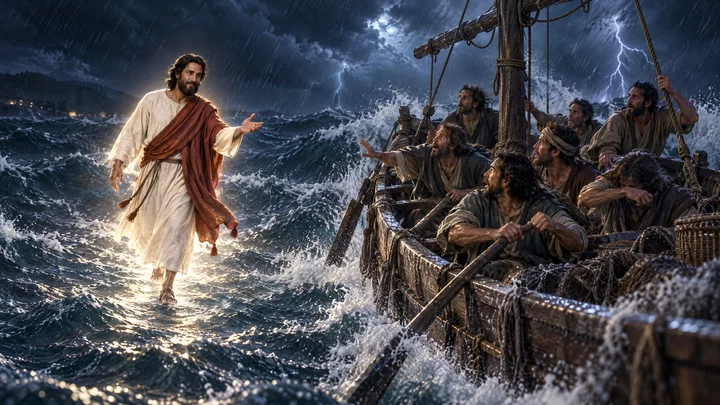
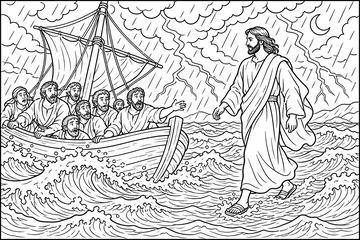
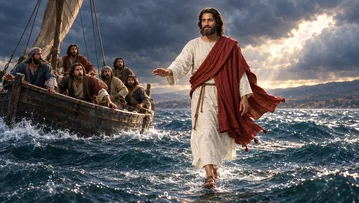
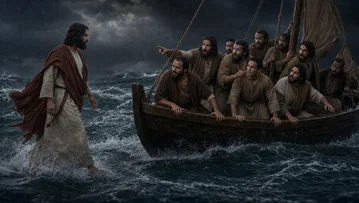
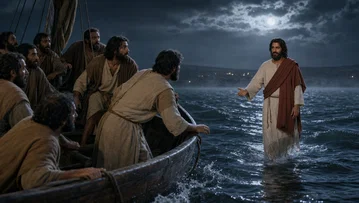
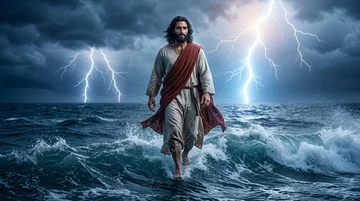
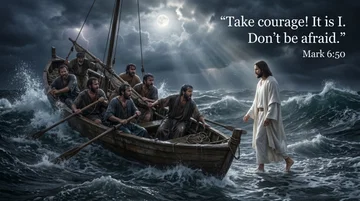
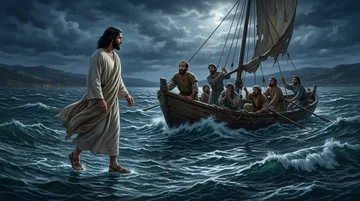
So when they had rowed about five and twenty or thirty furlongs, they see Jesus walking on the sea, and drawing nigh unto the ship: and they were afraid.
Translations
So when they had rowed about five and twenty or thirty furlongs, they see Jesus walking on the sea, and drawing near to the ship: and they were afraid.
King James Version, KJV Cambridge Paragraph Bible
So when they had rowed about five and twenty or thirty furlongs, they see Jesus walking on the sea, and drawing nigh unto the ship: and they were afraid.
So when they had rowed about five and twenty or thirty furlongs, they see Jesus walking on the sea, and drawing nigh to the boat: and they were afraid.
Revised Version, American Standard Version
When therefore they had rowed about five and twenty or thirty furlongs, they behold Jesus walking on the sea, and drawing nigh unto the boat: and they were afraid.
having pushed onwards, therefore, about twenty-five or thirty furlongs, they behold Jesus walking on the sea, and coming nigh to the boat, and they were afraid;
Having rowed then about twenty-five or thirty stadia, they see Jesus walking on the sea and coming near the ship; and they were frightened.
Having therefore rowed about twenty-five or thirty furlongs, they observe Jesus, walking upon the sea, and, near the boat, coming; and they were affrighted.
Berean Standard Bible, Majority Standard Bible
When they had rowed about three or four miles, they saw Jesus approaching the boat, walking on the sea— and they were terrified.
When therefore they had rowed about twenty-five or thirty stadia, they saw Jesus walking on the sea and drawing near to the boat; and they were afraid.
After they had gone three or four miles they saw Jesus walking on the sea and coming near to the boat; and they had great fear.
And when they had rowed about fiue and twentie, or thirtie furlongs, they sawe Iesus walking on the sea, and drawing neere vnto the ship: so they were afraide.
Douay-Rheims (Challoner revision)
When they had rowed therefore about five and twenty or thirty furlongs, they see Jesus walking upon the sea, and drawing nigh to the ship, and they were afraid.
Pictures
Cross-references
- Mark 6:47-50
And when even was come, the ship was in the midst of the sea, and he alone on the land.
Jesus comes to the struggling disciples on the sea and reassures them when they are afraid.
- Matthew 14:24-27
But the ship was now in the midst of the sea, tossed with waves: for the wind was contrary.
Jesus approaches the disciples on the stormy sea, and they fear until he reassures them.
- John 6:1-14
After these things Jesus went over the sea of Galilee, which is the sea of Tiberias.
The sea miracle follows the feeding of the multitude.
- Matthew 14:27
But straightway Jesus spake unto them, saying, Be of good cheer; it is I; be not afraid.
Jesus reassures the frightened disciples as he approaches them on the water.
- Matthew 14:28-29
And Peter answered him and said, Lord, if it be thou, bid me come unto thee on the water.
Peter walks on the water toward Jesus during the same event.
- Matthew 8:23-27
And when he was entered into a ship, his disciples followed him.
Jesus’ sea-walking recalls his stilling the tempest and rebuking the wind.
- Mark 6:45-46
And straightway he constrained his disciples to get into the ship, and to go to the other side before unto Bethsaida, while he sent away the people.
Jesus sends the disciples across the sea and withdraws to pray.
- John 6:15
When Jesus therefore perceived that they would come and take him by force, to make him a king, he departed again into a mountain himself alone.
Jesus withdrew alone to the mountain after the crowd tried to make him king.
- Mark 6:49-50
But when they saw him walking upon the sea, they supposed it had been a spirit, and cried out:
Jesus walks on the sea, and reassures the frightened disciples.
- Matthew 14:22
And straightway Jesus constrained his disciples to get into a ship, and to go before him unto the other side, while he sent the multitudes away.
same sending of disciples into storm
- Mark 6:51
And he went up unto them into the ship; and the wind ceased: and they were sore amazed in themselves beyond measure, and wondered.
coming stills the tempest
- Matthew 14:24
But the ship was now in the midst of the sea, tossed with waves: for the wind was contrary.
describes believers tossed in midst of sea
- Matthew 14:33
Then they that were in the ship came and worshipped him, saying, Of a truth thou art the Son of God.
shares confession He is Son of God
- Luke 8:24-25
And they came to him, and awoke him, saying, Master, master, we perish. Then he arose, and rebuked the wind and the raging of the water: and they ceased, and there was a calm.
Jesus commands the wind and water, and they obey.
- John 6:27
Labour not for the meat which perisheth, but for that meat which endureth unto everlasting life, which the Son of man shall give unto you: for him hath God the Father sealed.
Jesus contrasts perishable food with the bread that gives eternal life.
- Matthew 14:13-19
When Jesus heard of it, he departed thence by ship into a desert place apart: and when the people had heard thereof, they followed him on foot out of the cities.
The accounts parallel Jesus’ feeding of the five thousand.
- Mark 4:39
And he arose, and rebuked the wind, and said unto the sea, Peace, be still. And the wind ceased, and there was a great calm.
Jesus stills the storm, showing power that brings peace in trials.
- John 6:35
And Jesus said unto them, I am the bread of life: he that cometh to me shall never hunger; and he that believeth on me shall never thirst.
teaching that followed the miracle
Commentary
Each commentary is drawn from primary sources: the writings of Ellen G. White and Adventist pioneers and periodicals. Each commentary is separate. Its own words are not a quotation; follow the references to read the source passages.
Ellen G. White
27 sources
After the feeding of the multitude the disciples left by boat while Jesus withdrew from the crowd that sought to make Him king, and when they had rowed about twenty-five or thirty furlongs they saw Him walking on the sea drawing near the ship and were afraid.DA 377.1DA 377.3–378.13RED 60.1–62.1DA 381.2–32SP 274.2 They had spent many hours rowing in darkness through a violent storm against a fierce adverse wind, and though strong men accustomed to the water, all their rowing was futile and drove them off course.3RED 60.1–62.14RED 87.22SP 274.2 Jesus had watched them with tender care from the shore and came to them by miraculous power walking calmly and firmly on the storm-tossed waves, but they failed to recognize Him and mistook Him for a phantom foreboding death until His well-known voice identifying Himself turned their terror to joy.3RED 60.1–62.1DA 381.2–3DA 381.12SP 267.2–268.1ST Dec 29, 1887 The mighty work reveals His divinity and the majesty of God who holds the winds and controls the waters, though unbelief explains it away as delusion.4RED 96.3–97.17MR 280.4–281.22SP 283.3–285.1 He came as a messenger of life rather than of death, teaching that when followers have labored until their strength fails they are to stop relying on their own efforts and trust Him, for personal faith in a personal Saviour brings spiritual union with Christ who is the Bread of life.16MR 277.14T 530.1–24T 288.1–214MR 335.1–3ST Jul 18, 1878
Setting After Feeding
The rowing about twenty-five or thirty furlongs and seeing Jesus walking on the sea belongs to what followed the feeding of the multitude, which the people regarded as a divine work identifying Jesus as the prophet foretold by Moses.DA 377.1 After that miracle their conviction that He was the long-awaited Deliverer grew stronger, and they expected Him to set up an earthly kingdom for Israel that would break Roman power, provide for armies, and give the nation dominion.DA 377.2 When the crowd sought to make Him king by force, He withdrew from them and the disciples departed by boat, and the appearance on the water comes in that departure.DA 377.3–378.1
The walking on the water stands together with the feeding with loaves and fishes and with Christ's declaration that He is the Bread of life, a declaration that caused some of His disciples to turn from Him.14MR 335.1–39MR 242.1 It came after the feeding with the loaves and fishes and before He told His hearers He was the bread of life.9MR 242.1
Walking on the Sea
The disciples had rowed far from shore, about twenty-five or thirty furlongs, spending many hours rowing in darkness through a violent and furious storm against a fierce adverse wind that drove them off course.3RED 60.1–62.14RED 87.22SP 274.22SP 267.2–268.1ST Jul 18, 1878 All their rowing was futile even though they were strong men accustomed to the water, and they were trying to reach the point where Jesus had promised to meet them.4RED 87.22SP 274.22SP 267.2–268.1 Their hearts failed with terror and they longed for the Master's commanding presence for safety, regretting that they had left Him.2SP 267.2–268.1 Jesus crossed the sea to the other side without a boat and came toward them by miraculous power on the night after the multitude was left.3RED 60.1–62.12SP 274.29MR 31.1–2 He walked calmly and firmly on the storm-tossed, white-capped waves and drew near the ship while it buffeted high running waves and spray dashed over it, tossing up and down and careening over the waves.3RED 60.1–62.12SP 267.2–268.1ST Jul 18, 18787MR 280.4–281.2 His form was revealed by a flash of lightning as He stepped firmly on the white-capped billows.3RED 60.1–62.12SP 267.2–268.1
The disciples failed at first to recognize Him and mistook Him for a phantom or spirit foreboding immediate destruction and death.3RED 60.1–62.1DA 381.2–34T 288.1–22SP 267.2–268.1ST Jul 18, 1878 Unspeakable terror seized them so that their grip on the oars fell powerless while they kept their eyes fixed on Him, with the boat rocking beneath them.4T 530.1–22SP 267.2–268.1 They kept their eyes fixed on the figure and then cried out for help as He calmly advanced as though He would pass them.DA 381.2–32SP 267.2–268.1 Jesus had not forgotten them or lost sight of them but watched over them with tender care from the distant shore, seeing their danger and reading their thoughts.DA 381.12SP 267.2–268.1ST Dec 29, 1887 He was determined not to let one perish, waiting until their ambition was subdued and they humbly prayed for help, with their unholy ambition quelled and their hearts subdued.DA 381.12SP 267.2–268.1 His coming showed that they were not forgotten or left alone in their distress, and help came when their ambition was subdued and they humbly prayed.DA 381.1ST Dec 29, 1887
When they recognized Him He turned toward them and calmed their fear with His well-known reassuring voice identifying Himself and telling them not to fear.4T 530.1–23RED 60.1–62.1DA 381.2–32SP 267.2–268.1 Their apprehension left and their fear gave way to joy, the storm was forgotten, and they hailed Him with speechless joy as their Deliverer.4T 530.1–23RED 60.1–62.12SP 267.2–268.1 The account also includes Peter's attempt to walk toward Him and its result, and the sudden stilling of the tempest with the boat's arrival at land.4RED 87.2DA 383.2–384.1 The verse reveals the majesty of God and His works, that He holds the winds in His hand and controls the waters and at one glance beholds the highest heavens and the midst of the sea.7MR 280.4–281.2 Though finite beings on the broad deep waters are mere specks in His sight, angels are sent from His excellent glory to guard the little boat, showing wonderful works far above human comprehension.7MR 280.4–281.2
The event was sufficient proof of His divinity, though unbelieving people explained it away by reasoning that the disciples had been deluded, showing how unbelief denies the force of the miracle.4RED 96.3–97.12SP 283.3–285.1 The mighty work astonished those who heard about it and stirred curiosity about how He had crossed the lake.2SP 274.24RED 88.1 The disciples later faithfully recounted it to the wondering crowd in the synagogue as the explanation of how and when He had crossed.2SP 274.2 The verse records an earlier time when Jesus walked upon the water to rescue the disciples from death in peril on the sea.2SP 307.1–308.1 They later remembered it in another storm as proof that He had saved them in a like danger while wondering if He had now walked away upon the waves and left them to the tempest instead of saving them again.2SP 307.1–308.1
Teaching and Application
As part of Christ's teaching in John 6, the rowing far out and seeing Jesus drawing near belongs to the lesson that mere outward connection with any church will not save a man, and that only personal faith in a personal Saviour brings the soul into spiritual union with Christ.16MR 277.1 As part of that same chapter presenting Christ as the bread of life, it belongs to the education that the Word of God is spiritual food, even His flesh and His blood, to be fed upon by taking it into the mind.Ms 63, 1890, par. 5–7Ms 202, 1898, par. 2 To eat the Word in this sense means to be diligent students of the Word, understanding it, practicing it, and making its divine principles a part of life.Ms 63, 1890, par. 5–7Lt 99, 1904, par. 4–5 John 6 thus defines the righteousness of Christ that must be accepted in order to have on the wedding garment and be accounted a fit guest at the wedding, reaching God's standard of character for the marriage of humanity with divinity.Ms 13, 1899, par. 1–2 That fitness comes through surrender to God and a firm stand for Christ, rather than through presumption, measuring character by human ideas, and continuing in sin.Ms 13, 1899, par. 1–2
The willingness of the disciples to stop relying on their own efforts and trust Jesus, after struggling unsuccessfully until their strength failed, illustrates how His followers may labor until their strength fails and then entrust the work to Him.4T 530.1–2 He pities their weakness and can accomplish what had seemed too difficult.4T 530.1–2 Coming to the storm-tossed boat, He came as a messenger of life rather than of death, though His drawing near at first filled them with fear because they thought His appearance meant death was near.4T 288.1–2ST Jul 18, 1878 His well-known reassuring voice dispelled fear and gave hope and joy, changing despair into faith and hope, so that with His presence they no longer feared death.4T 530.1–24T 288.1–2ST Jul 18, 1878
Sources
Pioneers and periodicals
37 sources
After rowing about three or four miles, about halfway across the Sea of Galilee, through hours of labor in darkness in the fourth watch against a fierce contrary wind, Jesus came to the disciples walking literally on the sea itself and drawing near to the ship.ST May 20, 1886ST Sep 17, 1896ST Oct 28, 1897ST Oct 12, 1904 The disciples were afraid at the sight, mistaking him in the darkness and tempest for a ghost or apparition foretokening destruction, their terror increased by exhaustion and the wind and waves.ST Jul 18, 1878ST May 20, 1886ST Oct 28, 1897ST Oct 12, 1904ST Mar 5, 1896 When they recognized his voice saying It is I, be not afraid, they welcomed him aboard, the wind ceased, and the boat immediately reached the desired haven in safety.ST Sep 17, 1896ST Oct 28, 1897ST Sep 17, 1896ST Oct 28, 1897RH May 5, 1903 The act proves his divinity as Son of God and Creator, Master of sea and storm with authority over the waters he created.ST Oct 28, 1897ST Oct 12, 1904ST May 19, 1881 He saw their danger and would not let them perish but came to meet their need, and so he still draws near when darkness gathers and fierce waves threaten, to remove fear, quiet the storm, and guide believers to peace.RH Jan 28, 1873RH May 5, 1903ST Mar 4, 1913RH Jul 28, 1903ST Jun 20, 1900
Wording and Setting
The phrase for drawing near means to approach or come near, as Jesus came near to the ship on the sea, showing evening coming on and the day turned toward evening.ST Sep 21, 1915 The rowing of about twenty-five or thirty furlongs means about three or four miles, about halfway across the lake and still only about three miles from the starting place.ST Sep 17, 1896ST Oct 12, 1904ST Aug 2, 1905 That short distance was reached only after hours of labor straining through the night against a strong, contrary wind, leaving the rowers distressed, worn out and discouraged.ST Aug 25, 1881ST Aug 25, 1881ST May 20, 1886ST Oct 12, 1904
The event happened in darkness at night, in the morning watch and fourth watch toward early morning just before daybreak, in the deepest darkness of night.ST Sep 17, 1896ST Oct 12, 1904ST Oct 12, 1904ST Jun 20, 1900 The wind was strong, fierce, wild and impetuous, a contrary wind blowing with waves in fury and tossing the boat so that the sea rolled and threatened to engulf the frail craft.ST Sep 17, 1896ST Oct 12, 1904ST Mar 5, 1896 The disciples labored with despairing energy nearly all night and remained in the midst of the sea with the storm unabated.ST Mar 5, 1896
The setting is the Sea of Galilee on a voyage toward the west side of the lake, toward Bethsaida and Capernaum.ST Jul 7, 1898ST Jun 27, 1900 The place was at the head of the sea about two miles east of Capernaum across the influx of the Jordan near Bethsaida Julia and the plain where the five thousand were fed.ST Jul 7, 1898 The account belongs to Jesus' ministry in Capernaum, where his literal presence brought great blessings and opportunities and wonderful instruction that the hearers did not understand.ST Jun 2, 1898
The crossing followed the daytime feeding of hungry thousands with five barley loaves and two small fishes.ST Mar 4, 1913 On that day the crowd tried to make Jesus a temporal king, and because he refused to be made king the disciples were sent away discouraged and dissatisfied.ST Mar 5, 1896ST Aug 2, 1905 Jesus dismissed the crowd, sent the disciples away across the sea without him toward Capernaum, and withdrew alone into the mountain to pray to his Father.ST Oct 12, 1904ST Jun 20, 1900ST Aug 2, 1905
Events on the Sea
Jesus came to the disciples by walking across the sea itself toward their boat and drawing near to it.ST May 20, 1886ST Sep 17, 1896ST Oct 28, 1897ST Jun 2, 1898ST Oct 28, 1897 They were far across the sea in darkness and a strong, contrary wind when he approached during the dangerous storm.ST May 20, 1886ST Sep 17, 1896ST Oct 28, 1897RH Jul 28, 1903 He was not overcome by the storm but came to meet their need and bring help to his distressed, troubled followers, and the danger gave way to calm when he entered the ship.ST Oct 28, 1897ST Oct 28, 1897RH Jul 28, 1903 At the sight they were afraid, mistaking him in the darkness and tempest for an apparition, ghost, storm-wraith, and ill-omened specter foretokening destruction.ST May 20, 1886ST Oct 28, 1897ST Oct 12, 1904ST Mar 5, 1896ST Mar 4, 1913 Their appearance of fear was that of men who thought his coming signaled death rather than life.ST Jul 18, 1878ST Oct 28, 1897ST Oct 12, 1904
Their terror was increased by exhaustion of body and mind, overwrought nerves, discouragement over the refused kingship, old superstitions and fishermen's tales, and the lightning, wind, and waves.ST Jul 18, 1878ST Oct 12, 1904ST Mar 5, 1896ST Mar 4, 1913 Sent away discouraged and dissatisfied because Christ refused to be made king, they rowed disconsolately with despairing energy nearly all night yet remained in the midst of the sea with the storm unabated.ST Oct 12, 1904ST Mar 5, 1896ST Mar 4, 1913 Their discouragement made them superstitious and despairing and fearful of doom, with overwrought nerves magnifying every sign of evil in the deepest darkness just before daybreak.ST Oct 12, 1904ST Mar 5, 1896 When a flash revealed a form walking on the rolling waves as on solid earth and rock, strong men cried out in terror, loosed the oars, and trembled, taking him for a phantom of popular superstition presaging destruction.ST Jul 18, 1878ST Oct 12, 1904ST Mar 5, 1896
Jesus had seen their sad plight and came not to terrorize them but to save them, in a way to inspire utmost confidence as Master of the sea able to save to the uttermost however it might roar and lash its proud waves.ST Jul 18, 1878ST Mar 4, 1913ST Oct 12, 1904 He reassured them with his presence and voice, saying It is I, be not afraid, and answered their cry of fear with assurance.ST Sep 17, 1896ST Oct 28, 1897ST Oct 28, 1897ST Mar 4, 1913ST Oct 12, 1904 When they recognized him and heard his voice they welcomed him aboard with broken, open hearts.ST Sep 17, 1896ST Oct 28, 1897ST Mar 4, 1913ST Oct 12, 1904 Then despair gave way to faith and hope and fear to joy, they no longer feared because he was with them, and in communion they confessed that he is indeed the Son of God.ST Jul 18, 1878ST Oct 28, 1897ST Oct 12, 1904
Upon receiving him their troubles ended, the wind ceased, his presence quieted the storm and brought peace and rest, and the boat immediately reached the desired haven and safety.ST Oct 28, 1897RH May 5, 1903ST Oct 12, 1904RH Jul 28, 1903 Their straining after rowing only about twenty-five or thirty furlongs shows effort alone leaves men struggling, while receiving Jesus brings them to their destination and enables progress toward the haven.ST Sep 17, 1896ST Oct 28, 1897RH May 5, 1903 On this same occasion Peter also stepped onto the water to meet him, began to sink, and was rescued by Jesus.ST Jul 7, 1898 When Jesus entered the boat the wind ceased and they reached the harbor.RH Jul 28, 1903
What Miracle Reveals
The words are plain and must be taken exactly as written. Jesus literally walked upon the sea itself by supernatural power, as upon solid earth, and not merely along the shore near the sea as other men walk on solid ground.ST Sep 1, 1881 All three records of the event teach a real walking on water. To explain the sight as only walking along the shore distorts the natural meaning of the verse. Unbelieving minds seek to explain the wonderful work away by reasoning that the disciples were under a delusion, under the influence of hesitation and doubt spread by priests and rulers.ST Sep 1, 1881 His being taken for a ghost illustrates that a spiritual being could become visible to people, not that he was a mere phantom but a real, substantial being.ST Oct 6, 1914
The act is sufficient proof of his divinity.ST Sep 1, 1881 He is the Son of God, Creator of heaven and earth, and Master of the sea and storm.ST Oct 28, 1897ST Oct 12, 1904 Coming in the deepest darkness just before daybreak over rolling, fierce storm-tossed waves as if on rock, he displayed authority over the waters he created.ST Oct 12, 1904ST May 19, 1881 However the sea might roar and be troubled and lash its proud waves, he is its Master, able to save to the uttermost.ST Oct 12, 1904 His walking the waves proves he controls all things for the good of his own.ST Oct 12, 1904
He had seen the disciples' danger from shore and watched over them in their desperate struggle against the contrary wind far out on the sea.ST Dec 29, 1887ST Aug 25, 1881ST Jun 20, 1900 He was not absent from their distress nor overcome by the storm, and he would not let them perish or leave them forgotten and alone.ST Dec 29, 1887ST Aug 25, 1881 He came across the sea toward them in the early morning to meet their need, strengthen their faith, rescue the troubled and distressed, and bring them help.ST Mar 4, 1913RH Jul 28, 1903ST Jun 20, 1900 He knows his people's needs and does not abandon them, though he may allow hardship to continue only as long as is for their good, and he is able to save.ST Mar 4, 1913 The walking on the water was a miracle performed for them, not for his own service.ST Jun 20, 1900
Wider Chapter Teaching
John 6 belongs to the Passover gathering, where eating the flesh of the lamb and the blood upon the doorposts pointed to Jesus as the Lamb of God whose blood was to be shed for the sins of the world.ST Sep 1, 1881 There He taught that by faith eating His flesh and drinking His blood gives hope of resurrection to immortal life in the kingdom of God.ST Sep 1, 1881 The bread He gives is His flesh given for the life of the world, offering salvation to all who accept Him clothed in humanity as Redeemer, with access to the Father and invested with divine authority.ST Sep 1, 1881
The chapter teaches that eternal life is given now through faith in Jesus Christ. This life comes from God through the Spirit and is the life of righteousness. Immortality, or deathlessness and incorruptibility, is a different gift, bestowed on Christ's people at the resurrection.
John 6 belongs to Jesus' ministry in Capernaum, where His literal presence brought great blessings and opportunities. There He gave wonderful instruction to people who did not understand its meaning. The multitude knew of the crossing of the sea upon the water on the way from feeding the five thousand toward Bethsaida and Capernaum, along with His healing of the sick, restoring the lame and maimed, opening the eyes of the blind, multiplying the bread and fish which they themselves ate, and His gracious words.ST Jun 27, 1900 Even with that knowledge they still asked Him for a sign to prove He was what He claimed to be, as many today doubt and ask for a sign despite the accumulation of evidence.ST Jun 27, 1900
Comfort for Believers
Straining through the night to row only about twenty-five or thirty furlongs, about three or four miles from the start, pictures people trying to get on without Jesus, for effort alone leaves them struggling while receiving Him brings them at once to their destination.ST Sep 17, 1896 The fear of the disciples at seeing Him drawing near to the ship shows that the worst enemies are often foolish fears, fear of anticipated trouble and imaginary dangers, and that when seeming danger looms greatest it can become the mightiest weapon against present or anticipated trouble.ST Oct 12, 1904 Their selfishly mistaking kind help for an evil spirit and herald of destruction shows that single trials may look rude and harsh and ugly, yet be the only foundation God can lay in human nature for a superstructure of blessing, while His walking the waves proves He controls all things for the good of His own.ST Oct 12, 1904
The storm pictures life's troubles and the discipline of life in disappointments, losses, cares, anxieties, pain, weakness, sorrows and bereavements, and the disciples' danger while Jesus seemed absent pictures the discouragement of those facing trouble while their Lord seems away, yet though absent He pleads for them before God and will come to them, quiet the storm and guide them to peace.RH Aug 21, 1860RH Apr 29, 1875 He draws near when darkness gathers and fierce waves threaten to devour, staying beside believers so that no storm can drive Him away, and His nearness removes fear so they need not falter.RH Jan 28, 1873 His command makes the waters bear them up, His arm is their defense, and His shining face lights the billows to show the way they must follow as He beckons them to Himself.RH Jan 28, 1873
His coming shows He knows His people's needs and does not abandon them in distress, but may allow hardship to continue only as long as is for their good, and He is able to save, quieting the storm, bringing peace and rest, and enabling progress toward the desired haven and safety.RH May 5, 1903ST Mar 4, 1913 His watchful eye ever discerns all danger, He will not permit them to sink, but will speak to the raging storm and bring peace, and keeping eyes on Him gives calm and strength to endure difficulties and to help others who are sinking.RH Jul 28, 1903RH Apr 29, 1875 Hearing His voice saying It is I, be not afraid is the only antidote for doubts and fears and the way to be of good cheer, and His call to cheer and fearlessness is always audible to obedient faith, so that yielding to His will and receiving Him makes all well immediately.RH Apr 29, 1875ST Oct 12, 1904
The stormy circumstances call for trusting His power at every hour, in darkness or daylight, in peace or trouble, as the one who saves from danger.ST Mar 4, 1913 He is the source of joy, comfort and safety and remains the same for all who know Him, and knowing Him now brings peace with Him at the judgment and prepares people to meet Him at His coming.RH Sep 10, 1901 The event pictures the church in the world, for though it may seem forsaken through dark and dangerous times Jesus is praying for it and will come to its rescue, bring it safely through the storm and speak peace to it, though the church must suffer Satan's attacks before sharing Christ's victory.ST May 12, 1909 He sent the disciples through that night of labor in the fierce wind until by the morning watch they were still only about three miles out, worn out and discouraged as their hopes for a temporal kingdom were overturned, and He sent them through this for their good to teach them to look beyond an earthly kingdom and learn that Christ must rule in the heart.ST Oct 12, 1904
Sources