John 6:33
For the bread of God is he which cometh down from heaven, and giveth life unto the world.
Translations
For the bread of God is he which comes down from heaven, and gives life to the world.
King James Version, KJV Cambridge Paragraph Bible
For the bread of God is he which cometh down from heaven, and giveth life unto the world.
For the bread of God is he who cometh down from heaven, and giveth life to the world.
Revised Version, American Standard Version
For the bread of God is that which cometh down out of heaven, and giveth life unto the world.
for the bread of God is that which is coming down out of the heaven, and giving life to the world.'
For the bread of God is he who comes down out of heaven and gives life to the world.
For, the bread of God, is that which is coming down out of heaven, and giving, life, unto the world.
Berean Standard Bible, Majority Standard Bible
For the bread of God is He who comes down from heaven and gives life to the world.”
For the bread of God is that which comes down out of heaven and gives life to the world.”
The bread of God is the bread which comes down out of heaven and gives life to the world.
For the breade of God is hee which commeth downe from heauen, and giueth life vnto the world.
Douay-Rheims (Challoner revision)
For the bread of God is that which cometh down from heaven, and giveth life to the world.
Pictures
Cross-references 20 of 78
- John 6:51
I am the living bread which came down from heaven: if any man eat of this bread, he shall live for ever: and the bread that I will give is my flesh, which I will give for the life of the world.
Christ is the living bread from heaven, given for the life of the world.
- Exodus 16:4
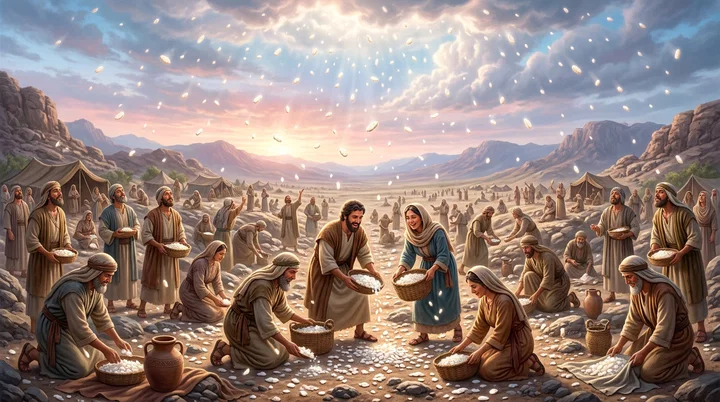
Then said the LORD unto Moses, Behold, I will rain bread from heaven for you; and the people shall go out and gather a certain rate every day, that I may prove them, whether they will walk in my law, or no.
Manna from heaven foreshadows Christ, the life-giving bread from heaven.
- John 6:63
It is the spirit that quickeneth; the flesh profiteth nothing: the words that I speak unto you, they are spirit, and they are life.
Christ’s words are spirit and life, and the Spirit gives life.
- John 6:54
Whoso eateth my flesh, and drinketh my blood, hath eternal life; and I will raise him up at the last day.
Eating Christ’s flesh and drinking his blood brings eternal life and resurrection.
- John 6:1-14
After these things Jesus went over the sea of Galilee, which is the sea of Tiberias.
The feeding miracle precedes Jesus’ teaching about the bread from heaven.
- Exodus 16:15
And when the children of Israel saw it, they said one to another, It is manna: for they wist not what it was. And Moses said unto them, This is the bread which the LORD hath given you to eat.
The manna in the wilderness prefigures the heavenly bread.
- John 6:27-29
Labour not for the meat which perisheth, but for that meat which endureth unto everlasting life, which the Son of man shall give unto you: for him hath God the Father sealed.
Christ gives enduring food that leads to eternal life, received by believing in Him.
- John 4:14
But whosoever drinketh of the water that I shall give him shall never thirst; but the water that I shall give him shall be in him a well of water springing up into everlasting life.
Both describe Christ as giving life through living water that satisfies forever.
- Deuteronomy 8:3
And he humbled thee, and suffered thee to hunger, and fed thee with manna, which thou knewest not, neither did thy fathers know; that he might make thee know that man doth not live by bread only, but by every word that proceedeth out of the mouth of the LORD doth man live.
Manna taught that life comes through God’s sustaining word, not bread alone.
- John 6:29
Jesus answered and said unto them, This is the work of God, that ye believe on him whom he hath sent.
Jesus identifies believing in the One God sent as God’s work.
- John 6:40
And this is the will of him that sent me, that every one which seeth the Son, and believeth on him, may have everlasting life: and I will raise him up at the last day.
Believing in the Son brings everlasting life and resurrection at the last day.
- Matthew 4:4
But he answered and said, It is written, Man shall not live by bread alone, but by every word that proceedeth out of the mouth of God.
Both connect life with receiving God’s nourishment, beyond ordinary bread.
- John 10:10
The thief cometh not, but for to steal, and to kill, and to destroy: I am come that they might have life, and that they might have it more abundantly.
Christ came to give abundant life.
- John 3:16
For God so loved the world, that he gave his only begotten Son, that whosoever believeth in him should not perish, but have everlasting life.
Belief in the Son brings everlasting life.
- John 3:36
He that believeth on the Son hath everlasting life: and he that believeth not the Son shall not see life; but the wrath of God abideth on him.
Belief in the Son brings everlasting life, while unbelief leaves a person without it.
- John 6:57
As the living Father hath sent me, and I live by the Father: so he that eateth me, even he shall live by me.
Those who receive Christ live by him, as he lives by the Father.
- Matthew 6:11
Give us this day our daily bread.
Daily bread is understood as nourishment for the soul and life in Christ.
- John 6:50
This is the bread which cometh down from heaven, that a man may eat thereof, and not die.
Christ’s bread-from-heaven testimony is part of the same test.
- Psalms 78:24
And had rained down manna upon them to eat, and had given them of the corn of heaven.
scripture quoted for bread from heaven
- John 6:53
Then Jesus said unto them, Verily, verily, I say unto you, Except ye eat the flesh of the Son of man, and drink his blood, ye have no life in you.
Life depends on partaking of the Son.
Commentary part 1 of 2
Each commentary is drawn from primary sources: the writings of Ellen G. White and Adventist pioneers and periodicals. Each commentary is separate. Its own words are not a quotation; follow the references to read the source passages.
Ellen G. White
110 sources
The bread God gives is a living person come down from heaven, Jesus Christ himself, sent by the Father to be the life of the soul.FE 455.3–456.1ST Mar 15, 1877Ms 5, 1901, par. 13–15Ms 18, 1895, par. 25 He gives everlasting life to the whole world, to all who receive him, bearing their guilt and raising them to resurrection and immortal life.ST Mar 15, 1877Lt 150, 1903, par. 22–27RH Jun 18, 1901 He is received by coming to him and trusting him as personal Saviour, eating his flesh and drinking his blood by taking his life-giving words into the life until they become part of character.Lt 150, 1903, par. 22–27Lt 82, 1895, par. 18Ms 5, 1901, par. 13–15Lt 81, 1901, par. 11–12Ms 133, 1907, par. 11–13 That heavenly bread is also God's Word, the Scriptures of the Old and New Testaments, to be diligently studied, believed and practiced day by day through prayer and meditation.Lt 82, 1895, par. 18Lt 343, 1905, par. 9Lt 43, 1905, par. 4Lt 5, 1898, par. 13–159MR 113.1–2 Those who so partake are satisfied, strengthened, converted and transformed into his likeness, and then pass what they receive on to other hungry souls.ST Mar 15, 187711MR 340.3Lt 37, 1899, par. 13–17Ms 78, 1902, par. 5–7
Setting and Occasion
Jesus spoke these words in the synagogue at Capernaum on the day after He fed the multitude, giving spiritual teaching on the miracle of the loaves that pointed beyond hope for an earthly kingdom to a deeper meaning.Ms 5, 1901, par. 13–15DA 383.1 His interview with His disciples was interrupted by people searching for Him and bringing their sick and afflicted, which led Him to go to the synagogue to teach as the Bread of Life. Many who had been left on the other side of the lake came there surprised to find Jesus and His disciples already arrived with no boat for crossing, and asked how and when He had crossed the sea. The discourse belongs to His wonderful sermon on the bread of life preached on the occasion of the miracle, setting forth the conditions of eternal life and entrance into the kingdom of God.14MR 335.1–39MR 242.1Lt 17, 1897, par. 6–8
The teaching followed the events of the preceding night, which the disciples recounted to the wondering crowd: the fury of the storm and hours of fruitless rowing against adverse winds, Christ walking upon the water, the fears aroused, His reassuring words, Peter's adventure and its result, and the sudden stilling of the tempest and landing of the boat. It came after the feeding of the five thousand with loaves and fishes and after His walking on the water upon the sea.14MR 335.1–39MR 242.19MR 31.1–2 It also stands connected with the Jews' demand for a sign that He was the Son of God.9MR 31.1–2
The crowd had followed Him because they ate of the loaves and were filled, wanting Him to keep supplying food for physical life and seeking only the temporal advantages they could obtain.Ms 5, 1901, par. 13–15Ms 48, 1895, par. 2–4Lt 17, 1897, par. 6–8 They wanted perishable food rather than food enduring to everlasting life, urged a miracle like the wilderness manna given through Moses, and wanted a temporal, royal kingdom, but He corrected that desire by directing them to food that lasts to everlasting life received by believing on the One the Father sent and sealed.Ms 5, 1901, par. 13–15Ms 151, 1902, par. 18–23Ms 9, 1898, par. 31–32 He told them not to labor anxiously for food that perishes but for the meat that endures to everlasting life, and after feeding the five thousand He refused to be made king because His work and kingdom are spiritual.Ms 48, 1895, par. 2–4Ms 151, 1902, par. 18–23Ms 9, 1898, par. 31–32 While the Bread of heaven stood in their midst unrecognized as the Bread of life, some asked to be given that bread continually, and He then stated plainly that He Himself is the bread of life.Ms 48, 1895, par. 2–4Ms 68, 1897, par. 8
That plain testimony tested those who claimed to follow Him and offended many who resisted reproof and chose human praise over God's admonition, so that when truth exposed their faults they turned away from Jesus rather than reform.Lt 146, 1900, par. 14–15 Many worldly-minded hearers, including professed disciples, turned away when He explained His spiritual kingdom more fully and walked no more with Him.Ms 9, 1898, par. 31–3214MR 335.1–39MR 242.1Lt 13, 1876, par. 1–3 They went back because they sought Him not for the miracle itself but because they ate of the loaves and were filled.Lt 17, 1897, par. 6–8
Bread Is Christ
The bread of God is Christ himself, a living person come down from heaven, the Bread of Life who gives life to the world.FE 455.3–456.1ST Mar 15, 1877Lt 150, 1903, par. 22–27Lt 81, 1901, par. 11–12 He was present among the crowd yet not recognized as the bread of life, and the lesson of the bread of life is stated in clear, definite, positive words repeated over and over to lift minds above the feeding of the five thousand with five loaves and two fishes to higher truth.FE 455.3–456.1Lt 150, 1903, par. 22–27Ms 5, 1901, par. 13–15 Bread pictures the vitalizing, life-giving power of his Spirit: as physical bread sustains the body, this spiritual bread satisfies the heart, strengthens the moral powers, brings continuing refreshment, and ends restless hunger for higher enjoyment and feverish thirst for wealth and honor.ST Mar 15, 187711MR 340.3 He is the believer's source of life, comfort, sobriety, and joy, and receiving him and taking his words into practical life brings lasting spiritual satisfaction, comfort from God, and immortality.FE 455.3–456.1ST Mar 15, 187711MR 340.3 He is divine truth bringing spiritual food to the hungry soul, and this heavenly bread as food for the soul answers spiritual hunger when received.Lt 81, 1901, par. 11–1211MR 340.3
He was given and sent by God the Father as the true bread from heaven for the whole world, the Son of man sealed to give food enduring to everlasting life, and this bread can be obtained from no human agent.Ms 5, 1901, par. 13–15Ms 18, 1895, par. 25Lt 9, 1902, par. 1–7Ms 133, 1907, par. 11–13Ms 48, 1895, par. 2–4 The bread in the desert was not given by Moses, and those who questioned him erred by fixing their eyes on Moses instead of on Christ while sitting in Moses' seat.Ms 5, 1901, par. 13–15Ms 18, 1895, par. 25Ms 48, 1895, par. 2–4Ms 156, 1901, par. 23–27 The manna that sustained Israel was not the true bread but points to the bread God gives, for Jesus identifies himself as the Bread of Life, unlike perishable food and unlike the wilderness manna, giving enduring life received by coming to him, believing in him, trusting him, and depending on him as Saviour and only hope, so that whoever comes never hungers and whoever trusts never thirsts.Ms 5, 1901, par. 13–15Ms 133, 1907, par. 11–13Ms 48, 1895, par. 2–4Ms 156, 1901, par. 23–27 God is not unmindful of physical wants and will provide to satisfy bodily necessities, but the spiritual food Christ provides is of far more consequence than temporal food, so there should be far more anxiety to secure the living bread enduring to eternal life than perishable bread for physical sustenance.Lt 9, 1902, par. 1–7 His love is beyond knowledge, not to be explained but realized in its effects, taking all eternity to reveal its fullness, and he is to be talked of every day as the same beneficent friend today as through the wanderings.Ms 18, 1895, par. 25
Christ himself conducted Israel through the wilderness, was their beneficent friend through their wanderings, and daily fed them manna from heaven and angels' food to preserve physical life, yet that food was only a type of the true bread from heaven.Ms 18, 1895, par. 25Ms 48, 1895, par. 2–4DA 385.3–52SP 276.1 That true manna is the life-giving Spirit flowing from the fullness of God, and as God gave manna to preserve physical life so God sent the gift of his Son that through eating the bread of life people become immortal.DA 385.3–52SP 276.1 He clothed his divinity with humanity to reveal himself as the Way, the Truth, and the Life, and the price of heaven is God's only begotten Son with the way to heaven by faith in Jesus.Ms 25a, 1895, par. 27 He withstood every temptation humanity must endure and by perfect obedience to the law of God through divine power proved humanity can obey it, vindicating the honor and glory of God.Ms 71, 1896, par. 19–20
He is to the world what the tree of life was to Adam and Eve in Eden, whose loss by disobedience meant loss of everlasting life, and he now presents himself as Lifegiver and tree of life to a world starving without knowing it is perishing.Ms 22, 1898, par. 7Ms 71, 1896, par. 19–20 By feeding upon his flesh and drinking his blood spiritual life is perfected and the human family is placed in the same relation to Christ as Christ was to God.Ms 71, 1896, par. 19–20 He is the living manna, the light of the world, and the divine antidote for the sin of the whole world.RH Jun 18, 1901Ms 22, 1898, par. 78MR 162.1–2 Eating that bread does not wait until translation but happens now when a person receives the words of Christ into the heart, laying hold upon truth itself in fellowship of the Spirit and appropriating it as eating the leaves of the tree of life, thereby entering into the life of Christ and appreciating the great sacrifice for the sinful race.Ms 103, 1902, par. 1–3 This is the righteousness of Christ each must accept to have on the wedding garment, for without accepting him no one is a fit guest for the wedding, which is the marriage of humanity with divinity and the standard of character each must reach by taking a firm stand for Christ and surrendering to God what is already his own, not continuing in sin nor measuring character by human ideas or presumption about eternal interests.Ms 13, 1899, par. 1–2
Life for the World
The bread of God come down from heaven gives life to the world by giving enduring, immortal life, not merely preserving physical life as the wilderness manna did.ST Mar 15, 1877Ms 133, 1907, par. 11–13 To receive Him, to believe in Him and become one with Him by eating His flesh and drinking His blood, is to have eternal life.Lt 150, 1903, par. 22–27RH Jun 18, 1901Lt 47, 1891, par. 17–22 That eating and drinking is spiritual, receiving His life-giving words through the Spirit, since flesh by itself profits nothing.Lt 47, 1891, par. 17–22 The believer's life is hid with Christ in God, the Saviour's life is in him even if he dies as Christ died, and he has the hope and promise of resurrection at the last day.RH Jun 18, 1901Lt 47, 1891, par. 17–22 This life is received now, in present oneness with Him, and carried on through eternity, not only at translation.Lt 150, 1903, par. 22–27RH Jun 18, 1901
The gift is free to all and is not confined to time or place, nation or people.Ms 48, 1895, par. 9 Against the effort to make it a national blessing confined to themselves, the Saviour of the world proclaimed it to the whole world.Ms 48, 1895, par. 9 It is for rich and poor, high and low, found through agencies planted at much expense to save souls as well as cure bodies and to teach right habits of living and truth for this time.STB 601.2Ms 59, 1908, par. 27 The sin-pardoning Saviour welcomes the rejected, and the poor and ignorant who have no earthly treasure receive spiritual nourishment and drink the water of life, raised by faith and pardon to the dignity of God's children.7T 226.1–2Lt 113, 1901, par. 8–12 The living manna was meant to bring life to all, but Israel hoarded it and, by refusing to serve the world's salvation, turned the gospel into a counterfeit.DA 35.1–36.2
The provision is full and abundant, exceeding all need, for the provision of salvation is nothing less than Christ Himself with unsearchable, inexhaustible resources furnished in inexpressible love at the costly gospel banquet.Ms 75, 1895, par. 210MR 187.3–188.3Ms 36, 1899, par. 5 Those who come to Him for that bread and for the water of salvation will always be supplied, for what He does is fully done.10MR 187.3–188.3Ms 36, 1899, par. 5 He does exceedingly abundantly above all that can be asked or thought, leaving more than is required.10MR 187.3–188.3Ms 36, 1899, par. 5 Hungry souls eager to hear the Word are to receive Him, who satisfies spiritual hunger and gives life.Lt 237, 1899, par. 1–2 He came to give life more abundantly, carrying on the great process by which believers are made one with Him in this present life to be one with Him throughout all eternity.RH Jun 18, 1901
He bears sinners' guilt that they may receive the merits of His righteousness. He offered Himself for the sins of the world as Sin-bearer for all who eat of Him, withstanding every temptation and by perfect obedience proving humanity can obey.Ms 71, 1896, par. 19–20 He gave His life so the world could have another opportunity to return to loyalty to God.Lt 58a, 1898, par. 21 That self-giving was at infinite cost, and He is the divine antidote for the sin of the whole world.RH Jun 18, 1901 As sin-pardoning Saviour He welcomes the rejected and raises the abandoned through faith and pardon.7T 226.1–2Lt 113, 1901, par. 8–12
Receiving by Faith
The bread is received by coming to him and believing in him as Redeemer and personal Saviour, by trusting him and depending on him as Saviour and only hope.Ms 5, 1901, par. 13–15Lt 81, 1901, par. 11–12Ms 133, 1907, par. 11–13Lt 37, 1899, par. 13–17Lt 9, 1898, par. 4–6 Whoever comes never hungers, and whoever trusts never thirsts, for he himself is that bread come down to give life to the whole world, not manna for physical life through Moses.Ms 5, 1901, par. 13–15Ms 133, 1907, par. 11–13Lt 23, 1896, par. 2–3 Merely seeing him and supposing oneself to believe, without true coming, does not bring his light, life and blessings, and those who asked for the bread continually yet wanted self and not Christ found it unpalatable when offered opportunity to eat.Ms 5, 1901, par. 13–15Lt 23, 1896, par. 2–3Ms 151, 1902, par. 18–23 Eating his flesh and drinking his blood is receiving and assimilating him and his life-giving words until they become part of life.Lt 150, 1903, par. 22–27Lt 82, 1895, par. 18Lt 81, 1901, par. 11–12CH 400.4–401.1Lt 241, 1903, par. 9–10 It is living by what God has revealed and keeping his precepts, keeping the Word and truth continually before the mind and bringing its truths into daily life, for his words are spirit and life while the flesh by itself profits nothing and it is the Spirit that gives life.Lt 82, 1895, par. 18Lt 81, 1901, par. 11–12CH 400.4–401.1Lt 9, 1898, par. 4–6Lt 241, 1903, par. 9–10 Receiving requires first believing on him whom God sent and then working the works of God as doers of the Word.Ms 25a, 1895, par. 27Lt 241, 1903, par. 9–10Ms 151, 1902, par. 18–23 It means understanding and doing his words, dwelling in him, laboring for food enduring to everlasting life rather than for perishing food, surrendering to God what is already his own, denying self, crucifying self, lifting the cross and following wherever he leads, and being willing to do God's will; unless this lesson of believing and then working is understood heaven will be missed.Ms 25a, 1895, par. 27Ms 151, 1902, par. 18–23Ms 13, 1899, par. 1–2Ms 67, 1897, par. 38–39STB 369.3 When reproved, reasoning about humiliation and refusing confession and repentance leaves one outside the narrow path and strait gate.Ms 67, 1897, par. 38–39STB 369.3 It is an actual personal experience now by faith, day by day, not waiting until translation, like eating the leaves of the tree of life.Ms 103, 1902, par. 1–3Lt 93, 1901, par. 11Ms 146, 1903, par. 9–13Ms 62, 1902, par. 8–9 The believer in fellowship of the Spirit lays hold upon truth itself and appropriates it, comprehending and appreciating the truth as it is in Jesus, and by receiving his words into the heart enters into his life and into living union with him, as a branch can live only while connected to the vine.Ms 103, 1902, par. 1–3Lt 93, 1901, par. 11Ms 146, 1903, par. 9–13 In this union one is truly converted and born again, becomes one with him and partaker of his nature, has Christ formed within as the hope of glory with his lifeblood circulating through the soul, grows in grace and in God's Word, and appreciates the great sacrifice made for the sinful race.Ms 103, 1902, par. 1–3Lt 93, 1901, par. 11FE 458.2–459.2Ms 68, 1897, par. 19Ms 146, 1903, par. 9–13 This eating is done by prayerful communion with God, by coming to Christ in earnest prayer, praying much in faith for wisdom, meditating upon its truths, committing the chapter to memory, bringing truth into daily experience, and being taught daily in the school of Christ.Lt 343, 1905, par. 9Lt 93, 1901, par. 116T 165.1–166.2Ms 1, 1888, par. 4Ms 140, 1902, par. 18 The sixth chapter contains important statements needing prayer to God for clearness of understanding, leaving worthless reading aside, and the strength so gained prepares for duty and fills the heart with peace.Lt 343, 1905, par. 9Lt 43, 1905, par. 46T 165.1–166.2Ms 140, 1902, par. 18ST Jan 29, 1902
Bread Is God's Word
The bread sent down from heaven is contained in the Bible, which is the Word of God, the living oracles, the Word of grace to be eaten by faith.21MR 44.1–2Lt 43, 1905, par. 4Lt 40, 1899, par. 17–18Lt 29, 1896, par. 21–23 It is the bread of life because it represents the body and blood of the Son of God.Lt 5, 1898, par. 13–15 Christ's word in both Old and New Testaments is true spiritual food and heavenly manna that sustains all spiritual life and binds people to Christ in God.HCSSP 24.36T 132.1 It carries power and authority that must be fully and unreservedly acknowledged by eating and drinking it and making it part of daily life in order to have eternal life and be saved.STB 369.3 The sixth chapter of John represents the Holy Spirit as present in God's Word, whose element is living and undying.9MR 113.1–2
It does not speak to the understanding alone as a book of knowledge speaks to the intellect, but aims at the heart, speaks to the moral nature, and takes possession of the will.Lt 5, 1898, par. 13–15 It casts down imaginations and every high thing that lifts itself against the knowledge of God and brings every thought captive to the obedience of Christ, for it is the wayward heart that has dragged down the faculties of the soul.Lt 5, 1898, par. 13–15 It spiritually builds up men and women from the food they give the mind, giving spiritual growth.Lt 43, 1905, par. 4 To eat His flesh and drink His blood is to first eat that bread and commune with God, and this puts the element of eternal life into the ministry.Lt 29, 1896, par. 21–23 The one who feeds the flock must first feed himself in this way, and then he sees truth on every side, gains a new perception of truth instead of stale oft-repeated ideas, works as Christ worked, respects the varied minds in his audience, gives a word that touches every case without worldly confusing ideas, and the bread of life he gives satisfies every soul hunger.Lt 29, 1896, par. 21–23
To receive this bread is to feed on Christ spiritually by keeping the Word and truth continually before the mind.Lt 82, 1895, par. 18 Eating the bread that comes down from heaven and gives life means reading and studying the chapter, meditating upon its truths, and committing it to memory, with lessons that older persons as well as younger ones all need to learn.Lt 343, 1905, par. 9 The Word must be brought home to the understanding until mind and soul are filled with its greatness and power, which requires the Scriptures to be thoroughly searched and understood.Ms 57, 1898, par. 22–25 Receiving this bread means voluntarily appropriating the truth until it becomes the very life of the soul, for without so eating there is no spiritual life.Ms 57, 1898, par. 22–25 Eating the Son of God's flesh and drinking His blood means receiving and assimilating His words until they become part of life, living by what God has revealed and keeping His precepts, for Scripture's truths are to be brought into daily life and its revealed knowledge is sufficient for salvation.CH 400.4–401.1Lt 241, 1903, par. 9–10
Believers therefore study and practice the Word, look to Jesus, and live by faith in God's Word, for Christ's words are Spirit and life while the flesh by itself gives no profit.Lt 82, 1895, par. 18 Understanding and living by the chapter's teaching, which sets out the conditions of eternal life, leads to a life that measures with the life of God.Ms 54, 1898, par. 1–2 Letting faith take hold of light beyond satanic deceptions gives spiritual growth, light and understanding, renewal of mind, strength to sinew and muscle, and an education enduring through time and eternity.Ms 15, 1898, par. 16Lt 43, 1905, par. 4 The sixth chapter contains important statements that need prayer to God for clearness of understanding to comprehend, and calls for especially diligent study to distinguish true from false in perilous days.Lt 43, 1905, par. 4 Eating the words of Christ is eating this bread of life, which gives spiritual vitality, and this promise shines as a cheering light amid moral darkness.Ms 15, 1898, par. 16
Nothing but that bread satisfies spiritual hunger, while book learning and worldly wisdom cannot give a true and sure foundation for eternity or bring anyone to the next world to see God.Ms 15, 1898, par. 16 Books and magazines that hinder spiritual growth lead the mind astray and should not be spent time reading.Lt 43, 1905, par. 4 Eating leaves worthless reading aside, keeping magazines off tables and saving dimes and dollars spent for unprofitable reading matter to put in self-denial boxes to help the work in the southern field.Lt 343, 1905, par. 9 Reading that weakens the appetite for Bible study should be shunned, because it distracts the mind from the nourishment needed for God's service.7T 203.4 Feeding the mind on worldly entertainments instead leaves no appetite for this heavenly food or instruction, for the soul that hungers for Christ is filled with His fullness.Lt 58a, 1898, par. 17–20
Worthless, frivolous, and exciting reading, tales and love stories, business cares, evil speaking and backbiting, human sayings and invented adulterated teachings, maxims of men, fictitious novelties and tissues of falsehood must be shunned, for they weaken appetite, distract the mind, leave no relish for heavenly food, starve the flock and cause spiritual consumption, decline and death.7T 203.4ST Mar 5, 19126T 132.1 The Word produces faith that works through love and purifies the soul, cutting away inherited evil tendencies and wrong traits strengthened by habit.ST Mar 5, 1912 Removing these traits prevents them from corrupting the whole person and destroying a good influence; otherwise, a person may become an influence leading to death rather than life.ST Mar 5, 1912 The soul fed where the Lord is not honored loses all relish for wholesome instruction.Lt 58a, 1898, par. 17–20
The Old Testament Scriptures are sufficient, and belief in those Scriptures leads to belief in the New Testament.Ms 32, 1900, par. 30–32 The New Testament was given to illuminate, not replace, the Old Testament, revealing the significance of the whole Jewish economy and its directions for practical holiness and obedience.21MR 44.1–2 Christ's word in both Testaments is contrasted with humanly invented and adulterated teachings, which cannot serve as the true manna.6T 132.1 Christ's work as substitute for sin was ancient Israel's only hope even before His crucifixion, and the living oracles are the flesh and blood of the Son of God.21MR 44.1–2Lt 40, 1899, par. 17–18
Results of Partaking
As physical bread sustains the body, so this spiritual bread satisfies the heart and the hunger of the soul and strengthens the moral powers.ST Mar 15, 1877 It gives continuing refreshment and spiritual vigor, ending restless hunger for higher enjoyment and feverish thirst for wealth, honor, pleasure and variety, and it becomes within believers a well of water springing up into everlasting life.ST Mar 15, 187711MR 340.3 Receiving this heavenly food answers spiritual hunger and supplies strength and comfort from God, for spiritually hungry souls need the bread of life.11MR 340.3Ms 112, 1898, par. 2 The soul that hungers for Christ is filled with His fullness, while feeding the mind on worldly entertainments leaves no appetite for this heavenly food or instruction.Lt 58a, 1898, par. 17–20 As food sustains physical life, Christ sustains the spiritual life and growth of those who trust in Him, and through Him they receive the bread of life and become immortal.ST Mar 15, 1877SC 67.3
Those who trust in Him receive life, comfort, sobriety, and joy, with Christ as an abiding guest in the soul, so there is no need to be dull and indolent or to live only for common earthly excitement.FE 455.3–456.1Ms 68, 1897, par. 7 Coming to Him and believing in Him meets spiritual hunger and thirst, and taking His words into practical life brings lasting spiritual satisfaction.FE 455.3–456.1Ms 67, 1897, par. 22–26 His words can comfort, encourage, strengthen and steady those who receive them, bringing nearness to Jesus with light, peace and abundant satisfaction and fullness of joy.Ms 67, 1897, par. 22–26Ms 10a, 1898, par. 14–167MR 29.3–30.2 The continual chase after pleasure, vanity and variety and drinking deep at selfish pleasure is feeding on that which is not bread, which does not satisfy and ends in disappointment, despondency and despair.Ms 10a, 1898, par. 14–16 Meditating on His love and compassion makes His teaching clear and full of meaning, bringing fresh and reviving power to the mind in wakefulness and pain and giving comfort and restoration in enforced rest from constant burdens and labor.Ms 40, 1892, par. 6–8
Taking in His Word brings thorough conversion and a new life of humility that bears the fruit of a good tree, cherishing in the heart the truth that works by love and purifies the soul.Lt 95, 1901, par. 18–19 As believers take in Christ's Word they grow to reflect His character in unselfishness, integrity, kindness and love, showing the fruits of the Spirit with eternal life and spiritual vigor.ST Oct 3, 1900 This eating is done daily, like taking the leaves of the tree of life, losing self in Him and bringing heaven into coming and going, and it restores the moral image of God in man that was obliterated by sin.Ms 29, 1901, par. 19 Beholding Him changes people into His likeness as they come in earnest prayer, learn from Him, and gain a daily experience with Him.6T 165.1–166.2 Feasting on Christ's Word and receiving its nourishment makes believers Christlike in spirit and character with spiritual refreshment, daily nourishment from Scripture and abiding in Christ, cutting away inherited evil tendencies and wrong traits strengthened by habit lest they corrupt the whole person.Lt 37, 1899, par. 13–17ST Mar 5, 1912
Eating the words of Christ is eating this bread of life, which gives spiritual vitality, and this promise shines as a cheering light amid moral darkness, for book learning and worldly wisdom cannot give a true foundation for eternity.Ms 15, 1898, par. 16 By receiving Christ people are made partakers of His nature and live in Him, enriched with highest blessedness in a life hid with Christ in God that is purified, exalted and devoted to the grandest purposes, which is eternal life.Ms 48, 1895, par. 9 Feeding upon His flesh and drinking His blood perfects spiritual life and places the human family in the same relation to Christ as Christ was to God.Ms 71, 1896, par. 19–20 As the body needs food each day, the soul must feed daily on the Word, which gives light and understanding, renews the mind, and sustains spiritual life and growth in Christ, strengthening the mind and awakening desire to overcome as Christ overcame.MYP 271.3Ms 66, 1897, par. 18–21 The church is fed with this heavenly manna and kept by God's grace, fitted for duty and prepared for service and future immortal life.Lt 2d, 1892, par. 16–17
Rejection and Response
Though the Bread of heaven stood in their midst, many did not recognize him as the bread of life.FE 455.3–456.1Ms 68, 1897, par. 8ST Aug 29, 1895 Some asked to be given that bread continually, yet without true longing for spiritual life that hungers and thirsts after righteousness, so they were not refreshed though the banquet of rich grace was prepared at infinite cost to satisfy that hunger and thirst.FE 455.3–456.1Ms 68, 1897, par. 8ST Aug 29, 1895 In caviling unbelief they blindly referred him to the miracle wrought for their fathers, as God gave manna to preserve physical life and Christ himself had conducted the Hebrews through the wilderness and fed them daily, yet they did not see that God had now sent the gift of his Son that through eating the bread of life people might become immortal.2SP 276.1 Merely seeing him does not bring his light and life and blessings, for many think they believe yet do not truly come to him as personal Saviour and believe in him as Redeemer, and coming to him takes away hunger and believing in him takes away thirst only for those who truly receive.FE 455.3–456.1RH Apr 18, 1907ST Apr 15, 1903
Many readily received temporal food but refused the Word of eternal life, and in rejecting Christ the Bread of life they rejected the truth.Ms 81, 1906, par. 2–817MR 252.4–254.2 The feeding of the five thousand with food passed through the disciples represented hungry souls being fed with the Bread of life and prepared the way for the gospel message, yet the crowd sought only to be filled with loaves and urged a miracle like the wilderness manna, seeing Christ yet not believing.Ms 81, 1906, par. 2–8Ms 151, 1902, par. 18–23 When given opportunity to eat this bread they found it unpalatable because they wanted self and not Christ, having never crucified self and not understanding receiving Christ, while eating it means coming to him and believing on him as the Lamb of God that takes away the sin of the world and as personal Saviour, laboring for the meat that endures to everlasting life rather than for perishing food.Lt 23, 1896, par. 2–3Ms 151, 1902, par. 18–23 His words likened to his flesh and blood can comfort, encourage, strengthen and steady those who receive them by studying and obeying them, but people may desire these blessings and still reject him when they cling to human traditions and ideas.Ms 67, 1897, par. 22–26Ms 151, 1902, par. 18–23
This bread is spiritual food that endures to eternal life and is of the highest consequence, coming from God through Christ and from no human agent, so comparatively little anxiety should be given to temporal food to satisfy temporal hunger, though Christ does not neglect his followers' physical needs.17MR 252.4–254.2Ms 67, 1897, par. 38–39 It satisfies the highest spiritual demands and the hunger of the soul, and when men accept Christ as the Way, the Truth, and the Life all their hungering of soul is satisfied, for the Bread is God's truth confronting the devil's lie.Ms 67, 1897, par. 38–39 It calls not for looking for a temporal kingdom or striving for temporal advancement and worldly pre-eminence after the pattern of the scribes and Pharisees, but for true wholehearted spiritual service in denying self, lifting the cross and following wherever Christ leads.Ms 67, 1897, par. 38–39 Those who live for self feed on empty earthly praise and husks and that which is not bread, spending money and strength without satisfaction unto disappointment and despair, giving comparatively little thought to spiritual demands, and by self-sufficiency and Satan's attributes cannot appropriate the divine life.Ms 67, 1897, par. 22–26Ms 67, 1897, par. 38–39
When truth exposed their faults, many turned away from Jesus rather than reform, for his plain testimony in John 6 tested those who claimed to follow him and set forth the conditions of eternal life and entrance into the kingdom of God.Lt 146, 1900, par. 14–15Lt 17, 1897, par. 6–8 That testimony offended many who resisted reproof and chose human praise over God's admonition, and many who had followed him went back and walked no more with him because they sought him not for the miracle but because they ate of the loaves and were filled, wanting only the temporal advantages they could obtain.Lt 146, 1900, par. 14–15Lt 17, 1897, par. 6–8 Those who when reproved by God reason about humiliation and refuse confession and repentance will never travel the narrow path or enter the strait gate, for the bread of heaven is the words of God carrying power and authority that must be fully acknowledged by eating and drinking them and making them part of daily life in order to have eternal life.STB 369.3 The gospel feast is his invitation and the manna of heaven is set before people starving for the light of life with unsearchable, inexhaustible resources furnished at inexpressible cost, yet those who reject the invitation remain without heavenly provision, and refusing him with earthly excuses manifests failure to feel need for prayer that the Holy Spirit would enlighten reason and bring sanctification of soul and spirit under the bright beams of the Sun of Righteousness.Ms 22, 1889, par. 60–63Ms 75, 1895, par. 2 Feeding upon the heavenly manna means receiving spiritual nourishment from Christ rather than allowing dissatisfaction with preaching to lead to criticism and division and closing the eyes for fear of seeing and being converted.Lt 146, 1900, par. 14–15STB 369.3Lt 244, 1908, par. 10
Sharing With Others
Those united to Christ receive spiritual food from him and pass it on to others, for disciples as his representatives can meet the needs of hungering souls only by first receiving from Christ the source of supply.Ms 81, 1906, par. 2–8RH Aug 11, 1910DA 369.2–4 They must depend on him and not on human beings for strength, guidance and wisdom, finding in him their sufficiency, sanctification, righteousness and reward.Ms 78, 1902, par. 5–7Ms 42, 1902, par. 6–9 They continue to receive as they impart, and are not to send anyone away unfed.RH Aug 11, 1910DA 369.2–4 The feeding of the five thousand, with food passed through the disciples to the multitude, represents hungry souls being fed with the Bread of life and prepared the way for the gospel message.Ms 81, 1906, par. 2–8 What was learned of eternal salvation and the wonderful things of God is to be repeated like the fragments distributed to the throng and carried into all the region round about, so that no word falls useless to the ground and nothing is lost.ST May 7, 1912DA 368.1 The crowd readily received temporal food yet refused the Word of eternal life, and to reject Christ the Bread of life is to reject the truth.Ms 81, 1906, par. 2–8
Gathering this bread means sinking the shaft deep into the mines of truth for precious ore of more value than gold and silver and costly houses with expensive furniture.ST May 7, 1912 This diligent study of the Bread of Life is the foundation for the spiritual principles that should shape education, holding the most precious and important lessons for all being educated in schools.8MR 157.3–158.2Ms 68, 1897, par. 9 Bringing its wonderful truths into practical life gives an education enduring through time and eternity, though as yet only faintly understood, and students must take in Christ's words to understand their privileges, realizing he himself is the great center of life because his words are spirit and life.Ms 68, 1897, par. 9 Feeding upon his words as his very flesh and blood is a matter of first importance to be taught in school at large expense with the most complete faculty, and youth must be educated in regard to the law of Jehovah and the penalty of transgression and that God accepts the ransom made by the Saviour in their behalf when they are obedient.Ms 202, 1898, par. 2 The one who feeds the flock must first eat that bread himself and commune with God, and this puts the element of eternal life into the ministry, giving new perception of truth instead of stale oft-repeated ideas, working as Christ worked, respecting varied minds, giving a word that touches every case without worldly confusing ideas, so the bread of life given satisfies every soul hunger.Lt 29, 1896, par. 21–23 Those who have a knowledge of the truth have the heavenly manna, and that Bread is to be given to souls perishing out of Christ, for keeping it hidden leaves souls to perish while bringing it out puts it on a candlestick where it can shine to all within the house.Ms 11, 1892, par. 1–3 In giving it, nothing that will benefit human beings and relieve the necessity of earth's hungry ones is to be neglected and no temporal advantage let slip, so that nothing is wasted or lost.ST May 7, 1912
Christ also met the physical hunger of the people who came to hear his words of life, showing his care for both bodily needs and spiritual life.17MR 252.1 As people need temporal food they need this heavenly bread continually, both those who serve and those they serve, and as they come day after day for temporal meals both need continual supply.7T 116.4–117.2CH 515.1Ms 122, 1902, par. 6–7 This life-giving bread is shared by speaking the truth to people who do not know it.7T 116.4–117.2CH 515.1Ms 122, 1902, par. 6–7 Serving physical food alone does not give people what they need, for the bread of heaven is spiritual food, the truth that leads to salvation.Lt 153, 1902, par. 5 The bread of heaven is for the rich and the poor, the high and the low, and God designs that they find it and the water of life through agencies of his own planting established at much expense to save souls as well as to cure bodies.STB 601.2 Finding it means being educated in right habits of living, spiritual and physical, and being made acquainted with the truth for this time, with the salvation of many souls at stake, and in God's providence the sick are given opportunity to separate for a time from harmful associations and surroundings and to place themselves where they receive health-restoring treatments and wise instruction from Christian nurses and physicians, by which arrangement people from all churches are reached.STB 601.2
Sources