Deuteronomy 23:25
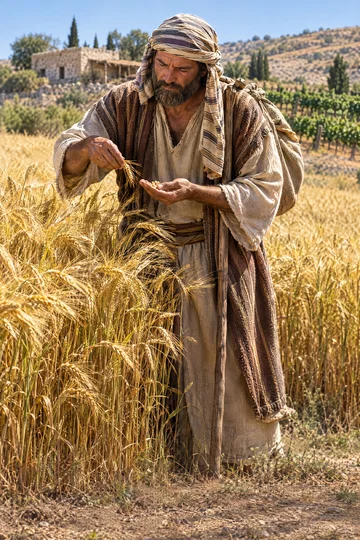
When thou comest into the standing corn of thy neighbour, then thou mayest pluck the ears with thine hand; but thou shalt not move a sickle unto thy neighbour’s standing corn.
Translations
When you come into the standing corn of your neighbor, then you may pluck the ears with your hand; but you shall not move a sickle to your neighbor’s standing corn.
When thou comest into the standing corn of thy neighbour, then thou mayest pluck the ears with thine hand; but thou shalt not move a sickle unto thy neighbour’s standing corn.
When thou comest into the standing corn of thy neighbour’s, then thou mayest pluck the ears with thine hand; but thou shalt not move a sickle unto thy neighbour’s standing corn.
When thou comest into the standing-corn of thy neighbor, then thou mayest pluck the ears with thy hand: but thou shalt not move a sickle to thy neighbor's standing-corn.
When thou comest into thy neighbour’s standing corn, then thou mayest pluck the ears with thine hand; but thou shalt not move a sickle unto thy neighbour’s standing corn.
When thou comest into thy neighbor’s standing grain, then thou mayest pluck the ears with thy hand; but thou shalt not move a sickle unto thy neighbor’s standing grain.
When thou comest in among the standing-corn of thy neighbour, then thou hast plucked the ears with thy hand, but a sickle thou dost not wave over the standing-corn of thy neighbour.
When thou comest into the standing corn of thy neighbour, thou mayest pluck ears with thy hand; but thou shalt not wave the sickle against thy neighbour's standing corn.
When thou enterest the standing corn of thy neighbour, thou mayest pluck off ears with thy hand,—but a sickle, shalt thou not wield against the standing corn of thy neighbour.
Berean Standard Bible, Majority Standard Bible
When you enter your neighbor’s grainfield, you may pluck the heads of grain with your hand, but you must not put a sickle to your neighbor’s grain.
When you come into your neighbor’s standing grain, then you may pluck the ears with your hand; but you shall not use a sickle on your neighbor’s standing grain.
When you go into your neighbour's field, you may take the heads of grain with your hand; but you may not put your blade to his grain.
When thou commest into thy neighbours corne thou mayest plucke the eares with thine hand, but thou shalt not moue a sickle to thy neighbours corne.
Douay-Rheims (Challoner revision)
If thou go into thy friend’s corn, thou mayst break the ears, and rub them in thy hand: but not reap them with a sickle.
Pictures
Cross-references
- Matthew 12:1-2
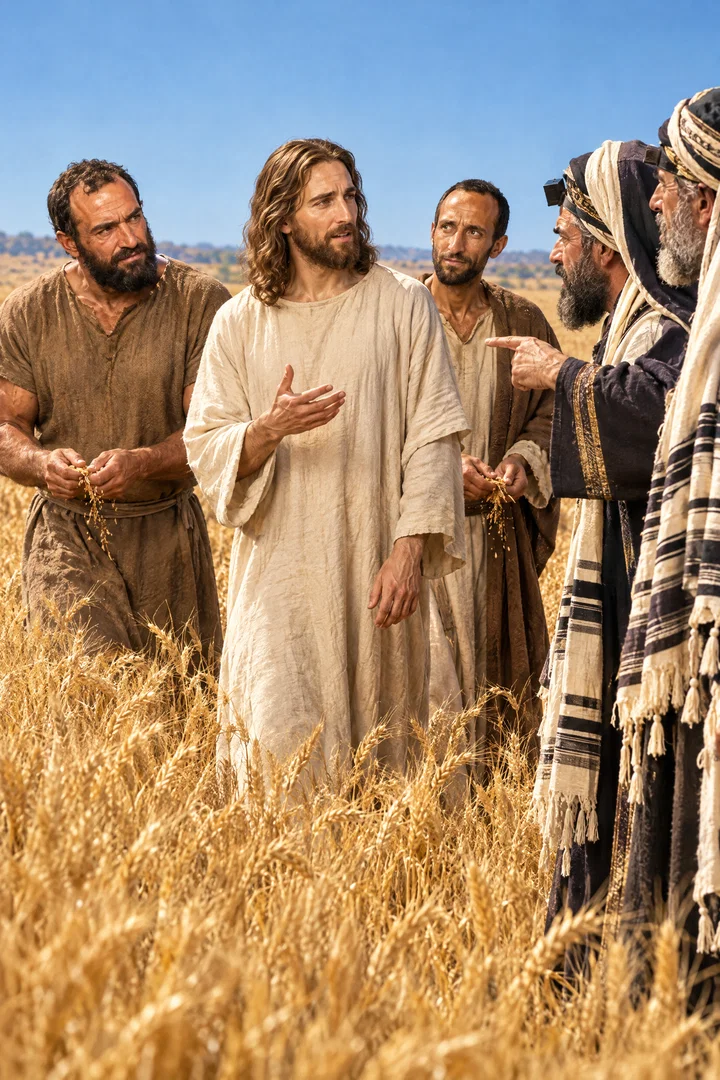
At that time Jesus went on the sabbath day through the corn; and his disciples were an hungred, and began to pluck the ears of corn, and to eat.
The disciples pluck grain as Deuteronomy permits, but are accused of breaking the Sabbath.
- Luke 6:1-5
And it came to pass on the second sabbath after the first, that he went through the corn fields; and his disciples plucked the ears of corn, and did eat, rubbing them in their hands.
The disciples pluck and eat grain by hand, as the verse permits.
- Mark 2:23
And it came to pass, that he went through the corn fields on the sabbath day; and his disciples began, as they went, to pluck the ears of corn.
The disciples pluck grain as the verse allows.
- 1 Samuel 21:1-6
Then came David to Nob to Ahimelech the priest: and Ahimelech was afraid at the meeting of David, and said unto him, Why art thou alone, and no man with thee?
David’s urgent hunger and use of consecrated bread support Jesus’ defense of the hungry disciples.
- Leviticus 19:9-10
And when ye reap the harvest of your land, thou shalt not wholly reap the corners of thy field, neither shalt thou gather the gleanings of thy harvest.
Requires leaving field and vineyard gleanings for the poor.
- Deuteronomy 24:19-22
When thou cuttest down thine harvest in thy field, and hast forgot a sheaf in the field, thou shalt not go again to fetch it: it shall be for the stranger, for the fatherless, and for the widow: that the LORD thy God may bless thee in all the work of thine hands.
Both provide harvest provisions that leave food for the poor.
Commentary
Each commentary is drawn from primary sources: the writings of Ellen G. White and Adventist pioneers and periodicals. Each commentary is separate. Its own words are not a quotation; follow the references to read the source passages.
Ellen G. White
5 sources
When coming into a neighbor's standing grain ready for the sickle, a hungry person may pluck ears with the hand and eat enough to satisfy immediate hunger, rubbing the kernels free in the hands.2SP 195.2–197.1DA 283.4–284.14RED 48.1PP 531.1–2HSFM 165.2 This permission covers a traveler entering the field and eating by hand what is needed for the moment.2SP 195.2–197.14RED 48.1PP 531.1–2HSFM 165.2 It does not permit putting a sickle to the neighbor's standing grain, cutting the standing crop, or carrying it away as a harvest.2SP 195.2–197.1DA 283.4–284.14RED 48.1PP 531.1–2HSFM 165.2 It grants food for immediate need, not a right to harvest another person's crop.2SP 195.2–197.14RED 48.1PP 531.1–2HSFM 165.2 In this way the poor and hungry are given access to food while the landowner's crop is protected from being appropriated.HSFM 165.2
As they passed through a grainfield on the Sabbath, the disciples picked heads and rubbed them to eat, acting under this permission to relieve hunger.2SP 195.2–197.1DA 283.4–284.14RED 48.1PP 531.1–2 They were hungry after long work of teaching and healing, and they ate to satisfy hunger and sustain bodily strength for use in the service of God.2SP 195.2–197.1 Their gathering and rubbing the grain to eat was permitted on ordinary days.DA 283.4–284.1 Religious leaders treated the picking as reaping and the rubbing as threshing, and so condemned the act when done on the Sabbath as a violation of their Sabbath requirements.DA 283.4–284.1
Such picking and eating to meet the body's need remains right and lawful even on the Sabbath.2SP 195.2–197.1 The Sabbath was made to give rest and peace and remind of the Creator, not to interfere with the needs of the body.2SP 195.2–197.1 As Lord of the Sabbath, Jesus acquits those who do this from blame under the very statutes they are accused of violating.2SP 195.2–197.1
Sources
Pioneers and periodicals
7 sources
The verse belongs to the laws governing duties between people.ST Mar 10, 1909 It permits a hungry traveler coming into a neighbor's standing grain to pluck ears with the hand to eat and supply immediate hunger, but forbids moving a sickle onto the neighbor's standing grain to harvest or gather a crop.RH Jan 8, 1857RH Aug 15, 1854ST Feb 17, 1898ST Mar 10, 1909ST Apr 14, 1881 It allows taking a small amount for immediate use, not reaping the field.RH Jan 8, 1857RH Aug 15, 1854RH Sep 2, 1851ST Feb 17, 1898ST Apr 14, 1881 In Nisan, the month of earing at Passover when barley was ripening and the first sheaf had been offered on the second day of the feast, this made it lawful on ordinary days for travelers on a short path near town to pluck barley ears and rub them with the hands and eat, with no blame.ST Apr 14, 1881
The disciples' taking a few ears to satisfy hunger was lawful under this rule and was not theft.RH Jan 8, 1857RH Aug 15, 1854RH Sep 2, 1851ST Feb 17, 1898 The accusation against them concerned Sabbath observance, not taking a neighbor's property.RH Jan 8, 1857RH Aug 15, 1854RH Sep 2, 1851 Sabbath accusers counted the plucking as a kind of reaping and the rubbing as a kind of threshing and grinding and preparing food that should have been done before sunset Friday, so the requirement of beforehand preparation made the act appear unlawful.RH Jan 8, 1857ST Apr 14, 1881 Hunger and inability to provide food in advance made the disciples' act a necessity and a necessary work of mercy rather than needless labor.RH Jan 8, 1857RH Sep 2, 1851 Jesus declared them guiltless, showing that the Sabbath law does not condemn acts needed to meet dire bodily need and did not make them Sabbath-breakers.RH Jan 8, 1857RH Sep 2, 1851
Human restrictions added by Jewish leaders were not part of God's law, which Christ clarified without changing it.ST Feb 17, 1898 The chapter containing the verse had been misconstrued to say that hatred of enemies was taught, but in saying Ye have heard that it hath been said Jesus did not introduce love for enemies as a new doctrine; He restored the real meaning of God's law.ST Jun 15, 1915 The law to which the verse belongs stands fast till heaven and earth pass away, with love for enemies as one of its two component parts.ST Jun 15, 1915 That love is illustrated in detail by helping an enemy with his strayed or fallen beast and by loving, blessing, and praying for those who curse, hate, lie about, or abuse.ST Jun 15, 1915 Loving friends only is what even sinners, murderers, and thieves do, while followers of Christ love enemies after His perfect example.ST Jun 15, 1915
Sources