Leviticus 22:19
Ye shall offer at your own will a male without blemish, of the beeves, of the sheep, or of the goats.
Translations
You shall offer at your own will a male without blemish, of the beeves, of the sheep, or of the goats.
Ye shall offer at your own will a male without blemish, of the beeves, of the sheep, or of the goats.
ye shall offer at your own will a male without blemish, of the beeves, of the sheep, or of the goats.
Ye shall offer at your own will a male without blemish of the beeves, of the sheep, or of the goats.
that ye may be accepted, ye shall offer a male without blemish, of the beeves, of the sheep, or of the goats.
that ye may be accepted, ye shall offer a male without blemish, of the bullocks, of the sheep, or of the goats.
at your pleasure a perfect one, a male of the herd, of the sheep or of the goats;
it shall be for your acceptance, without blemish, a male of the oxen, of the sheep, and of the goats.
that ye may be accepted, [it must be] a male without defect, of the beeves, or of the sheep, or of the goats:
Berean Standard Bible, Majority Standard Bible
must offer an unblemished male from the cattle, sheep, or goats in order for it to be accepted on your behalf.
that you may be accepted, you shall offer a male without defect, of the bulls, of the sheep, or of the goats.
So that it may be pleasing to the Lord, let him give a male, without any mark, from among the oxen or the sheep or the goats.
Yee shall offer of your free minde a male without blemish of the beeues, of the sheepe, or of the goates.
Douay-Rheims (Challoner revision)
To be offered by you, it shall be a male without blemish of the beeves, or of the sheep, or of the goats.
Pictures
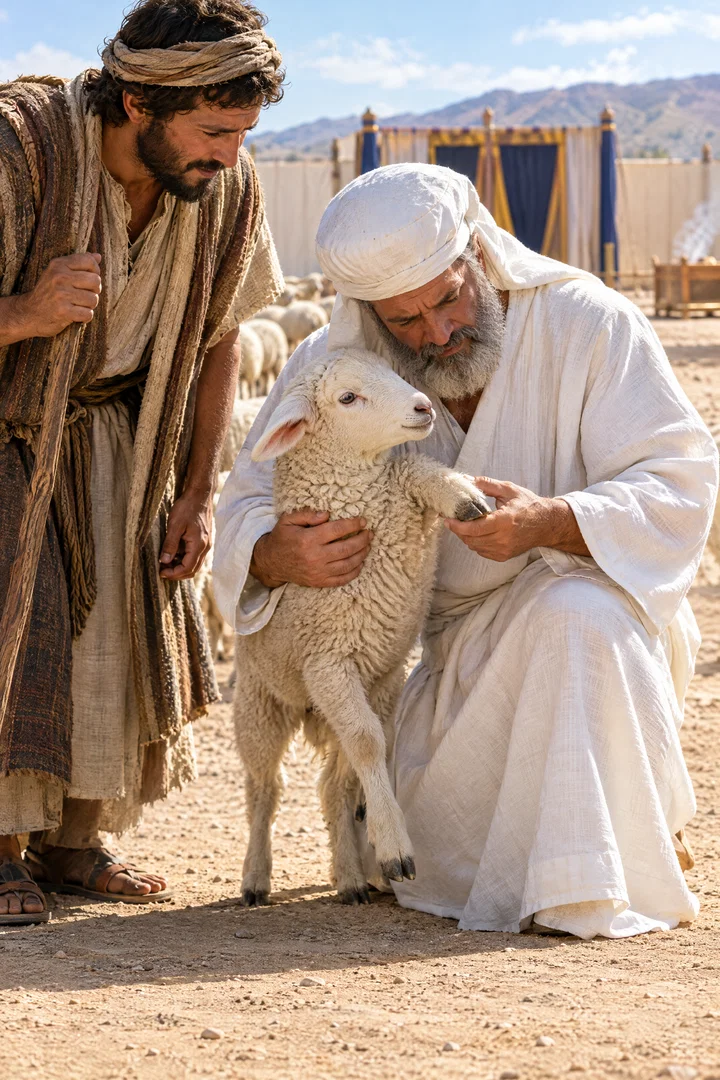
Cross-references
- Romans 12:1
I beseech you therefore, brethren, by the mercies of God, that ye present your bodies a living sacrifice, holy, acceptable unto God, which is your reasonable service.
The blemish-free offering standard informs presenting the body as a living sacrifice.
- Leviticus 1:3
If his offering be a burnt sacrifice of the herd, let him offer a male without blemish: he shall offer it of his own voluntary will at the door of the tabernacle of the congregation before the LORD.
Both require a male animal without blemish offered willingly.
- Deuteronomy 17:1
Thou shalt not sacrifice unto the LORD thy God any bullock, or sheep, wherein is blemish, or any evilfavouredness: for that is an abomination unto the LORD thy God.
both forbid blemished sacrifice
- Malachi 1:13
Ye said also, Behold, what a weariness is it! and ye have snuffed at it, saith the LORD of hosts; and ye brought that which was torn, and the lame, and the sick; thus ye brought an offering: should I accept this of your hand? saith the LORD.
Condemns offering torn, lame, or sick animals instead of acceptable offerings.
- 1 Peter 1:19
But with the precious blood of Christ, as of a lamb without blemish and without spot:
Christ is described as a lamb without blemish.
- Malachi 1:8
And if ye offer the blind for sacrifice, is it not evil? and if ye offer the lame and sick, is it not evil? offer it now unto thy governor; will he be pleased with thee, or accept thy person? saith the LORD of hosts.
Condemns offering defective animals instead of unblemished sacrifices.
- Deuteronomy 15:19-23
All the firstling males that come of thy herd and of thy flock thou shalt sanctify unto the LORD thy God: thou shalt do no work with the firstling of thy bullock, nor shear the firstling of thy sheep.
both limit eating to sound young animals
- Leviticus 3
And if his oblation be a sacrifice of peace offering, if he offer it of the herd; whether it be a male or female, he shall offer it without blemish before the LORD.
Both describe unblemished herd or flock animals offered as sacrifices.
- Ephesians 5:2
And walk in love, as Christ also hath loved us, and hath given himself for us an offering and a sacrifice to God for a sweetsmelling savour.
The passage says Jesus gave himself for us.
Commentary
Each commentary is drawn from primary sources: the writings of Ellen G. White and Adventist pioneers and periodicals. Each commentary is separate. Its own words are not a quotation; follow the references to read the source passages.
Ellen G. White
8 sources
A voluntary offering made at one's own will, freely and willingly, was to be a male without blemish taken from the cattle, the sheep, or the goats.ST Jul 15, 1880LC1 165.2–3ST Oct 5, 1882SG4 195.1–2ST Oct 5, 1882 The rule is extended in the verses that follow to bar any defective, diseased, lame, or injured animal from being offered.ST Oct 5, 1882ST Oct 5, 1882RH Mar 8, 1870 Each animal was carefully examined with scrutiny by the priests, and even the least defect, taint, impurity, or disease was sufficient cause for it to be refused and rejected.LC1 165.2–3ST Oct 5, 18825T 541.4ST Aug 13, 1874
The victim had to be clean, sound, perfect, valuable, and the best of its kind, not polluted or inferior.ST Jul 15, 1880SG4 195.1–2ST Oct 5, 1882ST Aug 13, 1874RH Mar 8, 1870 The clean, best animals were required because they symbolized Christ.ST Jul 15, 1880 The required perfection shows that God is not to be offered what is defective, and offerings to Him should be the best rather than given grudgingly.SG4 195.1–2ST Oct 5, 1882
Christ's followers are therefore to offer God their most valuable gifts and service, withholding nothing given to them for His honor.ST Jul 15, 1880 Applied to building a place of worship, God's people should give their best means to make it suitable and comfortable.SG4 195.1–2 Applied to presenting the body as a living sacrifice, the offering must be the best, holy and acceptable to God, free from sin's pollution and consecrated to holiness, not a diseased, decaying, defiled, lame, or injured offering.LC1 165.2–35T 541.4ST Aug 13, 1874RH Mar 8, 1870
Preserving that living sacrifice means bringing habits into line with God's standard, following natural law and restraint of appetite, so that body, abilities, and powers are kept in healthful condition for physical, mental, and moral health and can serve His will.LC1 165.2–3ST Oct 5, 1882ST Oct 5, 18825T 541.4 A body damaged and degraded by disease, wrong habits, harmful indulgence, and lustful appetite cannot glorify God, maintain consecration, or reach sanctification of body and spirit.LC1 165.2–3ST Oct 5, 1882ST Aug 13, 1874 Healthful condition of the body is necessary for perfection of Christian character.ST Aug 13, 1874
Sources
Pioneers and periodicals
18 sources
The verse lays down part of the law for worship in the Lord's house, showing what makes an offering acceptable for a sinful people approaching a holy God who dwelt among them.RH Feb 3, 1916 What was to be given of one's own will was a free-will gift prompted by an earnest heart, distinct from tithes and first-fruits and meant to meet needs of God's cause not otherwise provided for.RH Apr 7, 1903 The voluntary gift had to be a male without defect from the herd or flock, clean and the best of its kind, sound, young and healthy, examined to shut out anything diseased, polluted or inferior.ST Jul 15, 1880ST Jul 29, 1897ST May 27, 1897 The spotless animal pointed forward to Jesus Christ as the Lamb of God, whose perfect purity a defective creature could not represent, and for that reason God still requires his followers to give him their most valuable gifts and service rather than what is damaged or unwanted.ST Jul 15, 1880ST Feb 7, 1911ST May 27, 1897RH Jul 14, 1868 That same rule of an offering without blemish calls believers to present the body as a living sacrifice holy to God, preserving physical, mental and moral health by habits that follow natural law and restraint of appetite rather than corrupting the body by harmful indulgence.ST Oct 5, 1882ST Oct 5, 1882RH Mar 8, 1870ST Jul 29, 1897
Offering Law Stated
The verse stands among the laws that govern worship, offerings, and ritual of the Lord's house, defining what makes an offering acceptable and providing a suitable approach to a holy God by a sinful yet chosen people with whom God dwelt in the tent set up for him.RH Feb 3, 1916 It is purely legislative, civil, ceremonial, moral, religious and sanitary in content, with most attention given to religious and ceremonial service of the sanctuary, and it remains important and is not to be lightly passed over.RH Feb 3, 1916 At your own will means a free-will offering bestowed of the giver's own free will, prompted by the impulse of an earnest heart.RH Apr 7, 1903 It is distinct from tithes and first-fruits, and more than all other offerings is designed to supply the many needs of the Lord's cause not provided for by them, as when Israel gave willingly for building the tabernacle in the wilderness and for building the temple at Jerusalem.RH Apr 7, 1903
The acceptable voluntary offering had to be a male without blemish, of the beeves, of the sheep, or of the goats, including a lamb.ST Jul 15, 1880ST Oct 5, 1882ST Oct 5, 1882ST May 27, 1897RH Jul 14, 1868 The animals had to be clean and the best of their kind, sound, valuable, young and healthy, as illustrated by giving the fattest and most beautiful lamb in the flock rather than what was least valuable.ST Jul 15, 1880ST Oct 5, 1882ST Oct 5, 1882ST Jul 29, 1897RH Jul 14, 1868 They were carefully examined with scrutiny that rejected even the least defect, taint, disease, or impurity, with defective, diseased, polluted, or inferior animals excluded.ST Oct 5, 1882ST Oct 5, 1882ST Jul 29, 1897 This requirement illustrates the call to offer a living body as a sacrifice that is also perfect, by honoring God's image and respecting the laws that preserve it, and shows that bodies and abilities should be preserved through habits that follow natural law and restraint of appetite.ST Oct 5, 1882ST Jul 29, 1897 Applied to believers, the rule that God was not to be offered what was polluted or inferior shows that presenting the body as a living sacrifice means living to preserve physical, mental, and moral health rather than corrupting the body through harmful habits.ST Oct 5, 1882
The flesh the priests were allowed to eat was only lean meat from those young, healthy, unblemished creatures, with all the fat removed and burned to the Lord.RH Mar 31, 1868 This confirms that diseased and fat meat is unwholesome and unfit for feeble men and women of this age, and gives no license to eat swine's flesh swimming in grease.RH Mar 31, 1868
Christ Foreshadowed, Best Required
The details of sacrifice were object lessons about the sinfulness of sin and types pointing forward to Jesus Christ, the Lamb of God who takes away the sin of the world, finding their fuller meaning in his sacrifice, life, and work.ST Feb 7, 1911 The male without blemish from the cattle, sheep, or goats had to be clean and the best of its kind because it symbolized Christ.ST Jul 15, 1880 The unblemished animal represented his perfect purity as the Lamb offered for sinners, which a defective animal could not symbolize.ST Nov 19, 1894 Because God required the best, those who follow Christ must offer him their most valuable gifts and service, withholding nothing given for his honor.ST Jul 15, 1880 That means giving the fattest and most beautiful lamb in the flock rather than what is least valuable, and never giving something damaged or unwanted merely because nobody else will accept it.ST May 27, 1897RH Jul 14, 1868
The law that God must receive the best of the flock and herd without blemish applies also to time, so that the earliest hour of morning, the best of the day, belongs to seeking God and directing prayer to him in the morning rather than appropriating it to worldly affairs.RH Jul 2, 1861 God does not accept a lame sacrifice, so service must come up to the line and plummet of his righteousness and judgment, and keeping of the commandments must be in letter and in spirit too.RH Jul 7, 1859 Applied to the fourth commandment, this forbids cracking the Sabbath and battering its ends by letting secular pursuits continue too long before it or begin too soon after it.RH Jul 7, 1859 The sacred day must be allowed to retain its perfect proportions unmarred.RH Jul 7, 1859
Every sacrifice brought to the altar had to be without blemish, and the same standard binds Christians yielding themselves to God, with whom there is no respect of persons and before whom believers now are no better than the faithful fathers of old.RH Oct 27, 1859 Confession that claims forgiveness and cleansing from all unrighteousness must therefore spring from sorrow and aversion for sin that forsakes as well as confesses and covers all sin, because incomplete confession brings only incomplete forgiveness and cleansing.RH Oct 27, 1859 Consecration now must be just as entire and unblemished.RH Oct 27, 1859 Because God anciently demanded a blameless sacrifice, he will not accept the soiled and broken remnant of a misspent life.RH Jun 4, 1867 Youthful and healthful days must be given to God, not spent on worldly ambition and sinful pleasure with only what is left offered afterward, for God is not mocked and as a person lives so he will die.RH Jun 4, 1867
Body as Living Sacrifice
The demand that a freely given animal from herd or flock be a male perfect and without defect illustrates the call to offer the living body as a sacrifice that is also perfect, by honoring God's image and respecting the laws that preserve it.ST Jul 29, 1897 The rule that what was polluted or inferior was not to be offered to God shows that to present the body as a living sacrifice holy and acceptable means to live so as to preserve physical, mental, and moral health rather than to corrupt the body through harmful habits.ST Oct 5, 1882 Bodies and abilities are to be preserved through habits that follow natural law and restraint of appetite, for sacrificial victims were carefully examined and had to be physically sound.ST Oct 5, 1882 Applied to Christians' bodies as living sacrifices, the requirement of soundness without blemish means they must be kept free from sin's pollution and consecrated to holiness, since a lame, injured, diseased, decaying, or defiled offering would not pass the test.ST Oct 5, 1882ST Oct 5, 1882RH Mar 8, 1870
The blemishes of that bodily offering may be physical as well as spiritual.ST Jul 29, 1897 The body is God's temple and the means through which Jesus expresses Himself and makes the gospel known, and it should be free to function and convey God's love and wisdom, while practices that bind, warp, or distort it mar the offering.ST Jul 29, 1897 Sacrificial animals were examined with careful scrutiny and offered only when sound, valuable, and without blemish, taint, or disease, with even the least defect or impurity sufficient cause for rejection by the priests, and this defines what it means to present the body holy and acceptable rather than diseased, decaying, or defiled.ST Aug 13, 1874 A body degraded by wrong habits and indulgence of lustful appetite cannot glorify God, maintain consecration, or reach sanctification of body and spirit, because healthful condition of the body is necessary for perfection of Christian character.ST Aug 13, 1874
The flesh allowed to the priests was only lean meat from young, healthy creatures without blemish, with all the fat removed and burned to the Lord.RH Mar 31, 1868 This restriction to sound, healthy animals confirms that diseased and fat meat is unwholesome and unfit for feeble men and women of this age.RH Mar 31, 1868 It gives no license to eat swine's flesh swimming in grease.RH Mar 31, 1868
Sources