Malachi 1:8
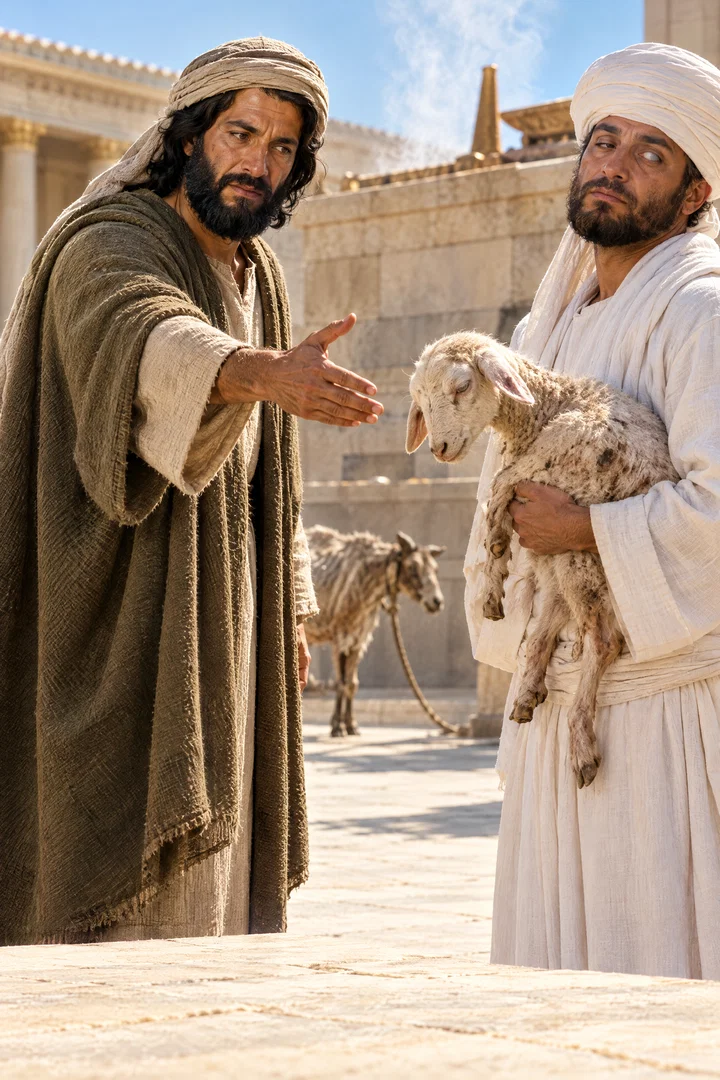
And if ye offer the blind for sacrifice, is it not evil? and if ye offer the lame and sick, is it not evil? offer it now unto thy governor; will he be pleased with thee, or accept thy person? saith the LORD of hosts.
Translations
And if you offer the blind for sacrifice, is it not evil? and if you offer the lame and sick, is it not evil? offer it now to your governor; will he be pleased with you, or accept your person? says the LORD of hosts.
And if ye offer the blind for sacrifice, is it not evil? and if ye offer the lame and sick, is it not evil? offer it now unto thy governor; will he be pleased with thee, or accept thy person? saith the LORD of hosts.
And if ye offer the blind for sacrifice, is it not evil?
And if ye offer the lame and sick, is it not evil?
Offer it now unto thy governor;
Will he be pleased with thee, or accept thy person? saith the Lord of hosts.And if ye offer the blind for sacrifice, is it not evil? and if ye offer the lame and sick, is it not evil? offer it now to thy governor; will he be pleased with thee, or accept thy person? saith the LORD of hosts.
And when ye offer the blind for sacrifice, it is no evil! and when ye offer the lame and sick, it is no evil! Present it now unto thy governor; will he be pleased with thee? or will he accept thy person? saith the LORD of hosts.
And when ye offer the blind for sacrifice, it is no evil! and when ye offer the lame and sick, it is no evil! Present it now unto thy governor; will he be pleased with thee? or will he accept thy person? saith Jehovah of hosts.
And when ye bring nigh the blind for sacrifice, 'There is no evil,' And when ye bring nigh the lame and sick, 'There is no evil;' Bring it near, I pray thee, to thy governor — Doth he accept thee? or doth he lift up thy face? Said Jehovah of Hosts.
And if ye offer the blind for sacrifice, is it not evil? And if ye offer the lame and sick, is it not evil? Present it now unto thy governor: will he be pleased with thee? or will he accept thy person? saith Jehovah of hosts.
And when ye bring near the blind as a sacrifice, [saying] —No harm! or when ye bring near the lame or the sick [saying] —No harm! Offer it, I pray you, unto thy pasha, Will he accept thee? or lift up thy countenance? saith Yahweh of hosts.
Berean Standard Bible, Majority Standard Bible
When you offer blind animals for sacrifice, is it not wrong? And when you present the lame and sick ones, is it not wrong? Try offering them to your governor! Would he be pleased with you or show you favor?” asks the LORD of Hosts.
When you offer the blind for sacrifice, isn’t that evil? And when you offer the lame and sick, isn’t that evil? Present it now to your governor! Will he be pleased with you? Or will he accept your person?” says the LORD of Armies.
And when you give what is blind for an offering, it is no evil! and when you give what is damaged and ill, it is no evil! Give it now to your ruler; will he be pleased with you, or will you have his approval? says the Lord of armies.
And if yee offer the blinde for sacrifice, it is not euill: and if ye offer the lame and sicke, it is not euill: offer it nowe vnto thy prince: will he be content with thee, or accept thy person, saieth the Lord of hostes?
Douay-Rheims (Challoner revision)
If you offer the blind for sacrifice, is it not evil? and if you offer the lame and the sick, is it not evil? offer it to thy prince, if he will be pleased with it, or if he will regard thy face, saith the Lord of hosts.
Pictures
Cross-references
- Leviticus 22:21-22
And whosoever offereth a sacrifice of peace offerings unto the LORD to accomplish his vow, or a freewill offering in beeves or sheep, it shall be perfect to be accepted; there shall be no blemish therein.
Both require sacrifices to be unblemished and forbid offering blind or defective animals.
- Malachi 1:13-14
Ye said also, Behold, what a weariness is it! and ye have snuffed at it, saith the LORD of hosts; and ye brought that which was torn, and the lame, and the sick; thus ye brought an offering: should I accept this of your hand? saith the LORD.
Condemns defective offerings and the contempt they show for God.
- Isaiah 1:12
When ye come to appear before me, who hath required this at your hand, to tread my courts?
God asks who required these offerings, rejecting worship he did not require.
- Romans 12:1
I beseech you therefore, brethren, by the mercies of God, that ye present your bodies a living sacrifice, holy, acceptable unto God, which is your reasonable service.
The call to offer the whole self to God contrasts with giving him only exhausted strength.
- Malachi 1:14
But cursed be the deceiver, which hath in his flock a male, and voweth, and sacrificeth unto the Lord a corrupt thing: for I am a great King, saith the LORD of hosts, and my name is dreadful among the heathen.
Condemns deceiving God by offering a blemished sacrifice.
- Malachi 2:8-9
But ye are departed out of the way; ye have caused many to stumble at the law; ye have corrupted the covenant of Levi, saith the LORD of hosts.
Priests depart from God’s ways and cause others to stumble at the law.
- Deuteronomy 15:21
And if there be any blemish therein, as if it be lame, or blind, or have any ill blemish, thou shalt not sacrifice it unto the LORD thy God.
A blind or lame animal is not fit for sacrifice.
- 1 Samuel 15:22
And Samuel said, Hath the LORD as great delight in burnt offerings and sacrifices, as in obeying the voice of the LORD? Behold, to obey is better than sacrifice, and to hearken than the fat of rams.
Both condemn sacrifice offered in place of obedience to God.
- Malachi 3:8-9
Will a man rob God? Yet ye have robbed me. But ye say, Wherein have we robbed thee? In tithes and offerings.
Withheld offerings dishonor God and are called robbery.
- Exodus 12:5
Your lamb shall be without blemish, a male of the first year: ye shall take it out from the sheep, or from the goats:
both require unblemished offerings to God
- Psalms 50:8-12
I will not reprove thee for thy sacrifices or thy burnt offerings, to have been continually before me.
God declares that sacrifices are not needed because all creation belongs to him.
- Micah 6:6-8
Wherewith shall I come before the LORD, and bow myself before the high God? shall I come before him with burnt offerings, with calves of a year old?
Offerings cannot replace the justice and character God requires.
- Psalms 51:17
The sacrifices of God are a broken spirit: a broken and a contrite heart, O God, thou wilt not despise.
God accepts a broken and contrite heart as a sacrifice.
- 2 Samuel 24:24
And the king said unto Araunah, Nay; but I will surely buy it of thee at a price: neither will I offer burnt offerings unto the LORD my God of that which doth cost me nothing. So David bought the threshingfloor and the oxen for fifty shekels of silver.
offering must cost the giver something
Commentary
Each commentary is drawn from primary sources: the writings of Ellen G. White and Adventist pioneers and periodicals. Each commentary is separate. Its own words are not a quotation; follow the references to read the source passages.
Ellen G. White
37 sources
It is wrong to bring God blind, lame, or sick animals in sacrifice, an insult exposed by asking whether a human ruler would be pleased with such a gift or receive the giver with favor.BS 23.2–3ST Oct 5, 18827T 175.3–5 Such offerings dishonor Him, despise His name, treat His table as contemptible, and withhold from Him as Father and Master the honor and fear due Him.BS 23.2–3ST Oct 5, 1882Ms 106, 1893, par. 1–2 An acceptable offering must be without blemish and from the best of the flock and field, given freely, willingly, and wholeheartedly rather than grudgingly or stingily, for God tests people by their works and sees when a stinted gift reveals a selfish heart.SG4 195.1–21T 221.11T 196.1–2 Giving Him only what is left after self and worldly aims come first, whether money, strength, or service, is that same lame sacrifice, for He calls for the whole person in fervent service of soul, body, mind, and strength.1T 115.2RH Mar 29, 1870RH Mar 29, 1870 Presented as a living sacrifice, the body must not be corrupted by habits that injure physical, mental, or moral health, and work for Him that has cost neither study nor prayer nor careful effort is a maimed offering He rejects.BS 23.2–3ST Oct 5, 18827T 175.3–5GW 64.1GW 114.3
Rebuke of Defective Offerings
To offer God a blind animal is evil, and to offer Him the lame and the sick is evil.BS 23.2–3ST Oct 5, 18827T 175.3–5Lt 46, 1888, par. 12 Such a gift is unworthy and disrespectful, as is exposed by asking whether a human governor would be pleased with it or would accept the person who brought it, for no one would present such an inferior, deficient gift to a ruler and expect his favor.BS 23.2–3ST Oct 5, 18827T 175.3–5Lt 46, 1888, par. 122T 256.3–258.3 The verse rebukes Israel for disregarding God's instruction that only perfect animals were to be offered.BS 23.2–3ST Oct 5, 1882 Those defective offerings dishonored Him, despised His name, treated His table as contemptible, offered polluted bread, and withheld from Him as Father and Master the honor and fear due Him.ST Oct 5, 1882Ms 106, 1893, par. 1–2
An acceptable offering must be without blemish and the best of the flock and field.SG4 195.1–21T 221.11T 196.1–2ST Sep 2, 1886 It must be given freely, willingly, and wholeheartedly rather than grudgingly, stingily, or as a stinted gift, for keeping the best for oneself while giving God what is poor, defective, or worthless is evil and unacceptable.1T 221.1SG2 237.2Lt 11, 1856, par. 6ST Sep 2, 1886 God tests people by their works and knows when a lame, stinted gift reveals a selfish, covetous heart that denies professed faith, even profession of belief in Christ's coming.SG2 237.2 Israel's sacrifices were to be without blemish, the best of the flock, and the whole people were to share in providing them.SG4 195.1–21T 196.1–2
Withholding a suitable share from God brought curses, with loss upon harvests and flocks and affliction upon families, while faithful, free giving was connected with the Lord's blessing on families and possessions.1T 221.1ST Sep 2, 1886 That loss and affliction come in proportion to what is withheld from God's work.ST Sep 2, 1886 Giving God less than is due in order to increase one's own gains brings loss rather than blessing.3T 546.3 To offer something common in place of something holy is robbery of God and a great sin, so taking His own reserved, sanctified, and blessed seventh-day Sabbath for common work while presenting to Him in its place a day He has not blessed commits that same sin.Ms 106, 1893, par. 1–2
Giving God Our Best
Malachi 1:8 applies to presenting the body as a living sacrifice, teaching that the offering to God must not be corrupted by habits that injure physical, mental, or moral health, but that habits of eating, drinking, and dressing should preserve health.BS 23.2–3ST Oct 5, 1882 The evil of offering blind, lame, or sick animals lay in disregarding God's instruction to offer only perfect animals, dishonoring Him and treating His table as contemptible, when such a defective gift would not be expected to please a human governor or gain his acceptance.BS 23.2–3ST Oct 5, 1882 Neglecting the laws of health and failing to care wisely for the entrusted body makes a person's service to God like a crippled, unacceptable offering.
Those able to use the physical organs God gave them give Him a lame, crippled offering when they sin by neglecting exercise and leaving parts of the body inactive.Ms 81, 1894, par. 5Ms 44, 1900, par. 47–48 When some faculties are left unused while others are taxed, the mind can do only a limited amount of work.Ms 81, 1894, par. 5Ms 2, 1870, par. 10–11 Ministers, teachers, students, and other brain workers who continually tax the mind with study while allowing the body to remain inactive and neglecting fresh air and exercise present God with a lame offering.Ms 2, 1870, par. 10–11 In such a course the nerves of emotion are excited while those of motion go unused, the mental organs are enfeebled by overwork and the muscles by lack of employment.Ms 2, 1870, par. 10–11 By contrast, a more active life with strictly temperate habits and physical exercise that diverts from mental effort and draws blood from the brain would give mental and physical vigor and power of endurance.Ms 2, 1870, par. 10–11
Applied to building a house of worship, the verse teaches that God's people should give their best resources to prepare a suitable, convenient, and comfortable place, not less than they would provide for their own homes nor as little as possible as if it were a loss.SG4 195.1–21T 196.1–2 Israel's sacrifices were to be without blemish, the best of the flock, and the whole people shared in providing them, so the whole people should share in this work.SG4 195.1–21T 196.1–2 Church fundraising through feasts, games, dances, fairs, lotteries, gambling, and other appeals to appetite or carnal amusement is like offering a lame or diseased sacrifice.ST Nov 28, 1878Ms 132, 1897, par. 14–17 Such methods are unacceptable to God and bring His displeasure even when the money is intended for church work, for gifts are acceptable only when given willingly from love for Christ and not obtained by appealing to appetite, worldly desires, or carnal amusement.ST Nov 28, 1878Ms 132, 1897, par. 14–17
Giving God only what can be spared after putting self and self-interest first is a lame sacrifice that is evil and unacceptable to Him.1T 115.2 Giving God only the strength and service left over after exhausting oneself for worldly aims and personal interests is an unworthy, unfit offering, not the service He requires and accepts, for He calls for the whole person in fervent service of soul, body, mind, and strength.RH Mar 29, 1870RH Mar 29, 1870 Even those without possessions are accountable to use their strength and to deny themselves in spending and desires, rather than leaving all sacrifice to those who have property.1T 115.2 The verse requires the best in service and giving of ability, thought, and skill as a fitting sign of respect, so offering weak, poorly trained, or unused abilities is not pleasing to God and those serving Him should train and exercise their faculties well.14MR 26.3Lt 56, 1897, par. 4
Applied to ministry and the Lord's work, a maimed, marred sacrifice is work that has cost neither study nor prayer nor effort, and God rejects offerings that cost no care.7T 175.3–5GW 64.1GW 114.36T 412.17T 189.5 The governor comparison exposes the disrespect of giving God what would not be offered to a human ruler, and demands that His work be done carefully, precisely, and reverently rather than negligently or with inferior effort.7T 175.3–57T 189.5 His servants must consecrate themselves without reserve, labor faithfully with utmost energy, and give Him full effort with preparation and reverence for sacred responsibilities.GW 114.36T 412.17T 189.519MR 18.1 Neglecting the appointed hour of prayer because entertaining guests, conversation, and recreation have kept people talking and amusing themselves until too tired to pray is like presenting God a lame, deficient offering.ST Apr 6, 1882MYP 342.2–3ST Dec 17, 1885 Prayer should be given a fitting, early place so it is unhurried, attentive, and accompanied by grateful praise.MYP 342.2–3
Bringing the Lord a polluted offering includes bringing Him a sin-stained soul, which is an unclean, unacceptable offering.LSEGW 330.1–2ST2 14.2STA 123.2STBk 123.2Ms 61, 1890, par. 45 Those who claim to keep His commandments must no longer bow to the idol of human opinions or to shameful lust but press together in unity and be holy in life and character.Ms 40, 1890, par. 107–108 Treating sacred things and offerings for God's service with a grudging, inferior spirit reveals a lack of reverence and places earthly concerns above spiritual ones, like presenting an unacceptable offering to a human ruler.2T 256.3–258.3
Sources
Pioneers and periodicals
70 sources
Malachi condemns bringing blind, lame, sick, torn and otherwise blemished animals for sacrifice as evil, for what is offered to God must be spotless, sound, of the kind He prescribed, and the best of the flock and field.ST Mar 29, 1883ST Aug 14, 1879ST Nov 22, 1899 Such offerings dishonored Him as Father and Master, withholding the honor due a father and the fear due a master and declaring by action that His table is contemptible, even while claiming it is no evil.ST Nov 22, 1899ST Nov 22, 1899ST Nov 22, 1899 The test to offer such a gift now to the governor exposes the insult, for not even an earthly ruler would be pleased with it or accept the person who brought it.ST Nov 22, 1899ST Nov 22, 1899ST Feb 27, 1901 God will not be pleased with or accept service given in this way, but would rather have the sanctuary doors shut than receive what degrades Him before onlookers.ST Aug 14, 1879ST Nov 22, 1899ST Feb 27, 1901 The same evil is done whenever people give Him only what is spared, damaged, or left over in money, strength, time, body, prayer and work, substitute their own will and human devices for what He commanded, or keep Sunday while profaning the Sabbath He sanctified, instead of giving themselves first and then their best freely, willingly and wholeheartedly in obedience.ST Mar 29, 1883ST Nov 22, 1899ST Dec 20, 1899ST Nov 8, 1883RH Jun 10, 1875
Defective Sacrifice and Setting
Malachi 1:8 condemns bringing blind, lame, sick, torn, diseased, blemished, worthless and otherwise unfit animals for sacrifice as evil, for what is offered to God was to be spotless, unblemished, sound, of the kind He prescribed, and the best of the flock and field.ST Mar 29, 1883ST Aug 14, 1879ST Nov 22, 1899ST Feb 27, 1901ST Feb 27, 1901 Such defective gifts dishonored God and treated His service with contempt, giving Him only what could be spared and what cost less, and they could not secure His favor or gracious acceptance.ST Aug 14, 1879ST Nov 22, 1899ST Dec 15, 1909 The offerings were to be worthy of God, offered with love and done well, because His service is sacred and worthy of the best.ST Mar 29, 1883
The priests and people had lost the proper spirit of sacrifice and become mercenary, unwilling to shut the doors of the Lord's house or kindle a fire on His altar for nothing but demanding pay for everything done in His service.ST Feb 8, 1892ST Feb 24, 1887 They called His service a weariness, snuffed at it, and brought what was torn and lame and sick, even worthless animals instead of the best.ST Feb 8, 1892ST Feb 24, 1887ST Jul 15, 1880 The priests' acceptance of inferior offerings to accommodate selfishness showed they had turned from the Lord's ways.RH Mar 31, 1903 Such careless offerings were part of backsliding that brought a curse on the nation.ST Jul 15, 1880
True sacrifice means disinterested benevolence that yields what is precious for the good of others, after the pattern of Christ renouncing the glory He had with the Father before the world was and humbling Himself to death on the cross, and after the first sacrifice by man that prefigured Christ's death.ST Feb 24, 1887 When that spirit of giving the best is lost, labor and service become merely formal, offerings are not acceptable in God's sight, and hearts become estranged from God.ST Feb 24, 1887 The offerings dishonored God as Father and Master by withholding the honor due from a son to a father and the fear due from a servant to a master.ST Nov 22, 1899ST Nov 22, 1899 By that action the offerers despised His name and declared the table of the Lord contemptible, even while claiming it is no evil.ST Oct 5, 1882ST Nov 22, 1899ST Nov 22, 1899ST Nov 22, 1899
The Lord proposes the test to offer such a gift now to their governor, asking whether he will be pleased with them or accept their person, in order to convince them of their dishonor.ST Nov 22, 1899ST Nov 22, 1899 Even an earthly ruler would not be pleased with or accept such an inferior gift, which exposes the insult and shows the offering unworthy by ordinary standards of respect.ST Nov 22, 1899ST Feb 27, 1901ST Feb 27, 1901ST Dec 15, 1909 God, the great King, is no less worthy of honor, and His name is dreadful among the heathen.ST Feb 8, 1892ST Feb 27, 1901 He curses the deceiver who has a male in his flock and vows but sacrifices a corrupt thing to the Lord.ST Feb 8, 1892
The passage belongs to Malachi's message condemning the degeneracy of the priesthood and the shortcomings of God's people, used as illustrations pointing to the closing days of the Christian dispensation, when Christ's second coming and the judgments of the great day of God separate the righteous from the wicked.ST Aug 29, 1911 Israel's torn and diseased offerings failed the conditions attached to the promises and were unfit for a sacrificial system that belonged to a shadow of good things to come.RH Jul 21, 1910 Animal blood is not the gospel way of showing faith in Christ.RH Jul 21, 1910 The mention of maimed offerings also shows that God does not depend on sacrifices or gifts, since all creation belongs to Him.RH Dec 1, 1868
Contempt and Divine Rejection
To bring blind, lame and sick animals was evil because it treated the Lord's service and worship as unimportant and showed contempt for His name, His ordinances, His holiness and His greatness.ST Aug 14, 1879RH Feb 17, 1874ST Feb 27, 1901 It was giving Him only what could be spared and what cost the giver less, while keeping the better for self.ST Aug 14, 1879ST Feb 27, 1901 In doing so the offerers revealed that they valued the unseen God and His service less than a person they could see.ST Feb 27, 1901
It showed less respect for God than for an earthly governor, bringing to the Lord what would not be dared to be presented to a human ruler.ST Jun 18, 1902ST Jan 20, 1909 Such an inferior gift would not please a governor nor move him to accept the person of the giver, and the challenge to offer it to him exposed the disrespect and deception toward God.ST Jun 18, 1902ST Jan 20, 1909 To give God what would be counted unfit for a human ruler was contempt for Him.ST Jun 18, 1902
God would not accept service offered in this way nor be pleased with it, and it could not secure His favor or gracious acceptance.ST Aug 14, 1879ST Nov 22, 1899ST Feb 27, 1901 Even an earthly ruler would not be pleased with an inferior gift nor show favor for it, and much less would the Lord.ST Feb 27, 1901 He would rather have the sanctuary doors shut than receive offerings that dishonor Him, and such cheap, imperfect offerings degraded Him before onlookers.ST Nov 22, 1899ST Feb 27, 1901
To profess to follow God while bringing polluted offerings and neglecting His ordinances is false service. Such offerings contradicted the profession that God had given His own first and best for salvation.ST Jun 18, 1902 They showed unbelief that God had made, or would make, a true offering.ST Jun 18, 1902
To treat worship as a joke and to offer what is defective or unworthy illustrates contempt for holy ordinances.RH Nov 9, 1911 It shows sacred things less respect than would be shown to earthly authority, as the challenge to offer such a gift to a human ruler exposes.RH Nov 9, 1911
Giving, Tithes and Offerings
Malachi 1:8 is instruction about giving that rebukes despising God's name by offering the blind and the lame and sick, and it calls for joyous, bountiful, liberal and faithful giving to support God's work.ST Nov 22, 1899ST Dec 20, 1899 The secret and key of such giving is first giving selves to the Lord, following Christ who gave Himself to redeem from all iniquity and purify a people for His own possession, zealous of good works.ST Nov 22, 1899 An inferior gift that would not be acceptable to a human governor is much less acceptable to the Lord.ST Dec 20, 1899
The same principle applies when only a small amount is given to the Lord's work while spending freely on self, giving God the worst while keeping the best for self and family.ST Nov 22, 1899ST Oct 8, 1885 It condemns keeping a reputation for generosity while serving self first and the Lord afterwards, making the Lord's cause bear every loss and disadvantage while pocketing every gain, as when what is offered is what is flooded in wet seasons and parched in dry seasons.ST Oct 8, 1885 Such offerings reveal a heart that is not pure or acceptable to God, and God would rather have the sanctuary doors shut than receive offerings that dishonor Him.ST Nov 22, 1899
Giving God worthless things and withholding or failing to respond to His claims in tithes and offerings is robbing Him, and He sees it.ST Apr 27, 1882ST Sep 12, 1895 Knowingly choosing ease and comfort instead brings a curse, and offering what is inferior — blind, lame, or sick — is evil and unacceptable, as even a human governor would reject such a gift.ST Apr 27, 1882ST Sep 12, 1895RH Apr 16, 1901 Those who withhold from God's work bring loss upon their harvests and flocks, and affliction upon their families, in proportion to what they withhold.ST Sep 2, 1886RH Apr 16, 1901
Money given to God must be perfect and of the best, not damaged, devalued, or mutilated coins that merchants and conductors will not accept.ST May 27, 1897 To drop such a coin into God's treasury just to get it out of sight is evil, for it treats Jesus as less deserving than men and says in effect that He may have what nobody else will have.ST May 27, 1897 True giving honors Him who gave Himself by offering the best at cost, after the pattern of the lamb without blemish and the gold, frankincense, and myrrh given to the infant Jesus.ST May 27, 1897
An offering to God must not be stinted or defective but suitable, unblemished, the best of the flock and field, and given freely and willingly.ST Sep 2, 1886RH Jun 2, 1868 Giving it freely is connected with receiving His blessing upon family and possessions.ST Sep 2, 1886RH Jun 2, 1868 The principle extends to giving God the best of one's strength, money, and possessions, and to caring for the poor without giving them what one would reject oneself.RH Jan 30, 1872 The offering must be guarded from covetous thoughts, selfishness, and sin so it can be complete and freely given, and the body is also to be offered as a living sacrifice kept by temperance from becoming a blemished offering.RH Jan 30, 1872
Church fundraising through feasts, games, dances, fairs, and lotteries is like offering a lame or diseased sacrifice.ST Nov 28, 1878 Using the money for church work does not make such an offering acceptable, and it brings God's displeasure.ST Nov 28, 1878 Gifts are acceptable only when given willingly from love for Christ, not obtained by appealing to appetite or carnal amusement.ST Nov 28, 1878 True sacrifice means disinterested benevolence that yields what is precious for the good of others, after the pattern of Christ renouncing the glory He had with the Father before the world was and humbling Himself to death on the cross, and after the first sacrifice by man that prefigured Christ's death.ST Feb 24, 1887 When that spirit of giving the best is lost and Israel offers the blind, the lame, and the sick and other worthless animals instead of the best, labor and service become merely formal and mercenary, unwilling to shut the doors of the Lord's house or kindle a fire on His altar for nothing, calling His service a weariness and snuffing at it while bringing what was torn and lame and sick, offerings are not acceptable in God's sight, and hearts become estranged from God.ST Feb 24, 1887
Substituted Worship and Obedience
The priests changed the offerings God had prescribed by substituting the lame and the blind at their own wills, offering polluted and unacceptable worship in place of what was commanded.RH Jun 10, 1875ST Mar 11, 1886ST Jun 12, 1884ST May 20, 1875ST Apr 2, 1896 This was will-worship and not worship in spirit, being guided by feelings and will and following one's own spirit instead of God's commandments.RH Jun 10, 1875ST Mar 11, 1886ST Apr 2, 1896 It volunteered an offering God had not required while withholding what He had commanded, coming from the fleshly mind which is the carnal mind not subject to the law of God.RH Jun 10, 1875ST Mar 11, 1886ST Apr 2, 1896 Such self-chosen worship that disregards God's command is not service pleasing to Him but reflects a perverse spirit claiming to serve Him while replacing what He required with inferior things of its own choosing.ST Jun 12, 1884ST May 20, 1875 It is always and everywhere denounced by God's word and providence and brings His woe.ST Mar 11, 1886ST Apr 2, 1896
To offer God what He has not commanded while claiming the substitute makes no difference is evil, contemptuous and impious disobedience.ST Jun 9, 1881RH Apr 13, 1876ST Nov 8, 1883 It treats His command as a trivial matter because He seems far away, as if He will not notice, yet God notices and does not treat disobedience as trivial.ST Jun 9, 1881RH Apr 13, 1876ST Nov 8, 1883 The question whether a governor would be pleased with such a gift or accept the person offering it exposes the disrespect of expecting acceptance for a defective substitute that one would not dare present to a human ruler.ST Jun 9, 1881RH Apr 13, 1876ST Nov 8, 1883
Presenting a humanly devised substitute for even one of God's commandments is likewise a presumptuous, defective offering, because God's regard for His word and law has not changed and His offerings must be sound and of the kind He prescribed. Setting up as worship or honor to God or to His Son what He has not required, while neglecting what He has expressly demanded, despises His name and offers polluted bread upon His altar.ST Apr 6, 1888 No profession of devotion or claim of desire to sacrifice for God's honor can take the place of obedience, for obedience is the sacrifice that honors God and Christ.ST Apr 6, 1888
God rejects a lame, partial, incomplete or divided offering and requires the whole heart and the supreme love due to Him as Creator.RH Jan 22, 1861RH Dec 10, 1867RH Aug 13, 1857RH Feb 5, 1861 His requirements are holy and just, and He accepts sinners only on the conditions set out in His word, not accepting a divided surrender that keeps back even a small idol or reserve but requiring that all be given to God and His cause.RH Jan 22, 1861RH Aug 13, 1857RH Feb 5, 1861 A lame offering reflects something wrong within the giver rather than unfavorable surroundings, for God measures love and obedience rather than the size of one's work.RH Jul 11, 1871 The verse therefore requires wholehearted devotion and not an offering given while the heart clings to the world.RH Apr 2, 1867 Its lesson is to examine one's faults, confess and forsake them, and give up worldly attractions for eternal life, which must be done before the High Priest leaves the heavenly sanctuary.RH Apr 2, 1867
Sabbath Law and Application
To offer God a substitute for what He commanded is evil and contemptuous, and what is unfit for an earthly governor is not an acceptable offering to God.ST Nov 8, 1883RH Aug 14, 1868 Replacing the Sabbath God commanded with Sunday substitutes an unsanctified offering for a pure one, dishonors what God commanded people to honor, and treats disobedience as obedience.RH Aug 14, 1868 Those who by the traditions of their fathers are out of harmony with the law of God, rather than turn and obey the law as it is, manufacture arguments to excuse disobedience by claiming it makes no difference which day is kept as the Sabbath if only one day in seven is kept.ST Nov 8, 1883 They would not dare treat the governor of the state in this way, but act as if God is far off and will not notice so trivial a matter.ST Nov 8, 1883
Keeping the first day of the week while profaning the seventh-day Sabbath under the claim of honoring Christ is polluted bread upon God's altar that despises His name and treats His table as contemptible, and rejecting the Old Testament to defend it adds to that contempt.ST Apr 6, 1888 God will not be pleased with it or accept the persons who offer it, any more than a governor would accept an inferior gift.ST Apr 6, 1888 When it has been clearly shown to be disobedience to the voice of the Lord, to keep insisting it is obedience presumes on His mercy as King Saul did.ST Apr 6, 1888
Offering a lame or defective sacrifice to God is evil and unacceptable, and the same principle applies to Sabbath keeping.RH Jul 7, 1859 The fourth commandment is cracked when secular pursuits begin too soon or continue too long.RH Jul 7, 1859 God requires commandment keeping to be whole, in both letter and spirit, to meet the standard of His righteousness and judgment.RH Jul 7, 1859 God rejects offerings that are blind, lame, or blemished and requires what is choice and perfect.RH Nov 5, 1861
Applied to Sabbath observance, worldly anxiety, business, and secular plans that crowd or pollute holy time are sacrifices unworthy of God, even when done under the excuse that they serve Him, and they are a lame, forbidden offering that the Lord rejects.RH Nov 5, 1861 His people should give Him their best, purest service, offered willingly.RH Nov 5, 1861 Those who give up worldly gain to observe the Sabbath properly receive His blessing, while those who sin against Him in this way receive His curse.
Whole Life as Offering
Malachi 1:8 shows that to present what is defective or carelessly chosen dishonors God, for to bring blind, lame or sick animals is evil.ST Mar 29, 1883RH Apr 21, 1868 The comparison with a governor exposes the disrespect, since no one would expect such an inferior gift to win a ruler's favor.ST Mar 29, 1883 So God's service, being sacred and worthy of the best, must be offered with love and done well, wholeheartedly and in a way pleasing to Him.ST Mar 29, 1883RH Apr 21, 1868 To give oneself to Christ is an offering to God that must be made as nearly perfect as possible, with special pains to make it the very best.ST Mar 11, 1886 To offer a poor, careless, half-done life is evil, because He deserves at least as much honor as an earthly governor, president or friend, to whom one would be ashamed to give anything but the best, and complacently offering the Lord what one would never think of offering an earthly friend insults Him, while making oneself all that one possibly can be in every everyday duty and work honors and praises Him more.ST Mar 11, 1886
The lesson applies to presenting the body as a living sacrifice, for habits of eating, drinking and dressing should preserve physical, mental and moral health rather than corrupt the offering given to God.ST Oct 5, 1882 Such an offering treated the Lord's table as contemptible, though no one would expect a human ruler to accept what was defective.ST Oct 5, 1882 The same principle calls for giving God the best of one's strength, money and possessions, and for caring for the poor without giving them what one would reject oneself.RH Jan 30, 1872 The body is to be kept from becoming a blemished offering through temperance, and an offering must be guarded from covetous thoughts, selfishness and sin so it can be complete and freely given.RH Jan 30, 1872 Neglecting the laws of health and failing to care wisely for the body God has entrusted to people makes their service to Him like a crippled offering. Sincere repentance and turning from ungodliness, including denying harmful habits, belongs to wholehearted devotion that the Lord will accept so that one may enjoy the Saviour's presence.RH Feb 11, 1862
Giving God only the strength and service left over after exhausting oneself for worldly aims is an unworthy, lame and sickly sacrifice that He does not accept, not the service He requires.RH Mar 29, 1870RH Mar 29, 1870 To spend one's best years in sin and then give Him what is left is ingratitude and a vile response to Him.ST Jun 10, 1880 The remaining life should instead be devoted entirely to God.ST Jun 10, 1880 God calls for the whole person — soul, body, mind and strength — in fervent service, rather than using one's whole strength for personal interests until little energy remains for Him, as if reserving an unfit offering for Him.RH Mar 29, 1870 The image also describes one whose remaining years and strength have been diminished by sorrow, who feels scarcely able to offer God the lame sacrifice of those remaining days.RH Sep 1, 1868
Neglecting prayer for the sake of entertaining guests is like giving God a lame offering, for to present Him with a defective offering is evil.ST Apr 6, 1882 Neglecting the appointed hour of prayer because conversation and recreation have left people too tired to pray is likewise like presenting God a lame offering, since an offering given carelessly or in deficient condition is unacceptable.ST Dec 17, 1885 A sleepy, hollow, forced prayer offered without earnest devotion is likewise unacceptable, for God rejects offerings that are lame or refuse.RH Jul 17, 1860 Giving Bible reading only the time left after worldly work has wearied the mind is like giving God a refuse offering, since to offer Him what is leftover or unfit is an unacceptable sacrifice.RH Jan 22, 1857 Entering the ministry with minds weakened by lack of study and mental training is a lame or sick sacrifice, which is evil, for those who serve God should offer their full strength and preparation rather than a deficient offering.RH Jun 18, 1872
Those who profess Christ but regard His service as hard offer Him deficient service, like a lame sacrifice, which He will not regard, for to offer what is lame is evil and unacceptable to God.RH May 14, 1861 Bringing God a lame or blind offering when one could have done better is evil, not an acceptable way to give.RH Dec 25, 1860 Ignorance and forgetfulness do not excuse failing to seek God and honor Him, nor do lack of wealth or skill excuse giving nothing or giving what is deficient, for Jesus can give wisdom to those who ask, so people should seek Him and do the best they can with what they know.RH Dec 25, 1860 Delaying or neglecting duty because one feels unfit turns reluctance to offer imperfect service into an excuse to abandon the work altogether, so a weak prayer or effort should not be withheld merely because it feels inadequate.RH Mar 20, 1856
An offering that is lame or otherwise defective is not acceptable to God, an image that meets the fear that an imperfect effort to overcome a fault such as sinful talk will not be accepted, yet Jesus promises forgiveness and help in overcoming sin.RH Nov 10, 1868 Faithful service is pictured as an offering that is not lame, as God's people proclaim His truth despite opposition and await their King's reward, for He condemns offering sacrifices that are lame or otherwise unfit.RH Dec 29, 1868 The same warning against a maimed or worthless sacrifice as evil is applied to a person's conduct, asking that no inadequate sacrifice be brought if duty requires one.ST Sep 19, 1911
Sources