Malachi 1:13
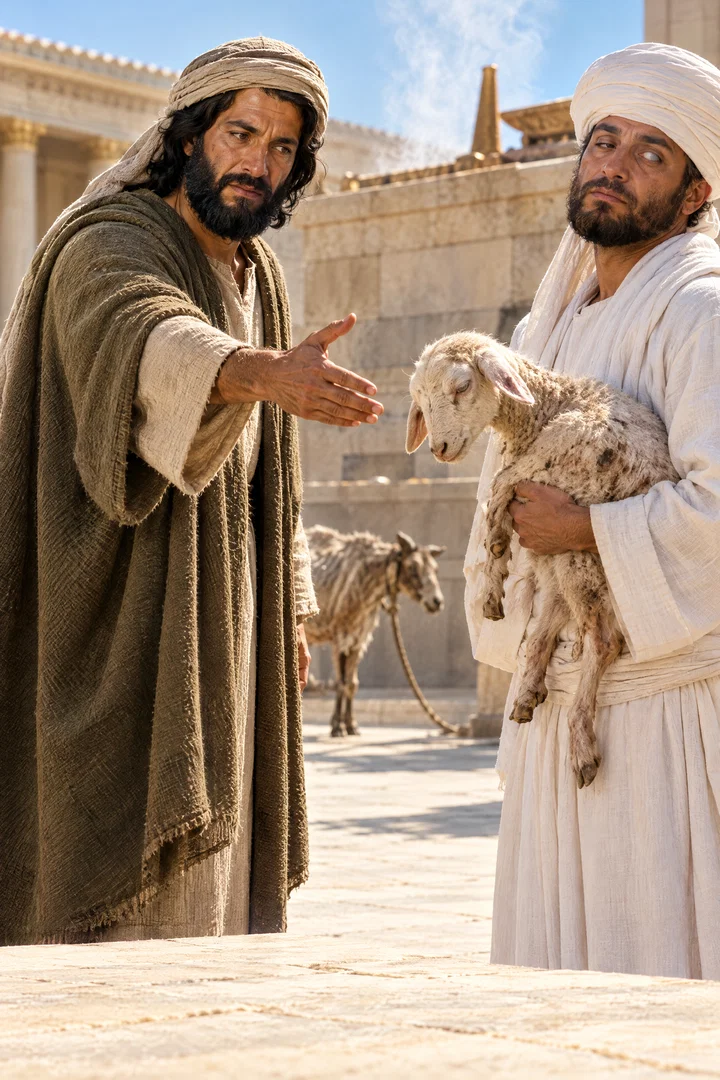
Ye said also, Behold, what a weariness is it! and ye have snuffed at it, saith the LORD of hosts; and ye brought that which was torn, and the lame, and the sick; thus ye brought an offering: should I accept this of your hand? saith the LORD.
Translations
You said also, Behold, what a weariness is it! and you have snuffed at it, says the LORD of hosts; and you brought that which was torn, and the lame, and the sick; thus you brought an offering: should I accept this of your hand? says the LORD.
Ye said also, Behold, what a weariness is it! and ye have snuffed at it, saith the LORD of hosts; and ye brought that which was torn, and the lame, and the sick; thus ye brought an offering: should I accept this of your hand? saith the LORD.
Ye said also, Behold, what a weariness is it!
And ye have snuffed at it, saith the Lord of hosts;
And ye brought that which was torn, and the lame, and the sick;
Thus ye brought an offering:
Should I accept this of your hand? saith the Lord.Ye said also, Behold, what a weariness is it! and ye have snuffed at it, saith the LORD of hosts; and ye brought that which was torn, and the lame, and the sick; thus ye brought an offering: should I accept this from your hand? saith the LORD.
Ye say also, Behold, what a weariness is it! and ye have snuffed at it, saith the LORD of hosts; and ye have brought that which was taken by violence, and the lame, and the sick; thus ye bring the offering: should I accept this of your hand? saith the LORD.
Ye say also, Behold, what a weariness is it! and ye have snuffed at it, saith Jehovah of hosts; and ye have brought that which was taken by violence, and the lame, and the sick; thus ye bring the offering: should I accept this at your hand? saith Jehovah.
And ye have said, 'Lo, what a weariness,' And ye have puffed at it, said Jehovah of Hosts, And ye have brought in plunder, And the lame and the sick, And ye have brought in the present! Do I accept it from your hand? said Jehovah.
And ye say, Behold, what a weariness! And ye have puffed at it, saith Jehovah of hosts, and ye bring [ that which was] torn, and the lame, and the sick; thus ye bring the oblation: should I accept this of your hand? saith Jehovah.
And ye have said, Lo! what a weariness! And ye have snuffed at Me, saith Yahweh of hosts, and have brought in the torn and the lame and the sick, thus have ye brought the present,— Could I accept it at your hand? saith Yahweh.
Berean Standard Bible, Majority Standard Bible
You also say: ‘Oh, what a nuisance!’ And you turn up your nose at it,” says the LORD of Hosts.“ You bring offerings that are stolen, lame, or sick! Should I accept these from your hands?” asks the LORD.
You say also, ‘ Behold, what a weariness it is!’ And you have sniffed at it”, says the LORD of Armies; “ and you have brought that which was taken by violence, the lame, and the sick; thus you bring the offering. Should I accept this at your hand?” says the LORD.
And you say, See, what a weariness it is! and you let out your breath at it, says the Lord of armies; and you have given what has been cut about by beasts, and what is damaged in its feet and ill; this is the offering you give: will this be pleasing to me from your hands? says the Lord.
Ye said also, Beholde, it is a wearines, and ye haue snuffed at it, sayth the Lord of hostes, and ye offred that which was torne, and the lame and the sicke: thus yee offred an offring: shoulde I accept this of your hand, sayth the Lord?
Douay-Rheims (Challoner revision)
And you have said: Behold of our labour, and you puffed it away, saith the Lord of hosts, and you brought in of rapine the lame, and the sick, and brought in an offering: shall I accept it at your hands, saith the Lord?
Pictures
Cross-references
- Leviticus 22:21-22
And whosoever offereth a sacrifice of peace offerings unto the LORD to accomplish his vow, or a freewill offering in beeves or sheep, it shall be perfect to be accepted; there shall be no blemish therein.
Offerings were required to be without blemish, condemning lame sacrifices.
- Malachi 1:8
And if ye offer the blind for sacrifice, is it not evil? and if ye offer the lame and sick, is it not evil? offer it now unto thy governor; will he be pleased with thee, or accept thy person? saith the LORD of hosts.
Both condemn offering blind, lame, and sick animals.
- Malachi 1:6-7
A son honoureth his father, and a servant his master: if then I be a father, where is mine honour? and if I be a master, where is my fear? saith the LORD of hosts unto you, O priests, that despise my name. And ye say, Wherein have we despised thy name?
Polluted, unacceptable offerings show contempt for God and dishonor him.
- Romans 12:1
I beseech you therefore, brethren, by the mercies of God, that ye present your bodies a living sacrifice, holy, acceptable unto God, which is your reasonable service.
The call to offer acceptable sacrifices is applied to believers’ bodies and daily lives.
- Malachi 3:8-10
Will a man rob God? Yet ye have robbed me. But ye say, Wherein have we robbed thee? In tithes and offerings.
Withholding what belongs to God brings judgment, while faithful giving brings blessing.
- Deuteronomy 15:21
And if there be any blemish therein, as if it be lame, or blind, or have any ill blemish, thou shalt not sacrifice it unto the LORD thy God.
Forbids presenting a blemished animal as a sacrifice.
- Isaiah 1:11-13
To what purpose is the multitude of your sacrifices unto me? saith the LORD: I am full of the burnt offerings of rams, and the fat of fed beasts; and I delight not in the blood of bullocks, or of lambs, or of he goats.
Both condemn offerings presented without true devotion.
- Leviticus 3:1-12
And if his oblation be a sacrifice of peace offering, if he offer it of the herd; whether it be a male or female, he shall offer it without blemish before the LORD.
It describes the peace-offering and the animals offered.
- Leviticus 23:18-20
And ye shall offer with the bread seven lambs without blemish of the first year, and one young bullock, and two rams: they shall be for a burnt offering unto the LORD, with their meat offering, and their drink offerings, even an offering made by fire, of sweet savour unto the LORD.
Both prescribe sacrificial offerings presented to the LORD.
- Micah 6:6-8
Wherewith shall I come before the LORD, and bow myself before the high God? shall I come before him with burnt offerings, with calves of a year old?
Both reject inadequate offerings in favor of what God truly requires.
- Hebrews 10:1
For the law having a shadow of good things to come, and not the very image of the things, can never with those sacrifices which they offered year by year continually make the comers thereunto perfect.
The law’s sacrifices are described as a shadow of coming good things.
Commentary
Each commentary is drawn from primary sources: the writings of Ellen G. White and Adventist pioneers and periodicals. Each commentary is separate. Its own words are not a quotation; follow the references to read the source passages.
Ellen G. White
10 sources
The verse exposes Israel and its priests as dishonoring God by calling His service a weariness and snuffing at it with contempt, treating worship as a burden to be performed grudgingly and carelessly.ST Oct 5, 1882BS 23.2–3ST Jan 29, 18804T 470.3–472.11T 196.1–2 Their contempt appeared in bringing as offerings animals that were torn and lame and sick and otherwise damaged and unfit, while keeping the good for themselves, in direct violation of the requirement to bring only perfect animals without blemish.ST Oct 5, 1882BS 23.2–3ST Jan 29, 18804T 470.3–472.11T 221.1 God rejects such offerings as unacceptable, asking whether He should accept this of their hand.ST Oct 5, 1882BS 23.2–3ST Jan 29, 18804T 470.3–472.11T 196.1–2 What is offered to God must be fitting and acceptable, the best and without blemish, given freely and generously and not as sparingly and as little as possible.ST Oct 5, 1882BS 23.2–31T 196.1–21T 221.1SG4 195.1–2 A vow to God is not honored by presenting a corrupt thing, but must be faithfully paid as promised, and withholding what was vowed profanes what is sacred.4T 470.3–472.1
Withholding a proper share brought judgment in poor harvests and flocks and affliction in families, while giving freely was connected with blessing on families and possessions.1T 221.1 The same principle applies to the body, which is to be presented as a living and holy and acceptable sacrifice rather than one corrupted by damaging habits, through daily practices that preserve physical and mental and moral health.ST Oct 5, 1882BS 23.2–3 The same principle applies to building a place of worship, where God's people should give generously of their means and share in providing what is suitable and comfortable, rather than treating what they spend for worship as wasted or as a loss.1T 196.1–2SG4 195.1–21T 195.2 Small, stinted gifts from professed believers contradict their claim to believe that Jesus is coming, for Jesus knows their works and hates such offerings.1T 195.2
A church purpose does not make corrupt means of raising money acceptable, so funds obtained through lotteries and games and fairs and dances and festivals and luxurious feasts are defective, lame and diseased offerings that can lead young people toward ruin.Ms 132, 1897, par. 14–17 Letting guests and entertainment leave people too weary to pray presents God with a lame offering, so prayer should be given an unhurried and attentive and grateful place.MYP 342.2–3
Sources
Pioneers and periodicals
26 sources
The verse describes the priests and the people calling the service of the Lord a wearisome burden and showing contempt for it.ST Feb 8, 1892ST Aug 14, 1879ST Feb 27, 1901 Their contempt was shown by bringing as offerings animals that were torn, lame, sick and otherwise unfit, while keeping the best for themselves, an offering the Lord rejects as unacceptable and unfit to offer even to an earthly ruler.ST Feb 8, 1892ST Aug 14, 1879ST Feb 27, 1901ST Jan 20, 1909ST Jun 5, 1901 God as a great King requires offerings that are fit and without blemish, and the one who has a sound animal yet vows and sacrifices a corrupt thing is a deceiver under a curse.ST Feb 8, 1892ST Aug 14, 1879RH Feb 17, 1874RH Oct 11, 1864ST Jun 5, 1901 Treating regular worship as a weariness dishonors His holiness and greatness and reveals merely formal service from a heart estranged from Him, calling for deep repentance.ST Aug 14, 1879ST Feb 27, 1901ST Jun 18, 1902ST Feb 27, 1901ST Feb 24, 1887 The same principle requires willing, cheerful and wholehearted giving, the presenting of the body as a living and holy sacrifice without divided surrender, and it condemns treating the seventh-day Sabbath as burdensome and contemptible.ST Oct 5, 1882RH May 1, 1855ST Nov 22, 1899RH Aug 13, 1857RH Jan 21, 1875
Words and Historical Setting
The priests and the people called the service of the Lord a wearisome burden and showed contempt for it by sniffing or snuffing at it in scorn.ST Feb 8, 1892ST Aug 14, 1879ST Feb 27, 1901ST Feb 27, 1901RH Feb 17, 1874 Their worship had become merely formal and tiresome, revealing hearts estranged from God and a poor state of piety when regular worship felt like weariness.ST Feb 27, 1901ST Feb 24, 1887RH Jan 21, 1875 The dishonor lay in treating the Lord's house and its offerings as worthless and burdensome rather than holy.ST Oct 5, 1882ST Aug 14, 1879RH Feb 17, 1874ST Aug 29, 1911
That contempt was shown by bringing as offerings animals that were torn, lame, sick, blind, injured, stolen or taken by violence, and otherwise worthless, defective and unfit.ST Oct 5, 1882ST Feb 8, 1892ST Aug 14, 1879ST Feb 27, 1901ST Feb 27, 1901 They offered what was expendable and cheap instead of honoring God with the best, keeping the sound animals for themselves.ST Feb 8, 1892ST Aug 14, 1879RH Feb 17, 1874 Such careless and disrespectful gifts exposed deception, especially when a sound male was present in the flock.ST Aug 14, 1879RH Feb 17, 1874ST Jan 20, 1909
They had lost the proper spirit of sacrifice and the spirit of giving the best, so their labor and offerings were not acceptable in God's sight.ST Feb 8, 1892ST Feb 24, 1887 They would not even shut the doors of the Lord's house or kindle a fire upon His altar for nothing, but demanded payment for everything done in His service.ST Feb 8, 1892ST Feb 24, 1887 This mercenary spirit made every act in the service of God a matter of pay.ST Feb 8, 1892ST Feb 24, 1887
The setting is a degenerate priesthood with neglect of temple worship through covetousness in the work done for God.ST Aug 29, 1911ST Feb 20, 1893 It belongs to the period of the returned exiles, who brought deficient gifts and unwilling service.ST Aug 29, 1911RH Jan 21, 1875 The rebuke falls on both the priests and the shortcomings of the people with them.ST Aug 29, 1911RH Jan 21, 1875
The Lord answers by asking whether He should accept such an offering from their hand, and He rejects it as unacceptable and unworthy.ST Oct 5, 1882ST Feb 27, 1901ST Feb 27, 1901RH Feb 17, 1874ST Aug 29, 1911 Defective, careless service cannot be accepted from those who owe Him reverence as a great King.ST Aug 14, 1879ST Feb 27, 1901RH Feb 17, 1874 The question itself pronounces the curse on the deceiver who vows and sacrifices a corrupt thing while having better available.ST Feb 8, 1892ST Aug 14, 1879RH Feb 17, 1874
Such a gift is unfit for God because it would not have been dared as a gift to a human governor or earthly ruler.ST Jan 20, 1909ST Jun 5, 1901 What an earthly ruler would reject dishonors God when offered to Him, to whom honor is due.ST Jan 20, 1909ST Jun 5, 1901 To offer God less than would be given to man degrades the honor owed to His name.ST Jan 20, 1909ST Jun 5, 1901
The wider passage to which the verse belongs identifies the covenant of Levi as the covenant of the priesthood. That Levitical priesthood covenant is distinct from the Ten Commandments, which are God's covenant and remain in force.
Divine Honor and Prophecy
The offering had to be fit and without blemish, and torn and lame and sick animals were rejected as unacceptable, showing that care is required even in details of worship.RH Oct 11, 1864ST Jun 5, 1901 The people treated the offering as a burden while bringing what was defective.ST Jun 5, 1901 The one who has a sound male in the flock yet vows and sacrifices a corrupt thing is a deceiver under a curse, because God is a great King whose name is dreadful and to be revered among the heathen and the nations.ST Feb 8, 1892ST Aug 14, 1879RH Feb 17, 1874 The same loss of the proper spirit of sacrifice appeared in refusing to shut the doors of the house of the Lord or kindle a fire on His altar without pay, demanding payment for everything done in His service, while calling His service wearisome and expressing contempt for it.ST Feb 8, 1892 The priests treated worship and offerings as a wearisome burden and showed contempt by bringing what was torn and lame and sick, giving what was defective and expendable rather than honoring Him.ST Aug 14, 1879RH Feb 17, 1874
Such careless, half-hearted service dishonors God and degrades His honor, failing to recognize His holiness and greatness and the honor due to Him.ST Aug 14, 1879ST Feb 27, 1901ST Jun 5, 1901ST Feb 27, 1901 An offering that an earthly ruler would reject is not fit for God, and He asks whether He should accept such defective gifts from the hand.ST Jun 5, 1901 The people kept the best for themselves and gave from what remained, deliberately choosing inferior animals that cost less even while the best were still available.ST Jun 18, 1902ST Feb 27, 1901 That practice contradicted their profession that God had given His first and best for salvation and redemption, and expressed unbelief that God had made or would make a true offering.ST Jun 18, 1902
The animal sacrifices belonged to a system that foreshadowed Christ and were offered in faith in the Lamb to whom they pointed, and they were not the gospel way of showing faith in Him.ST Jan 20, 1909RH Jul 21, 1910 They were tied to conditional promises concerning the land and religious services, which Israel failed to meet by offering torn and diseased animals, so that arrangement could not apply in the future.RH Jul 21, 1910 When regular worship becomes a weariness it reveals a poor state of piety, with labor and service merely formal, the spirit of giving the best lost, and the heart estranged from God.ST Feb 27, 1901ST Feb 24, 1887 The contempt was shown by bringing what was torn and lame and sick, with stolen and injured and worthless animals, and such careless and disrespectful service cannot be accepted.ST Feb 27, 1901ST Feb 24, 1887ST Feb 27, 1901 It calls for deep and lasting repentance.ST Feb 27, 1901 The rebuke of the degenerate priesthood and the people's shortcomings also points forward to the closing days of the Christian dispensation and to the separation of the righteous and the wicked at the great day of God.ST Aug 29, 1911
Present Application to Worship
Offerings are not to be given contemptuously or as a mere burden, but with a willing heart, and joyful, generous giving begins by first giving oneself to the Lord in following Christ, who gave himself to redeem and purify a people zealous for good works.ST Nov 22, 1899RH Jan 21, 1875 God rejects unwilling service and deficient gifts, for treating worship as a wearisome burden while bringing what is torn, lame and sick is unacceptable to Him.ST Nov 22, 1899RH Jan 21, 1875 Worship is therefore to be rendered with a willing and cheerful heart, even when His people are in need.ST Nov 22, 1899RH Jan 21, 1875
The same requirement that sacrifices not be careless or inferior applies to presenting the body to God as a living, holy, acceptable sacrifice, through daily habits that preserve physical, mental and moral health.ST Oct 5, 1882 God does not accept a divided surrender, where cherished idols or anything held back from Him makes the sacrifice lame and otherwise unfit.RH Aug 13, 1857RH Sep 15, 1868 Offerings given grudgingly or made up of inferior things, like lame, blind or diseased animals brought while treating the service as a weariness, are rejected by God.RH Apr 16, 1901 Withholding what should be given to God or offering Him what is unfit brings loss rather than blessing.RH Apr 16, 1901
The complaint that the Lord's service is wearisome, with contempt for what is offered to God, applies to those who treat the seventh-day Sabbath, the memorial of creation, as burdensome and contemptible.RH May 1, 1855 Refusal to honor that memorial profanes God's name and work, and calling the Sabbath a grievous yoke or dismissing it as Jewish echoes that weariness and scorn.RH May 1, 1855 To snuff at it is to treat the holy day with contempt, deriding both the Sabbath and those who observe it as keeping the old Jewish Sabbath and a yoke of bondage.RH May 1, 1855
Saying God's service is wearisome and treating it with contempt is wrong when missionary work is abandoned because of small inconveniences or discouragement, making service to God secondary to other concerns.ST Jun 10, 1880 Treating worship as a weariness reflects unwillingness toward religious duty, as when family prayer is found tiresome after the Sabbath because daily practice has not made it familiar and enjoyable.RH Oct 21, 1873 The same words apply to children who keep the Sabbath only as an imposed task because it brings them no delight, who need appealing, age-appropriate instruction and reading to help make the Sabbath a delight rather than a burden.RH Dec 25, 1860 Calling God's service weary expresses contempt for it, and unnecessary absence from worship communicates the same loss of interest, discourages those who attend, gives a poor testimony to others, and shows divided-hearted service which God does not accept.ST Jun 10, 1880RH Oct 21, 1873RH Dec 25, 1860RH Sep 15, 1868
Sources