Leviticus 25:8
And thou shalt number seven sabbaths of years unto thee, seven times seven years; and the space of the seven sabbaths of years shall be unto thee forty and nine years.
Translations
And you shall number seven sabbaths of years to you, seven times seven years; and the space of the seven sabbaths of years shall be to you forty and nine years.
King James Version, KJV Cambridge Paragraph Bible
And thou shalt number seven sabbaths of years unto thee, seven times seven years; and the space of the seven sabbaths of years shall be unto thee forty and nine years.
And thou shalt number seven sabbaths of years to thee, seven times seven years; and the space of the seven sabbaths of years shall be to thee forty and nine years.
Revised Version, American Standard Version
And thou shalt number seven sabbaths of years unto thee, seven times seven years; and there shall be unto thee the days of seven sabbaths of years, even forty and nine years.
'And thou hast numbered to thee seven sabbaths of years, seven years seven times, and the days of the seven sabbaths of years have been to thee nine and forty years,
And thou shalt count seven sabbaths of years, seven times seven years; so that the days of the seven sabbaths of years be unto thee forty-nine years.
And thou shalt count to thee seven weeks of years, seven years, seven times,—so shall the days of the seven weeks of years become to thee forty-nine years.
Berean Standard Bible, Majority Standard Bible
And you shall count off seven Sabbaths of years— seven times seven years— so that the seven Sabbaths of years amount to forty-nine years.
“‘ You shall count off seven Sabbaths of years, seven times seven years; and there shall be to you the days of seven Sabbaths of years, even forty-nine years.
And let seven Sabbaths of years be numbered to you, seven times seven years; even the days of seven Sabbaths of years, that is forty-nine years;
Also thou shalt number seuen Sabbaths of yeeres vnto thee, euen seuen times seuen yeere: and the space of the seuen Sabbaths of yeeres will be vnto thee nine and fourtie yeere.
Douay-Rheims (Challoner revision)
Thou shalt also number to thee seven weeks of years, that is to say, seven times seven, which together make forty-nine years:
Pictures
Cross-references
- Leviticus 25:4
But in the seventh year shall be a sabbath of rest unto the land, a sabbath for the LORD: thou shalt neither sow thy field, nor prune thy vineyard.
The seventh year is a sabbath of rest for the land.
- Leviticus 26:34-35
Then shall the land enjoy her sabbaths, as long as it lieth desolate, and ye be in your enemies’ land; even then shall the land rest, and enjoy her sabbaths.
Neglected land-rest years are repaid by the land’s later rest during desolation.
- Leviticus 25:21
Then I will command my blessing upon you in the sixth year, and it shall bring forth fruit for three years.
God provides enough in the sixth year to sustain the land through its sabbaths.
- Exodus 23:10-11
And six years thou shalt sow thy land, and shalt gather in the fruits thereof:
Both prescribe a sabbath rest for the land.
- 2 Chronicles 36:21
To fulfil the word of the LORD by the mouth of Jeremiah, until the land had enjoyed her sabbaths: for as long as she lay desolate she kept sabbath, to fulfil threescore and ten years.
The land rested during desolation, fulfilling its neglected sabbaths.
- Colossians 2:16-17
Let no man therefore judge you in meat, or in drink, or in respect of an holyday, or of the new moon, or of the sabbath days:
Year and Jubilee sabbaths are shadows whose fulfillment is in Christ.
- Leviticus 25:2
Speak unto the children of Israel, and say unto them, When ye come into the land which I give you, then shall the land keep a sabbath unto the LORD.
listed together as ceremonial sabbaths
- Leviticus 25:13
In the year of this jubile ye shall return every man unto his possession.
Each person returns to their ancestral property.
- Leviticus 25:15
According to the number of years after the jubile thou shalt buy of thy neighbour, and according unto the number of years of the fruits he shall sell unto thee:
Property prices were reckoned by the years remaining until jubilee.
- Exodus 20:8-11
Remember the sabbath day, to keep it holy.
The passage contrasts the Sabbath commandment’s fixed day with the Sabbath year.
- Leviticus 25:16
According to the multitude of years thou shalt increase the price thereof, and according to the fewness of years thou shalt diminish the price of it: for according to the number of the years of the fruits doth he sell unto thee.
Land price varies with the years remaining before Jubilee.
- Deuteronomy 31:10
And Moses commanded them, saying, At the end of every seven years, in the solemnity of the year of release, in the feast of tabernacles,
Both describe the seven-year reckoning and its year of release.
- Leviticus 16:30
For on that day shall the priest make an atonement for you, to cleanse you, that ye may be clean from all your sins before the LORD.
The jubilee begins in connection with the Day of Atonement and cleansing from sin.
- Hebrews 4:9
There remaineth therefore a rest to the people of God.
The seventh-year Sabbath pattern points to a rest remaining for God’s people.
Commentary
Each commentary is drawn from primary sources: the writings of Ellen G. White and Adventist pioneers and periodicals. Each commentary is separate. Its own words are not a quotation; follow the references to read the source passages.
Ellen G. White
6 sources
The count is seven sabbaths of years, seven times seven years, and the space of the seven sabbaths of years is forty and nine years, leading to the fiftieth-year jubilee, the great year of release when the land rests.13MR 135.3Lt 221, 1899, par. 2–513MR 136.1PP 533.2–4 The instruction was given by direct communication from heaven, with the Lord over the whole earth.Lt 221, 1899, par. 2–5 Every seventh year is a yearly sabbath for the land, when agricultural work and cultivation of the soil are not permitted and the land lies uncultivated in its spontaneous growth.13MR 135.3Lt 221, 1899, par. 2–5LS 231.1–232.1 That rest invigorates the worn-out productive soil.Lt 221, 1899, par. 2–5
The spontaneous growth is for the benefit of the poor with free access for all, including strangers and livestock, flocks and herds.13MR 135.3Lt 221, 1899, par. 2–513MR 136.1 Under special divine supervision and special interposition under God's supervision the sixth year yields enough provision for three years as a constant lesson of His ownership and care.Lt 221, 1899, par. 2–513MR 136.1 The cycle teaches that God is the householder and owner of the land and the people are His tenants, that the land is the Lord's, that He makes it productive by His blessing upon obedient people, and that He cares for the poor and has made provision for them.13MR 135.3Lt 221, 1899, par. 2–513MR 136.1
The verse belongs to the laws concerning distribution of property whose principles teach liberality and overcome stinginess.Lt 221, 1899, par. 2–5ED 44.113MR 136.1 If observed, those principles would prevent oppression of the poor and the resulting hatred between rich and poor, hinder the amassing of great wealth, and help prevent the ignorance and degradation caused by ill-paid servitude.ED 44.1 These requirements are specifications of practical missionary duty of one to another and the principles of Christianity and the gospel of the Old Testament, binding in the present age of light.Lt 221, 1899, par. 2–5 They require obedient liberality toward brethren working in hard fields instead of selfishly closing the heart and refusing and saying No.Lt 221, 1899, par. 2–5
The verse does not mean that it is now sin to labor or that people are now in the jubilee and must stop work while the poor are supported without labor.LS 231.1–232.1 Teaching that labor must cease and property must be sold and given away on that ground is error that confuses and distracts.LS 231.1–232.1 It deceives some, cannot prosper, and will be brought down while truth triumphs in the end.LS 231.1–232.1
Sources
Pioneers and periodicals
36 sources
The verse commands the counting of seven groups of seven years, making forty and nine years, with the year following as the fiftieth year, the year of jubilee.RH Mar 12, 1901ST Sep 26, 1911ST Feb 10, 1914RH Jan 26, 1905 That jubilee was ushered in by trumpet on the tenth day of the seventh month, the Day of Atonement, at the close of the forty-ninth year.SMV 22.1–24.1ST Feb 10, 1914RH Jul 24, 1900 At jubilee liberty was proclaimed, those who had sold their service were freed, and every person returned to family and possession with land restored to its original owner.ST Sep 26, 1911ST Aug 25, 1909ST Feb 10, 1914 These sabbaths of years are ceremonial sabbaths of a lower order, distinct from the weekly seventh-day Sabbath, belonging to the ordinances pointing to Christ that expired and were abolished at his death while the weekly Sabbath remained.RH Aug 31, 1905RH Mar 19, 1857ST Apr 30, 1894 The jubilee points to the time when God will free His people from death and worldly bondage into eternal freedom, a release fulfilled in Christ as present earnest of freedom from sin and full inheritance when He comes.ST Nov 11, 1908
Counting the Forty-Nine Years
The verse commands a count of seven sabbaths of years, that is seven periods of seven years, making forty and nine years in all.RH Mar 12, 1901ST Sep 26, 1911ST Feb 10, 1914RH Jan 14, 1862 Each sabbath in the count is a sabbatical period of seven years, so seven such cycles complete the forty-nine years that lead to jubilee.RH Mar 12, 1901ST Sep 26, 1911RH Jan 14, 1862ST Aug 25, 1909 The year following those forty-nine years is the fiftieth year, the year of jubilee, when liberty was proclaimed, property returned to its former owner, Israelites who had sold their service were freed, and each person was restored to his inheritance.RH Mar 12, 1901ST Sep 26, 1911RH Jan 26, 1905RH Jan 14, 1862
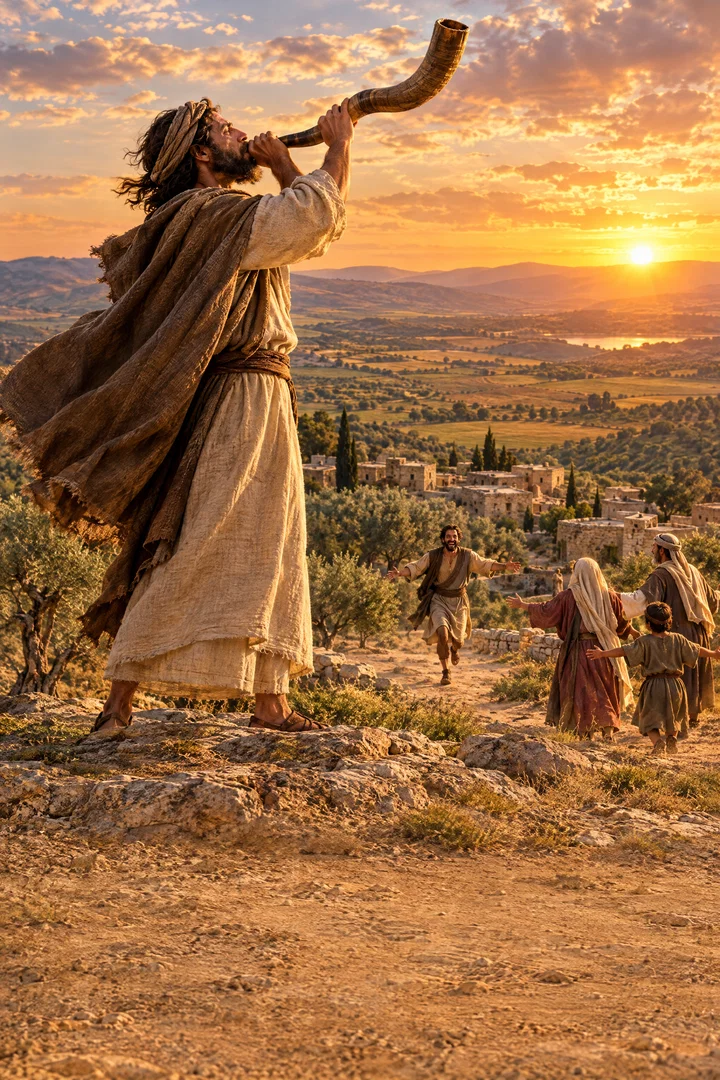
The jubilee is ushered in by trumpet on the tenth day of the seventh month, the Day of Atonement, at the end of the forty-ninth year.SMV 22.1–24.1ST Feb 10, 1914RH Jul 24, 1900ST Feb 10, 1914 That sounding hallows the fiftieth year and proclaims liberty throughout the land, with every man returning to his possession and to his family.SMV 22.1–24.1ST Feb 10, 1914RH Jul 24, 1900 The tenth day of Tisri in the fiftieth year thus opens the jubilee, announced when the forty-ninth year ended at the close of the Day of Atonement as a time of release and restoration.ST Feb 10, 1914RH Jul 24, 1900ST Feb 10, 1914
In the verse sabbaths means groups or weeks of seven years, also described as seven weeks of years, showing that Sabbath can refer to a seven-part week or group and not only to the seventh day.RH Jun 4, 1908 The continued counting of years in seven-year cycles totaling forty-nine years confirms that the older year beginning in the fall was not discontinued when the sacred year beginning in the spring was established.ST Jun 26, 1879 Belonging to the chapter that identifies the seventh year as a Sabbath year and counts seven cycles of seven years, the verse also shows that a Sabbath year is not tied to one particular calendar year.ST Jun 26, 1879RH Jan 10, 1856
Jubilee Practice and History
At the close of the forty-nine years counted as seven groups of seven years, the jubilee was proclaimed as a time of liberty and restoration, when Israelites who had sold their service were set free and every person returned to his possession and to his family, with land and property returning to its former and original owner.ST Sep 26, 1911ST Aug 25, 1909ST Feb 10, 1914 The release and restoration then announced pointed forward to the eternal inheritance in the antitypical jubilee.ST Feb 10, 1914
Because all sold land returned at jubilee, only its use until its return was bought, so its price varied with the nearness of the jubilee.ST Apr 3, 1884ST Jun 18, 1885 When the jubilee was far off the land brought nearly full value and a proportionately higher price because many years remained, and when near it brought only a small sum and a lower price because possession would be short.ST Apr 3, 1884ST Jun 18, 1885 Every seventh year in the count was a year of rest for all things, in which after six years of cultivation the land lay fallow and rested, with general release from all debts, setting free of bondsmen, and reading of the law to the people.RH Jan 22, 1857RH Jan 14, 1862
The sabbatical year was almost entirely disregarded, and though the jubilee held a very prominent place in the typical system, the whole Bible records not a single instance of its observance, with no evidence that it was ever observed.RH Jan 14, 1862RH Dec 10, 1861 The lack of a recorded instance does not prove that it was not observed.ST Dec 7, 1915 The year sabbaths and jubilee sabbaths, the land sabbaths and the jubilee, were national observances given for a specific time and purpose and depended on Israel's possession and cultivation of its own land.ST Jun 9, 1914RH Jan 14, 1862
The provision of the year of jubilee was given to offset the inclination covetously to increase land and houses and to accumulate great holdings through sharp dealing, preventing land monopolies by returning each family and tribe to possession of its allotted land.ST Nov 20, 1901ST Jun 18, 1885 Under the law the right to redeem lay with him who was nearest of kin, beautifully foreshadowing the true position of Christ as Redeemer, who to redeem mankind had to become man's near Kinsman by taking man's flesh and blood as the Son of Man.ST Nov 1, 1910 Like the year of release for bond-servants, the year of rest for the land, and the customs concerning the Goel, the jubilee served a utilitarian and even beneficent purpose in its own time, but its far greater importance lies in its symbolical character typical of heavenly things, testifying to divine origin and preserved for present instruction.RH Mar 12, 1908
Future Jubilee Hope
The forty-nine years are reached by counting seven sabbaths of years, each period seven years, with the fiftieth year following as jubilee. That jubilee points to the time when God will free his people from the bonds of death and grant them eternal freedom. It is typical of the passing of God's people and God's children from the bondage and slavery of this world into the liberty and glory of God's kingdom. The numbering toward that jubilee foreshadows the jubilee of heaven and earth, the grand Sabbatic year at the coming of Jesus Christ to claim the kingdoms of this world, now about to break after nearly six thousand years of Christ standing before a fallen, redeemed race as the Lamb newly slain and nearly two thousand years of his absence, preceded by a great crisis and a short, sharp conflict with the man of sin even through seas of blood that quickens the cry, Come, Lord Jesus, come quickly.RH Dec 16, 1873
After seven cycles of seven years totaling forty-nine years the next year is the year of jubilee, when land returns to the family of its original owner.RH Jan 26, 1905 Just as it follows the seventh sabbatical year, so the eighth millennium follows the seventh and begins with the earth made new as the home of the redeemed, making the jubilee a type of the new creation.RH Jan 26, 1905 The jubilee followed those seven weeks of years and was announced when the forty-ninth year ended, at the close of the Day of Atonement, as a time of release and restoration pointing to the eternal inheritance in the antitypical jubilee.ST Feb 10, 1914 Its meaning is fulfilled in Christ, in whom freedom from sin is an earnest of the jubilee believers experience now, while the full jubilee comes when they enter their eternal inheritance, blessings potentially present in Christ when he rose victorious from the grave.ST Nov 11, 1908
Prophetic Jubilee Calculations
The seven sabbaths must be completed through seven kinds of Sabbaths: the seventh day, the fiftieth day, the seventh week, the seventh month, the seventh year, the seven times seven years with the fiftieth jubilee, and the seven times seven jubilees with the fiftieth jubilee bringing the complete or perfect Sabbath.SMV 22.1–24.1 The numbering of seven sabbaths of years, seven times seven years, forty and nine years, leads to the fiftieth-year jubilee when the trumpet sounds on the tenth day of the seventh month, the day of atonement, throughout the land.SMV 22.1–24.1 Then the fiftieth year is hallowed, liberty is proclaimed to all inhabitants, every man returns to his possession and to his family, nothing is sown or reaped or gathered from the undressed vine, the jubilee is holy and its increase is eaten out of the field.SMV 22.1–24.1 This typical jubilee points to the antitypical great Jubilee of Jubilees when the people of God come into the inheritance of the purchased possession, the redemption of their bodies, and the trumpet proclaims glorious liberty through all the land.SMV 22.1–24.1 The Jews kept only six of the seven and broke the seventh, leaving its keeping for the people of God.SMV 22.1–24.1
The great Jubilee of Jubilees is seven times seven fifties, forty-nine times fifty, equal to 2450 years.SMV 22.1–24.1 No year of release or jubilee was kept after the reign of Josiah, the last obedient king of Jerusalem, which ended in B.C. 607, when the Jews had kept no more than twenty-one jubilees and lacked twenty-three of the great Jubilee.SMV 22.1–24.1 After that neither kings, nobles, people nor lands could be redeemed and the land was to lie desolate while the people were in their enemies' land.SMV 22.1–24.1 The 2450 years began when the keeping of the Sabbaths and jubilees ceased at the close of Josiah's reign in B.C. 607, and 2450 minus 607 brings the Jubilee of Jubilees in A.D. 1843, when Christ comes and rewards every man as his work shall be.SMV 22.1–24.1
The prophetic period of the Great Jubilee is also reckoned as 2460 years from the captivity of Jehoiakim.RH Sep 10, 1857
Ceremonial Sabbath Distinction
The sabbaths of years in the verse are sabbaths of the land, not the weekly Sabbath of the Lord.RH Aug 31, 1905RH Mar 19, 1857ST May 16, 1878RH Mar 31, 1863 They belong to the ceremonial code as institutions of a lower order, forming a separate class distinct both from the Lord's weekly seventh-day Sabbath and from the feast-day and annual sabbaths.RH Aug 31, 1905ST Apr 30, 1894ST May 16, 1878RH Aug 29, 1871RH Mar 31, 1863 The verse numbers seven sabbatical periods of seven years, a span of forty-nine years in connection with the land sabbath and jubilee, with the fiftieth year following as its own year-based sabbath alongside the seventh-day and seventh-year sabbaths.ST Apr 30, 1894ST May 16, 1878RH Mar 31, 1863
They belong to the law of commandments contained in ordinances which gave them their force, and to the sabbatical system pointing forward to Christ and His ministry as shadows.RH Aug 31, 1905ST Apr 30, 1894ST Jun 9, 1914 As national observances given for a specific time and purpose for Israel and its land, they were local sabbaths that expired by limitation, were abolished at the cross when that law ceased, and were not binding after Christ's death.RH Aug 31, 1905RH Mar 19, 1857ST Apr 30, 1894ST Jun 9, 1914 They pertained to the earthly inheritance in the land of Canaan, so that when that inheritance was trodden down by the Gentiles after the dispersion they could not be kept, while the weekly Sabbath remained unaffected.RH Aug 31, 1905RH Aug 29, 1871
The seventh year and the fiftieth year were peculiarly Jewish, unlike the weekly seventh-day Sabbath.ST Dec 18, 1893 There was no whole seventh-month sabbath, only certain holy days in the seventh month, and the seven annual sabbaths and feast days are distinct from the Sabbaths of the Lord.ST Dec 18, 1893 The laws about the seventh year and the year of jubilee are raised as a challenge to keeping the seventh-day Sabbath without keeping those annual observances. The verse gives part of the Lord's standard of Sabbath keeping and reverence, calling for life to conform to it.RH Feb 10, 1916
Present Practical Application
The counting toward jubilee shows that all sold land returned to its original possessor, so its price varied with the nearness of jubilee, bringing nearly full value when far off and only a small sum when near because only short possession was bought.ST Apr 3, 1884 The final antitypical jubilee is now just at hand in the soon redemption of God's people and proclamation of liberty through all the land, when the earth will be given to the one whose right it is.ST Apr 3, 1884 Putting money into houses and lands now is being deceived and paying full price for what loses value every day and will be worth nothing to its buyers when the jubilee is proclaimed.ST Apr 3, 1884 As that year draws near earthly property grows less and less valuable as God views it and as those who truly love His closing message view it, with judgment one year nearer and little time left to use it, so means should be given liberally to His closing cause rather than held back.RH May 16, 1907 Those who still clung to possessions will then cast their idols of silver and gold away as worthless trash, while all treasure laid up in heaven will hail the expected Lord with joy and receive an inheritance incorruptible, undefiled, and unfading.ST Apr 3, 1884
Seven sabbaths of years, or seven periods of seven years, make forty-nine years, and the fiftieth year began when the jubilee trumpet sounded on the Day of Atonement.RH Jul 24, 1900 The numbering of years brings the long-looked-for day of jubilee, whose liberty and debt release applies to the present call to relieve the debts of the schools.RH Jul 24, 1900RH Nov 6, 1900 That day of jubilee means God freeing His schools from debt by setting His hand to move hearts throughout the land to give freely and generously to suffering schools.RH Nov 6, 1900 Giving to sustain God's schools on earth hastens the glad day when those givers will enjoy studying in the schools above.RH Nov 6, 1900
The counting toward the jubilee when the land rests does not mean it is now sin to labor or that people are now in the jubilee and must stop work while the poor are supported without labor.LS 231.1–232.1 Teaching that labor must cease and property must be sold and given away on that ground is confusing and deceiving error.LS 231.1–232.1 Such teaching distracts and deceives some, cannot prosper, and will be brought down while truth triumphs in the end.LS 231.1–232.1
Sources